GENEVA (AP) — UEFA has proposed a revamp of qualifying for the 2030 World Cup and 2032 European Championship that could end mismatches between the strongest and weakest teams, with a format similar to the Champions League.
UEFA president Aleksander Ceferin revealed last year that reform was planned to revive interest from fans and broadcasters because many traditional men's qualifying groups had become predictable.
Lopsided recent results that provoked concern included France beating Gibraltar 14-0 in a Euro 2024 qualifying game, and Austria’s 10-0 win over San Marino last year in a 2026 World Cup qualifier.
On Wednesday, UEFA proposed creating a top tier of the 36 best-ranked teams playing in three groups of 12 with a format similar to the Champions League.
Teams in those groups would each play six games against six different opponents and be ranked in a 12-team league table. Teams would be drawn from three different seeding pots, playing a weighted schedule of two teams from each pot.
Such a format could fit in existing FIFA-mandated schedules from September to November and would not add extra games to player workloads.
The 36 top teams would not play teams ranked Nos. 37 to 55 by UEFA, which could play games in a separate tier and also have a path through playoffs to qualifying for major tournaments.
A decision on the proposed revamp is expected in September, UEFA said after an executive committee meeting on the sidelines of the Europa League final in Istanbul, Turkey.
“The concept will be fine-tuned over the next few months before being submitted for final approval of the detailed format at the next Executive Committee meeting,” UEFA said.
UEFA did not specify how many direct qualifying places would be earned from each 12-team group.
The 2030 World Cup being co-hosted mainly by Spain, Portugal and Morocco — with three opening games in South America — is expected to be a 48-team tournament. Europe should get 16 qualifying slots.
FIFA has been asked by South American soccer body CONMEBOL to consider expanding to 64 teams.
AP soccer: https://apnews.com/hub/soccer

A FIFA World Cup trophy is displayed on stage for a panel on the 2026 FIFA World Cup soccer tournament halftime show at the Global Citizen NOW summit, Thursday, May 14, 2026, in New York. (AP Photo/Heather Khalifa)
NEW YORK (AP) — The split between Wall Street and most U.S. households grew wider Friday, as U.S. stocks rose toward the finish of an eighth straight winning week, their best such streak since 2023. That's even though a survey showed U.S. consumers are feeling even worse about the economy.
The S&P 500 added 0.7% and pulled closer to its all-time high set in the middle of last week. The Dow Jones Industrial Average was up 408 points, or 0.8%, as of noon Eastern time, and the Nasdaq composite was 0.6% higher.
Ross Stores helped drive the market and rose 6.5% after the off-price retailer reported profit and revenue for the latest quarter that easily cleared analysts’ expectations. CEO Jim Conroy said it saw strong customer traffic through the three months, and the company may have benefited from households spending their tax refunds.
Estee Lauder jumped 9.9% after saying it was no longer considering a possible merger with Puig, the Spanish fragrance and beauty products company.
Workday rose 3.9%, and Zoom Communications jumped 11.1% after both delivered better profit reports for the latest quarter than analysts expected.
They’re the latest companies to top analysts’ expectations for profits for the start of 2026, and the cavalcade of such reports has helped U.S. stocks remain near their records. Stock prices tend to follow the path of corporate profits over the long term.
The strength is coming even after a survey of U.S. consumers by the University of Michigan found sentiment fell to a record low, piercing below a bottom in 2022 when inflation peaked above 9%. Households are feeling worried about how bad inflation is now because of expensive oil created by the war with Iran.
U.S. consumers are forecasting inflation will worsen to 4.8% in the coming 12 months, up from a forecast of 4.7% last month, according to the survey. In the longer run, their forecasts for inflation jumped to 3.9% from 3.5% last month. Such rising expectations are a concern for economists because they can drive behavior that creates a vicious cycle that makes inflation worse.
Sentiment dropped in particular for lower-income consumers who are least able to absorb more expensive essentials, and it fell for Republicans as well, according to the survey.
Helping to keep uncertainty high have been continued swings for oil prices. They yo-yoed again on Friday, like they did through the week on uncertainty about when the United States and Iran may find a deal to reopen the Strait of Hormuz. Its closure has prevented oil tankers from exiting the Persian Gulf and delivering crude to customers worldwide.
The price for a barrel of Brent crude oil, the international standard, was last up 1% to $103.60. Benchmark U.S. crude, meanwhile, rose 0.7% to $97.04 per barrel after both erased earlier losses.
Worries about inflation staying high have pushed bond yields higher worldwide, threatening to slow economies and undercut prices for stocks, bitcoin and all kinds of other investments. High yields have already forced the average long-term U.S. mortgage rate to its most expensive level since last summer, and they could curtail companies’ borrowing to build the AI data centers that have supported the U.S. economy’s growth recently.
Yields had been down Friday morning, offering some relief, but they climbed after oil prices erased their losses and the survey on consumer sentiment showed worsening inflation expectations.
The yield on the 10-year Treasury pulled back to 4.57%, where it was late Thursday, and remains well above its 3.97% level from before the war.
Worries about inflation have climbed so high that traders on Wall Street have eliminated bets that the Federal Reserve will resume its cuts to interest rates this year. Lower rates would give the economy a boost, but they could also worsen inflation.
An important member of the Fed, Gov. Christopher Waller, said in a speech Friday, “If I believe inflation expectations start to become unanchored, I would not hesitate to support an increase in the target range for the federal funds rate.”
But he also said that is not the case now, and it “is time to simply sit and watch how the conflict and the data evolve” in his speech titled “Policy Risks Have Changed.”
In stock markets abroad, indexes rose across much of Europe and Asia.
Japan’s Nikkei 225 climbed 2.7% to another record after a report showed inflation hitting a four-year low in April, at 1.4%, despite higher prices for oil and gas due to the war.
AP Business Writers Chan Ho-him and Matt Ott contributed to this report.
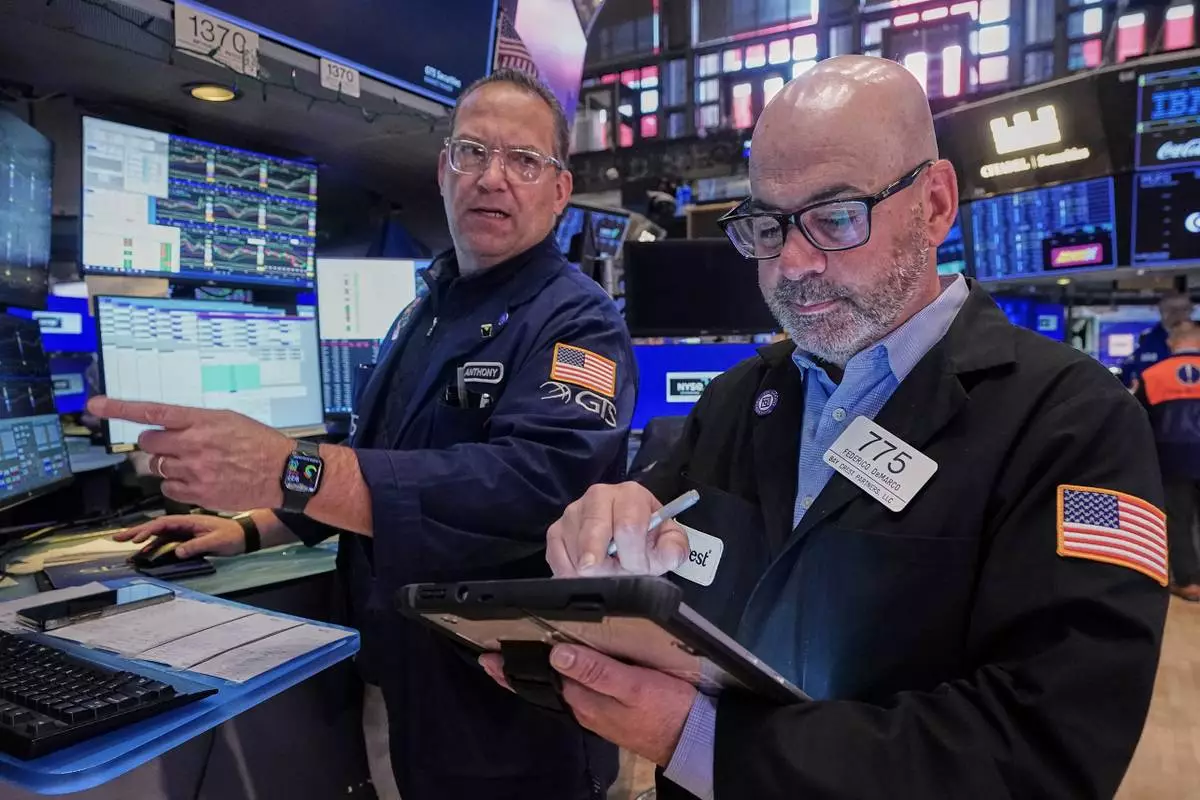
Specialist Anthony Matesic, left, and trader Fred Demarco work on the floor of the New York Stock Exchange, Friday, May 22, 2026. (AP Photo/Richard Drew)
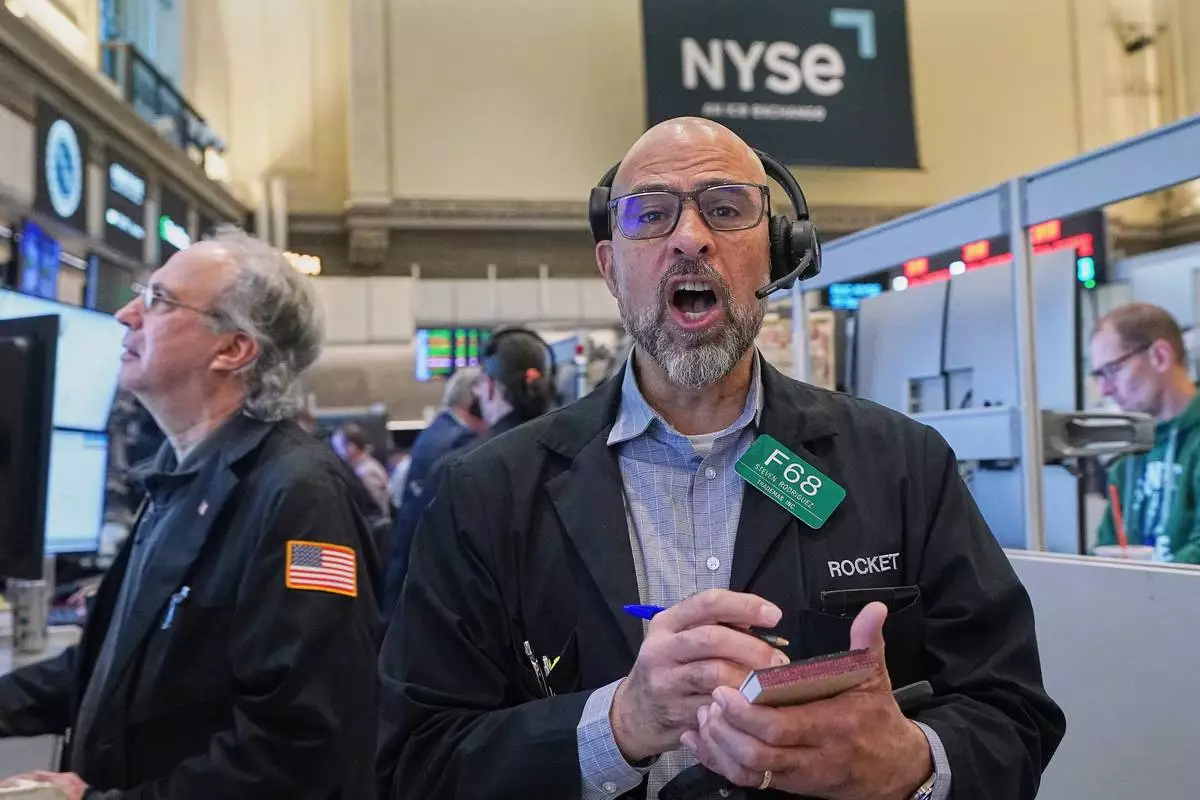
Options trader Steven Rodriguez, center, works on the floor of the New York Stock Exchange, Monday, May 11, 2026. (AP Photo/Richard Drew)

A dealer talks on the phone at a dealing room of Hana Bank in Seoul, South Korea, Wednesday, May 13, 2026. (AP Photo/Lee Jin-man)
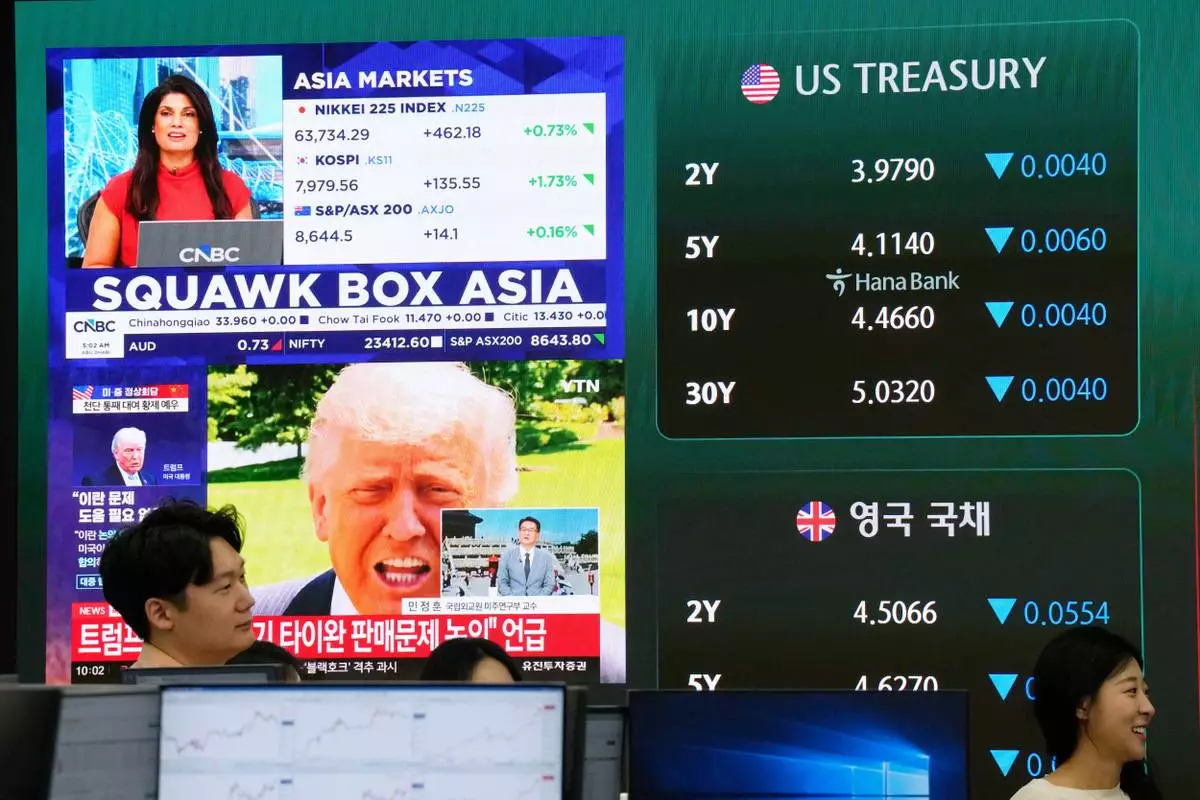
Asia markets index of Japan, South Korea and Australia is seen on a screen at the foreign exchange dealing room of the Hana Bank headquarters in Seoul, South Korea, Thursday, May 14, 2026. (AP Photo/Ahn Young-joon)
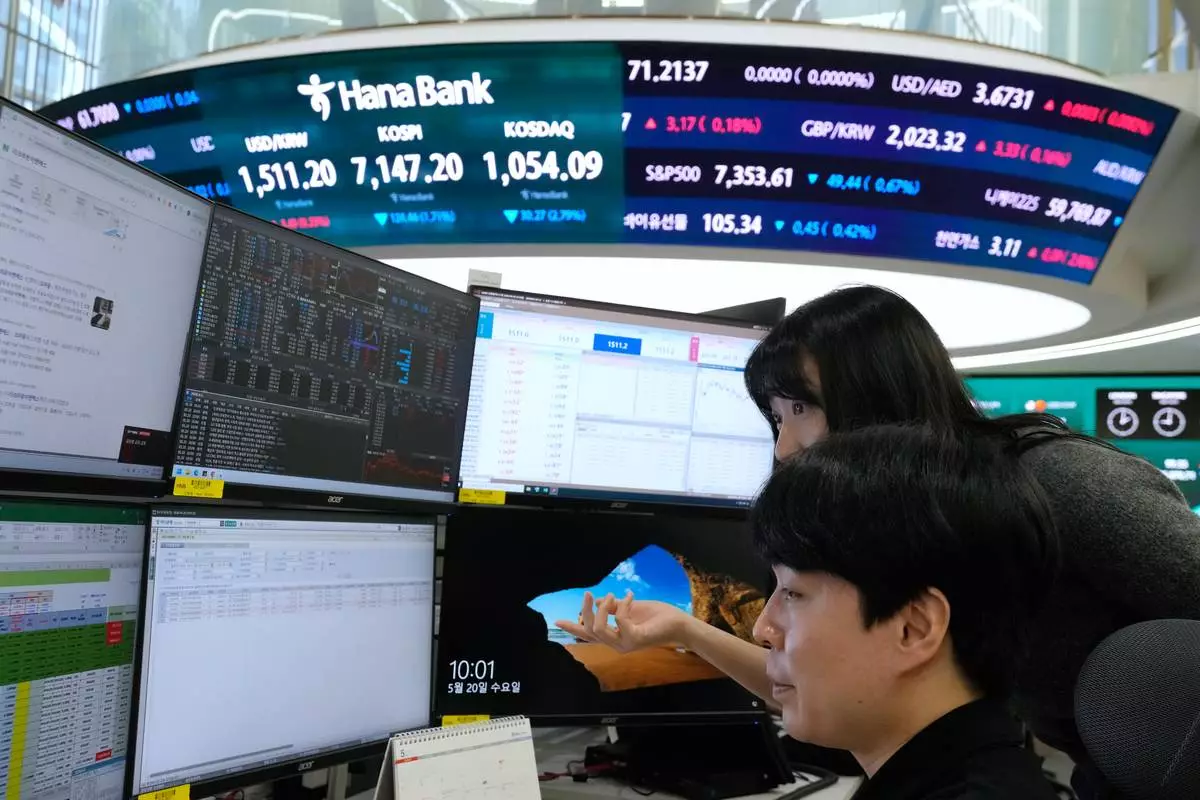
Currency traders watch monitors at the foreign exchange dealing room of the Hana Bank headquarters in Seoul, South Korea, Wednesday, May 20, 2026. (AP Photo/Ahn Young-joon)