NEW YORK (AP) — Call it a comeback. Or chalk it up as a choke.
Game 1 of the Eastern Conference finals was both. The Knicks wouldn't have been able to charge all the way back without Cleveland collapsing.
Click to Gallery
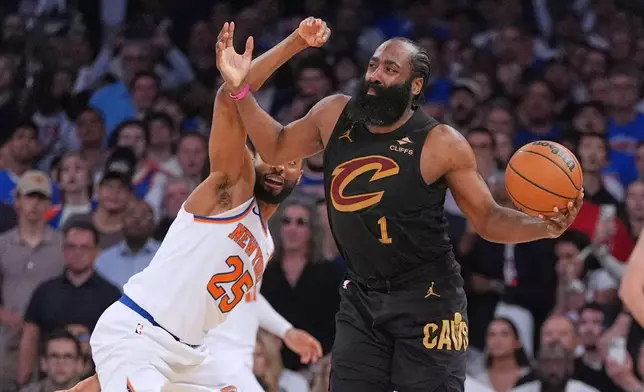
New York Knicks' Mikal Bridges, left, covers Cleveland Cavaliers' James Harden during the overtime period of Game 1 in the Eastern Conference finals NBA basketball playoffs series Tuesday, May 19, 2026, in New York. (AP Photo/Seth Wenig)
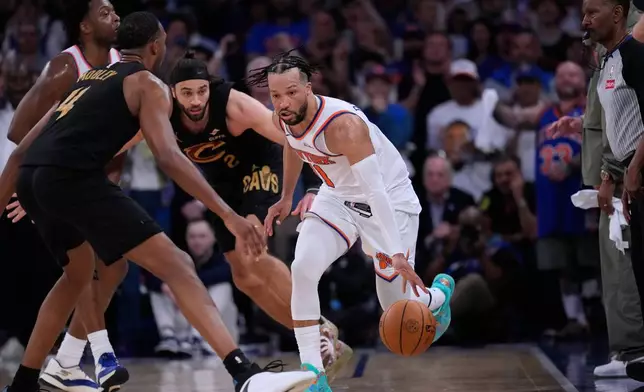
New York Knicks' Jalen Brunson, right, brings the ball up the court during the overtime period of Game 1 in the Eastern Conference finals NBA basketball playoffs series against the Cleveland Cavaliers, Tuesday, May 19, 2026, in New York. (AP Photo/Seth Wenig)
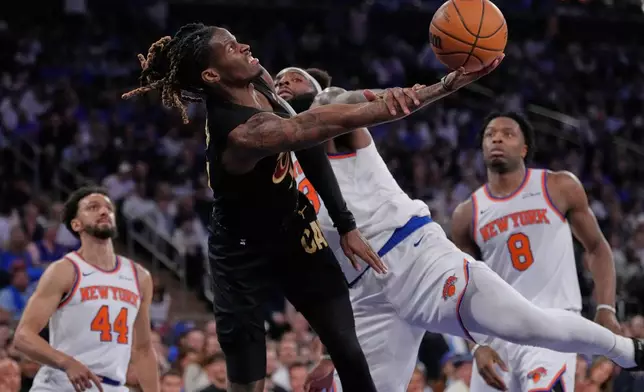
New York Knicks' Mitchell Robinson, center right, fouls Cleveland Cavaliers' Keon Ellis, center left,who goes looks to shoot during the first half of Game 1 in the Eastern Conference finals NBA basketball playoffs series, Tuesday, May 19, 2026, in New York. (AP Photo/Seth Wenig)
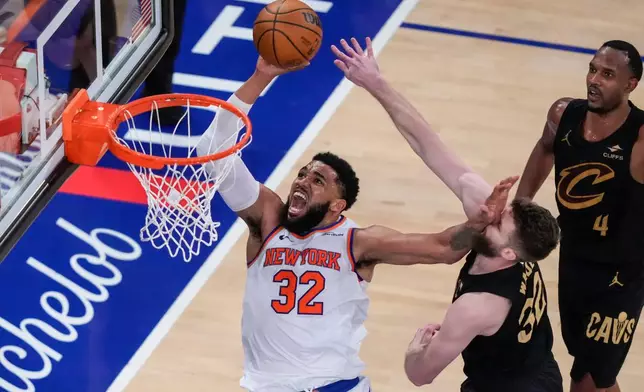
New York Knicks center Karl-Anthony Towns (32) shoots against Cleveland Cavaliers forward Dean Wade (32) during the second half of Game 1 in the Eastern Conference finals NBA basketball playoffs series Tuesday, May 19, 2026, in New York. (AP Photo/Yuki Iwamura)
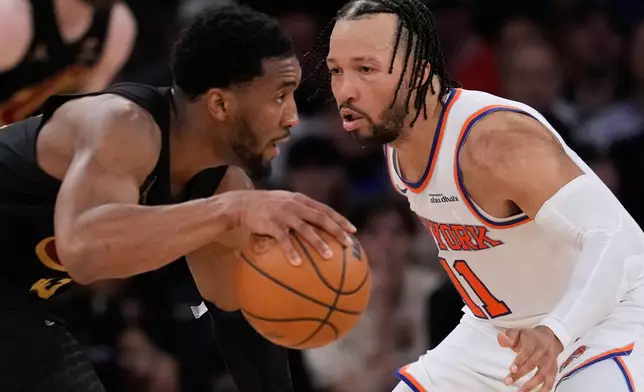
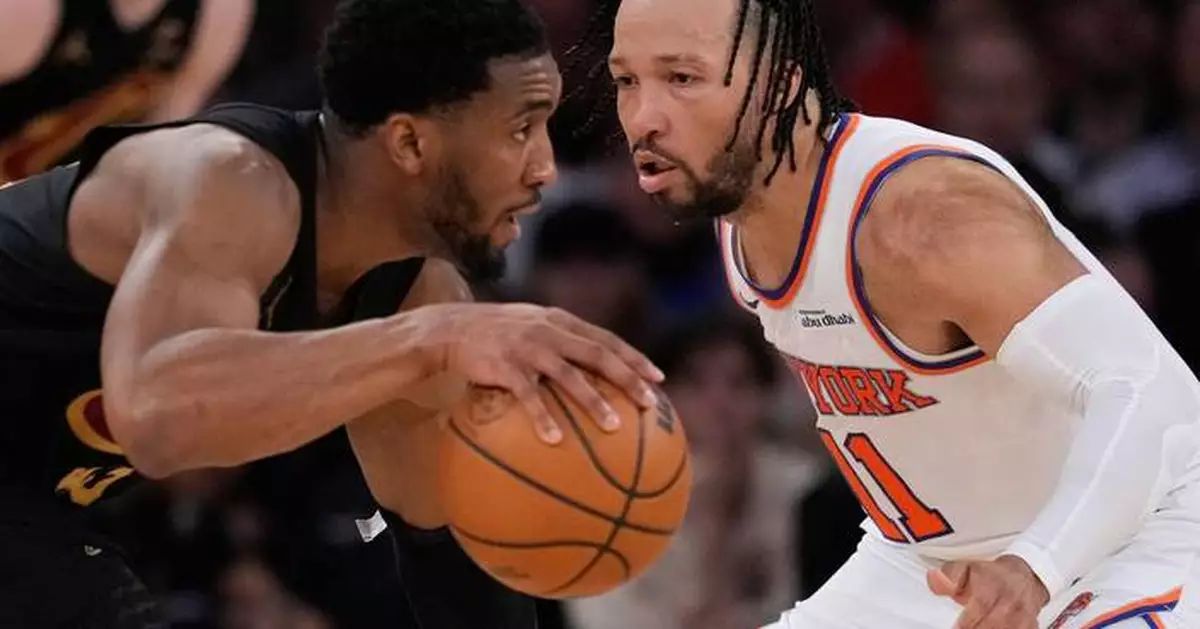
New York Knicks' Jalen Brunson, right, covers Cleveland Cavaliers' Donovan Mitchell, left, during the second half of Game 1 in the Eastern Conference finals NBA basketball playoffs series, Tuesday, May 19, 2026, in New York. (AP Photo/Seth Wenig)
The Cavaliers led 93-71 with under eight minutes to play before the Knicks outscored them 44-11 the rest of the way to win 115-104 in overtime. The only bigger fourth-quarter playoff comeback in the last 30 years was when the Clippers rallied from 24 down to beat Memphis in Game 1 of a Western Conference first-round series in 2012, and it matched the biggest in any NBA game this season.
“We should’ve won the game," Cavaliers All-Star Donovan Mitchell said. “We didn’t.”
A look at some of the reasons they didn't.
Impossible as it became to imagine a few minutes later, James Harden made a good defensive play on a then still-struggling Jalen Brunson with the Cavs leading by 20 with 7:04 to play. Harden blocked Brunson's shot on a drive, but Karl-Anthony Towns came up with the ball to extend the possession and kicked it out to Landry Shamet, who made a 3-pointer. After a Cavaliers turnover, New York took a timeout with 6:41 to play. The lead was still 93-76, but as players walked off the court with Shamet pumping his fist to urge on his teammates, the Knicks suddenly looked like they had life for the first time in a while.
“If you’re going to make a run, that’s when you’ve got to do it. So might as well throw your best punch at that point and try to do what you can,” Shamet said.
“You've got to leave it all out there especially at this time of the year and that’s what we did. We had a group that didn’t flinch at that deficit and made some effort.”
The Knicks' game plan over the next few minutes was basic basketball. Whoever Harden was guarding when Brunson brought the ball up the court — usually either Mikal Bridges or OG Anunoby — would come set a pick on Brunson's defender, so Harden would then have to switch onto Brunson. Brunson then attacked Harden off the dribble, creating angles for a series of floaters and bank shots that he has mastered to become an All-Star.
Brunson made four straight Knicks baskets that way, before eventually making a 3-pointer that cut it to 94-89 with 3 1/2 minutes to go.
Moments before Brunson lined up that 3-pointer, ESPN analyst Richard Jefferson noted that the Cavaliers might want a timeout if the Knicks scored.
But was it perhaps too late by then? Cleveland had multiple possessions to see the Knicks were running one thing at them and could have halted play before then to set up a defensive scheme that might've changed things.
The Cavaliers still had four timeouts they could have used at that point. Yet they never called one until after Brunson's shot.
“I like to hold my timeouts,” Cavs coach Kenny Atkinson explained afterward, when his answer became an internet meme. "I didn’t want to get one timeout at the end of the game, a one- or two-point game. I try to hold them.”
The game perhaps never would've gotten to overtime if the Cavaliers had gotten a little luckier on a pair of 3-point attempts.
Mitchell had one with 3:47 to play that was inside the rim and then spun out. That would have extended Cleveland's lead to 11. Instead, Brunson hit his 3-pointer 17 seconds later that cut it to 94-89.
Then, not long after Shamet hit a tying 3-pointer that bounced off the rim first before falling in, the Cavaliers had the ball on the final possession of regulation and got it to Sam Merrill from straightaway. His shot looked so perfect that play-by-play man Mike Breen appeared to be beginning his signature “BANG!” exclamation with the ball inside the rim. But he got out only the “BA!” before having to switch to “In and out! That one halfway down!"
“We got a little unlucky," Atkinson said.
Counting the last 12:49 of the game — the end of regulation and then all of overtime — Brunson outscored the Cavaliers himself, 17-11. Anunoby nearly did; he had 10 points in that span.
A look at some of the numbers:
— Field goals: New York .750 (15-20), Cleveland .222 (4-18).
— 3-pointers: New York .750 (6-8), Cleveland .182 (2-11).
— Free throws: New York .800 (8-10, all of that from Anunoby), Cleveland .250 (1-4).
— Rebounds: New York 13, Cleveland 2.
— Brunson shot 8 for 10 in those minutes, while Shamet and Bridges were a combined 5 for 5 (all on 3-pointers).
— Harden (1-5) and Mitchell (0-5) were a combined 1 for 10 in the collapse.
AP Basketball Writer Tim Reynolds in Oklahoma City contributed to this report.
AP NBA: https://apnews.com/hub/nba
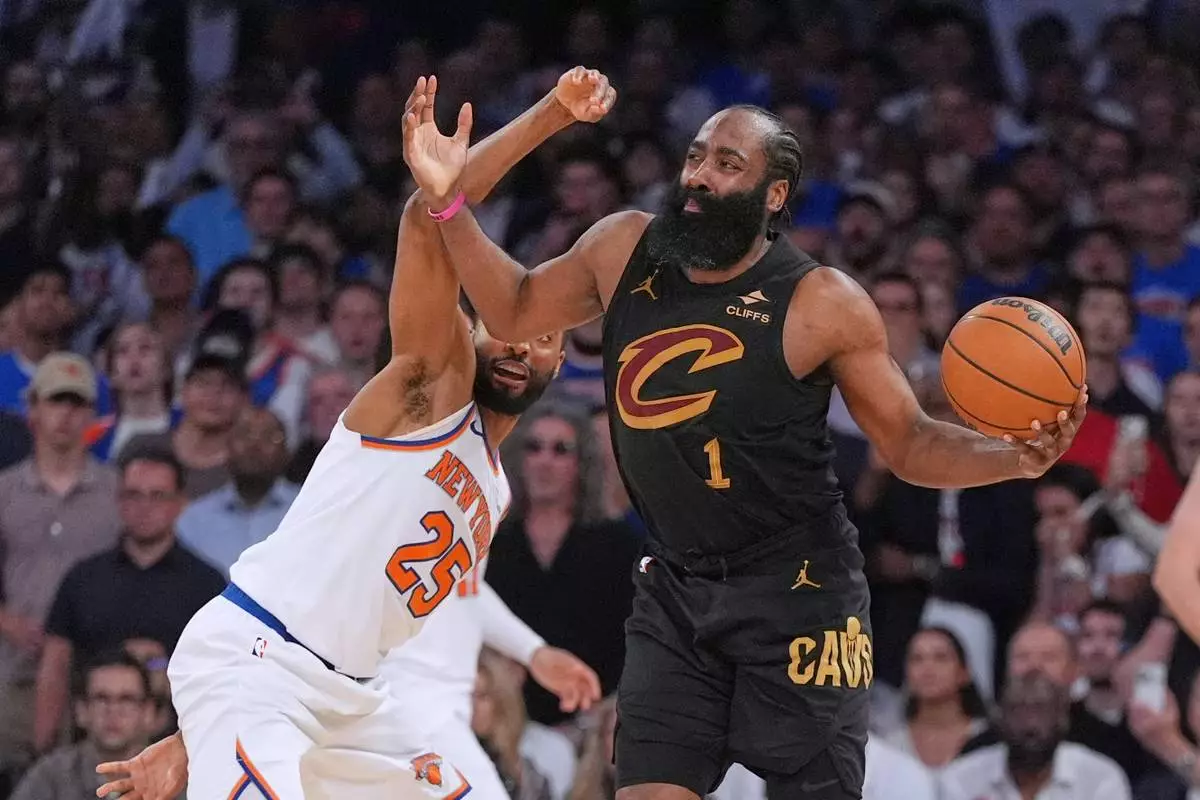
New York Knicks' Mikal Bridges, left, covers Cleveland Cavaliers' James Harden during the overtime period of Game 1 in the Eastern Conference finals NBA basketball playoffs series Tuesday, May 19, 2026, in New York. (AP Photo/Seth Wenig)
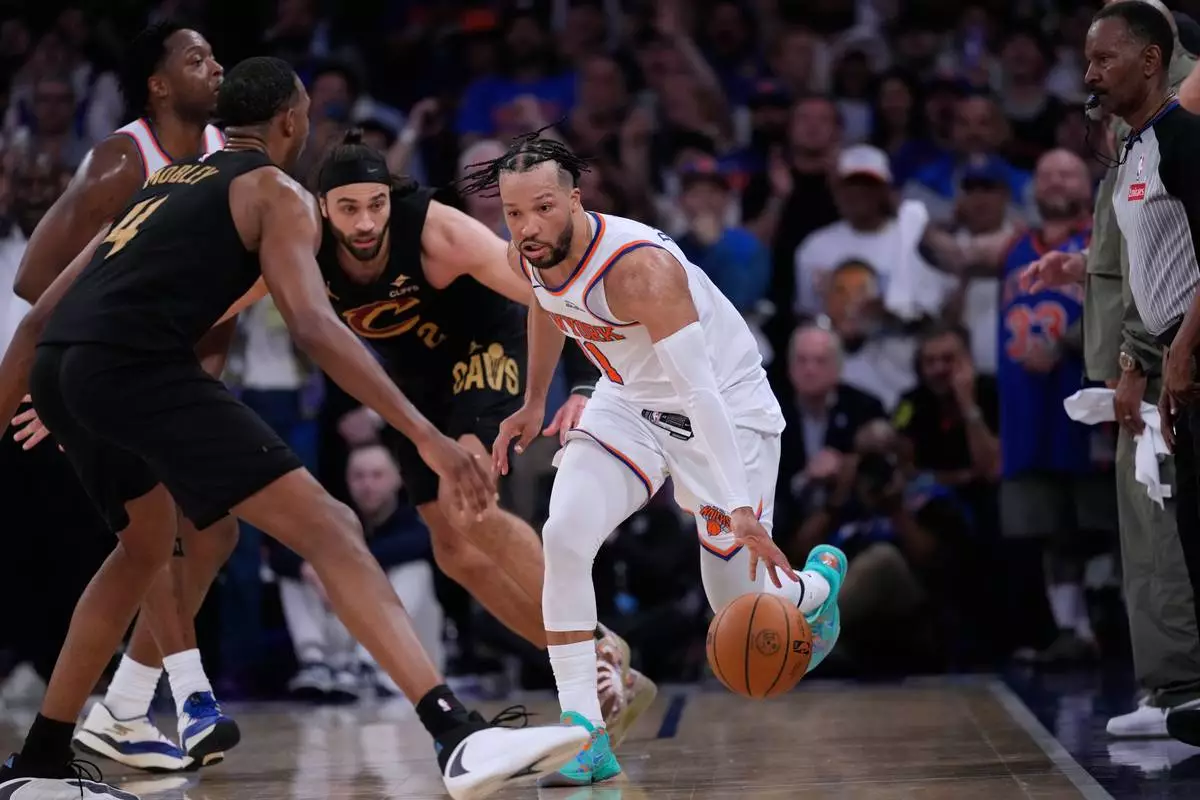
New York Knicks' Jalen Brunson, right, brings the ball up the court during the overtime period of Game 1 in the Eastern Conference finals NBA basketball playoffs series against the Cleveland Cavaliers, Tuesday, May 19, 2026, in New York. (AP Photo/Seth Wenig)
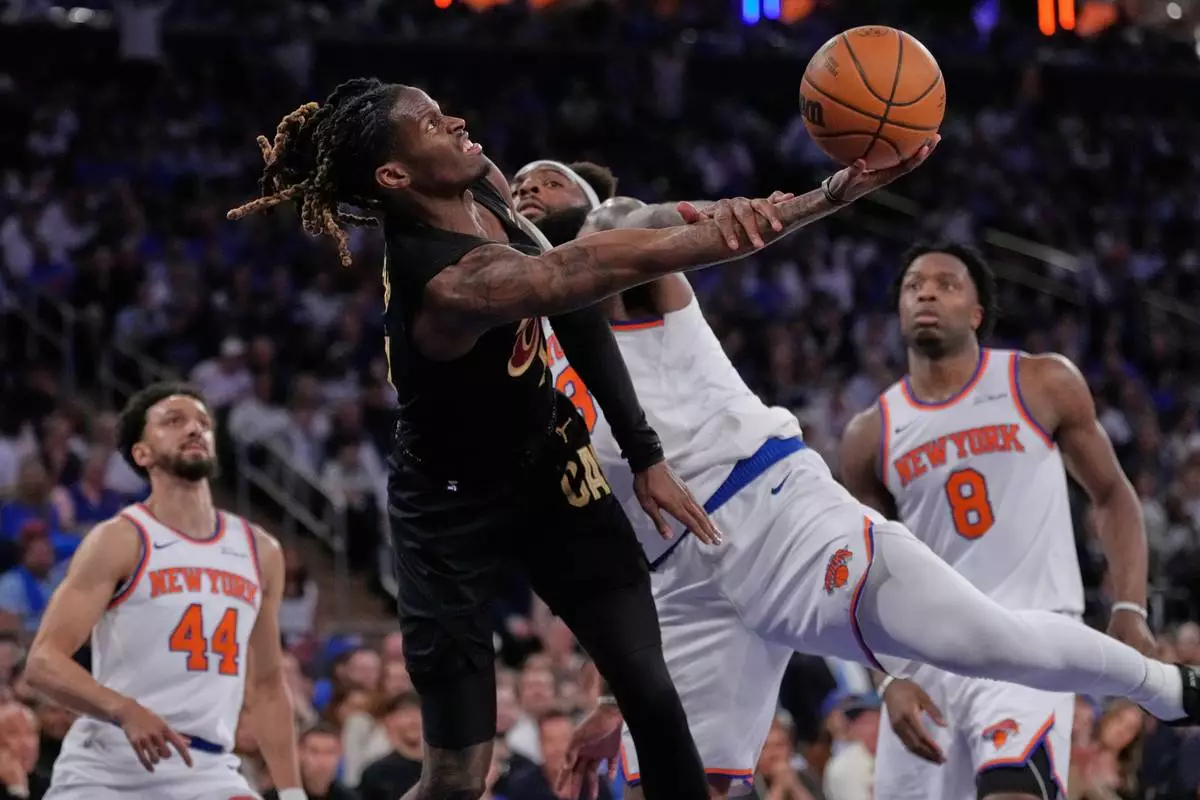
New York Knicks' Mitchell Robinson, center right, fouls Cleveland Cavaliers' Keon Ellis, center left,who goes looks to shoot during the first half of Game 1 in the Eastern Conference finals NBA basketball playoffs series, Tuesday, May 19, 2026, in New York. (AP Photo/Seth Wenig)
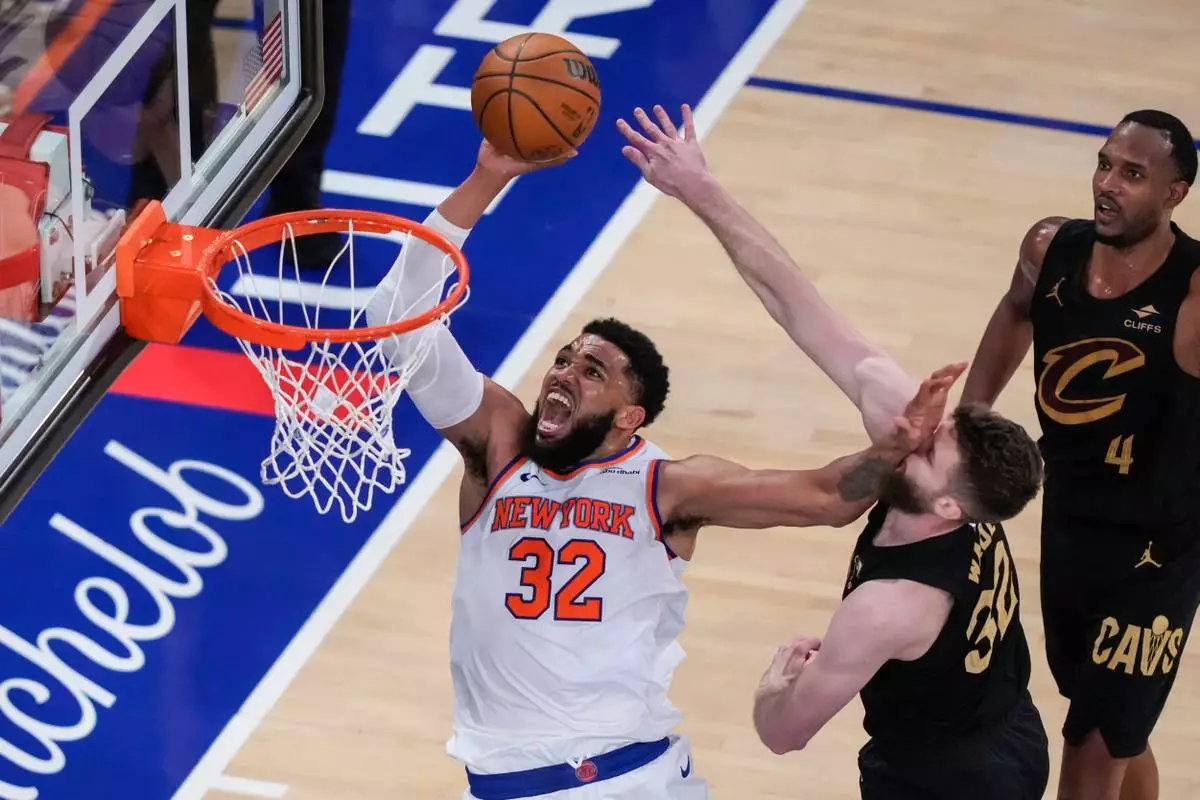
New York Knicks center Karl-Anthony Towns (32) shoots against Cleveland Cavaliers forward Dean Wade (32) during the second half of Game 1 in the Eastern Conference finals NBA basketball playoffs series Tuesday, May 19, 2026, in New York. (AP Photo/Yuki Iwamura)
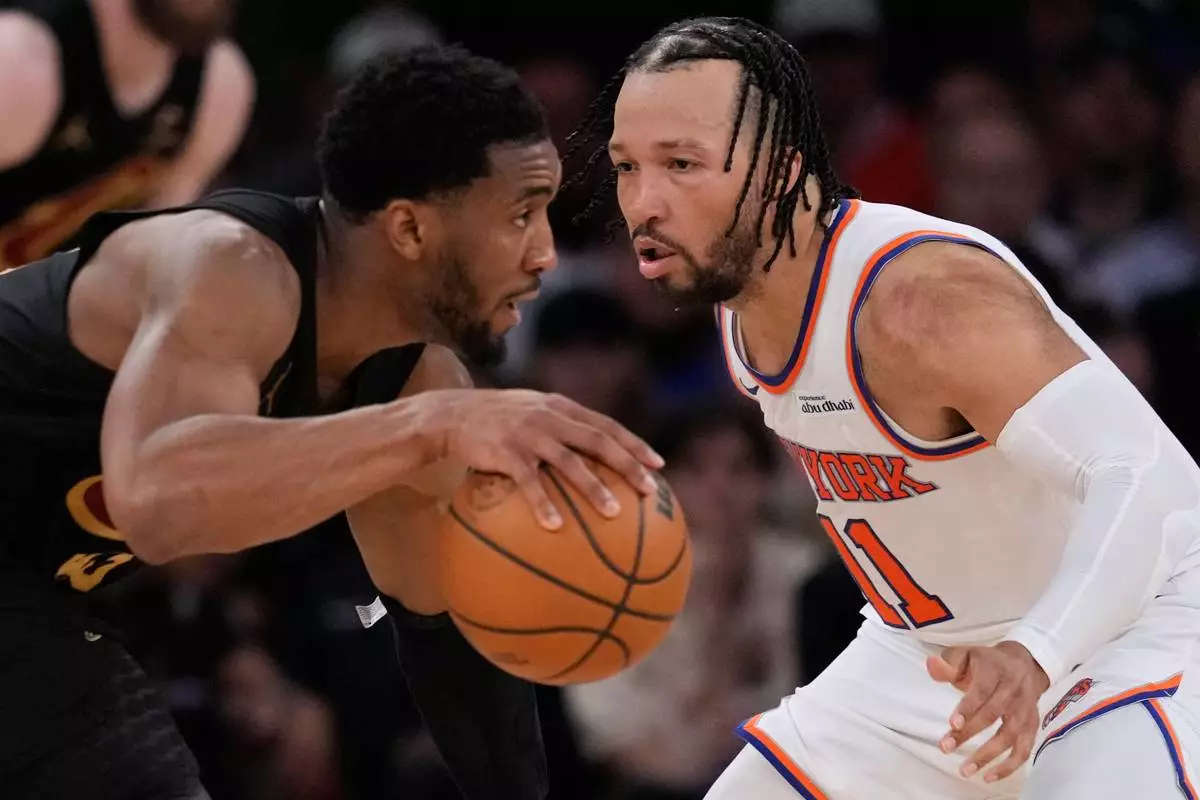
New York Knicks' Jalen Brunson, right, covers Cleveland Cavaliers' Donovan Mitchell, left, during the second half of Game 1 in the Eastern Conference finals NBA basketball playoffs series, Tuesday, May 19, 2026, in New York. (AP Photo/Seth Wenig)