NEWARK, N.J.--(BUSINESS WIRE)--May 20, 2026--
PGIM, the $1.4 trillion global investment management business of Prudential Financial, Inc. 1 ( NYSE: PRU ), has announced that the PGIM Real Estate Fund, Inc. has completed its 10th property acquisition with the purchase of The Arbor, a 127-unit housing community in the Riverdale neighborhood in the Bronx, New York, at a gross capitalization of $73.5 million.
This press release features multimedia. View the full release here: https://www.businesswire.com/news/home/20260520170097/en/
The fund acquired the asset in a joint venture with Fetner Properties through a sale and leaseback with the seller, Columbia University. Beginning in July 2026, apartments are expected to be re-leased in two phases and will be operated as a residential property while it undergoes a value-add capital improvement program.
“Reaching 10 property acquisitions, $260 million in capital deployed and over $632 million in gross property value 2 are important proof points for this fund and for our broader commitment to opening institutional-quality private real estate to a wider pool of investors,” said Darin Bright, senior portfolio manager for the PGIM Real Estate Fund. “Each investment in this portfolio has been sourced with the same rigor and conviction we bring to our institutional strategies. The acquisition of The Arbor, which has very strong near-term growth potential, is a testament to that approach.”
The acquisition follows the fund’s recent conversion from a tender offer fund to an interval fund structure, completed on April 30, 2026. While still taxed as a REIT, PGIM, Inc., the fund’s subadviser, believes that the conversion offers new and existing shareholders a more transparent and predictable liquidity framework through mandatory quarterly repurchase offers. The fund continues to deliver on its investment objective of providing current income and long-term capital appreciation through a diversified portfolio of private real estate investments.
“A sharp repricing in real estate and a slow, uneven recovery have set up a significant tailwind for the asset class,” said Soultana Reigle, head of U.S. Equity for PGIM’s Real Estate Investment Group. “Our real estate strategies invest in sectors tied to essential demand, including various housing formats and logistics, that persists through cycles regardless of the broader financial market backdrop. These stabilized real estate investments tend to generate resilient income with growth and lower volatility.”
PGIM’s Real Estate Investment Group is one of the world’s largest real estate investment managers, with $217 billion in gross assets under management and administration, 3 and real estate professionals located in more than 30 cities worldwide. Through its full suite of real estate equity and debt solutions, PGIM aims to achieve exceptional outcomes on behalf of investors and borrowers. PGIM’s uncompromising commitment to building lasting relationships with clients is founded on trust, transparency, and mutual respect.
ABOUT PGIM
PGIM is the global asset management business of Prudential Financial, Inc. ( NYSE: PRU ), with $1.4 trillion in assets under management. 1 PGIM offers clients deep expertise across public and private asset classes, delivering a diverse range of investment strategies and tailored solutions — including fixed income, equities, real estate and alternatives. With 1,500+ investment professionals across 40 offices in 20 countries, we serve retail and institutional clients worldwide. For more information, visit pgim.com.
Prudential Financial, Inc. (PFI) of the United States is not affiliated in any manner with Prudential plc, incorporated in the United Kingdom, or with Prudential Assurance Company, a subsidiary of M&G plc, incorporated in the United Kingdom. For more information please visit news.prudential.com.
PGIM Investments LLC (the “Manager” or “PGIM Investments”) serves as the investment manager to the Fund and has engaged its affiliate, PGIM, Inc. (the “Subadviser” or “PGIM”), as subadviser to provide day-to-day management of the Fund’s portfolio, primarily through the PGIM Real Estate Investment Group (“PGIM Real Estate”) and the PGIM Credit Investment Group (“PGIM Credit”). PGIM Real Estate, a manager of public and private real estate investing, is an investment group of PGIM. PGIM Credit is the public and private fixed income investment group of PGIM. PGIM Fixed Income, a manager of private and public fixed income investments, is an investment sub-group of PGIM Credit.
These materials are neither intended as investment advice nor an offer or solicitation with respect to the purchase or sales of any security or financial instruction. These materials are not intended to be an offer with respect to the provision of investment management services. Investment products are distributed by Prudential Investment Management Services LLC, member FINRA and SIPC. PGIM Investments is a registered investment advisor and investment manager to PGIM registered investment companies. PGIM Real Estate is a unit of PGIM, Inc., a registered investment advisor. PGIM is the principal asset management business of Prudential Financial, Inc. (PFI), and a trading name of PGIM, Inc. and its global subsidiaries and affiliates. All are Prudential Financial affiliates. © 2026 Prudential Financial, Inc. and its related entities. PGIM, PGIM Investments, PGIM Real Estate, and the PGIM logo are service marks of Prudential Financial, Inc. and its related entities, registered in many jurisdictions worldwide.
This material is being provided for informational or educational purposes only and does not take into account the investment objectives or financial situation of any client or prospective clients. The information is not intended as investment advice and is not a recommendation. Clients seeking information regarding their particular investment needs should contact their financial professional.
INVESTMENT PRODUCTS | Are not insured by the FDIC or any federal government agency | May lose value | Are not a deposit of or guaranteed by any bank or any bank affiliate
Consider a fund’s investment objectives, risks, charges, and expenses carefully before investing. The prospectus contains this and other information about the fund.
Contact your financial professional for a prospectus. Read it carefully before investing. The Fund has a limited operating history and there is no assurance that the Fund will achieve its investment objective. This material must be read in conjunction with the Fund's prospectus in order to fully understand all the implications and risks of an investment in the Fund. This material is neither an offer to sell nor a solicitation of an offer to buy securities. Prior to making an investment, investors should read the prospectus, including the “Risk Factors” section therein, which contain the risks and uncertainties that we believe are material to our business. This material includes information pertaining only to PGIM Real Estate Fund, Inc. Any recipient of this material acknowledges that their receipt of the material is not an approval to market or offer interests in the Fund. An investment in the Fund may not be in the best interest of, or suitable for, all investors. Alternative investments often are speculative, typically have higher fees than traditional investments, often include a high degree of risk and are suitable for eligible, long-term investors who are willing to forego liquidity and put capital at risk for an indefinite period of time. There can be no assurance that PGIM's targets will be realized or that PGIM will be successful in finding investment opportunities that meet these anticipated return parameters. Returns will be lower after deduction of fees, expenses and taxes. Past performance is not indicative nor a guarantee of future returns. PGIM has not made any representation or warranty, expressed or implied, with respect to fairness, correctness, accuracy, reasonableness, or completeness of any of the information contained herein (including but not limited to information obtained from third parties unrelated to PGIM), and expressly disclaims any responsibility or liability therefor. PGIM has no responsibility to update any of the information provided in this summary document. Shares of the Fund may only be offered in jurisdictions where the Fund is authorized for distribution.
CONNECT WITH US:
Visit pgim.com
Follow on LinkedIn
5504935

Soultana Reigle, Head of U.S. Equity for PGIM’s Real Estate Investment Group
BUNIA, Congo (AP) — Anxious healthcare workers in eastern Congo said Wednesday they are underprotected and undertrained in a rapidly spreading Ebola outbreak of a rare type of the virus in one of the world’s most remote and vulnerable places.
The region has long been threatened by armed groups that control a major city where Ebola cases have now been confirmed, complicating health workers’ catch-up efforts to trace the outbreak.
The World Health Organization, which noted a low risk globally, has said “patient zero” has not been found.
“It’s truly sad and painful because we’ve already been through a security crisis, and now Ebola is here too,” said Justin Ndasi, a resident of Bunia, where the first known death was announced last week after what experts say was a worrying delay in detecting the virus.
Tons of health supplies have been airlifted to Bunia but residents said masks are harder to find and some disinfectants that previously sold for 2,500 Congolese francs (about $1) now cost four times more.
At a treatment center in Rwampara, healthcare workers in protective gear silently handled the bodies of suspected Ebola victims. Families, which traditionally wash deceased loved ones, cried and watched helplessly as workers disinfected them and placed them into coffins for secure burial sites.
The disease struck suddenly, they said, describing a rapid deterioration after symptoms were mistaken for illnesses such as malaria.
“He told me his heart was hurting,” said Botwine Swanze, who lost her son. “Then he started crying because of the pain. ... Then he started bleeding and vomiting a lot.”
The Ebola virus is highly contagious and spreads in the human population through contact with bodily fluids such as vomit, blood or semen. Symptoms include fever, vomiting, diarrhea, muscle pain and at times internal and external bleeding.
WHO has declared the outbreak a public health emergency of international concern, worried over its “scale and speed." The WHO chief in Congo says it could last at least two months.
The rare type of Ebola, known as the Bundibugyo virus, spread undetected for weeks following the first known death while authorities tested for another, more common Ebola virus and came up negative.
Investigations continued into where and when the outbreak started, but “given the scale, we are thinking that it has started probably a couple of months ago," said Anaïs Legand, with WHO's emergencies program.
So far, 51 cases have been confirmed in Congo’s northern provinces of Ituri and North Kivu, and two cases in Uganda, WHO Director-General Tedros Adhanom Ghebreyesus said Wednesday. There are 139 suspected deaths and almost 600 suspected cases.
But "the scale of the epidemic is much larger,” he said.
The London-based MRC Centre for Global Infectious Disease Analysis estimated that cases have been substantially undercounted and that the actual number could already exceed 1,000. “The true magnitude remains uncertain,” it said.
This is Congo’s 17th Ebola outbreak, and the WHO has said the country's health ministry has experienced staff and capacity to respond. Most outbreaks, however, were of the more common Ebola type.
Dr. Vasee Moorthy, a special adviser at WHO, said a vaccine to address Bundibugyo would not be available for at least six to nine months.
Eastern Congo already faced “immense pressure from conflict, displacement and a collapsing health system,” said Dr. Lievin Bangali, senior health coordinator for the International Rescue Committee in Congo, adding that years of underfunding have weakened the response.
The outbreak highlights the effects of the Trump administration’s deep cuts in foreign aid. U.S. Secretary of State Marco Rubio has said the administration set a priority on funding 50 emergency clinics in affected areas. The U.S. pledged to contribute $23 million.
In Bunia, schools and churches remain open while some residents wear masks. Elsewhere in Ituri province, suspected Ebola patients share a ward with others injured or ill at Bambu General Hospital.
A Doctors Without Borders team identified suspected cases over the weekend at Bunia's Salama hospital but found no available isolation ward in the area, said Trish Newport, an emergency program manager.
“Every health facility they called said, ‘We’re full of suspect cases. We don’t have any space.’ This gives you a vision of how crazy it is right now," she said on social media.
In Mongbwalu, where the body of the first known death was taken, the nearby border with Uganda remains open and gold mining continues, said Chérubin Kuku Ndilawa, a civil society leader.
“There’s no panic. People continue with their normal lives, but they’re also starting to spread the word,” said Ndilawa, and noted a lack of public handwashing stations.
There were around 30 Ebola patients at Mongbwalu General Hospital, where a student from the local medical technology institute died on Wednesday, Dr. Didier Pay said.
“The patients are scattered here and there,” said Dr. Richard Lokudu, the hospital’s medical director. “We hope for the proper triage and isolation facilities to be installed today, and if that doesn’t happen, we will be completely overwhelmed.”
They are understaffed and not trained to handle suspected cases, Lokudu said, and added that if confirmed cases surge, “we have no protection.”
In the Ebola-affected city of Goma, where Rwanda-backed M23 rebels are in control, the “situation is complicated,” said Dr. Anne Ancia, WHO's representative in Congo.
A U.S. national who tested positive in Congo arrived in Berlin on Wednesday and was in a special isolation ward where a “comprehensive examination” was underway, German Health Ministry spokesperson Martin Elsässer said.
Elsässer declined to comment on the condition of the patient, who has not been identified by German or U.S. authorities. The ministry later said, without elaborating, that it would take in the patient's wife and three children at the request of U.S. authorities.
A top health official in the Czech Republic said they are receiving an American doctor who was treating Ebola patients in Uganda and who is without symptoms. It was not clear whether any were infected.
Dr. Satish Pillai, incident manager for Centers for Disease Control and Prevention’s Ebola response, told reporters Wednesday that the Americans were being transported in coordination with the U.S. State Department and other agencies. One patient, who is in stable condition, is now being treated in Germany, Pillai said.
Asked whether the White House played a role in the decision to move the Americans to Europe, Pillai said the decision was based on conditions on the ground and the need to mobilize rapidly.
Associated Press writers Jamey Keaten in Geneva; Jean Yves Kamale in Kinshasa, Congo; Wilson McMakin in Dakar, Senegal; Devi Shastri in Milwaukee, WI; Karel Janicek in Prague and Geir Moulson in Berlin contributed to this report.
For more on Africa and development: https://apnews.com/hub/africa-pulse
The Associated Press receives financial support for global health and development coverage in Africa from the Gates Foundation. The AP is solely responsible for all content. Find AP’s standards for working with philanthropies, a list of supporters and funded coverage areas at AP.org.
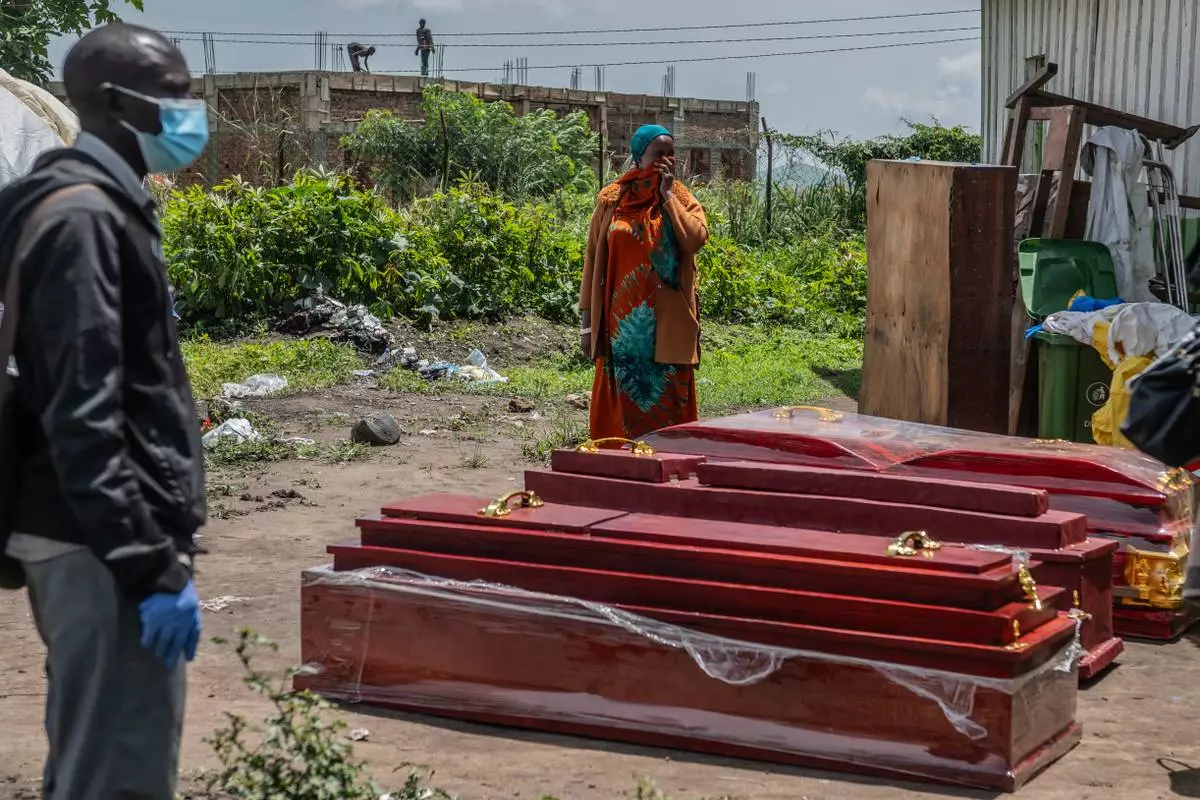
Family members of people who died of Ebola stand next to coffins at a health center in Rwampara, Congo, Wednesday, May 20, 2026. (AP Photo/Moses Sawasawa)
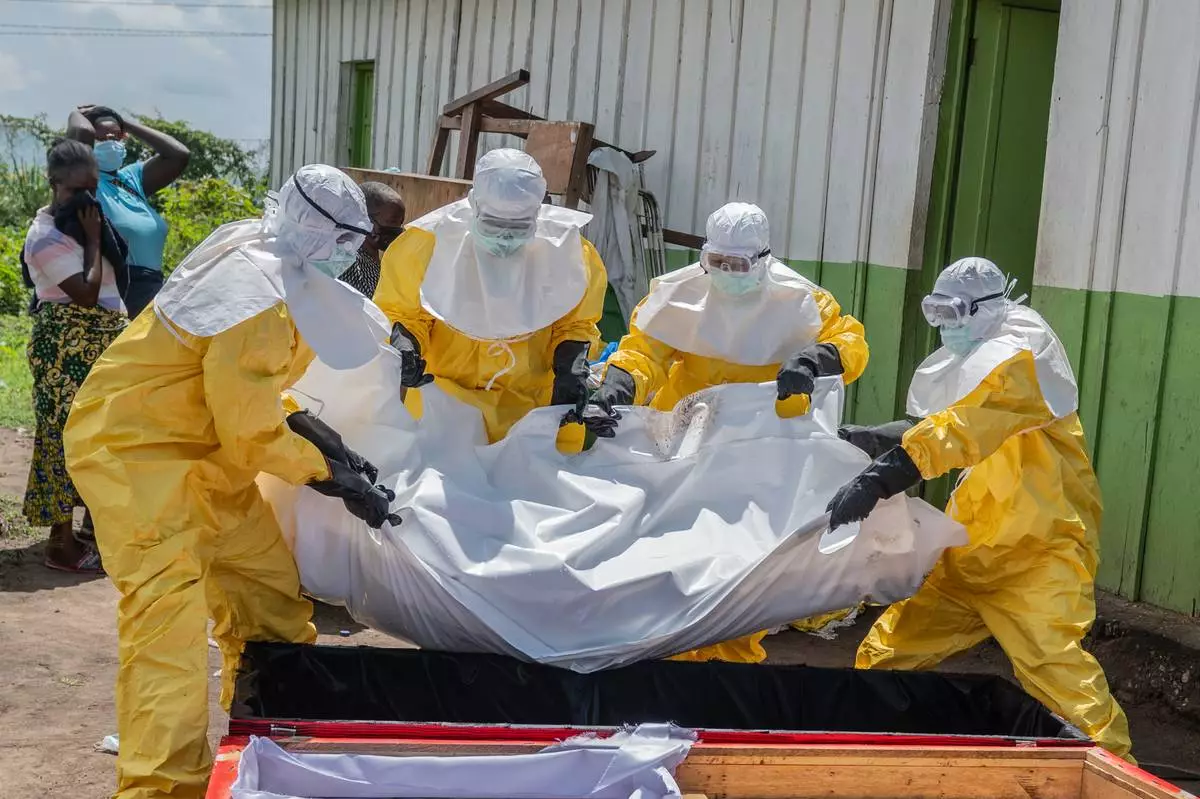
Red Cross workers carry the body of a person who died of Ebola into a coffin at a health center in Rwampara, Congo, Wednesday, May 20, 2026. (AP Photo/Moses Sawasawa)
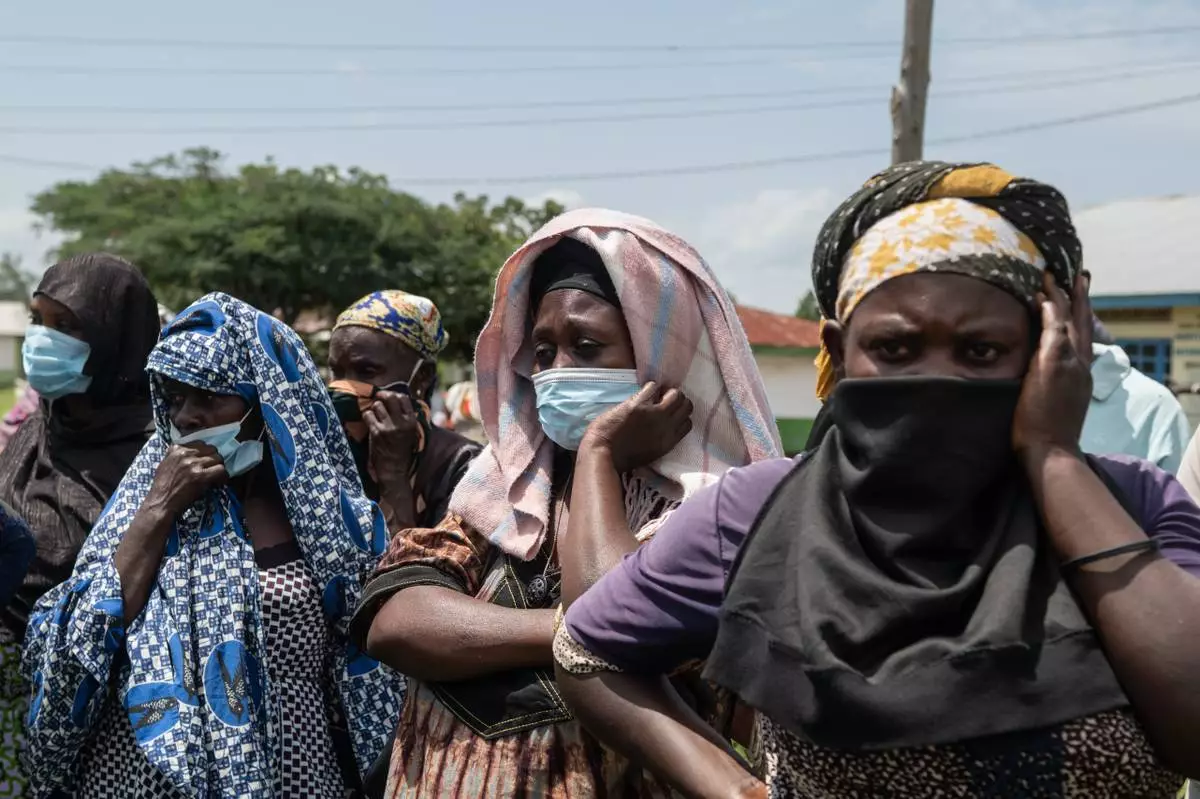
Relatives look on as people who died of Ebola are taken from a health center in Rwampara, Congo, Wednesday, May 20, 2026. (AP Photo/Moses Sawasawa)
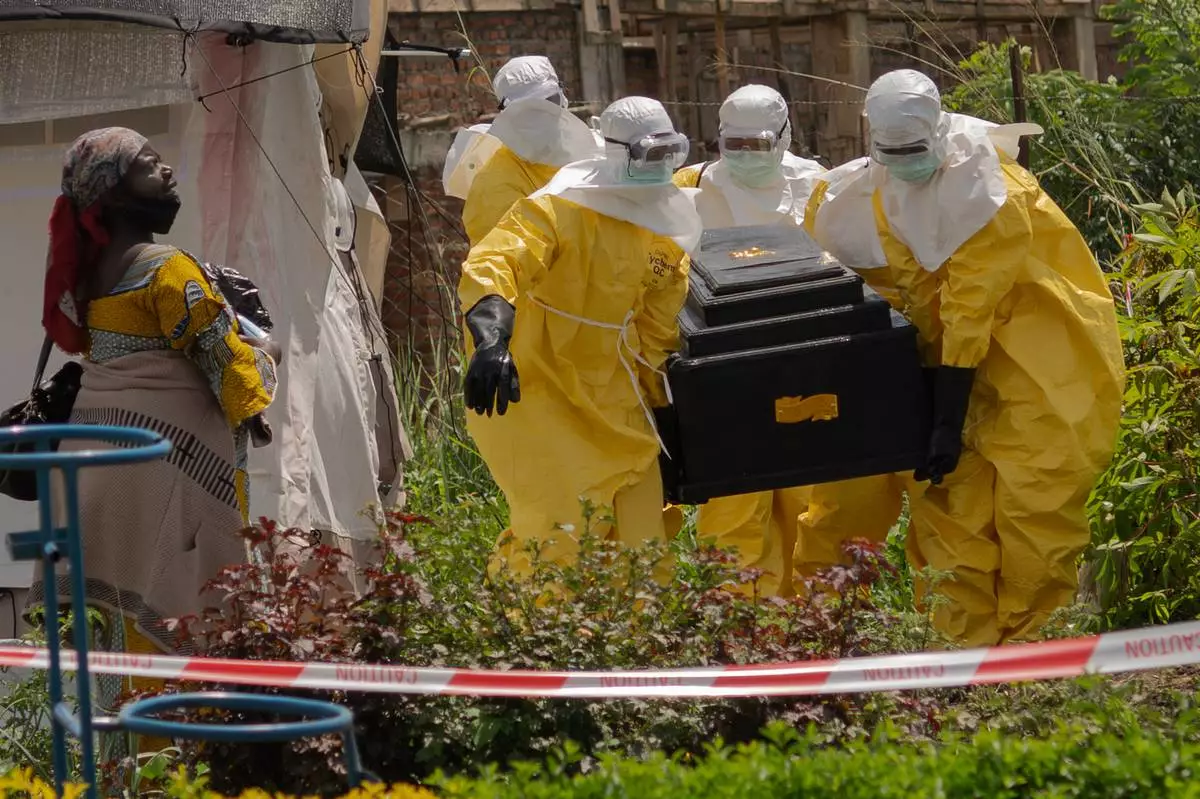
A woman cries as Red Cross workers carry the coffin of a person who died of Ebola from a health center in Rwampara, Congo, Wednesday, May 20, 2026. (AP Photo/Moses Sawasawa)
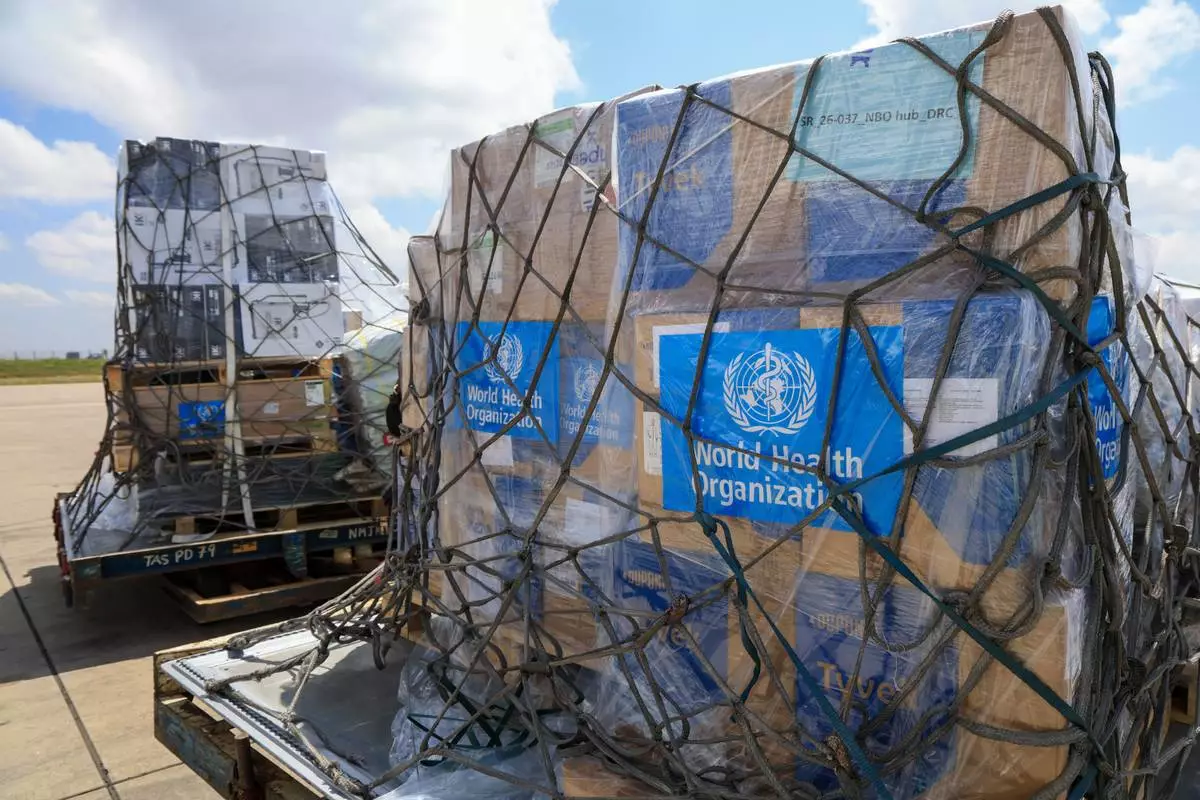
World Health Organization (WHO) emergency supplies headed for Congo to combat the Ebola outbreak in Ituri province, seen at Jomo Kenyatta International Airport in Nairobi, Kenya, Wednesday, May 20, 2026. (AP Photo/Andrew Kasuku)
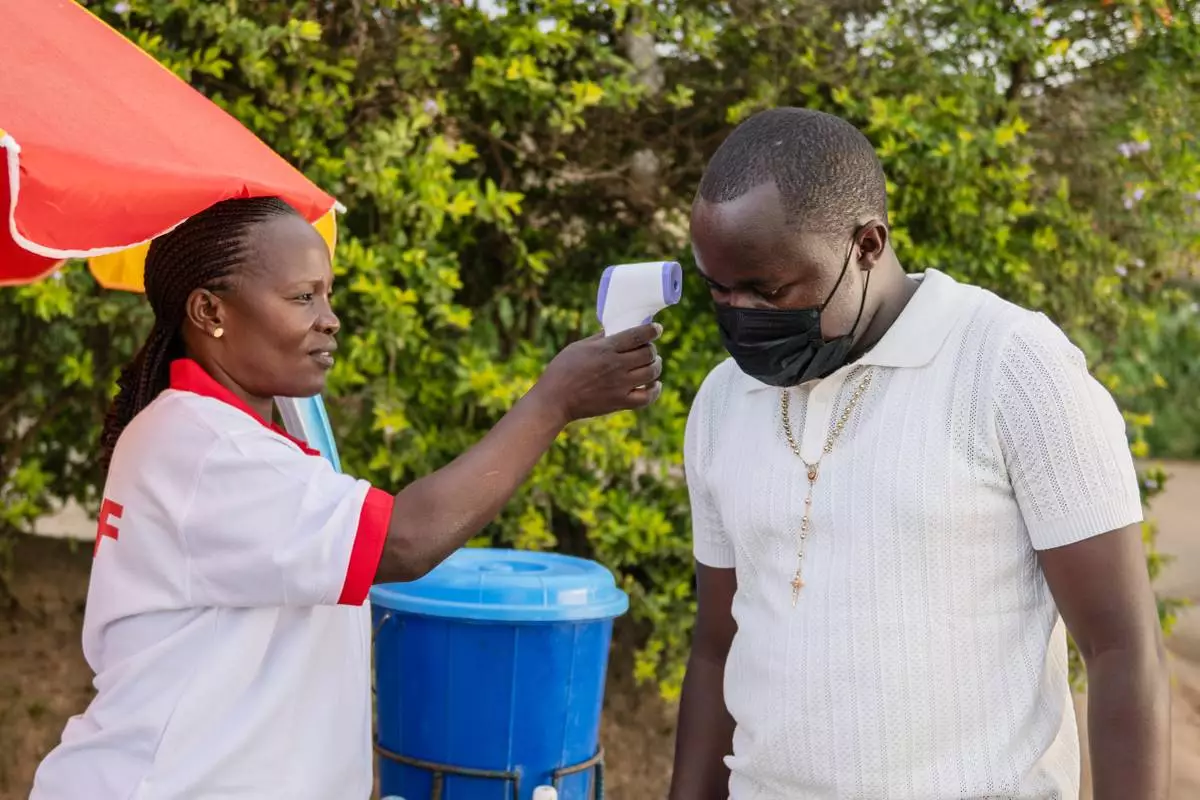
A health worker uses a thermometer to screen a man by the roadside in Bunia, Congo, Tuesday, May 19, 2026. (AP Photo/Moses Sawasawa)
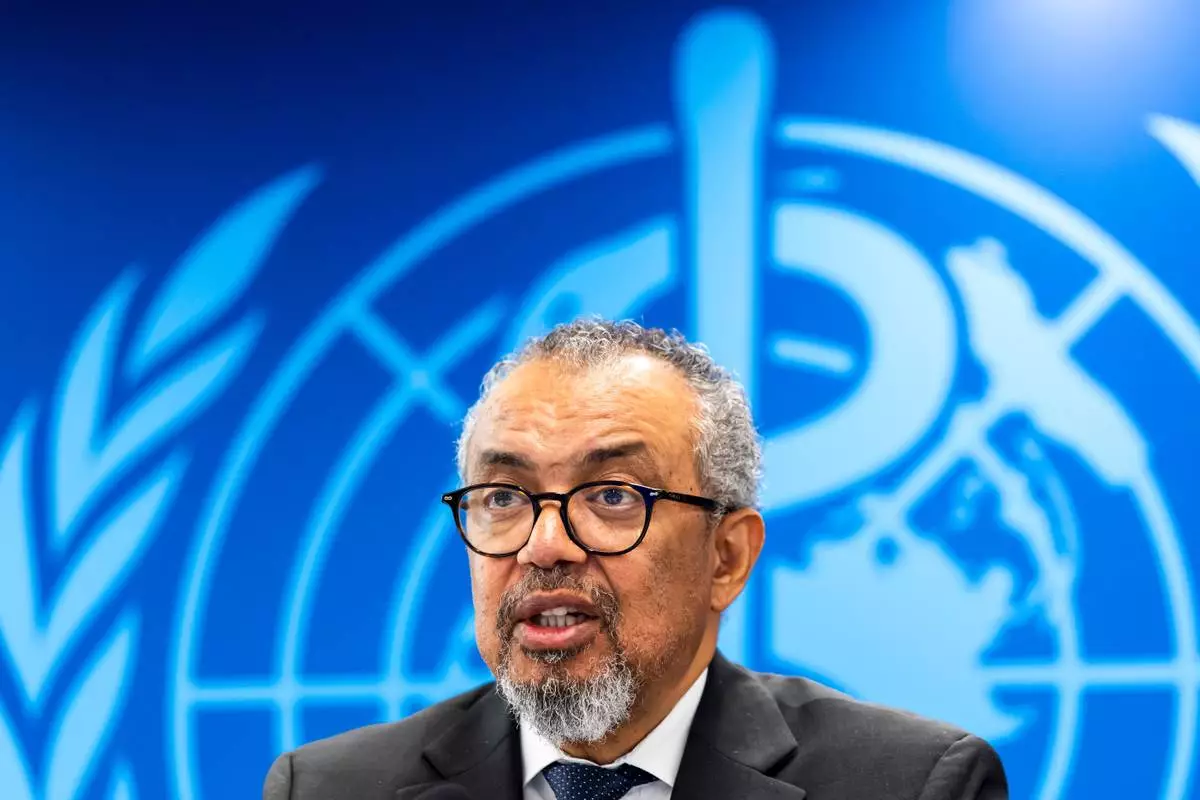
World Health Organization Director-General Tedros Adhanom Ghebreyesus speaks to the media following an emergency committee during a press conference at its headquarters in Geneva, Switzerland, Wednesday, May 20, 2026. (Salvatore Di Nolfi/Keystone via AP)
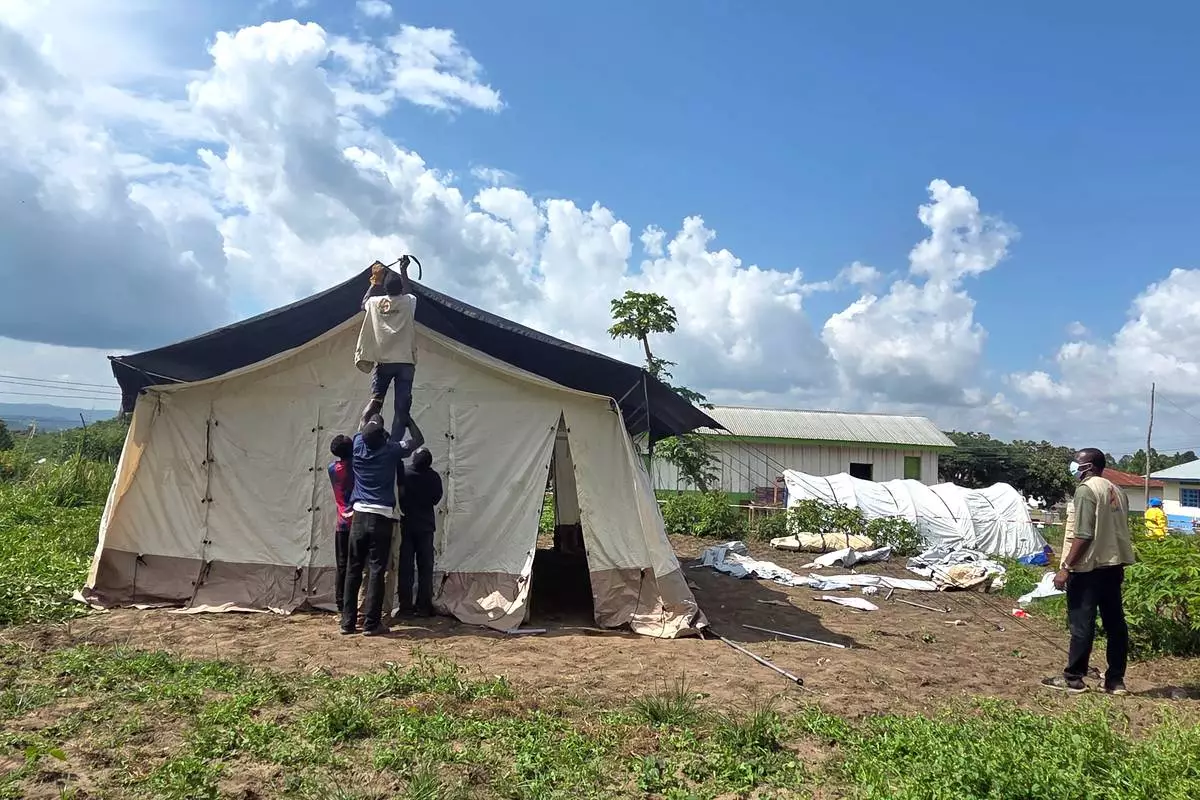
Aid workers set up an Ebola treatment center in Rwampara, Congo, Tuesday, May 19, 2026. (AP Photo/Dirole Lotsima Dieudonne) Corrects from Bunia to Rwampara
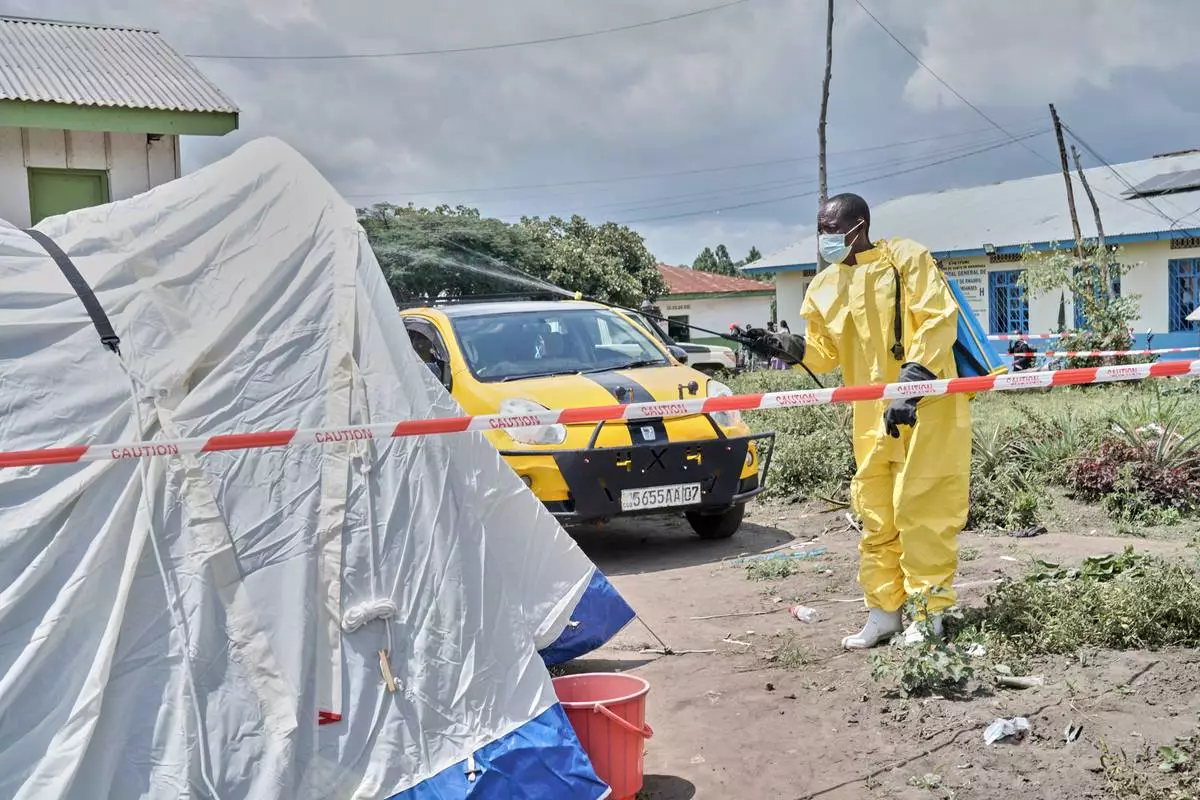
A man sprays a tent at an Ebola treatment center in Bunia, Congo, Tuesday, May 19, 2026. (AP Photo/Dirole Lotsima Dieudonne)

People offload a shipment of more than 15 tons of supplies donated by UNICEF as part of the response to the Ebola virus outbreak at Bunia National Airport in Bunia, Congo, Tuesday, May 19, 2026. (AP Photo/Moses Sawasawa)
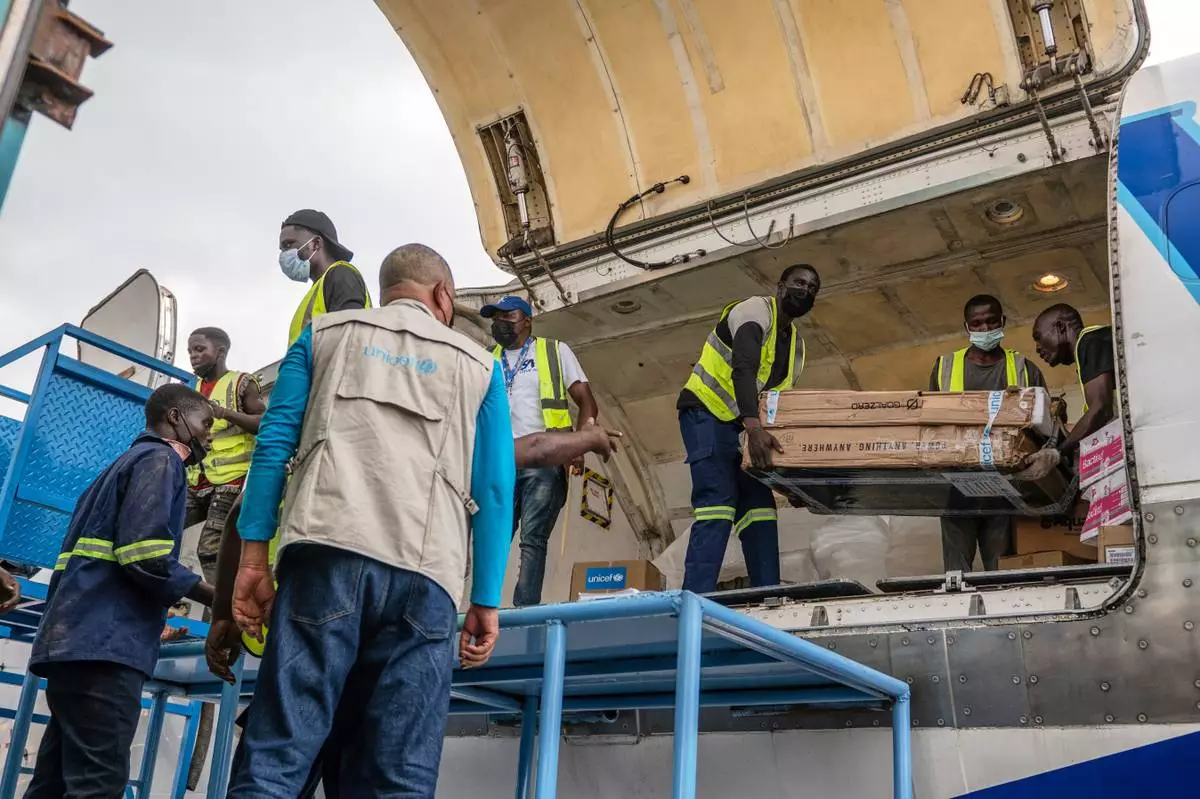
People offload a shipment of more than 15 tons of supplies donated by UNICEF as part of the response to the Ebola virus outbreak at Bunia National Airport in Bunia, Congo, Tuesday, May 19, 2026. (AP Photo/Moses Sawasawa)
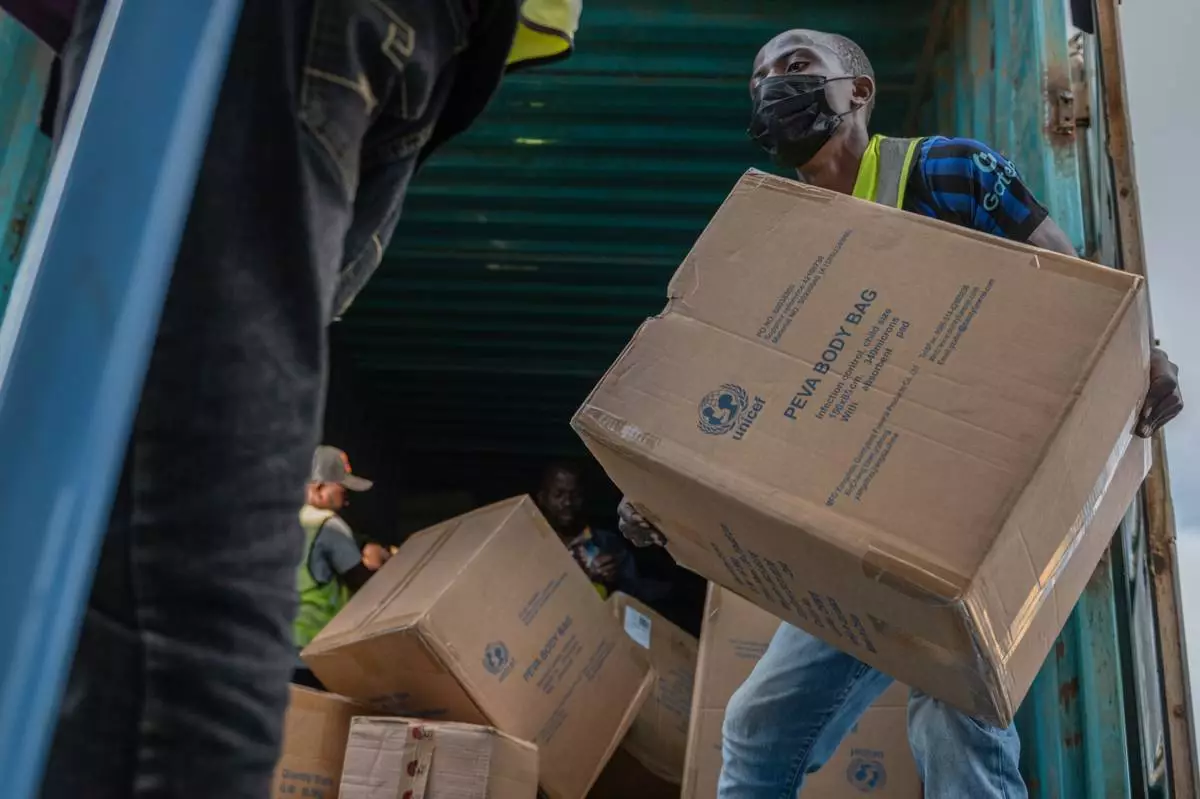
People offload a shipment of more than 15 tons of supplies donated by UNICEF as part of the response to the Ebola virus outbreak at Bunia National Airport in Bunia, Congo, Tuesday, May 19, 2026. (AP Photo/Moses Sawasawa)