NEW YORK (AP) — Promising a commitment to "ambitious journalism and agenda-setting conversations,” media scion James Murdoch has struck a deal with the Vox Media digital company to acquire New York magazine, the Vox Media Podcast Network and the Vox editorial brand.
The deal with Vox, widely seen as liberal-leaning, represents a major move toward his own media empire for the 53-year-old younger son of Rupert Murdoch, who himself owned New York Magazine from 1976 until 1991. And it comes less than a year after the Murdoch family reached a deal on control of the 95-year-old mogul’s media empire after his death, ensuring no change in direction at Fox News, the most popular network for conservatives, under Rupert's chosen heir, Lachlan Murdoch.
Under the new deal, expected to close within weeks, Lupa Systems, James Murdoch’s media company, acquires the three divisions — about half of Vox Media. Neither Vox Media nor Lupa was disclosing the sum. The New York Times cited people familiar with the matter saying it was more than $300 million. The acquired divisions will operate, according to a statement, as a subsidiary of Lupa — called Vox Media.
Not included in the deal are the Vox brands Eater, Popsugar, SB Nation, The Dodo, and The Verge. But the deal does include, along with New York magazine, its verticals The Cut, Vulture, Intelligencer, The Strategist, Curbed, and Grub Street.
It also includes the Vox Media Podcast Network. which features wildly popular shows like “Criminal” and “Pivot” with Kara Swisher and Scott Galloway. The network “has been the fastest growing business within Vox Media and will immediately put Lupa at the top of the podcast field,” said the Vox statement.
James Murdoch, a former CEO of 21st Century Fox who resigned from the board of News Corporation in 2020 over differences about content and direction, is known to hold less conservative views than his father. In the deal reached last year, James and his two older sisters. Prudence MacLeod and Elisabeth Murdoch, gave up any claims to control of Fox in exchange for stock valued at the time at $3.3 billion.
That deal created a trust establishing control of the Fox Corp. for Lachlan Murdoch, along with his younger sisters, Grace and Chloe.
In his own remarks about the Vox deal, James Murdoch said the acquisition “aligns well with our existing holdings and investments and reflects both our interest in the forward edge of culture and our deep commitment to ambitious journalism and agenda-setting conversations.
It will allow us to apply new tools across the businesses we are building, adding substantial production, distribution, and editorial capability to our group," Murdoch said.
Current Vox chairman and CEO Jim Bankoff will lead the new Vox Media, becoming CEO of the new company upon closing.
“We are incredibly proud to have built and scaled several of the leading media properties of this generation,” Bankoff said. “Together under Lupa’s stewardship we are primed to be the best home for talent and the most dynamic media company of this new era.”
David Haskell, New York magazine's editor-in-chief, noted in an email to subscribers that Lupa now becomes the magazine's sixth owner since 1968.
Haskell promised that the magazine would continue with “the fearless, independent journalism that you expect from us."
“We will continue to create news cycles, start conversations, contribute to the most important debates in politics and society, identify and explore what’s most interesting in contemporary culture, and always do our best to challenge our readers, surprise them, and help them make sense of the modern world,” Haskell said.
Jocelyn Noveck covers the intersection of media and entertainment for The Associated Press.

FILE - James Murdoch arrives at St Bride's Church for the celebration ceremony of the wedding of Rupert Murdoch and Jerry Hall in London, March 5, 2016. (Photo by Joel Ryan/Invision/AP, File)
NEW YORK (AP) — The U.S. stock market bounced back Wednesday after pressure eased on Wall Street from the bond market and oil prices gave back some of their big gains.
The S&P 500 climbed 1.1% for its first rise in four days and pulled closer to its all-time high set last week. The Dow Jones Industrial Average added 645 points, or 1.3%, and the Nasdaq composite rallied 1.5%.
Stocks got a lift from easing yields in the bond market, which offered relief following rapid climbs that had rattled stock markets worldwide recently. The yield on the 10-year Treasury fell to 4.57% from 4.67% late Tuesday, which is a significant move for a market that measures things in hundredths of a percentage point.
The 10-year Treasury yield had been rising from less than 4% before the war with Iran began, along with other yields around the world, because of worries that the fighting will keep oil prices high, among other factors. The inflation concerns not only seemed to eliminate the chances for a cut to interest rates by the Federal Reserve this year, they also heightened the risk that central banks may have to raise rates in 2026.
High yields slow economies and weigh on prices for stocks, cryptocurrencies and all kinds of other investments. Besides driving up rates for mortgages, they could also curtail companies’ borrowing to build the artificial-intelligence data centers that have been supporting the U.S. economy’s growth recently.
Yields eased Wednesday as oil prices pulled back some more. The price for a barrel of Brent crude fell 5.6% to settle at $105.02, though it remains well above its roughly $70 level from before the war. Prices have been yo-yoing on rising and falling hopes that the United States and Iran can reach an agreement to allow oil deliveries to fully resume from the Persian Gulf to customers worldwide.
A report showing less bad inflation in the United Kingdom than economists expected also helped calm yields worldwide.
With the easing of yields, technology stocks helped lead Wall Street higher.
Nvidia rose 1.3% ahead of its latest profit report, which arrived after trading ended for the day, and was the strongest force lifting the S&P 500. The chip company reported another quarter of bigger growth in profit and revenue than analysts expected, while it also gave a better-than-expected forecast for revenue in the current quarter.
Other tech stocks leading the market included Advanced Micro Devices, up 8.1%, and Intel, up 7.4%.
Smaller companies can feel even bigger relief from lower yields than their bigger rivals because many need to borrow to grow. The Russell 2000 index of the smallest U.S. stocks jumped 2.6%, more than double the gain of the S&P 500, which measures the biggest U.S. stocks.
Also helping to drive the market was the company behind TJ Maxx, Marshalls and other stores, which climbed 5.7% after delivering stronger profit and revenue for the latest quarter than analysts expected. TJX’s CEO, Ernie Herrman, said the current quarter is off to a good start, and the off-price retailer raised its forecasts for revenue and profit this year.
Red Robin Gourmet Burgers jumped 18.2%, and Cava Group rose 3.1% following their own better-than-expected profit reports. Such results raise hopes that households can keep spending and supporting the economy, even though they’re contending with high gasoline prices and widespread discouragement about economic conditions.
Most big U.S. companies have likewise reported better profits for the start of 2026 than analysts expected, which has helped stocks run to records. Stock prices tend to follow the path of corporate profits over the long term.
On the losing side of Wall Street was Target, which fell 3.9% even though the retailer reported better profit and revenue for the latest quarter than analysts expected. A new CEO, Michael Fiddelke, is trying to turn around the company and boost its revenue.
Expectations were high for the company’s performance after Target’s stock came into the day with a gain of more than 30% for the year so far, quadruple the S&P 500’s gain.
All told, the S&P 500 rose 79.36 points to 7,432.97. The Dow Jones Industrial Averae jumped 645.47 to 50,009.35, and the Nasdaq composite rallied 399.65 to 26,270.36.
In stock markets abroad, indexes climbed in Europe following weaker finishes across Asia.
Tokyo’s Nikkei 225 fell 1.2% as the yield on the 10-year Japanese government bond slipped but remained near its highest level since 1997.
AP Business Writers Matt Ott and Elaine Kurtenbach contributed.
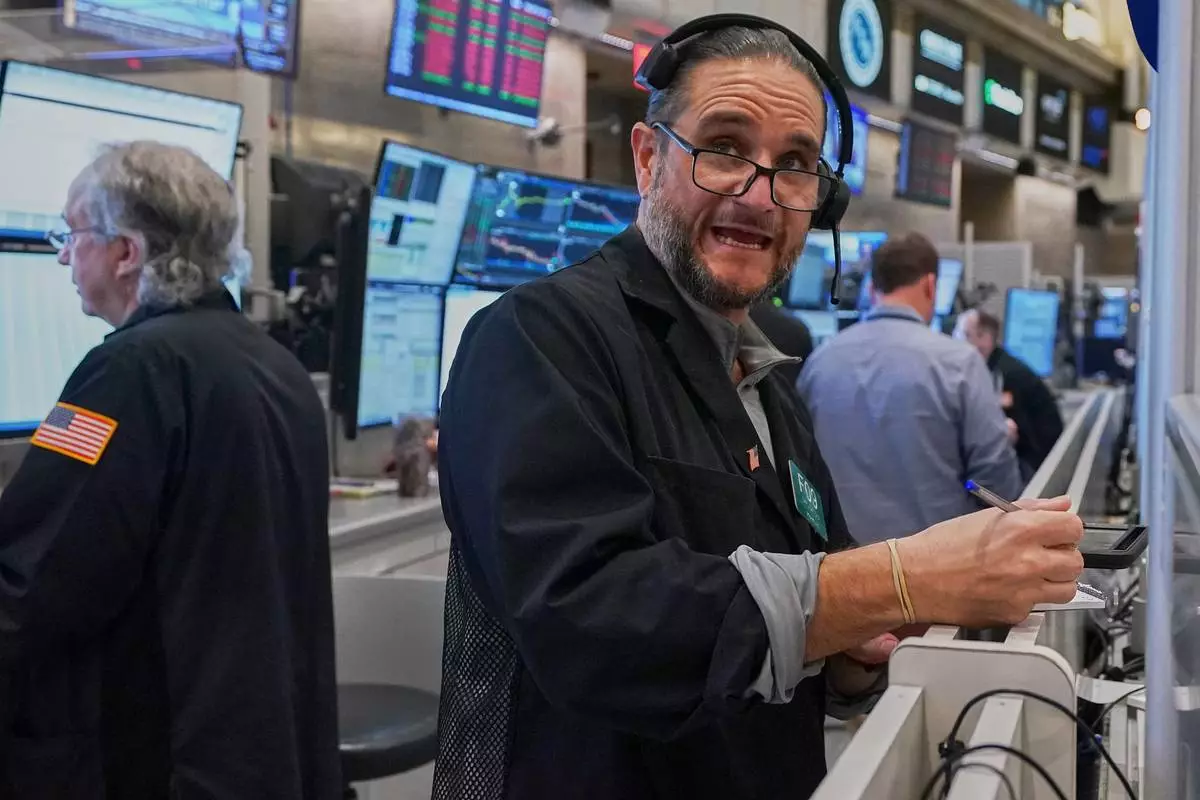
Options trader Chris Dattolo works on the floor of the New York Stock Exchange, Wednesday, May 13, 2026. (AP Photo/Richard Drew)
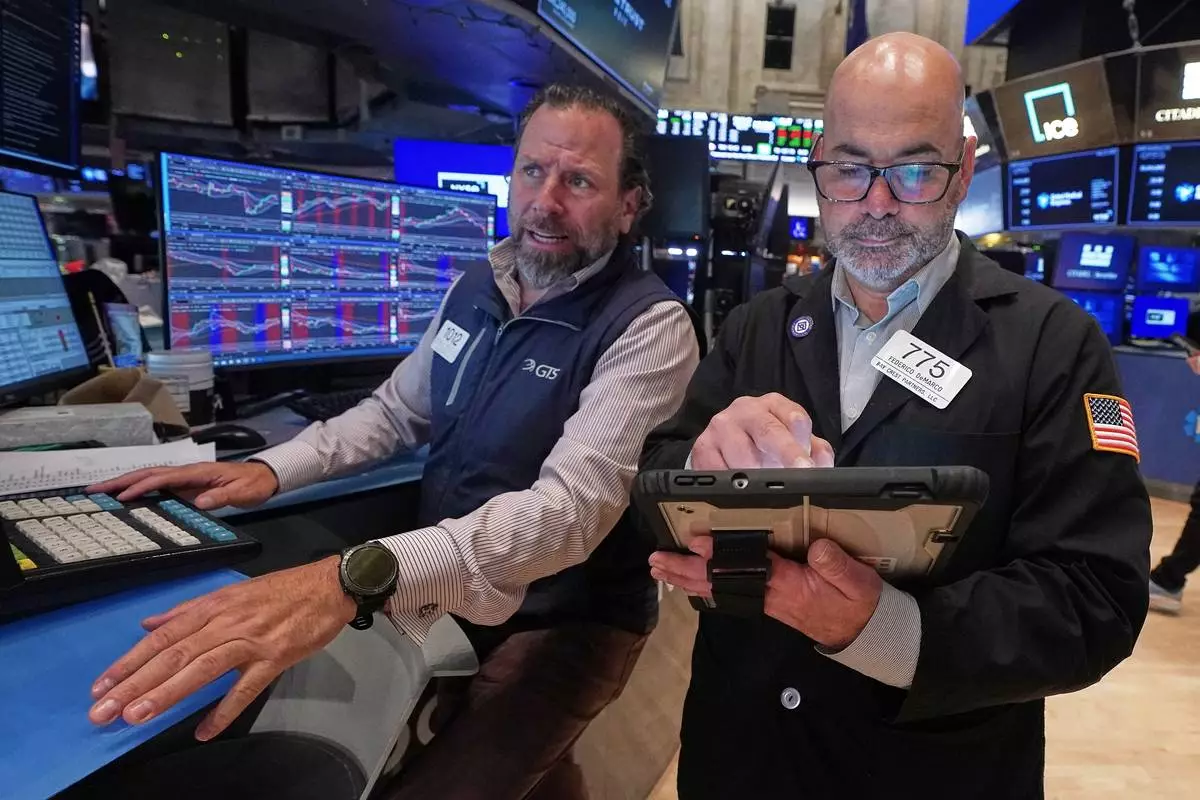
Specialist Michael Pistillo. Left, and trader Fred's Demarco work on the floor of the New York Stock Exchange, Wednesday, May 13, 2026. (AP Photo/Richard Drew)
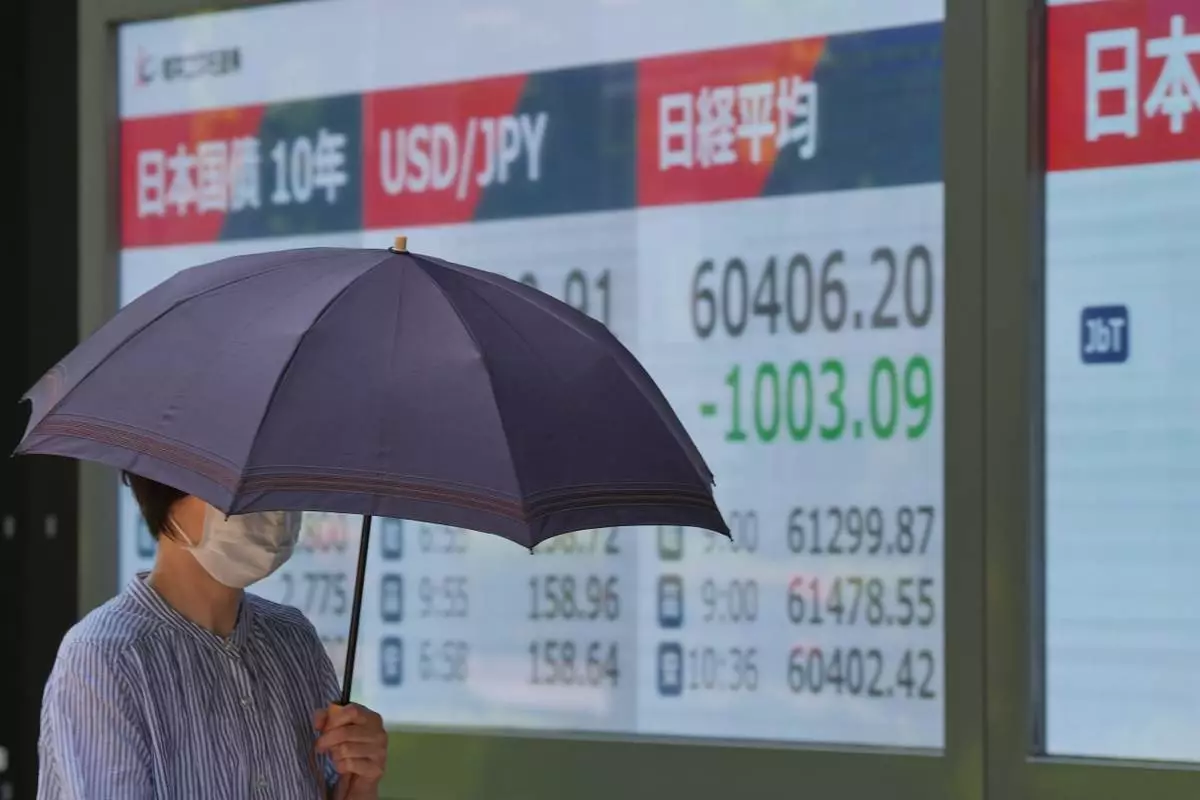
A person walks in front of an electronic stock board showing Japan's Nikkei index at a securities firm Monday, May 18, 2026, in Tokyo. (AP Photo/Eugene Hoshiko)
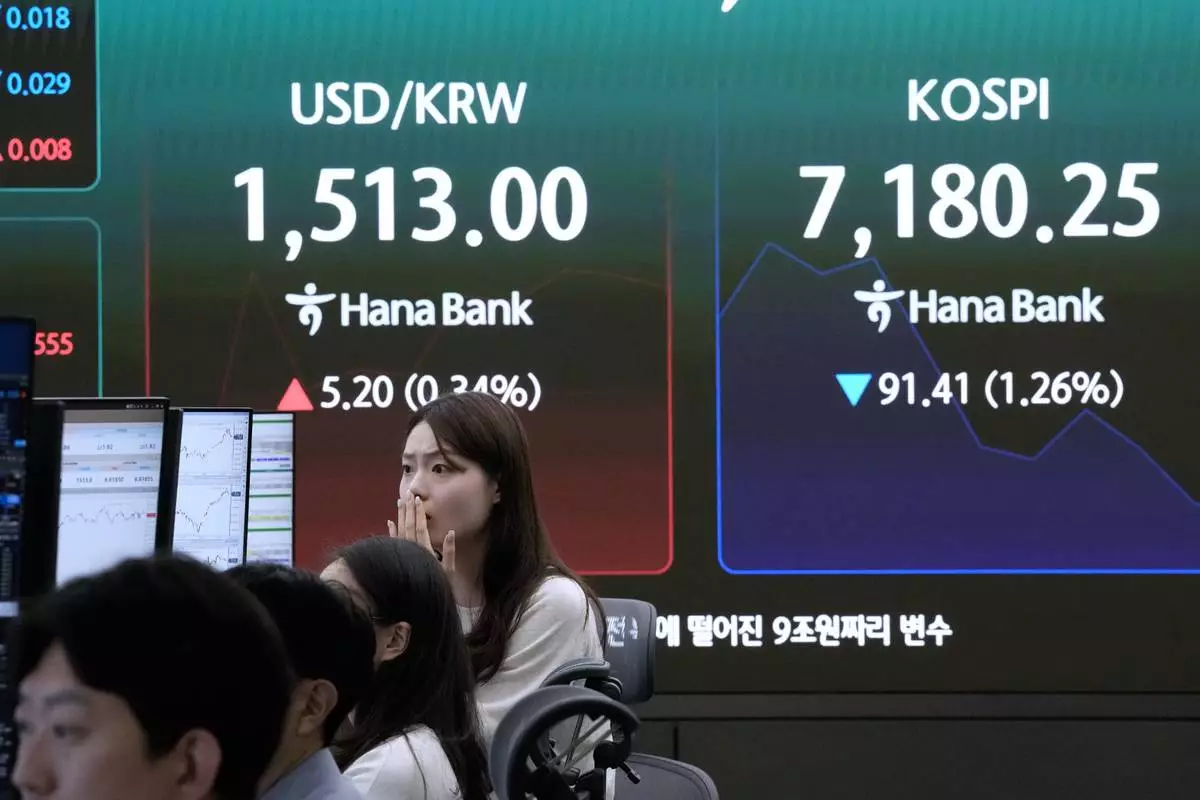
Currency traders watch monitors near a screen showing the Korea Composite Stock Price Index (KOSPI), right, and the foreign exchange rate between U.S. dollar and South Korean won at the foreign exchange dealing room of the Hana Bank headquarters in Seoul, South Korea, Wednesday, May 20, 2026. (AP Photo/Ahn Young-joon)
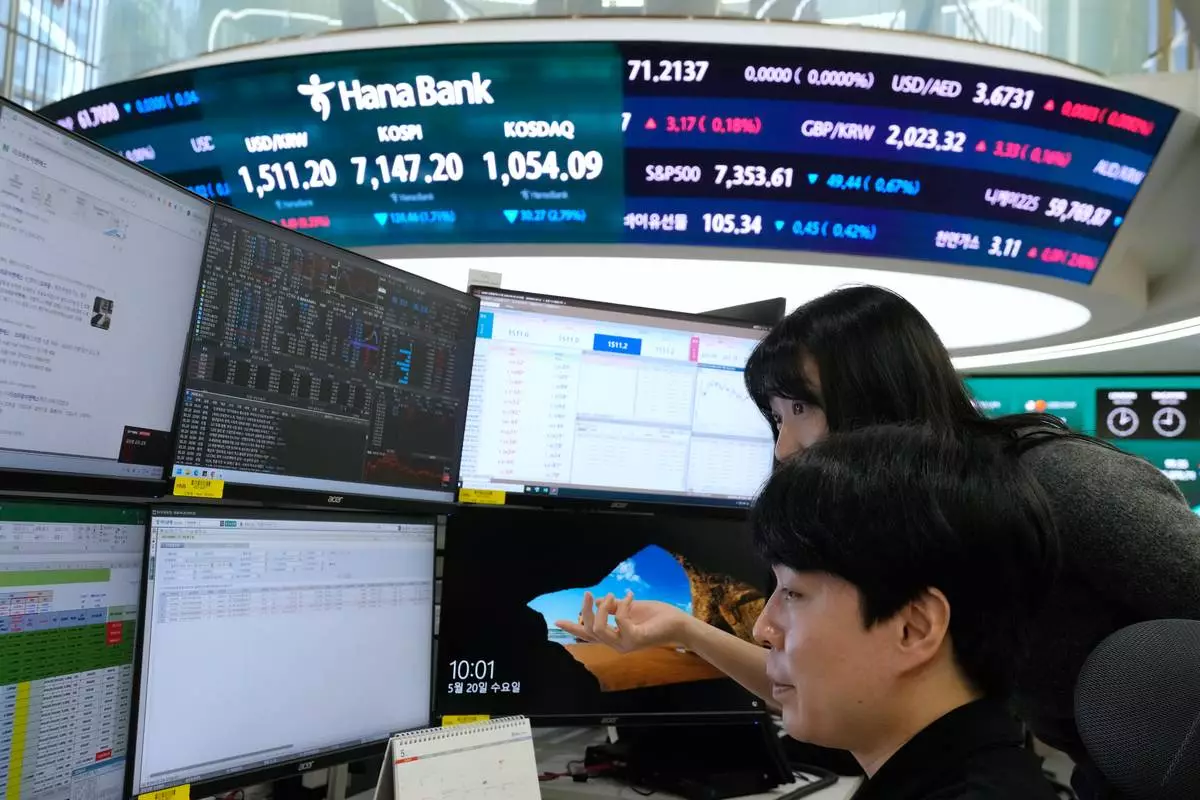
Currency traders watch monitors at the foreign exchange dealing room of the Hana Bank headquarters in Seoul, South Korea, Wednesday, May 20, 2026. (AP Photo/Ahn Young-joon)
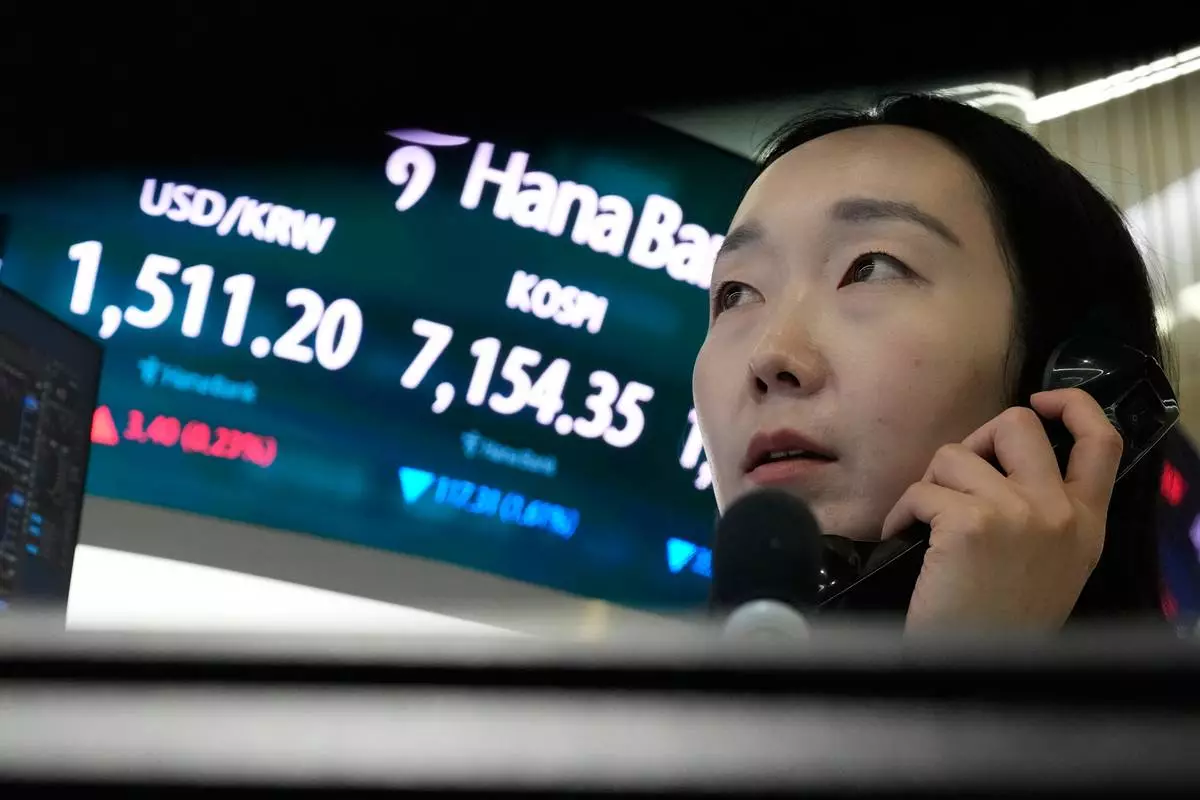
A currency trader talks on the phone near a screen showing the Korea Composite Stock Price Index (KOSPI) and the foreign exchange rate between U.S. dollar and South Korean won, left, at the foreign exchange dealing room of the Hana Bank headquarters in Seoul, South Korea, Wednesday, May 20, 2026. (AP Photo/Ahn Young-joon)