OKLAHOMA CITY (AP) — Victor Wembanyama fouled Jalen Williams on a shot attempt in the opening minutes of Game 2 of the Western Conference finals on Wednesday night.
Except, no, he really didn't.
Click to Gallery
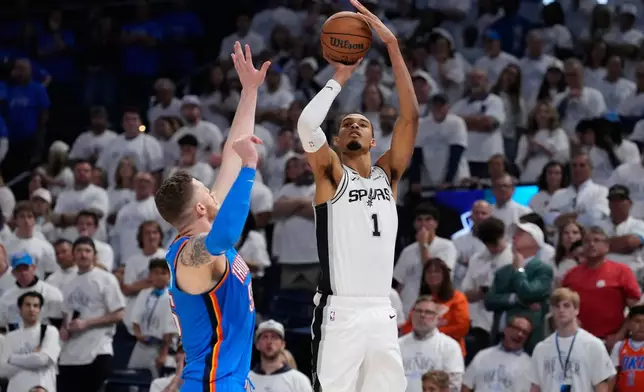
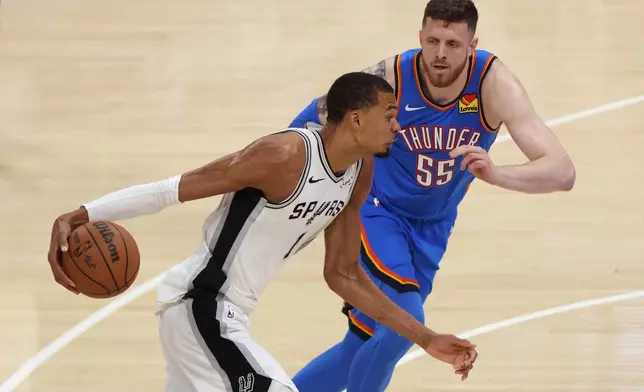
San Antonio Spurs forward Victor Wembanyama (1) shoots against Oklahoma City Thunder center Isaiah Hartenstein (55) during the second half of Game 2 in the Western Conference finals NBA basketball playoffs series Wednesday, May 20, 2026, in Oklahoma City. (AP Photo/Tony Gutierrez)
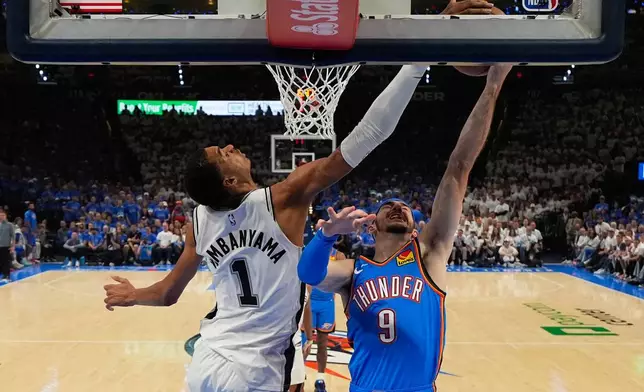
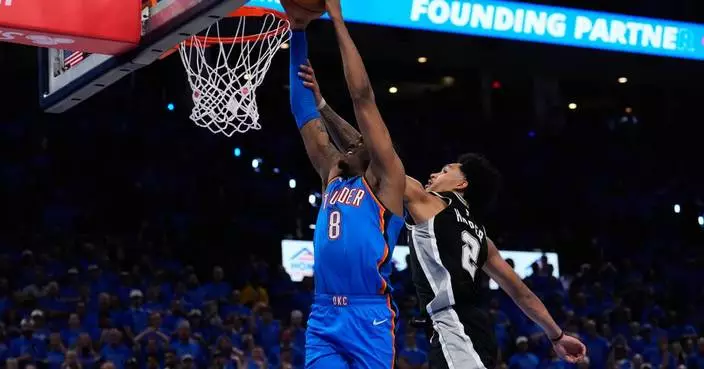
San Antonio Spurs forward Victor Wembanyama (1) blocks a shot by Oklahoma City Thunder guard Alex Caruso (9) during the second half of Game 2 in the Western Conference finals NBA basketball playoffs series Wednesday, May 20, 2026, in Oklahoma City. (AP Photo/Nate Billings)
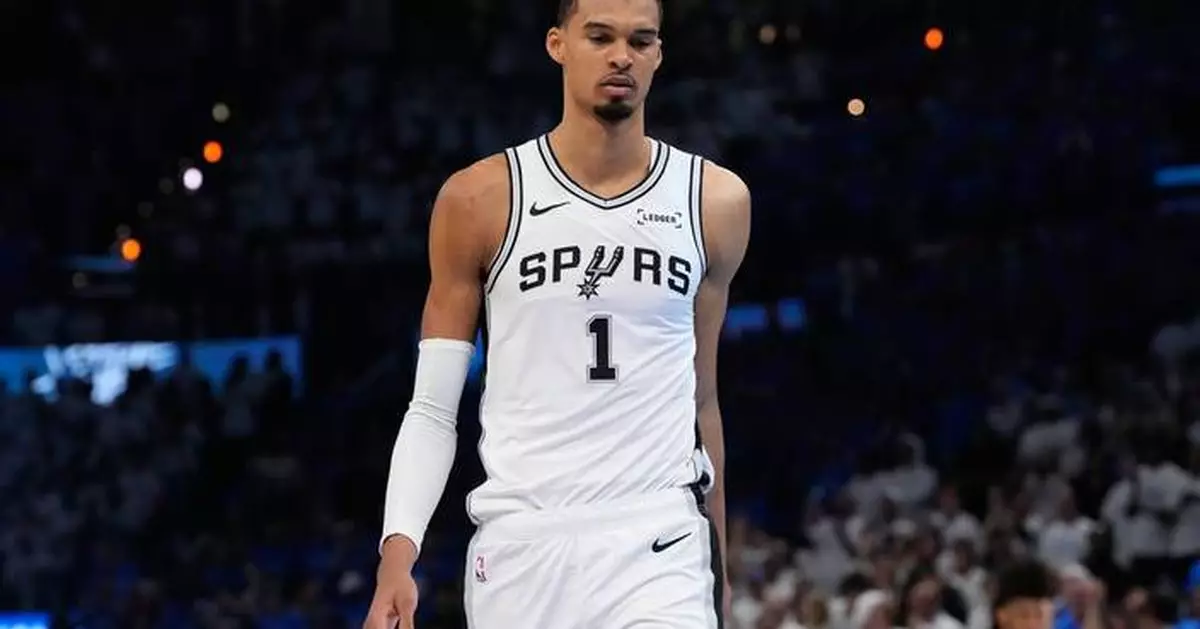
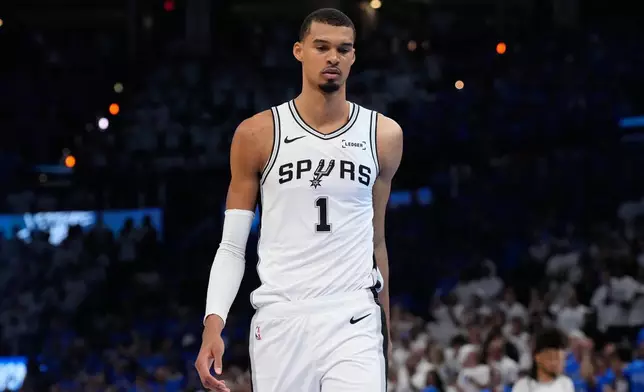
San Antonio Spurs forward Victor Wembanyama stands on the court during the second half of Game 2 in the Western Conference finals NBA basketball playoffs series against the Oklahoma City Thunder Wednesday, May 20, 2026, in Oklahoma City. (AP Photo/Tony Gutierrez)
San Antonio Spurs forward Victor Wembanyama (1) controls the ball against Oklahoma City Thunder center Isaiah Hartenstein (55) during the second half of Game 2 in the Western Conference finals NBA basketball playoffs series Wednesday, May 20, 2026, in Oklahoma City. (AP Photo/Nate Billings)
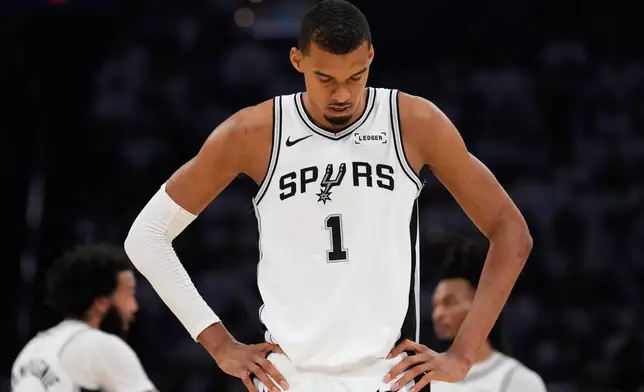
San Antonio Spurs forward Victor Wembanyama reacts after Game 2 in the Western Conference finals NBA basketball playoffs series against the Oklahoma City Thunder Wednesday, May 20, 2026, in Oklahoma City. (AP Photo/Tony Gutierrez)
Yes, Wembanyama made contact with Williams. Yes, it looked like a foul. Yes, it was called that way — at first. Upon review, it was determined that Thunder center Isaiah Hartenstein actually shoved Wembanyama into his teammate and caused the foul himself.
That's how physical the Thunder were with Wembanyama in Game 2. They grabbed, pushed, nudged, anything and everything they could muster against the 7-foot-4 French star who still finished with 21 points, 17 rebounds, six assists and four blocked shots.
But the Thunder won 122-113, tying the series at a game apiece.
“It's all in the scouting,” Wembanyama said. "I have to trust the scouting. We have to trust it and do our work early. It's straight effort. ... Doesn't mean it's easy. We have to work through it."
He knew what was coming, and so did the Thunder. Oklahoma City coach Mark Daigneault told Hartenstein on Tuesday that he would have a bigger role in Game 2.
“I'm just kind of one of those players that brings physicality to the game,” said Hartenstein, who got only 12 minutes in Game 1 and then assumed a key role in Game 2 — with 10 points and 13 rebounds. “I think that's just kind of what we needed.”
Stopping Wembanyama isn't going to happen. He's too good. The Thunder playbook in Game 2 — and going forward — will be about making life as difficult as possible for him, hoping to prevent outbursts like the 41-point, 24-rebound gem that Wembanyama put together in San Antonio's Game 1 win.
“Every good player, they have to feel the defense," Thunder guard Shai Gilgeous-Alexander said. “It's tough. He’s very different to scout. You've got to try to mix things up, you've got try different things. And that’s just what we did. Coach tried something in the first game, didn’t like it, tried something else. That’s what it’s about.”
Wembanyama's debut in the conference finals is off to an elite start. He has got 62 points and 41 rebounds through the first two games; the last player with 60 points and 40 rebounds in the first two games of the conference finals was Kareem Abdul-Jabbar in 1974 — with 69 points and 40 rebounds for Milwaukee against Chicago.
But the MVP finalist and Defensive Player of the Year wasn't in the mood to hear stats. He wanted a 2-0 lead, and settling for a 1-1 tie going home for Game 3 wasn't cause for celebration. The Spurs rallied from 13 down in the fourth to make it interesting, but couldn't finish the comeback.
He was asked what the toughest part of Game 2 was.
“I would say it's spending so much energy on catching back up ... then letting it go away,” Wembanyama said.
That, to him, was the biggest hit of all.
AP NBA: https://apnews.com/nba
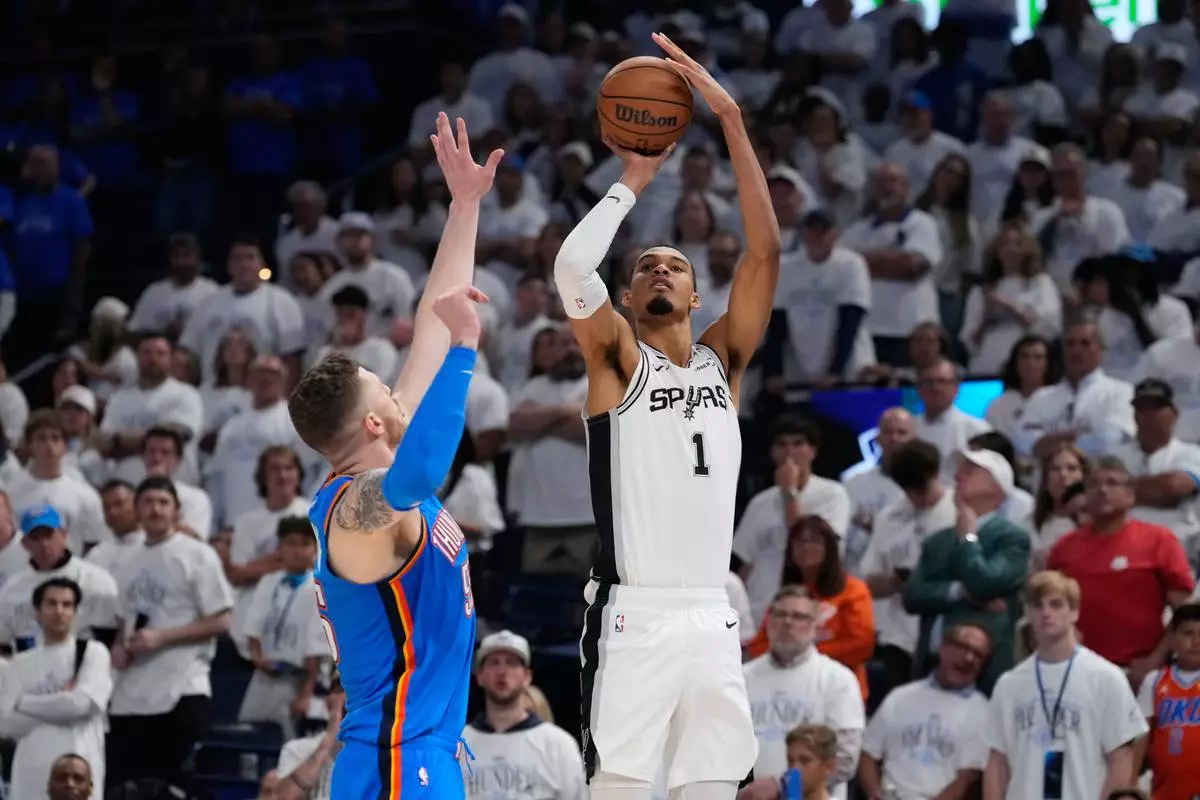
San Antonio Spurs forward Victor Wembanyama (1) shoots against Oklahoma City Thunder center Isaiah Hartenstein (55) during the second half of Game 2 in the Western Conference finals NBA basketball playoffs series Wednesday, May 20, 2026, in Oklahoma City. (AP Photo/Tony Gutierrez)
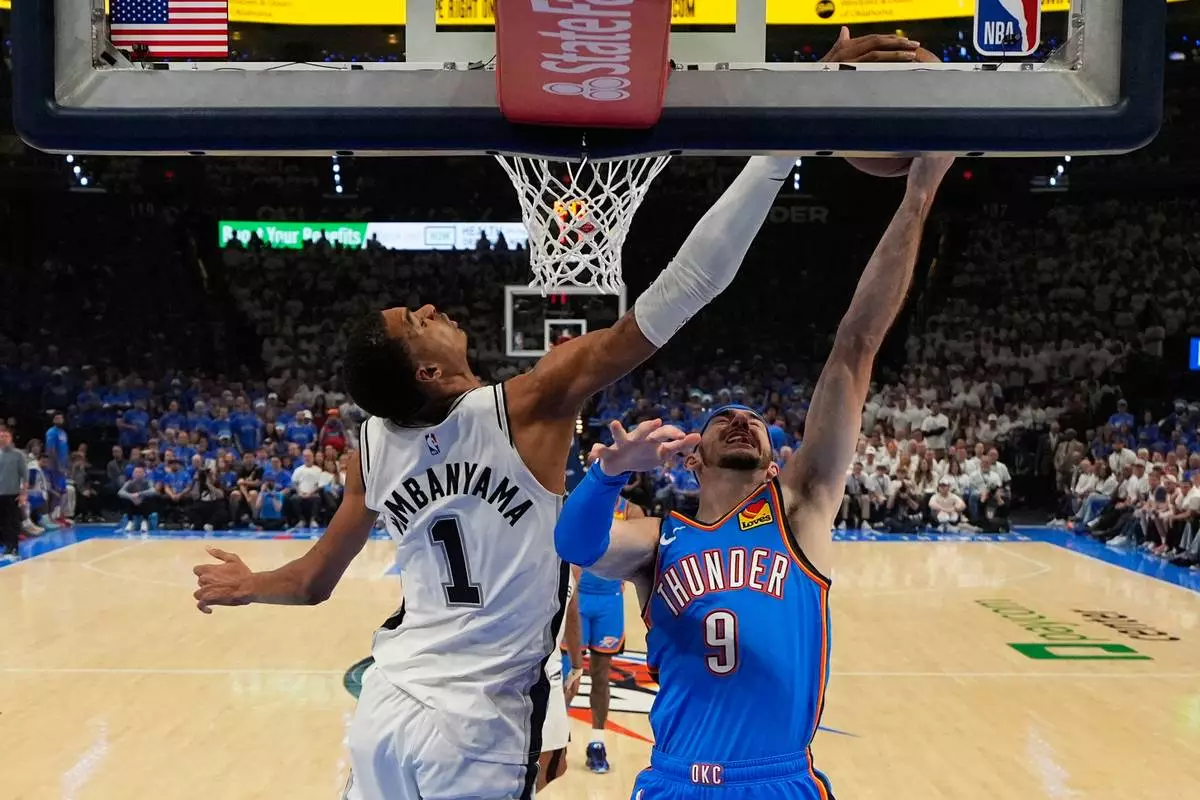
San Antonio Spurs forward Victor Wembanyama (1) blocks a shot by Oklahoma City Thunder guard Alex Caruso (9) during the second half of Game 2 in the Western Conference finals NBA basketball playoffs series Wednesday, May 20, 2026, in Oklahoma City. (AP Photo/Nate Billings)
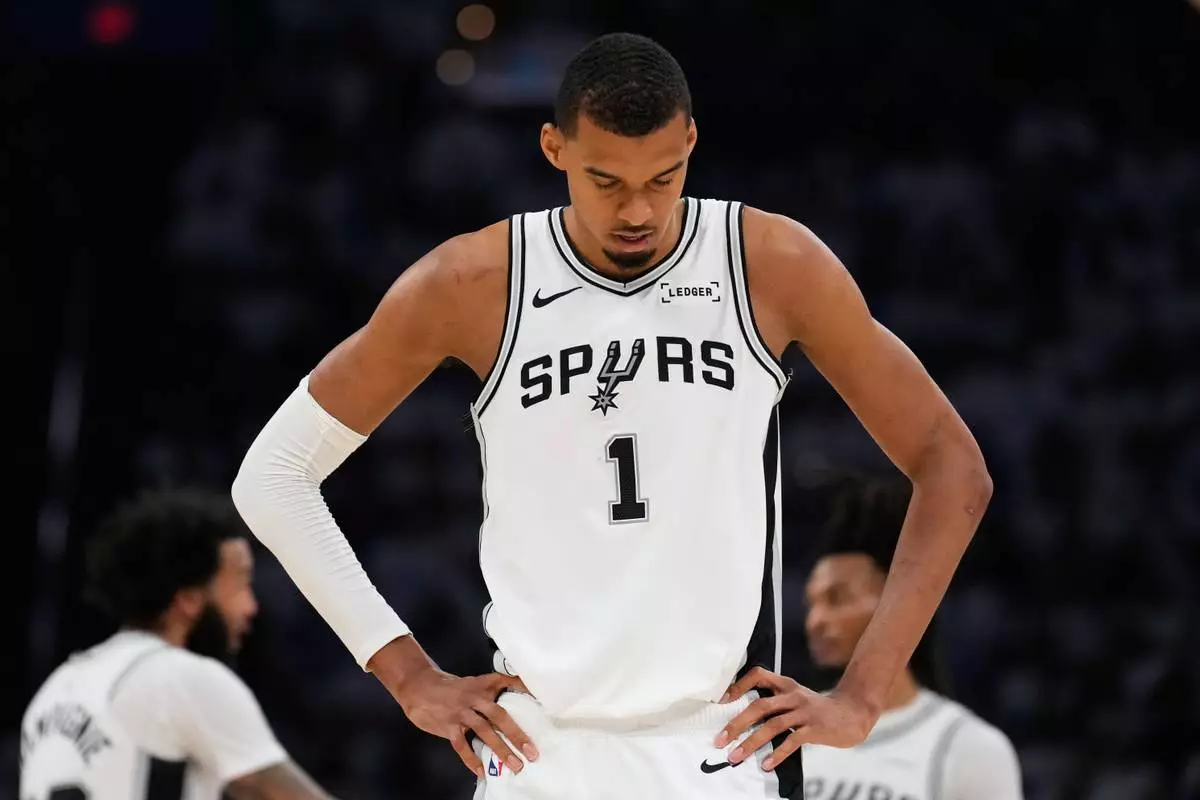
San Antonio Spurs forward Victor Wembanyama stands on the court during the second half of Game 2 in the Western Conference finals NBA basketball playoffs series against the Oklahoma City Thunder Wednesday, May 20, 2026, in Oklahoma City. (AP Photo/Tony Gutierrez)
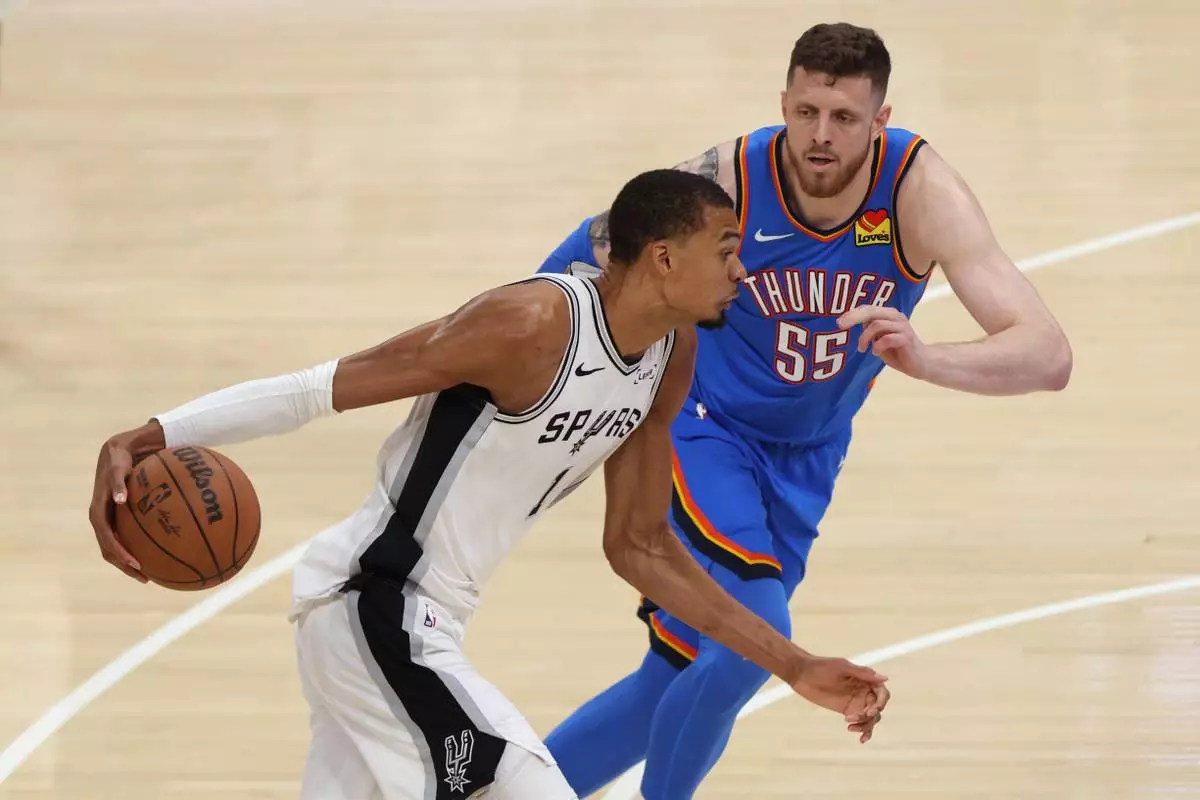
San Antonio Spurs forward Victor Wembanyama (1) controls the ball against Oklahoma City Thunder center Isaiah Hartenstein (55) during the second half of Game 2 in the Western Conference finals NBA basketball playoffs series Wednesday, May 20, 2026, in Oklahoma City. (AP Photo/Nate Billings)
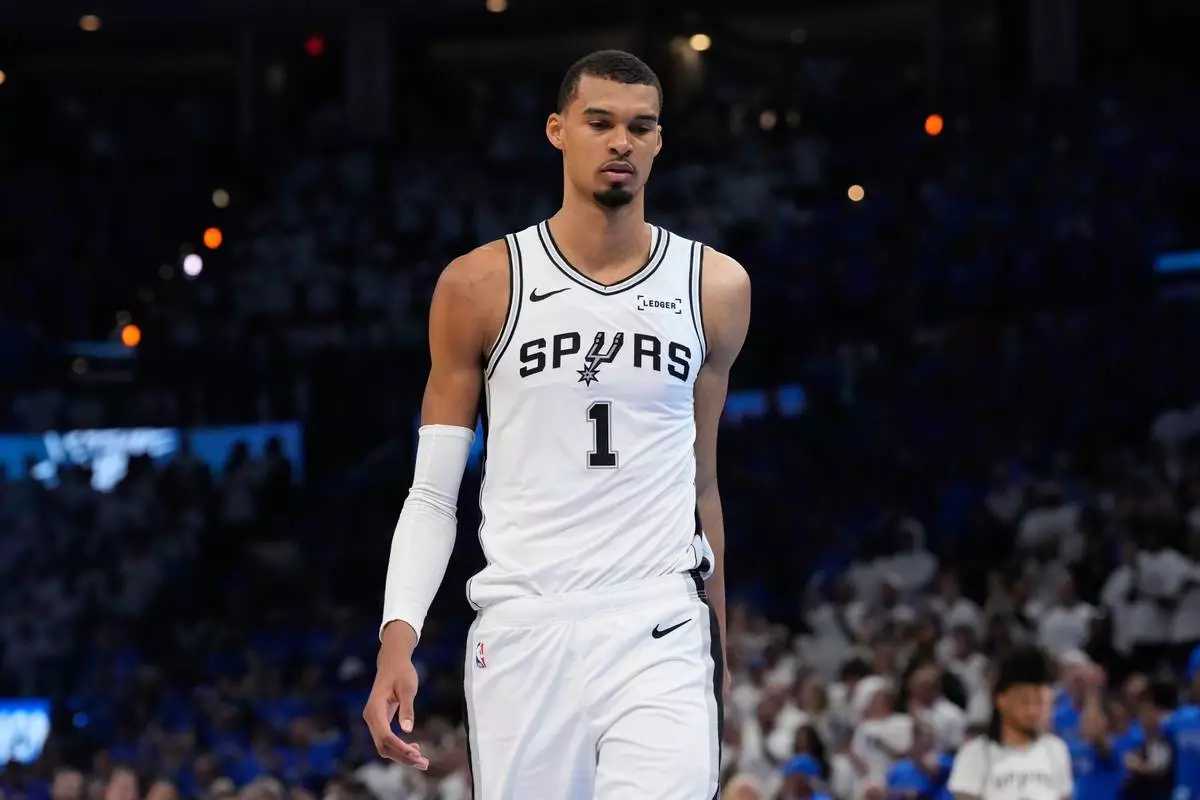
San Antonio Spurs forward Victor Wembanyama reacts after Game 2 in the Western Conference finals NBA basketball playoffs series against the Oklahoma City Thunder Wednesday, May 20, 2026, in Oklahoma City. (AP Photo/Tony Gutierrez)
WASHINGTON (AP) — Wednesday's U.S. indictment of former Cuban President Raúl Castro is the latest salvo in the Trump administration’s months-long pressure campaign against the Caribbean island's socialist-controlled government.
Castro was charged for his alleged role in the 1996 shootdown of two planes operated by the Miami-based exile group Brothers to the Rescue. Castro was defense minister at the time.
President Donald Trump has been escalating talk on regime change in Cuba after the military action in Venezuela early this year resulted in the capture of President Nicolás Maduro. In addition, a White House-ordered economic blockade has led to blackouts, food shortages and a collapse in economic activity across Cuba.
The indictment comes amid rising tensions between Trump's administration and Cuba’s government. Meanwhile, the U.S. is in the midst of an uneasy ceasefire in the U.S. war against Iran.
Here’s a closer look at developments over the year between Cuba and the U.S.
A day after the operation in Venezuela that captured Maduro, Secretary of State Marco Rubio declared Cuba's government was “in a lot of trouble," as the president renewed calls for an American takeover of the Danish territory of Greenland.
Trump fired off a warning to the government of Cuba as the close ally of Venezuela braced for potential unrest after Maduro was deposed. Trump called for the Cuban government “to make a deal BEFORE IT IS TOO LATE."
Cuba’s president, Miguel Díaz-Canel, responded, “Those who turn everything into a business, even human lives, have no moral authority to point the finger at Cuba in any way, absolutely in any way.”
Trump signed an executive order to impose a tariff on any goods from countries that sell or provide oil to Cuba, a move that could further cripple the island.
A day before the war in Iran began, Trumpsaid the U.S. was in talks with Havana and raised the possibility of a “friendly takeover of Cuba,” though he didn't offer any details.
Trump said Rubio was in discussions with Cuban leaders “at a very high level.”
Trump didn’t clarify his comments but seemed to indicate that the situation with Cuba, among Washington’s bitterest adversaries for decades, was coming to a critical point.
Raúl Guillermo Rodríguez Castro, the grandson of Castro known as "Raúlito," secretly met with Rubio on the sidelines of a Caribbean Community summit in St. Kitts in February.
Díaz-Canelsaid Cuba and the U.S. held talks, marking the first time the Caribbean country confirmed widespread speculation about discussions with the Trump administration amid an energy crisis.
He said the talks “were aimed at finding solutions through dialogue to the bilateral differences between our two nations. International factors facilitated these exchanges.”
A sanctioned Russian oil tanker arrived in Cuba, the first time in three months fuel reached the island.
Diaz-Canel said he would not resign.
Two senior State Department officials — Jeremy Lewin, who is in charge of all U.S. foreign assistance, and Michael Kozak, the top U.S. diplomat for Latin America — led a delegation to Havana and met with Rodríguez Castro, according to one U.S. official familiar with the meetings.
Díaz-Canel said in an interview he would not step down and that the U.S. has no valid reason to carry out a military attack against the island or to attempt to depose him.
Speaking in the interview on NBC's “Meet the Press,” the president said an invasion of Cuba would be costly and affect regional security.
Díaz-Canel spoke during a rally that drew hundreds of people to commemorate the 65th anniversary of the declaration of the Cuban Revolution’s socialist essence.
“The moment is extremely challenging and calls upon us once again, as on April 16, 1961, to be ready to confront serious threats, including military aggression. We do not want it, but it is our duty to prepare to avoid it and, if it becomes inevitable, to defeat it,” Díaz-Canel said.
News emerged that an American delegation recently met with Cuban government officials, marking a renewed diplomatic push. This was at least the third meeting with Rodríguez Castro.
A senior State Department official met with Rodríguez Castro earlier in the month, according to a department official, who was not authorized to comment publicly and spoke on condition of anonymity to discuss the sensitive matter.
The official did not say who from the U.S. met with Rodríguez Castro, whose grandfather is believed to play an influential role in the Cuban government despite not holding an official post. A second U.S. official said Rubio was not part of the delegation that visited Havana.
A Cuban diplomat speaking at the United Nations said Havana will not abide by any American “ultimatums” to release political prisoners as part of new talks.
In an interview with The Associated Press, Cuban Ambassador to the U.N. Ernesto Soberón Guzmán said internal issues regarding detainees “are not on the negotiating table.” The release of political prisoners was a key U.S. demand as the longtime adversaries held discussions in Cuba for the first time in a decade.
Senate Republicans rejected legislation from Democrats that would have required Trump to end the U.S. energy blockade on Cuba unless he receives approval from Congress.
The vote on the war powers resolution showed how Republicans continue to stand behind Trump as he acts unilaterally to exert American force in a range of global conflicts, including Venezuela, Iran and Cuba — one of the U.S.’s closest neighbors.
U.S. officials said the United States was not looking at imminent military action against Havana despite Trump’s repeated threats that “Cuba is next” and that American warships deployed in the Middle East for the Iran conflict could return by way of the island.
The officials involved in preliminary discussions with Cuban authorities also told the AP that they are not optimistic the communist government will accept an offer for tens of millions of dollars in humanitarian aid, two years of free Starlink internet access for all Cubans, agricultural assistance and infrastructure support.
But they said Cuba had not yet outright refused the offer, which came with conditions that the government has long resisted, even after the Trump administration imposed new sanctions on Havana.
U.S. and Cuban officials said CIA Director John Ratcliffe met with Cuban officials including Raúl Castro’s grandson during a high-level visit to the island.
Ratcliffe met with Rodríguez Castro, Interior Minister Lázaro Álvarez Casas and the head of Cuban intelligence services, and discussed intelligence cooperation, economic stability and security issues. A CIA official confirmed the meetings to the AP.
The Justice Department was preparing to seek an indictment against Castro, three people familiar with the matter told the AP.
One of the people said the potential indictment was connected to Castro’s alleged role in the 1996 shootdown of two planes operated by the Miami-based exile group Brothers to the Rescue. Castro was defense minister at the time.
All three people spoke on the condition of anonymity because they weren’t authorized to discuss an ongoing investigation. The Cuban government did not respond to a request for comment on the potential indictment, which was reported earlier by CBS.
The State Department imposed a new layer of sanctions on several Cuban government agencies, including the Interior Ministry and National Police and Intelligence Directorate, as the Trump administration continued to ratchet up pressure against the island.
Federal prosecutors announced a grand jury indictment against Castro in connection with the shootdown of the two Brothers to the Rescue planes in 1996.
This story has been corrected to reflect that two planes, not four, were shot down in 1996.
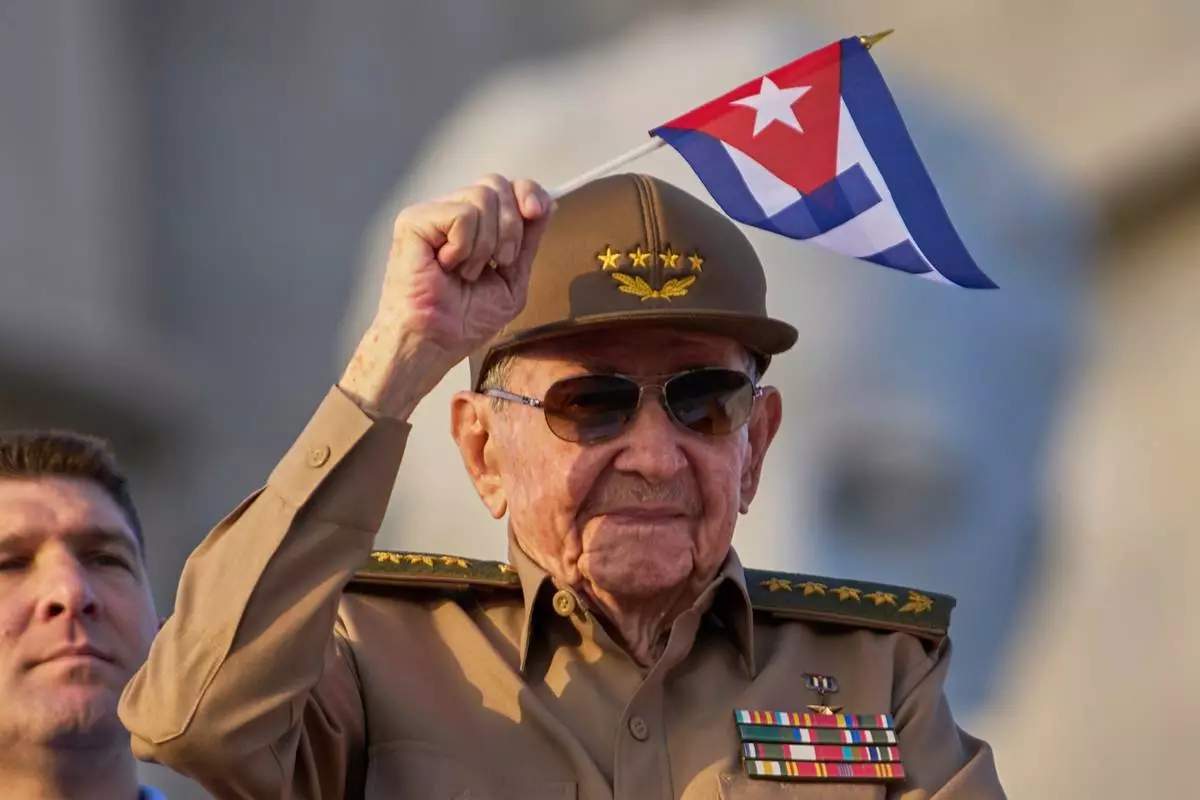
FILE - Raul Castro waves a Cuban national flag during a May Day parade at Revolution Square in Havana on May 1, 2025. (AP Photo/Ramon Espinosa, File)