Government issues Red Outbound Travel Alert for Democratic Republic of Congo in view of Ebola outbreak in Africa
The Hong Kong Special Administrative Region (HKSAR) Government today (May 21) announced to issue Red Outbound Travel Alert (OTA) for the Democratic Republic of the Congo based on public health considerations. Hong Kong residents should avoid non-essential travel there. For details, please refer to the OTA webpage of the Security Bureau (www.sb.gov.hk/eng/ota/index.html). In addition, the HKSAR Government announced on May 17 the activation of the Alert Response Level in accordance with the Preparedness and Response Plan for Ebola Virus Disease (the Response Plan). The relevant departments are fully prepared. Once a suspected case is identified, testing and comprehensive prevention and control measures will be implemented immediately in accordance with established protocols to prevent the spread of the virus in Hong Kong and protect public health.
The HKSAR Government emphasised that no confirmed cases of Ebola disease have ever been recorded locally. At present, the risk of Ebola disease is primarily confined to outbreak areas and the immediate public health impact to Hong Kong is currently low.
Red Outbound Travel Alert
------------------------------
The World Health Organization (WHO) recently declared that the Ebola disease epidemic in the Democratic Republic of the Congo and Uganda constituted a Public Health Emergency of International Concern. The scale of the outbreak in the Democratic Republic of the Congo showed signs of spread. It has spread to cities in the northern provinces, including Bunia and Goma, with increasing number of confirmed, suspected and fatal cases. Furthermore, there are currently no approved vaccines or treatments for the Bundibugyo virus involved in this outbreak. Local conflicts have also led to large-scale population movements. All of these factors have increased the risk of spread of the virus. The Department of Health (DH) has assessed the risk of local transmission spreading to other regions as very high. The HKSAR Government has therefore issued a Red OTA for the Democratic Republic of the Congo.
Hong Kong residents in the Democratic Republic of the Congo who need assistance may call the 24-hour hotline of the Assistance to Hong Kong Residents Unit of the Immigration Department (ImmD) at (852) 1868, call the 1868 hotline using network data or use the 1868 Chatbot via the ImmD Mobile Application, send message to the 1868 WhatsApp and 1868 WeChat assistance hotline or submit the Online Assistance Request Form, or contact the Chinese Embassy in the Democratic Republic of the Congo at consular protection hotline: (243) 851474669. Hong Kong residents are encouraged to use the online Registration of Outbound Travel Information service (www.gov.hk/roti) of the ImmD to register their contact details and itinerary when outside Hong Kong. The information provided allows the DH and ImmD to disseminate practical information to them through appropriate means, including SMS on mobile phones, in a timely manner when necessary.
Strengthening screening to guard against imported cases
-----------------------------------------------------------------------------
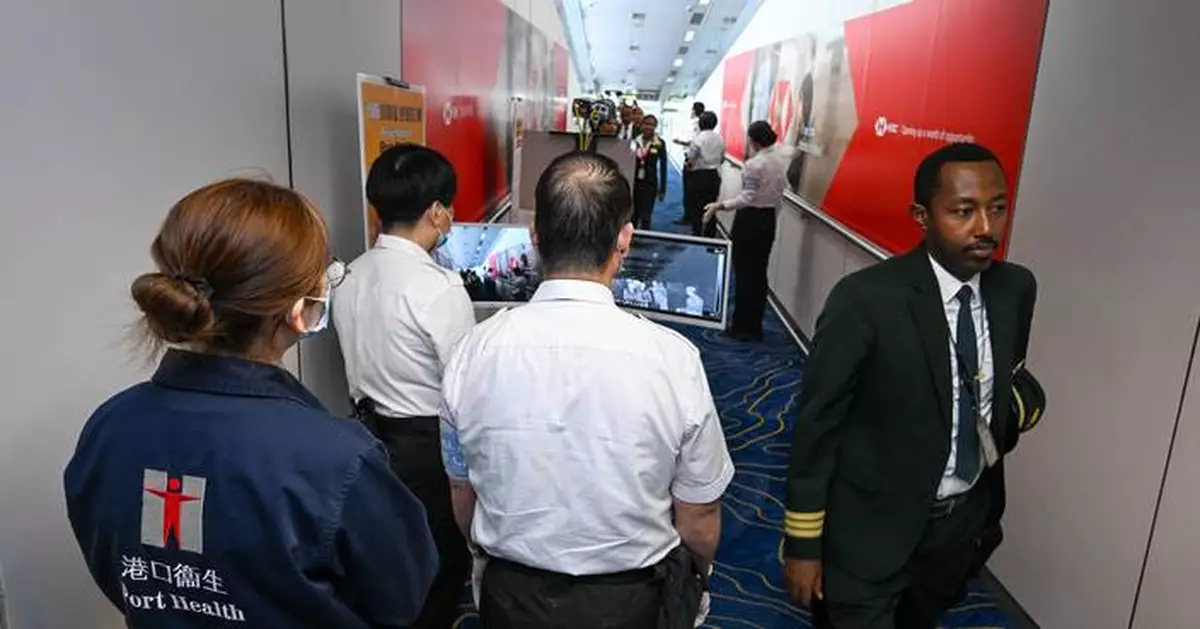
To prevent against imported cases, the DH has strengthened port health measures comprehensively. The DH has all along conducted health screenings for inbound travellers at all boundary control points. There are no direct flights between Hong Kong and the countries affected by the outbreak. However, as travellers may arrive in Hong Kong via other locations, primarily Addis Ababa, the capital of Ethiopia, from Africa, the DH has immediately strengthened health screenings for passengers arriving on flights from Addis Ababa. Staff have been deployed at arrival gates of the air-bridge to conduct temperature checks and health screenings for passengers disembarking from these specific flights.
The DH is also broadcasting announcements in the airport arrival hall and through airlines to urge passengers who have visited the Democratic Republic of the Congo or Uganda within the past 21 days to proactively declare their travel history to the DH staff on site for further health assessment. From May 17 to 20, 11 individuals who declared having visited the relevant regions underwent health assessments by the DH. No suspected cases of Ebola disease were identified. The DH staff also provided these individuals with health information on the spot, reminding them to seek immediate medical advice at accident and emergency departments if they develop symptoms within 21 days of arrival in Hong Kong.
The DH today sent another letter to all doctors in Hong Kong to remind them to remain highly vigilant. Any person who has travelled to affected areas (including the Democratic Republic of the Congo and Uganda) within the past 21 days and exhibits relevant symptoms must be managed as a suspected case and reported immediately to the Centre for Health Protection (CHP) via the 24-hour hotline provided in the letter.
The Infection Control Branch of the CHP, in collaboration with the Infectious Disease Control Training Centre of the Hospital Authority (HA), will organise a seminar next week for healthcare professionals from both public and private medical institutions. The seminar will cover the latest situation regarding the Eboladisease outbreak, diagnosis, clinical management and infection control measures with a view to enhancing healthcare professionals' understanding of the disease and their ability to respond effectively.
Testing and clinical management capabilities with high biosafety standards
-----------------------------------------------------------------------------------
Although the immediate public health impact of Ebola disease in Hong Kong is currently low, all relevant government departments have made the necessary preparations in case of occurrence of suspected or confirmed cases.
The Public Health Laboratory Services Branch (PHLSB) of the CHP compriseslaboratories with high biosafety standards, capable of conducting, testing for high-risk pathogens, and which also possess sufficient testing and genetic analysis capabilities and facilities. The PHLSB has procured laboratory reagents to performtesting for all suspected cases of Ebola disease. In collaboration with the HA, the DH has established procedures for handling high-risk specimens related to suspected cases to ensure that, should a suspected case arise in Hong Kong, testing can be conducted as quickly as possible to enable early detection and diagnosis, and prevent an outbreak.
Currently, no preventive vaccine or antiviral treatment for the Bundibugyo virus has been developed worldwide. Should suspected or confirmed cases appear in Hong Kong, they will be referred to public hospitals under the HA for dedicated treatment, standardised diagnosis and follow-up managements, in order to fully safeguard public health and safety.
The HA will continue to adopt the strategy of "early detection, early isolation, early notification". The HA has reminded frontline healthcare workers to strengthen the screening for patients by gathering relevant information such as symptoms, contact history, occupation, and travel history, particularly in cases where patients exhibit relevant symptoms (such as fever, headache, myalgia, vomiting, diarrhea, rash, or severe signs of bleeding under skin) as well as whether the person has been to the Democratic Republic of the Congo and Uganda, has had close contact with a symptomatic person who recently traveled to these two countries, or has had close contact with a confirmed Ebola disease patient, within the past 21 days.
If a suspected case is identified, the patient will be immediately transferred to the Hospital Authority Infectious Disease Centre (HAIDC) at Princess Margaret Hospital for isolation and treatment. The DH will be notified as soon as possible. The patient's clinical specimens will be sent to the PHLSB for further testing. All suspected and confirmed Ebola disease cases will be admitted to the airborne infection isolation rooms (AIIRs) of the HAIDC. If necessary, the HA will also deploy AIIRs in various public hospitals to receive close contacts.
The HA has also reminded frontline healthcare workers to remain vigilant and to strictly implement all infection control measures, including airborne, droplet, and contact precautions. Public hospitals currently have sufficient isolation facilities to receive patients requiring isolation, and there is ample stock of Personal Protective Equipment (PPE) to protect frontline healthcare workers. The HA has formulated contingency plans and clinical guidelines for frontline healthcare workers to refer to and will further strengthen training to ensure that frontline healthcare workers are familiar with the relevant procedures, including the donning and doffing of PPE, to reduce the risk of infection and safeguard the public.
The DH also works closely with the Outbreak Control and Response Team (OCRT) of the Fire Services Department to ensure readiness for collaboration in handling and transporting patients suspected of being infected with high consequence infectious diseases. The OCRT is responsible for co-ordinating and implementing frontline response measures for high-risk infectious disease cases, including on-site risk assessments, infection control measures and interdepartmental co-operation. Relevant personnel have received specialised training. Furthermore, the OCRT's Infection Control and Critical Care Transfer Ambulance is equipped with a high-efficiency negative pressure system and specialised equipment for critical care transport. When necessary, this ambulance can be deployed to handle cases related to high consequence infectious diseases, thereby effectively reducing the risk of transmission and providing appropriate support. This will further enhance Hong Kong's overall response capacity for the current Ebola outbreak.
In addition, the DH will follow established mechanisms to trace close contacts of confirmed or suspected cases. It has also inspected and ensured that the quarantine facilities (currently located at Penny's Bay) are ready for use if necessary.
Although no confirmed cases of Ebola disease have ever been recorded in Hong Kong, as an international city, Hong Kong remains vigilant and prepared for potential risks at all times. Last November, the DH conducted an interdepartmental exercise on Ebola disease to ensure that all stakeholders are familiar with the workflows and arrangements outlined in the Response Plan, thereby enhancing the HKSAR Government's response capabilities for the prevention and control of infectious diseases.
Risk communication and community engagement
-------------------------------------------------------
The CHP will continue to enhance risk communication and health education for the public via various online and offline channels, including press releases, social media posts and media interviews. In addition, the DH met with non-governmental organisations (NGOs) serving the African community in Hong Kong yesterday (May 20). Through these NGOs, the DH has conveyed relevant health information to Africans living in Hong Kong. The DH has also distributed health promotional materials at venues in Tsim Sha Tsui, where relatively more Africans stay.
Ebola disease is a severe acute viral illness. Six viruses of the Ebola virus genus have been identified, including the BVD (Bundibugyo virus disease) involved in the current outbreak. The virus is transmitted to humans through close contact with the blood, secretions, organs, or other bodily fluids of infected animals. Human-to-human transmission resulting from direct contact (through broken skin or mucous membranes) with the blood, secretions, organs or other body fluids of infected people, and indirect contact with environments contaminated with such body fluids. According to information from the WHO, the average case fatality rates from past Ebola disease outbreaks was around 50 per cent.
The HKSAR Government will continue to maintain close contact with the WHO, the Chinese Mainland, and other relevant health authorities, closely monitor the development of the Ebola disease outbreak, and adjust its prevention and control strategies as necessary.
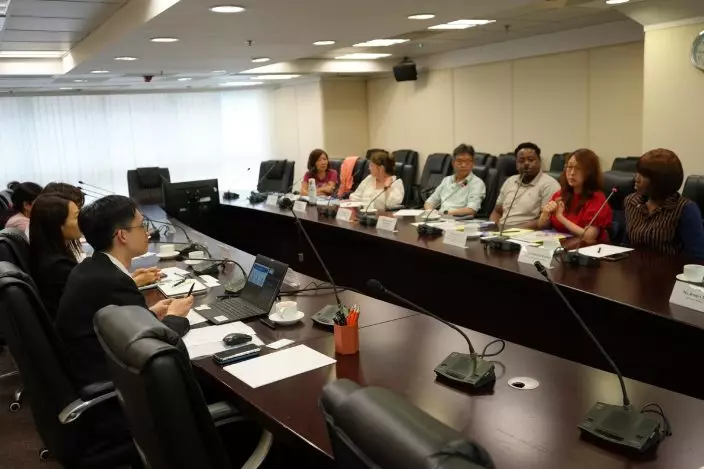
The Hong Kong Special Administrative Region Government announced on May 17 the activation of the Alert Response Level in accordance with the Preparedness and Response Plan for Ebola Virus Disease. The relevant departments are fully prepared and on high alert. Once a suspected case is identified, testing and comprehensive prevention and control measures will be implemented immediately in accordance with established protocols to prevent the spread of the virus in Hong Kong and protect public health. Photo shows staff members of the Centre for Health Protection of the Department of Health yesterday (May 20) meeting representatives from non-governmental organisations (NGOs) that provide services for Africans to disseminate health-related information to Africans living in Hong Kong through the NGOs. Source: HKSAR Government Press Releases
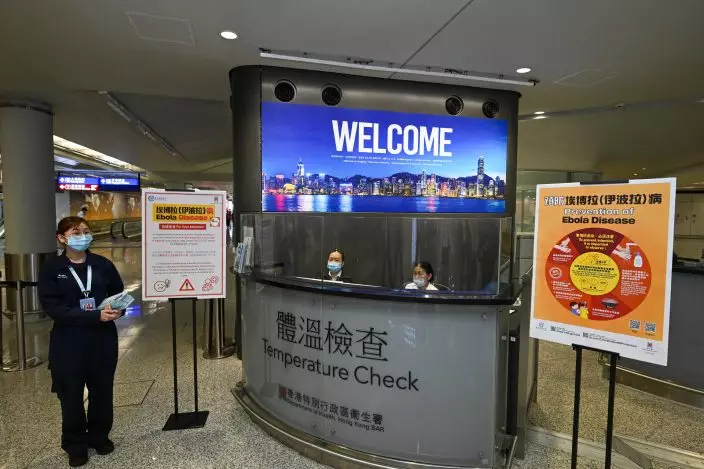
The Hong Kong Special Administrative Region Government announced on May 17 the activation of the Alert Response Level in accordance with the Preparedness and Response Plan for Ebola Virus Disease. The relevant departments are fully prepared and on high alert. Once a suspected case is identified, testing and comprehensive prevention and control measures will be implemented immediately in accordance with established protocols to prevent the spread of the virus in Hong Kong and protect public health. Photo shows notices posted at the airport’s arrival area by the Centre for Health Protection (CHP) of the Department of Health, urging travellers who have visited the Democratic Republic of the Congo or Uganda within the past 21 days to proactively report to CHP Port Health Division officers upon arrival in Hong Kong so that further health assessments can be conducted. Source: HKSAR Government Press Releases
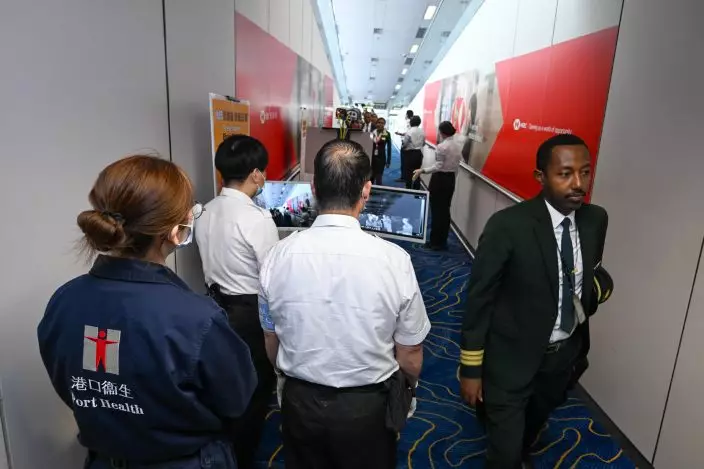
The Hong Kong Special Administrative Region Government announced on May 17 the activation of the Alert Response Level in accordance with the Preparedness and Response Plan for Ebola Virus Disease. The relevant departments are fully prepared and on high alert. Once a suspected case is identified, testing and comprehensive prevention and control measures will be implemented immediately in accordance with established protocols to prevent the spread of the virus in Hong Kong and protect public health. Photo shows staff members of the Centre for Health Protection of the Department of Health conducting enhanced health screenings for passengers arriving on flights from Africa. Source: HKSAR Government Press Releases