SANTA ROSA, Calif.--(BUSINESS WIRE)--May 21, 2026--
Keysight Technologies, Inc. (NYSE: KEYS) today introduced an Electrical-Optical-Electrical (EOE) simulation solution in ADS 2026. Engineers can now simulate electrical-to-optical-to-electrical signal chains within a single design environment. This capability is increasingly important as AI infrastructure and high-performance computing drive demand for faster optical links. This type of analysis is essential for setting architecture and evaluating performance.
This press release features multimedia. View the full release here: https://www.businesswire.com/news/home/20260521850422/en/
By 2029, 87% of hyperscale optical transceivers will operate at 800Gbps or higher, with 1.6Tbps and 3.2Tbps on the horizon. With optical links connecting CPUs, GPUs, and high-speed SerDes interfaces, teams need to model interactions across electrical and optical domains. Legacy simulation workflows handle these separately, requiring the results from different tools to be manually stitched together, potentially missing cross-domain effects that impact system performance.
The breakthrough EOE capability in ADS 2026 enables engineers to simulate the complete signal path, from transmitters through optical and photonic circuits to electrical receivers, in a unified workflow. The solution leverages Keysight's High Speed Digital workflow with Keysight Photonic Designer. By simulating the mixed-domain signal chain before hardware implementation, teams can evaluate electrical and optical design tradeoffs and assess signal integrity against high-speed standards earlier in the design cycle.
Key benefits of the solution include:
Beyond system-level EOE simulation, ADS 2026 covers the full design flow from system down to component optimization. Through PDK support at the circuit level and Keysight RSoft integration at the component level, engineers get a true representation of photonic IC behavior, with no disconnect between the real chip and system-level simulation.
Niels Fache, Senior Vice President, Keysight, said: “AI infrastructure depends on 800 Gbps and 1.6 Tbps optical links to move data at scale. At these speeds, electrical and optical performance can no longer be modeled separately. With ADS 2026, engineering teams now have the ability to simulate those interactions before committing to silicon."
Resources:
About Keysight Technologies
At Keysight (NYSE: KEYS), we inspire and empower innovators to bring world-changing technologies to life. As an S&P 500 company, we’re delivering market-leading design, emulation, and test solutions to help engineers develop and deploy faster, with less risk, throughout the entire product life cycle. We’re a global innovation partner enabling customers in communications, industrial automation, aerospace and defense, automotive, semiconductor, and general electronics markets to accelerate innovation to connect and secure the world. Learn more at Keysight Newsroom and www.keysight.com.

Engineer performing end-to-end electro-optic (EOE) simulations in Keysight ADS Photonic Designer to analyze photonic integrated circuits, electronic interfaces, and system-level signal integrity for next-generation high-speed optical interconnects.
WASHINGTON (AP) — Senate Republican leaders on Thursday are expected to abandon a proposal for $1 billion in security money for the White House complex and President Donald Trump’s ballroom amid backlash from members of their own party.
Pressured by the White House, Republicans tried to add the money to a roughly $70 billion bill to restore funding to U.S. Immigration and Customs Enforcement and the Border Patrol. But the security proposal met with opposition from some GOP lawmakers who are questioning the timing of the request, the cost and how the taxpayer dollars would be used.
Senate Majority Leader John Thune, R-S.D., acknowledged “ongoing vote issues” on Wednesday as leaders tried to measure Republican support and figure out what will be allowed in the bill under the chamber’s rules.
Sen. John Kennedy, R-La., told reporters Wednesday that the bill was “back to square one” without the security money because “the votes are not there.”
Thune hopes to pass the bill this week and send it to the House before leaving for a weeklong Memorial Day recess. But the bill’s text has still not been released as leaders were wrangling over the security proposal and new GOP concerns over the Trump administration's $1.776 billion settlement fund.
Republican senators were set to meet with acting Attorney General Todd Blanche on Thursday as they finalized the text and decided whether to put parameters on the settlement, which was designed to compensate Trump's allies who believe they have been politically persecuted. Thune told reporters that senators have questions about the fund and want to know "how we might make sure that it’s fenced in appropriately.”
The last-minute scramble comes as Democrats have criticized Republicans for trying to fund Trump’s ballroom when voters are concerned about basic affordability issues — and as some GOP lawmakers have grown increasingly frustrated with Trump. Several GOP senators have spoken out against the settlement, which was announced this week, and many were upset by the president’s endorsement Tuesday of Texas Attorney General Ken Paxton in the party primary runoff next week against Sen. John Cornyn.
The “anti-weaponization” fund, part of a settlement that resolves Trump’s lawsuit against the IRS over the leak of his tax returns, unexpectedly has become one of the main complications in the bill. Democrats said they would force votes to block it or place restrictions on it.
Democrats have an opening because Republicans are trying to pass the immigration enforcement bill through a complicated budget process that requires a long series of amendment votes. Democrats are considering multiple amendments, potentially to block that new fund outright or to ban any payments to Trump supporters who harmed law enforcement officers in the Jan. 6, 2021, attack on the Capitol.
Presenting a united front, Democrats from both the House and Senate rallied on the Capitol steps Thursday to show their opposition. Senate Democratic leader Chuck Schumer of New York said the amendment process “will give Republicans countless chances to do the right thing.”
He added that if they declined to make changes, it would show voters that “Ballroom Republicans are not working for you, they are busy fighting for Trump."
Those amendments, along with others, could pass as a growing number of Republicans have voiced reservations about the fund. So Republicans are now discussing their own last-minute additions to head that off, potentially placing some parameters on the settlement and who could receive compensation, according to two people with knowledge of the private discussions who requested anonymity to discuss them.
It was unclear how any Senate changes would be received in the House. House Speaker Mike Johnson, R-La., said Wednesday that the House will pass the bill “whatever form it takes.”
As Republicans challenged the settlement and parts of his agenda, Trump unloaded on the Senate in a social media post on Wednesday.
He urged Republicans to fire the Senate parliamentarian, Elizabeth MacDonough, who said over the weekend that parts of the $1 billion security proposal cannot remain in the ICE and Border Patrol bill. Trump also renewed his long-standing calls for the Senate to pass the SAVE Act, a Republican bill that would require all voters to prove U.S. citizenship, and to end the Senate filibuster.
Republicans need to “get smart and tough,” Trump said, or “you’ll all be looking for a job much sooner than you thought possible!”
While they have been loyal to Trump on most issues, Senate Republicans have resisted his repeated calls — even in his first term — to kill the filibuster, which triggers a 60-vote threshold in the Senate.
Hanging over the growing GOP rift is Trump’s surprise endorsement of Paxton. That intervention has Republican senators privately fuming that it could cost them their majority in November as they view the incumbent, Cornyn, as the better candidate in the November general election.
Under the Secret Service’s request, about $220 million would fund security improvements related to the ballroom. The rest would go for a new screening center for visitors, training and other security measures.
Sen. Thom Tillis, R-N.C., said the effort to add the security package to the bill was a “bad idea.” The bill should not have included the other security improvements, he said, “because it’s just giving everybody the ‘billion-dollar ballroom.'”
Several other Republicans in the House and Senate have questioned the request, and senators left a briefing with the director of the Secret Service last week saying they needed a lot more information.
People “can’t afford groceries and gasoline and healthcare, and we’re going to do a billion dollars for a ballroom?” asked Louisiana Sen. Bill Cassidy, who lost reelection in his GOP primary on Saturday after Trump endorsed one of his opponents.
Left in the bill is the money for ICE and Border Patrol, which Democrats have blocked for months in protest of the administration's immigration enforcement crackdown.
Democrats demanded changes for the agencies, but negotiations with the White House yielded little progress. So Republicans are using the complicated budget maneuver called reconciliation — the same process that allowed them to pass Trump's tax and spending cuts bill last year — to fund the agencies through the end of Trump's term with a simple majority and no Democratic votes.
Still, passage requires sign-off from the parliamentarian and unity from Republicans.
Associated Press writers Lisa Mascaro and Joey Cappelletti contributed to this report.
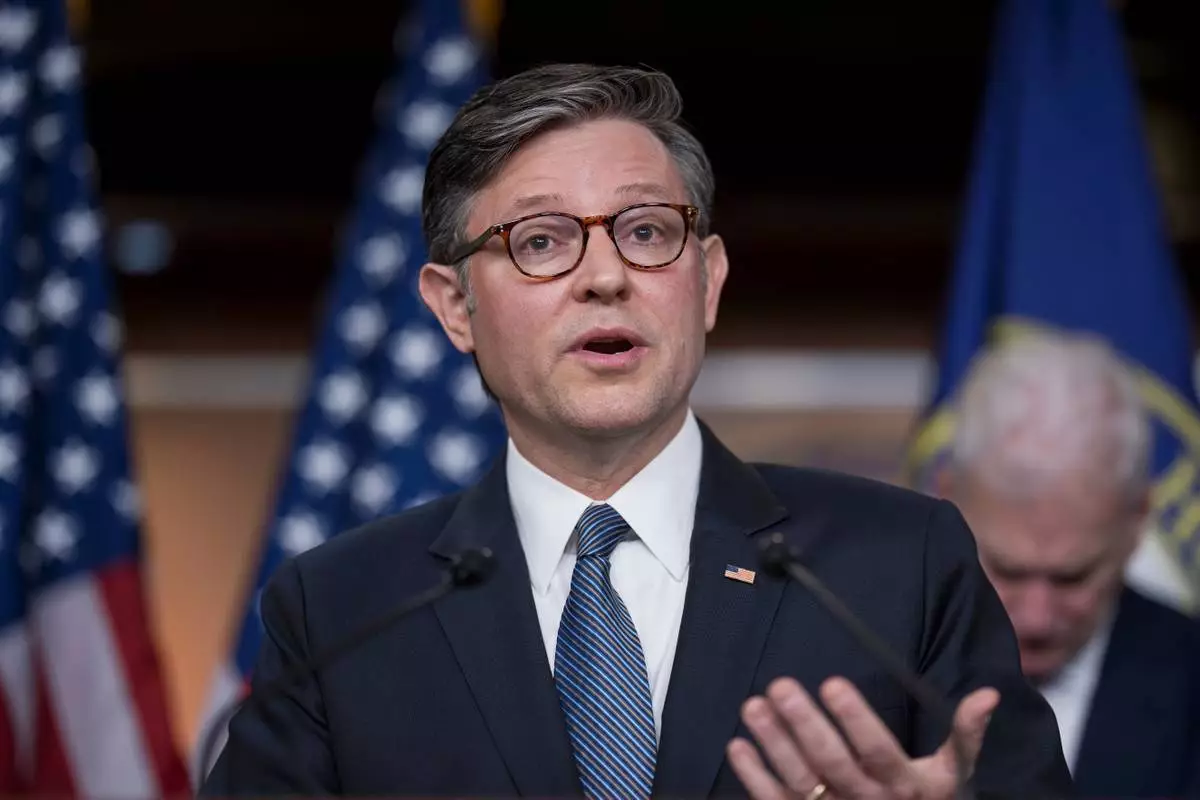
Speaker of the House Mike Johnson, R-La., and House GOP leaders hold a news conference after primary elections that affirmed President Donald Trump's dominance of the Republican Party, at the Capitol in Washington, Wednesday, May 20, 2026. (AP Photo/J. Scott Applewhite)
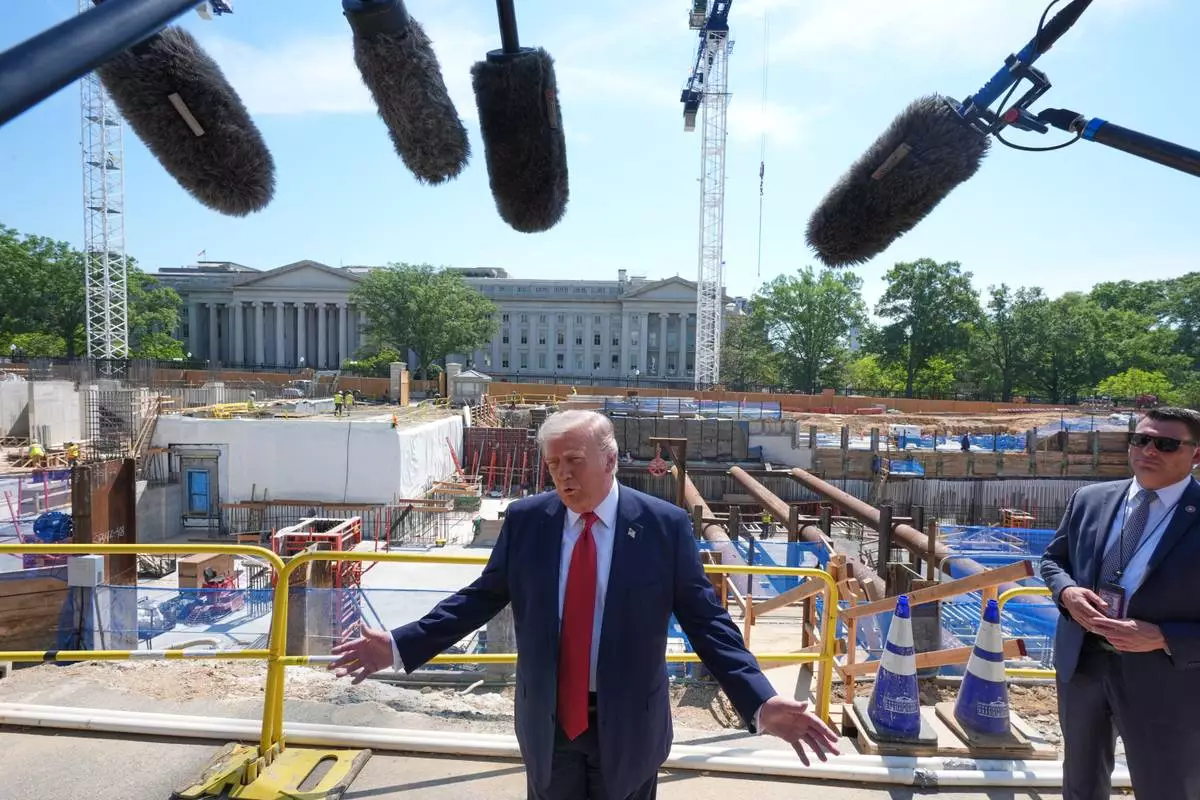
President Donald Trump tours Ballroom construction around the outside the White House, Tuesday, May 19, 2026, in Washington. (AP Photo/Jacquelyn Martin)
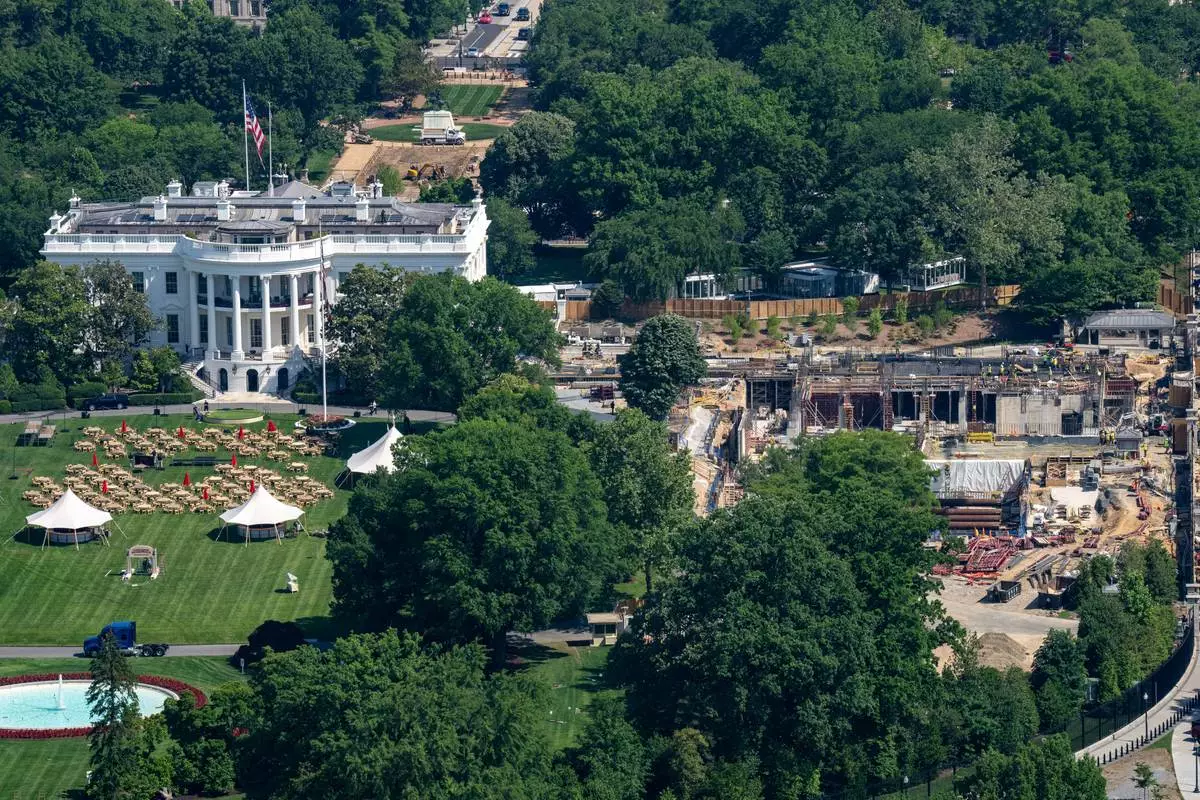
Work continues on the construction of the ballroom at the White House, Tuesday, May 19, 2026, in Washington, where the East Wing once stood. (AP Photo/Alex Brandon)
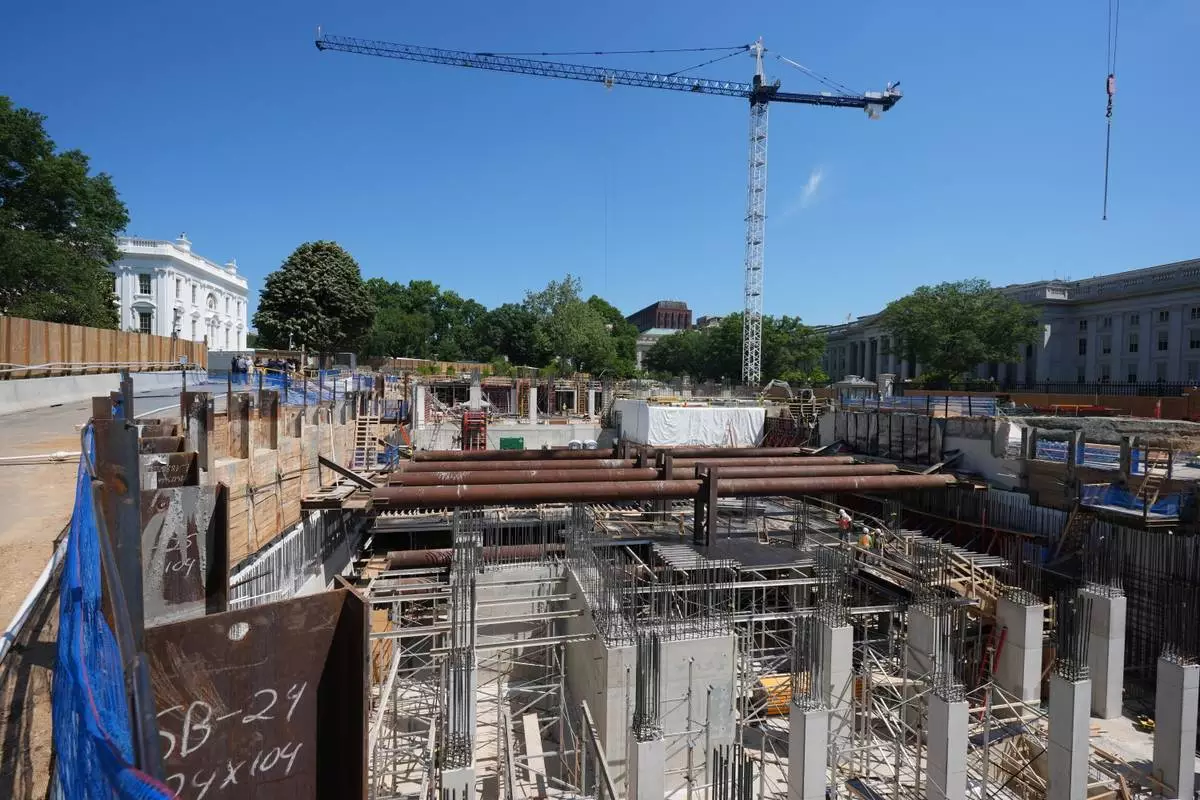
The Ballroom construction site can be seen as President Donald Trump tours the area at the White House, Tuesday, May 19, 2026, in Washington. (AP Photo/Jacquelyn Martin)