PHOENIX (AP) — Corbin Carroll lined a run-scoring single with two outs in the ninth inning and the Arizona Diamondbacks extended their winning streak to five games with a 2-1 victory over the Colorado Rockies on Thursday night.
Arizona's Eduardo Rodriguez pitched seven scoreless innings after suffering his first loss of the season against the Rockies last weekend.
Colorado took advantage after he left, tying it at 1 in the eighth when Juan Morrillo hit Tyler Freeman with the bases loaded.
Paul Sewald (1-4) worked a perfect ninth and Juan Mejia (0-4) walked two in the bottom half.
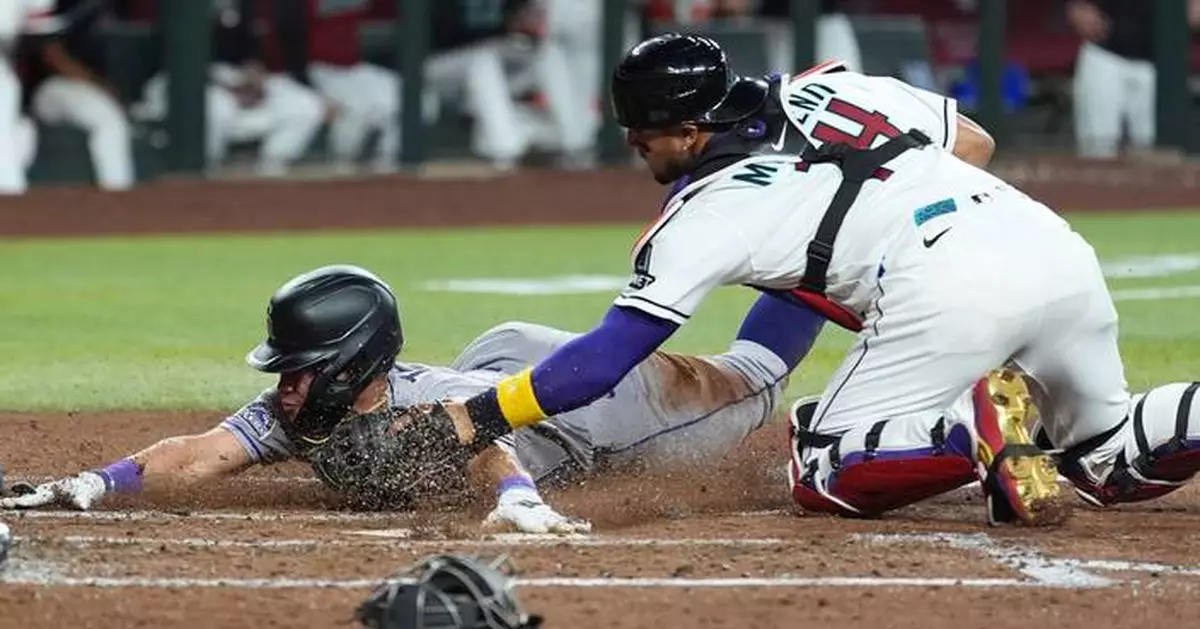
Carroll lined a single to right on a 2-2 count and Gabriel Moreno beat the throw to the plate for Arizona's second walk-off win in three games. Ketel Marte hit a winning two-run homer in the Diamondbacks' 5-3 victory over San Francisco on Tuesday.
Carroll also drove in a run on a fielder's choice in the sixth inning for Arizona's first five -game winning streak since June 9-14, 2025.
Rodriguez didn't allow a hit until Ezequiel Tovar's bloop double just inside the line in right. Jake McCarthy followed with a one-out infield single, but Rodriguez made a nifty play to throw out Tovar at the plate on Braxton Fulford's safety squeeze.
The left-hander got Troy Johnston to fly out to end the inning with two on and induced an inning-ending double play in the sixth after the Rockies hit two weak singles.
Zach Agnos got his first career start when the Rockies opted for a bullpen game to give right-hander Tomoyuki Sugano an extra day's rest.
The right-hander lasted a career-high five innings, allowing a hit with four strikeouts and a walk.
Rockies RHP Tomoyuki Sugano (4-3, 4.02 ERA) was set to face RHP Michael Soroka (6-2, 3.49) in the second game of the series Friday night.
AP MLB: https://apnews.com/MLB

Colorado Rockies starting pitcher Zach Agnos throws against the Arizona Diamondbacks during the first inning of a baseball game, Thursday, May 21, 2026, in Phoenix. (AP Photo/Ross D. Franklin)

Arizona Diamondbacks pitcher Eduardo Rodriguez throws against the Colorado Rockies during the first inning of a baseball game, Thursday, May 21, 2026, in Phoenix. (AP Photo/Ross D. Franklin)
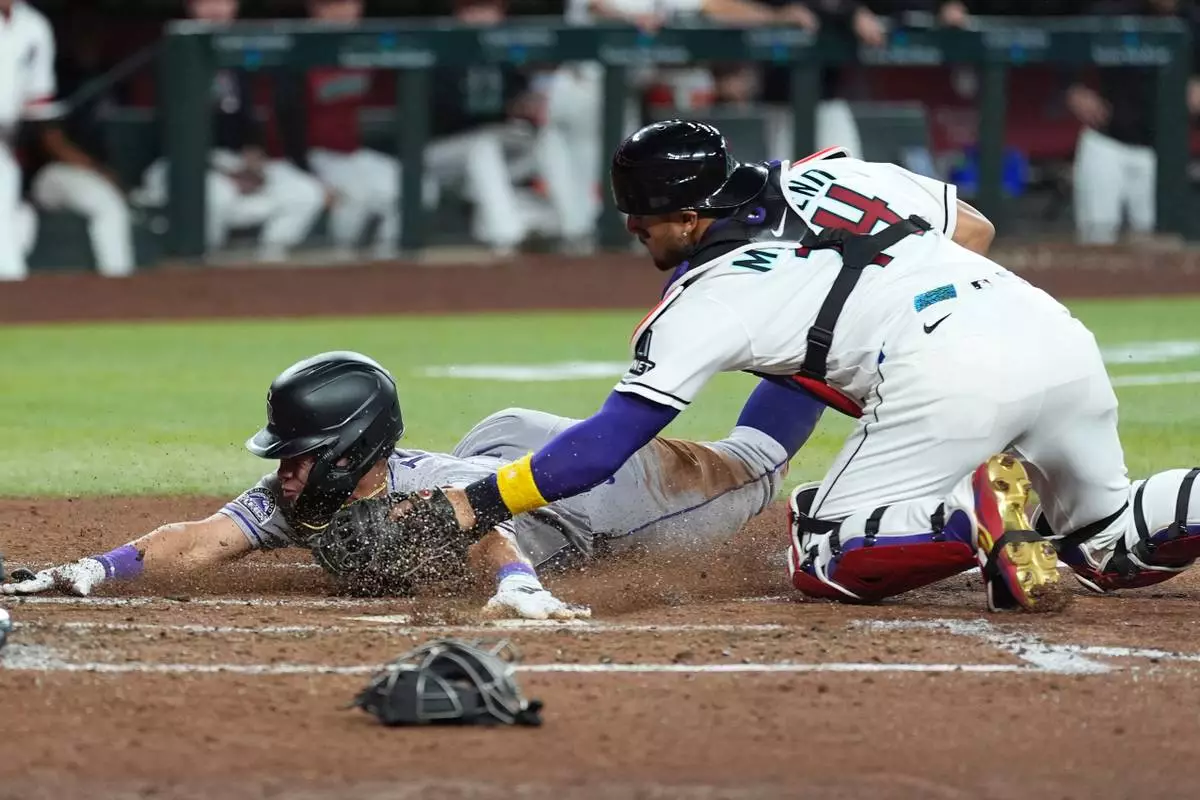
Arizona Diamondbacks catcher Gabriel Moreno, right, tags out Colorado Rockies' Ezequiel Tovar at home plate during the fifth inning of a baseball game, Thursday, May 21, 2026, in Phoenix. (AP Photo/Ross D. Franklin)
NEW YORK (AP) — After more than a decade of mixing and kneading dough in his family’s Brooklyn pizzeria, Salvatore Lo Duca recently made a distressing discovery: A key component of their thin-crust pies, bromated flour, contained a suspected carcinogen already banned in much of the world.
So, in the back kitchen of Lo Duca Pizza, the 39-year-old began tweaking the original recipe handed down by his parents — with unexpected results.
“When we started playing around with a different flour, I actually took a liking to it,” said Lo Duco, who runs the shop with his five brothers. “It’s a little more expensive, but the quality is there.”
A looming ban on the additive, potassium bromate, may soon force thousands of pizzerias and bagel shops across New York into a similar transition.
The bill, passed by state lawmakers and awaiting Gov. Kathy Hochul’s signature, has divided dough-makers, triggering fears that even a minor change to long-established baking practices could have dramatic implications for the city’s most iconic foods.
“This is an earth-shaking event for New York pizza,” said Scott Wiener, a pizza historian who leads tours of notable slice shops. “That ingredient is part of the identity of the slice.”
Employees at several stores that use bromated flour declined to comment for this story. But Wiener estimated that around 80% of pizza and bagel shops rely on a flour that contains the oxidizing agent, which reduces rest time for dough and helps ensure a stronger, chewier product.
To some, the quintessential qualities of the New York bagel — its height and structure, external crispiness and springy bite — would not be possible, or at least as ubiquitous, without the chemical shortcut.
“You could achieve that same bagel texture, but it’s a lot more work and it’s going to be a lot more expensive,” lamented Jesse Spellman, the second-generation owner of Utopia Bagels.
Ahead of the possible ban, he too has been adjusting his family recipe, experimenting with yeast concentrations and rise time.
“It’s going to take some time to get a product that we’re happy with,” Spellman said.
Others, meanwhile, see the proposed ban on potassium bromate as long overdue. The additive is already outlawed across the European Union, China, India, Canada and — as of next year — California. Some experts have theorized that its absence outside the United States could be one reason that many Americans find baked goods in Europe and elsewhere more tolerable.
“From a consumer’s point of view, there’s nothing good about potassium bromate,” said Erik Millstone, a professor of science policy at the University of Sussex focused on the health impact of chemicals in food.
Going back to the 1980s, he noted, studies have shown it can cause cancer in laboratory animals, even in “perfectly reasonable” doses.
“Most well-informed people would prioritize a long healthy life over a slightly softer and more soluble bun,” he said.
Already, many of New York’s most celebrated pizzerias, particularly newer and more artisanal-leaning shops, tout their use of “unbromated” flour.
But neighborhood slice shops still overwhelmingly rely on a General Mills flour called All Trumps, a standard ingredient since the city’s first grab-and-go pizza parlors opened nearly a century ago, according to Wiener. General Mills now sells an unbromated flour for roughly the same price, though other alternatives are costlier.
In Wiener’s view, the move away from bromated flour could ultimately improve the quality of slices across the city.
“Without such a fast turn around for dough production, you’re going to get more well-fermented doughs, which is going to lead to lighter pizzas that are easier to eat and leave you with less of a stomachache,” he said. “It will require more of a process. But everything will be built back better.”
If the legislation passes, businesses will have a one year grace period to continue using the additive, plus additional time to go through unexpired bags. A spokesperson for Hochul said she would review the bill.
In the meantime, the possibility of the ban has rippled beyond New York’s borders.
“Pizza in Florida is officially better than pizza in New York,” crowed Mario Mangilia, the owner of DoughBoyz in Florida in a recent Instagram post. He added that “my grandfather would haunt me” if the shop’s dough recipe were ever changed.
But after he was confronted by several prominent pizza accounts over the additive's health concerns, Mangilia appeared to walk back his pro-bromate stance.
“I’ll tell you what,” he replied to a Long Island-based pizza owner. “I’ll test some different flour out to check it out.”
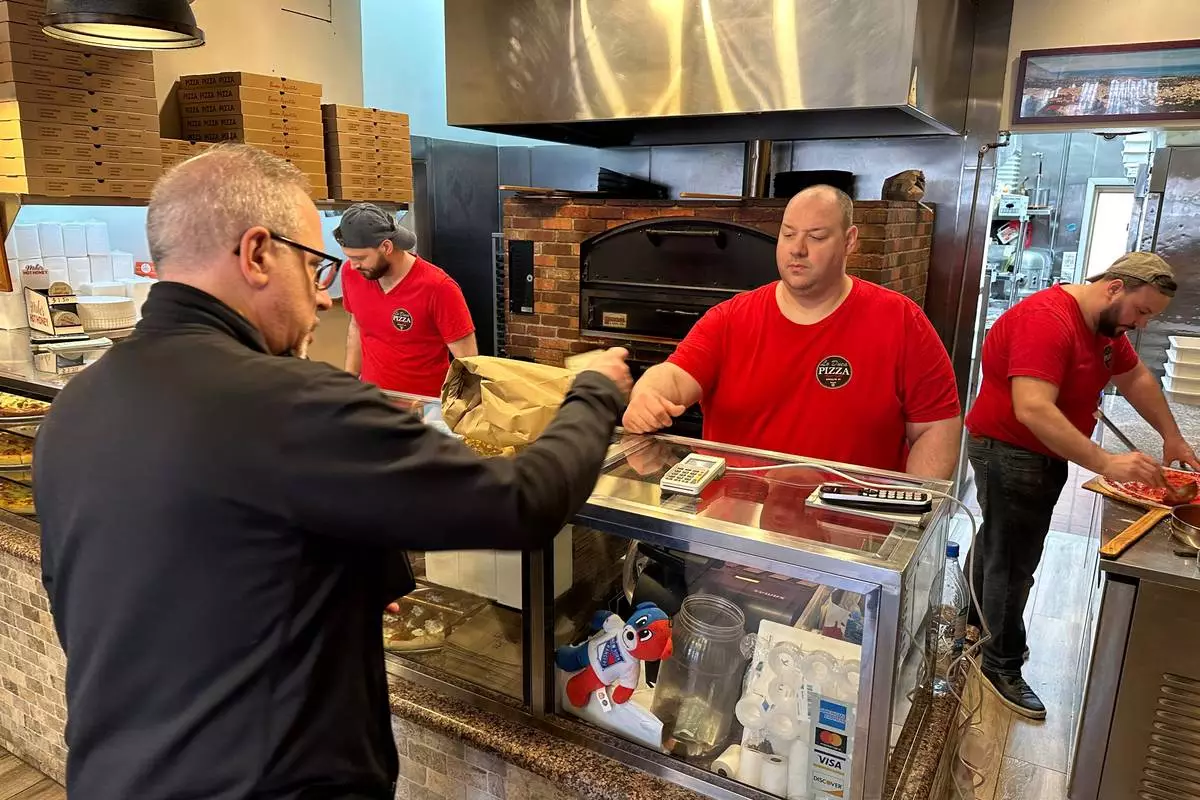
A man pays for pizza at Lo Duca Pizza, May 12, 2026, in the Brooklyn borough of New York. (AP Photo/David R. Martin)
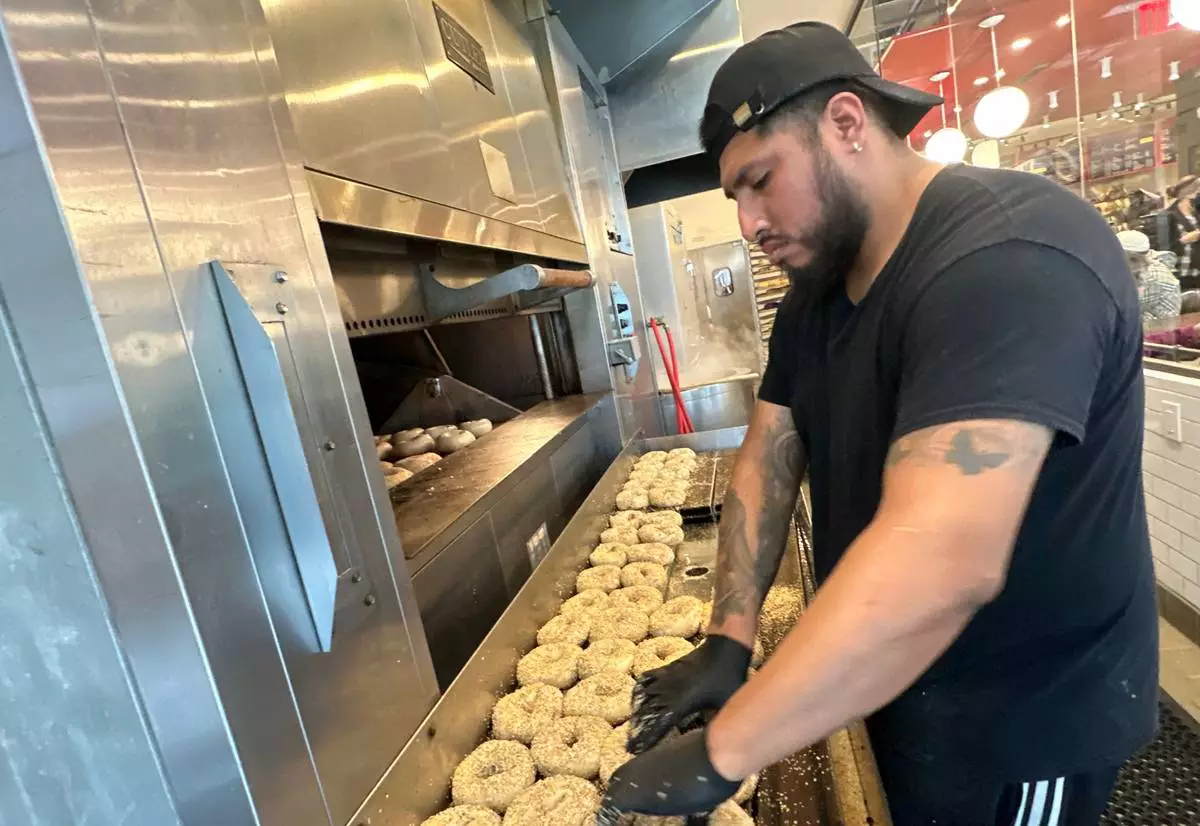
A worker at Utopia Bagel preps bagels made with bromated flour, May 13, 2026, in the Queens borough of New York. (AP Photo/David R. Martin)
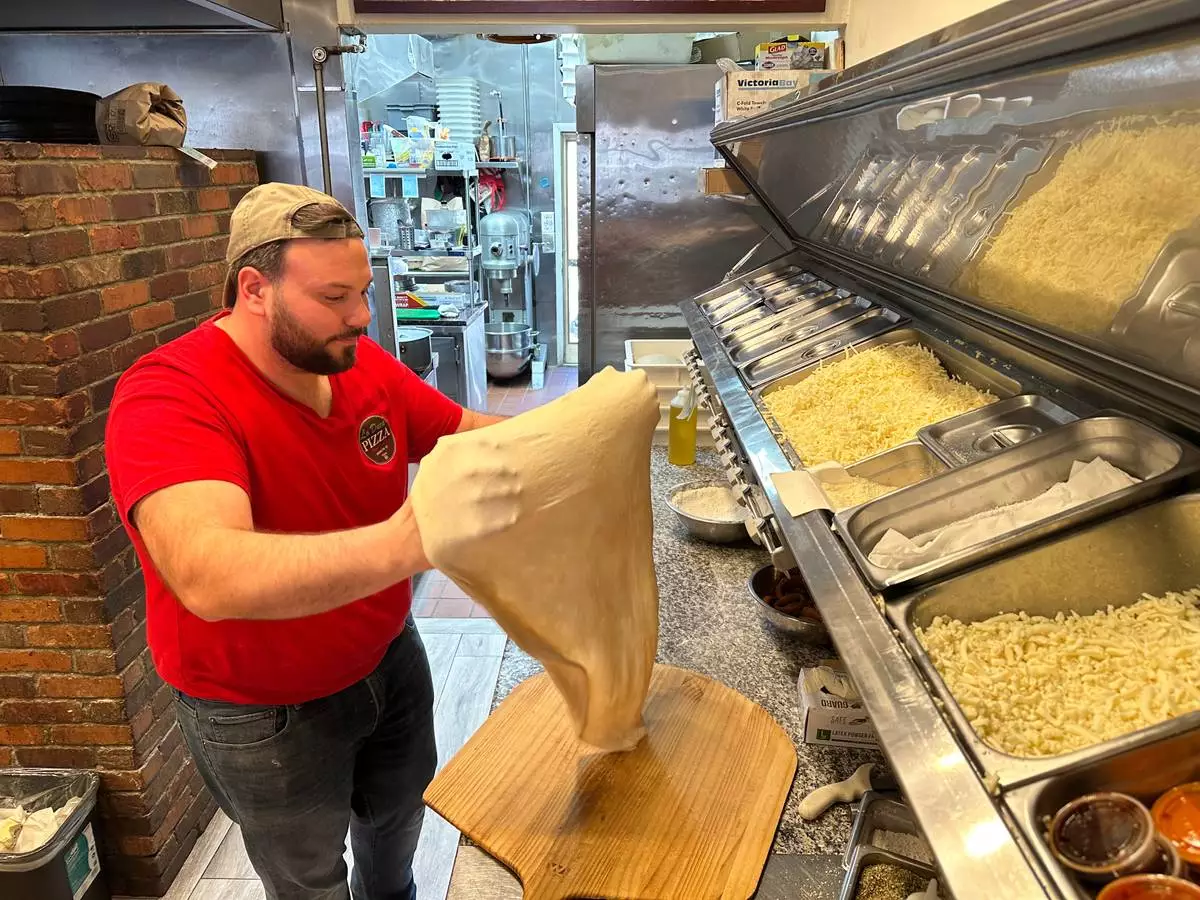
Salvatore Lo Duca makes pizza at Lo Duca Pizza Tuesday, May 12, 2026, in the Brooklyn borough of New York. (AP Photo/David R. Martin)