JOHOR, MALAYSIA - Media OutReach Newswire - 22 May 2026 - Forest City Golf Resort announced that the Forest City Classic Course recorded its largest year-on-year rise in rankings to date in the 2026 Asia Top 100 Golf Courses, advancing 14 positions to No. 36 in Asia and retaining its status as Malaysia's top-ranked course. Adding to the momentum, the on-site Forest City Golf Hotel was recently recognised with the 2025 Agoda Gold Circle Award. As Malaysia gears up for Visit Malaysia 2026 and Visit Johor 2026, the resort expects heightened regional interest in golf travel.
Strong Rankings and Asia Golfing Trend Underscore Forest City's Readiness for Increased Demand
According to Forest City Golf Resort, it hosted more than 100,000 golfers in 2025. Driven by national and state campaigns and expected rising interest in golf, 2026 is expected to see continued growth in visitor arrivals, especially among recreational and leisure-focused golfers.
Visit Malaysia 2026 and Visit Johor 2026 are complementary, government-led tourism campaigns designed to stimulate inbound and domestic travel through coordinated promotion, marquee events, and service enhancements across key gateways and destinations. With ambitious targets — Visit Malaysia 2026 aims to attract 47 million tourists and generate RM147.1 billion in tourism receipts, while Visit Johor 2026 targets 12 million visitors and an estimated RM42 billion in economic impact by year-end — these initiatives are expected to drive increased demand for hospitality, events, and leisure around Forest City SFZ throughout 2026.
Meanwhile, Asia has seen a growing interest in golf participation and travel. Urban driving ranges and family-oriented mini-golf are broadening entry points to the game, and independent data from the R&A, one of the two governing bodies globally determining the rules of golf, revealed in 2024 that Asia leads the global golf population ahead of Europe, Canada, and all other R&A affiliated regions (excluding the US and Mexico, which are affiliated with the USGA). International golf travel into Asia is also growing, with Southeast Asia in particular strengthening its position as one of the most attractive regions for golf tourism due to championship courses, quality hospitality, and diverse cultural experiences — signalling a broad-based upswing supported by participation growth, investment, and tourism.
Against this backdrop, with the Forest City Classic Course ranking No. 36 in Asia and No. 1 in Malaysia for 2026, the resort is well positioned to translate demand into stay-and-play bookings, corporate golf events, and family getaways. Forest City Golf Resort also recently won the 2025 Agoda Gold Circle Award, reinforcing its appeal as an integrated golf-and-hospitality proposition designed to support stronger occupancy, longer lengths of stay, and higher per-guest spend through 2026.
Classic and Legacy Courses Anchor Forest City Golf Resort: Seven Years, One Consistent Verdict
Forest City Golf Resort in Johor, Malaysia, offers two 18-hole championship courses: the Classic Course, designed by veteran course architect Liang Guokun, and the Legacy Course, a signature collaboration between Jack Nicklaus and Jack Nicklaus II. Both have achieved strong rankings in Asia.
Co-hosted by the Chinese and Korean editions of Golf Travel magazine since 2016, the Asia Top 100 Golf Courses ranking evaluates course design, playability, landscape aesthetics, and technical difficulty. The Classic Course first entered the list in 2018 and has maintained an unbroken presence through 2026.
In 2026, the Classic Course placed No. 36 in Asia — an improvement of 14 places. Within Malaysia, three courses were recognised; Forest City ranked No. 1 nationally, with the others at No. 55 and No. 73.
Forest City views this sustained recognition as evidence of relentless operational refinement and consistent course quality. In a competitive ranking where many venues rotate in and out, seven consecutive appearances reflect consistently high professional standards in design, conditioning, and the playing experience, as well as a deep commitment to achieving higher levels of excellence.
Course Design Philosophies: Return to Nature, Calibrated Challenge
Forest City Golf Resort's 36 holes present complementary architectural signatures at international championship standard.
The Classic Course, by veteran architect Liang Guokun, exemplifies his "Return to Nature" philosophy through multi-layered landscapes, sculpted bunker lines, and lake vistas integrated strategically across every hole. The lakes form part of the course's water management system, delivering visual drama and functional sustainability in tandem. Liang's standing is independently validated: both the Classic Course and his Holiday Island Golf Club feature in the 2026 Asia Top 100.
For golfers, the Classic Course translates design intent into experience: each shot invites thoughtful decision-making, rewarding precision and course management while immersing players in a carefully composed natural setting. The result is a round that challenges skill and strategy while offering a sense of progression through a living landscape.
The Legacy Course, a signature collaboration between Jack Nicklaus and Jack Nicklaus II, adds a distinct counterpoint. This rare father-and-son design balances calibrated challenge with aesthetic appeal, catering to players who seek a different test from the Classic Course while maintaining championship credentials.
Both the Classic and Legacy courses are GEO Certified, underscoring verified environmental stewardship rather than self-declared claims. In 2025, Forest City Golf Resort hosted several major tournaments and welcomed more than 100,000 golfers, confirming the venue's role as an active stage for diverse styles of play as well as an exceptional destination for visiting golfers.
| | Classic Course | Legacy Course |
| Designer | Liang Guokun | Jack Nicklaus & Jack Nicklaus II |
| Yardage | 7,138 yards | 7,386 yards |
| Holes | 18 | 18 |
| Design Signature | "Return to Nature," lake integration | Challenge × aesthetics balance |
| GEO Certified | Yes | Yes |
| Asia Top 100 (2026) | No. 36 — No. 1 in Malaysia | Previously recognised (Asia-Pacific) |
| Design hallmark | Lakes integrated as water management + strategic challenge | Pulai River mangrove edges, elevation changes, water carries |
Beyond the Courses: Forest City as a Golf Tourism Destination
Forest City Golf Resort operates as an active international competition venue as well as a premier leisure destination. Its regularly held tournaments and growing visitor numbers underscore consistent utilisation throughout the year. These metrics also complement the Asia Top 100 recognition and reflect the resort's capacity to stage events at scale while maintaining a high-quality guest experience.
Set within Forest City's wider leisure ecosystem, the resort benefits from approximately 4 km of coastline, curated mangrove boat tours, sea-fishing, and year-round food and beverage options. This natural and amenity-rich setting supports repeat visitation: close enough to Singapore for convenient access and continually evolving to reward the return visit with rich and diverse experiences and itineraries.
Beyond golf, Forest City Golf Resort has secured nearly 20 industry accolades since 2018, contributing to Forest City's portfolio of more than 40 international awards overall. For organisers, these third-party validations, combined with proven MICE infrastructure and cross-border connectivity, translate into a reliable platform for corporate golf days, incentive travel, and multi-event calendars — breathtaking for the new, heartwarming for the familiar.
Resort Overview
- Location: Forest City, Johor. Approximately 2 km from Singapore at the closest point.
- Access: Approximately 40 minutes' drive to Singapore's CBD via the Second Link Crossing (travel time subject to traffic).
- Accommodation: Forest City Golf Hotel (five-star; recipient of 2025 Agoda Gold Circle Award) and garden villas. Golf Villa show units renovated with a "limitless space," intended for groups and families.
- MICE and corporate: Conference and event facilities available for corporate golf days, incentive travel, and board-level meetings. Catering and breakout spaces available.
- Visitor volumes (2025): More than 100,000 golfers visited; among Malaysia's most visited golf clubs.
- Booking: Tee times, stay-and-play packages, and corporate event enquiries are available via the official site at https://fcgolfresort.com/.
Looking Ahead: Consistency as a Competitive Advantage
Sustained recognition in the Asia Top 100 reflects consistent investment in course quality, operations, and environmental management (including ongoing GEO certification) — commitments Forest City Golf Resort expects to carry forward through 2026 and beyond. As the Visit Malaysia 2026 and Visit Johor 2026 campaigns take effect, the resort anticipates stronger demand across stay-and-play bookings, corporate events, and family leisure. These conditions, combined with its proximity to Singapore and integrated amenity offering, strengthen Forest City's value proposition as a golf tourism destination and integrated resort platform for golfers, organisers, and long-term stakeholders alike.
Hashtag: #ForestCity
The issuer is solely responsible for the content of this announcement.
** This press release is distributed by Media OutReach Newswire through automated distribution system, for which the client assumes full responsibility. **

Panoramic view of Forest City Golf Resort with lush greenery, white bunkers, sunlit lakes, and the luxury hotel towers.
Over Half of Youth Feel Inferior Due to Parental Criticism: Accumulated Emotions Increase Risks of Depression
HONG KONG SAR - Media OutReach Newswire - 22 May 2026 - Save the Children Hong Kong today released its research report, "Hearing Children" – Child-led Research Report: How Family Interactions Affect Youth Mental Health (Full Report). Following the implementation of the Mandatory Reporting of Child Abuse Ordinance (the "Ordinance"), there has been ongoing public debate on how to enhance child wellbeing; however, unlike physical harm, psychological trauma is significantly more difficult to identify. According to the latest figures from the Social Welfare Department, a total of 1,354 child abuse cases were recorded in 2025. Of these, only 16 cases—a mere 1.2%—were classified as "psychological abuse".
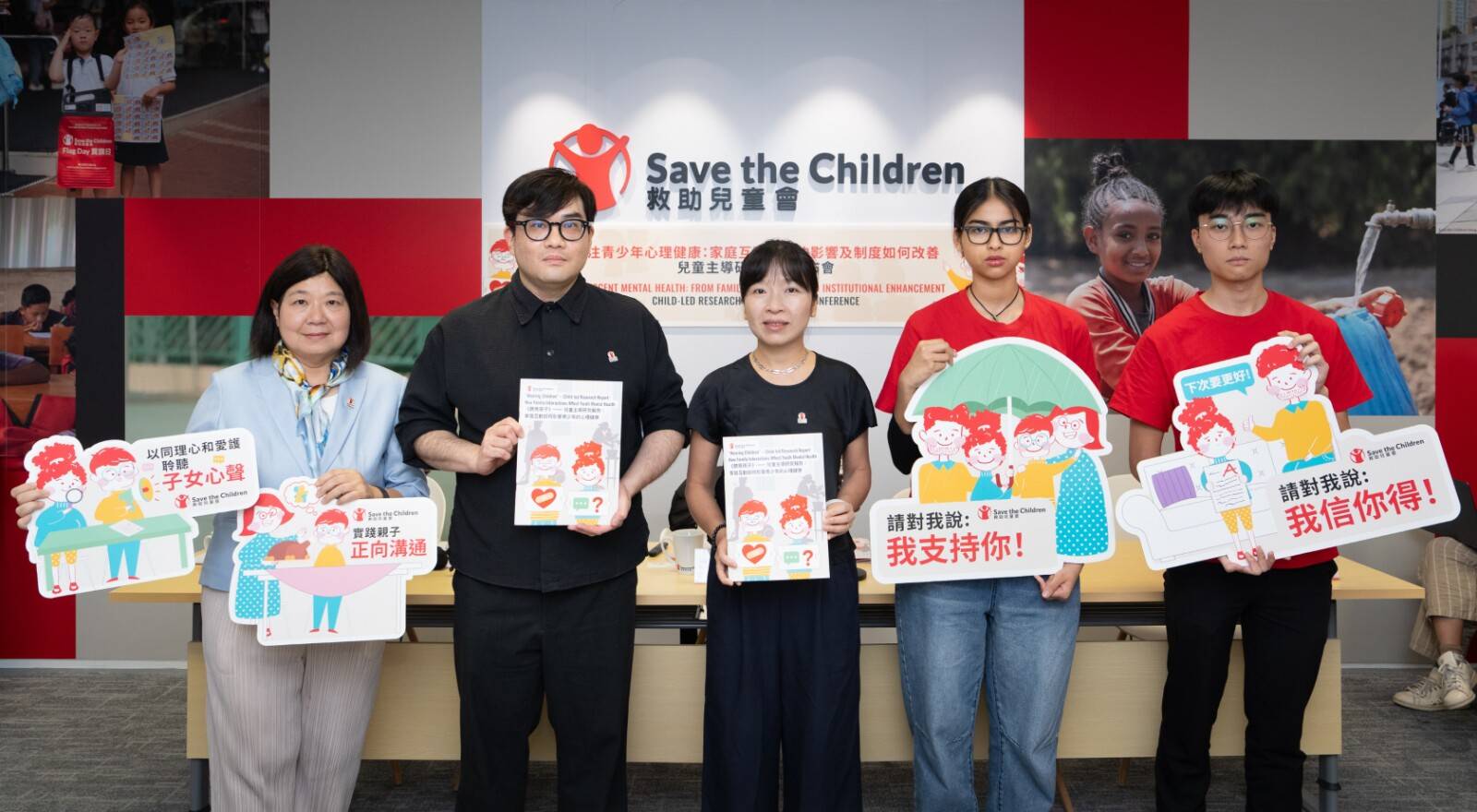 New study from Save the Children Hong Kong: Parental criticism leaves half of local youth feeling inferior and increases risks of mental health issues.
 The organisation believes that whilst the vast majority of parents care deeply for their children, they may inadvertently cause psychological trauma through their disciplinary methods, communication styles, and the way expectations are conveyed. Save the Children Hong Kong recommends that parents adopt "Positive Parenting" to strengthen parent-child non-violent communication, expressing their thoughts through mutual understanding and respect. Simultaneously, the Government should allocate additional resources to community and school settings to bolster mental health support for children and young people. Regarding the 25 categories of professionals specified under the Ordinance, training on identifying psychological abuse should be strengthened to support frontline practitioners in making clearer judgements on reporting thresholds and to facilitate timely intervention.
Over 80% of Youth Feel Pressure to be "Perfect": 40% Told to Improve Even When Praised
The study was designed by six youth researchers aged 14 to 17, under the guidance of Professor Gary Tang Kin Yat, Associate Professor of the Department of Social Science at The Hang Seng University of Hong Kong. It aimed to explore the psychological and emotional harm hidden behind parental "love and discipline". The study surveyed 408 children and adolescents aged 13 to 18, and found that 20.4% of respondents experience heavy pressure to "be perfect". Furthermore, 41.2% reported that even when parents praise their achievements, it is often accompanied by reminders of "how to do better next time". Over half of the respondents felt inferior to others due to parental disparagement, while more than 30% felt that no matter how hard they tried, they could never meet their parents' expectations.
Ms. Wong Shek Hung, Director of Hong Kong Programme of Save the Children Hong Kong, noted that while parents genuinely care for their children, yet when faced with their own stresses and anxieties, they may struggle to find the most appropriate way to express their care. Consequently, their love can inadvertently become a burden for the child. "This reflects the pivotal role parents play in their children's lives. Children place immense value on every word their parents say; as such, comments we may seem insignificant can directly impact how a child views themselves," she said.
The survey also explored parental behaviours that adolescents found most distressing. Respondents identified the most hurtful remarks as toxic comparisons (e.g., "Why can't you be more like them?"), invalidation of worth ("You are such a disappointment"), and dictatorial commands ("Because I said so"). The most resented behaviours included losing emotional control ("Losing their temper"), invading privacy ("Checking my phone"), and micromanagement ("Having to control everything").
Table: The True Voices of Youth – What We Want Parents to Know
| Most Hurtful Remarks (Top Five) | Most Resented Behaviours (Top Five) | Most Desired Encouragement (Top Five) |
| " Look at other people" | "(Parents) Losing their temper" | "You did a great job" |
| " You are so disappointing" | "Snooping on my phone" | "I support you" |
| "I said no means no" | "Having to make every decision" | "I believe you can do it" |
| "You aren't as good as others" | "Entering my room without knocking" | "Your happiness is what matters most" |
| "I'm only doing this for your own good" | "Moving or touching my belongings" | "I know you've done your best" |
Avoiding Adults: A Widening Gap in Mental Health Support for Children
Another alarming phenomenon is the significant gap emerging in Hong Kong's mental health safety net for children and adolescents. Unlike physical trauma, psychological distress is difficult to identify and often relies on the victims seeking help themselves. However, the study found that when children and young people feel distressed, their help-seeking behaviour tends to "avoid adults". A vast majority of respondents (86.3%) prioritise speaking to friends or venting on social media (78.7%). Conversely, the overwhelming majority "rarely or never" seek help from teachers (96.8%), social workers (97.5%), or parents (73.3%).
Nearly half of the respondents (49.6%) tend to internalise and handle their problems alone. Beyond the habit of self-reliance (47.3%), key reasons for this include a feeling that "no one truly understands or can help" (45.3%), a desire not to become a burden to others (29.9%), and a fear of being judged, misunderstood, or getting into trouble after seeking help (18.4%).
Ms. Wong Shek Hung expressed concern that current child protection systems—such as school-based social workers and helplines—may become ineffective if children actively avoid adult assistance, thereby limiting opportunities for timely intervention. She warned that if stress and emotions continue to accumulate without an outlet, the consequences could be severe.
Invisible Wounds: The Link Between Mental Stress and Psychosomatic Symptoms
Whilst psychological stress leaves no visible scars, its latent harm can be more enduring and profound. The study reveals that when adolescents are under mental pressure, their physical health is equally affected. When facing conflicts or difficulties at home, over a third of respondents (37.1%) reported "sometimes" experiencing insomnia, stomach aches, or headaches. Similarly, over a third (38.1%) indicated they "sometimes" experience acute anxiety reactions, such as nervous tension, trembling, or a racing heart.
Dr. Phyllis Chan Kwok-ling, Adviser of Save the Children Hong Kong and Psychiatrist, noted that psychological trauma is difficult to detect, which may lead to more severe cumulative consequences. "This is especially true if children and adolescents conceal their trauma or lack the self-awareness to address it. As trauma accumulates, it may become a root cause of emotional problems and increase the risk of developing conditions such as depression." Dr Chan explained. She also expressed concern that the study found neither parents nor teachers are seen as confidants. "When adolescents face difficulties, they need adults to listen and share experiences. If they turn only to social media or peers, the lack of adult guidance may amplify their distress. Furthermore, relying solely on peers carries the risk of an 'echo chamber' effect; mutual validation amongst friends may deepen their sense of hurt and intensify wariness or hostility towards parents."
Ms. Wong Shek Hung added that adolescents may not know how to articulate their inner needs, leading them to remain silent or cope in isolation. "In reality, as long as both parties are willing to take the first step towards better communication and empathy, a warm and intimate parent-child relationship can be maintained."
Strengthening Systemic Support and Empowering Children with Emotional Regulation Skills
Beyond the family unit, society bears a responsibility to provide support across schools, communities, and institutional levels. We must systematically foster emotional management skills in children and assist parents in adopting positive communication and parenting techniques. To this end, the organisation proposes the following recommendations:
- Mainstream "Social and Emotional Learning" (SEL): Integrate SEL into the regular school curriculum to strengthen students' ability to manage and articulate their emotions.
- Promote "Positive Parenting" through Home-School Cooperation: Implement comprehensive Positive Parenting initiatives to develop disciplinary communication skills and foster empathy within parent-child interactions.
- Enhance Mandatory Reporting Training: In relation to the Mandatory Reporting of Child Abuse Ordinance, training for professionals should be strengthened to include content on "identifying psychological abuse", supported by real-life case studies to help frontline staff clarify reporting criteria and enable timely intervention.
(For detailed information on these recommendations, please refer to the full report.)
Ms. Wong Shek Hung emphasised that family dynamics cannot be addressed with a "one-size-fits-all" legislative framework, nor is punishing parents an ideal way to manage family relationships. "The law provides only the most basic safety net. As previously mentioned, most parents care deeply for their children; the gap lies in communication and mutual understanding, as well as in adopting positive ways of interaction. Beyond legislation, we hope to improve parent-child relationships in the long term through support services and public education."
Hashtag: #SavetheChildrenHongKong #香港救助兒童會 #positiveparenting #正向管教 #mentalhealth #精神健康
https://savethechildren.org.hk/en/
https://www.linkedin.com/company/save-the-children-hong-kong
https://www.facebook.com/savethechildrenhk
https://www.instagram.com/savethechildrenhk/
YouTube: https://www.youtube.com/user/savehk
The issuer is solely responsible for the content of this announcement.
Save the Children Hong Kong
Save the Children believes every child deserves a future. In Hong Kong and around the world, we do whatever it takes – every day and in times of crisis – so children can fulfil their rights to a healthy start in life, the opportunity to learn and protection from harm. With over 100 years of expertise, we are the world's first and leading independent children's organisation – transforming lives and future.
Established in 2009, Save the Children Hong Kong is part of the global movement which operates in around 100 countries. We work with children, families, schools, communities and our supporters to deliver lasting change for children in Hong Kong and around the world.
HONG KONG SAR - Media OutReach Newswire - 22 May 2026 - Save the Children Hong Kong today released its research report, "Hearing Children" – Child-led Research Report: How Family Interactions Affect Youth Mental Health (Full Report). Following the implementation of the Mandatory Reporting of Child Abuse Ordinance (the "Ordinance"), there has been ongoing public debate on how to enhance child wellbeing; however, unlike physical harm, psychological trauma is significantly more difficult to identify. According to the latest figures from the Social Welfare Department, a total of 1,354 child abuse cases were recorded in 2025. Of these, only 16 cases—a mere 1.2%—were classified as "psychological abuse".
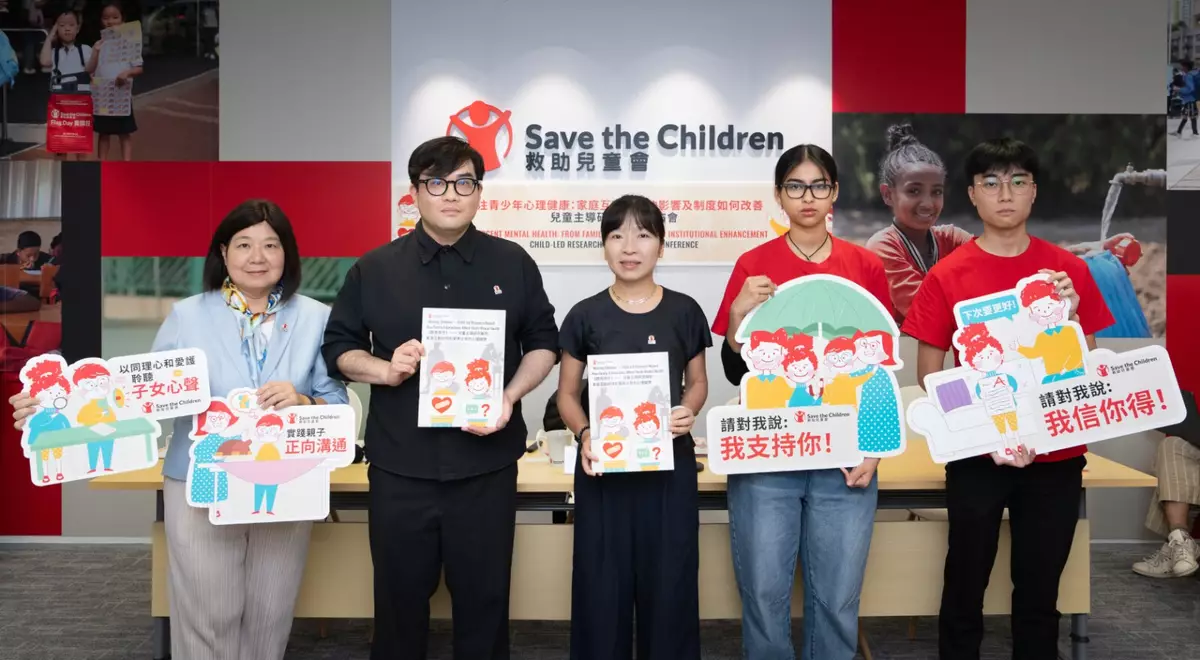
New study from Save the Children Hong Kong: Parental criticism leaves half of local youth feeling inferior and increases risks of mental health issues.
The organisation believes that whilst the vast majority of parents care deeply for their children, they may inadvertently cause psychological trauma through their disciplinary methods, communication styles, and the way expectations are conveyed. Save the Children Hong Kong recommends that parents adopt "Positive Parenting" to strengthen parent-child non-violent communication, expressing their thoughts through mutual understanding and respect. Simultaneously, the Government should allocate additional resources to community and school settings to bolster mental health support for children and young people. Regarding the 25 categories of professionals specified under the Ordinance, training on identifying psychological abuse should be strengthened to support frontline practitioners in making clearer judgements on reporting thresholds and to facilitate timely intervention.
Over 80% of Youth Feel Pressure to be "Perfect": 40% Told to Improve Even When Praised
The study was designed by six youth researchers aged 14 to 17, under the guidance of Professor Gary Tang Kin Yat, Associate Professor of the Department of Social Science at The Hang Seng University of Hong Kong. It aimed to explore the psychological and emotional harm hidden behind parental "love and discipline". The study surveyed 408 children and adolescents aged 13 to 18, and found that 20.4% of respondents experience heavy pressure to "be perfect". Furthermore, 41.2% reported that even when parents praise their achievements, it is often accompanied by reminders of "how to do better next time". Over half of the respondents felt inferior to others due to parental disparagement, while more than 30% felt that no matter how hard they tried, they could never meet their parents' expectations.
Ms. Wong Shek Hung, Director of Hong Kong Programme of Save the Children Hong Kong, noted that while parents genuinely care for their children, yet when faced with their own stresses and anxieties, they may struggle to find the most appropriate way to express their care. Consequently, their love can inadvertently become a burden for the child. "This reflects the pivotal role parents play in their children's lives. Children place immense value on every word their parents say; as such, comments we may seem insignificant can directly impact how a child views themselves," she said.
The survey also explored parental behaviours that adolescents found most distressing. Respondents identified the most hurtful remarks as toxic comparisons (e.g., "Why can't you be more like them?"), invalidation of worth ("You are such a disappointment"), and dictatorial commands ("Because I said so"). The most resented behaviours included losing emotional control ("Losing their temper"), invading privacy ("Checking my phone"), and micromanagement ("Having to control everything").
Table: The True Voices of Youth – What We Want Parents to Know
| Most Hurtful Remarks (Top Five) | Most Resented Behaviours (Top Five) | Most Desired Encouragement (Top Five) |
| " Look at other people" | "(Parents) Losing their temper" | "You did a great job" |
| " You are so disappointing" | "Snooping on my phone" | "I support you" |
| "I said no means no" | "Having to make every decision" | "I believe you can do it" |
| "You aren't as good as others" | "Entering my room without knocking" | "Your happiness is what matters most" |
| "I'm only doing this for your own good" | "Moving or touching my belongings" | "I know you've done your best" |
(Top Five)
(Top Five)
Avoiding Adults: A Widening Gap in Mental Health Support for Children
Another alarming phenomenon is the significant gap emerging in Hong Kong's mental health safety net for children and adolescents. Unlike physical trauma, psychological distress is difficult to identify and often relies on the victims seeking help themselves. However, the study found that when children and young people feel distressed, their help-seeking behaviour tends to "avoid adults". A vast majority of respondents (86.3%) prioritise speaking to friends or venting on social media (78.7%). Conversely, the overwhelming majority "rarely or never" seek help from teachers (96.8%), social workers (97.5%), or parents (73.3%).
Nearly half of the respondents (49.6%) tend to internalise and handle their problems alone. Beyond the habit of self-reliance (47.3%), key reasons for this include a feeling that "no one truly understands or can help" (45.3%), a desire not to become a burden to others (29.9%), and a fear of being judged, misunderstood, or getting into trouble after seeking help (18.4%).
Ms. Wong Shek Hung expressed concern that current child protection systems—such as school-based social workers and helplines—may become ineffective if children actively avoid adult assistance, thereby limiting opportunities for timely intervention. She warned that if stress and emotions continue to accumulate without an outlet, the consequences could be severe.
Invisible Wounds: The Link Between Mental Stress and Psychosomatic Symptoms
Whilst psychological stress leaves no visible scars, its latent harm can be more enduring and profound. The study reveals that when adolescents are under mental pressure, their physical health is equally affected. When facing conflicts or difficulties at home, over a third of respondents (37.1%) reported "sometimes" experiencing insomnia, stomach aches, or headaches. Similarly, over a third (38.1%) indicated they "sometimes" experience acute anxiety reactions, such as nervous tension, trembling, or a racing heart.
Dr. Phyllis Chan Kwok-ling, Adviser of Save the Children Hong Kong and Psychiatrist, noted that psychological trauma is difficult to detect, which may lead to more severe cumulative consequences. "This is especially true if children and adolescents conceal their trauma or lack the self-awareness to address it. As trauma accumulates, it may become a root cause of emotional problems and increase the risk of developing conditions such as depression." Dr Chan explained. She also expressed concern that the study found neither parents nor teachers are seen as confidants. "When adolescents face difficulties, they need adults to listen and share experiences. If they turn only to social media or peers, the lack of adult guidance may amplify their distress. Furthermore, relying solely on peers carries the risk of an 'echo chamber' effect; mutual validation amongst friends may deepen their sense of hurt and intensify wariness or hostility towards parents."
Ms. Wong Shek Hung added that adolescents may not know how to articulate their inner needs, leading them to remain silent or cope in isolation. "In reality, as long as both parties are willing to take the first step towards better communication and empathy, a warm and intimate parent-child relationship can be maintained."
Strengthening Systemic Support and Empowering Children with Emotional Regulation Skills
Beyond the family unit, society bears a responsibility to provide support across schools, communities, and institutional levels. We must systematically foster emotional management skills in children and assist parents in adopting positive communication and parenting techniques. To this end, the organisation proposes the following recommendations:
- Mainstream "Social and Emotional Learning" (SEL): Integrate SEL into the regular school curriculum to strengthen students' ability to manage and articulate their emotions.
- Promote "Positive Parenting" through Home-School Cooperation: Implement comprehensive Positive Parenting initiatives to develop disciplinary communication skills and foster empathy within parent-child interactions.
- Enhance Mandatory Reporting Training: In relation to the Mandatory Reporting of Child Abuse Ordinance, training for professionals should be strengthened to include content on "identifying psychological abuse", supported by real-life case studies to help frontline staff clarify reporting criteria and enable timely intervention.
(For detailed information on these recommendations, please refer to the full report.)
Ms. Wong Shek Hung emphasised that family dynamics cannot be addressed with a "one-size-fits-all" legislative framework, nor is punishing parents an ideal way to manage family relationships. "The law provides only the most basic safety net. As previously mentioned, most parents care deeply for their children; the gap lies in communication and mutual understanding, as well as in adopting positive ways of interaction. Beyond legislation, we hope to improve parent-child relationships in the long term through support services and public education."
Hashtag: #SavetheChildrenHongKong #香港救助兒童會 #positiveparenting #正向管教 #mentalhealth #精神健康
https://savethechildren.org.hk/en/
https://www.linkedin.com/company/save-the-children-hong-kong
https://www.facebook.com/savethechildrenhk
https://www.instagram.com/savethechildrenhk/
YouTube: https://www.youtube.com/user/savehk
The issuer is solely responsible for the content of this announcement.
Save the Children Hong Kong
Save the Children believes every child deserves a future. In Hong Kong and around the world, we do whatever it takes – every day and in times of crisis – so children can fulfil their rights to a healthy start in life, the opportunity to learn and protection from harm. With over 100 years of expertise, we are the world's first and leading independent children's organisation – transforming lives and future.
Established in 2009, Save the Children Hong Kong is part of the global movement which operates in around 100 countries. We work with children, families, schools, communities and our supporters to deliver lasting change for children in Hong Kong and around the world.
** This press release is distributed by Media OutReach Newswire through automated distribution system, for which the client assumes full responsibility. **