Skip to Content Facebook Feature Image

Pushed to the limit, Republicans show rare defiance to Trump's demands

News

Pushed to the limit, Republicans show rare defiance to Trump's demands
News

News

Pushed to the limit, Republicans show rare defiance to Trump's demands

2026-05-22 19:39 Last Updated At:19:41

WASHINGTON (AP) — The day arrived when the Senate just said, No.

President Donald Trump’s political revenge tour met its potential match this week as angry, upset Republican senators, pushed to a breaking point by his seemingly insatiable and outlandish demands — particularly a $1.776 billion fund for Jan. 6 rioters and others he believes were wrongly prosecuted — did the unthinkable.

More Images
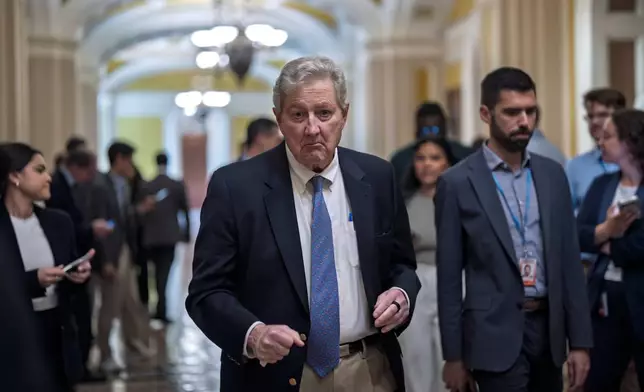
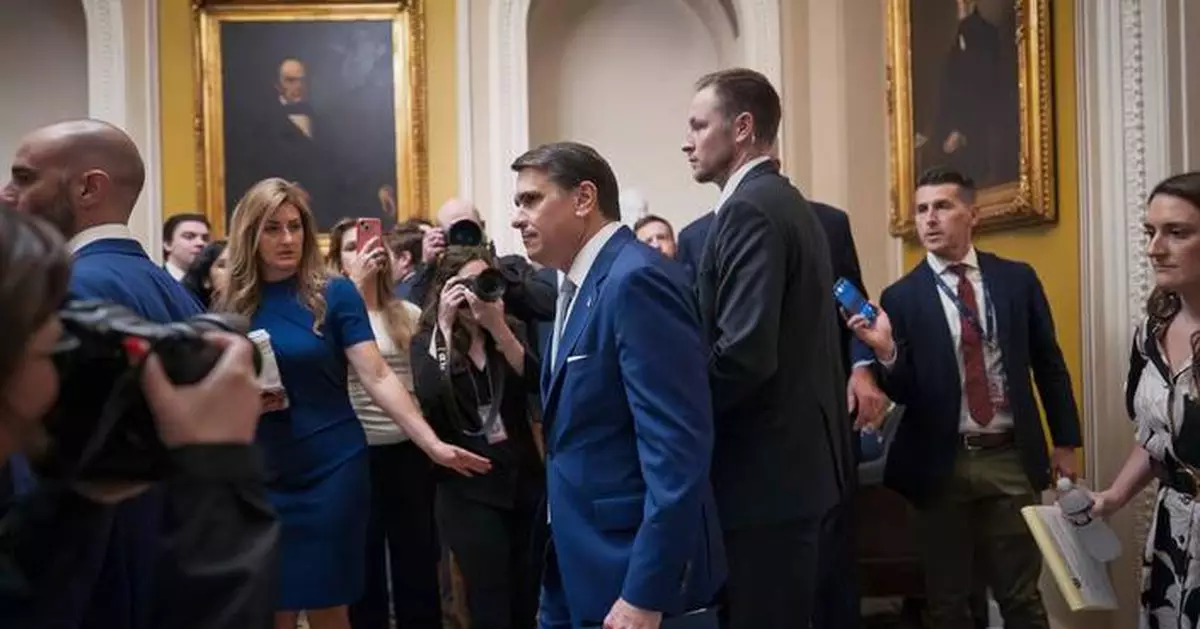
Sen. John Kennedy, R-La., heads to a closed-door meeting with Republican senators at the Capitol in Washington, Thursday, May 21, 2026. (AP Photo/J. Scott Applewhite)
Sen. John Kennedy, R-La., heads to a closed-door meeting with Republican senators at the Capitol in Washington, Thursday, May 21, 2026. (AP Photo/J. Scott Applewhite)
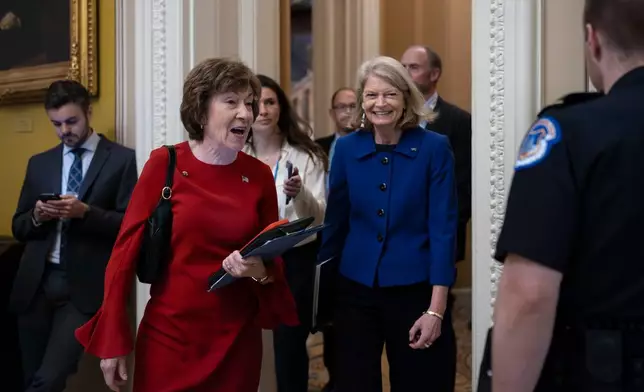
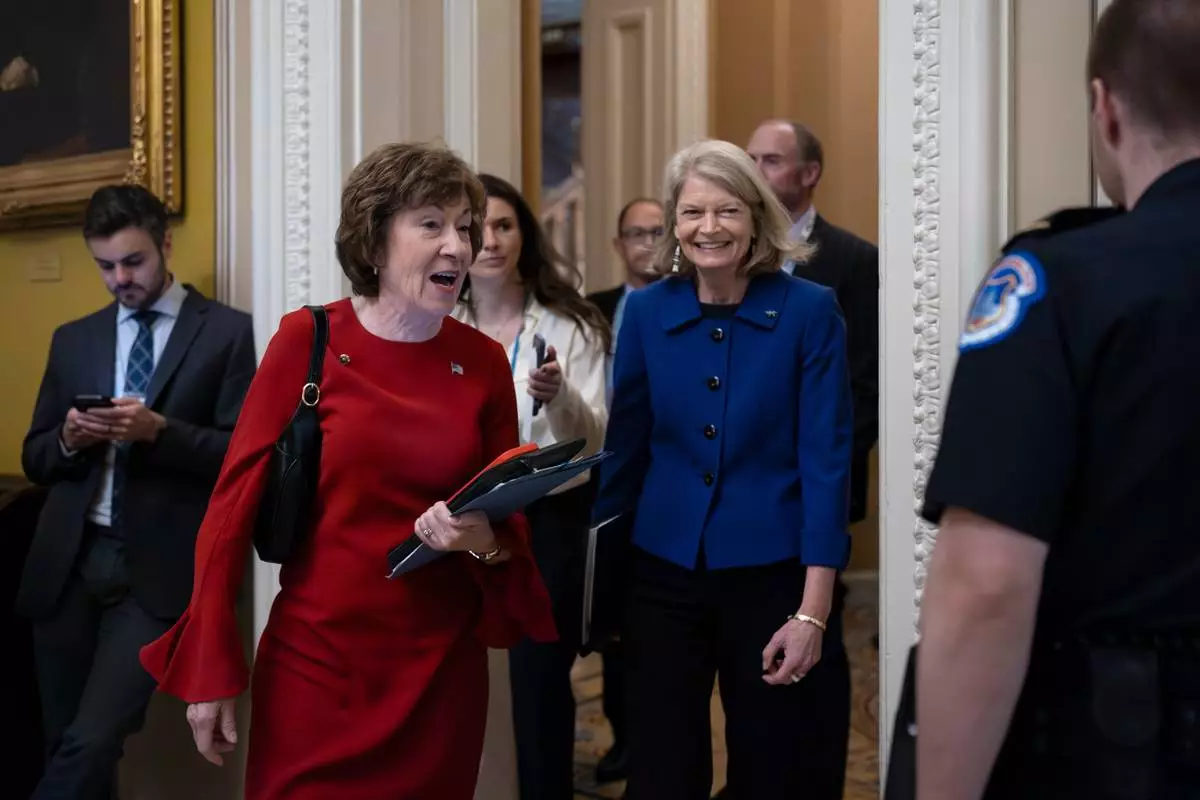
Senate Appropriations Committee Chair Susan Collins, R-Maine, left, and Sen. Lisa Murkowski, R-Alaska, arrive for a closed-door meeting with fellow Republican senators at the Capitol in Washington, Thursday, May 21, 2026. (AP Photo/J. Scott Applewhite)
Senate Appropriations Committee Chair Susan Collins, R-Maine, left, and Sen. Lisa Murkowski, R-Alaska, arrive for a closed-door meeting with fellow Republican senators at the Capitol in Washington, Thursday, May 21, 2026. (AP Photo/J. Scott Applewhite)

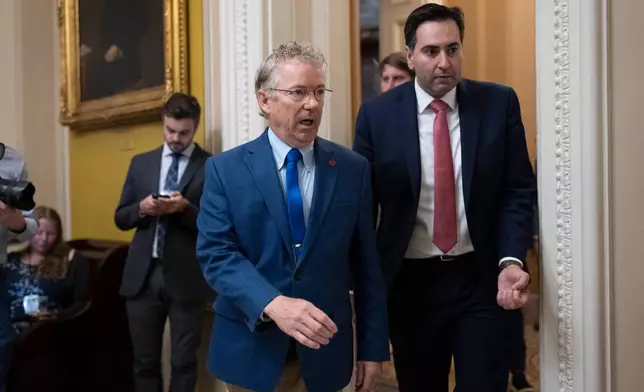
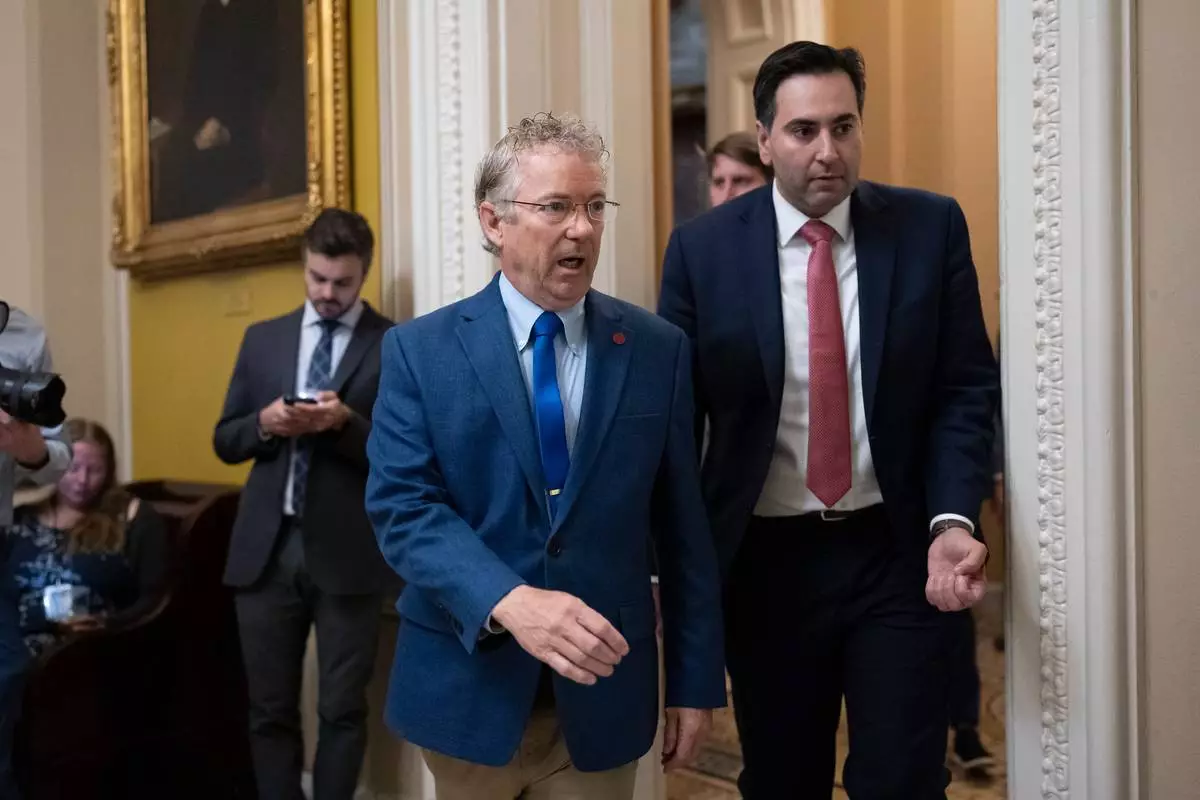
Senate Homeland Security Committee Chairman Rand Paul, R-Ky., arrives for a closed-door meeting with fellow Republican senators at the Capitol in Washington, Thursday, May 21, 2026. (AP Photo/J. Scott Applewhite)

Senate Homeland Security Committee Chairman Rand Paul, R-Ky., arrives for a closed-door meeting with fellow Republican senators at the Capitol in Washington, Thursday, May 21, 2026. (AP Photo/J. Scott Applewhite)

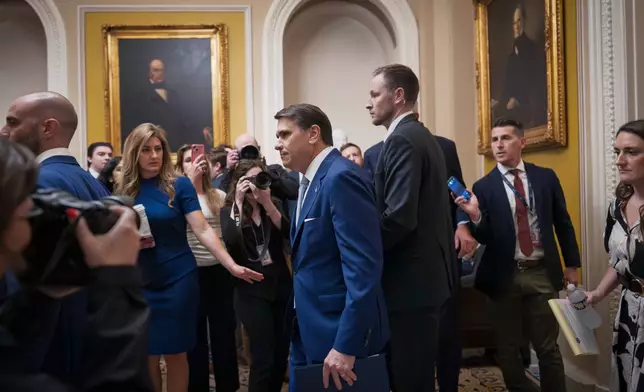
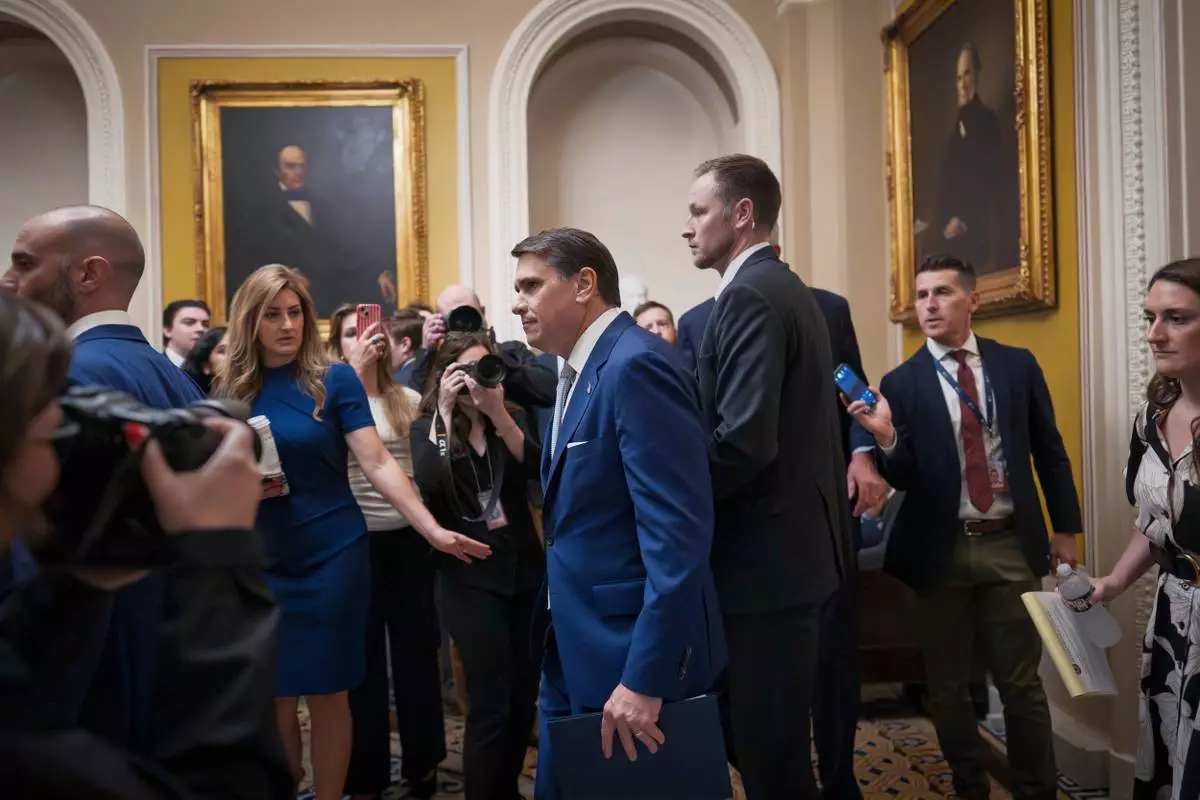
Acting Attorney General Todd Blanche arrives for a closed-door meeting with Republican senators who are expected to abandon a proposal for $1 billion in security money for the White House complex and President Donald Trump's ballroom after it has failed to win enough party support, at the Capitol in Washington, Thursday, May 21, 2026. (AP Photo/J. Scott Applewhite)

Acting Attorney General Todd Blanche arrives for a closed-door meeting with Republican senators who are expected to abandon a proposal for $1 billion in security money for the White House complex and President Donald Trump's ballroom after it has failed to win enough party support, at the Capitol in Washington, Thursday, May 21, 2026. (AP Photo/J. Scott Applewhite)

They simply refused, closed up shop, and went home.

The moment was as rare as it was daring, a sudden flex from the Congress that has become a shell of its former self as a coequal branch, the Republican majority almost always more willing to accommodate the Republican president than to confront him.

The result left in shambles, for now, the GOP's top priority of passing a roughly $70 billion budget package that would fuel Trump’s immigration and deportation operations for the remainder of his presidential term, into 2029. The voting was postponed until Congress resumes next month, blowing Trump's June 1 deadline to have it on his desk.

Trump, asked during an event at the Oval Office if he was losing control of the Senate, shrugged.

“I really don't know,” the president said.

It all caps a bruising week after the president swept midterm primary elections, taking down one Republican after another — Sen. Bill Cassidy in Louisiana and Rep. Thomas Massie in Kentucky, and endorsing the challenger to Sen. John Cornyn in Texas — turning the might of his Make America Great Again movement against those who have stuck to their own views, rather than yield to his.

And it wasn’t just the Senate. In the Republican-led House, for the first time this year, enough GOP lawmakers broke ranks to signal support for a war powers resolution from Democrats designed to halt Trump’s military action in Iran. House Speaker Mike Johnson postponed voting until he could ensure an outcome that avoids confronting the president.

The endgame leaves Trump and the party exposed in new ways.

While the president is winning with his handpicked candidates, many are untested heading into general elections this fall. Trump's own approval rating sits at a low point, and he is spending his political capital, alienating his would-be allies and threatening to detail GOP priorities as they try to persuade voters to keep them in office.

Trump's announcement of nearly $1.8 billion “anti-weaponization” fund for those the president believes were wrongly prosecuted came with little warning, and less support, blindsiding senators already fuming over his push for $1 billion to provide security for his new White House ballroom.

The audacity of the arrangement — Trump negotiating a settlement to his own lawsuit against the Internal Revenue Service that would set up the compensation fund for those perceived to be wrongly prosecuted — proved too toxic for the Senate to bear.

“Under what circumstances would it ever makes sense to provide restitution for people who were either pled guilty or were found guilty in a court of law?” steamed Sen. Thom Tillis, R-N.C.

Tillis derided the White House move as “stupid on stilts” and a “payout for punks.”

GOP Sen. Mitch McConnell of Kentucky, the former majority leader, who tends to keep his own counsel, issued his own a statement in the aftermath.

“So the nation’s top law enforcement official is asking for a slush fund to pay people who assault cops? Utterly stupid, morally wrong — Take your pick,” McConnell said.

The political calculations were becoming apparent: The more Trump bullies and badgers the Congress, the more they are left questioning what they have to gain, or lose, from trying to appease him, especially for those already heading for the exits.

“I think it’s hard to divorce anything that happens here from what’s happening in the political atmosphere around us,” said Senate Majority Leader John Thune, R-S.D.

Acting Attorney General Todd Blanche met for hours behind closed doors with senators over the compensation fund, but left without a resolution.

Afterward, Thune said the discussion likely left the administration’s team with “an appreciation for the depth of feeling on the issue.”

While Trump-backed candidates defeated Republican incumbents in the House and Senate this week, showing his command of the party faithful, some in Congress saw the defeats of their colleagues differently.

“You don’t want to have a totally loyal party that’s in the minority. And that's maybe where we’re headed,” said Republican Rep. Don Bacon of Nebraska, who is retiring at the end of his term.

It began Saturday, when Cassidy, who voted to convict Trump in his Senate impeachment trial after Jan. 6, lost his primary to a Trump-backed challenger in Louisiana. He returned to Washington days later noticeably more eager to criticize Trump — and more willing to vote against him.

“Congress should hold the executive branch accountable,” Cassidy said Monday. A day later, he joined Democrats in voting to rein in the war in Iran.

Then came Trump’s endorsement of Ken Paxton over Cornyn in Texas, a move many Republicans viewed as both personal and politically reckless. Trump said Cornyn “was not supportive of me when times were tough.”

“There’s a lot of folks in our conference that are disappointed because we appreciate working with John Cornyn,” said Sen. Mike Rounds, R-S.D.

Others worried the divisive Texas primary could jeopardize a seat Republicans cannot afford to lose.

“He made the wrong pick,” Tillis said. “It’s going to be a lot more expensive to hold that seat.”

In the House there were also signs of Republican discontent.

Rep. Brian Fitzpatrick, R-Pa., joined Democratic Rep. Tom Suozzi in introducing legislation that would block taxpayer dollars from being used for Trump’s proposed “anti-weaponization” compensation fund.

Fitzpatrick also drew Trump’s ire after the president complained publicly that the congressman “likes voting against Trump” and warned, “You know what happens with that?”

But Fitzpatrick insisted the backlash inside the party was driven by policy concerns, not political fear.

“People have the right to free speech in this country,” Fitzpatrick said. “But what we do here is all about policy.”

At the same time, Fitzpatrick and Republican Michigan Rep. Tom Barrett were expected to side with Democrats in voting for the war powers resolution to rein in Trump’s military campaign in Iran.

GOP leaders pulled the measure at the last minute when it became clear Republicans lacked the votes to defeat it.

Bacon, who spent some 30 years on active duty in the Air Force, said he believed much of the Republican pushback to the war could be resolved if Trump consulted Congress more.

“You sit down with somebody, and work with them instead of threatening, bully and yelling,” said Bacon. “It don’t work.”
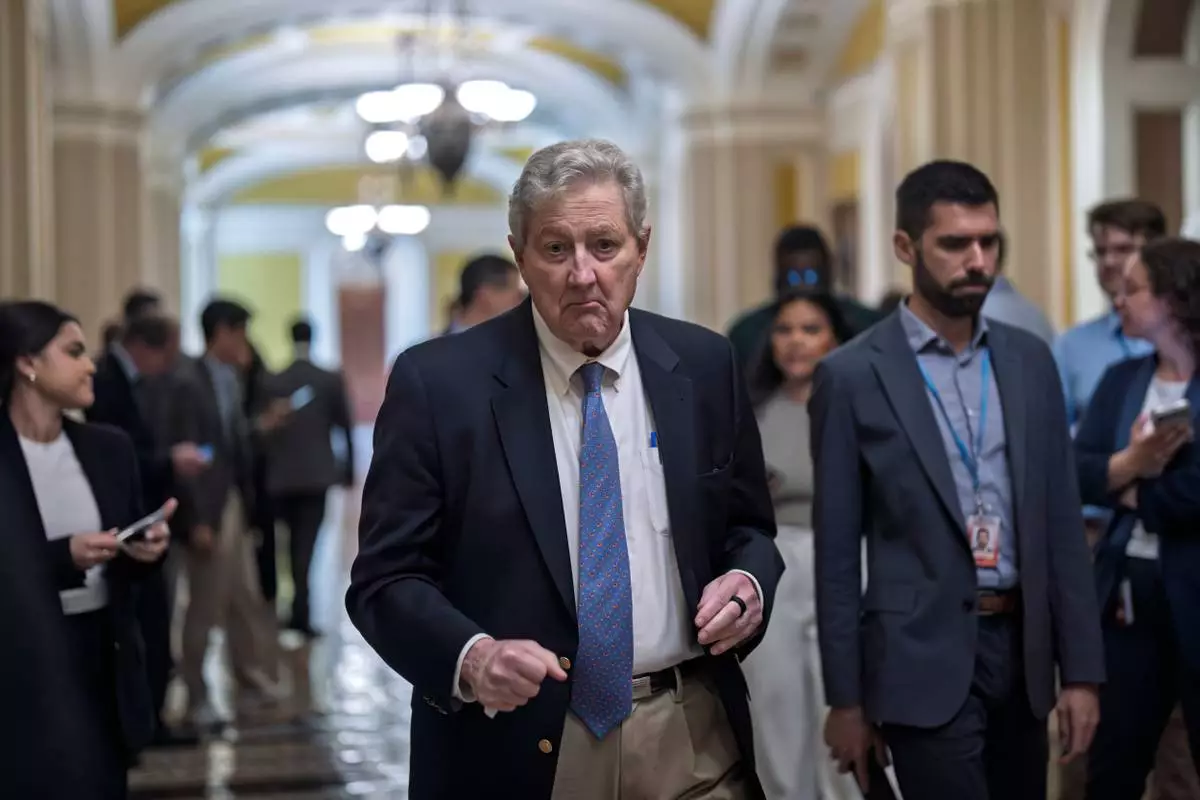
Sen. John Kennedy, R-La., heads to a closed-door meeting with Republican senators at the Capitol in Washington, Thursday, May 21, 2026. (AP Photo/J. Scott Applewhite)
Sen. John Kennedy, R-La., heads to a closed-door meeting with Republican senators at the Capitol in Washington, Thursday, May 21, 2026. (AP Photo/J. Scott Applewhite)
Senate Appropriations Committee Chair Susan Collins, R-Maine, left, and Sen. Lisa Murkowski, R-Alaska, arrive for a closed-door meeting with fellow Republican senators at the Capitol in Washington, Thursday, May 21, 2026. (AP Photo/J. Scott Applewhite)
Senate Appropriations Committee Chair Susan Collins, R-Maine, left, and Sen. Lisa Murkowski, R-Alaska, arrive for a closed-door meeting with fellow Republican senators at the Capitol in Washington, Thursday, May 21, 2026. (AP Photo/J. Scott Applewhite)

Senate Homeland Security Committee Chairman Rand Paul, R-Ky., arrives for a closed-door meeting with fellow Republican senators at the Capitol in Washington, Thursday, May 21, 2026. (AP Photo/J. Scott Applewhite)

Senate Homeland Security Committee Chairman Rand Paul, R-Ky., arrives for a closed-door meeting with fellow Republican senators at the Capitol in Washington, Thursday, May 21, 2026. (AP Photo/J. Scott Applewhite)

Acting Attorney General Todd Blanche arrives for a closed-door meeting with Republican senators who are expected to abandon a proposal for $1 billion in security money for the White House complex and President Donald Trump's ballroom after it has failed to win enough party support, at the Capitol in Washington, Thursday, May 21, 2026. (AP Photo/J. Scott Applewhite)

Acting Attorney General Todd Blanche arrives for a closed-door meeting with Republican senators who are expected to abandon a proposal for $1 billion in security money for the White House complex and President Donald Trump's ballroom after it has failed to win enough party support, at the Capitol in Washington, Thursday, May 21, 2026. (AP Photo/J. Scott Applewhite)
HELSINGBORG, Sweden (AP) — NATO allies and defense officials expressed bewilderment on Friday at U.S. President Donald Trump’s announcement that he would send 5,000 U.S. troops to Poland just weeks after he ordered the same number of forces pulled out of Europe.

The apparent change of mind came after weeks of statements from Trump and his administration about reducing — not increasing — the American military footprint in Europe. Trump's initial order set off a flurry of action among military commanders and left allies already doubtful about America's commitment to Europe's security to ponder what forces they might have to backfill on NATO's eastern flank with Russia and Ukraine.

Earlier this month, the Trump administration said it was reducing levels in Europe by about 5,000 troops, and U.S. officials confirmed about 4,000 service members were no longer deploying to Poland. The dispatch to Germany of U.S. personnel trained to fire long-range missiles was also halted.

But in a post on Truth Social on Thursday, Trump said he would send "an additional 5,000 Troops to Poland,” citing his strong ties with Polish President Karol Nawrocki, whom Trump endorsed in elections last year.

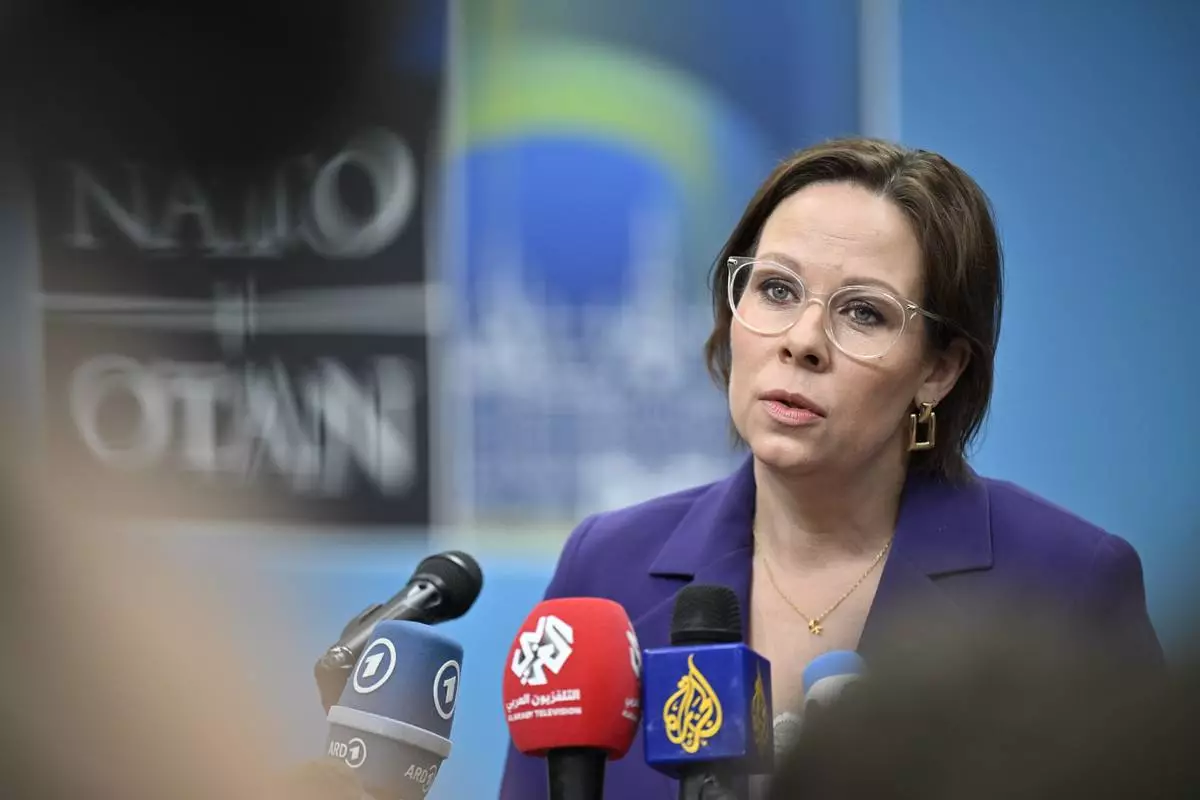
“It is confusing indeed, and not always easy to navigate,” Swedish Foreign Minister Maria Malmer Stenergard told reporters at a meeting Friday that she was hosting of her NATO counterparts, including U.S. Secretary of State Marco Rubio.

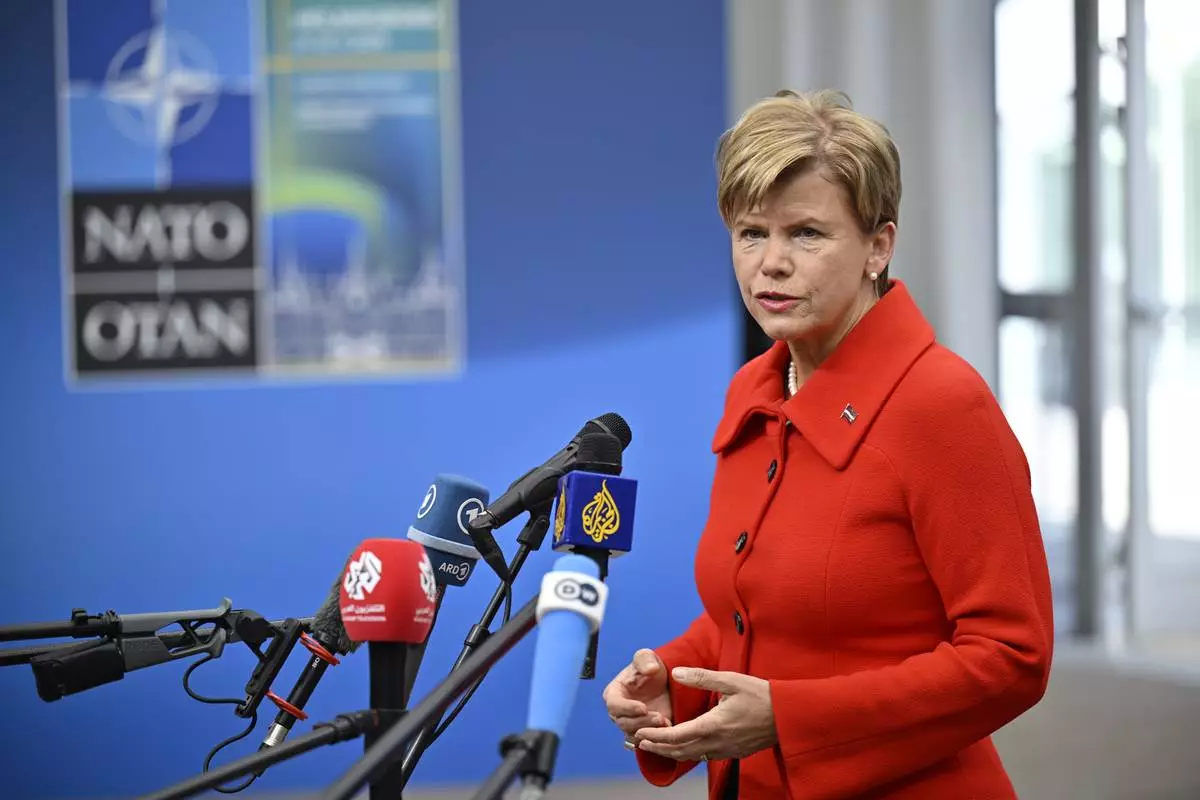
Ministers from the Netherlands and Norway were sanguine about Trump’s latest move, as was Latvian Foreign Minister Baiba Braže, who said allies knew the U.S. troop “posture was being reconsidered, and now there is no change of posture. For now.”

U.S. defense officials also expressed confusion. “We just spent the better part of two weeks reacting to the first announcement. We don’t know what this means either,” said one of two officials who spoke on condition of anonymity to discuss sensitive military matters.

But Rubio played down the issue. He said that “the United States continues to have global commitments that it needs to meet in terms of our force deployment, and that constantly requires us to reexamine where we put troops.”

The latest surprise came despite a U.S. pledge to coordinate troop deployments, including one from NATO’s top military officer, U.S. Lt. Gen. Alex Grynkewich, on Wednesday.

Trump's initial announcement that he would withdraw troops came as he fumed over remarks by German Chancellor Friedrich Merz, who said that the U.S. was being “humiliated” by the Iranian leadership and criticized what he called a lack of strategy in that war.

Trump told reporters that the U.S. would be cutting even more than 5,000 and also announced new tariffs on European cars. Germany is the continent’s biggest auto producer.

Rubio insisted that Trump’s decision “is not a punitive thing. It’s just something that’s ongoing.” He has often been called on to offer a less antagonistic U.S. presence at meetings with European partners, but Rubio did skip the last NATO gathering of foreign ministers in December.

About 80,000 U.S. troops are stationed in Europe. The Pentagon is required to keep at least 76,000 troops and major equipment on the continent unless NATO allies are consulted and there is a determination that such a withdrawal is in U.S. interests.

The withdrawal of 5,000 troops might drop numbers below that limit.

But Trump's latest post suggests that troop numbers in Europe would not change. Polish Foreign Minister Radek Sikorski welcomed the decision to send more forces to his country, saying it ensures that “the presence of American troops in Poland will be maintained more or less at previous levels.”

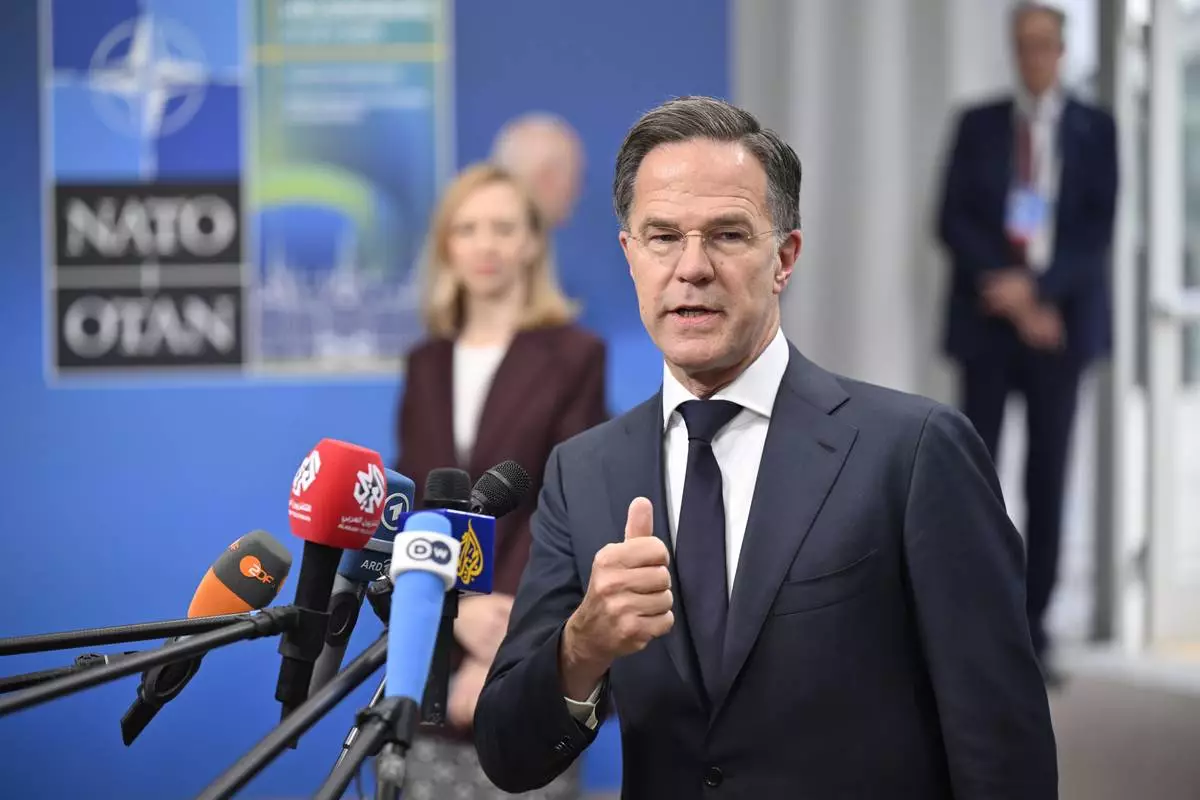
NATO Secretary-General Mark Rutte also welcomed the move. On Thursday, before Trump took to Truth Social again, Rutte had underlined that it was important for Europe to take care of its own security. “We have a process in place. This is normal business,” he told reporters.

Friday's NATO meeting in Helsingborg, Sweden, was aimed at preparing for a summit of Trump and his counterparts in Turkey in July.

Cook reported from Brussels. Associated Press writer Emma Burrows in London contributed.

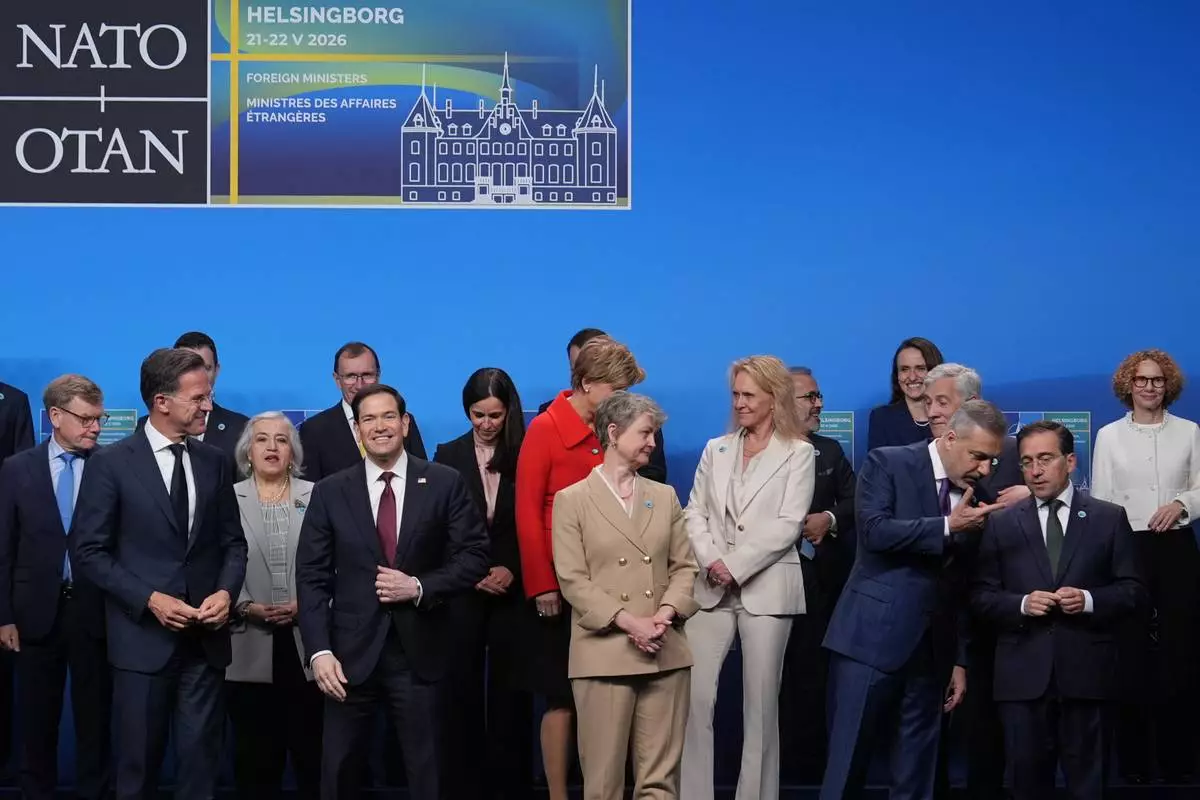
United States Secretary of State Marco Rubio, front second left, and NATO Secretary General Mark Rutte, front left, speak with each other during a group photo at a meeting of NATO foreign ministers in Helsingborg, Sweden, Friday, May 22, 2026. (AP Photo/Julia Demaree Nikhinson, Pool)

United States Secretary of State Marco Rubio, front second left, and NATO Secretary General Mark Rutte, front left, speak with each other during a group photo at a meeting of NATO foreign ministers in Helsingborg, Sweden, Friday, May 22, 2026. (AP Photo/Julia Demaree Nikhinson, Pool)

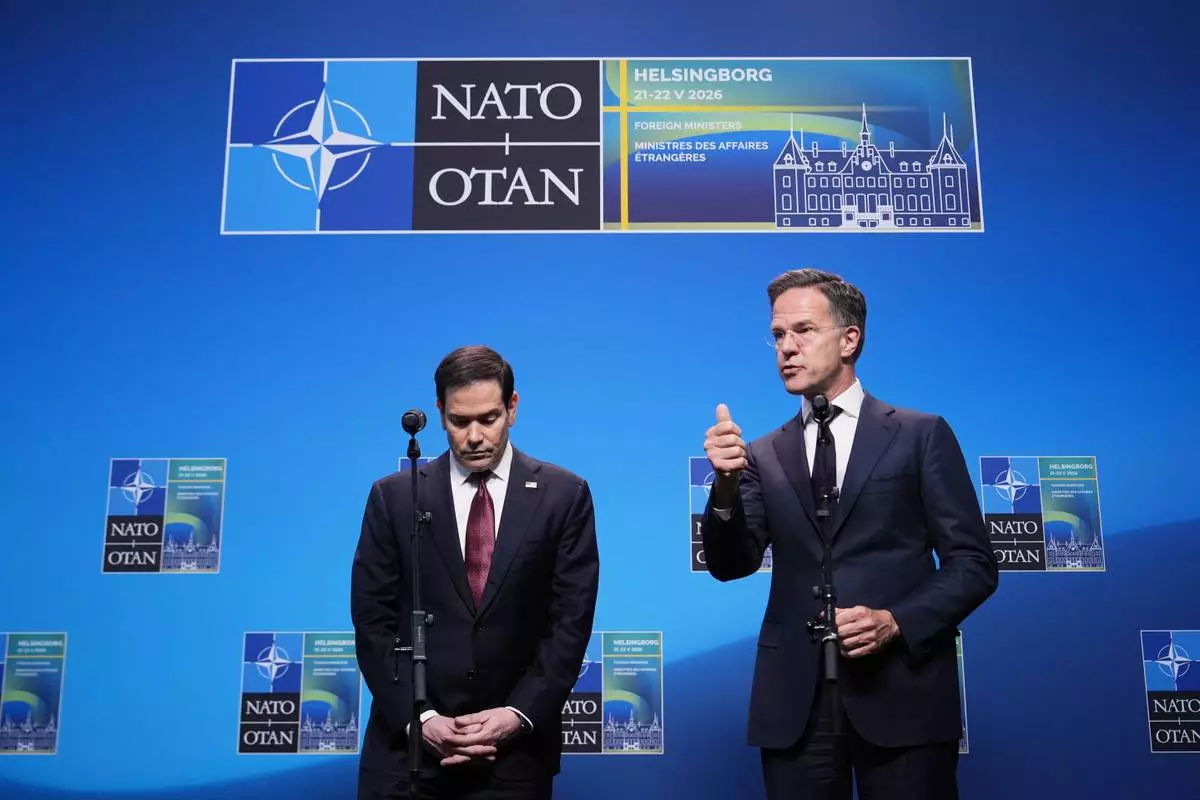
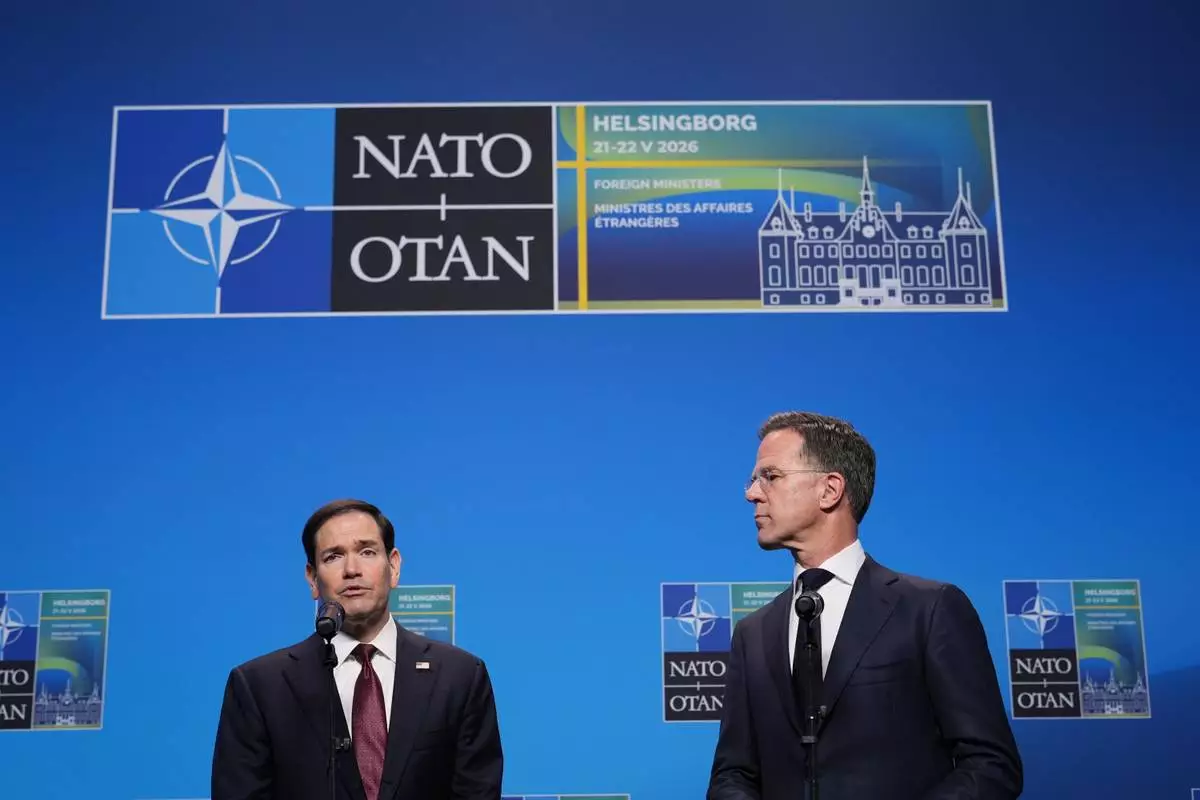
United States Secretary of State Marco Rubio, left, and NATO Secretary General Mark Rutte look at each other as they deliver a statement during a meeting of NATO foreign ministers in Helsingborg, Sweden, Friday, May 22, 2026. (AP Photo/Julia Demaree Nikhinson, Pool)

United States Secretary of State Marco Rubio, left, and NATO Secretary General Mark Rutte look at each other as they deliver a statement during a meeting of NATO foreign ministers in Helsingborg, Sweden, Friday, May 22, 2026. (AP Photo/Julia Demaree Nikhinson, Pool)

Latvian Foreign Minister Baiba Braže speaks at the doorstep of the NATO foreign ministers' meeting at Sea U in Helsingborg, Sweden, Friday, May 22, 2026. (Johan Nilsson/TT News Agency via AP)

Latvian Foreign Minister Baiba Braže speaks at the doorstep of the NATO foreign ministers' meeting at Sea U in Helsingborg, Sweden, Friday, May 22, 2026. (Johan Nilsson/TT News Agency via AP)

United States Secretary of State Marco Rubio, left, and NATO Secretary General Mark Rutte deliver a statement during a meeting of NATO foreign ministers in Helsingborg, Sweden, Friday, May 22, 2026. (AP Photo/Julia Demaree Nikhinson, Pool)

United States Secretary of State Marco Rubio, left, and NATO Secretary General Mark Rutte deliver a statement during a meeting of NATO foreign ministers in Helsingborg, Sweden, Friday, May 22, 2026. (AP Photo/Julia Demaree Nikhinson, Pool)

NATO Secretary General Mark Rutte speaks to media at the NATO Foreign Ministers' meeting in Helsingborg, Sweden, Friday, May 22, 2026. (Johan Nilsson/TT News Agency via AP)

NATO Secretary General Mark Rutte speaks to media at the NATO Foreign Ministers' meeting in Helsingborg, Sweden, Friday, May 22, 2026. (Johan Nilsson/TT News Agency via AP)

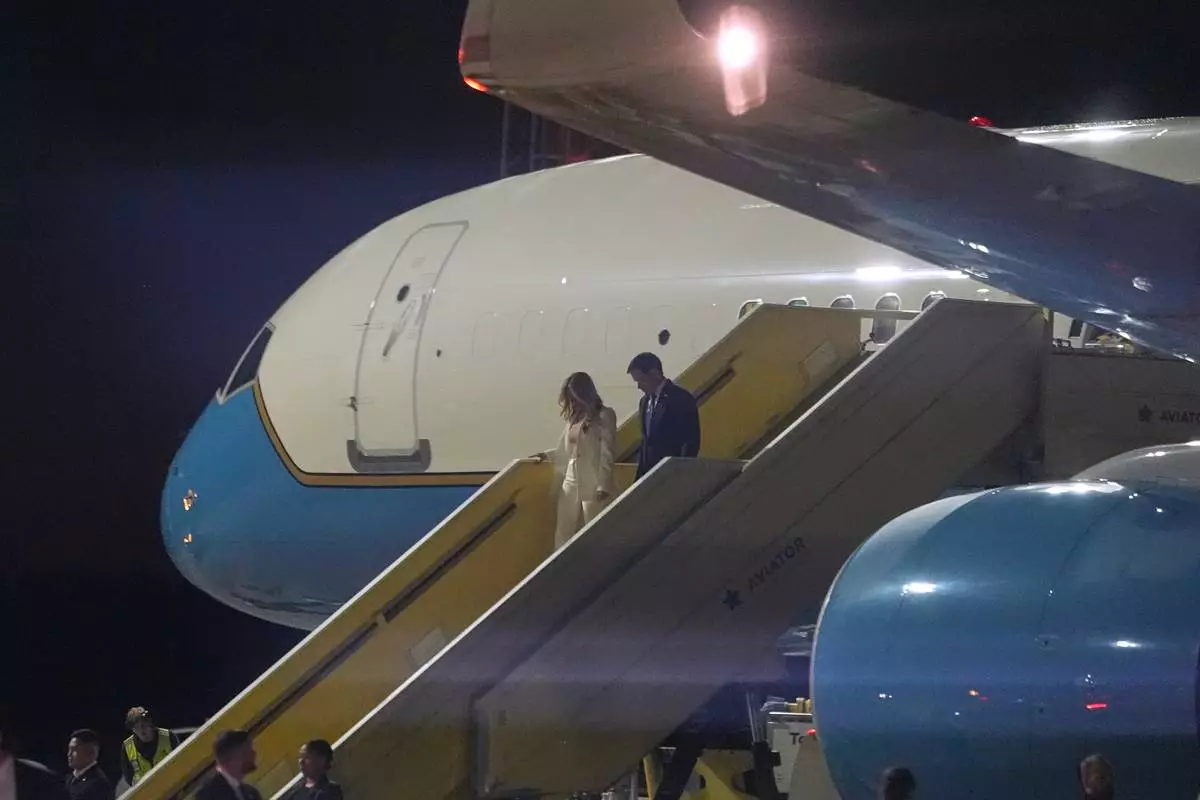
Secretary of State Marco Rubio arrives with his wife Jeanette at Malmo Airport, Friday, May 22, 2026, in Malmo-Sturup, Sweden, ahead of a NATO foreign ministers meeting. (AP Photo/Julia Demaree Nikhinson, Pool)

Secretary of State Marco Rubio arrives with his wife Jeanette at Malmo Airport, Friday, May 22, 2026, in Malmo-Sturup, Sweden, ahead of a NATO foreign ministers meeting. (AP Photo/Julia Demaree Nikhinson, Pool)

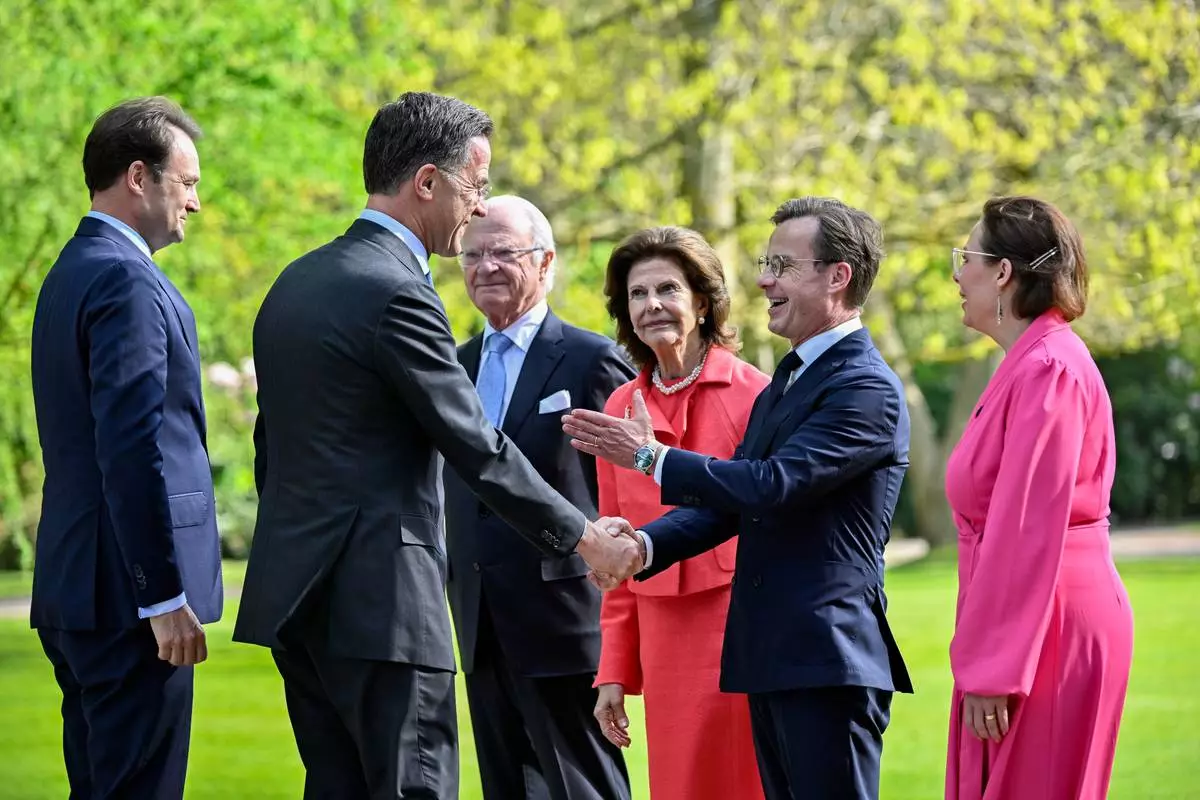
NATO Secretary General Mark Rutte, second from left, shakes hands with Prime Minister of Sweden Ulf Kristersson, as he is greeted by King Carl Gustaf of Sweden, Queen Silvia of Sweden and Minister for Foreign Affairs of Sweden Maria Malmer Stenergard, right, before a dinner at Sofiero Castle in Helsingborg, Sweden, Thursday May 21 2026. (Johan Nilsson/TT News Agency via AP)

NATO Secretary General Mark Rutte, second from left, shakes hands with Prime Minister of Sweden Ulf Kristersson, as he is greeted by King Carl Gustaf of Sweden, Queen Silvia of Sweden and Minister for Foreign Affairs of Sweden Maria Malmer Stenergard, right, before a dinner at Sofiero Castle in Helsingborg, Sweden, Thursday May 21 2026. (Johan Nilsson/TT News Agency via AP)

Swedish Foreign Minister Maria Malmer Stenergard speaks to media at the NATO Foreign Ministers' meeting in Helsingborg, Sweden, Friday, May 22, 2026. (Johan Nilsson/TT News Agency via AP)

Swedish Foreign Minister Maria Malmer Stenergard speaks to media at the NATO Foreign Ministers' meeting in Helsingborg, Sweden, Friday, May 22, 2026. (Johan Nilsson/TT News Agency via AP)

Recommended Articles