Skip to Content Facebook Feature Image

Pakistan, China mark 75 years of bilateral ties, jointly advance CPEC phase two

China

China

China

Pakistan, China mark 75 years of bilateral ties, jointly advance CPEC phase two

2026-05-22 17:48 Last Updated At:20:47

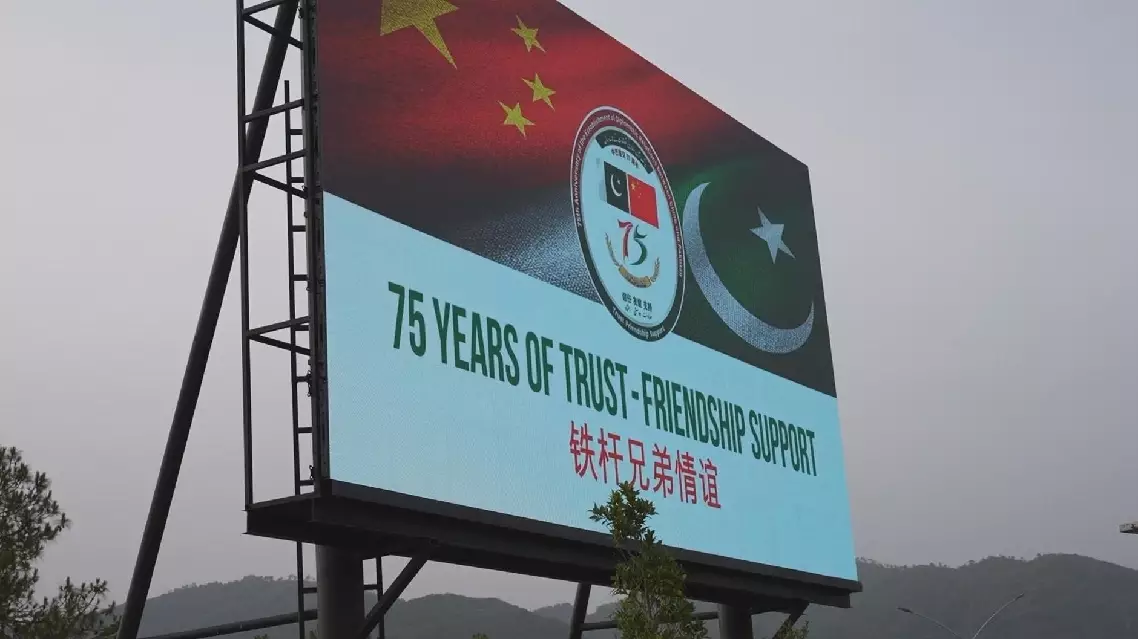
Pakistan and China are marking 75 years of diplomatic ties with renewed emphasis on economic cooperation and regional connectivity as officials from both countries say the relationship has evolved far beyond traditional diplomacy, into what they describe as an all-weather strategic partnership.

At the center of that partnership remains the China-Pakistan Economic Corridor, or CPEC.

The CPEC, launched in 2013 as the flagship of the Belt and Road Initiative, has made substantial progress over the years, moving from blueprints to power plants and ports. It profoundly transformed Pakistan's economic landscape, reshaping its connectivity, energy security, and development outlook while deepening its strategic partnership with China.

But now, both sides say the focus is shifting toward what many here call "CPEC Phase Two".

"In this new phase, we will see greater business-to-business cooperation, we will see modernization of agriculture in Pakistan, we will see greater people-to-people contacts, particularly in the areas of human resources development and the area of technological cooperation," said Ahsan Iqbal, Pakistani Federal Minister for Planning, Development and Special Initiatives.

Officials from Pakistan also say that improving security and investor confidence remain key priorities as the country seeks greater Chinese investment.

Meanwhile, Chinese analysts say Pakistan remains strategically important to the country's regional connectivity vision.

"Now all private (sectors) come to Pakistan for doing business in the solar energy, and environmental treatment or some technical fields, mostly in the service and product fields," said La Jielian, chairman of Pakistan Overseas Chinese Association.

With Prime Minister Shahbaz Sharif's upcoming visit to China, analysts here say the partnership is also gaining significance amid global economic uncertainty and shifting geopolitical dynamics.

"The current situation also needs these types of positive steps to meet with the different countries' representatives, countries' people, to do different visits, to bring peace and stability to the region," said Kamran Raja, an analyst.

Officials from both countries say the coming years will focus on expanding practical cooperation and accelerating economic projects, as the two countries continue to project their partnership as one built on long-term strategic trust.
Pakistan, China mark 75 years of bilateral ties, jointly advance CPEC phase two

Pakistan, China mark 75 years of bilateral ties, jointly advance CPEC phase two

Amid the rising fuel costs and airline surcharges linked to the U.S.-Israeli war against Iran, Caribbean tourism officials gathered at the 44th Caribbean Hotel and Tourism Association Forum this month and expressed cautious optimism, citing resilient visitor demand, strategic marketing adjustments, and strong seasonal performance as foundations for continued recovery.

The U.S.-Israeli war against Iran is already affecting Caribbean economies as fuel prices surge and airlines pass costs on to passengers. This not only pressures the region's tourism-dependent economies but also raises the cost of imported food, electricity, and transportation.

Since the start of the conflict, the price of Brent crude has surged nearly 50 percent, prompting airlines to find the ways to share the burden with travelers.

"The impacts are unfolding in stages. In the first place, when the uncertainty, or the disturbance occurred in the Middle Eastern region, it actually cut the supply chain to some extent to the Pacific, and people started to look at the region in particular. We amplified out marketing presence, to ensure that when people are looking for an option or places to rebook, that St. Lucia would turn up. And we've actually seen some of that result," said Louis Lewis, chief executive officer of the Saint Lucia Tourism Authority.

During the International Monetary Fund's Spring Meeting, the international financial institution expressed its concern for Caribbean tourism, warning that it could see a decline as ticket prices increase.

Lewis acknowledged the potential for longer-term disruption.

"The second thing is that if the conflict continues as a prolonged activity, we anticipate that it could impact us. We will have to diversify from our major source markets, hence the reason why we are looking at Latin America," he said.

But some of the region's top tourism officials are seeing positive signs. The region is coming off another successful year, where tourism arrivals grew by 2.5 percent, adding an additional 900,000 visitors over 2024.

"The region has been witnessing a very good winter season, and I have no doubt whatsoever that the forecast that we have for the summer will continue to be very strong," said Ian Gooding-Edghill, minister of tourism of Barbados.

Still, structural vulnerabilities remain. As an import-dependent region, the Caribbean is highly exposed to global price fluctuations. Concerns are mounting that rising prices in the United States could trigger sharper inflationary pressures, including higher operating costs in the tourism sector.

"In Saint Lucia, we just saw the cost of energy increase about 20 percent, and that's having an impact now going into the summer when our rates are lower. It rallies points to the importance of us building a bit more resilience into Caribbean tourism," said Sanovnik Destang, president of the Caribbean Hotel and Tourism Association.

Caribbean tourism shows resilience despite Middle East tension challenges

Caribbean tourism shows resilience despite Middle East tension challenges

Caribbean tourism shows resilience despite Middle East tension challenges

Caribbean tourism shows resilience despite Middle East tension challenges

Recommended Articles