KYIV, Ukraine (AP) — Hundreds of Ukrainians marched through the capital on Friday, demanding that the government veto a bill that families of missing soldiers say could lead to their loved ones being prematurely declared dead.
The protesters gathered to oppose Bill No. 13646, which addresses the legal status of missing persons. Participants said that certain provisions of the legislation could allow courts to declare missing Ukrainian military personnel legally dead before their fate has been confirmed.
Click to Gallery
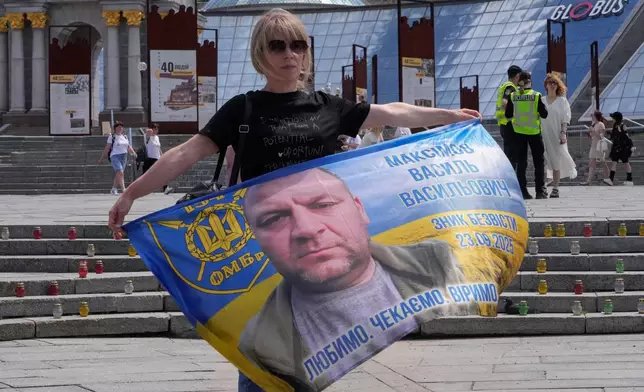
Women hold a banner with portrait of their relative during a rally of families of missing soldiers in Kyiv, Ukraine, Friday, May 22, 2026. (AP Photo/Efrem Lukatsky)
A woman holds a banner with the portrait of her relative during a rally of families of missing soldiers in Kyiv, Ukraine, Friday, May 22, 2026. (AP Photo/Efrem Lukatsky)
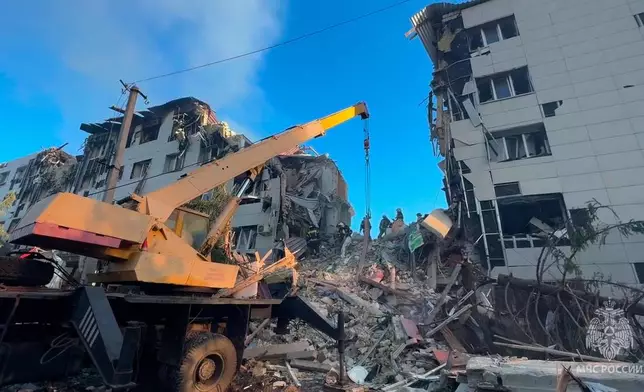
In this image taken from video released by Russian Emergency Ministry Press Service Telegram channel on Friday, May 22, 2026, Rescuers work at the side of a college dormitory building damaged by Ukrainian drones in Starobilsk, Ukraine. (Russian Emergency Ministry Press Service via AP)
A woman looks at a makeshift memorial for fallen soldiers in Russia Ukraine war on Independence Square in Kyiv, Ukraine, Friday, May 22, 2026. (AP Photo/Efrem Lukatsky)
“Today all the families came out so that the missing are not equated with the dead,” said Mariana Yatselenko, 27, who took part in the Kyiv march.
More than 90,000 people are listed as missing in Ukraine’s unified registry of persons who disappeared under special circumstances, according to Artur Dobrosierdov, the country’s commissioner for missing persons.
Neither Russia nor Ukraine publish regular casualty numbers in the war, although analysts estimate hundreds of thousands of casualties in the fighting.
The Ukrainian register covers people who went missing during combat, as a result of armed aggression or in occupied territories, mostly after Russia’s all-out invasion began on Feb. 24, 2022. But some cases date back to 2014, when Russian soldiers invaded the Crimean Peninsula and pro-Russia forces started fighting in eastern Ukraine.
The registry began operating in May 2023, and at that point, information about both military personnel and civilians from previous years was entered into it.
Similar demonstrations have been held previously over the bill, reflecting growing pressure from relatives of soldiers who are missing.
Ukrainian drones hit a college dormitory building in Starobilsk, a city in Ukraine’s Russia-occupied Luhansk region, killing four people and wounding 39 others, Russian authorities said. Up to 18 people could be buried under the rubble, officials said.
Kremlin spokesman Dmitry Peskov denounced the strike as a “heinous crime.” Ukrainian officials made no immediate comment.
The Russian Defense Ministry on Friday said that it intercepted 217 Ukrainian drones over multiple Russian regions, including the Moscow region and St. Petersburg, the country’s second-largest city.
For the fourth time this month Ukraine struck Russia’s Yaroslavl oil refinery, around 700 kilometers (440 miles) from the border, in an overnight operation, Ukrainian President Volodymyr Zelenskyy said Friday.
Ukraine has been pounding Russian oil facilities in an effort to deny Moscow funding for its invasion.
U.S.-led diplomatic efforts to stop the fighting have brought no significant results and recently appeared to peter out.
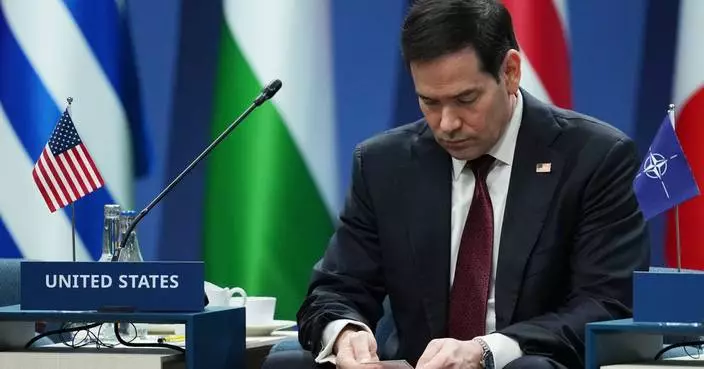
“They were not fruitful, unfortunately,” U.S. Secretary of State Marco Rubio said of negotiations over the past year with Russia and Ukraine.
No talks are happening now, he said during a trip to Sweden, although they could resume if Washington sees an opportunity for progress.
Ukraine’s air force said that it shot down or jammed 115 of 124 Russian drones that were launched overnight, in regular bombardments of civilian areas that in recent months have escalated.
Eleven people, including a child, were wounded in Russian attacks across the northern Sumy region, the National Police said. Also, a man was killed by a Russian drone in the city of Kherson, in southern Ukraine, according to the region’s military administration chief.
The number of Ukrainian civilian casualties verified by the United Nations increased by 21% in the first four months of this year, compared with the same period last year, with 815 civilians killed and 4,174 wounded.
In Washington, the Trump administration approved a modest $108 million arms sale to Ukraine that will help the country sustain its midrange air defense missile system.
The U.S. State Department announced the sale of ground-to-air Hawk missile components, spare parts and logistic support late Thursday. Under U.S. President Donald Trump, Washington has slashed military support for Ukraine.
On the battlefield, Ukrainian counterattacks have driven the Russian army out of more than 400 square kilometers (150 square miles) of southern Ukraine since the end of last year, Western analysts say.
Those successes are attributed to Ukraine’s increasingly homegrown drone and missile technology, as well as Russian forces being denied access to Starlink satellite services used to steer drones toward targets.
Zelenskyy said that Russia could be planning new attacks on northern Ukraine, launched from Belarus.
Moscow “is eager to draw (Belarus) deeper into this war,” Zelenskyy said on social media, warning that “there will be consequences” for the Belarusian government, if it provides a platform for strikes on Ukraine.
Ukrainian Foreign Minister Andrii Sybiha alerted allies at a NATO meeting in Sweden about what Ukrainian intelligence services say are growing threats from Belarus. Sybiha urged partners to take unspecified deterrence measures against Minsk.
Russia and Belarus held joint nuclear exercises earlier this week.
The Institute for the Study of War, a Washington-based think tank, underscored “Russia’s ability to leverage Belarus for future Russian military operations and Russia’s deepening de facto control over Belarus.”
Matthew Lee in Washington, and Barry Hatton in Lisbon, Portugal, contributed to this report.
Follow the AP’s coverage of the war in Ukraine at https://apnews.com/hub/russia-ukraine

Women hold a banner with portrait of their relative during a rally of families of missing soldiers in Kyiv, Ukraine, Friday, May 22, 2026. (AP Photo/Efrem Lukatsky)
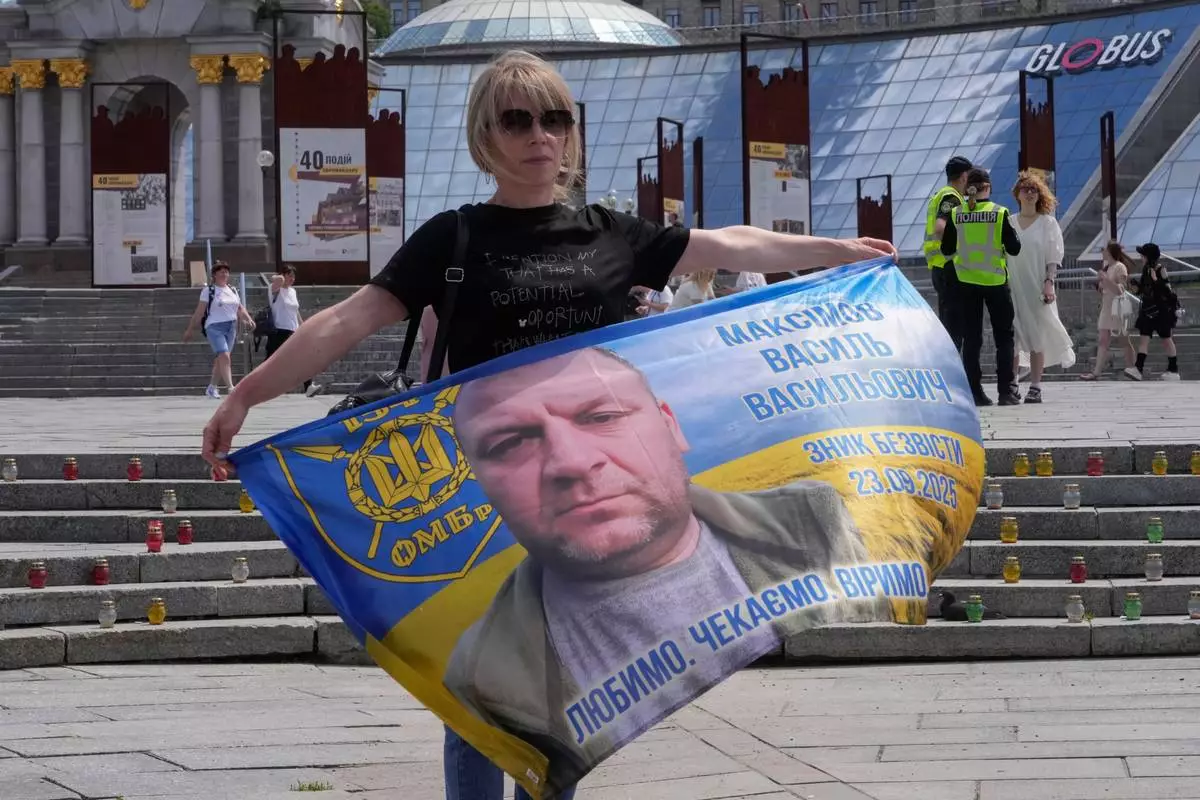
A woman holds a banner with the portrait of her relative during a rally of families of missing soldiers in Kyiv, Ukraine, Friday, May 22, 2026. (AP Photo/Efrem Lukatsky)

In this image taken from video released by Russian Emergency Ministry Press Service Telegram channel on Friday, May 22, 2026, Rescuers work at the side of a college dormitory building damaged by Ukrainian drones in Starobilsk, Ukraine. (Russian Emergency Ministry Press Service via AP)

A woman looks at a makeshift memorial for fallen soldiers in Russia Ukraine war on Independence Square in Kyiv, Ukraine, Friday, May 22, 2026. (AP Photo/Efrem Lukatsky)
President Donald Trump is testing his midterm message on the economy in a toss-up congressional district in New York, even as voters largely disapprove of his stewardship. The event's promoted focus is the tax law Trump signed last year, which quadrupled the federal deduction for state and local taxes, a critical change for high-tax states like New York.
Meanwhile, Republicans are struggling to find the votes to keep supporting Trump's war with Iran. In Havana, a huge crowd of Cubans is taunting Trump while protesting the U.S. indictment former President Raúl Castro amid Trump's pressure campaign. And in Europe, Secretary of State Marco Rubio is facing NATO allies confused by contradictory Trump administration statements.
The Latest:
The secretary of state said he and other foreign ministers discussed the issue of reopening the critical waterway, and that he reiterated the need for a “Plan B” if a deal isn’t reached between Washington and Tehran.
“Someone’s going to have to do something about it, okay?” Rubio said. “They’re not just going to voluntarily reopen the straits in that scenario.”
Rubio said he received lots of “nods” from European allies when he brought it up Friday. In the same breath, Rubio confirmed what Iranian officials had been saying, that progress is being made in the negotiations.
“I wouldn’t exaggerate it and I wouldn’t diminish it,” he said. “But there’s more work to be done.”
Rubio says America’s NATO allies understand that eventually there will be a reduction in the U.S. troop presence in Europe as the Trump administration evaluates its force posture globally.
“I think there’s a broad recognition that there are going to be eventually less U.S. troops in Europe than there has historically been for a variety of reasons,” Rubio told reporters.
NATO allies have been confused by contradictory statements coming from Trump and his top aides, including an announcement last week that troop levels would be reduced in Poland that Trump appeared to reverse on Thursday. A previously announced troop reduction in Germany appears to be going ahead but Rubio noted that the Germans “didn’t freak out about it” because it brought the numbers back to where they were three years ago.
The U.S. secretary of state has met with his NATO foreign minister counterparts in Sweden and reiterated U.S. demands for Europe and Canada to increase their defense spending and military industrial capabilities.
In meetings with his colleagues in Helsingborg on Friday, Rubio said the U.S. remains committed to NATO but said the force posture of American troops in Europe is contingent on what allies contribute. The alliance has been jolted by Trump’s abrupt decisions on troop deployments.
Trump has expressed strong dissatisfaction with some allies and their reluctance or refusal to assist in the war with Iran. Rubio said the president’s views and “frankly, disappointment at some of our NATO Allies and their response to our operations in the Middle East, they are well documented” and need to be addressed by NATO leaders at their summit in Turkey in July.
While the president’s handpicked candidates are winning GOP primaries, many are untested heading into general elections this fall. Trump’s own approval rating sits at a low point, and he’s spending his political capital, alienating would-be allies and threatening to detail GOP priorities.
Trump’s announcement of nearly $1.8 billion “anti-weaponization” fund for people he believes were wrongly prosecuted blindsided senators already fuming over his push for $1 billion to provide security for his new White House ballroom. The audacity of the arrangement proved too toxic for the Senate to bear.
Sen. Thom Tillis of North Carolina called it “stupid on stilts” and a “payout for punks.”
“So the nation’s top law enforcement official is asking for a slush fund to pay people who assault cops? Utterly stupid, morally wrong — Take your pick,” said Sen. Mitch McConnell of Kentucky, the former majority leader.
Voting on a roughly $70 billion budget package that would fuel Trump’s immigration and deportation operations for the remainder of his presidential term, into 2029, was postponed until Congress resumes next month. That blows Trump’s June 1 deadline to have it on his desk.
Trump shrugged when asked during an Oval Office event if he was losing control of the Senate.
“I really don’t know,” the president said.
And it wasn’t just the Senate. For the first time this year, enough Republican House members broke ranks to signal support for a war powers resolution from Democrats that’s designed to halt Trump’s military action in Iran. House Speaker Mike Johnson postponed the voting to avoid confronting the president.
Trump’s political revenge tour met its potential match this week as angry Republican senators, pushed to a breaking point by his seemingly insatiable and outlandish demands — particularly a $1.776 billion fund for Jan. 6 rioters and others he believes were wrongly prosecuted — did the unthinkable.
They simply refused, closed up shop, and went home.
The moment was as rare as it was daring, a sudden flex from the Congress that has become a shell of its former self as a coequal branch, the Republican majority almost always more willing to accommodate the Republican president than to confront him.
▶ Read more:
Rubio says America’s NATO allies understand that eventually there will be a reduction in the U.S. troop presence in Europe as the Trump administration evaluates its force posture globally.
“I think there’s a broad recognition that there are going to be eventually less U.S. troops in Europe than there has historically been for a variety of reasons,” Rubio told reporters.
NATO allies have been confused by contradictory statements coming from Trump and his top aides, including an announcement last week that troop levels would be reduced in Poland that Trump appeared to reverse on Thursday. A previously announced troop reduction in Germany appears to be going ahead but Rubio noted that the Germans “didn’t freak out about it” because it brought the numbers back to where they were three years ago.
The U.S. secretary of state has met with his NATO foreign minister counterparts in Sweden and reiterated U.S. demands for Europe and Canada to increase their defense spending and military industrial capabilities.
In meetings with his colleagues in Helsingborg on Friday, Rubio said the U.S. remains committed to NATO but said the force posture of American troops in Europe is contingent on what allies contribute. The alliance has been jolted by Trump’s abrupt decisions on troop deployments.
Trump has expressed strong dissatisfaction with some allies and their reluctance or refusal to assist in the war with Iran. Rubio said the president’s views and “frankly, disappointment at some of our NATO Allies and their response to our operations in the Middle East, they are well documented” and need to be addressed by NATO leaders at their summit in Turkey in July.
“Who do they think they are to judge Raúl?” Gerardo Hernández asked as the crowd cheered. He’s one of five Cubans accused of being a spy who was imprisoned and later released by the U.S. in 2014.
“For the United States, the law is a tailor-made suit,” he said before punching the air with this fist, to a shout of “Viva Raúl!”
The crowd responded to his call: “Homeland or death, we will vanquish!”
Thousands of people have crowded along Havana’s famed seawall to decry the U.S. indictment. Attendees include daughter, Mariela Castro, and his grandson, Raúl Guillermo Rodríguez Castro. Salsa songs with biting anti-Trump lyrics are booming across the old city.
The Castro indictment has many thinking the Trump administration is following a playbook it used to capture then-Venezuelan President Nicolás Maduro in a military operation in January. Maduro is now imprisoned in the U.S. on federal drug trafficking charges and has pleaded not guilty.
The U.S. military touted the arrival of the USS Nimitz aircraft carrier group for maritime exercises in the Caribbean Sea as the charges against Castro were announced. But professor William LeoGrande, a Latin America specialist at American University, warned against assumptions that a Maduro-like extraction would succeed in Cuba.
“The United States certainly has the military capability to seize Raúl Castro, just as they seized Maduro, although it would probably be more costly,” LeoGrande said. But Castro has been retired for almost a decade. “He still has influence and the leadership seeks his opinion on major decisions, but he is not running the government on a day-to-day basis. If the US were to abduct him, it would not change the operations of government, unlike what happened in Venezuela.”
A huge crowd of Cubans rallied Friday outside the U.S. Embassy in Havana to honor former President Raúl Castro and to protest the Trump administration’s criminal indictment.
“The Cuban people reaffirm that neither threats, nor blockade, nor energy embargo, nor false accusations will be able to break the will of an entire people in defense of their Revolution,” read a statement published by state media.
Raúl Castro has rarely appeared in public since stepping down and handing over to President Miguel Díaz-Canel, who was joined by military leaders at the rally.
Castro was last seen surrounded by tens of thousands of people at a state-organized rally on May 1.
The Trump administration has approved a modest $108 million arms sale to Ukraine that will help the country maintain and sustain its midrange air defense missile system.
The State Department announced the sale of ground-to-air Hawk missile components, spare parts and logistic support late Thursday. The administration has notably reduced military support for Ukraine over the past 18 months as it seeks to mediate an agreement with Russia to end the conflict.
The sale “will improve Ukraine’s capability to meet current and future threats by further equipping it to conduct self-defense and regional security missions with a more robust integrated air defense capability,” the department said in a statement.
Republicans struggled Thursday to find the votes to dismiss legislation that would compel President Donald Trump to withdraw from the war with Iran, delaying planned votes on the matter into June.
The House had scheduled a vote on a war powers resolution, brought by Democrats, that would rein in Trump’s military campaign. But as it became clear that Republicans would not have the numbers to defeat the bill, GOP leaders declined to hold a vote on it. It was the latest sign of the slipping support in Congress for a war that Trump launched more than two months ago without congressional approval.
Republicans in the Senate are also working to ensure they have the votes to dismiss another war powers resolution that advanced to a final vote earlier this week, when four GOP senators supported the resolution and three others were absent from the vote.
The actions by congressional leaders showed Republicans are struggling to maintain political backing for Trump’s handling of the war.
▶ Read more
NATO allies and defense officials expressed bewilderment at Trump’s decision to send 5,000 U.S. troops to Poland.
“It is confusing indeed, and not always easy to navigate,” Swedish Foreign Minister Maria Malmer Stenergard told reporters at a meeting she was hosting of her NATO counterparts, including U.S. Secretary of State Marco Rubio.
U.S. defense officials were also confused. “We just spent the better part of two weeks reacting to the first announcement. We don’t know what this means either,” said one of two officials who spoke on condition of anonymity to discuss sensitive military matters.
NATO allies have been blindsided, despite a U.S. pledge to coordinate troop deployments. “We’re going to stay well-synchronized with our allies moving forward,” NATO’s top military officer, U.S. Lt. Gen. Alex Grynkewich, promised on Wednesday.
▶ Read more
Trump on Thursday said the U.S. will send an additional 5,000 troops to Poland, stirring confusion following weeks of changing statements from Trump and his administration about reducing — not increasing — the American military footprint in Europe.
The Trump administration has said it was reducing levels in Europe by about 5,000 troops, and U.S. officials confirmed about 4,000 service members were no longer deploying to Poland. Trump’s social media announcement raises more uncertainty for European allies that have been blindsided by the changes, as the administration has complained about NATO members not shouldering enough of the burden of their own defense and failing to do more to support the Iran war.
Trump and the Pentagon have said in recent weeks that they were drawing down at least 5,000 troops in Germany after Chancellor Friedrich Merz said the U.S. was being “humiliated” by the Iranian leadership and criticized what he called a lack of strategy in the war.
▶ Read more
Trump is heading to a toss-up congressional district in New York on Friday to test his midterm message on the economy, even as voters largely disapprove of his stewardship of it.
Trump will travel to the Hudson Valley area to appear with Republican Rep. Mike Lawler, who is up for reelection in what will be one of the most closely watched House races this November. The focus of the event is to promote the tax law Trump signed last year, particularly the quadrupling of the deduction for state and local taxes, which is critical in a high-tax state like New York.
The White House has been looking for more opportunities to highlight Trump’s economic accomplishments as his approval rating on the economy has slumped. About one-third of U.S. adults approve of how Trump is handling the economy, according to a new AP-NORC poll, down slightly from 40% at the start of Trump’s second term.
▶ Read more
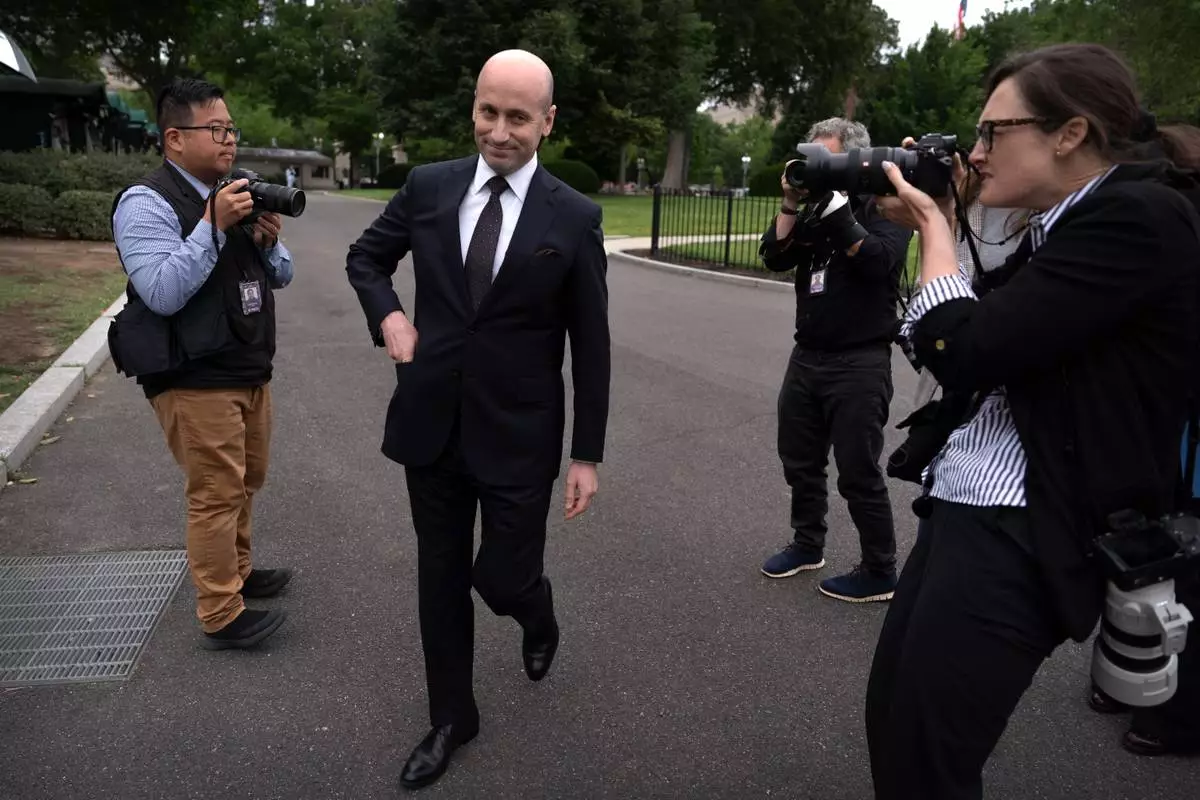
Stephen Miller, White House deputy chief of staff, leaves after speaking to reporters outside the White House, Thursday, May 21, 2026, in Washington. (AP Photo/Mark Schiefelbein)
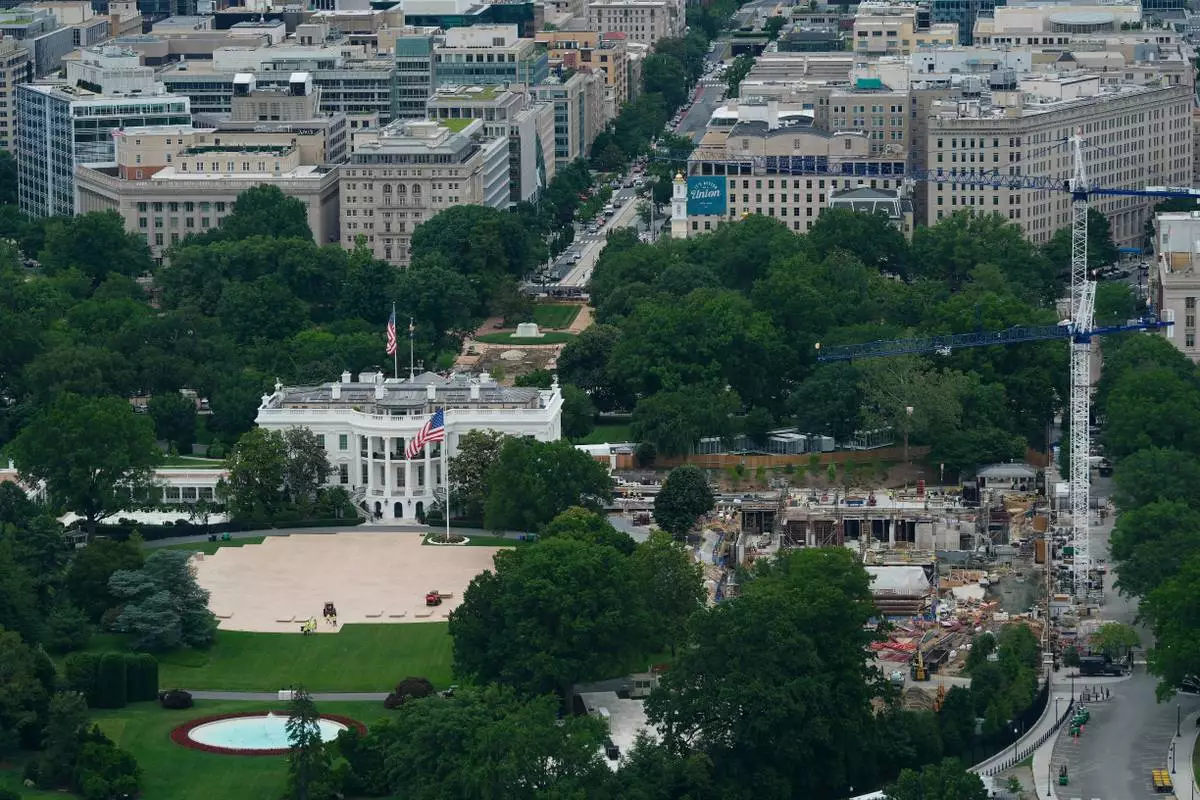
Work continues on the construction of the ballroom at the White House, Thursday, May 21, 2026, in Washington, where the East Wing once stood, as work also begins for the upcoming UFC fight on the South Lawn. (AP Photo/Pablo Martinez Monsivais)
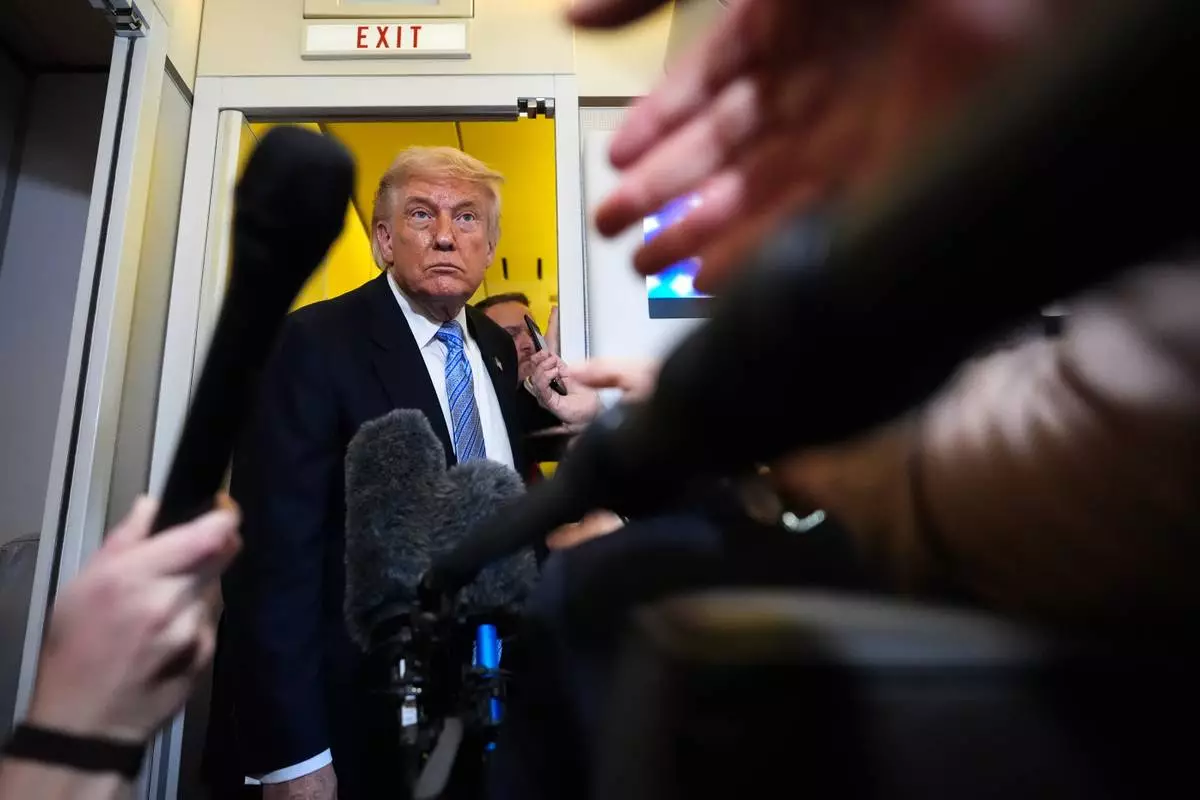
President Donald Trump speaks to reporters aboard Air Force One, Friday, May 15, 2026, as he returns from a trip to Beijing, China. (AP Photo/Mark Schiefelbein)