NASHVILLE, Tenn. (AP) — A federal judge on Friday dismissed a human smuggling case against Kilmar Abrego Garcia, finding that the Justice Department’s pursuit of criminal charges was designed to punish him for challenging his mistaken deportation to El Salvador last year.
The ruling amounted to an extraordinary rebuke of a Justice Department that under President Donald Trump has repeatedly been accused of targeting defendants for political purposes. The Trump administration touted the charges against Abrego Garcia last year at a press conference in which then-Attorney General Pam Bondi declared, “This is what American justice looks like.”
“The evidence before this court sadly reflects an abuse of prosecuting power,” U.S. District Judge Waverly Crenshaw, in Nashville, Tenn., said in his ruling granting Abrego Garcia’s motion to dismiss for “selective or vindictive prosecution.”
Abrego Garcia’s deportation became an embarrassment for Trump officials when they were ordered to return him to the U.S. In his motion to dismiss, Abrego Garcia claimed that both the timing of the criminal charges and inflammatory statements about him by top Trump officials demonstrated that the prosecution was vindictive.
“Kilmar Abrego Garcia is a victim of a politicized, vindictive White House and its lawyers at what used to be an independent Justice Department," his criminal defense attorneys said in a statement after Friday's ruling. "We are so pleased that he is a free man."
The Justice Department vowed to appeal, calling the judge’s order “wrong and dangerous.”
Without Abrego Garcia’s “successful lawsuit challenging his removal to El Salvador, the government would not have brought this prosecution,” said Crenshaw, dismissing claims of “new evidence” against him.
Crenshaw stopped short of finding the government acted with “actual vindictiveness,” a rarely-met standard that usually requires evidence like a prosecutor admitting that charges were filed in retaliation against someone. But the judge did find there was enough evidence of “presumptive vindictiveness” — including the timing of the indictment, statements made by then-U.S. Deputy Attorney General Todd Blanche, and the sustained oversight of the case by other top Justice Department officials — that the case against Abrego Garcia was thoroughly tainted.
The government’s own explanations weren’t convincing, Crenshaw wrote.
Abrego Garcia was charged with human smuggling and conspiracy to commit human smuggling, with prosecutors claiming that he accepted money to transport within the United States people who were in the country illegally.
The charges stem from a 2022 traffic stop in Tennessee for speeding. Body camera footage from a Tennessee Highway Patrol officer shows a calm exchange with Abrego Garcia. There were nine passengers in the car, and the officers discussed among themselves their suspicions of smuggling. However, Abrego Garcia was eventually allowed to continue driving with only a warning.
In the Friday ruling, Crenshaw wrote that the timing of the charges was central to the presumption of vindictiveness. Homeland Security had been aware of the traffic stop for two years and had closed the case against Abrego Garcia when it deported him. Once the U.S. Supreme Court ruled that he should be brought back to the U.S., they reopened the case. While the government bore the responsibility to rebut the presumption of vindictiveness, prosecutors did not call as a witness the person who reopened the case, to explain why. Instead they offered only “secondhand testimony.”
Abrego Garcia's deportation violated a 2019 immigration court order granting him protection from deportation to his home country, after the judge found he faced danger there from a gang that targeted his family. Abrego Garcia is a Salvadoran citizen with an American wife and child who has lived in Maryland for years although he immigrated to the U.S. illegally as a teenager. The 2019 order allowed him to live and work in the U.S. under Immigration and Customs Enforcement supervision, but he was not given residency status.
Meanwhile, Trump administration officials have said Abrego Garcia cannot remain in the U.S. They have vowed to deport him to a third country, most recently Liberia.
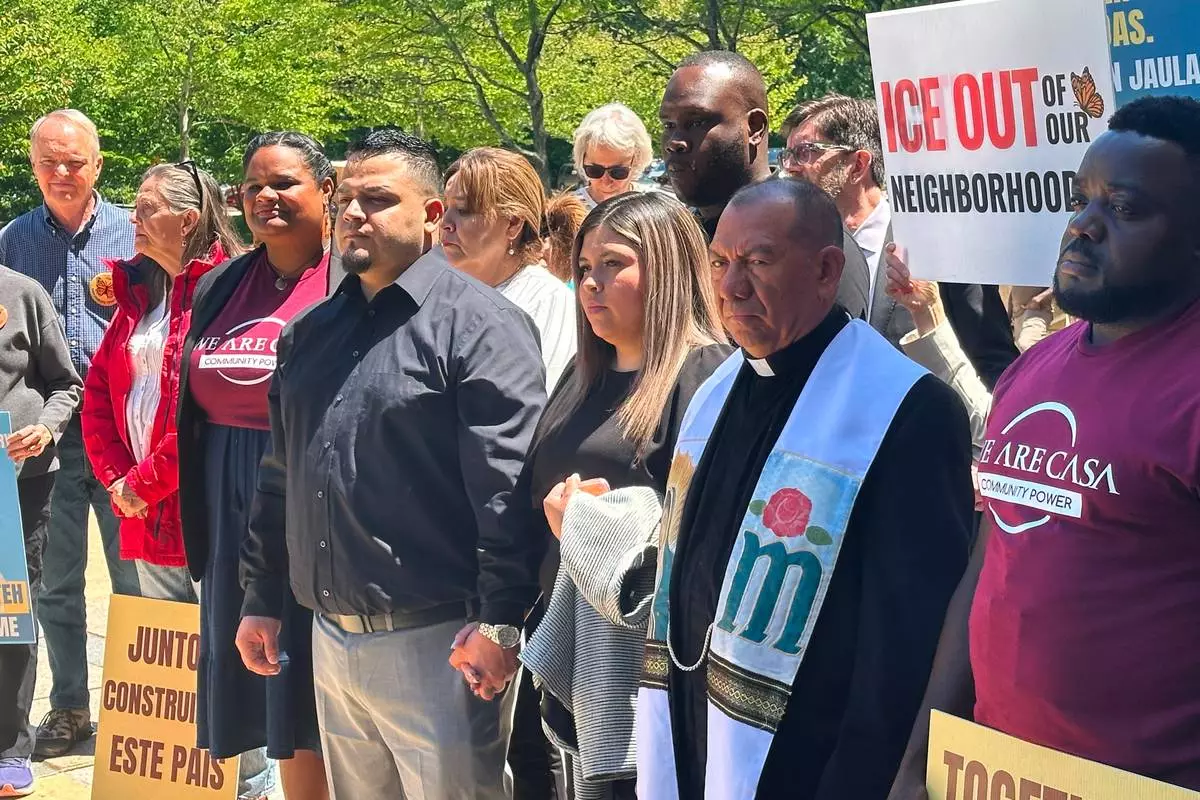
Kilmar Abrego Garcia and his wife, center, hold hands as people rally in support of him at a news conference outside federal court after a hearing in his case on Tuesday, May 12, 2026, in Greenbelt, Md. (AP Photo/Michael Kunzelman)
WASHINGTON (AP) — Secretary of State Marco Rubio already faced a difficult task in soothing NATO allies anxious about President Donald Trump’s often-abrupt announcements. Then Trump did it again.
Just hours after Rubio departed for Friday’s NATO foreign ministers meeting in Sweden, Trump stunned virtually everyone by announcing he would send an additional 5,000 troops to Poland, a country that recently was told it would not be getting an expected deployment.
At the meeting, Rubio tried to calmly explain the situation to Europeans who have been unnerved by Trump’s constant unpredictability: The U.S. remains committed to NATO but will adjust its military footprint in Europe, which eventually will mean fewer American troops on the continent.
Rubio and NATO chief Mark Rutte insisted that the U.S. is consulting with allies. Yet the announcements have blindsided some countries.
“At the end of the day, I think it’s well understood in the alliance that the United States’ troop presence in Europe is going to be adjusted," Rubio told reporters. “That work was already ongoing, and it’s been done in coordination with our allies. I’m not saying they’re going to be thrilled about it, but they certainly are aware of it. It shouldn’t be a surprise to anybody.”
Rubio insisted that “none of this is surprising, although obviously I understand why it creates some nervousness.”
America's top diplomat has often been called on to offer a calmer, less antagonistic presence from the Trump administration. Rubio has been dispatched on several such missions this year, including to the Munich Security Conference in February and, more recently, to Italy, where he met with Italian officials and Pope Leo XIV after Trump criticized the American pontiff for his stances on crime and the Iran war.
Friday’s meeting in the city of Helsingborg, which precedes a NATO leaders’ summit in Turkey in July, also came amid great uncertainty over how the war in Iran will play out and whether stalled U.S. efforts to broker an end to the Russia-Ukraine conflict will resume. Resentment also still simmers on the continent over Trump’s criticism of allies and his interest in taking over Greenland, a territory of NATO ally Denmark.
Still, it was the abrupt reversal of the Poland decision and an earlier announcement about drawing down thousands of U.S. troops in Germany that attracted the most attention.
Rubio said “this is not a decision that was made on the back of a napkin” and that the Germans “didn’t freak out about it” because the reduction brought the numbers back to where they were three years ago.
With details about the Poland deployment still unknown a day later, Dan Fried, a former U.S. ambassador to Poland and assistant secretary of state for Europe, slammed the Trump administration for its initial decision and an inability to explain the reversal.
He called it the result of a “bad process or lack of process” and said it created “an absolute mess” with America’s European allies. “It was a poorly managed decision — people were appalled,” he said.
Fried, who was traveling throughout Europe for three weeks before returning home Friday, said he had been doing a live TV interview in Poland on Thursday night when Trump announced the surprise reversal. He said he and the host had to laugh when they saw the news.
Although Fried welcomed the step, he said it pointed to larger issues that raise major concerns about the administration’s commitment to NATO and its seriousness about demanding reforms, such as spending more on defense, that most members have already agreed to.
“The administration’s seriousness about that policy is now in serious question,” he said. “They are so haphazard and chaotic that they can’t take yes for an answer. The administration needs to pull itself together.”
For the second day in a row, Rubio declined to discuss any further changes to the American military presence in Europe, including a possible reduction in the number of troops that the U.S. will commit under the NATO Force Model, which is a contingency plan for European defense in the event of serious security concerns.
Rubio repeated that he is a “strong supporter” of the transatlantic military alliance and called it important. But he reiterated complaints that some NATO allies, notably Spain, had refused to allow access to U.S. bases for the Iran conflict and others had been reluctant, if not resistant, to join a coalition to reopen and protect the Strait of Hormuz, a crucial oil shipping route that Iran largely has closed.
“When some of those bases are denied to you during a conflict that we’re involved in, then you question whether that value is still there,” he said Friday. “So that’s going to have to be discussed.”
Rubio, who was heading next to India, noted that nearly all NATO allies agree that Iran should not be allowed to develop nuclear weapons, but few, if any, stepped up when Trump said he would take action to prevent it.
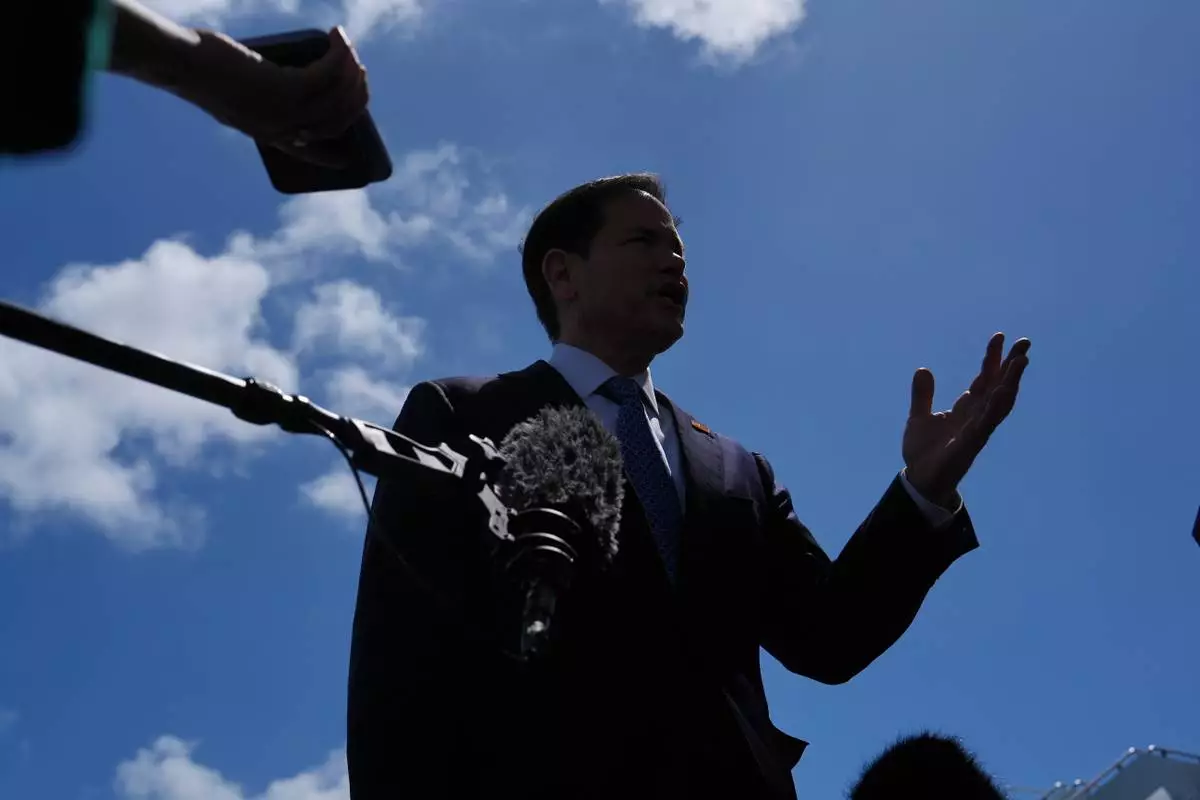
Secretary of State Marco Rubio speaks to the press before boarding his plane at Homestead Air Reserve Base, Thursday, May 21, 2026. Rubio is traveling to a NATO foreign ministers meeting in Sweden. (AP Photo/Julia Demaree Nikhinson, Pool)
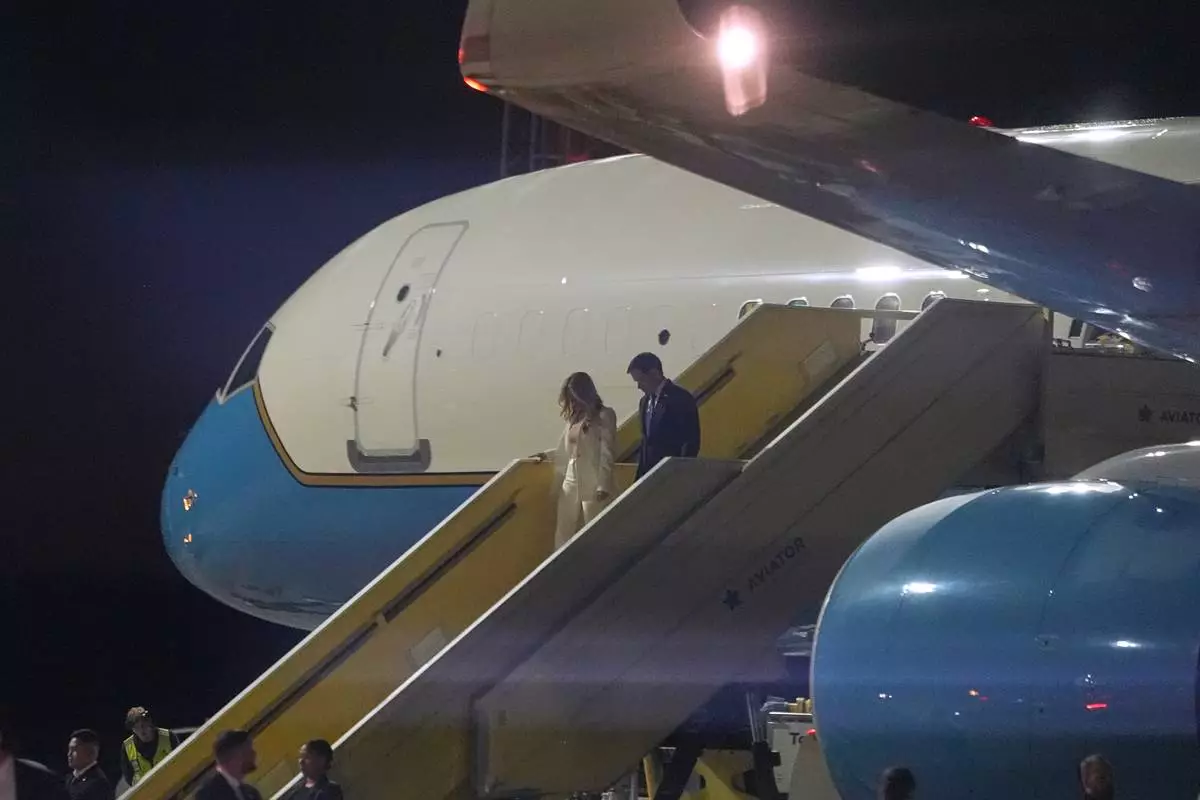
Secretary of State Marco Rubio arrives with his wife Jeanette at Malmo Airport, Friday, May 22, 2026, in Malmo-Sturup, Sweden, ahead of a NATO foreign ministers meeting. (AP Photo/Julia Demaree Nikhinson, Pool)
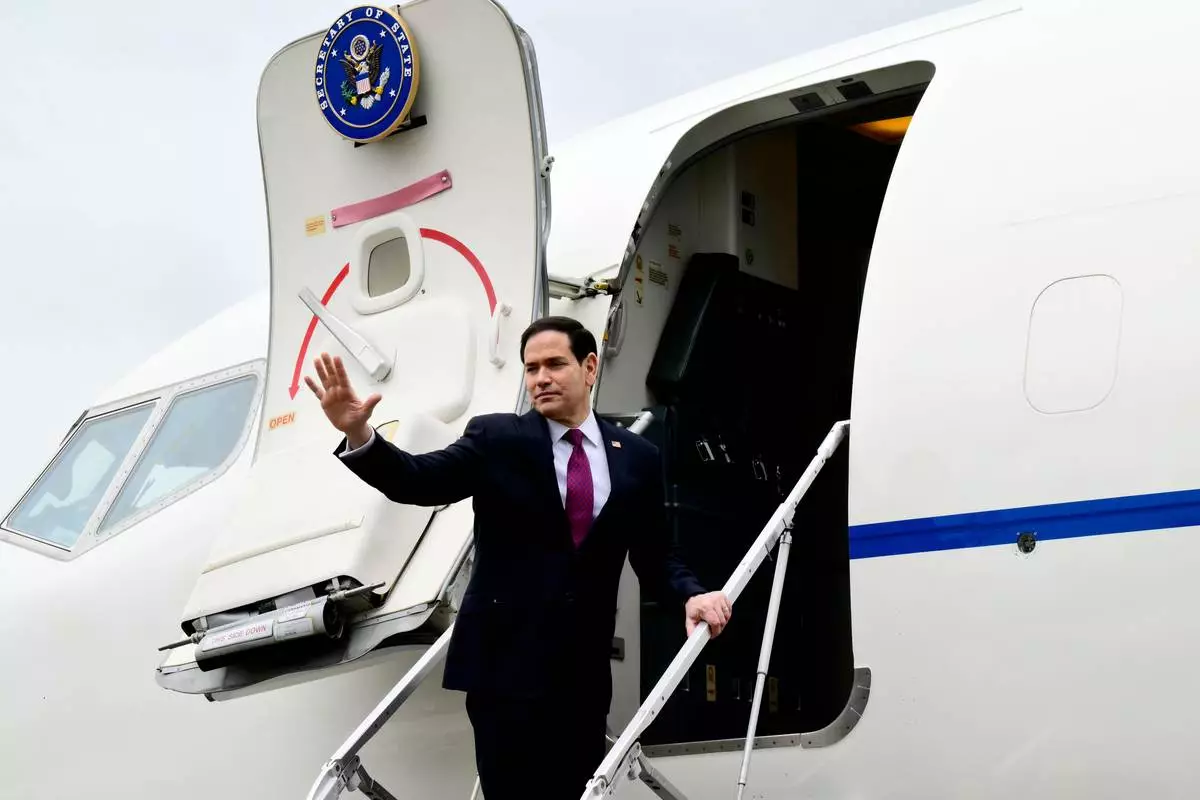
US Secretary of State Marco Rubio waves as he boards a US government aircraft after concluding his two-day visit to Italy and the Vatican, at Ciampino airport in Rome, Friday, May 8, 2026. (Stefano Rellandini/Pool Photo via AP)
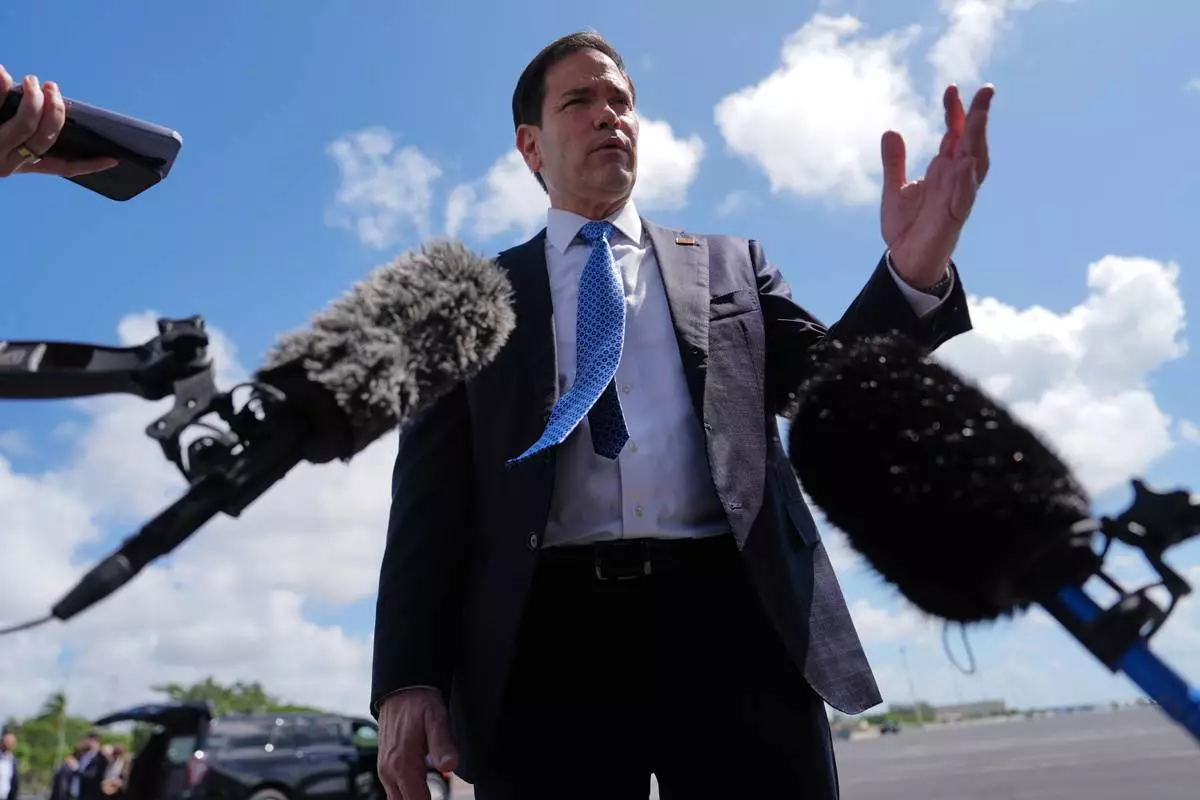
Secretary of State Marco Rubio speaks to the press before boarding his plane at Homestead Air Reserve Base, Thursday, May 21, 2026. Rubio is traveling to a NATO foreign ministers meeting in Sweden. (AP Photo/Julia Demaree Nikhinson, Pool)
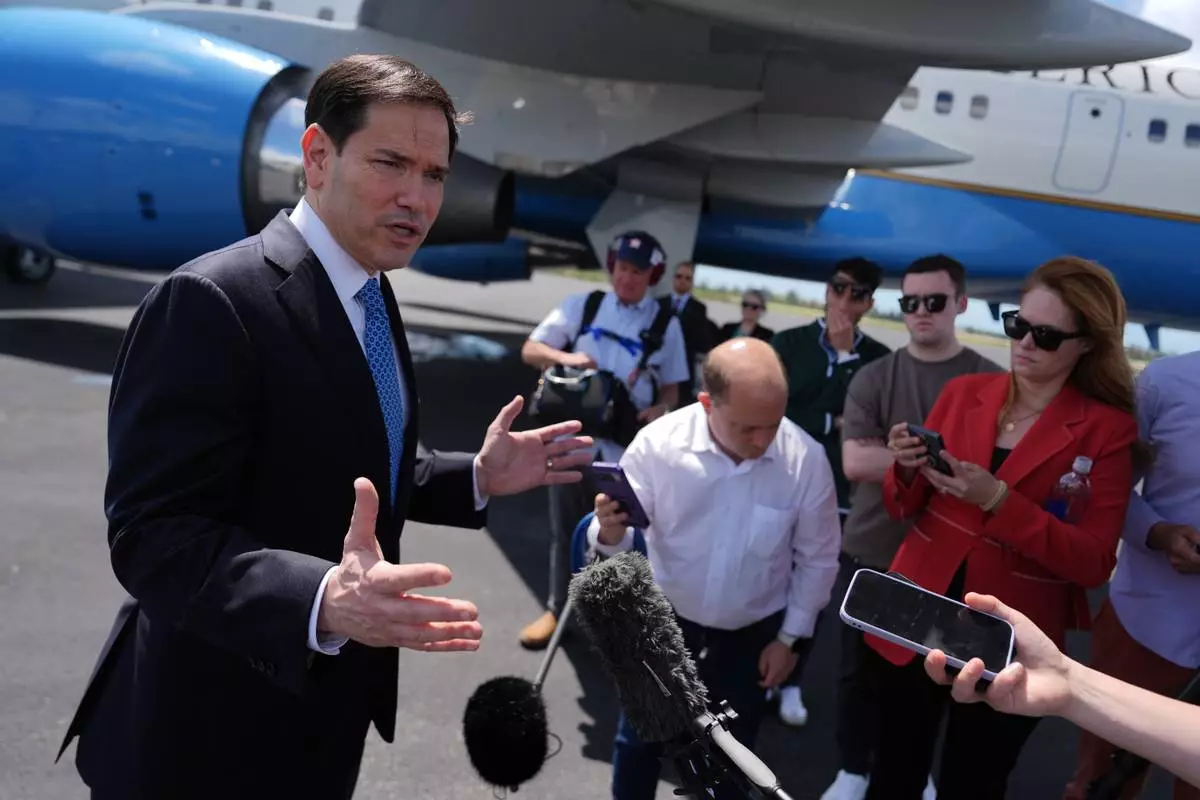
Secretary of State Marco Rubio speaks to the press before boarding his plane at Homestead Air Reserve Base, Thursday, May 21, 2026. Rubio is traveling to a NATO foreign ministers meeting in Sweden. (AP Photo/Julia Demaree Nikhinson, Pool)
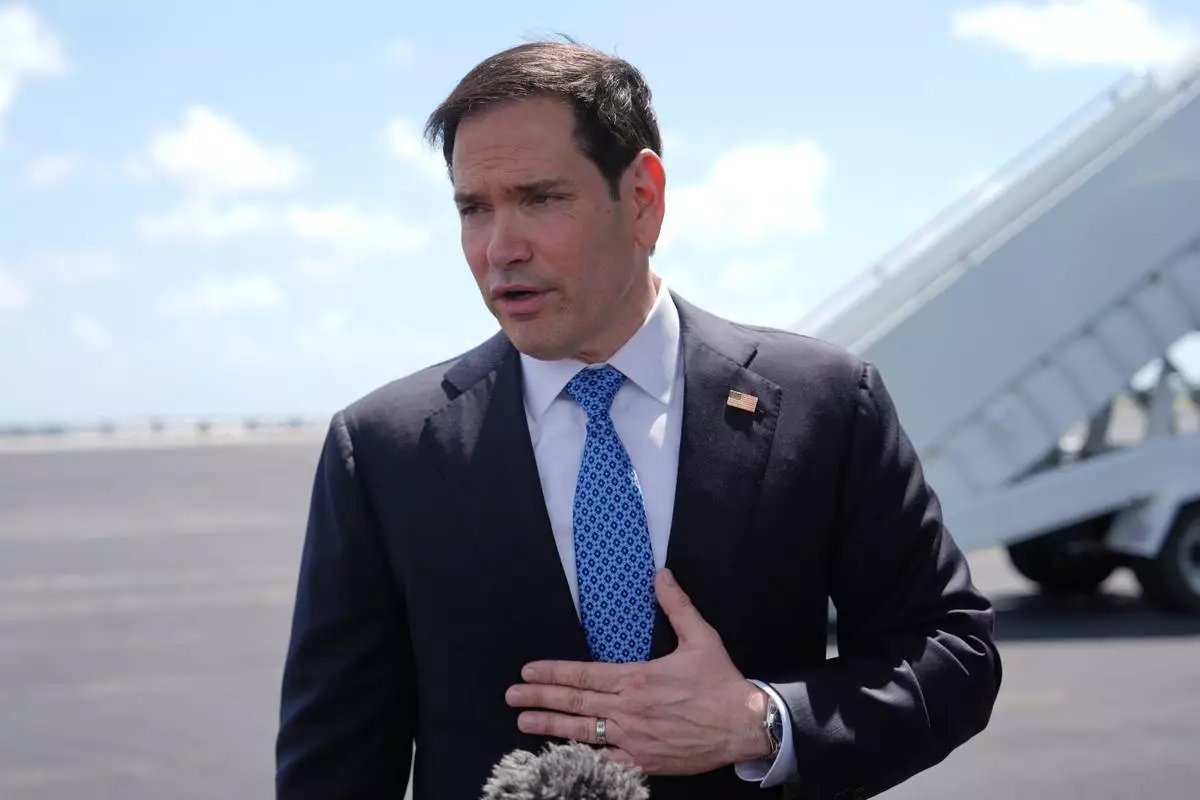
Secretary of State Marco Rubio speaks to the press before boarding his plane at Homestead Air Reserve Base, Thursday, May 21, 2026. Rubio is traveling to a NATO foreign ministers meeting in Sweden. (AP Photo/Julia Demaree Nikhinson, Pool)
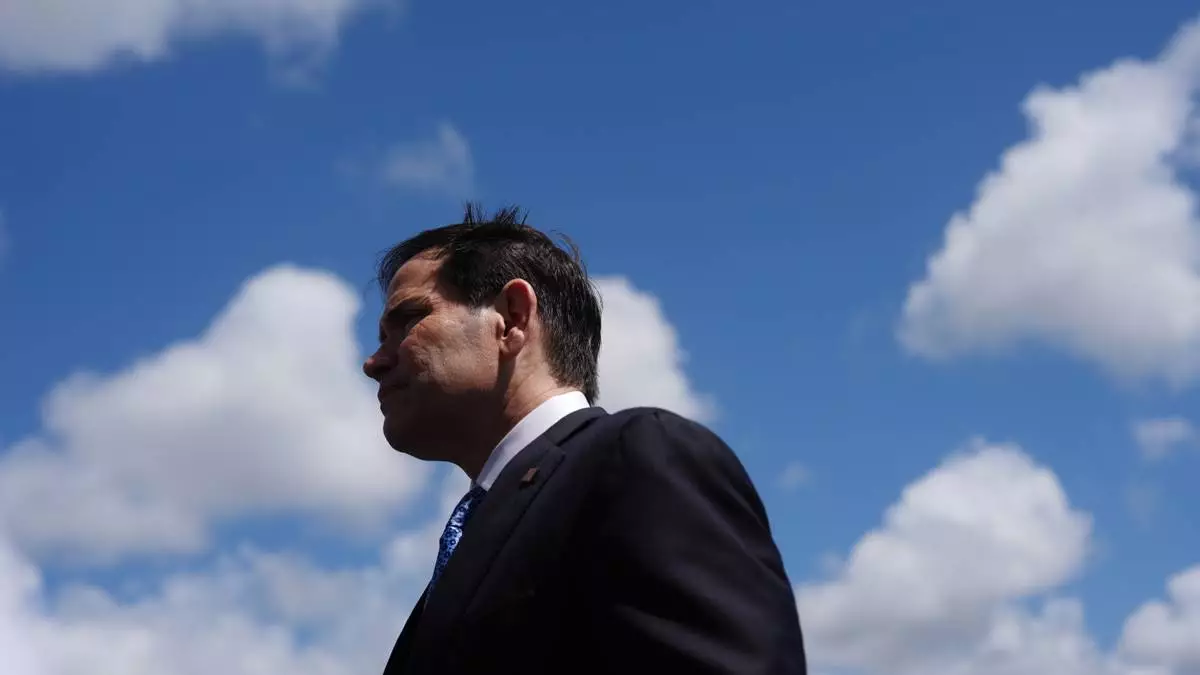
Secretary of State Marco Rubio speaks to the press before boarding his plane at Homestead Air Reserve Base, Thursday, May 21, 2026. Rubio is traveling to a NATO foreign ministers meeting in Sweden. (AP Photo/Julia Demaree Nikhinson, Pool)