China's Shenzhou-23 crew, during their upcoming mission, will carry out various experiments involving "artificial embryos", rare-earth alloys and novel batteries, while contributing data on long-duration space residency, the China Manned Space Agency (CMSA) announced on Saturday.
The more than 100 new science and application projects to be conducted in orbit focus on a number of frontier fields, CMSA spokesman Zhang Jingbo told a press conference held one day prior to the launch of the Shenzhou-23 mission.
"The Shenzhou-23 crew will carry out as planned more than 100 new science and application projects during their time in orbit. These projects will dive deep into cutting-edge areas of science and technology such as space life science, materials science, microgravity fluid physics, aerospace medicine and new space technologies," he said.
"In the field of space life science, [the mission] will utilize zebrafish embryos, mouse embryos and stem cell-derived 'artificial embryos' to explore the establishment of a space embryonic research system ranging from lower vertebrates to higher mammals, and steadily push forward systematic research on how embryos develop in space. In space material science, their research will focus on producing advanced materials, including high-performance rare-earth permanent magnets and lightweight high-entropy alloys, and studying how to regulate their performance," said Zhang.
"In the field of aerospace medicine, [the mission] will leverage the year-long flight of one astronaut to explore human adaptability and performance limits, aiming to establish a multi-system, multi-omics atlas of human body in space. In space technology, in-orbit verification of a new type of space energy storage battery will also be conducted, and the results are expected to be applied to future upgrades of the space station's capabilities," Zhang added.
The crew will also conduct extravehicular activities (EVAs), handle cargo transfers, and install and retrieve external facilities. Aside from operational tasks, they will also engage in science education.
China's Shenzhou-23 crewed spaceship is scheduled to be launched at 11:08 p.m. Sunday (Beijing Time) from the Jiuquan Satellite Launch Center in northwest China.
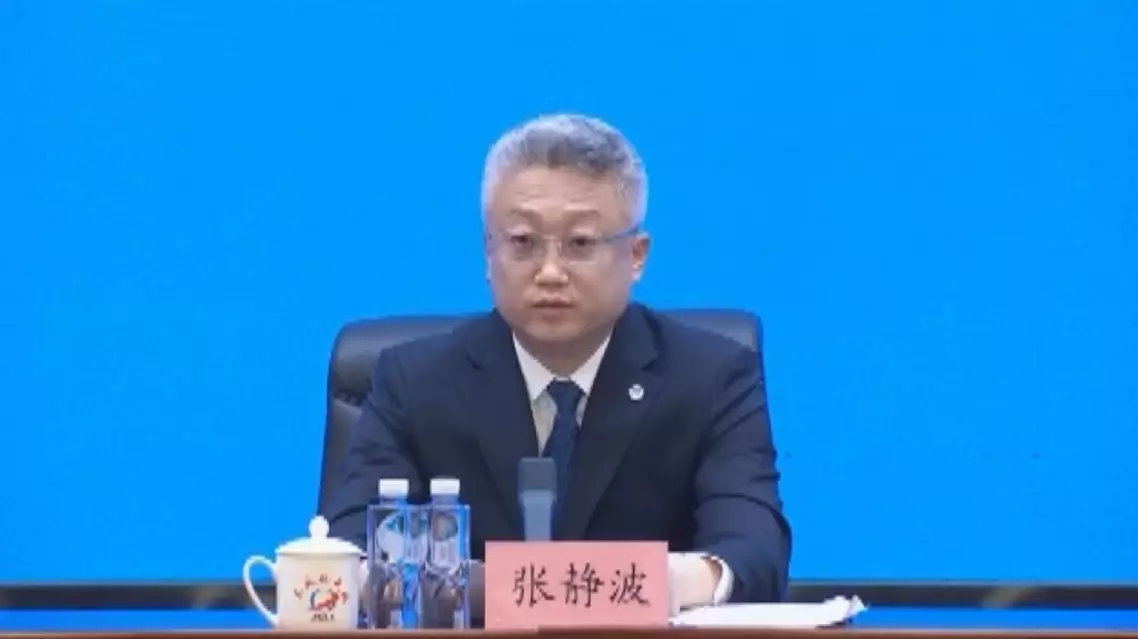
China's Shenzhou-23 crew to conduct over 100 new science, application projects in orbit
Heavy rains continued to hit central and southern China on Friday, causing multiple rivers to swell beyond warning levels and prompting rescue efforts to save stranded residents.
Shimen County in central China's Hunan Province has entered a critical period for flood control following days of persistent downpours. With a high risk of secondary disasters such as mountain torrents, landslides, and mudslides, local authorities have transferred all trapped residents to safety and imposed traffic controls on affected roads.
Torrential rains also triggered flooding across south China's Guangdong Province, Guangxi Zhuang Autonomous Region, and east China's Jiangxi Province. From Thursday to Friday, 15 rivers exceeded warning levels, with the highest water level reaching 1.51 meters above the warning line. Most of these waterways have now receded below their alert levels.
Fangchenggang City, Guangxi, saw the sudden onslaught of continuous heavy rain, which caused severe urban waterlogging across multiple regions. Rising river waters trapped 15 residents in Baisha Village of Gangkou District. Local fire rescue teams rushed to the scene immediately and successfully evacuated all the trapped people in batches to safe areas.
In Yangjiang City, Guangdong Province, the Moyang River experienced its second flood peak on Friday morning, hitting 6.82 meters, which was 0.02 meters above the warning level. By Friday noon, the water level had dropped to 6.7 meters. Large and medium-sized reservoirs in Yangjiang have cumulatively intercepted over 100 million cubic meters of floodwater, easing flood control pressure downstream.
The widespread rainfall has also extended to parts of east and north China.
On Friday, heavy to torrential rains hit parts of east China's Anhui, Jiangxi, central China's Hunan, Hubei and southwest China's Sichuan provinces, with extremely heavy rain recorded in some areas of Xiangtan and Changsha in Hunan Province.
According to China's National Meteorological Center (NMC), a new round of heavy rainfall will also start to develop from northwest China's Shaanxi, central China's Henan and Hubei provinces on Saturday.
The NMC continued to issue a blue rainstorm alert on Saturday, marking the 12th consecutive day of rainstorm warnings since May 12.
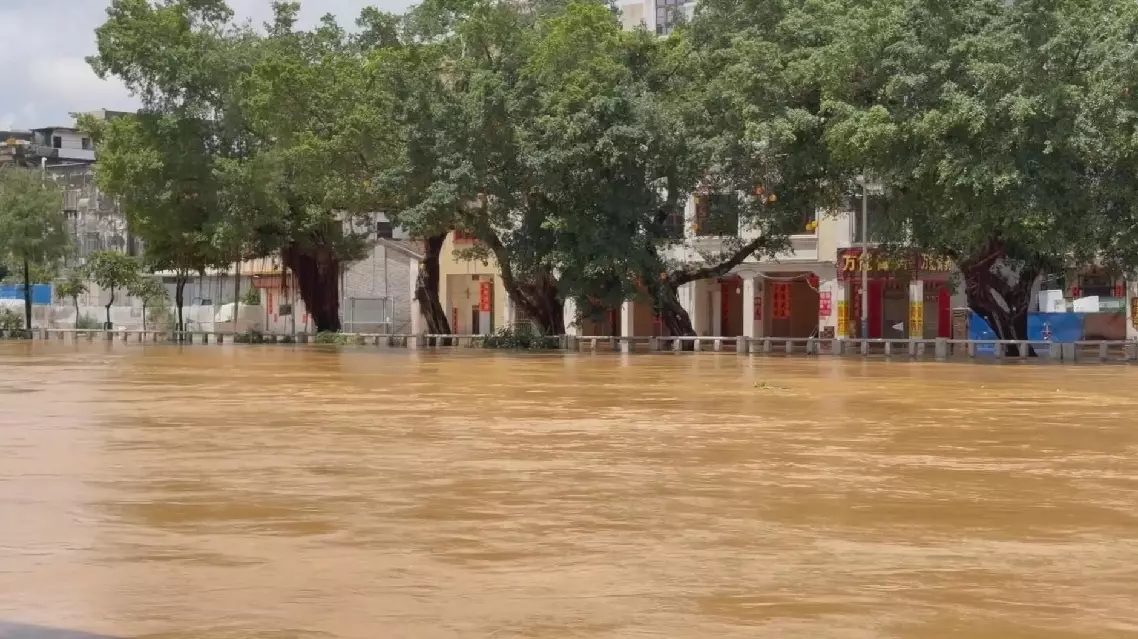
Flood rescue operations intensify as heavy rain hits multiple regions in China