The Red Cross Field Hospital in Rafah remains a critical lifeline as the humanitarian and health crisis in the Gaza Strip deepens, delivering urgent medical care to the wounded and sick despite ongoing security threats and severe shortages of staff and supplies.
Two years after its establishment as a temporary facility amid the war, the hospital is undergoing development and expansion to enhance its capacity and improve the health services provided to thousands of Palestinians who rely on it as one of the most important medical facilities operating in the southern Gaza Strip.
"This upgrading has greatly contributed to the continued operation of the Red Cross Field Hospital in the southern Gaza Strip, and to the continued support of the health system in the Strip. It will increase the number of beds from 60 to 72, and will include tangible improvements in the operating room, outpatient clinics and emergency departments, in addition to developing post-operative care services, which will contribute to reducing overcrowding within the hospital," said Amani Al-Naouq, spokeswoman for the International Committee of the Red Cross in Gaza.
Alongside the hospital's restoration, doctors and medical staff continue to perform their duties under complex and exceptional circumstances. In addition to dealing with injuries and emergencies, they face numerous challenges.
"We are suffering from a shortage of medical staff and human resources, especially scientific expertise. Since the beginning of the war, we have lost some of our skilled personnel, while others have left the Gaza Strip or gone abroad. Therefore, we are facing a severe shortage, particularly in surgical specialties. Gaza also suffers from a limited number of advanced medical devices, such as MRI and CT scanners. The number is very small compared to the enormous pressure on them, and they require regular maintenance. Currently, there is only one device in the southern Gaza Strip. The third aspect of the crisis is the shortage of medicines, especially medicines for chronic diseases, and this crisis is still ongoing," said Mohammed Ismail Shaaban, a doctor at the Red Cross Field Hospital.
The process of upgrading and expanding the field hospital was not an easy task, as the engineering and logistics teams faced many challenges related to the security situation and the difficulty of bringing in the necessary materials and equipment.
"As you can see, the hospital is made up of tents. When it was established two years ago in May 2024, it was designed to operate for a temporary period of no more than six months as a field hospital in a conflict zone. But two years later, the hospital is still there, and the humanitarian and health needs are still there as well. Therefore, it was necessary to carry out a comprehensive development process for the infrastructure that had been worn out and damaged, so that the hospital could continue to operate for a longer period," said Nidal Abu Tarboush, head of the engineering department at the field hospital.
Patients, for their part, view the hospital as a sanctuary. Many express appreciation for the medical services available, even as anxiety continues to permeate their daily lives.
"We faced many difficulties, including the shelling from warships. As you can see, we work in the tents without any security guarantees. Stray bullets are a constant danger, and the hospital cannot provide protection from such threats," said Ali Abu Alwan, a patient.
"I just came out of surgery, thank Allah. The medical team treated my gunshot wound and removed the shrapnel and foreign objects," said Mahmoud Farid Al-Najjar, another patient.
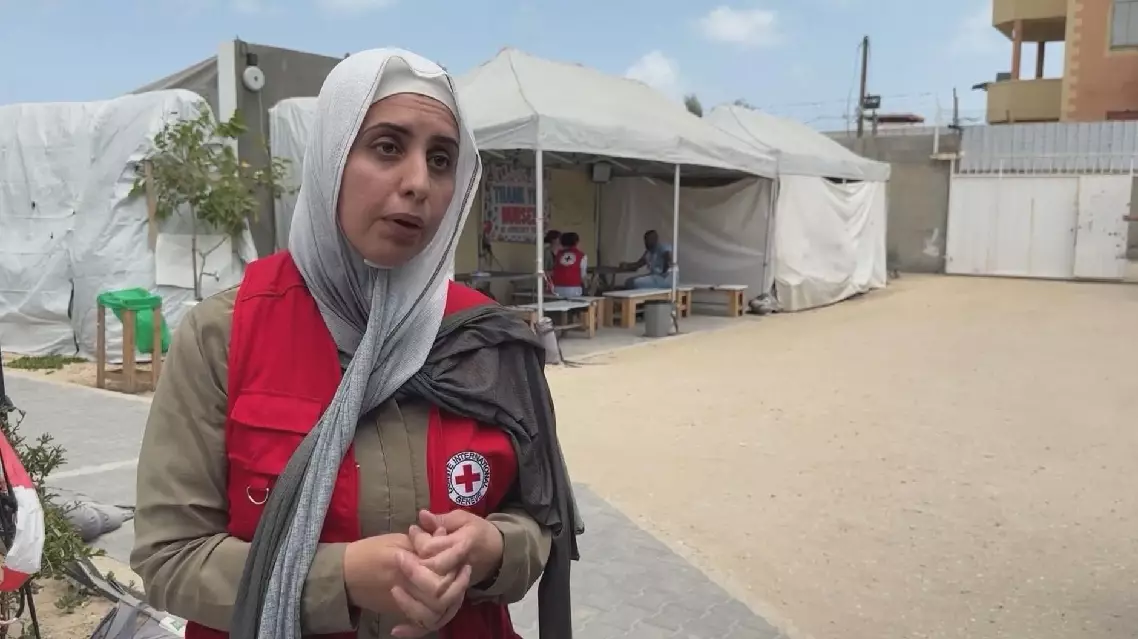
Red Cross Field Hospital in Rafah brings hope of recovery to thousands of patients