China's Ministry of Water Resources has activated a Level-IV flood prevention emergency response for four provincial-level regions, including southwest China's Chongqing Municipality, where torrential rainfall caused rivers to overflow and inundate low-lying areas.
In Chongqing's Qijiang District, persistent heavy rainfall caused the Tonghui River and other waterways to rise rapidly and even flow backward, flooding streets and submerging vehicles.
According to local water conservancy authorities, the water level on the Tonghui River running through the city reached 259.37 meters at 09:30 on Saturday, exceeding the warning level by 1.37 meters.
"We've designated staff members to urgently evacuate residents and relocate more than 30 parked vehicles from the surrounding areas. Dedicated personnel have been assigned to stand guard. Moving forward, we will continue to monitor water flow conditions and carry out follow-up work including river channel dredging and street disinfection and cleaning," said Yang Yutao, Communist Party secretary at the Tonghui Residential Compound in Qijiang District.
By 23:00 on the same day, the water level on the Tonghui River had receded to 254.32 meters, falling below the alert threshold. Local authorities promptly organized emergency response efforts.
Meteorological departments forecast that sustained rainfall will continue in Chongqing through May 27, warning residents to remain vigilant against possible secondary disasters such as mountain torrents triggered by consecutive heavy precipitation.
At 09:00 on Sunday, the Ministry of Water Resources activated a Level IV flood prevention emergency response for the four provincial level regions -- Anhui in east China, Henan in central China, Chongqing in southwest China and Shaanxi in north China, requiring local water conservancy departments and basin management agencies to closely monitor the rainfall and flood developments, implement scientifically precise flood control scheduling of water projects, and strengthen safety measures for small and medium-sized reservoirs and projects under construction to ensure the protection of people's lives and property. The ministry is also maintaining an ongoing Level-IV emergency response for three other provincial level regions -- Jiangxi in east China and Hubei and Hunan in central China.
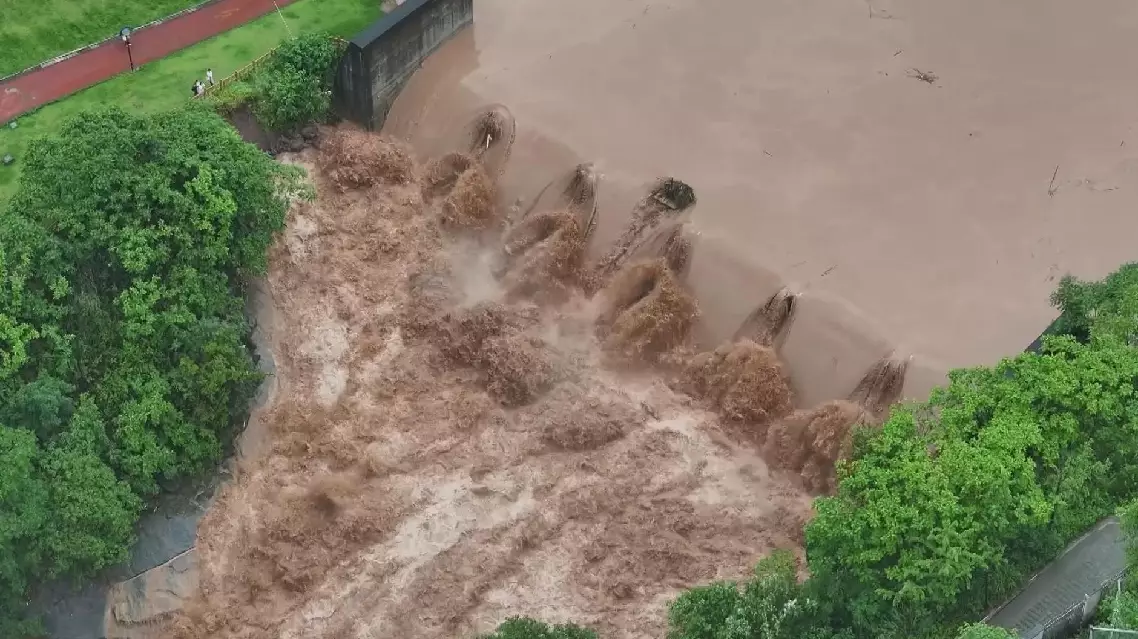
Heavy rains trigger floods, local government activates emergency response plans
Chinese Foreign Minister Wang Yi met with United Nations Secretary-General Antonio Guterres on Tuesday on the sidelines of the UN Security Council high-level meeting on upholding the purposes and principles of the UN Charter and strengthening the UN-centered international system.
During the meeting, Wang, also a member of the Political Bureau of the Communist Party of China Central Committee, said the current international situation is fraught with turbulence and regional conflicts are erupting in multiple locations, and the United Nations is facing severe challenges while simultaneously being subject to heightened expectations.
As the rotating president of the UN Security Council for May, China took the initiative to convene the high-level meeting on upholding the purposes and principles of the UN Charter and strengthening the UN-centered international system, in a bid to join with all nations in reaffirming the Charter's founding spirit, revitalizing the authority of the UN, and forging the broadest possible consensus toward these ends, Wang said.
This year marks the 55th anniversary of the restoration of the lawful seat of the People's Republic of China at the United Nations, he said, adding that China highly appreciates the UN Secretariat's steadfast adherence to the one-China principle and its faithful observance of UN General Assembly Resolution 2758.
As a staunch supporter of the UN cause, China stands ready to continue holding high the banner of multilateralism and firmly upholding the international system with the United Nations at its core, Wang said, adding that China is committed to continuously deepening its cooperation with the United Nations in areas such as advancing South-South cooperation, reforming the international economic and financial systems, as well as addressing climate change, artificial intelligence, and regional hotspots.
Through concrete actions, China aims to support, revitalize, and strengthen the United Nations, constantly leveraging China's governance experience to empower global governance and injecting stronger momentum into the building of a community with a shared future for humanity, Wang said.
Guterres commended China for taking the initiative to convene the high-level meeting, which clearly showcases China's unwavering support for multilateralism and the United Nations. He expressed his gratitude to China for its consistent commitment to upholding the UN Charter and international law.
Noting that China is the most reliable partner for sustainable development and a robust contributor to UN peacekeeping operations, the UN chief said the United Nations commends the series of global initiatives put forward by China in fields such as security, peace and development, and looks forward to working together to resolve conflicts, to ensure that peace, international law and multilateralism prevail.
The United Nations firmly upholds General Assembly Resolution 2758, which embodies the one-China principle, said Guterres, adding that there is no room for ambiguity on this issue.
The United Nations stands ready to continue deepening cooperation with China in areas such as the reform of the international economic and financial system, sustainable development, climate change, and artificial intelligence, thereby promoting the balanced advancement of the three pillars of the United Nations -- peace and security, development, and human rights, Guterres said.
Chinese FM meets with Guterres on strengthening UN role