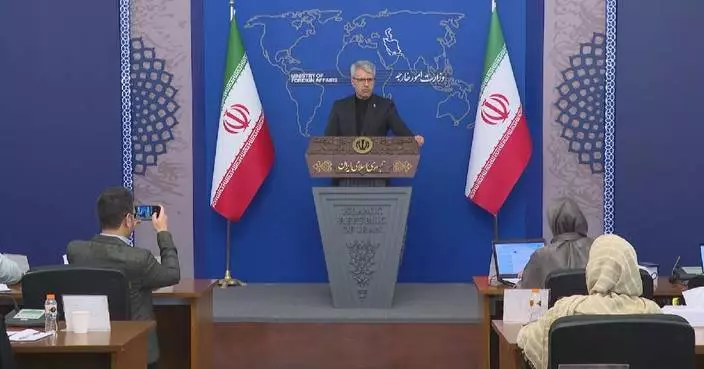
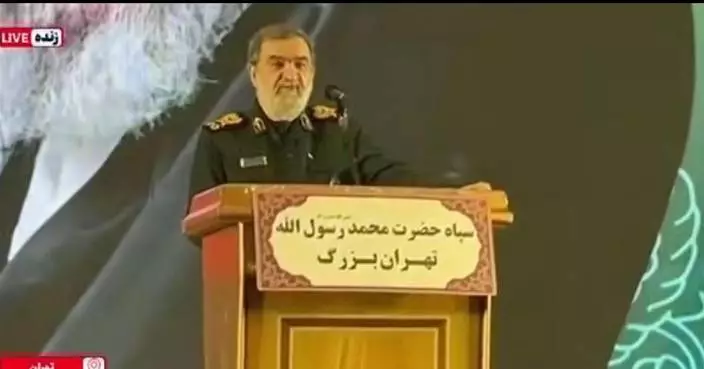
U.S. President Donald Trump said on Monday that talks with Iran on a possible peace agreement are making smooth progress, while Iran's President Masoud Pezeshkian stressed the country will not yield to external pressure or unreasonable demands.
Trump wrote on social media Monday that Middle East countries should immediately sign the Abraham Accords to normalize relations with Israel, adding that if a U.S.-Iran deal is reached, Iran should also join the agreement. Earlier the same day, Trump stated he would not sign any deal that paves the way for Iran to acquire nuclear weapons.
Pezeshkian responded that Iran will not yield to external pressure or excessive demands and that the rights of the Iranian people must be fully safeguarded. Speaking at a meeting with members of Iran's chambers of commerce, mining, and agriculture, Pezeshkian said that after failing to reach its goals militarily, the "enemy" has focused on economic warfare against Iran. He emphasized that Iran is advancing diplomacy and negotiations to ensure that the Iranian people's legitimate rights and interests are protected.
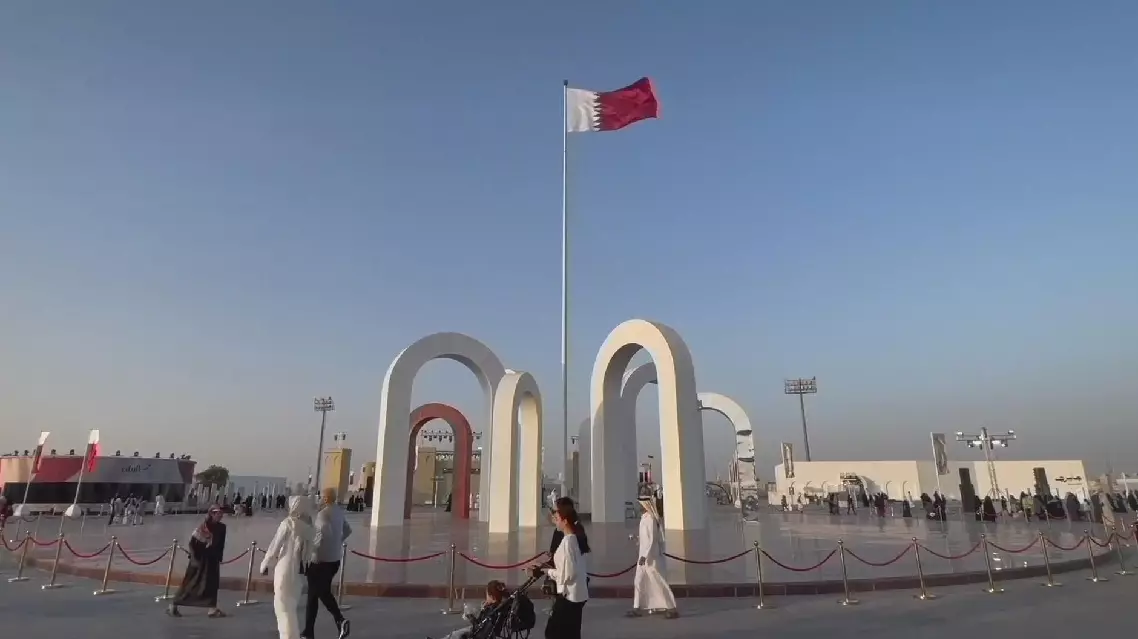
A high-level Iranian delegation arrived in Doha on Monday for talks with Qatar's Prime Minister and Foreign Minister Sheikh Mohammed bin Abdulrahman bin Jassim Al Thani and other Qatari officials on a possible peace agreement with the United States, according to Iran's semi-official Mehr News Agency.
The visit by the delegation, which includes Iranian Parliament Speaker Mohammad Bagher Ghalibaf, Foreign Minister Abbas Araghchi and Iran's Central Bank Governor Abdolnaser Hemmati, among others, aims to advance diplomatic efforts mediated by Pakistan in recent weeks to end the "war of aggression imposed" by the United States and Israel against Iran, Mehr said.
The talks were reported to focus on the Strait of Hormuz, Iran's stockpile of highly enriched uranium, and frozen Iranian assets abroad. While U.S. officials claim a framework agreement is 95 percent complete and talks are moving forward, Iranian officials caution that consensus is not the same as a signed deal and have criticized the U.S. for inconsistency.
Despite positive signals, the two sides remain divided on key issues such as Iran's nuclear activities, sanctions relief, and management of the Strait of Hormuz.
In a related development, Iran's semi-official Fars news agency reported that several explosions were heard on Monday night in Iran's southern port city of Bandar Abbas, Hormozgan Province. U.S. Central Command (CENTCOM) Spokesman Tim Hawkins said in a statement that U.S. forces struck missile launch sites and mine-laying boats in southern Iran in the day, "to protect our troops from threats posed by Iranian forces."
"Targets included missile launch sites and Iranian boats attempting to emplace mines. U.S. Central Command continues to defend our forces while using restraint during the ongoing ceasefire," he said.
U.S., Iranian presidents signal progress in talks but differences remain