Skip to Content Facebook Feature Image

As US stock market hits new highs, 2 of 3 Americans are cutting back on spending, survey shows

News

As US stock market hits new highs, 2 of 3 Americans are cutting back on spending, survey shows
News

News

As US stock market hits new highs, 2 of 3 Americans are cutting back on spending, survey shows

2026-05-27 00:05 Last Updated At:00:10

WASHINGTON (AP) — U.S. consumer confidence declined slightly this month as gas prices stayed high and inflation remained elevated, a sharp contrast to soaring stock prices hover near record levels.

The Conference Board’s consumer confidence index slipped 0.7 points to 93.1 in May, the first decline after three months of gains. The measure hasn't fallen as much this year as other gauges of consumer attitudes, but it has been stuck at a low level since the pandemic. Before COVID-19, it regularly reached 130.

A separate gauge of consumer sentiment released last week by the University of Michigan fell to a record low this month. Soaring gas and food costs have worsened inflation that is outpacing the average growth in paychecks, reducing most Americans’ purchasing power. Americans have soured on President Trump’s economic policies, polls show, potentially creating problems for Republicans heading into the midterm elections.

Consumer sentiment is mostly gloomy even as the economy is still growing and the unemployment rate has stayed low. Some economists argue that the gap reflects inequality in a “K-shaped” economy, with higher-income Americans benefitting from rising stock prices and still spending while lower-income households struggle.

Tuesday's consumer confidence survey showed that confidence grew among households with incomes at or above $100,000, while it fell for most others.

“The prospect of higher prices and faster inflation continues to loom over confidence readings with many households taking a more cautious approach to purchases this year,” Ben Ayers, Nationwide senior economist, said.

There were some positive signs, Ayers noted: Americans' expectations for growth six months in the future improved, potentially a sign they expect the Iran war to be over by then.

Still, Americans' outlook on the job market worsened slightly. The proportion of respondents who said jobs are “plentiful” dropped to 25.5%, the lowest in three years. At the same time, just 18.6% said jobs were “hard to get,” the smallest percentage since October. The findings reflect the “low-hire, low-fire” job market that has made it harder for those out of work to obtain new jobs.

Gas prices have soared to a nationwide average of $4.49 a gallon from $2.98 just before the war began at the end of February, and have been at or above $4.50 a gallon for nearly all of May.

This month, the Conference Board added special questions to its survey, which found rising prices have caused most Americans to change their spending habits. Two-thirds of respondents said they are cutting back spending in response to the increases, with most of those reducing overall purchases and delaying more expensive acquisitions.

Many consumers are also planning to economize on clothes, shoes, hobby items, and toys and games, the survey found.

Inflation jumped to 3.8% in April, the highest in three years and far above the Federal Reserve's 2% target. In addition to more expensive gas, grocery prices have also started rising more quickly, likely driven by higher shipping costs. Beef prices have also risen sharply, as drought and other factors have reduced cattle herds.

The higher prices are reducing Americans' average inflation-adjusted incomes. Average hourly earnings, adjusted for price changes, shrank in April from a year earlier for the first time in three years.

Other data also suggests consumers have grown more cautious amid rising prices. Adjusted for inflation, retail sales actually declined in April, after a solid increase in March.

And the University of Michigan's consumer sentiment index fell to a record-low 44.8 in May, its third straight decline, as a majority of respondents said rising prices were hurting their personal finances.
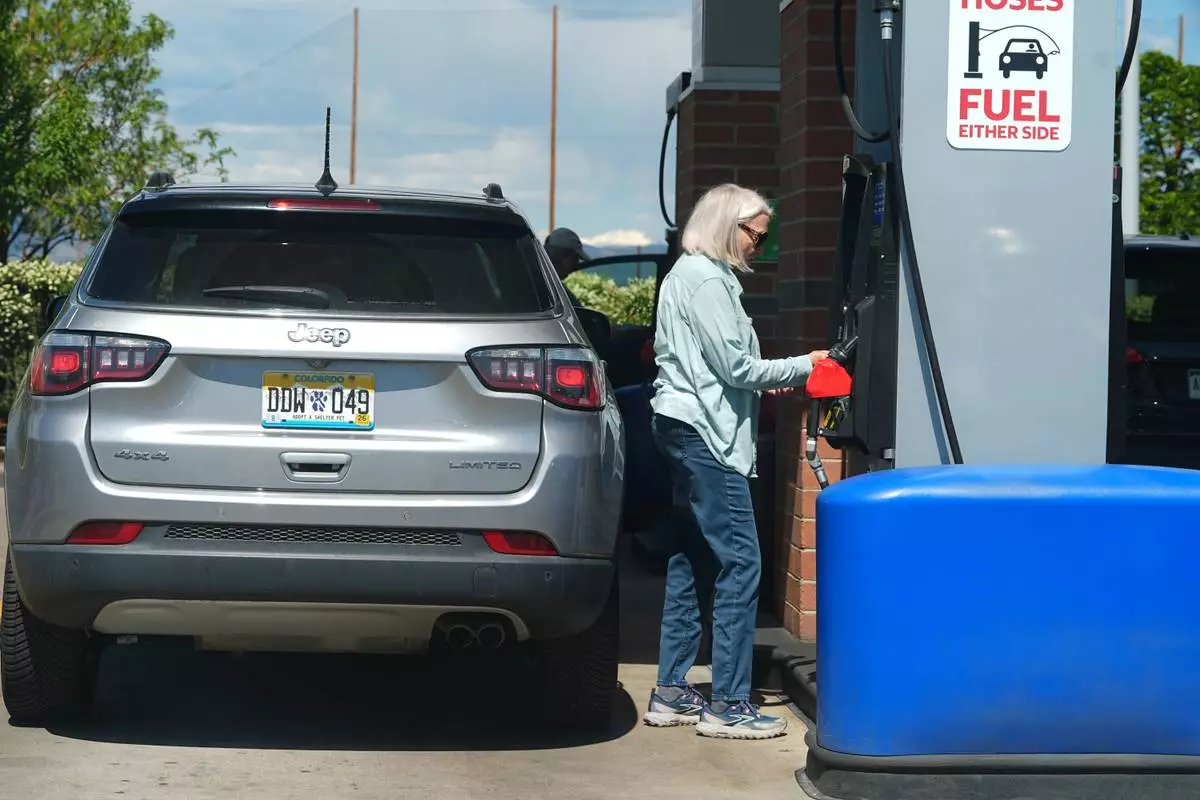
A motorist swipes a credit card at the pump to pay for gasoline at a gas station, Sunday, May 24, 2026, in Sheridan, Colo. (AP Photo/David Zalubowski)
A motorist swipes a credit card at the pump to pay for gasoline at a gas station, Sunday, May 24, 2026, in Sheridan, Colo. (AP Photo/David Zalubowski)

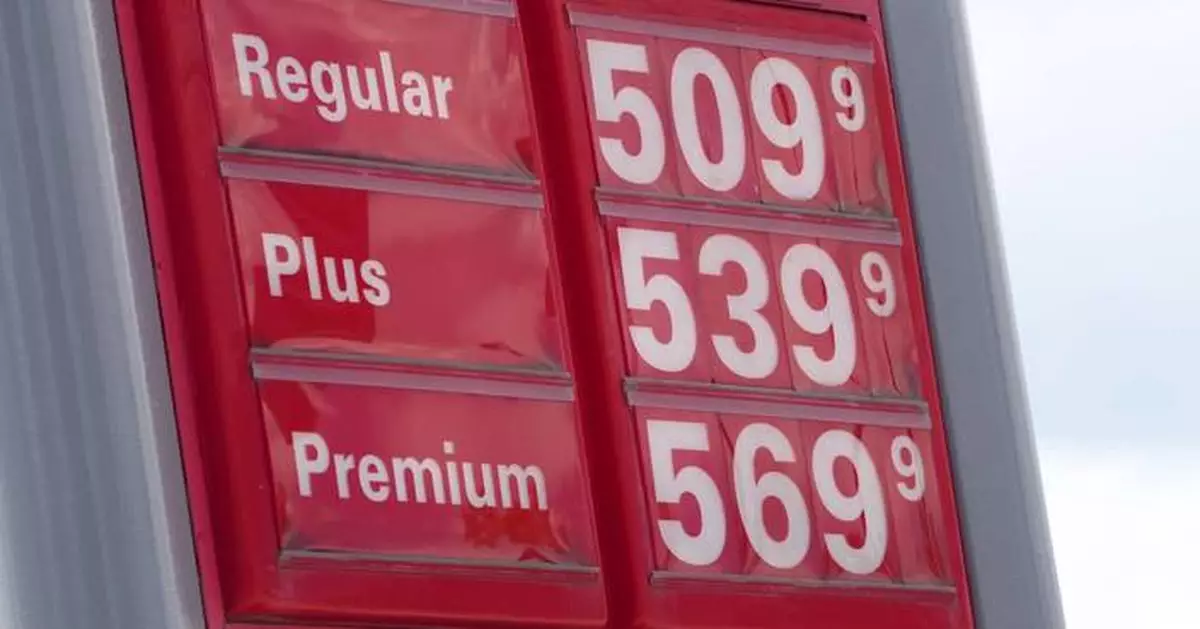
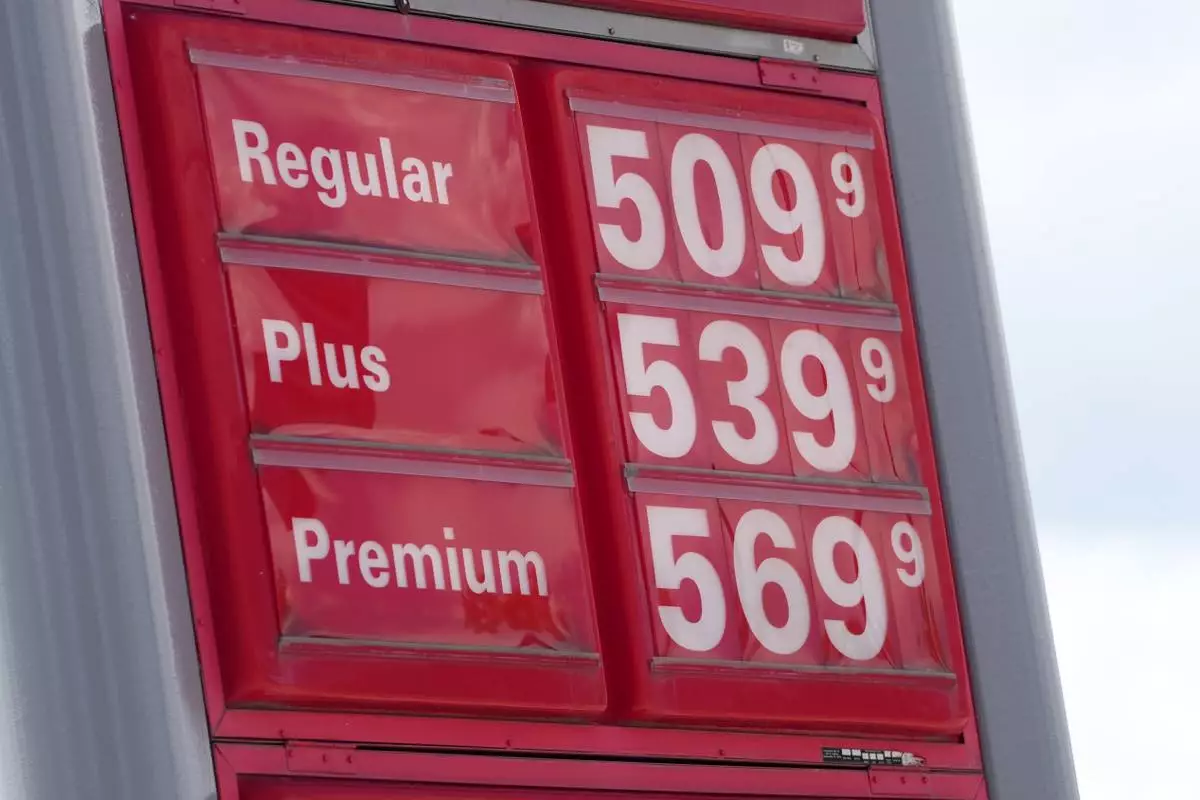
The per-gallon prices for the various grades of gasoline available at a gas station are displayed on a sign above the pumps, Sunday, May 24, 2026, in southeast Denver. (AP Photo/David Zalubowski)

The per-gallon prices for the various grades of gasoline available at a gas station are displayed on a sign above the pumps, Sunday, May 24, 2026, in southeast Denver. (AP Photo/David Zalubowski)

BP has ousted its chairman over what it called serious concerns related to “important governance standards, oversight and conduct.”

The departure was abrupt and unexpected, with Albert Manifold having been appointed to the position late last year.

“Albert has helped bring a welcome focus and pace to BP’s transformation," Amanda Blanc, senior independent director, said in a statement Tuesday. "However, the board has been surprised and disappointed to learn of governance oversight and conduct issues it deems unacceptable and has taken decisive action.”

BP's board named Ian Tyler as interim chair, effective immediately.

BP, based in London, is a “supermajor,” one of the five largest oil production and exploration companies in the world when measured by revenue and profit.

Manifold, who had been the top executive at Dublin-based global building materials company CRH for 10 years, became the chair at BP in October. BP was looking for someone to revamp the oil giant and went with an industry outsider in Manifold, who had made major strategic changes at CRH.

After a new focus on renewable energy at BP in 2020, by 2025 the company was seeking a return to its roots. BP's hard reset was criticized by environmentalists, as well as some shareholders.

CEO Murray Auchincloss said last year that optimism over opportunities in renewable energy was misplaced, with the company moving “too far and too fast.”

Changes in leadership at BP in recent years has been tumultuous.

CEO Bernard Looney resigned in late 2023 after BP determined that he had misled the company over his past relationships with colleagues.

Auchincloss stepped down in December, and the company named Meg O'Neill as his successor.

Manifold’s was challenged almost immediately when shareholders defeated company resolutions this spring that would have allowed BP to reduce climate reporting requirements and move its annual meetings fully online. Some 18% of shareholders voted against Manifold’s election as chairman, a high level of opposition for an appointment that is generally rubber stamped by investors.

Legal & General, one of Britain’s largest insurers and investment companies, said at the time that Manifold was responsible for resolutions that would have had “a negative impact on shareholders’ insight into how the company is addressing financially material long-term risks, and seizing long-term value creation opportunities, associated with the energy transition,” the Times of London reported on April 23.

Glass Lewis, an influential shareholder advisor, urged investors to vote against Manifold’s election. It held that BP took “unprecedented action” by refusing to consider a resolution from a group of climate activists and pension funds hoping to force the board to create an alternative strategy should demand for fossil fuels decline, the Times reported.

Like other big oil companies, BP has struggled with falling demand in recent years.

BP’s 2025 earnings fell 16% from a year earlier to $7.49 billion as the price of Brent crude, a benchmark for international oil prices, dropped 16.9%. The company’s preferred measure of earnings is underlying replacement cost profit, which adjusts for one-time items and fluctuations in the market value of inventories. Net income plunged 86% to $55 million.

Last year there were media reports that British oil giant Shell was in talks to buy rival BP. Shell denied the reports at the time.

The search for a new chair is underway, BP said Tuesday.

Shares of BP Plc slid nearly 5% in midday trading on the NYSE.

Danica Kirka in London contributed to this report.

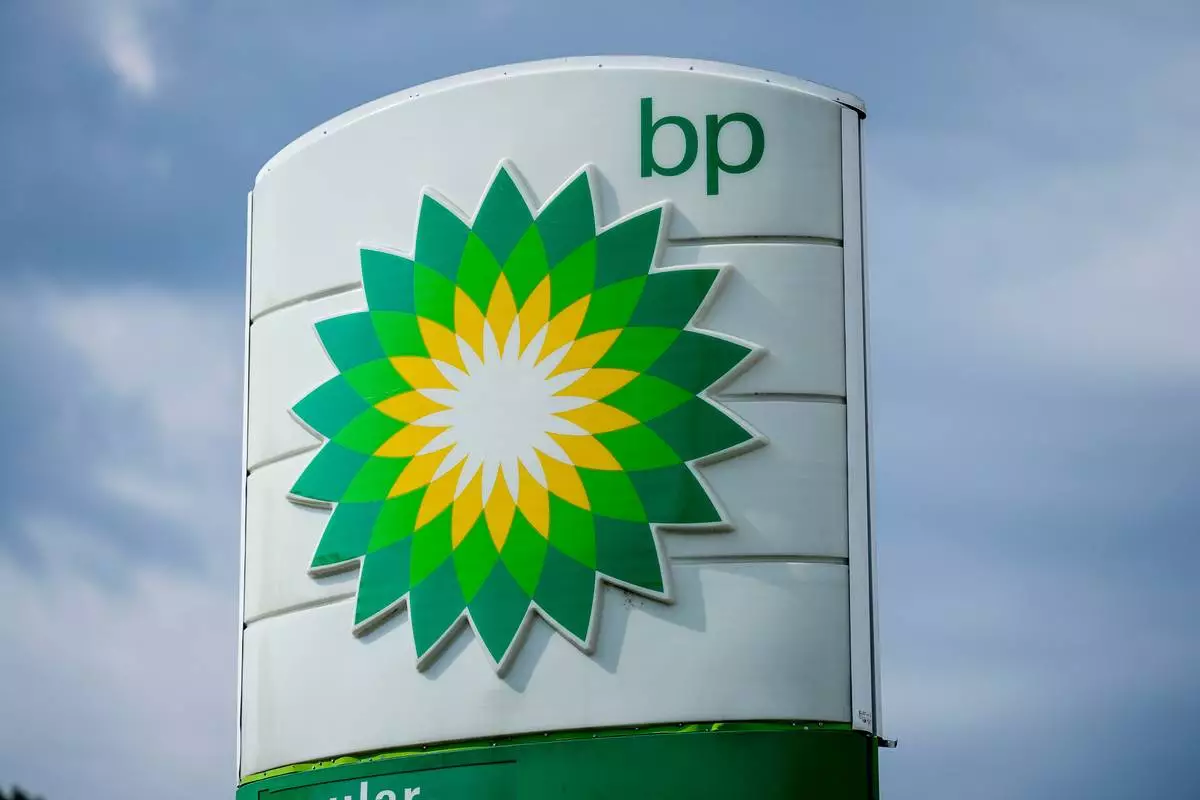
FILE - A BP fuel sign is seen, Tuesday, Sept. 12, 2023, in Marietta, Ga. (AP Photo/Mike Stewart, file)

FILE - A BP fuel sign is seen, Tuesday, Sept. 12, 2023, in Marietta, Ga. (AP Photo/Mike Stewart, file)

Recommended Articles