KANSAS CITY, Mo. (AP) — The most enduring memories that Clark and Dan Hunt share of their father, the sports tycoon Lamar Hunt, have less to do with all the World Cup games they saw together and more to do with the long, strange and often sinewy roads they took to get to them.
The van rides around Europe with a random cache of reporters, one of them a young CBS broadcaster named Verne Lundquist. Those side trips to find the best wienerschnitzel and ice cream. The fences they scaled to go swimming at Italian hotel pools long closed for the day. And the Mexican restaurant that proved to be the downfall of them all.
“My dad, he could eat anything,” Dan Hunt recalled, thinking back to that night during the 1986 World Cup. “I mean, he had a cast-iron stomach. He never got sick. And that about killed him. That was the food that took down the Hunt family.”
In wide-ranging interviews with The Associated Press, the Hunt brothers — Clark, the chairman of the NFL's Kansas City Chiefs and Dan, the president of Major League Soccer club FC Dallas — reflected on the robust soccer legacy left by their late father.
Without him, the U.S. may well have been watching the World Cup being played elsewhere next month rather than hosting it.
It was Lamar Hunt, after all, who helped professional soccer gain a foothold in the U.S. with his investment in the North American Soccer League. And when it folded in the 1980s, it was an undeterred Hunt who helped found MLS, whose very existence was one of the requirements of FIFA to allow his country to host the 1994 World Cup.
Lamar Hunt served as co-chairman of the organizing committee for matches in Dallas that year. Now, some 32 years later, Clark Hunt is serving in the same capacity for matches in Kansas City while Dan has taken on that role in Dallas.
Unlike the last World Cup played in the U.S., though, four group-stage matches and two knockout games will be played at Arrowhead Stadium, the home of the Chiefs, and a building Lamar Hunt long called his favorite place in the world.
“It's going to be special,” Clark Hunt said, “and I think it goes back to thinking about my dad a lot. That's what I'm going to do during those games, just think about how excited he would be to see the World Cup in Arrowhead Stadium.”
To say soccer was fledgling in the U.S. in the 1950s would be an understatement. There were no professional leagues to speak of, and after losing two of three games at the World Cup in 1950, the Americans would go four decades without qualifying at all.
It took a trip across the Atlantic Ocean for Lamar Hunt to fall in love with the sport.
His future wife, Norma Hunt, was attending University College Dublin as a Rotary scholar in the early 1960s, and the son of oil tycoon H.L. Hunt had gone to visit her. They found themselves at a Shamrock Rovers match, watching from a standing-room-only terrace on a cool night, and became engrossed in the throbbing, fevered pitch of European football.
“I think,” Clark Hunt said, “that may have been my dad's first professional soccer game.”
The experience stayed with Lamar Hunt, even as he returned to the U.S. and poured himself into a different kind of football, helping to found the American Football League — which would soon merge with the NFL — and the Dallas Texans, now the Chiefs.
A few years later, Hunt returned to Europe to take in his first World Cup. It was 1966, and he watched as the host England beat West Germany in an historic final at Wembley Stadium for what remains its only championship.
That year, a group of entrepeneaurs that included Hunt and Jack Kent Cooke established the United Soccer Association, which would later merge with the National Professional Soccer League to create the North American Soccer League. For nearly two decades, the NASL would push U.S. soccer forward, luring such stars as Pele, Franz Beckenbauer and Carlos Alberto to North America, and laying the groundwork for future generations of American players.
“We know from his ventures into professional football that he was not afraid of a challenge,” Clark Hunt said, “and he was always an optimist, too, and many of his ventures probably had long odds. But he had tremendous perseverence and tremendous work ethic, and he had a vision and a belief for what he was doing.”
The NASL grew quickly throughout the 1970s — too quickly, as it turned out. Many new owners did not have the resources to withstand losses while their clubs were getting off the ground, and they began to fold, leading to several years of contraction.
After the 1984 season, with attendance waning and games no longer televised, the league collapsed.
“My dad was always great about not sharing his negative feelings, but I'm sure he had them,” Clark Hunt said. “I remember as a high school and college student being very upset about it, even though I didn't have any real, you know, direct nexus to the team. But I just knew how disappointing it was for him, and sad that a sport I had come to love had really disappeared.”
Professional soccer didn't disappear for long, though.
Lamar Hunt was nothing if not persistent, and he viewed every failure as a learning opportunity. So, when soccer's governing body, FIFA, told organizers for the 1994 World Cup that one of its requirements to host the tournament was a top-tier domestic league, Hunt used what he had learned from the NASL in helping to establish Major League Soccer.
“You knew that if Lamar Hunt was part of it,” said Thom Meredith, his right-hand man for many years, “it meant something. You had Robert Kraft and all these other guys, but when it came down to it, you had Lamar Hunt in the room.”
Hunt not only helped bankroll the league but owned three of its first franchises; the family still owns FC Dallas, but divested itself of clubs in Columbus and Kansas City. Over the years, the league has grown to 30 clubs across the U.S. and Canada, attracted stars such as David Beckham and Lionel Messi, and laid the groundwork for robust youth soccer programs nationwide.
“My dad would be so pleased to see where MLS is today,” Clark Hunt said, “and he would be so excited about where it's going.”
While domestic soccer was important to Hunt, it was the World Cup that captivated him, beginning with that 1966 classic all the way through the 2002 edition hosted by South Korea and Japan, which helped spur the growth of the game in Asia.
Most years, Hunt would pack his family in rental cars and crisscross host countries to catch every game they could.
Clark Hunt, who later starred on the college soccer team at SMU, attended his first World Cup in 1978. But rather than the games, his most vivid memory was of a plaza outside a stadium in Düsseldorf, where activities had been set up for kids. One involved kicking a ball through a hole cut into a piece of wood, and Lamar Hunt had just as much fun trying as his 9-year-old son.
Dan Hunt's first World Cup experience came in Mexico in 1986. The lowlight was that meal that left the whole family feeling ill, but the highlight was undoubtedly the final, when Diego Maradona helped Argentina prevail over West Germany in Mexico City.
“We had seats at about the 40-yard line, you know? Great seats. And we were there with our tickets and people were stitting there, and they were unwilling to move. Security was unwilling to move them. So we had no seats," Dan Hunt recalled. “So my dad, true to form, solved the problem by buying more tickets, and we were right behind the goal for the penalty-kick shootout.”
Both of the brothers were busy at the start of the 2002 tournament, so Lamar Hunt — who died four years later at the age of 74 — headed to Asia by himself. On one of his first days there, his briefcase containing all of his money, tickets and travel documents was stolen, leaving the billionaire entrepeneur to figure out how to use an ATM in a foreign country.
“He stuck is best card in and started to push buttons,” Dan Hunt said, “and he panicked and it shredded his card. So we'd send him cash. And then he was in South Korea, headed back to Japan, and they confiscated it all because he was over the legal limit.
“I just remember thinking, ‘My dad is totally going to get kidnapped.'”
When the U.S. was awarded the World Cup along with Mexico and Canada in June 2018, organizers in Kansas City and executives with the Chiefs quickly went to work. The city had missed out on hosting matches in 1994 after FIFA determined Arrowhead Stadium would be unable to fit the required pitch, and they weren't going to let that happen twice.
Over the course of several years, and at a cost of nearly $20 million, seats were removed from the lower bowl of the NFL stadium and other modifications were made so that it could make its World Cup debut, now just days away. Its first game: Messi and defending champion Argentina against Algeria on June 16.
Kansas City will host six matches in all, includeding a quarterfinal, and the metropolitan area is serving as a home base not only for la Albiceleste and Algeria but also for perennial power England and the Netherlands, a longtime Hunt family favorite.
Meanwhile, five group-stage matches will be played at AT&T Stadium in Dallas, not far from where Lamar Hunt once lived. Four more will be played at the home of the Cowboys in the knockout rounds, including a semifinal match on July 14.
“I think this is one of the final pegs of fulfilling dad's legacy,” Dan Hunt said. “He called Arrowhead Stadium his favorite place on earth, and it's just so cool to have games there. And you know, Dallas was his hometown, and he loved it so much. So I think he would be just excited that we're back here. I think he would be over the moon.”
AP World Cup coverage: https://apnews.com/hub/fifa-world-cup
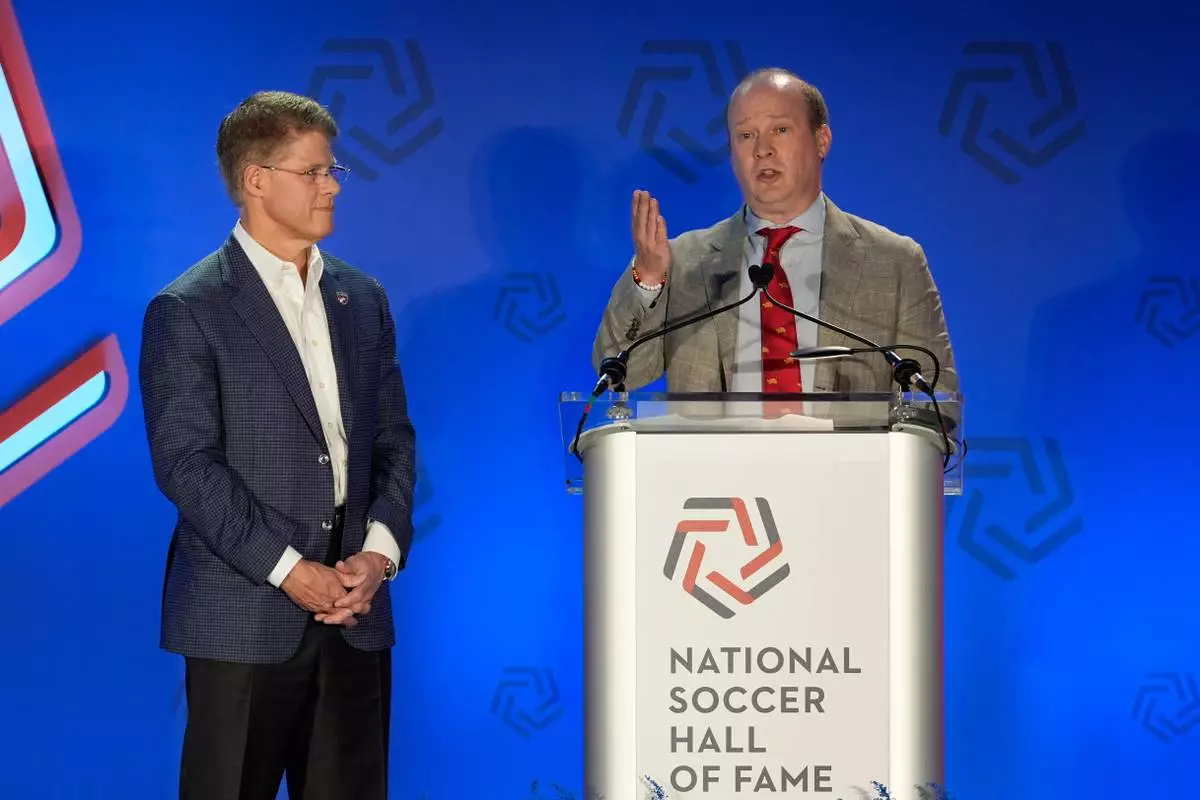
FILE - FC Dallas chairman and CEO Clark Hunt, left, looks on as Dan Hunt, president, FC Dallas, speaks during an induction ceremony for the National Soccer Hall of Fame, May 4, 2024, in Frisco, Texas. (AP Photo/Tony Gutierrez, File)
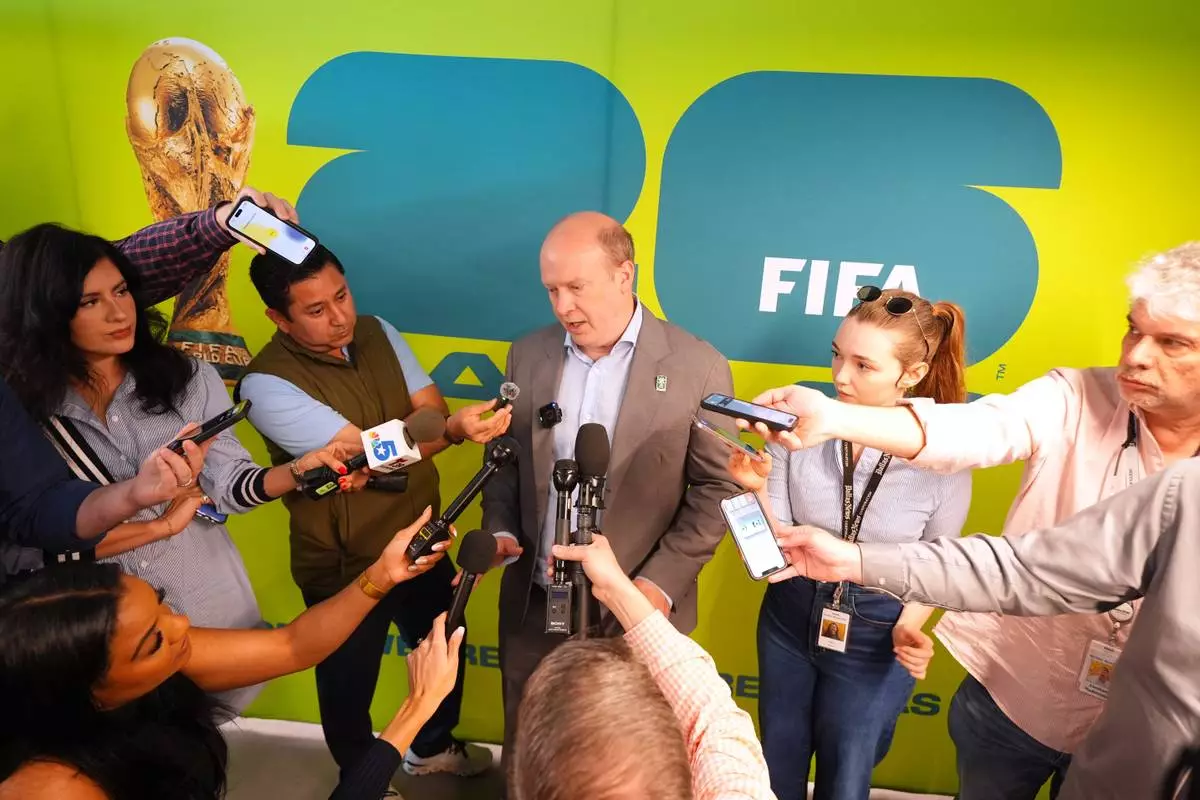
FILE - Dan Hunt, president of FC Dallas, speaks to reporter after a news conference announcing the 2026 FIFA World Cup Fan Festival soccer experience in Dallas, March 9, 2026. (AP Photo/LM Otero, File)
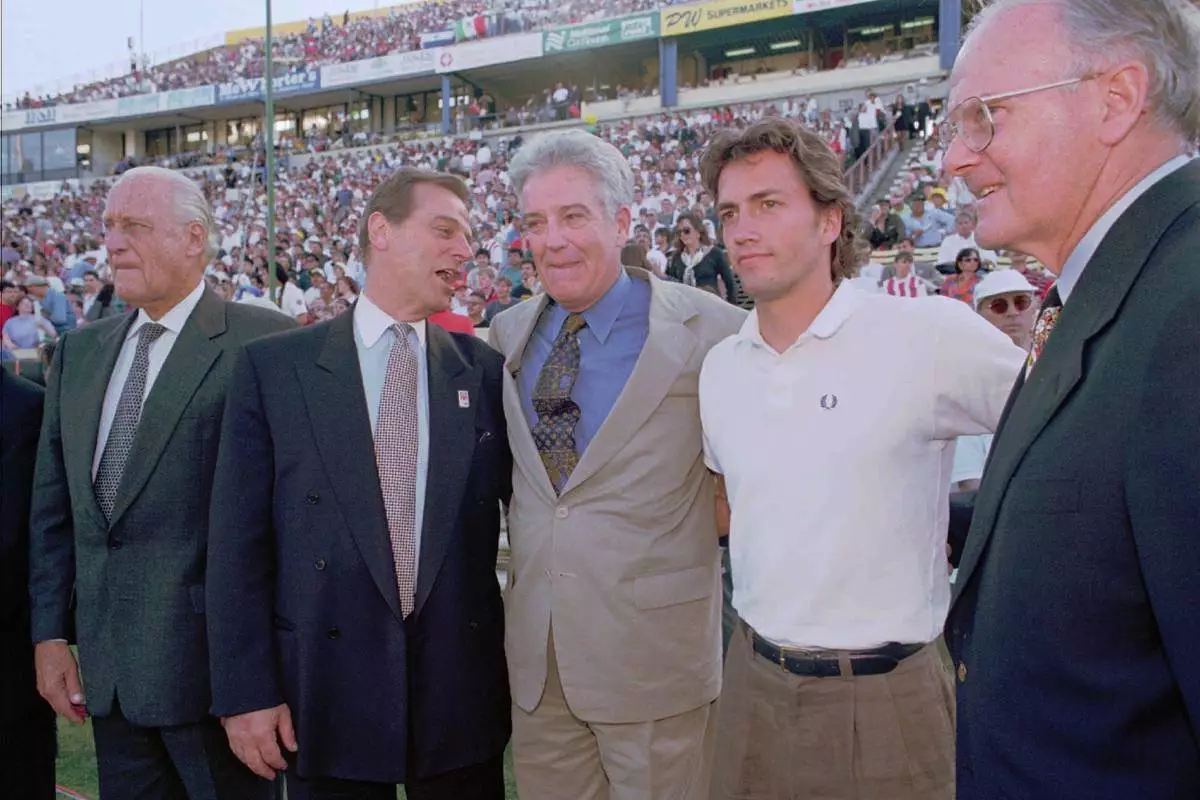
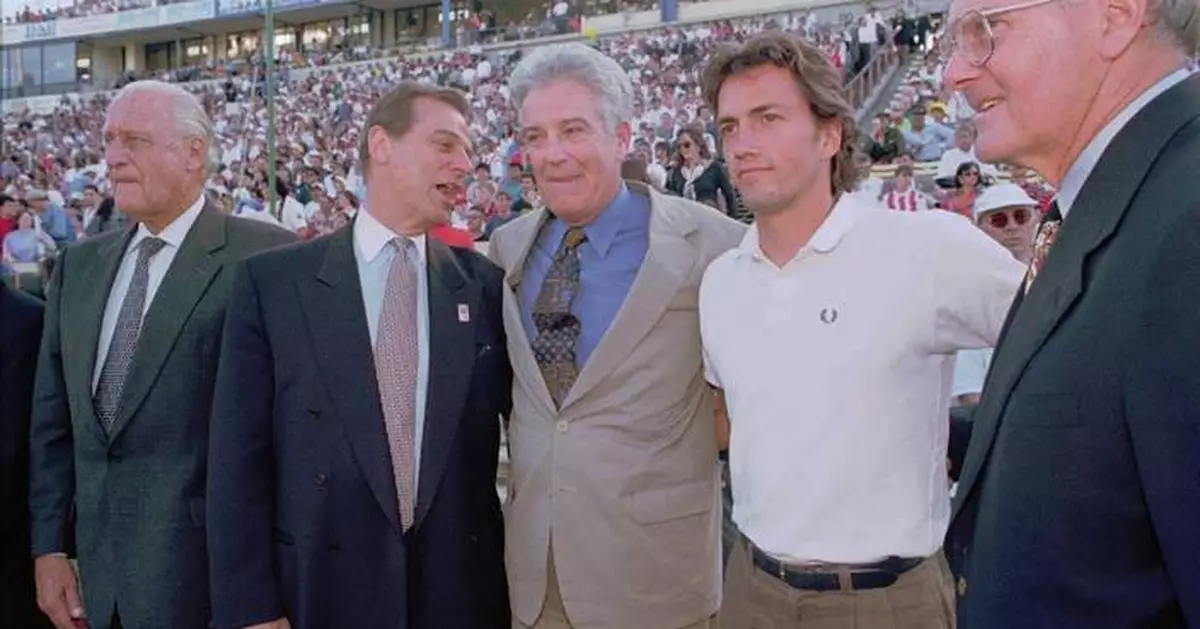
FILE - From right, Major League Soccer owners representative Lamar Hunt, actor Andrew Shue, Commissioner Douglas Logan, Chairman Alan Rothenberg, and FIFA representative Joao Havelange gather on the field before the start of the league's inaugural game in San Jose, Calif., April 6, 1996. (AP Photo/Craig Fujii, File)