LOS ANGELES--(BUSINESS WIRE)--May 27, 2026--
Logos Faith Development, a Los Angeles–based for-profit impact developer, in partnership with St Rest Friendship Baptist Church, commemorated the official groundbreaking on Tuesday, May 26th on Phase One of a 138-unit affordable housing community in Los Angeles, marking a major milestone in the organization’s 2026 development pipeline and its first groundbreaking completed without co-developers.
This press release features multimedia. View the full release here: https://www.businesswire.com/news/home/20260527115435/en/
Local officials and community leaders including representatives from the City of Los Angeles Council District 8 (CD8) office, joined Logos and St Rest Friendship Baptist Church at the groundbreaking, underscoring the importance of public-private and faith-based collaboration in addressing Los Angeles’ housing challenges.
The St Rest development will deliver much-needed affordable housing while demonstrating the power of faith-based partnerships to unlock underutilized land for community impact. The project at 709 W. Manchester Ave. in Los Angeles (development site) reflects Logos Faith Development’s mission to work alongside churches and mission-aligned partners to address the region’s housing crisis through scalable, financially sustainable development.
Pastor Martin Porter, Founder and CEO of Logos Faith Development, said, “This project is not simply about developing a building, it’s about my passion and vision for people to live in housing that has world-class interior design that inspires them on a daily basis, and to have access to life and vocational coaching that leads them to having lives worth living that are full of purpose and abundance. In short, we are not simply developing projects, we are developing people.”
Pastor Torrey N. Collins of St Rest Friendship Baptist Church, said, “This project reflects our calling to serve our community in tangible ways. By partnering with Logos Faith Development, we are transforming our land into a place of opportunity, dignity, and hope. Today’s groundbreaking is a testament to what can happen when faith, vision, and expertise come together.”
Los Angeles City Council President, Marqueece Harris-Dawson, Council District 8 (CD8), said, "Addressing our housing crisis is something everyone in Los Angeles should be invested in, and I look forward to the success of this project."
St Rest Phase One will deliver 62 new apartment homes serving low- and moderate-income households. The four-story development will include 53 one-bedroom units and nine two-bedroom units, features a courtyard on the second floor and will provide 27 covered parking spaces. St Rest will include deeper affordability replacement units as part of the project’s overall housing mix. Construction funding for this initial phase of the project was delivered via a roughly $15 million construction loan from Sunflower Bank. Phase One is expected to be completed during Q4 2027.
The overall St Rest project will feature a mix of 138 one-bedroom and two-bedroom units, with roughly 90% of the units dedicated to low-income tenants under Section 8 standards. The full two-phase plan will ultimately create new housing units across neighboring parcels, along with a new worship and ministry space for St Rest Friendship Baptist Church in Phase Two. The development will serve individuals and families in need while strengthening community ties and reinforcing the role of churches as anchors for neighborhood stability.
The St Rest project advances Logos Faith Development’s broader 2026 strategy, which includes multiple planned groundbreakings across California and positions the firm as a leading voice in faith-based affordable housing nationwide. With a development pipeline valued at approximately $700 million and more than 2,000 affordable housing units planned in partnership with over 30 faith-based organizations, Logos Faith Development continues to expand its footprint across Southern California and beyond.
The Saint Rest development also supports Logos Faith Development’s ongoing fundraising and investor engagement efforts, reinforcing its position as a trusted partner for impact investors seeking both financial performance and measurable social outcomes.
About Logos Faith Development
Founded in 2017, Logos Faith Development is a leading Los Angeles-based developer that partners with churches to build much needed affordable housing in Southern California. The full-service real estate firm joins with churches, landowners, and mission-aligned organizations to repurpose underutilized land into affordable communities, thus working to help solve the affordable housing crisis and make an impact on underserved communities. Logos Faith Development brings a strong track record for creating affordable housing and has a development pipeline valued at $700 million that spans more than 2,000 units and encompasses more than 30 faith-based organizations. More information: www.logosfaithdevelopment.com.

Logos Development Team Gathers with Church & City Officials for St Rest Groundbreaking Event May 26, 2026 *Photo Courtesy of Logos Faith Development
MINA, Saudi Arabia (AP) — Masses of pilgrims in Saudi Arabia threw pebbles at a large pillar in a symbolic ritual on Wednesday, one of the final days of the Hajj as Muslims around the world started celebrating the Islamic holiday of Eid al-Adha.
Pilgrims in Mina, Saudi Arabia, chanted “Allahu akbar” (“God is great”) while throwing pebbles in a ritual seen as a symbolic stoning of the devil. The act is also seen as a symbol of rejecting evil and a commemoration of the Prophet Ibrahim’s rejection of temptation when the devil tried to dissuade him from submitting to God’s will.
Large crowds of pilgrims moved through the sprawling Jamarat complex after arriving from Muzdalifah, where they collected pebbles overnight following a day of worship and prayer at Arafat on Tuesday.
Aamar Shakur, a pilgrim from Pakistan, said he saw the pebble throwing as a symbol of confronting personal struggles in which he was “throwing the stone to my own devil.”
The last days of the Hajj in Saudi Arabia coincide with Eid al-Adha, or “Feast of Sacrifice,” which marks the willingness of Ibrahim, known as Abraham to Christians and Jews, to sacrifice his son. During the holiday, Muslims typically slaughter sheep or cattle and distribute some of the meat to poor people.
The Hajj, one of the Five Pillars of Islam, is required once in a lifetime of every Muslim who can afford it and is physically able. Performed over several days, the Hajj can be a deeply moving spiritual experience and a chance to seek God’s forgiveness.
The physically demanding Hajj has been held this year in intense heat, which appeared to take a toll on some as they moved between holy sites. Medical teams stationed across Mina were seen treating several pilgrims.
Many poured water over their heads and faces to cool themselves under the scorching sun, while others carried umbrellas. Some pushed elderly relatives and loved ones in wheelchairs through the crowds toward the pillars so they could complete the ritual.
The Hajj brings together large numbers of Muslims of diverse races, ethnicities, languages and socioeconomic classes, creating a sense of unity for many.
More than 1.5 million pilgrims have arrived from abroad, a Saudi official said Friday.
This year's Hajj takes place against the backdrop of a tenuous ceasefire in the Iran war and related uncertainty throughout the region.
Eid al-Adha is a typically a joyous occasion, marked with communal prayers, food and festive gatherings with loved ones. In some places, though, conflicts and economic pressures, are dampening festivities for many.
In Jakarta, Indonesia, Muslim worshippers have joined communal prayers in the mosques and streets.
Lebanon is observing Eid al-Adha amid an ongoing conflict between Israel and the Hezbollah militant group. Many of the displaced people in the country are sheltering in tented settlements or public schools repurposed as shelters, a far cry from the normalcy of spending the occasion among friends and family in their hometowns.
“There is no Eid for us. We are displaced, forced to leave our land, our homes, our livelihoods, while our memories are being destroyed,” said Rabee Khreis, who fled the village of Khiyam where intense fighting has taken place.
A U.S.-brokered ceasefire in the Israel-Hezbollah conflict appeared more nominal by the day, complicating efforts at a broader peace in the Iran war.
In the Gaza Strip, where the Israel-Hamas war that began in October, 2023, has devastated the territory and its people, Palestinians are observing a subdued Eid al-Adha under a fragile ceasefire and rampant suffering and displacement.
“This is not Eid... we’re dead,” said Mahmoud Saqer, a displaced man from Khan Younis.
In Khan Younis and Gaza City, amid destroyed buildings, worshippers gathered for Eid prayers with few signs of celebration as the typical joy of Eid eluded many.
“There’s no Eid. My children were killed,” said Ayda Al-Banna, a displaced woman from Gaza City, who prayed Eid prayers with her granddaughter. “Eid is only for the people who lost no one.”
Israel’s military offensive in Gaza has killed more than 72,803 Palestinians, according to Gaza’s Health Ministry, caused widespread destruction and displaced most of the territory’s residents. The ministry, part of the Hamas-led government, maintains detailed casualty records that are seen as generally reliable by U.N. agencies and independent experts. It does not give a breakdown of civilians and militants.
Israel launched the offensive after Hamas-led militants killed some 1,200 people, mostly civilians, and took another 251 hostage in an attack on Israel on Oct. 7, 2023. While the heaviest fighting has mostly subsided since a fragile ceasefire took effect on Oct. 10, deadly Israeli strikes have repeatedly disrupted the truce. Hamas and Israel have accused each other of violating the ceasefire.
Fam reported from Winter Park, Florida. Associated Press journalists Wafaa Shurafa in Deir al-Balah, Gaza Strip, Ali Sharafeddine in Beirut, and Andi Jatmiko in Jakarta, Indonesia, contributed.
Associated Press religion coverage receives support through the AP’s collaboration with The Conversation US, with funding from Lilly Endowment Inc. The AP is solely responsible for this content.
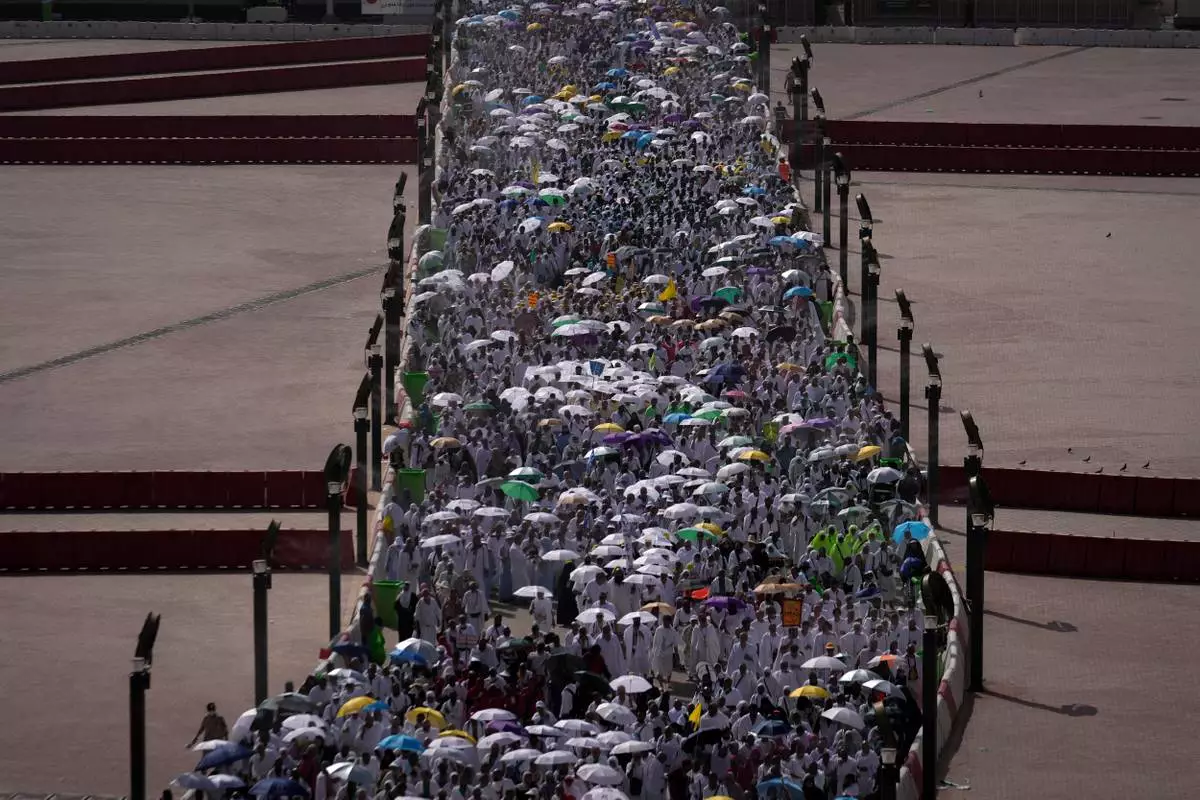
Muslim pilgrims walk on their way to cast pebbles at pillars in the symbolic stoning of the devil, the last rite of the annual Hajj, in Mina near the holy city of Mecca, Saudi Arabia, Wednesday, May 27, 2026. (AP Photo/Altaf Qadri)
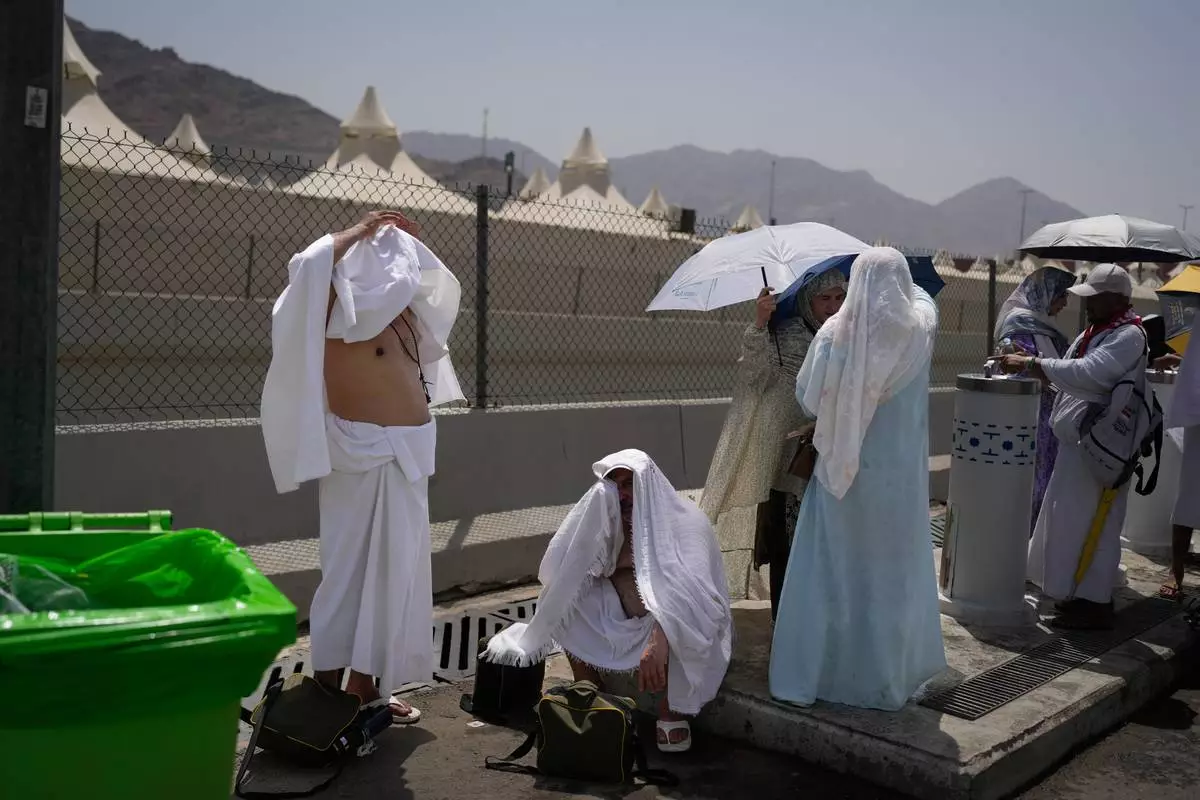
Muslim pilgrims cover their heads to avoid sunlight as they rest while on their way to cast pebbles at pillars in the symbolic stoning of the devil, the last rite of the annual Hajj, in Mina near the holy city of Mecca, Saudi Arabia, Wednesday, May 27, 2026. (AP Photo/Altaf Qadri)
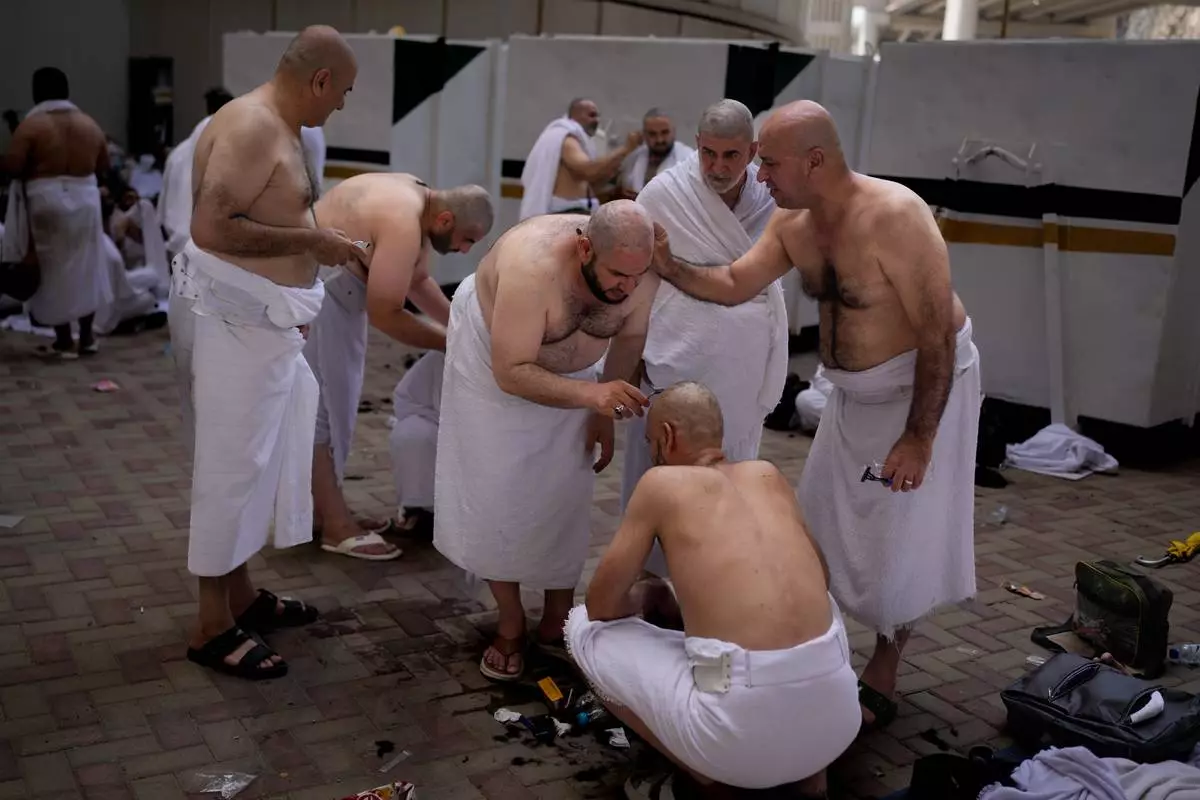
Muslim pilgrims shave each other's heads, during a ritual known as "halq," marking the completion of Hajj after the symbolic stoning of the devil in Mina near the holy city of Mecca, Saudi Arabia, Wednesday, May 27, 2026. (AP Photo/Altaf Qadri)
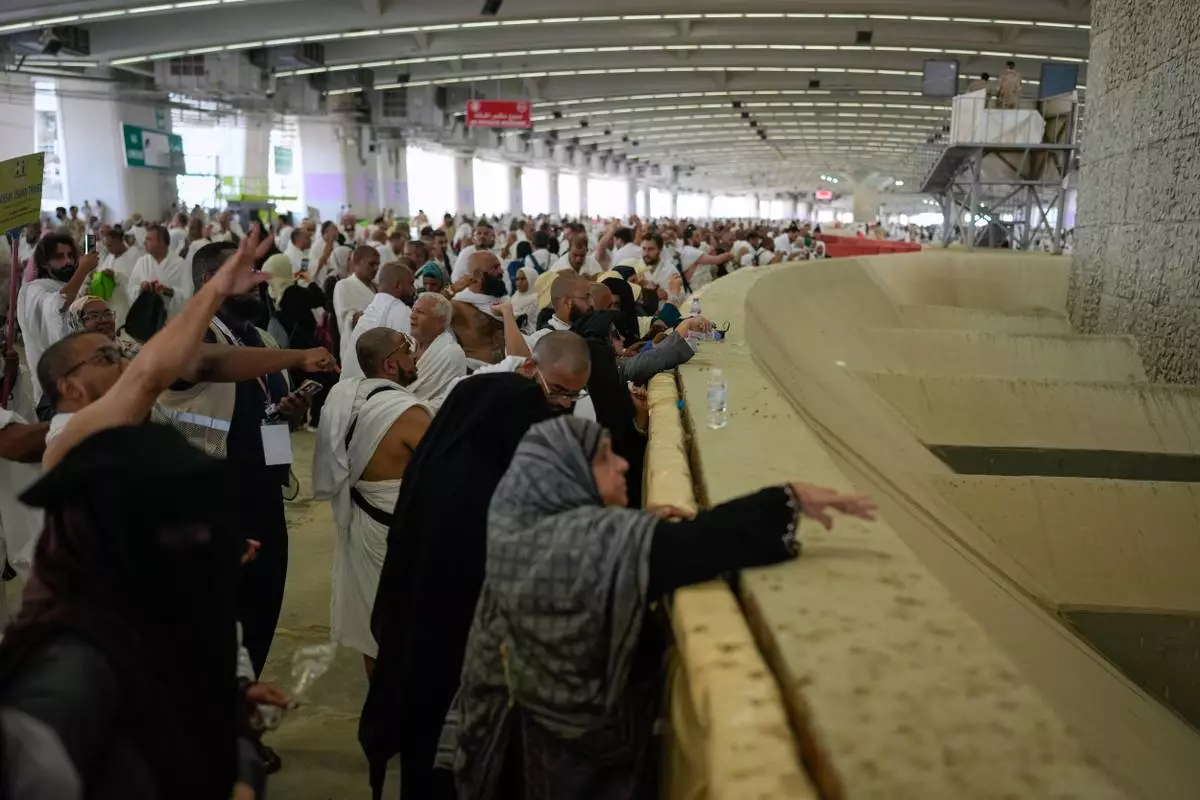
Muslim pilgrims pray after they cast pebbles at pillars in the symbolic stoning of the devil, the last rite of the annual Hajj, in Mina near the holy city of Mecca, Saudi Arabia, Wednesday, May 27, 2026. (AP Photo/Altaf Qadri)
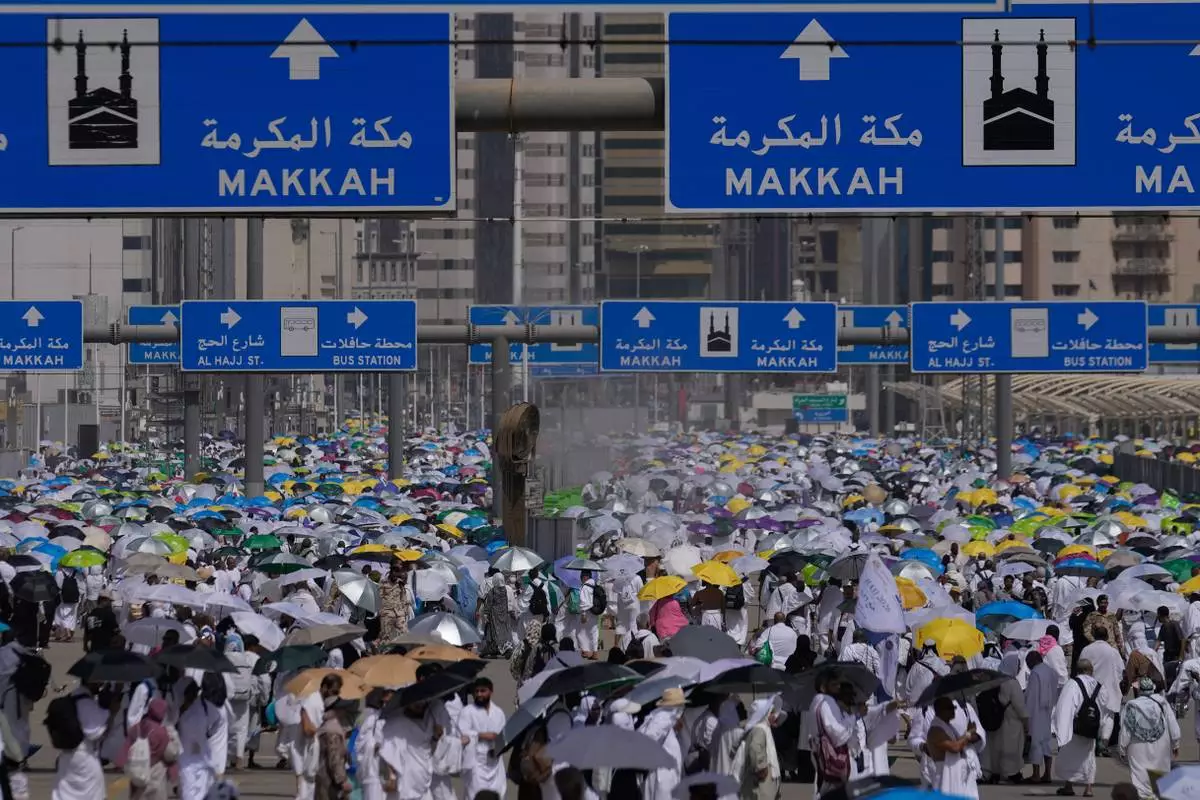
Muslim pilgrims leave after casting pebbles at pillars in the symbolic stoning of the devil, the last rite of the annual Hajj, in Mina near the holy city of Mecca, Saudi Arabia, Wednesday, May 27, 2026. (AP Photo/Altaf Qadri)
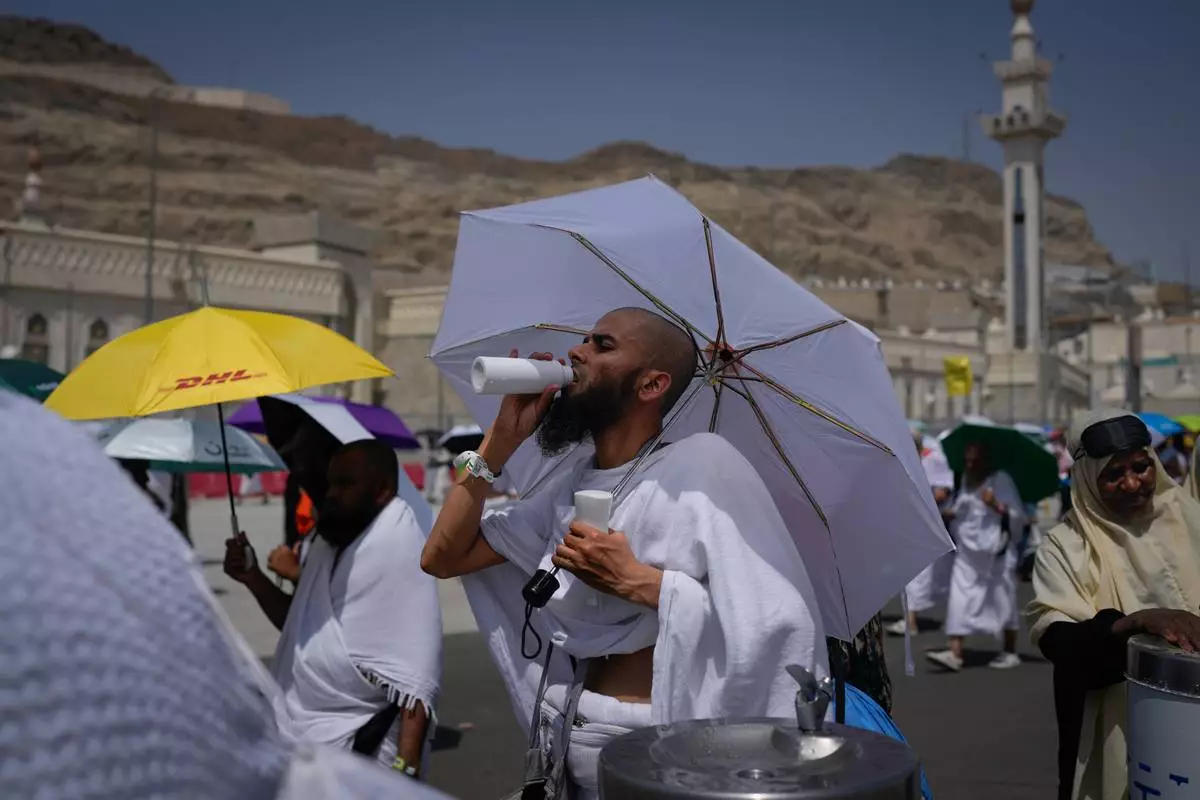
A Muslim pilgrim drinks water as pilgrims walk on their way to cast pebbles at pillars in the symbolic stoning of the devil, the last rite of the annual Hajj, in Mina near the holy city of Mecca, Saudi Arabia, Wednesday, May 27, 2026. (AP Photo/Altaf Qadri)