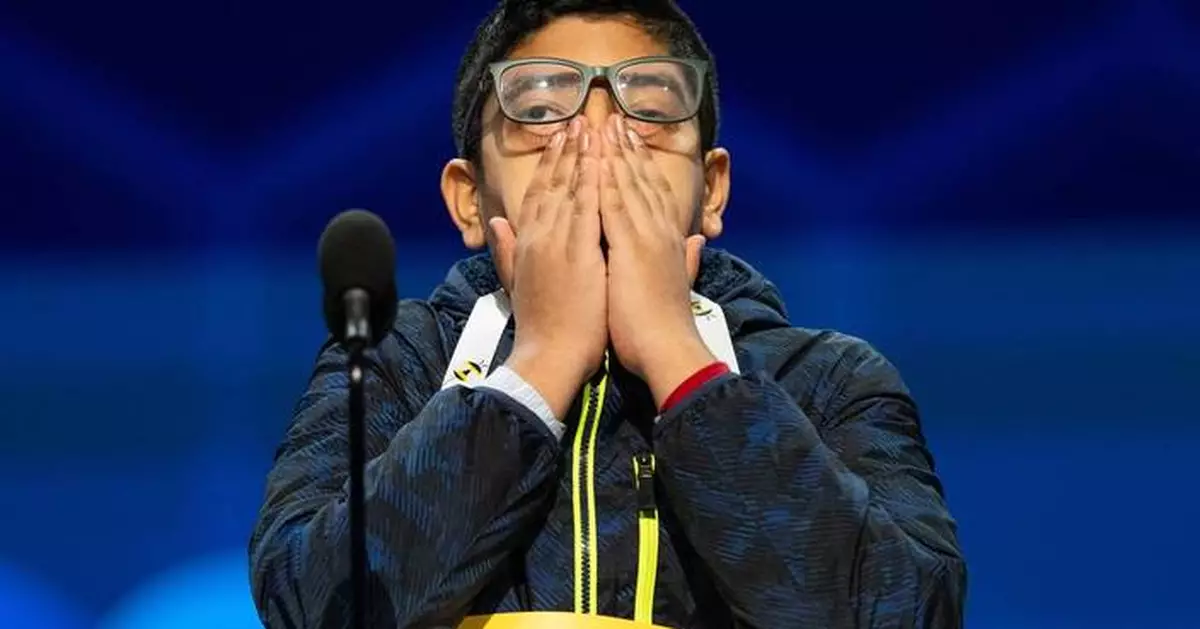
WASHINGTON (AP) — Shrey Parikh finished third in the 2024 Scripps National Spelling Bee before making a stunning exit from his school bee last year. Now in his final year before he ages out of the competition, he's fully committed.
The 14-year-old from Rancho Cucamonga, California, works with three coaches. He pays for word lists and study guides. He tries to learn every Greek and Latin root, every language pattern, every spelling bee-worthy word he can find. And he competes throughout the year in online bees that pit him against the country's other top spellers.
Click to Gallery
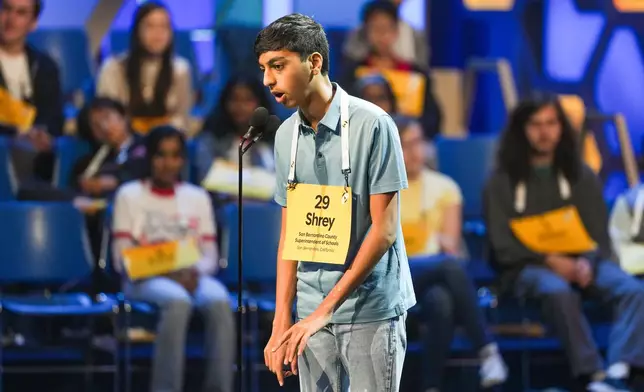
Shrey Parikh, 14, of Rancho Cucamonga, Calif., competes during the first preliminary round of the Scripps National Spelling Bee, Tuesday, May 26, 2026, in Washington. (AP Photo/Allison Robbert)
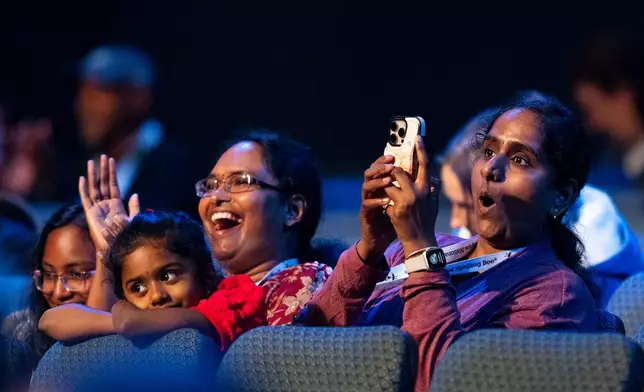
Parents in the audience watch closely during the quarterfinals of the Scripps National Spelling Bee, Wednesday, May 27, 2026, in Washington. (AP Photo/Allison Robbert)
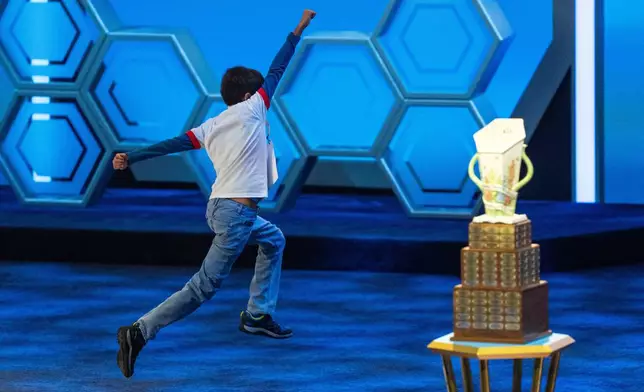
Sanil Thorat, 10, of Shreveport, La., reacts after answering correctly during the quarterfinals of the Scripps National Spelling Bee, Wednesday, May 27, 2026, in Washington. (AP Photo/Allison Robbert)
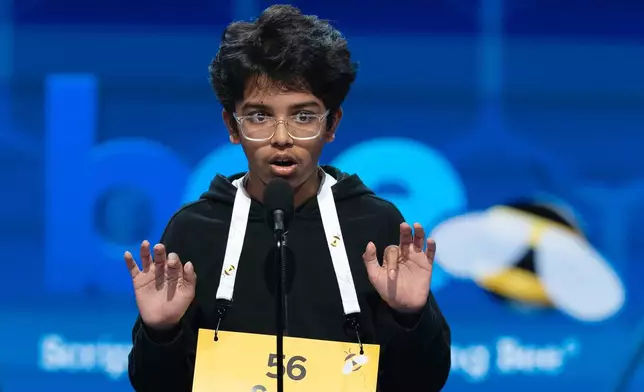
Sarv Dharavane, 12, Dunwoody, Ga., spells his word during the quarterfinals of the Scripps National Spelling Bee at DAR Constitution Hall, Wednesday, May 27, 2026, in Washington. (AP Photo/Jose Luis Magana)
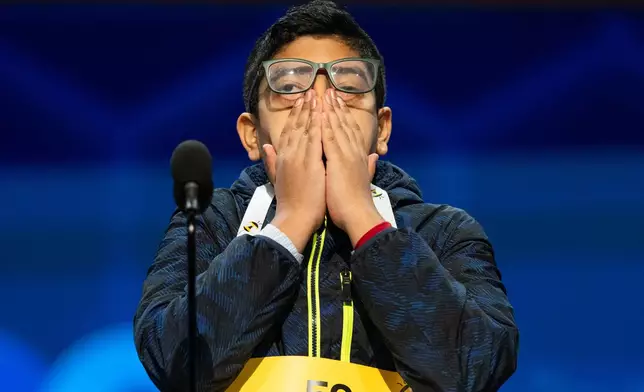
Anay Mahesh, 13, of Orlando, Fla., reacts after answering incorrectly during the quarterfinals of the Scripps National Spelling Bee, Wednesday, May 27, 2026, in Washington. (AP Photo/Allison Robbert)
Shrey's approach has proven effective for spellers seeking to hold the trophy, and on Wednesday he became one of nine spellers who got through the semifinals and will compete in the finals Thursday night.
But at least one other finalist has gone old-school, shunning outside help and using the dictionary as his guide.
Their opposing strategies have revived a long-running if good-natured debate in spelling circles: Which is more important, mastery of languages or rote memorization?
“At the end of finals, most of the words aren’t going to have a really clean-cut language pattern or rule that you can pull from. So I think memorization is really important,” said Sam Evans, who coached each of the past two champions. “Sometimes it gets a bad reputation, but you have to do it.”
It’s all but impossible to reach the finals without knowing the components that make up words absorbed into English: roots and languages of origin. But some champions have stood out for their incredible recall, the ability to instantly visualize any word they’ve run across or even recite dictionary definitions verbatim: Nihar Janga in 2016, Zaila Avant-garde in 2021 and Bruhat Soma in 2024.
Sarv Dharavane might be the next of that group.
Sarv finished third in 2025 as a relative unknown in the spelling community. There’s a reason for that. The 12-year-old sixth-grader from Dunwoody, Georgia, has no coach. He doesn’t participate in online bees. And his only study guide is the source for every word in the competition: Merriam-Webster’s Unabridged dictionary.
“The book is my coach,” Sarv said.
Given his past success, he saw no reason to change it up. And he's back in the finals.
“I didn't really change anything because my strategy got me far last year, but I did more of what I did before,” Sarv said.
“I used to read the dictionary and set aside difficult words to study later,” he explained. “I did it a lot, so I got a lot of words and it was really easy just to go through them. I've always been able to remember pretty well, and I can read through long lists without getting tired, so this strategy works pretty well for me.”
Simple, right?
Many spellers think there's a better way.
Dev Shah, the 2023 champion, advocates an artistic approach to spelling — the one also championed by his coach, Scott Remer. Master roots, master language patterns, and learn how to spot the exceptions, and you can spell a word that you’ve never seen or don’t remember.
Shah accepted that he could never memorize the dictionary — “No one can,” he said — and he believed if he got a word he didn't know, he could figure it out.
“The skill of guessing is everything,” he wrote in a Washington Post op-ed after his victory.
In an interview Wednesday, Shah said memorization was important, especially for quirky words with obscure origins. He said the best spellers, including Avant-garde, found a balance between memorization and mastery.
Having a conceptual understanding of how words are spelled can also help spellers perform under pressure when their memory fails them, said Shah, who admitted he finds it daunting to memorize a huge volume of words.
Former champion Sohum Sukhatankar, who coaches Shrey, said spellers need to fill their brains with the most useful information.
“When you’re at the highest level, you have to be prepared for hundreds of thousands of words,” he said. “You want to do as little memorization as possible to avoid the chance that you just forget it, so it’s all about efficiency.”
Shrey knows he might have to guess when he's at the microphone, but he wants to eliminate variables. That makes sense, given that a year ago, he wasn't even the top speller at his school.
“I had a fever at my school bee last year, and I just blanked on the word ‘calipers’ ... and I missed it,” he said. “I was really devastated.”
It took a few months before Shrey was motivated to start studying again. Once he did, he added Sukhatankar to his coaching team. He's learned how to slow down when he's at the microphone because of a bad experience in 2023, when he rushed through a word, didn't enunciate it clearly and judges determined he got it wrong.
He's also a believer in study guides. Shrey said an interactive, AI-assisted platform called Onyma that offers personalized learning and competition with other spellers — launched this month by Sukhatankar and Evans — has helped with his preparation.
He also uses SpellPundit, an online resource created by two former spellers and their parents that made a splash at the 2019 bee when the majority of that year’s eight co-champions used it. The company claims every champion since as a customer.
Shrey won the annual SpellPundit bee, the South Asian Spelling Bee and several other online bees, which he doesn't necessarily see as an advantage.
“I feel like it (creates) more pressure to perform,” he said.
Evans believes spellers who want to win should use their study time efficiently, but there's no barrier to learning every possible word.
“There's a common joke among spellers that says everything's in the dictionary, so it's all ‘on-list,’” he said. “The dictionary is the most basic thing that spellers need to know.”
Ben Nuckols has covered the Scripps National Spelling Bee since 2012. Follow his work here.
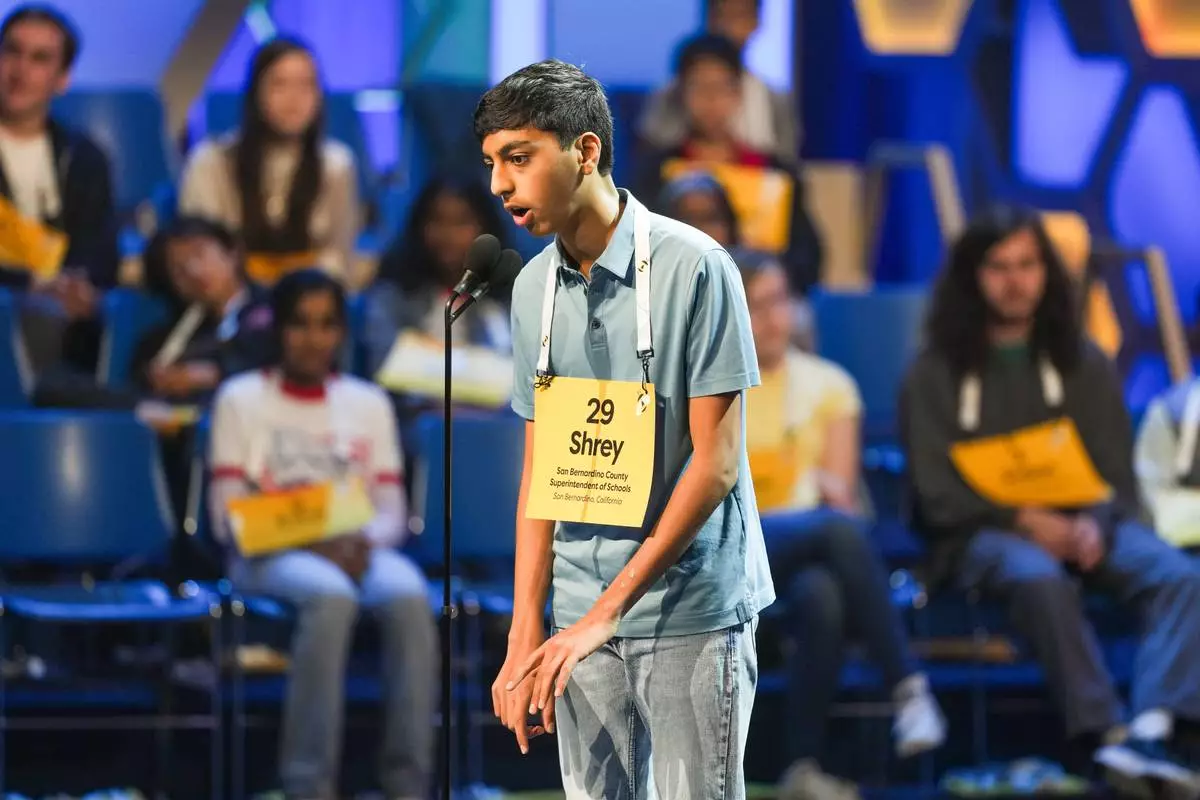
Shrey Parikh, 14, of Rancho Cucamonga, Calif., competes during the first preliminary round of the Scripps National Spelling Bee, Tuesday, May 26, 2026, in Washington. (AP Photo/Allison Robbert)
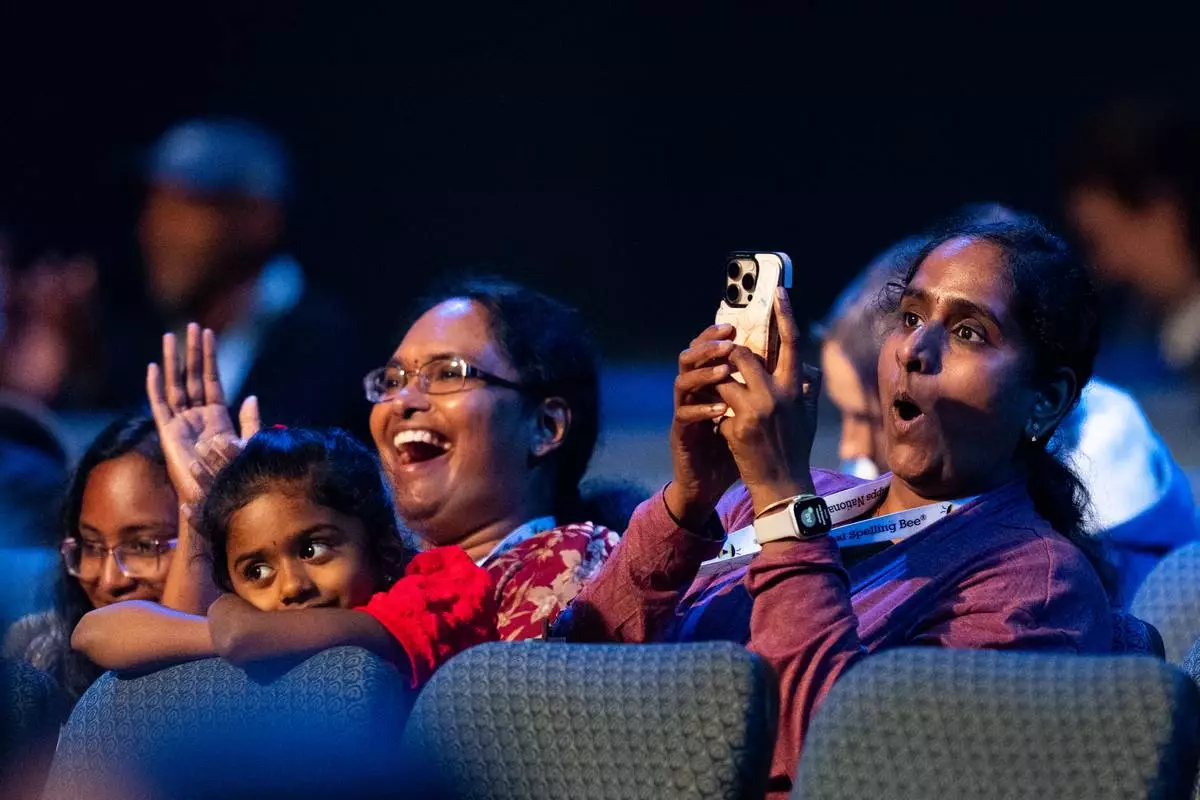
Parents in the audience watch closely during the quarterfinals of the Scripps National Spelling Bee, Wednesday, May 27, 2026, in Washington. (AP Photo/Allison Robbert)
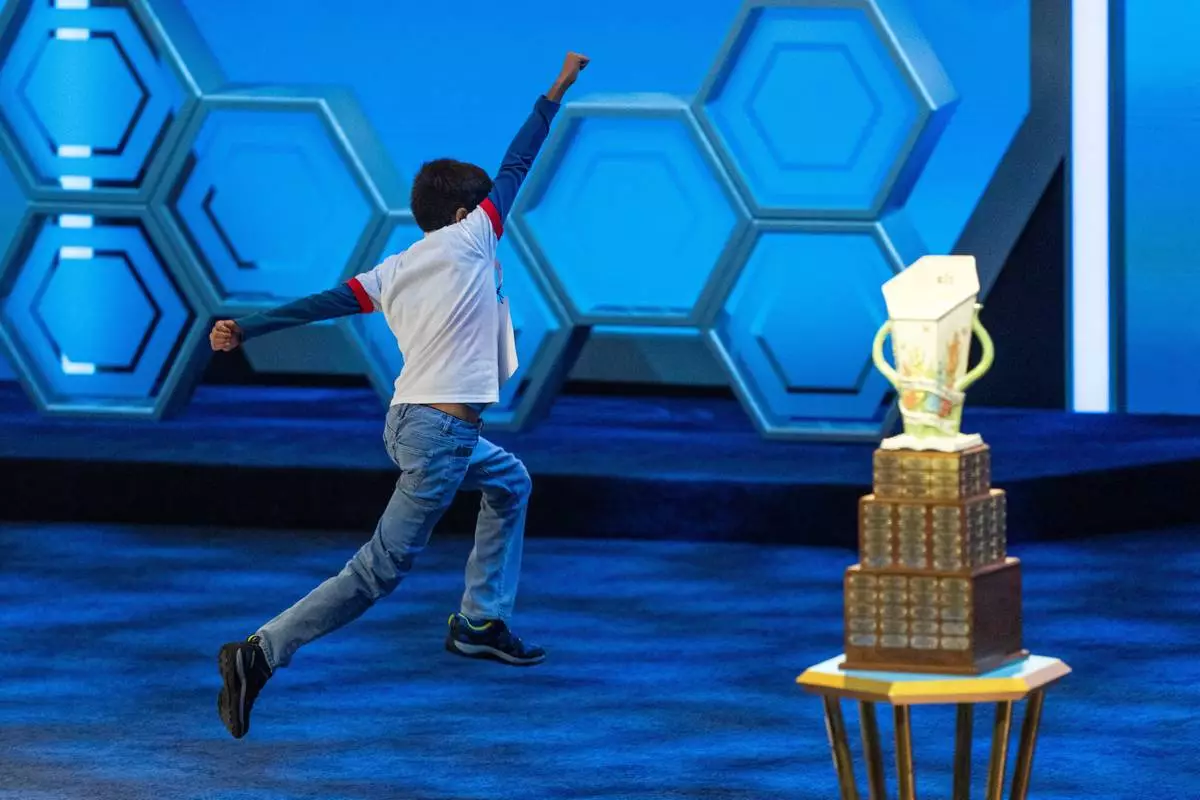
Sanil Thorat, 10, of Shreveport, La., reacts after answering correctly during the quarterfinals of the Scripps National Spelling Bee, Wednesday, May 27, 2026, in Washington. (AP Photo/Allison Robbert)
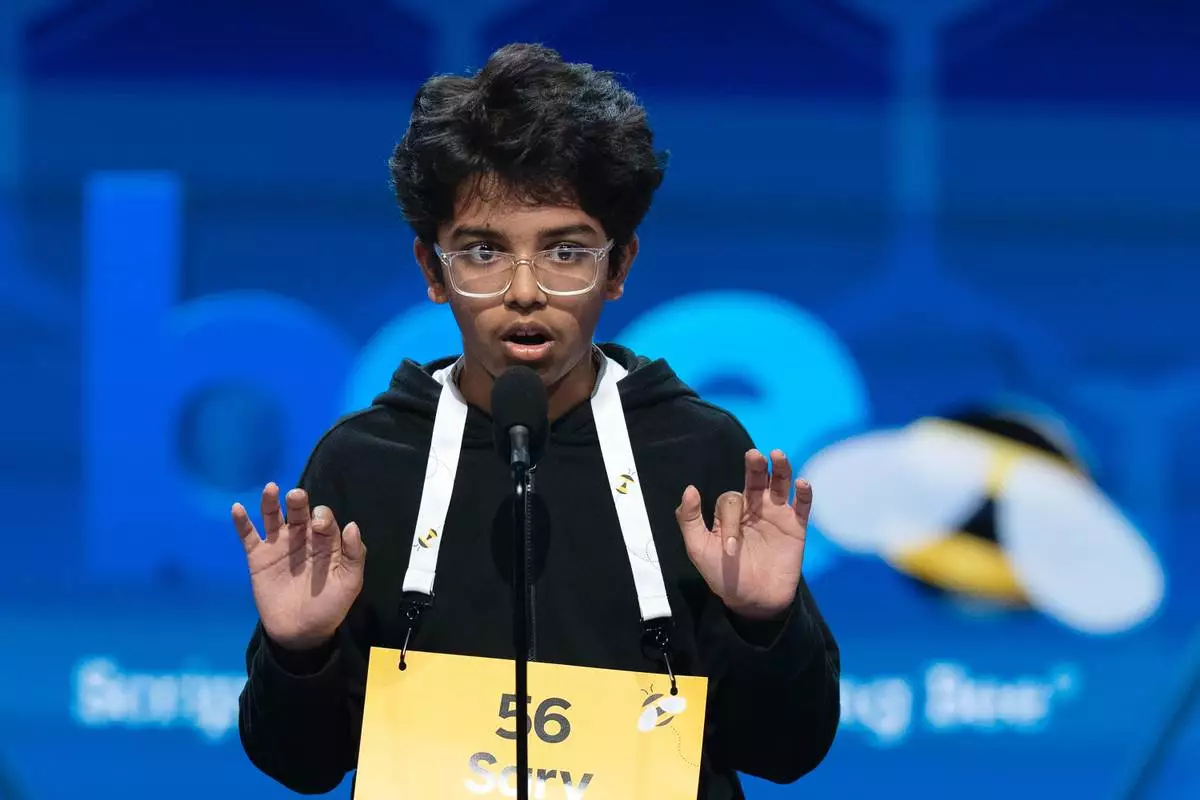
Sarv Dharavane, 12, Dunwoody, Ga., spells his word during the quarterfinals of the Scripps National Spelling Bee at DAR Constitution Hall, Wednesday, May 27, 2026, in Washington. (AP Photo/Jose Luis Magana)
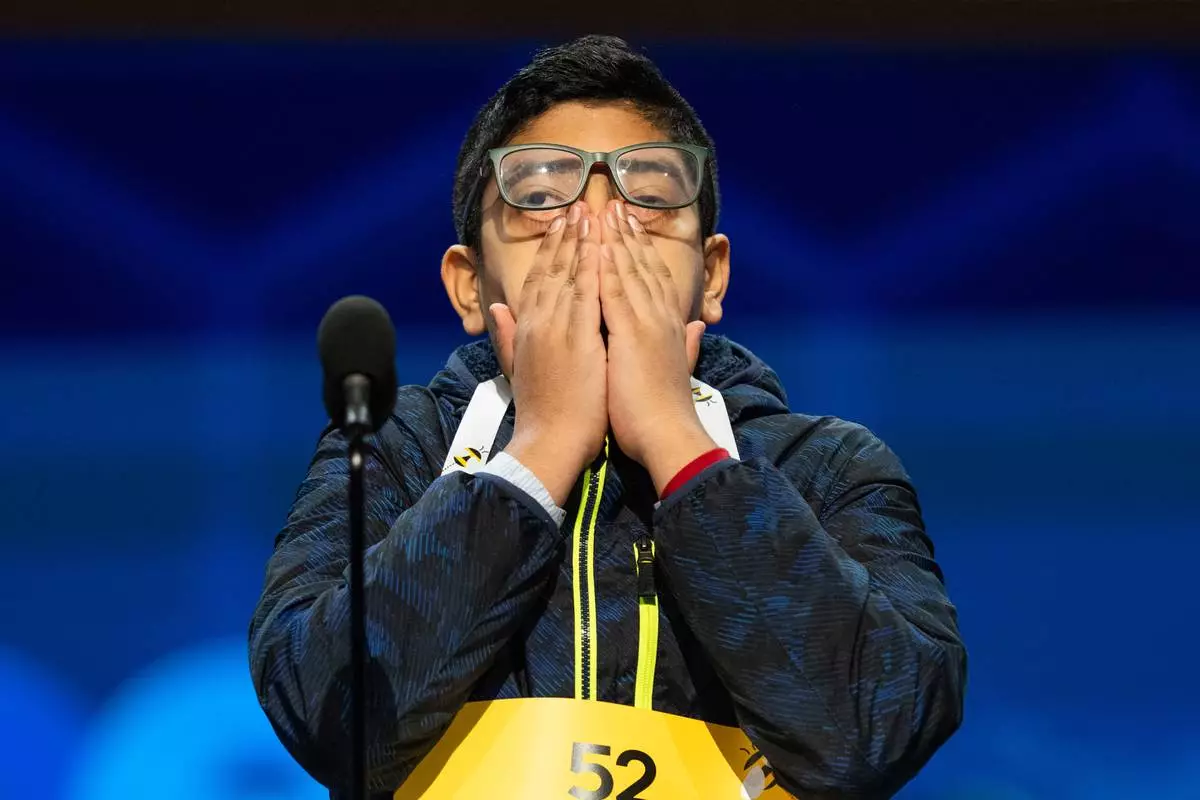
Anay Mahesh, 13, of Orlando, Fla., reacts after answering incorrectly during the quarterfinals of the Scripps National Spelling Bee, Wednesday, May 27, 2026, in Washington. (AP Photo/Allison Robbert)