Skip to Content Facebook Feature Image

Russia wants banks and their staff to help fight Ukrainian drones

News

Russia wants banks and their staff to help fight Ukrainian drones
News

News

Russia wants banks and their staff to help fight Ukrainian drones

2026-05-27 22:08 Last Updated At:22:10

Russian bank staff and branches could be joining the fight against Ukrainian drone attacks under an ambitious plan approved by the country’s lower house of parliament.

The banks would bear the cost of installing electronic jamming systems on their premises while selected employees would shoot down incoming drones, according to the draft bill passed in its third and final reading Tuesday.

Since there are banks in almost every town, their incorporation in air defenses could help expand Russia’s cover.

The bill, which state news agency Interfax said was first presented last August and later expanded in scope, must still be approved by the upper house Federation Council and signed by President Vladimir Putin before coming into force.

Russia is finding it hard to protect its large land mass from a growing number of attacks by increasingly sophisticated Ukrainian long-range drones. Smaller drones are also holding back Russian troops along the 1,250-kilometer (780-mile) front line and disrupting the supply lines of Russia’s invading army, Western analysts and officials say.

As the intensity and depth of Ukrainian drone attacks have increased, Russian authorities have encouraged businesses to contribute to protective measures against aerial strikes.

Russian banks are not known to have been a prime target for Ukrainian drones over the four years of war that followed Moscow's invasion. The plan encompasses Russia’s central bank and other top institutions, including majority state-owned Sberbank.

With little detail included in the bill, it has raised questions about how such a project would work. The widespread installation of equipment and training of staff in how to use it would require a huge organizational effort.

With Putin keen to shield Russians from the war, the plan could work against his efforts by involving regular citizens in it and making the consequences of the invasion more visible.

The proposed measure reflects growing problems for Russia against Ukraine’s increasingly sophisticated drones, according to Thomas Withington, a researcher at the Royal United Services Institute in London.

The draft bill “seems to indicate that … military-level drone defense capabilities in Russia are failing, because if they were working you wouldn’t need to do that,” he told The Associated Press.

“This situation is not improving for Russia,” he said, noting that Moscow is battling to keep up with Ukrainian drone innovations.

The measure seeks to “try and offload some of the burden of drone protection to the non-military, non-law enforcement sectors,” which are under strain, he said.

Under the bill that passed in its second and third reading by the Duma, bank employees may jam or intercept drone control signals, and damage or destroy uncrewed aerial, underwater and ground vehicles threatening their facilities, without waiting for a response from security services.

“Jamming will be used to make it more difficult for (the drones) to target and attack the relevant targets,” Anatoly Aksakov, chairman of the State Duma Committee on Financial Markets, told Russian media outlet RBK. “Plus, we’ll also use means to shoot down these drones, thereby protecting the relevant targets.”

Each organization will determine which employees are authorized to deploy the measures.

Follow the AP’s coverage of the war in Ukraine at https://apnews.com/hub/russia-ukraine
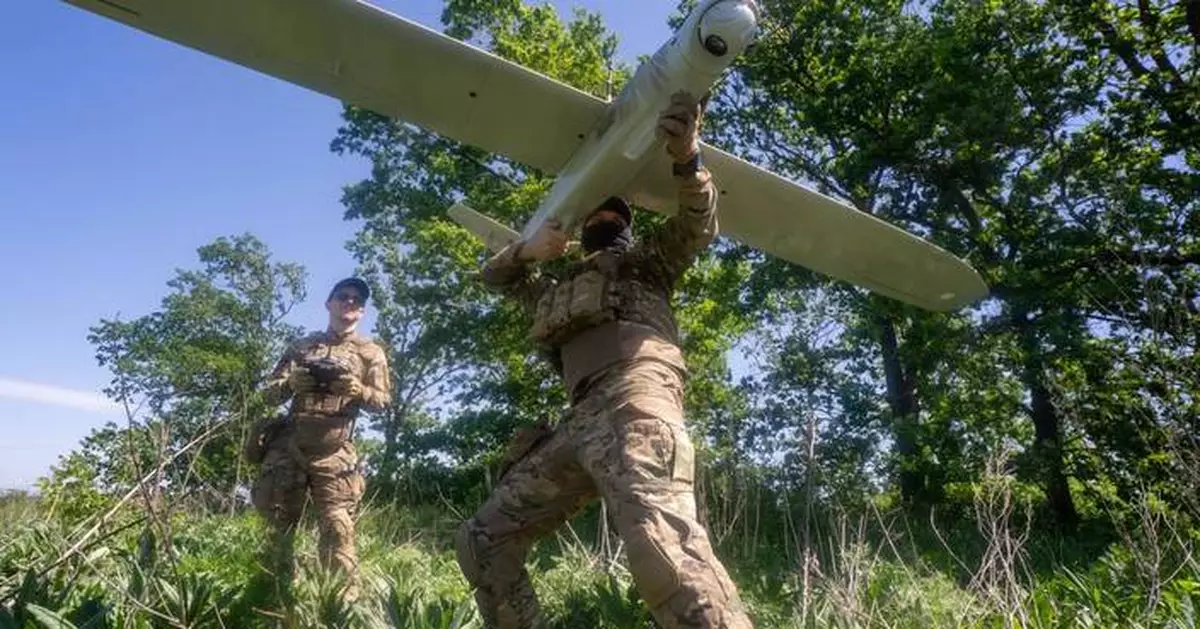
Ukrainian servicemen of Khartia brigade launch a drone towards Russian positions at the front line in the Kharkiv region, Ukraine, Wednesday, May 20, 2026. (AP Photo/Andrii Marienko)
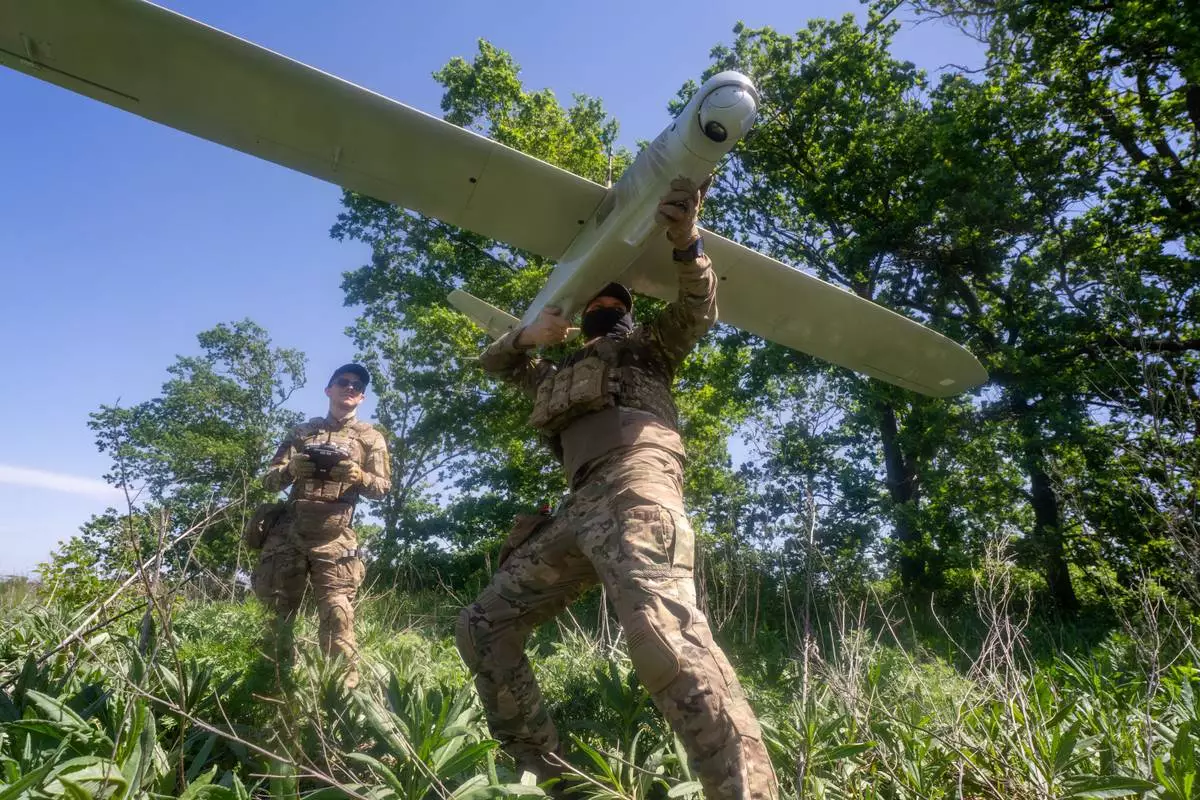
Ukrainian servicemen of Khartia brigade launch a drone towards Russian positions at the front line in the Kharkiv region, Ukraine, Wednesday, May 20, 2026. (AP Photo/Andrii Marienko)
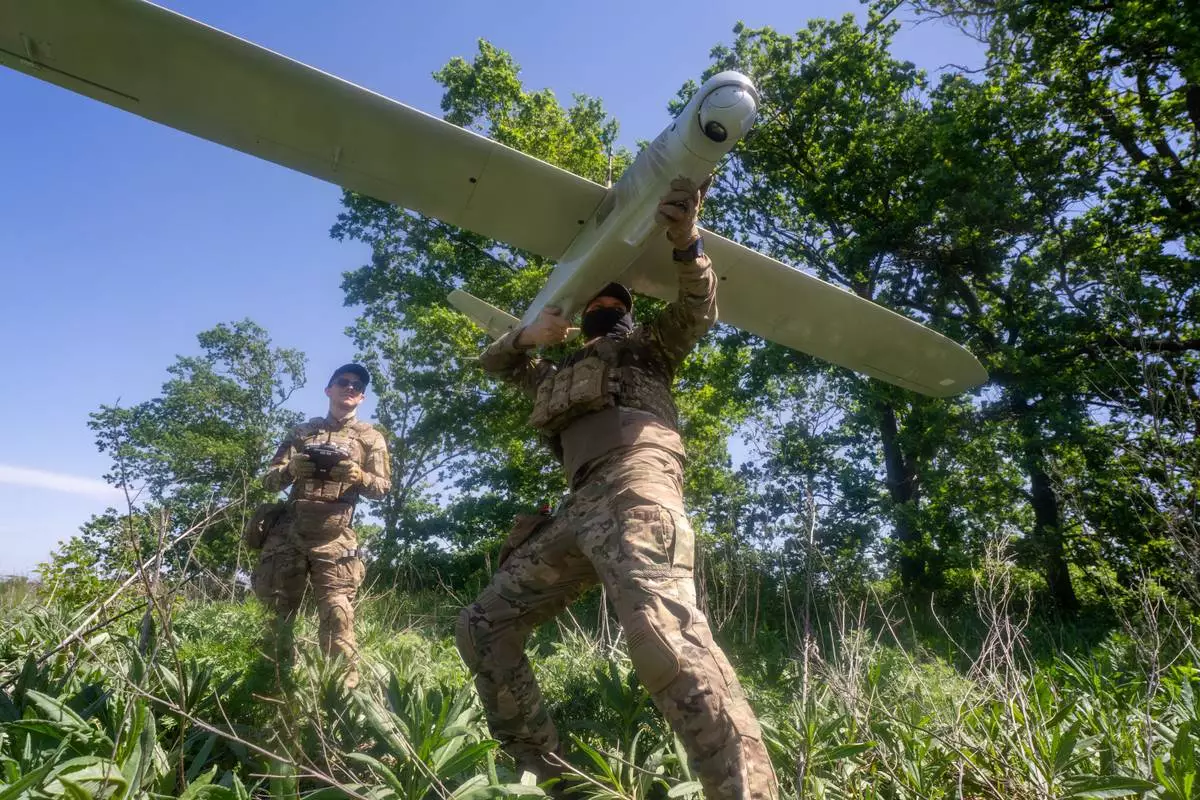
A Ukrainian serviceman of Khartia brigade launches a drone towards Russian positions at the front line in the Kharkiv region, Ukraine, Wednesday, May 20, 2026. (AP Photo/Andrii Marienko)

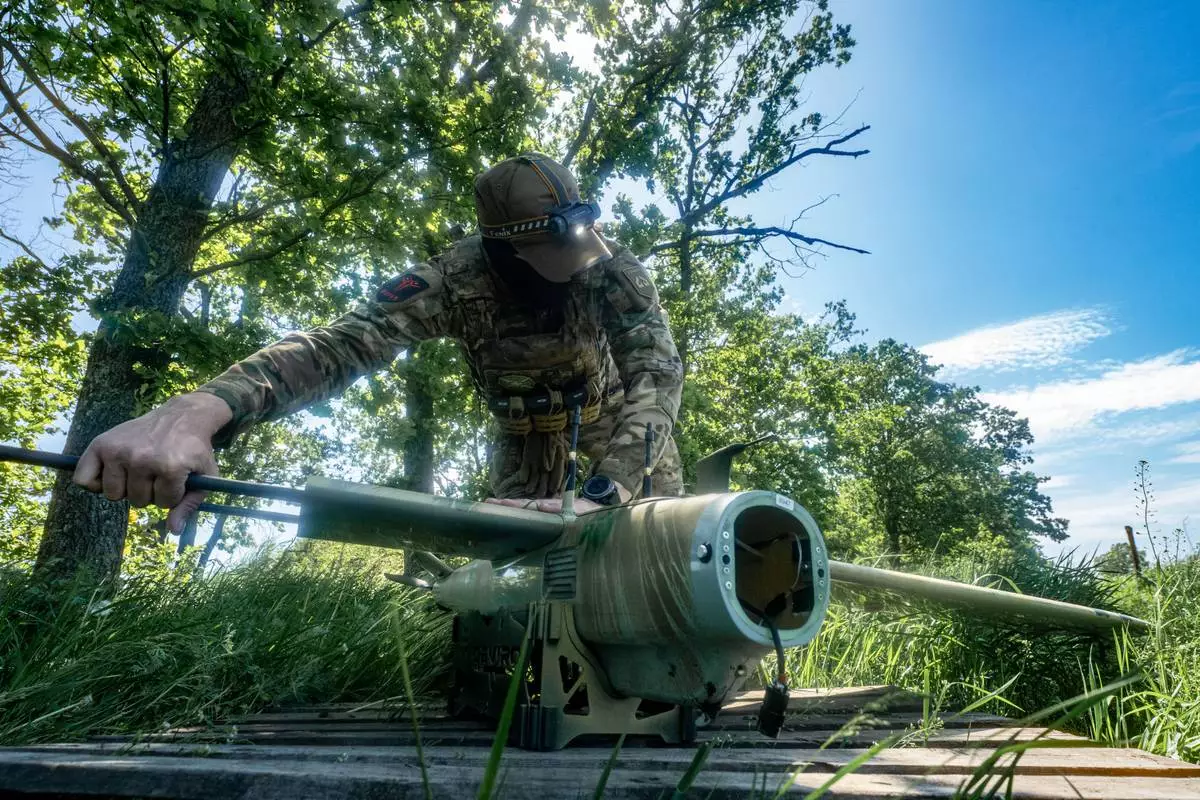
A Ukrainian serviceman of Khartia brigade launches a drone towards Russian positions at the front line in the Kharkiv region, Ukraine, Wednesday, May 20, 2026. (AP Photo/Andrii Marienko)
Ukrainian servicemen of Khartia brigade launch a drone towards Russian positions at the front line in the Kharkiv region, Ukraine, Wednesday, May 20, 2026. (AP Photo/Andrii Marienko)
Ukrainian servicemen of Khartia brigade launch a drone towards Russian positions at the front line in the Kharkiv region, Ukraine, Wednesday, May 20, 2026. (AP Photo/Andrii Marienko)
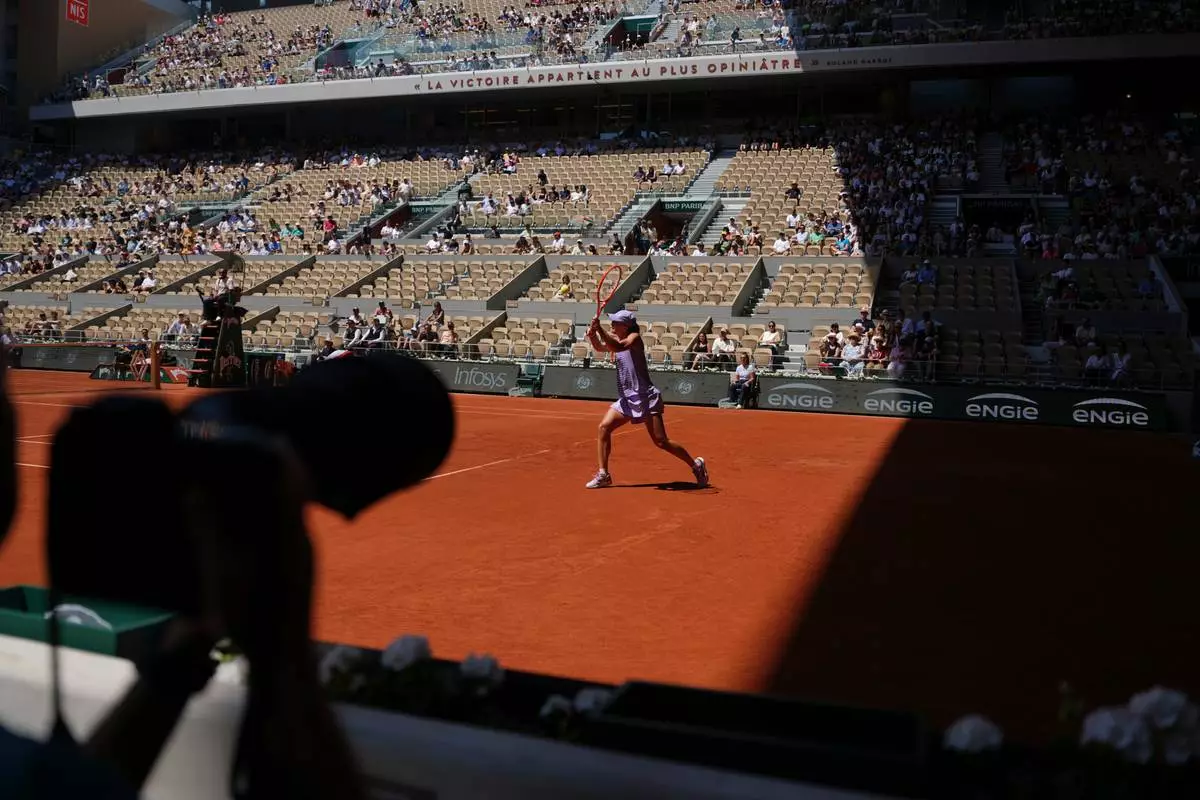
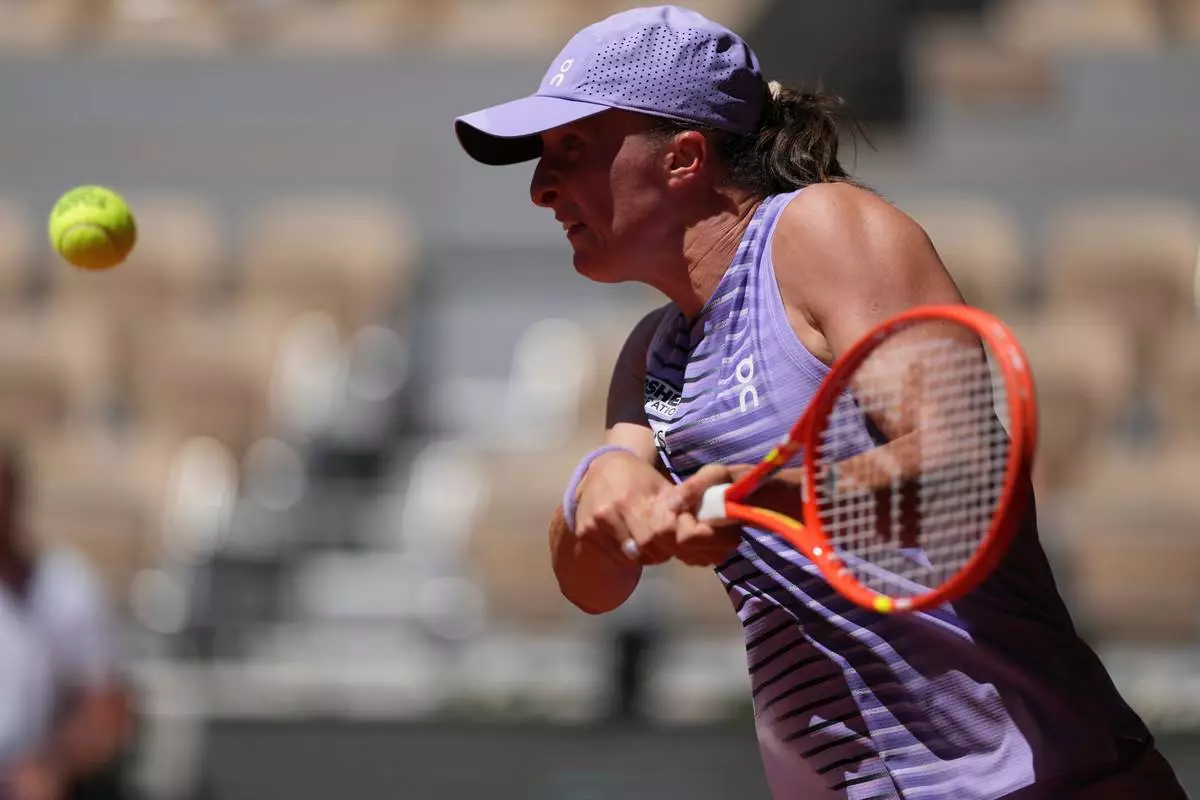
PARIS (AP) — Iga Swiatek has improved her career record at the French Open to 42-3.

The four-time champion eliminated 35th-ranked Sara Bejlek 6-2, 6-3 to reach the third round on Wednesday.

Swiatek won Roland Garros in 2020, 2022, 2023 and 2024.

With a heat wave still a factor in Paris, seventh-seeded Elina Svitolina extended a run of solid form with a 6-0, 6-4 victory over Kaitlin Quevedo.

Svitolina is on an eight-match winning streak after raising the Italian Open trophy.

Also, 11th-seeded Belinda Bencic beat American opponent Caty McNally 6-4, 6-0.

For the fourth straight day of this year's tournament, the temperature was forecast to rise to at least 32 degrees Celsius (90 Fahrenheit).

Later Wednesday, 39-year-old Novak Djokovic faced 74th-ranked French player Valentin Royer, while second-seeded Alexander Zverev was playing Tomas Machac in the night session on Court Philippe-Chatrier.

AP tennis: https://apnews.com/hub/tennis

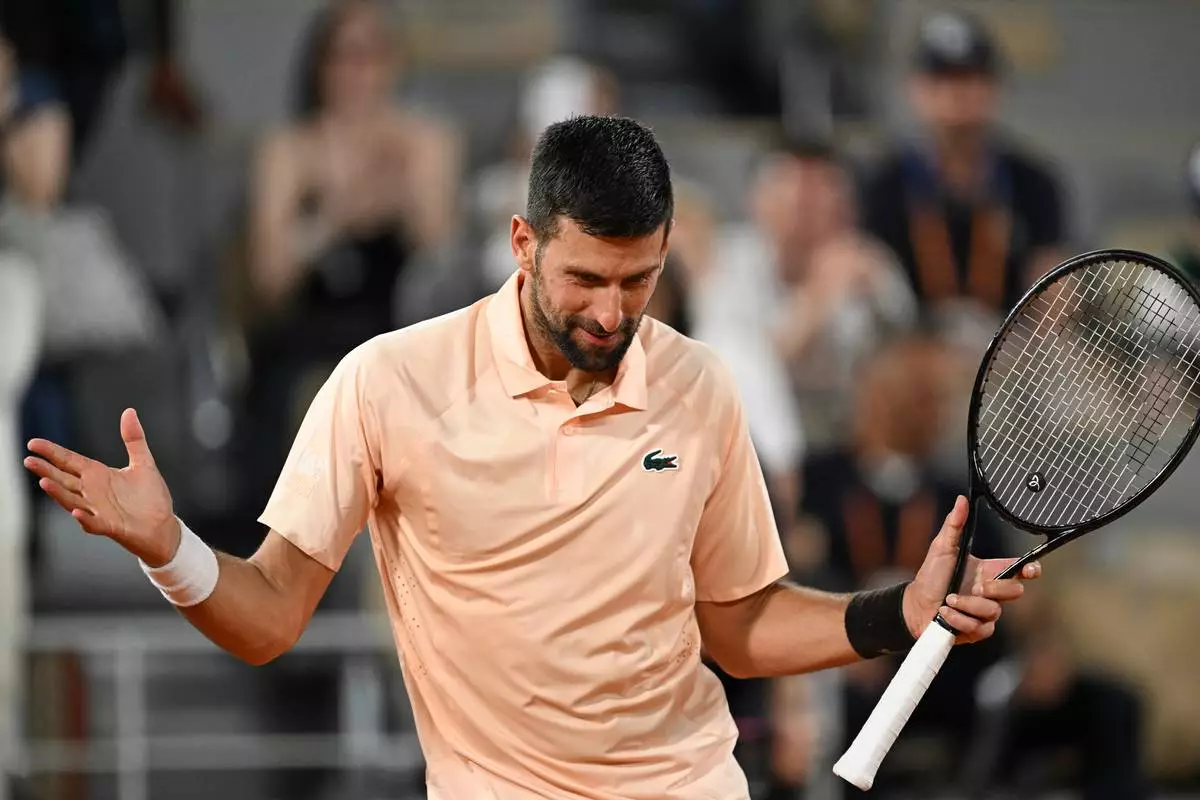
Novak Djokovic of Serbia celebrates after winning the first round men's singles tennis match against against Giovanni Mpetshi Perricard of France at the French Open tennis tournament in Paris, Sunday, May 24, 2026. (AP Photo/Emma Da Silva)

Novak Djokovic of Serbia celebrates after winning the first round men's singles tennis match against against Giovanni Mpetshi Perricard of France at the French Open tennis tournament in Paris, Sunday, May 24, 2026. (AP Photo/Emma Da Silva)

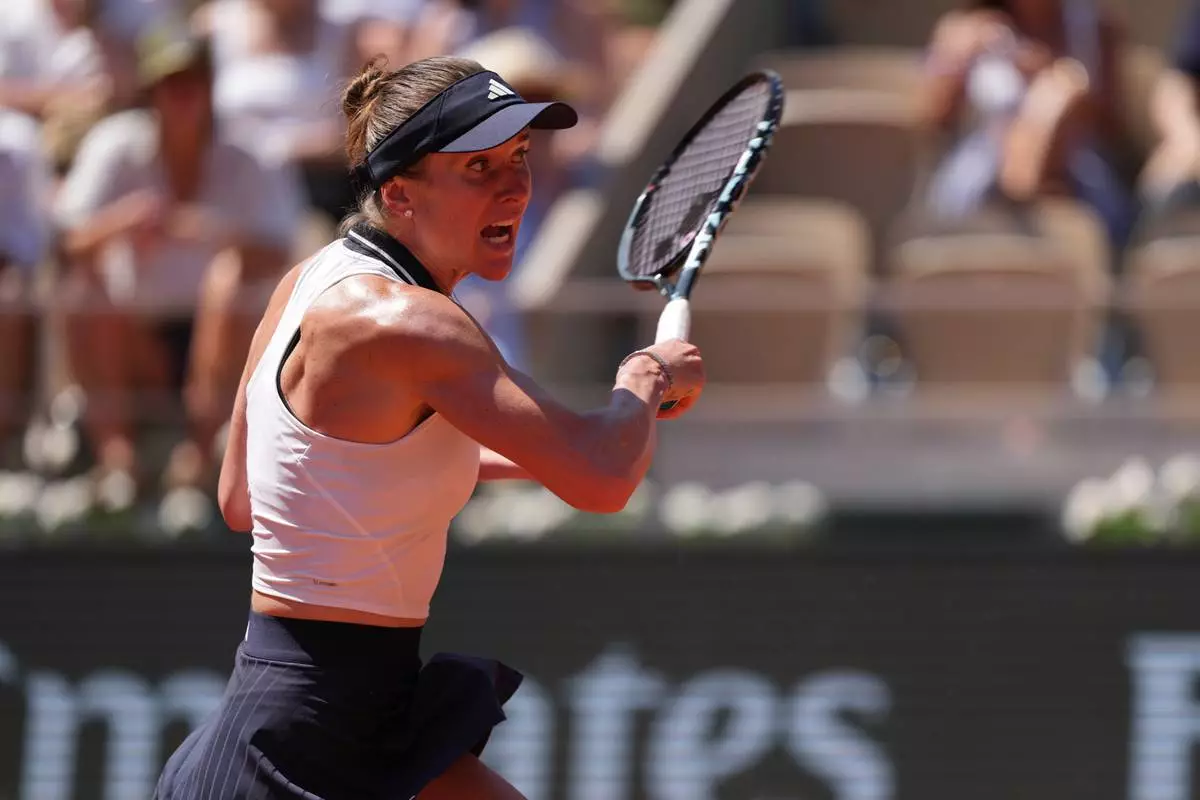
Elina Svitolina of Ukraine returns to Kaitlin Quevedo of Spain during their second round women's singles tennis match at the French Open tennis tournament in Paris, Wednesday, May 27, 2026. (AP Photo/Thibault Camus)

Elina Svitolina of Ukraine returns to Kaitlin Quevedo of Spain during their second round women's singles tennis match at the French Open tennis tournament in Paris, Wednesday, May 27, 2026. (AP Photo/Thibault Camus)

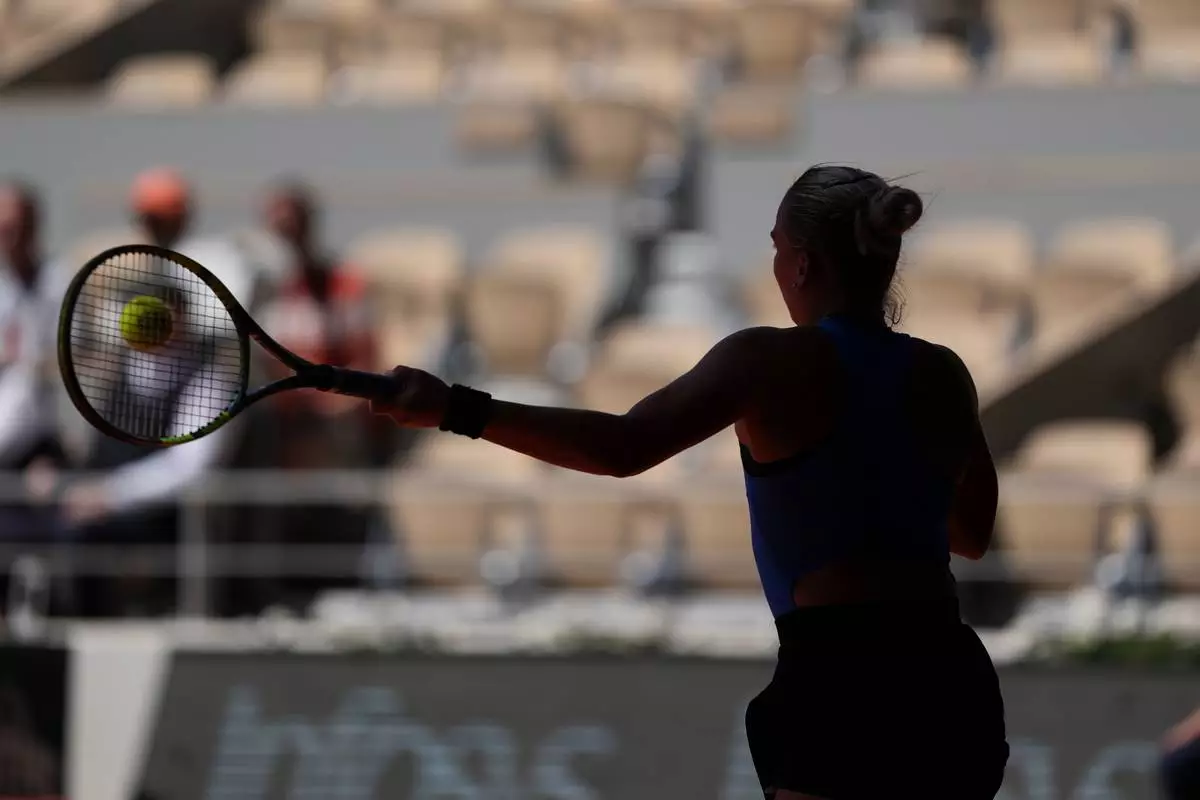
Sara Bejlek of the Czech Republic returns to Iga Swiatek of Poland during their second round women's singles tennis match at the French Open tennis tournament in Paris, Wednesday, May 27, 2026. (AP Photo/Thibault Camus)

Sara Bejlek of the Czech Republic returns to Iga Swiatek of Poland during their second round women's singles tennis match at the French Open tennis tournament in Paris, Wednesday, May 27, 2026. (AP Photo/Thibault Camus)

Iga Swiatek of Poland returns to Sara Bejlek of the Czech Republic during their second round women's singles tennis match at the French Open tennis tournament in Paris, Wednesday, May 27, 2026. (AP Photo/Thibault Camus)

Iga Swiatek of Poland returns to Sara Bejlek of the Czech Republic during their second round women's singles tennis match at the French Open tennis tournament in Paris, Wednesday, May 27, 2026. (AP Photo/Thibault Camus)

Iga Swiatek of Poland returns to Sara Bejlek of the Czech Republic during their second round women's singles tennis match at the French Open tennis tournament in Paris, Wednesday, May 27, 2026. (AP Photo/Thibault Camus)

Iga Swiatek of Poland returns to Sara Bejlek of the Czech Republic during their second round women's singles tennis match at the French Open tennis tournament in Paris, Wednesday, May 27, 2026. (AP Photo/Thibault Camus)

Recommended Articles