LOS ANGELES (AP) — Win or lose, billionaire Democrat Tom Steyer will leave a mark in the history books in his bid to become California's next governor — he’s running the most expensive political advertising campaign in the country this year.
Steyer — a former hedge fund manager turned liberal activist — has spent or booked more than $195 million in ads for broadcast TV, cable and radio with the tally still growing, according to data compiled by advertising tracker AdImpact.
His torrent of ads has opened the one-time presidential candidate to criticism that he is trying to buy the governor's chair, and his ad total represents more than 20 times the amount spent by his nearest rival, fellow Democrat Xavier Becerra, as the two duel for a spot in the November election.
Nationally, his spending is unparalleled — no one is even close.
In Georgia, Republican health care executive Rick Jackson has spent about $83 million on advertising in his primary race for governor, which is headed for a June runoff, ranking him second. The third place spot is held by his Republican rival, Lt. Gov. Burt Jones, who has President Donald Trump’s endorsement and has spent nearly $31 million on ads, according to AdImpact.
Following Jones was Democratic U.S. Rep. Raja Krishnamoorthi of Illinois, who spent over $28 million on advertising in a failed bid for U.S. Senate.
Katie Porter, a former U.S. House member who is among seven established Democrats in the California race, has repeatedly criticized Steyer for dipping into his personal fortune to keep ads in front of voters with scant competition from rivals.
“He’s not earning support — he’s buying this seat,” her campaign wrote in an email to supporters Wednesday.
In raw numbers, Steyer's ad blitz has eclipsed the 2010 record set by Republican Meg Whitman, who spent $178.5 million in total on a losing bid for governor, much of it her own money. At the time, it was the costliest campaign for statewide office in the nation’s history. When adjusted for inflation, however, Whitman still holds the state record, but that represented spending for the full election, not just the primary.
Steyer's record-level output has lifted him into contention in the crowded race, but he's not breaking away from the field. He's among a leading group of several candidates — including Becerra and Republican Steve Hilton — as the campaign heads toward a June 2 primary. Mail voting started earlier this month.
Still, Steyer's cash advantage is giving him a publicity edge as the contest enters its crucial final days. He's maintained a steady flow of advertising and online posts questioning Becerra's credentials and record, with Becerra, a former state attorney general and Biden administration health secretary, lacking the funds to reply in kind.
One Becerra ad sought to connect with voters who might be getting bleary-eyed from the cascade of Steyer advertising. It used tranquil scenes of Joshua trees, waves curling on a beach and soaring redwoods, with a gentle prod: “You can stop the endless Tom Steyer ads. Vote Xavier Becerra.”
Steyer’s financial edge has allowed him to stretch the boundaries of his campaign far beyond traditional TV and radio ads, with steady posts on online platforms like YouTube and Instagram. The New York Times reported that his campaign paid a progressive Texas influencer $100,000 to help Steyer win the election. The Sacramento Bee reported that Becerra, too, had hired an influencer.
In a statement, Steyer spokesperson Kevin Liao did not directly address the campaign's spending but pointed to millions of dollars pumped into ads by independent groups backed by Pacific Gas and Electric Co., real estate agents and others seeking to defeat the billionaire, who has promised to “break up the electric monopolies in California.”
Speaking to reporters Wednesday in Berkeley, Steyer defended his spending in the race, saying he was fighting against powerful corporate interests that are driving up the price of living in the state.
“The corporations and billionaires have spent a record amount against me,” Steyer said. “I'm only working for the people of California.”
Many voters have been slow to vote in a race without a star candidate and no clear leader. More than 50 names will be on the ballot. California uses a “top two” primary system that puts all candidates on one ballot, with only the top two vote-getters advancing to November, regardless of party.
“In a race this close, it all matters,” said Democratic consultant Andrew Acosta.
History shows that money doesn’t always translate into votes.
Billionaire developer Rick Caruso spent over $100 million in 2022 in his bid to become Los Angeles mayor, much of it his own money, but he was handily defeated by Mayor Karen Bass, who spent a fraction of Caruso’s total. Billionaire former New York City Mayor Michael Bloomberg spent more than $1 billion of his own money on his 2020 presidential bid before dropping out. And Steyer’s money was unable to lift him into contention in the 2020 presidential contest, from which he dropped out early in the year after a poor finish in the South Carolina primary.
Democratic San Jose Mayor Matt Mahan's campaign for governor was supported by independent committees bankrolled by millions of dollars from tech leaders and venture capitalists, yet he failed to gain traction in the race.
Steyer has never held elected office.
In a 2019 interview with The Associated Press, Steyer was asked what he would say to people who think he’s trying to buy the presidency.
“I don’t think that’s possible,” Steyer said at the time, before adding, “I’m never going to apologize for succeeding in business. That’s America, right?”
The contest is unfolding as California struggles with a long-running homeless crisis, wildfire insurance shortages, projected budget shortfalls and housing costs that are out of reach for many working-class families. Voters, meanwhile, are saddled with growing everyday bills for groceries, utilities and gas.
The AdImpact data does not include ads on some popular streaming services, like Hulu and YouTube, or mail advertising.
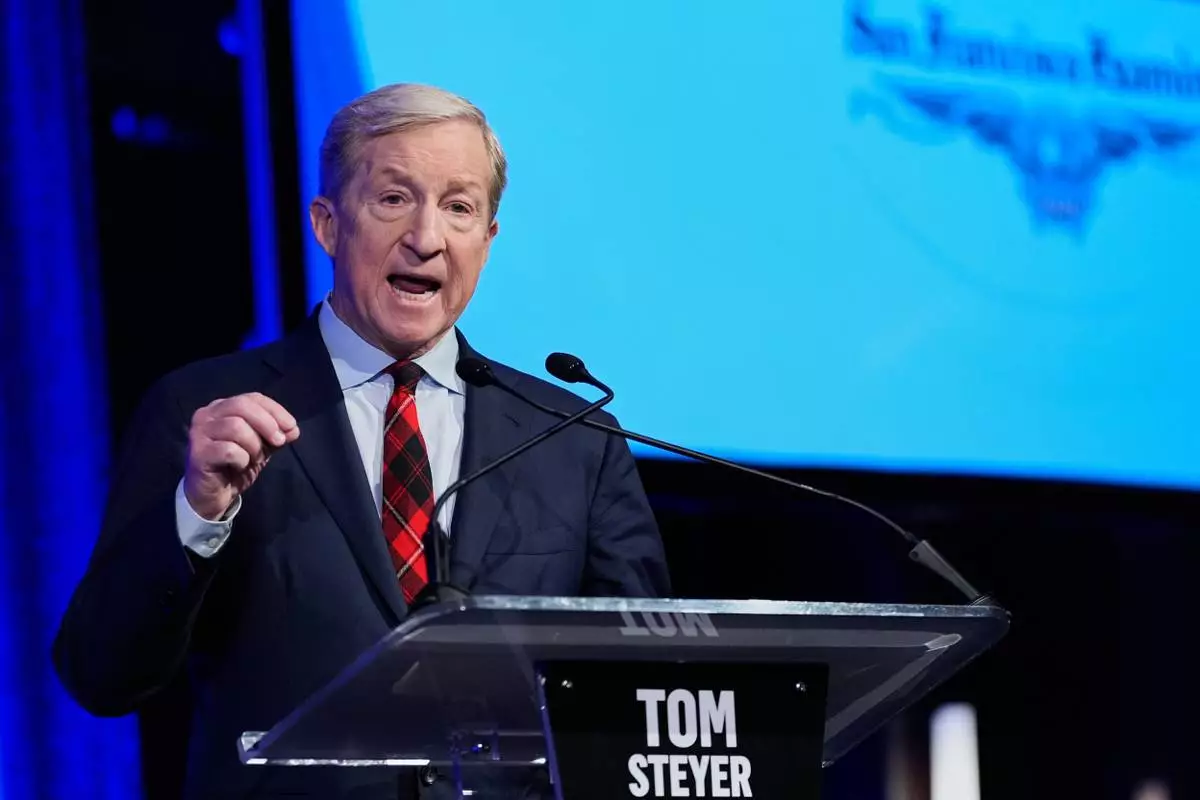
Tom Steyer speaks during a California gubernatorial debate in San Francisco, Thursday, May 14, 2026. (AP Photo/Godofredo A. Vásquez, Pool)
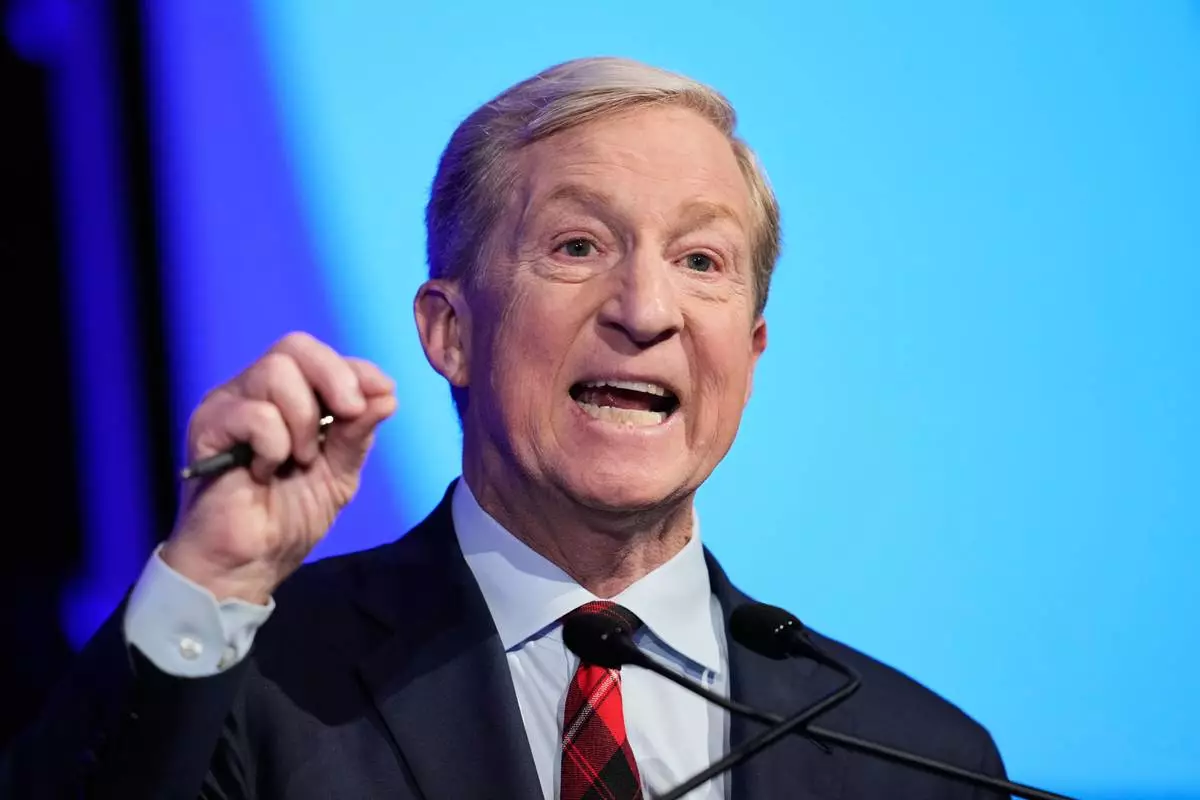
Tom Steyer speaks during a California gubernatorial debate hosted by CBS Bay Area and the San Francisco Examiner in San Francisco, Thursday, May 14, 2026. (AP Photo/Godofredo A. Vásquez, Pool)