CHICAGO--(BUSINESS WIRE)--Sep 2, 2026--
Lindsay Dailey has joined Dorsey & Whitney LLP as a Partner in the Healthcare Transactions & Regulations group in Chicago, the international law firm announced today.
This press release features multimedia. View the full release here: https://www.businesswire.com/news/home/20260901892520/en/
Lindsay brings extensive data privacy experience gained from her lengthy practice in highly regulated industries, including three in-house privacy secondments with a national retail pharmacy, medical device company, and a bank. Her practice specializes in day-to-day privacy counseling and building privacy compliance programs from the ground up.
Lindsay has also worked for the American Medical Association, American Dental Association, Rehabilitation Institute of Chicago, and the Illinois Office of Health Information Technology.
These experiences inform her ability to counsel domestic and international clients across all industries, with a specialty in healthcare and technology. She helps clients optimize personal data, design websites and mobile apps, negotiate privacy contracts, establish privacy-minded processes for onboarding vendors and new technologies, and counsels on data breach incidents, risk analysis, and risk management processes.
Lindsay joins Dorsey from Polsinelli, where she was a Shareholder. Lindsay received her J.D. from Loyola University Chicago School of Law and her B.A. from University of Illinois at Urbana-Champaign.
“We are delighted to welcome Lindsay to our Healthcare Transactions & Regulations team and our expanding Chicago office,” said Alissa Smith, Healthcare Transactions & Regulations Practice Group Co-Leader. “Drawing on significant in-house and privacy experience, Lindsay helps clients develop practical, business-minded privacy and data security programs. We are excited for our clients to benefit from her experience and perspective.”
“I’m happy to join not only Dorsey’s Healthcare group, but also the full-service Dorsey team in Chicago,” said Lindsay Dailey. “Collaborating with such a talented group presents a tremendous opportunity to provide clients with strategic, forward-thinking guidance.”
About Dorsey & Whitney LLP
Clients have relied on Dorsey as a valued business partner since 1912. With locations across the United States and in Canada, Europe, and the Asia-Pacific region, Dorsey provides results-oriented, grounded counsel for its clients' legal and business needs, including Labor & Employment matters. Dorsey represents a number of the world's most successful companies from a wide range of industries, including banking & financial institutions; development & infrastructure; energy & natural resources; food, beverage & agribusiness; healthcare & life sciences; and technology.

Lindsay Dailey has joined Dorsey & Whitney LLP as a Partner in the Healthcare Transactions & Regulations group in Chicago.
MILAN (AP) — Italy deployed soldiers to Milan as the nation's fashion and finance capital braced for fresh protests on Saturday, one week after looting and clashes with police.
Premier Giorgia Meloni announced a raft of measures, including sending an additional 500 soldiers to Milan, and tougher penalties for minors, who police said made up a large part of the violent protesters.
While protests in France have claimed most international attention, Milan is among the many other European cities, from Tirana in Albania to Madrid in Spain, that are rocked by protests Saturday.
The protests encompass a broad range of issues from pensions and housing to anti-war movements, education and corruption.
The 500 soldiers deployed to Milan come in addition to hundreds already stationed there, and will support about 5,000 police and other law enforcement personnel. Authorities are conducting drone surveillance, checks at railway stations, rapid-response units and online monitoring for potential calls to violence. Milan Mayor Giuseppe Sala has said he is concerned about a repeat of violence this weekend and expressed support for the deployment of more soldiers.
Many stores, particularly luxury boutiques within Milan's fashion district including Omega, Tiffany and Gucci, boarded up their front windows with wooden planks.
Rioters last weekend smashed their way into stores, targeting sneakers, athletic wear and sporting goods on streets that run off the city’s central Duomo square.
Officials said security measures on Saturday would extend beyond the city center amid concerns protesters could move into other neighborhoods to evade heavily policed areas.
Valter Mazzetti, secretary-general of the Fsp police union, told The Associated Press that soldiers could provide immediate reinforcements but not resolve police staffing shortages.
Defense Minister Guido Crosetto said in a social media post that the troops lacked key tools available for public-order operations, and that soldiers were only recently allowed to use plastic restraint ties and only in areas around train stations, not throughout the city. They are not authorized to carry pepper spray or tasers, he said.
Milan police say last week's violence and looting involved about 2,000 very young protesters, a large number of whom were “naturalized, second-generation Italians,” alongside foreign nationals. Over two days, police arrested 45 people, including 34 minors.
Milan’s welfare councilor Lamberto Bertolé told the AP that more investigation is needed to understand the backgrounds and motives of the young people who joined the looting.
“Many young people increasingly lack a sense of belonging and prospects for the future. Part of our society feels excluded, amid social and economic inequalities,” said Bertolé, a member of the center-left Democratic Party.
Security was also heightened in Rome, where authorities locked down luxury shopping streets and stepped up controls around the Circus Maximus and Piazza del Popolo.
Several hundred students demonstrated peacefully to stress they were not rioters.
“I think the images from last week were truly something terrible, especially for the young people, for the students, for the vast majority of the younger generations who want to study, want to make proposals, and do not accept being represented by those who use issues and needs to devastate entire cities,” said Riccardo Ponzio, national president of an Italian far-right student association.
A separate anti-war march took off in central Rome, and there are concerns over possible infiltration by violent groups.
Organizers sought to distance themselves from potential unrest, urging participants to keep their faces uncovered and hands visible.
Aside from Rome and Milan, demonstrations have been called in at least seven other cities. The newly formed “Oct. 17 Movement” has been the main driver alongside student federations, grassroots trade unions, and anti-war coalitions.
In Albania's capital Tirana, riot police used water cannons on large groups of protesters, some of whom threw projectiles at police. Authorities said 2,500 police officers are patrolling the streets Saturday.
For over a week, protesters have hurled rocks, flares, firebombs and fireworks at police who have used batons and tear gas in clashes in the city center.
High school and university students are demanding lower tuition fees, greater state investment in education and protesting corruption in the education system. Some have joined a broader anti-government movement calling for the resignation of Socialist Prime Minister Edi Rama.
A separate protest organized by the opposition outside the prime minister's office turned violent earlier, with some activists lighting fires on the street.
Rama said Saturday his government was preparing a response to the students' demands and called them to a dialogue. He warned that violent protesters will face penalties.
Thousands of retirees and others marched in Spain's capital Saturday to demand public pensions aren’t meddled with.
Large crowds marched peacefully down streets in central Madrid, waving colorful flags and banners reading “protect pensions” and “decent pensions for today and the future."
The protests came ahead of next month’s snap election as Prime Minister Pedro Sánchez’s Socialist Party criticized the conservative opposition Popular Party for making overtures about privatizing public pensions.
Spain has been roiled by protests this fall around the issue of housing, as rental and home costs have risen in recent years beyond what many Spaniards can afford.
In Spanish cities, a housing supply shortage has worsened thanks to population growth driven by immigration and a proliferation of short-term rentals. The September eviction of an 87-year-old woman from her rented apartment in Madrid triggered huge street protests.
The movement is centered at a tent camp protest that has remained in the capital’s Puerta del Sol square for almost a month.
Taking their cue from Spaniards, protesters in Lisbon who have been gathering to demand affordable housing are expected to march across the city on Saturday.
They have also targeted recent measures announced by the government of Prime Minister Luis Montenegro that include easing the cap on yearly rent increases and facilitating the eviction of tenants who fail to pay rent.
Montenegro defends the measures saying that it aims at reinforcing trust between tenants and landlords and boosting the rentals market. Protesters claim that the measures are not balanced and put tenants in a more vulnerable position.
Associated Press writers Sylvia Hui in London, Demetris Nellas in Athens, Suman Naishadham in Madrid, Giada Zampano in Rome; and videojournalists Niccolò Lupone in Milan, Veronica Sauchelli in Rome, and Helena Alves in Lisbon contributed to this report.
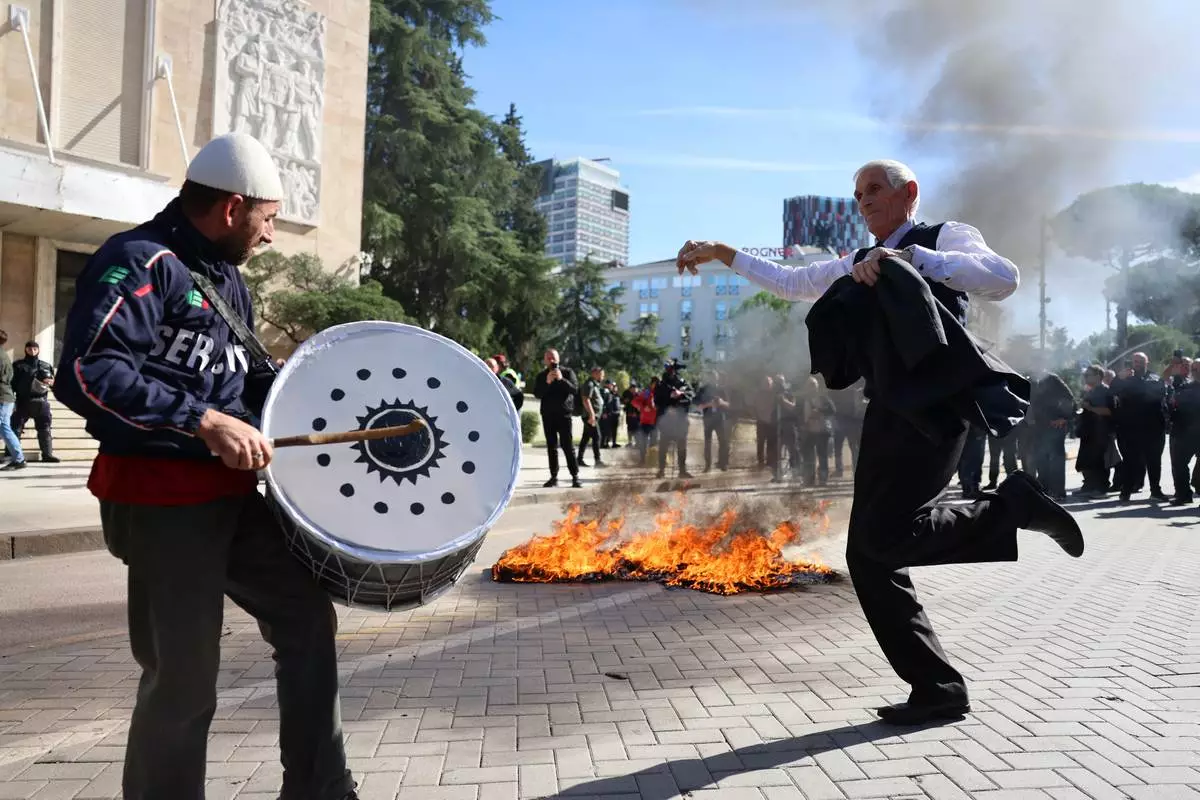
Protesters gather outside the Prime Minister's office during an anti-government rally, in Tirana, Albania, Saturday, Oct. 24, 2026. (AP Photo/Hameraldi Agolli)
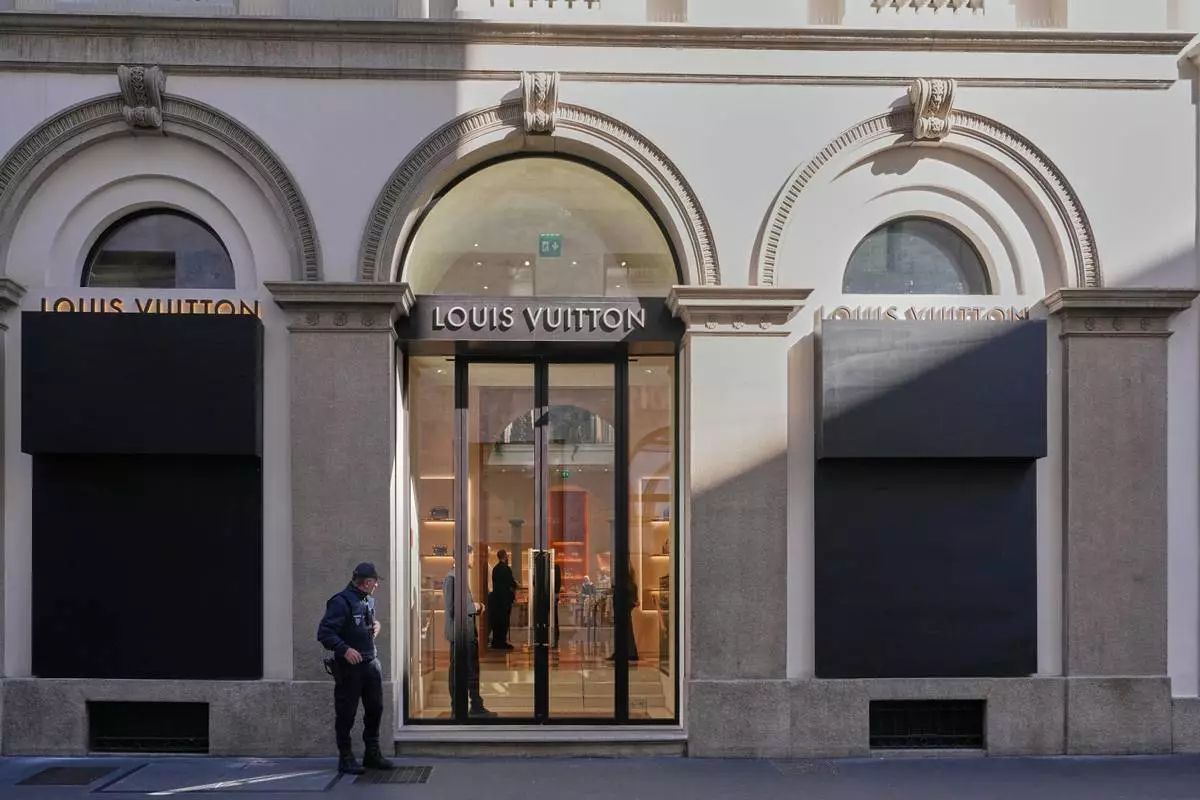
Shop windows are boarded up in Milan, Saturday, Oct. 24, 2026, ahead of a protest against the rising cost of living and deteriorating public services, one of several demonstrations organized across Italy by groups spanning the political spectrum. (AP Photo/Antonio Calanni)
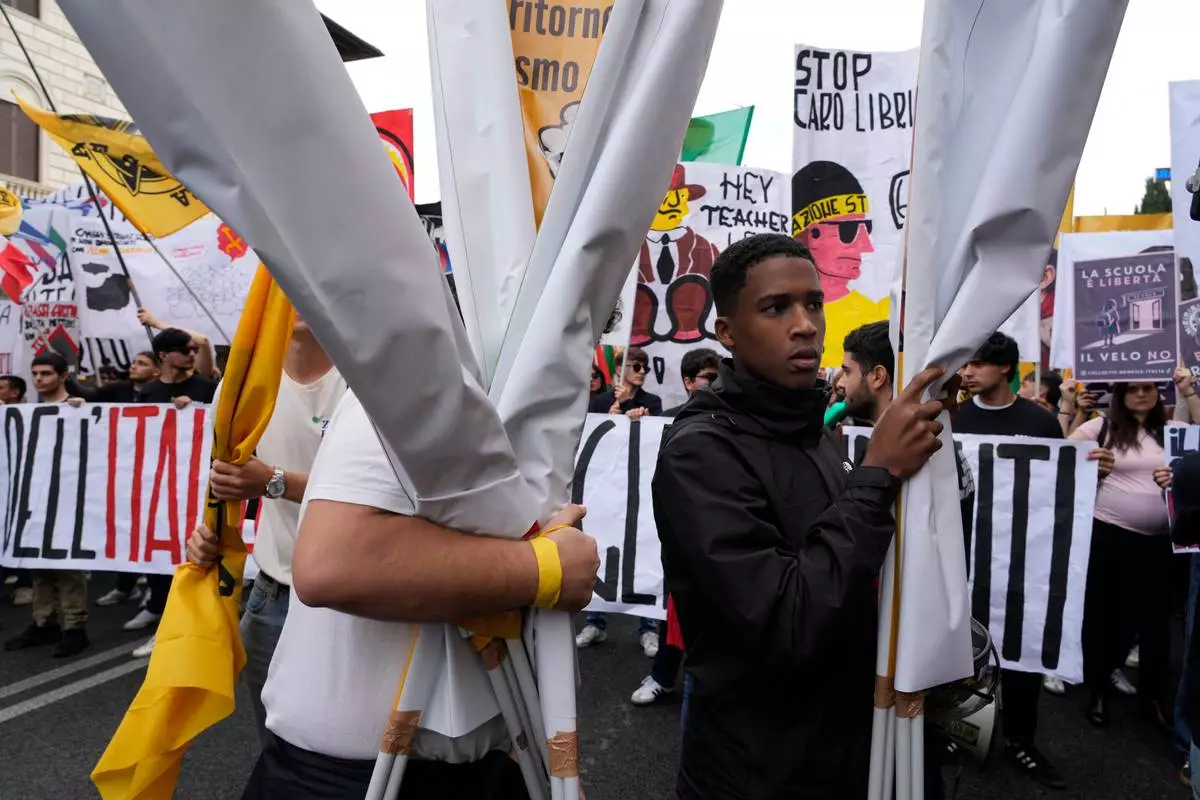
Members of right-wing student groups march through the streets of Rome, Saturday, Oct. 24, 2026, during a demonstration called "Unlock Everything," organized in opposition to recent left-wing student protests and one of several demonstrations held by groups across the political spectrum. (AP Photo/Gregorio Borgia)
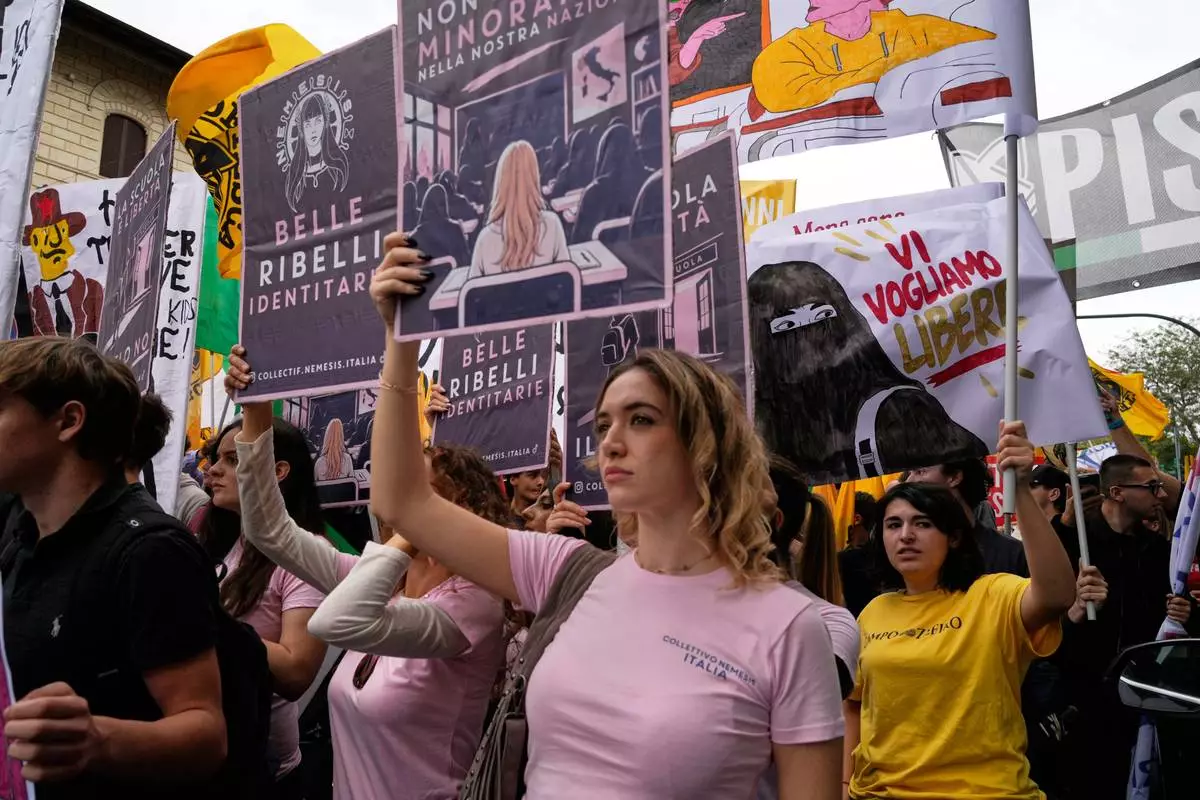
Members of right-wing student groups march through the streets of Rome during a demonstration called "Unlock Everything," organized in opposition to recent left-wing student protests and one of several demonstrations held by groups across the political spectrum, Saturday, Oct. 24, 2026. (AP Photo/Gregorio Borgia)
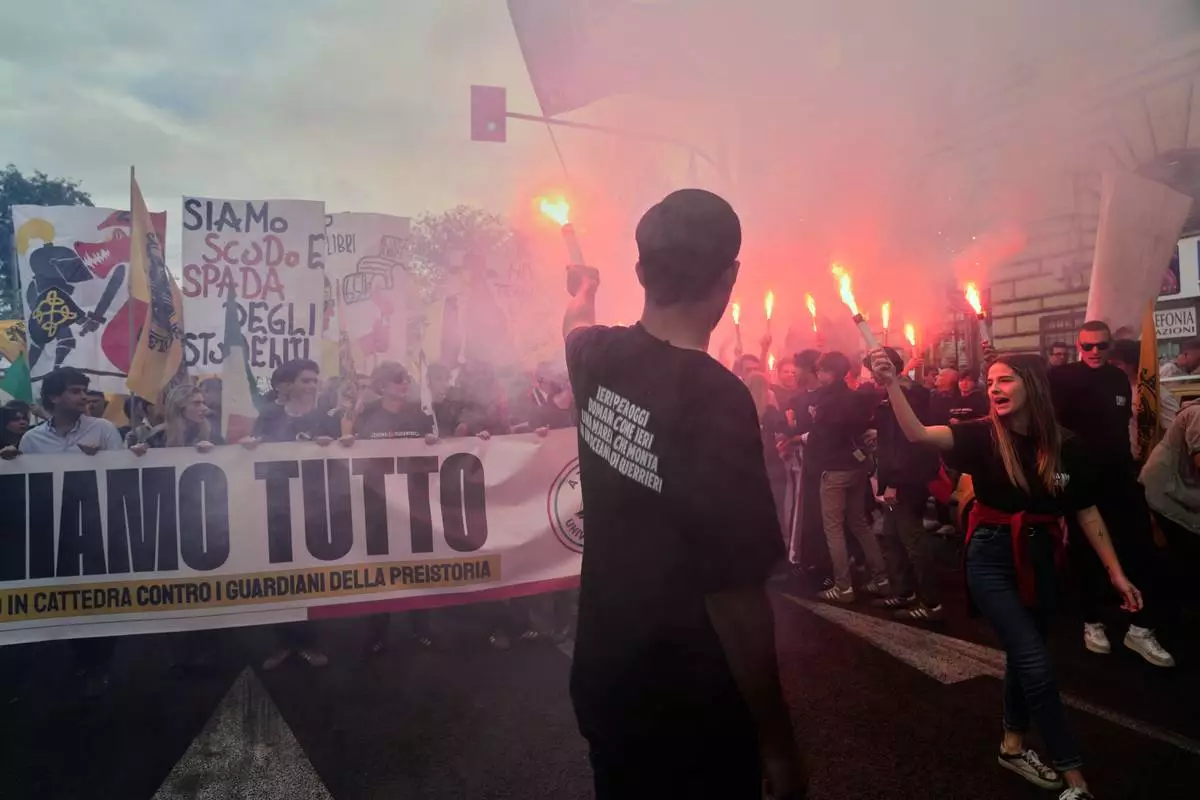
Members of right-wing student groups march through the streets of Rome during a demonstration called "Unlock Everything," organized in opposition to recent left-wing student protests and one of several demonstrations held by groups across the political spectrum, Saturday, Oct. 24, 2026. (AP Photo/Gregorio Borgia)
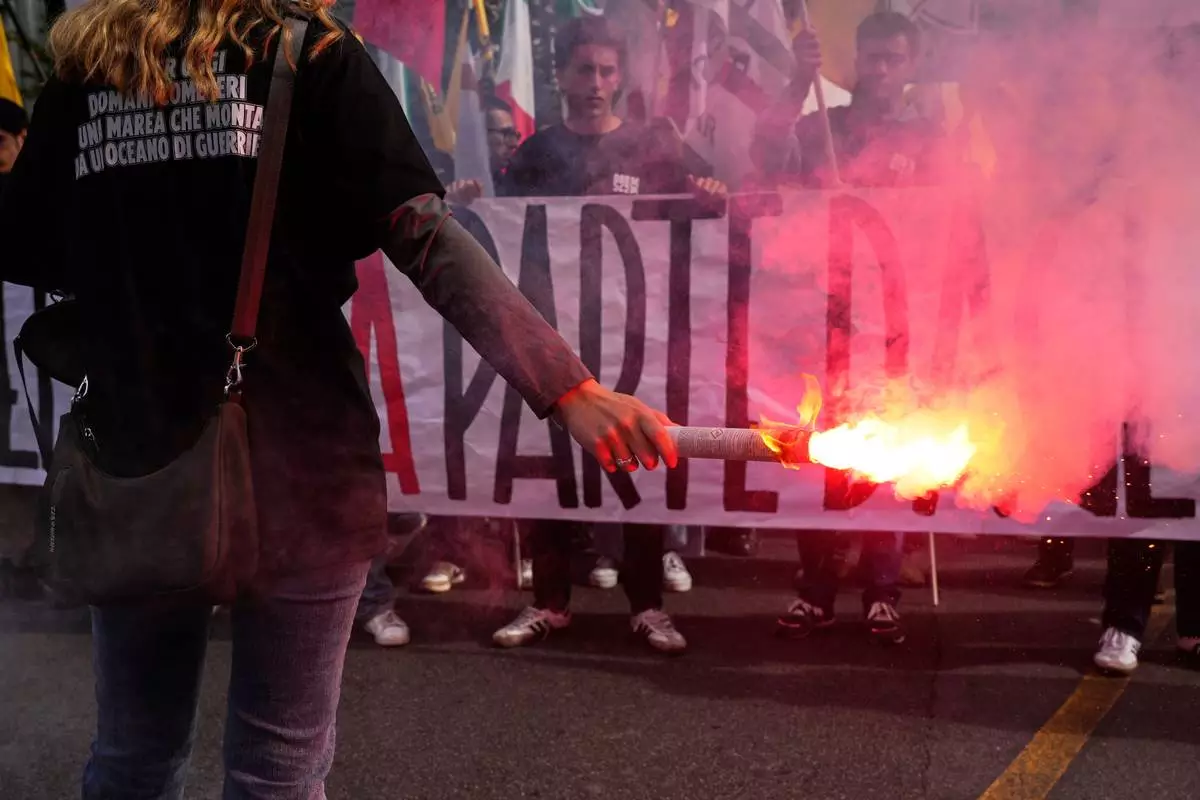
Members of right-wing student groups march through the streets of Rome, Saturday, Oct. 24, 2026, during a demonstration called "Unlock Everything," organized in opposition to recent left-wing student protests and one of several demonstrations held by groups across the political spectrum. (AP Photo/Gregorio Borgia)
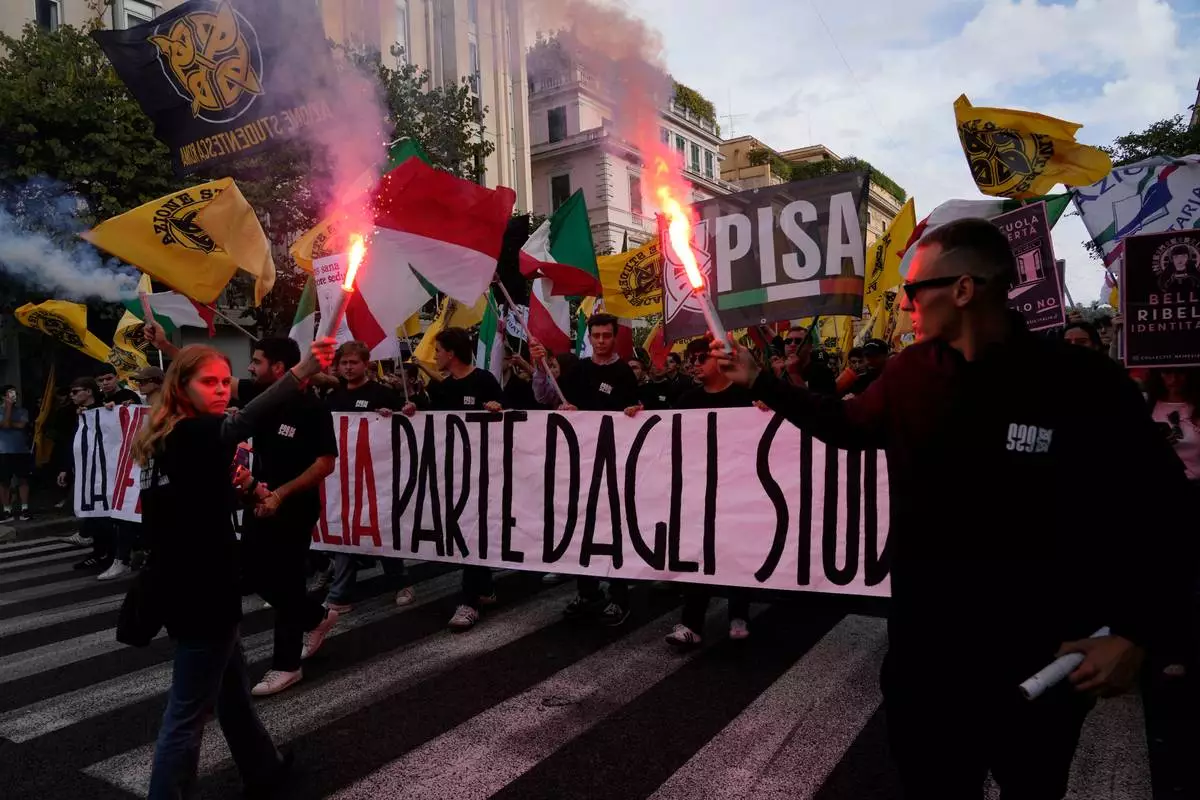
Members of right-wing student groups march through the streets of Rome, Saturday, Oct. 24, 2026, during a demonstration called "Unlock Everything," organized in opposition to recent left-wing student protests and one of several demonstrations held by groups across the political spectrum. (AP Photo/Gregorio Borgia)