Stocks rose on Wall Street Wednesday as relatively steady oil prices and bond yields relieve some pressure.
The S&P 500 index rose 0.4%. The Dow Jones Industrial Average rose 203 points, or 0.4%, as of 1:28 p.m. Eastern time. The Nasdaq composite rose 0.3%.
Click to Gallery
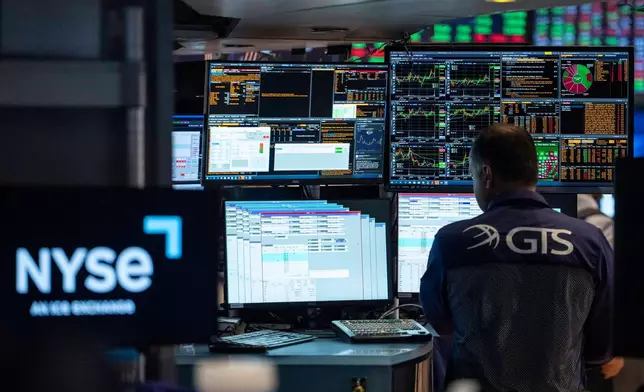
Specialists Dilip Patel works on the floor of the New York Stock Exchange, Thursday, Aug. 27, 2026, in New York. (AP Photo/Yuki Iwamura)
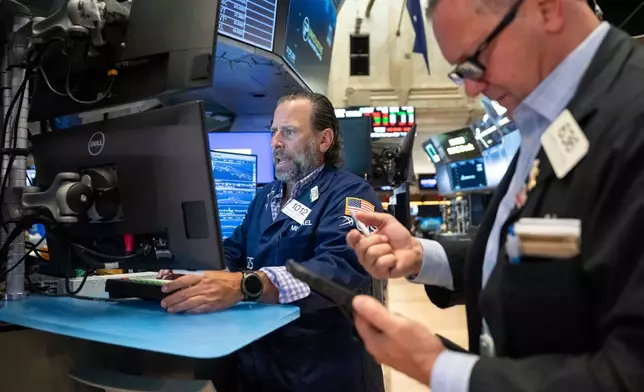
Specialist Michael Pistillo works on the floor of the New York Stock Exchange, Thursday, Aug. 27, 2026, in New York. (AP Photo/Yuki Iwamura)
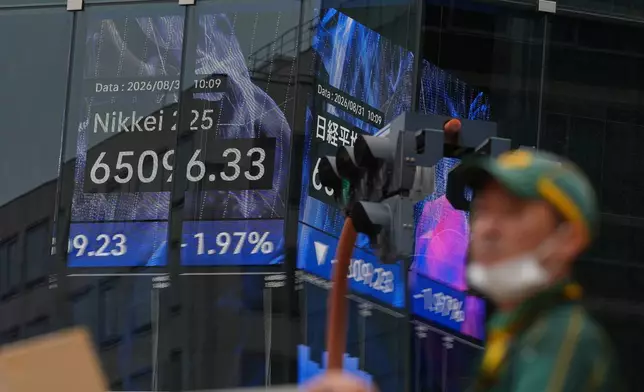
A person walks in front of an electronic stock board showing Japan's Nikkei index at a securities firm Monday, Aug. 31, 2026, in Tokyo. (AP Photo/Eugene Hoshiko)
A person walks in front of an electronic stock board showing Japan's Nikkei index at a securities firm Monday, Aug. 31, 2026, in Tokyo. (AP Photo/Eugene Hoshiko)
Currency traders work at the foreign exchange dealing room of the Hana Bank headquarters in Seoul, South Korea, Wednesday, Sept. 2, 2026. (AP Photo/Ahn Young-joon)
Currency traders work near a screen showing the Korea Composite Stock Price Index (KOSPI) and the foreign exchange rate between U.S. dollar and South Korean won at the foreign exchange dealing room of the Hana Bank headquarters in Seoul, South Korea, Wednesday, Sept. 2, 2026. (AP Photo/Ahn Young-joon)
Currency traders work at the foreign exchange dealing room of the Hana Bank headquarters in Seoul, South Korea, Wednesday, Sept. 2, 2026. (AP Photo/Ahn Young-joon)
The gains follow two weak days for the broader market as it came under pressure from rising oil prices and a bond-market sell-off.
Technology and communication services stocks accounted for some of the strongest gains. Chipmaker Nvidia, whose big market value tend to give it more influence over the broader market’s direction, rose 3.6%, while computer memory seller Micron Technology gained 1.2%.
Meta added 2.4% and Netflix rose 1.3%.
Banks and credit card issuers also helped lift the market. Capital One Financial rose 2.7% and American Express added 1.6%.
Elsewhere, Dell Technologies jumped 9.2% for the biggest gain among S&P 500 stocks following an encouraging financial update.
Markets in Europe fell after markets in Asia closed lower.
Oil prices held relatively steady despite the intensification in the six-month long U.S. war with Iran. The U.S. attacked sites in Iran over the weekend, ending a lull in major hostilities and Iran has since retaliated against sites around the Gulf region.
Prices for Brent crude, the international standard, rose 1.3% to $95.91 a barrel. Energy stocks were mixed. Chevron edged 0.5% higher after confirming it will expand operations in Venezuela.
A surge in oil prices following the start of the U.S. war with Iran fueled a jump in gasoline prices and global shipping costs. The conflict shut down the Strait of Hormuz, through which 20% of the world’s oil is typically shipped.
Higher energy costs worsened inflation that was already stubbornly high amid a volatile U.S. tariff war with much of the world.
Inflation has been squeezing businesses and households at the same time that the mostly resilient jobs market shows signs of weakening. Payrolls processing firm ADP reported that private-sector employment slipped in August, according to its monthly survey. It is just a small snapshot, though, of the broader labor market and follows a government report on Tuesday that showed U.S. job openings rose in July.
The big focus this week will be the government’s broader employment report for August, which will be released Friday. The previous report for July showed that the jobs market stalled, with employers cutting positions.
Both inflation and the jobs market have been key focuses for Wall Street and the Federal Reserve.
“Friday’s employment report, and perhaps even more importantly next week’s inflation data, will play a significant role in determining whether policymakers decide to raise rates in September,” said Angelo Kourkafas, senior global strategist, investment strategy at Edward Jones, in a research note.
The Fed is trying to balance its task of supporting employment and taming inflation. Wall Street expects the central bank to raise interest rates before the year ends in an effort to cool inflation, which remains well above 3%. The Fed has a stated goal of cooling inflation to a target of 2%.
The bond market has been selling off, which is a signal that it expects borrowing costs to rise.
The yield on the 10-year Treasury, which tends to impact mortgage rates, held steady at 4.79%. It has been rising steadily throughout the year and was as low as 4.20% at the beginning of 2026.
The yield on the 2-year Treasury, which closely tracks expectations for Federal Reserve moves on interest rates, slipped to 4.38% from 4.39% late Tuesday. It is significantly higher for the year, though, and was as low as 3.50% at the beginning of 2026.
Investors are also betting on a 64% chance that the Fed will raise rates at its upcoming meeting in September, according to CME FedWatch.
The Fed’s position is growing more complicated. Raising the benchmark interest rate would help cool inflation by making borrowing costs higher and slowing the economy. Doing so, though, could also hurt the employment market at a time when it is seemingly already weakening.
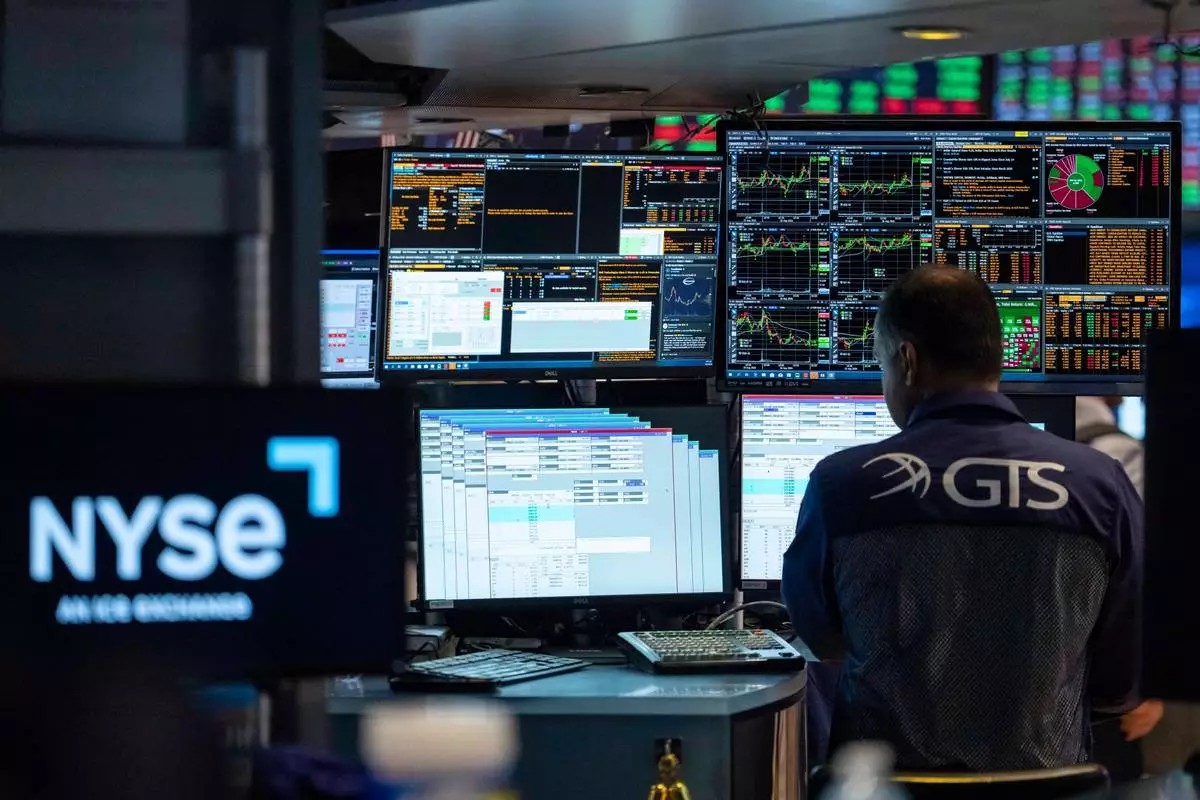
Specialists Dilip Patel works on the floor of the New York Stock Exchange, Thursday, Aug. 27, 2026, in New York. (AP Photo/Yuki Iwamura)
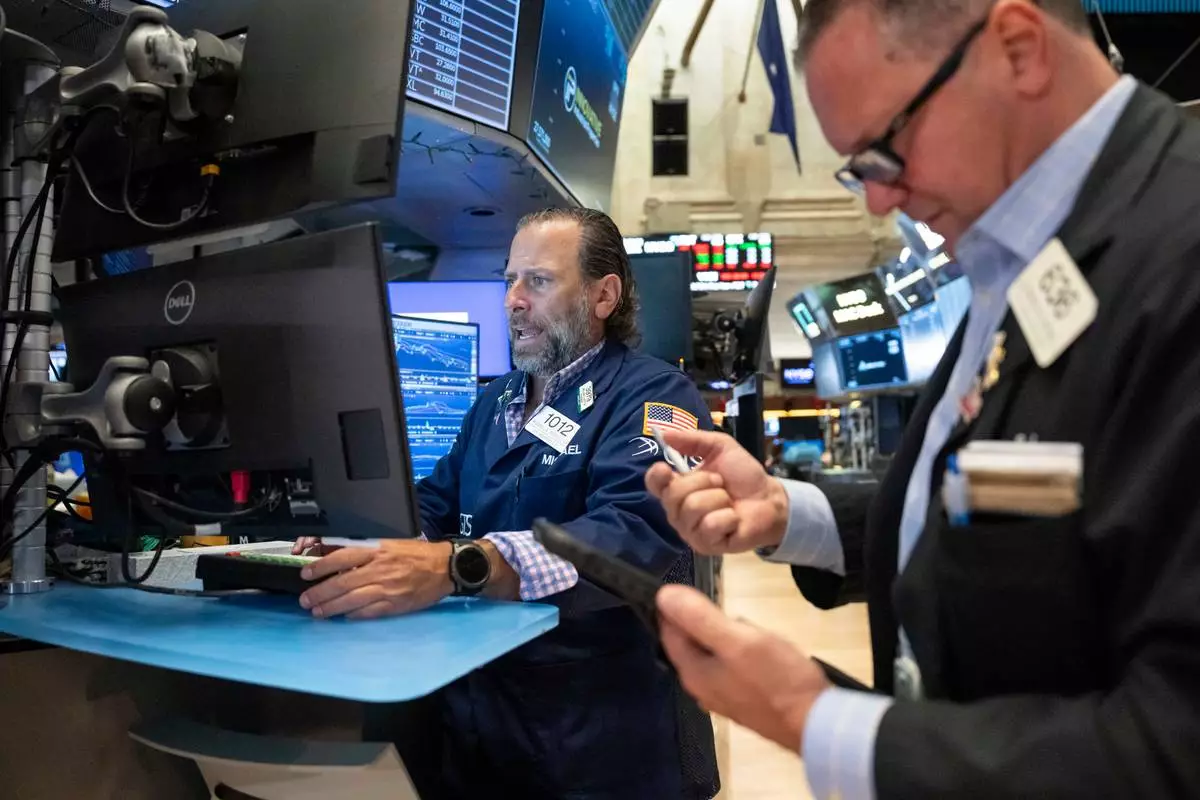
Specialist Michael Pistillo works on the floor of the New York Stock Exchange, Thursday, Aug. 27, 2026, in New York. (AP Photo/Yuki Iwamura)
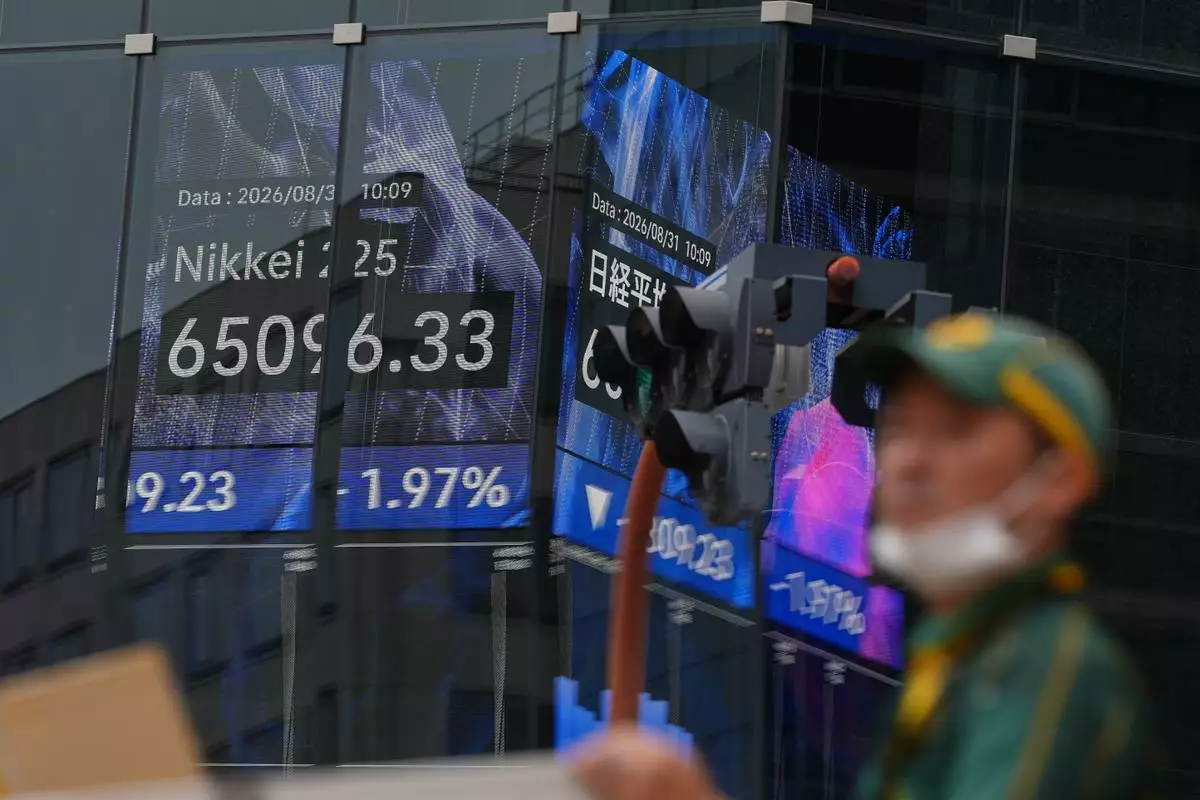
A person walks in front of an electronic stock board showing Japan's Nikkei index at a securities firm Monday, Aug. 31, 2026, in Tokyo. (AP Photo/Eugene Hoshiko)

A person walks in front of an electronic stock board showing Japan's Nikkei index at a securities firm Monday, Aug. 31, 2026, in Tokyo. (AP Photo/Eugene Hoshiko)

Currency traders work at the foreign exchange dealing room of the Hana Bank headquarters in Seoul, South Korea, Wednesday, Sept. 2, 2026. (AP Photo/Ahn Young-joon)

Currency traders work near a screen showing the Korea Composite Stock Price Index (KOSPI) and the foreign exchange rate between U.S. dollar and South Korean won at the foreign exchange dealing room of the Hana Bank headquarters in Seoul, South Korea, Wednesday, Sept. 2, 2026. (AP Photo/Ahn Young-joon)

Currency traders work at the foreign exchange dealing room of the Hana Bank headquarters in Seoul, South Korea, Wednesday, Sept. 2, 2026. (AP Photo/Ahn Young-joon)
Scams in the U.S. have surged to a record high, and most people have been targeted. Americans reported a record $15.9 billion in losses last year to the Federal Trade Commission — a 25% increase from 2024, and likely a huge undercount. The FTC estimates that real losses in 2024 were close to $200 billion, or about $550 million every day.
An investigation by The Associated Press and FRONTLINE found that despite attempts by both the Trump administration and Congress to fight scams, victims still have little recourse. The investigation included interviews with 58 victims.
Here are other takeaways:
— Virtually nobody is immune to scams. Ninety-eight percent of Americans suspect they have been targeted with scam messages, many every day, according to a poll by The Associated Press-NORC Center for Public Affairs Research. Three in 10 said they have personally lost money or information to scams. The 58 victims interviewed by the AP/FRONTLINE were aged 32 to 90, lost several thousand dollars to $4 million each and ranged from IT professionals and academics to people just trying to make ends meet. Several said they contemplated suicide, and two attempted it. Only one got money back, from her bank.
— After the scam, many victims end up paying more in taxes. The IRS often demands that retirees, including scam victims, pay taxes on funds they withdrew from tax-deferred accounts like their retirement savings. Before 2018, victims of theft or fraud could sometimes deduct losses incurred from their taxable income. But under a provision of the Trump administration’s Tax Cuts and Jobs Act, made permanent in 2025, personal losses from many common scams are not eligible for tax breaks. That means victims can owe taxes after money was stolen from them.
— Some victims are also penalized by banks that blame them or even accuse them of being complicit. Victims described having their accounts abruptly frozen or cancelled, along with demands for repayment on loans and legal fees. Earlier this year, American Bankers Association Chair Kenneth Kelly said banks spend “time, money and significant resources” trying to stop fraud, which usually refers to unauthorized transactions. But under current U.S. law, financial institutions are rarely liable for transactions their customers authorize.
— The U.S. lags behind several other countries in protecting consumers. Since late 2024, financial services companies in the United Kingdom have generally had to reimburse clients tricked into sending money to scammers. And trained social workers sometimes visit scam victims. The European Union is also rolling out rules that make financial institutions potentially liable for scammed funds if they don’t put in adequate fraud protections, and its Digital Services Act requires platforms to quickly act on reported scam content. In Australia, financial institutions, telecommunications companies and digital platforms can be fined or forced to compensate victims if they don’t do enough to prevent and respond to scam activity. And in Singapore, banks and telecom companies may have to repay victims of certain phishing scams if they fail to implement required safeguards. Police can temporarily restrict bank transfers of someone who they believe to be a victim, and they sit physically with bank and e-commerce platform staff in a national anti-scam center.
— The rise of cryptocurrency has helped fuel scams because it is a form of digital cash that can be hard to trace to its real owners. China bans crypto-related businesses, while the European Union requires licensing, consumer protections and broad disclosures. But while the Trump administration has backed some cryptocurrency regulation, it has also promised to halt “aggressive enforcement actions and regulatory overreach.” the GENIUS Act signed by President Donald Trump last year to regulate some cryptocurrencies did not require companies to return stolen funds to fraud victims - a gap that consumer advocates, prosecutors and some lawmakers have criticized. Unlike bank deposits, crypto assets are not backed by federal insurance. Many cryptocurrency exchanges operate across borders and through offshore entities where U.S. laws may not apply.
— The U.S. government is waking up to the threat. Congress is considering more than a dozen bills to prevent scams, including one to establish a centralized website for complaints and another to require disclosures on deepfakes and other AI-generated content. The Justice Department in November unveiled a strike force to fight scam centers in Southeast Asia, and the Treasury has levied sanctions on them. President Donald Trump also signed an executive order in March directing the attorney general to prioritize the prosecution of scammers and to submit a recommendation for a program to restore money to victims.
— Fledgling efforts to help victims get money back aren’t keeping up with the tsunami of those who have lost it. Efforts are still piecemeal: At least 13 federal agencies touch on different aspects of these crimes, according to a report issued by the Government Accountability Office. The FBI’s Operation Level Up has stopped about 8,500 people from falling for scams over almost two years by calling them to intervene, according to former FBI Financial Crimes Section chief Rebecca Keithley. But that’s a small fraction of victims, with the FBI receiving nearly 3,000 internet crime complaints a day on average through its IC3.gov portal.
—-
This story is part of an ongoing collaboration between The Associated Press and FRONTLINE (PBS) that includes the documentary “Scammed,” premiering Tuesday, Sept. 29, on PBS and online.
—-
The Associated Press receives financial support from multiple private foundations. AP is solely responsible for all content. Find AP’s standards for working with philanthropies, a list of supporters and funded coverage areas at AP.org.
—-
Contact AP’s global investigative team at Investigative@ap.org or https://www.ap.org/tips/

A text message from a scammer who stole $575,000 from Brian Glick is displayed on Glick's phone as he poses for a portrait at his home, Wednesday, June 25, 2025, in Ballston Lake, N.Y. (AP Photo/David Goldman)

Alice Lin, who fought back to recover some of the $720,000 she and her late husband had saved over their lifetime which was stolen by an online scammer, sits at her computer at home, Saturday, May 9, 2026, in Alhambra, Calif. (AP Photo/David Goldman)

Simon, who was targeted by a scammer that stole $800,000 from his retirement savings and asked not to be identified by his full name because he's too ashamed to tell most of his family about the crime, looks out a window from his home, Wednesday, June 17, 2026, in southeastern New York. (AP Photo/David Goldman)

Chris Colocousis looks at a cryptocurrency deposit he made as part of a scam where $405,000 was stolen from his retirement savings, Tuesday, March 10, 2026, at his home in Raynham, Mass. (AP Photo/David Goldman)

Debra Fox, who had $58,000 stolen from her in a romance scam, looks at her phone, Wednesday, May 13, 2026, at her home in Arvada, Colo. (AP Photo/David Goldman)