An adult was wounded in a shooting at a Virginia elementary school Wednesday morning, according to an official who responded to the scene and confirmed no children were injured.
Jim Wood, a Waynesboro city council member whose district includes Westwood Hills Elementary School, said in a phone interview that the shooting was an isolated event and that the shooter is no longer a threat. He declined to further elaborate on the suspect's status.
“This is a one-on-one incident,” said Wood, who was at a nearby event Wednesday morning and went to the scene. He later went to a church, where he said children were being reunited with their families.
The adult victim was taken to a hospital with injuries not considered life-threatening, Wood said.
Robin Lawson, a spokeswoman for Virginia State Police, also confirmed that initial reports indicate one adult was injured and no children were harmed.
Waynesboro police have not yet released a full statement on the shooting, but Lawson said one would be forthcoming Wednesday afternoon.
Wood said he could not identify the suspect or confirm any connection between that person and the victim.
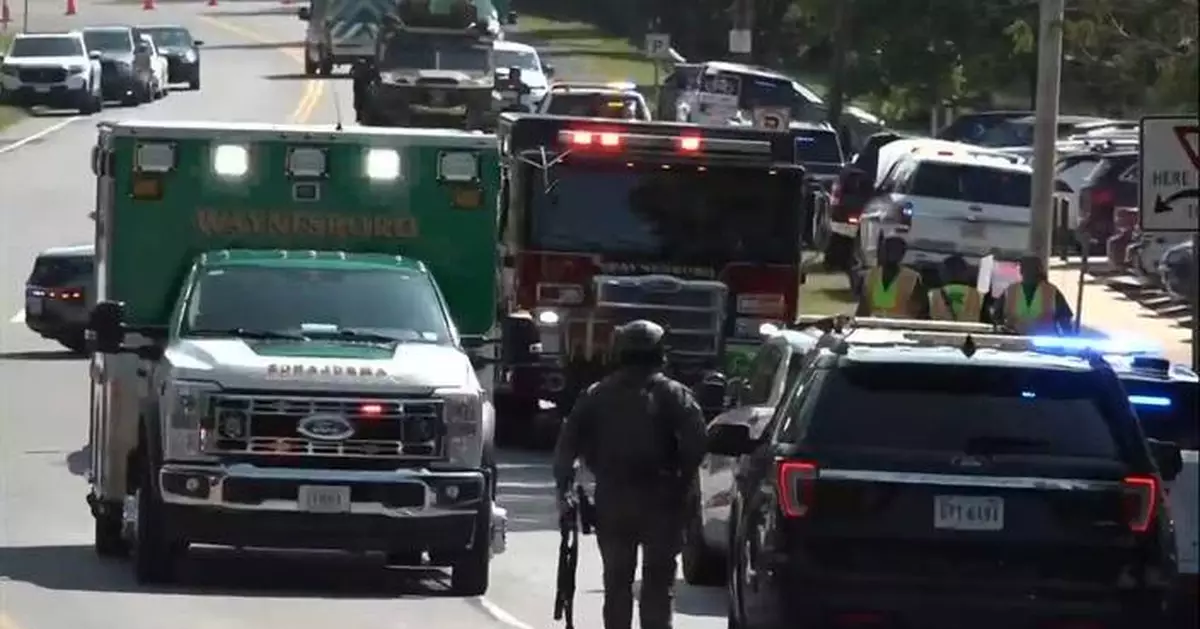
Video from local media showed several emergency vehicles outside the school. In social media posts, the school system confirmed police were “managing an emergency” Wednesday morning, later confirming that all “Westwood students, teachers, and staff are accounted for and are safe.”
Virginia Gov. Abigail Spanberger said she was monitoring the incident.
“My heart is with these young students, their parents and families, and the teachers and staff at the school,” Spanberger said on social media. “Thank you to the first responders who are assisting at the scene.”
Waynesboro is about 96 miles (155 km) northwest of Richmond.
Rankin reported from Richmond, Virginia. Raby reported from Charleston, West Virginia.
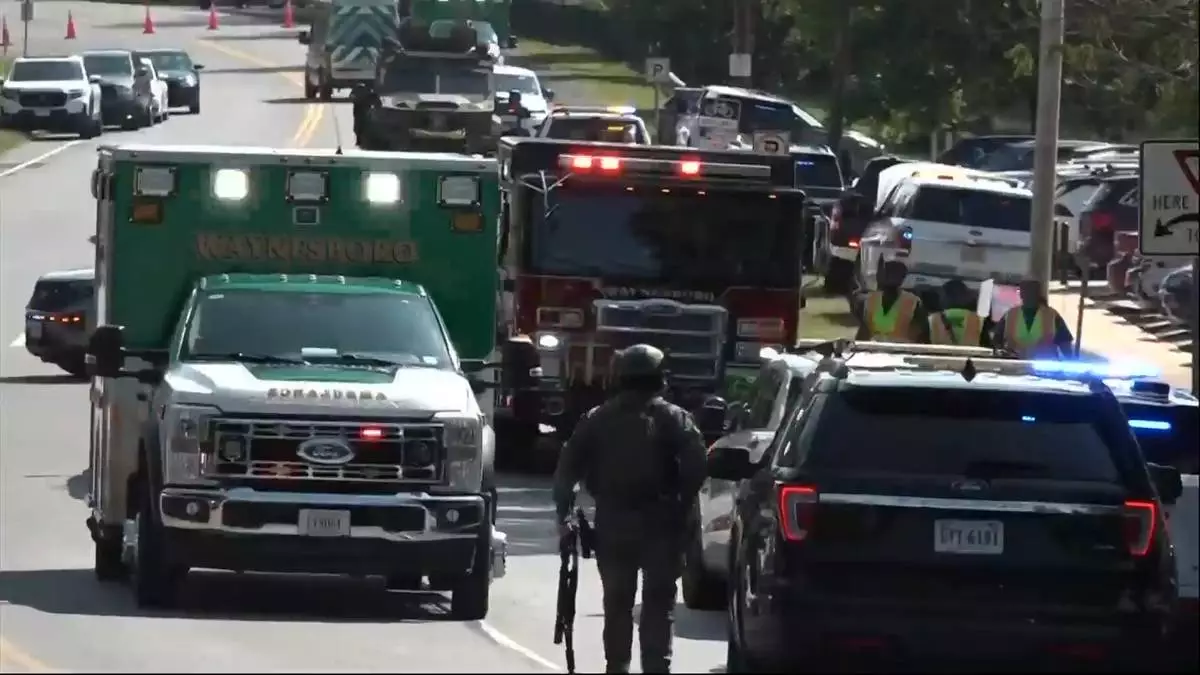
In this image from video provided by WHSV-TV, police respond to an emergency at an elementary school in Waynesboro, Va., on Wednesday, Sept. 2, 2026. (WHSV-TV via AP)
BUNIA, Congo (AP) — Congo’s Ebola outbreak has killed more than 3,000 people out of more than 6,100 confirmed cases, according to the latest government data from Wednesday, as the disease is spreading at an unprecedented speed, faster than efforts to track and slow it.
Data from Congo’s Ministry of Health showed the outbreak has recorded 6,186 confirmed cases, including 3,007 deaths since it was declared a global health emergency in mid-May. It remains the fastest-growing outbreak of Ebola ever.
Jean-Claude Angwanzia, a resident of Bunia, said that he left Mambassa in the epicenter of Ituri province, because he didn’t feel safe. He said that he hardly saw health workers and infected bodies were being mishandled, prompting safety concerns.
“I had to flee the area because of the danger looming over us,” he said.
The pace of the outbreak is putting a strain on people's lives.
Papy Baraka, a public transportation driver in Bunia, has had to cut down on the number of passengers he picks up in his car.
“The disease puts everyone at risk, and daily life has slowed to a crawl. We are afraid,” he said.
Recent weeks have witnessed a surge in cases, with two new health zones affected last week in North Kivu, where the fatality rate is much higher than in the rest of the affected provinces. The virus has spread to six provinces.
The U.S. Centers for Disease Control said Tuesday in a report that the efforts to contain the virus “remained below established response targets” and the fast expansion of the disease across many health zones indicates “uncontrolled expansion of the outbreak.”
The report said that the statistics show that most of the cases are “occurring outside known transmission chains” as a result of the percentage of confirmed new cases coming from only between 15% and 20% of known contacts.
Health workers are struggling under difficult conditions and have gone on strike multiple times to demand their pay.
The disease has continued to spread rapidly for several reasons, including conflict in the eastern region of the country where the outbreak is concentrated, attacks on health workers, miners constantly on the move, and inadequate health infrastructure.
The resumption of school in the middle of the outbreak has also raised concerns about transmission in classrooms.
The World Health Organization said that the outbreak is on track to exceed the deadliest on record, West Africa's regional outbreak between 2014 and 2016, which killed 11,000 people.
The Africa Centers for Disease Control and Prevention said that the outbreak is possibly three times larger than the number of cases recorded, as surveillance and contact tracing are still weak. Despite that, the outbreak has already become Congo's deadliest Ebola outbreak.
There is no vaccine or approved treatment for the rare Bundibugyo virus that has sparked the current outbreak. A couple of vaccines are being developed to tackle the disease.
Last week, the government started the distribution of the Ervebo vaccine to front-line health workers in Kisangani in the northeastern Tshopo region. Ervebo has helped combat previous Ebola disease outbreaks, and WHO said that it could offer some protection.
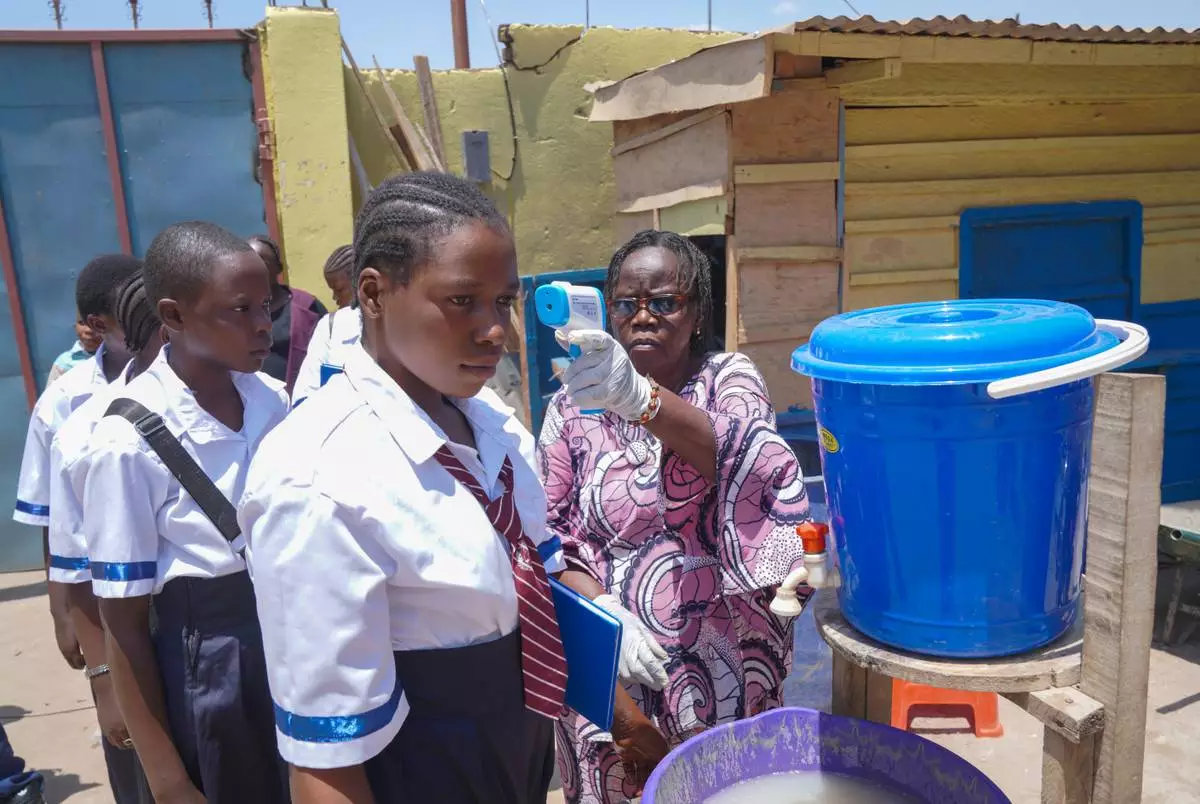
A school official checks students' temperatures as they enter school, on the first day of the new school year amid the Ebola virus outbreak, in Ituri, Congo, Tuesday, Sept.1, 2026. (AP Photo/Dieudonne Dirole)
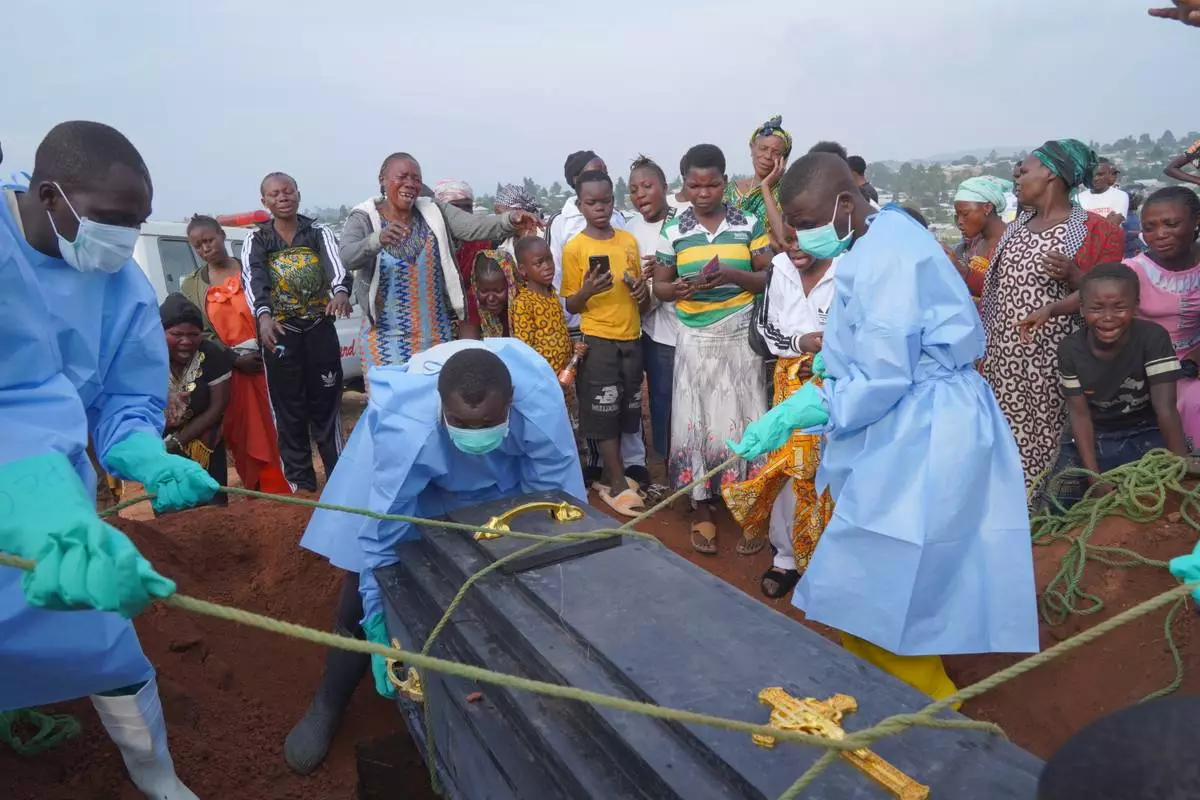
People dressed in protective gear lower into a grave the coffin containing the remains of Jeannine Katusabe, who died of Ebola, during a burial service in Bunia, Ituri province, eastern Congo, Tuesday, Aug. 11, 2026. (AP Photo/Dieudonne Dirole)