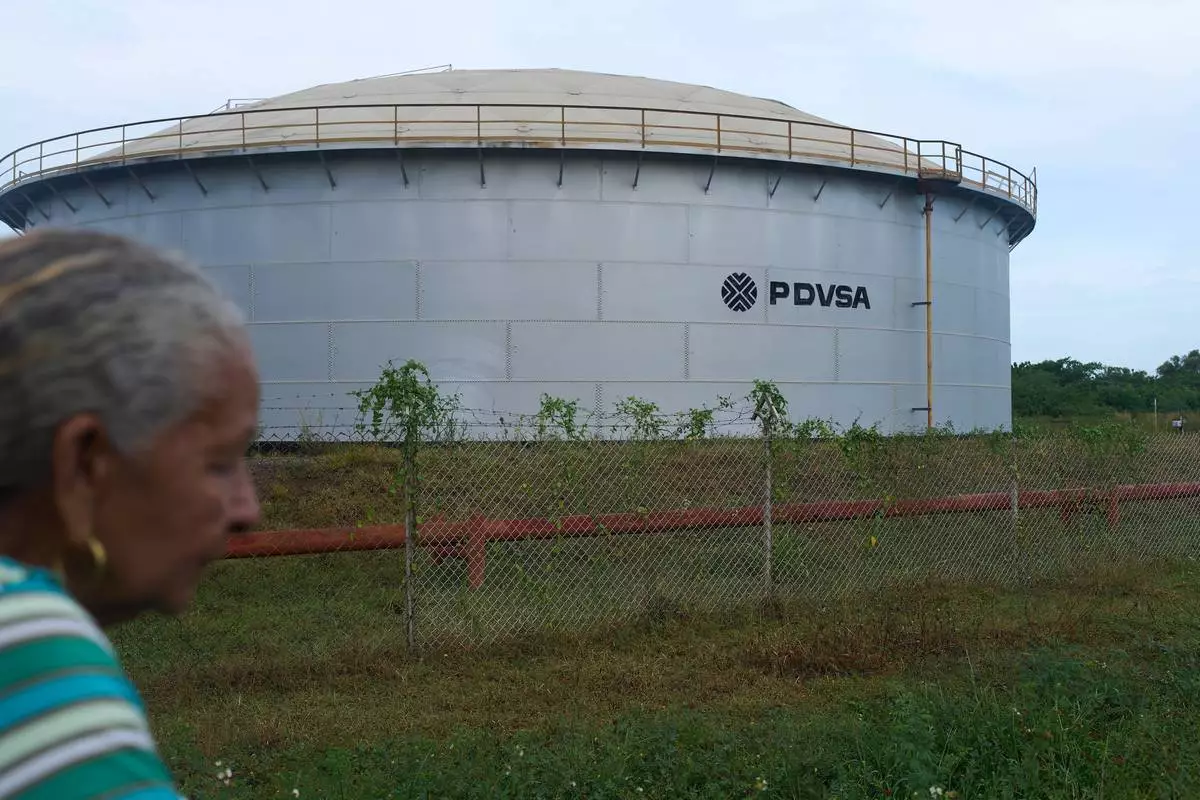
Iran targeted Gulf allies of the United States on Wednesday, firing drones at Kuwait and Bahrain after a night of U.S. aerial bombardment of Iran.
Iranian officials said one of the U.S. strikes on the country overnight struck a wedding party, leaving at least four people dead and dozens wounded.
Fighting between the U.S. and Iran has increased this week after the U.S. hit Iranian rocket launchers on an island in the Strait of Hormuz on Sunday, saying Iran was planning to use them to shoot mines into the waterway. Iran retaliated by firing missiles at American bases in Jordan, which were all intercepted.
Here’s a look at the latest developments in the Iran war and the wider Middle East. Full coverage can be found here.
The U.S. Central Command said Tuesday’s strikes focused on Iranian military targets including air defense sites, radar systems and maritime assets.
But Iranian media said one U.S. strike hit a home hosting a wedding in Kuhestak, a small town on the coast overlooking the Strait of Hormuz.
Four people were killed — two women and two children, aged 4 and 16 — and at least 68 were wounded, the state news agency IRNA and state TV said Wednesday. Just after the strike, Ahmad Nafisi, the province’s deputy governor, had told Iranian state television that five people were killed. There was no explanation for the change.
The U.S. military said it was aware of the report but that it “never targets civilians.”
Bahrain said its air defense systems intercepted several Iranian air attacks early Wednesday, without providing further details.
Iranian state media said Iran’s military had launched drone attacks on U.S. bases in Bahrain and in the United Arab Emirates in response to the overnight attacks.
Iran’s Ministry of Foreign Affairs said Iran acted in self-defense in retaliation for U.S. violations of Iran’s sovereignty.
Saudi shipping company Bahri said two Filipino sailors were killed in an attack late Monday as their vessel transited the Strait of Hormuz.
In a statement Wednesday, the company said its ship, named the SIDR, was “involved in a security incident” in the strait shortly before midnight on Monday that resulted in the loss of two of their seafarers.
No one claimed responsibility for the attack on the Saudi tanker.
The Saudi Ministry of Foreign Affairs condemned the attack.
The ministry said the oil-rich kingdom stresses the need to halt escalation and respect the security and safety of international navigation and of global energy supplies.
The Saudi ministry called on all parties to return to negotiations and peaceful solutions.
Iran has established a chokehold on the Strait of Hormuz, through which a fifth of the world’s traded oil passed in peacetime, after the U.S. and Israel attacked Iran on Feb. 28. Ship traffic through the waterway has slowed to a trickle, roiling the global economy and spiking prices for energy and other goods across the world.
U.S. Treasury Secretary Scott Bessent said Wednesday on “Fox & Friends” that multiple officials in President Donald Trump's administration are talking to other nations still doing business with Iran and pressuring them to stop.
He avoided mentioning Russia specifically, even when asked.
“My message to everyone is stay away,” Bessent said. “We all want this conflict to end, and the fastest way for the conflict to end is for no one to provide any support to this regime. We are going to sever every tie that they have from the outside world.”
Top diplomats in Egypt and Qatar have called for the U.S. and Iran to return to the negotiating table in line with their collapsed ceasefire deal.
Foreign Minister Badr Abdelatty of Egypt spoke by phone on Wednesday with his Qatari counterpart Sheikh Mohammed bin Abdulrahman Al Thani.
The ministers warned that the ongoing escalation threatens “dire consequences on the region’s security and stability,” the Egyptian foreign ministry said.
Iran’s currency market hit a record low Wednesday, hours after the exchange of fire between the country and the U.S. over control of the Strait of Hormuz.
Traders in the Tehran market exchanged 2.20 million rials for one U.S. dollar, nearly 10% higher than last week’s record, on Aug. 25, when one dollar was sold at 2.02 million rials.
The currency had already been under pressure before the U.S. and Israel attacked Iran on Feb. 28, as Iran faced double-digit inflation and negative growth. The rial has repeatedly hit new lows since the war began.
The Council of Arab Interior Ministers described Iran’s attacks on Kuwait, Jordan, the United Arab Emirates and Bahrain as a “violation of international law.”
The council said Iran’s “brutal aggression” is part of Tehran’s efforts to destabilize security and stability in the region. The council also said the attacks threaten international peace and security.
The leaders of China and Egypt welcomed regional efforts to “reach political understandings” aiming at restoring peace and stability in the Middle East amid renewed escalation between Iran and the United States.
President Xi Jinping of China and Egypt’s President Abdel Fattah el-Sissi held talks in Cairo on Wednesday that focused on bilateral ties and regional and international topics.
They welcomed regional efforts to ease tensions and promote “peace and stability in the Gulf and the Middle East,” according to a joint communique following the talks.
Pakistan said Wednesday it remains engaged with the United States and Iran, with support from regional countries, in efforts to bring Washington and Tehran back to the negotiating table.
Foreign Ministry spokesperson Tahir Andrabi told a weekly news briefing in Islamabad that Pakistani Prime Minister Shehbaz Sharif met Iranian President Masoud Pezeshkian on the sidelines of the Shanghai Cooperation Organization, a political and security group billed as a counterweight to the U.S. global influence.
A man drove through a crowd gathered in the northern Iranian city of Mashhad late Tuesday, killing four people and injuring more than 10, the official IRNA news agency reported on Wednesday.
Quoting local traffic police, the semiofficial Fars news agency described the incident as a road accident and implied the driver might have been under the influence of drugs or alcohol.
This story has been corrected to show that Iranian state media are now reporting that four people were killed in the strike on the wedding, not five. They gave no explanation for the change.
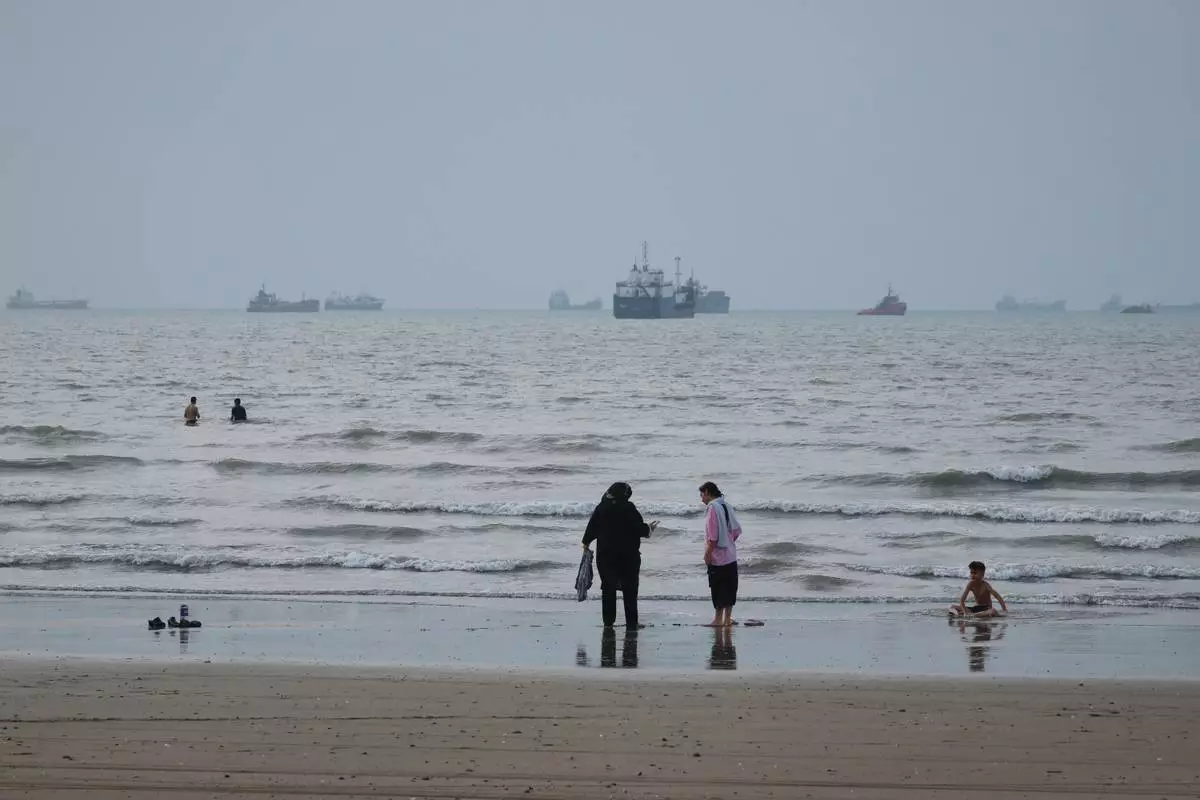
People spend time at a beach as commercial vessels are anchored in the Strait of Hormuz off Bandar Abbas, Iran, Wednesday, Sept. 2, 2026. (Razieh Poudat/ISNA via AP)