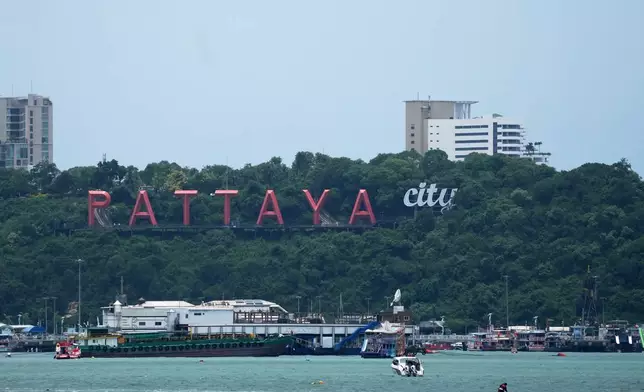
PATTAYA, Thailand (AP) — There’s no getting around the fact that Thailand’s seaside resort of Pattaya has a lingering reputation for sex tourism, even though that’s only part of the story for the city that's a major shore leave destination of crew members aboard the USS Abraham Lincoln.
Many of the 5,000 or so sailors and Marines onboard the Lincoln, as well as personnel on other ships in its carrier strike group, are visiting Pattaya for some rest and recuperation this week after the big ship’s long, troubled tour of duty in the Middle East.
Click to Gallery
Tourists ride a jet ski on Pattaya Beach in Pattaya, Thailand, on Aug. 31, 2026. (AP Photo/Sakchai Lalit)
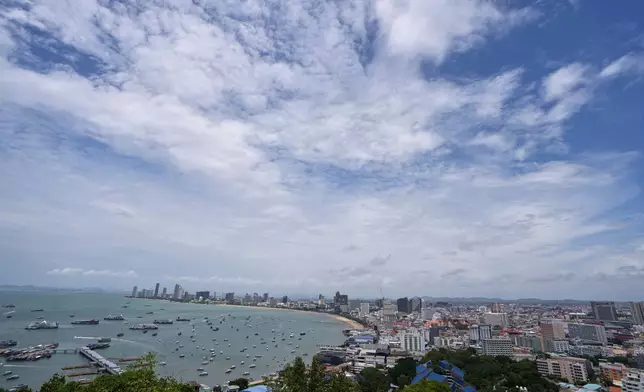
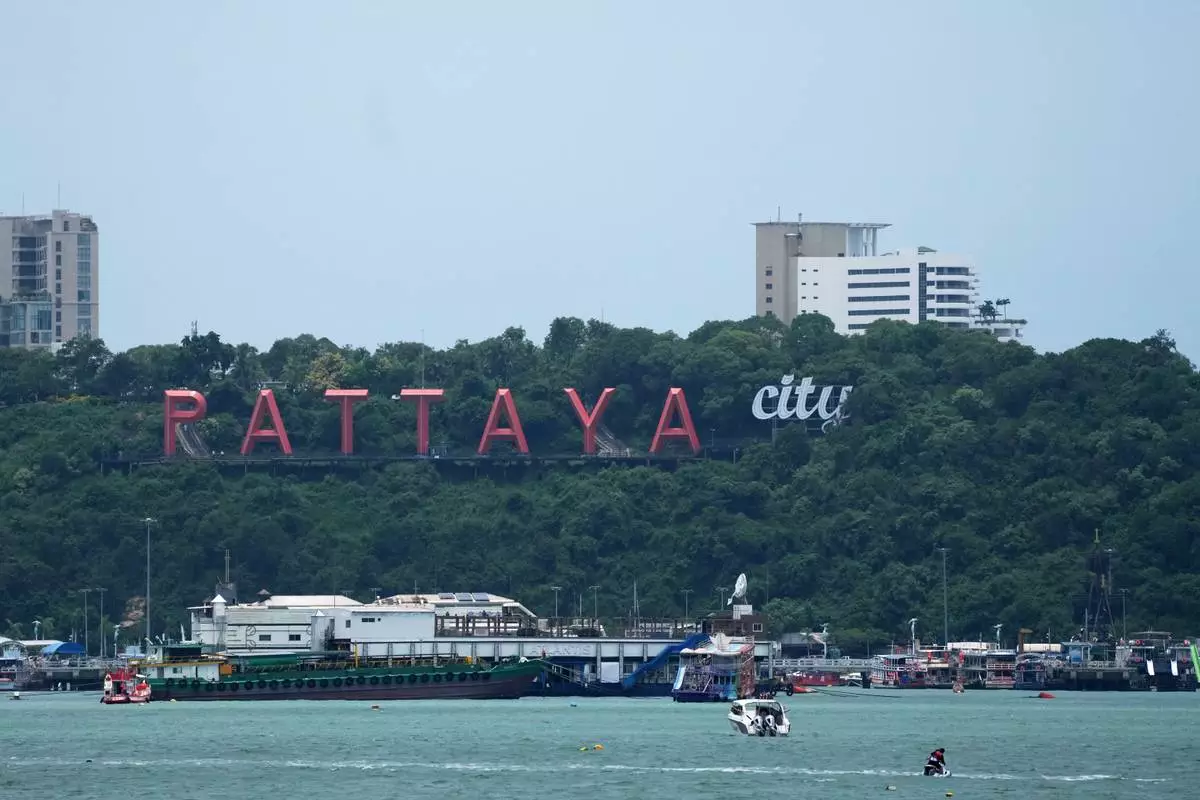
Boats float on Pattaya Beach in Thailand, on Aug. 31, 2026. (AP Photo/Sakchai Lalit)
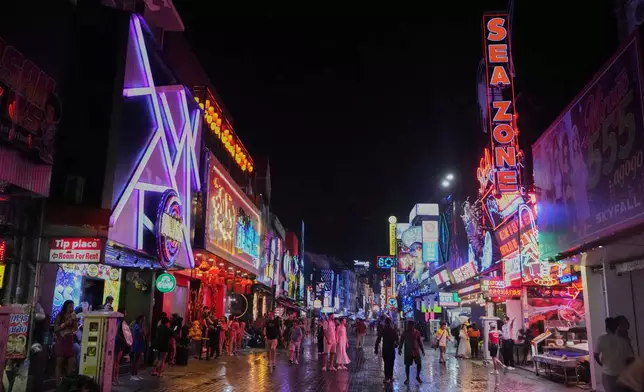
Tourists stroll down Walking Street in Pattaya, Thailand, on Aug. 31, 2026. (AP Photo/Sakchai Lalit)
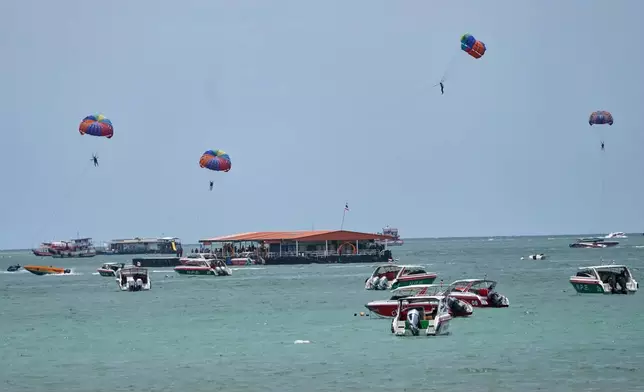
Tourists parasail on Pattaya Beach in Thailand, on Aug. 31, 2026. (AP Photo/Sakchai Lalit)
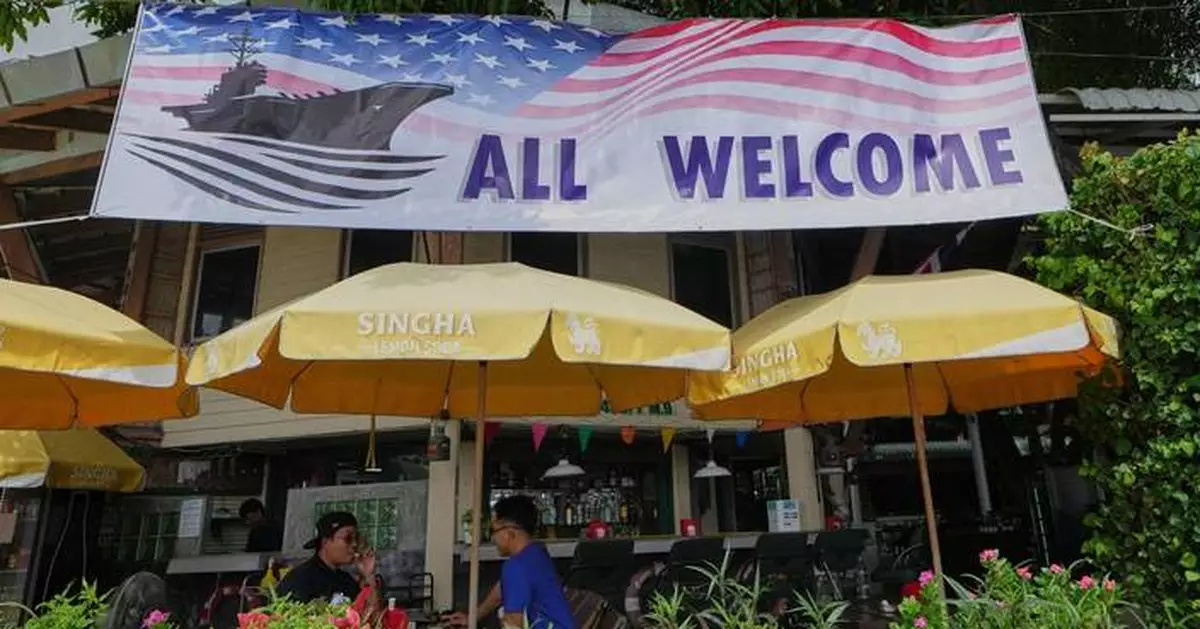
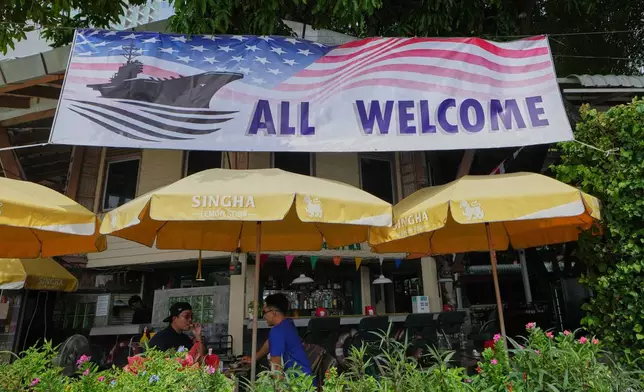
Customers of a restaurant sit under a banner in Pattaya, Thailand, on Sept. 1, 2026. (AP Photo/Sakchai Lalit)
They will be following millions of other tourists, including a significant number of U.S. military personnel who take part every year in major land and sea exercises nearby with their Thai counterparts.
Social media ahead of the Lincoln’s visit has been awash with jibes about lusty sailors, but recent visitors say the development of more family-friendly attractions means the new, more wholesome Pattaya overshadows its former seedy self.
Many U.S. Navy ships dock at nearby deep-water facilities such as Laem Chabang Port and the Sattahip Royal Thai Navy Base, both less than an hour away by road.
Shore leave spending boosts the local economy, and mission duties often include community outreach in and around the city, about 100 kilometers (60 miles) southeast of Bangkok. That includes specialized medical care for villagers or putting in volunteer time at orphanages.
But when hundreds or thousands of sailors have a chance to enjoy some onshore liberty, the navy deploys members of its Shore Patrol to work side by side with Thai police to defuse any trouble.
Navy personnel are likely to have been reminded that, though rarely enforced, the law in Thailand technically bans prostitution, and paying for sex is a punishable offense under Article 134 of the Uniform Code of Military Justice, the legal framework for the U.S. armed forces.
The military connection goes back at least to the Vietnam War era, when at its height, 40,000–50,000 U.S. service personnel were stationed in Thailand, largely in support of that conflict’s air operations. Bases used by U.S. forces dotted Thailand, and all attracted their share of nightlife activities.
Pattaya was close to both the Sattahip naval base and the Thai Navy’s U-Tapao airfield, which hosted U.S. Air Force B-52 bombers.
Elizabeth Becker, author of “Overbooked: The Exploding Business of Travel and Tourism,” wrote that American GIs during the Vietnam War flocked to Pattaya, a once-quiet fishing village, “and it turned into a raunchy seaside playground.”
The military facilities brought a continuous stream of personnel through Pattaya, while the 1966 Entertainment Places Act created a legal gray area allowing the sex trade to operate semi-openly in bars and massage parlors — as something of a private arrangement between customer and employee — despite a 1960 law criminalizing prostitution.
Pattaya also had a beach that could be reached relatively easily from Bangkok, which positioned it well for a transition to civilian visitors after the withdrawal of U.S. military forces in 1976.
Pattaya’s infrastructure of go-go clubs and other entertainment venues was then marketed to travelers arriving in greater numbers due to cheaper air travel and a boom in package tours. Sex tourism became entrenched.
Severe economic disparities brought many young women and men from Thailand’s poor northeastern Isan region to work in Pattaya's lucrative nightlife sector. They earned wages far exceeding rural agricultural incomes, allowing them to send money home to their families.
Prostitution is culturally taboo, but sex work has quietly flourished in Thai society for centuries, with the domestic market dwarfing the more glitzy one for foreigners.
Pattaya underwent another evolution in the 1990s, with a new wave of tourists coming from what had been the Soviet Union, after communism there collapsed in late 1991.
Embracing modern globalized tourism, the newcomers came on direct charter flights, even from provincial cities, to the civilian airport at U-Tapao, benefiting from a 30-day visa-free agreement. Signs in Cyrillic sprouted around Pattaya as businesses catered to this new clientele.
Russians were not the only people calling Pattaya their home away from home.
The agreeable climate and allegedly laissez-faire attitude of local law enforcement attracted fugitives from justice and criminals from all over the world, including Russian, Eastern European, and Western European gangsters as well as drug-dealing motorcycle gangs from Australia.
Pattaya has tried with some success to rebrand itself as a family destination, with parks, malls and luxury resorts largely in surrounding areas that attract large numbers of Thais and visitors from other Asian nations.
A popular water park is themed around Cartoon Network shows. The Nong Nooch Tropical Botanical Garden displays vast stretches of flora and hosts cultural shows. The Sanctuary of Truth Museum is an ornate all-wood structure over 100 meters (yards) tall.
There are also golf courses, running events and day trips to nearby islands.
Travelers can still get a taste of the spicier old Pattaya with a nocturnal stroll down “Walking Street,” at the heart of the city’s racy nightlife district.
Peck reported from Bangkok.
Tourists ride a jet ski on Pattaya Beach in Pattaya, Thailand, on Aug. 31, 2026. (AP Photo/Sakchai Lalit)
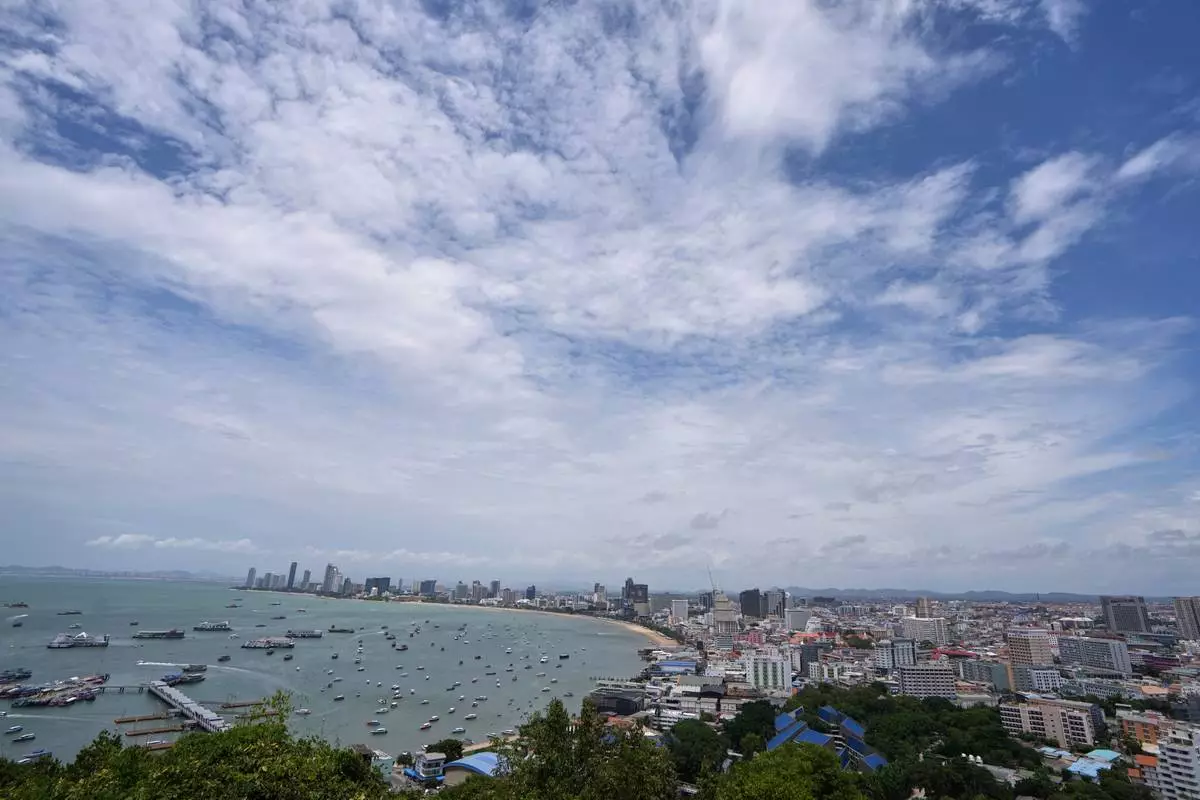
Boats float on Pattaya Beach in Thailand, on Aug. 31, 2026. (AP Photo/Sakchai Lalit)
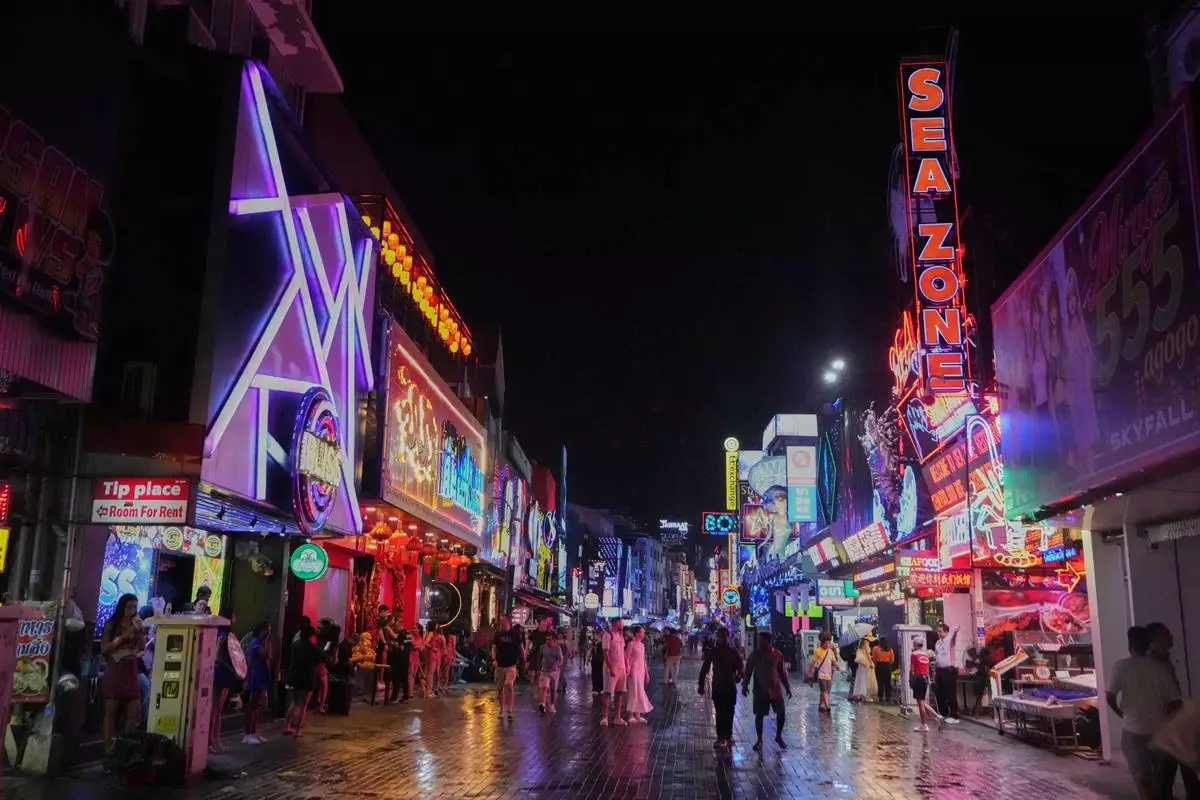
Tourists stroll down Walking Street in Pattaya, Thailand, on Aug. 31, 2026. (AP Photo/Sakchai Lalit)
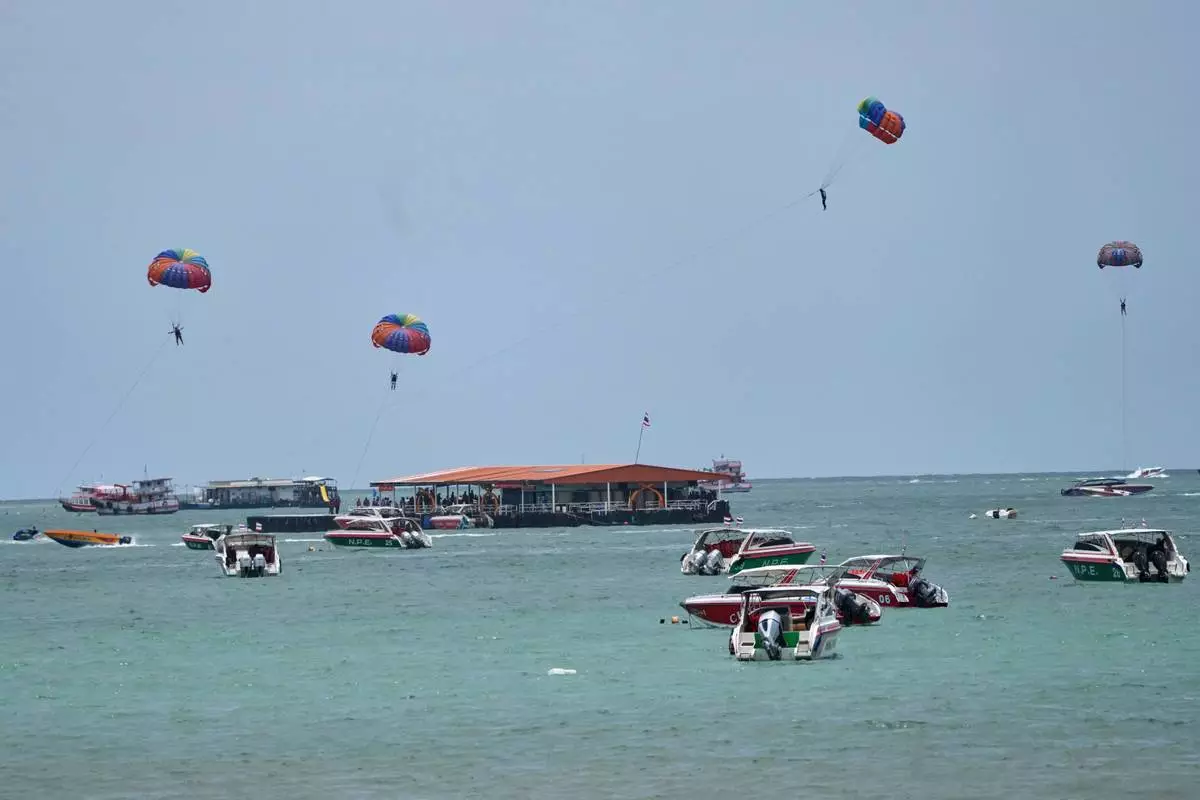
Tourists parasail on Pattaya Beach in Thailand, on Aug. 31, 2026. (AP Photo/Sakchai Lalit)
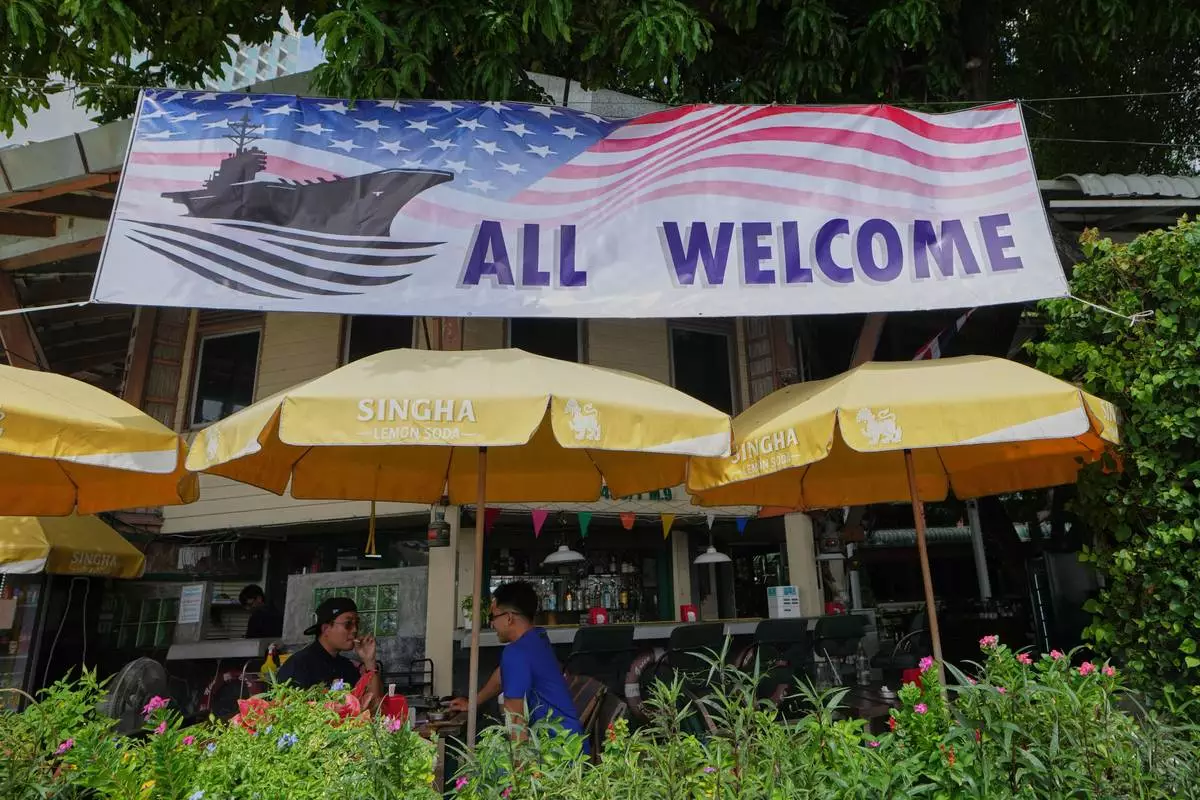
Customers of a restaurant sit under a banner in Pattaya, Thailand, on Sept. 1, 2026. (AP Photo/Sakchai Lalit)
PARIS (AP) — U.S. President Donald Trump and leading Republicans are trying to leverage widespread riots in France ahead of midterm congressional elections by making unsubstantiated claims that the social unrest in Europe is caused by Muslim migrants.
This “is completely false,” French President Emmanuel Macron replied Wednesday.
Peaceful nationwide demonstrations in France over the high cost of living and in support of students' grievances over underfunded schools turned violent over the weekend, with masked rioters committing vandalism and clashing with overwhelmed police. In Italy’s finance and fashion capital of Milan on Saturday, rioters clashed with police, looted stores and set property on fire.
Here's a closer look at the facts.
CLAIM: Migrants of Muslim heritage are doing most of the damage in France and Italy.
THE FACTS: It is difficult to know the exact sociological makeup of the protesters, but no one group has been singled out as being responsible for the violence.
Trump has tried to put the blame on migrants, urging French President Emmanuel Macron to “close your borders and take control before it is too late!”
“If Europe doesn’t close its borders and bring the criminals out, like the people that are protesting, Europe is finished,” Trump said at the White House while leaving for a campaign rally supporting Republicans in Kansas. “When I look at France, when you look at Italy, when you look at all the turmoil and the hatred — that’s not about school. That’s about people coming into the countries that hate the country.”
Republicans have specifically alleged that Muslims are releasing pent-up anger at the historically Catholic France, while tying it to a dystopian view of what could happen in the U.S.
“Today, radical Islam is the single greatest threat to the American democracy and freedom. We’re seeing in real time in France what happens when moderates capitulate to radical Islam,” Kansas Sen. Roger Marshall told the crowd at Monday's rally attended by Trump.
Macron, speaking during a trip to Qatar, said “We’ve had people claiming that we were invaded by hordes of migrants and Islamists, which is completely false," telling reporters he's referring to Trump's comments, among others.
Macron pointed to “foreign manipulation of information in the aftermath” and “AI-generated images depicting scenes that never actually happened.”
Some leaders on the other side of the Atlantic are “using our country for their own political campaigns,” he added. “People must stop spreading nonsense.”
Authorities and police have not linked immigrants to the rioting in France.
French authorities do not release the identities of people arrested and sent to trial. Unlike the United States, France does not collect data based on race or ethnicity, in line with a national doctrine of colorblindness, which aims at encouraging equality by ignoring race altogether.
Accounts of the protests and images of the unrest seem to show they are representative of France’s diverse society, which has seen influxes of people from France’s former colonies in Africa and Asia for generations.
In Italy, Milan police said violent protests on Saturday included a large number of naturalized children of immigrants as well as foreign nationals. However, Milan’s welfare councilor, Lamberto Bertolé, told The Associated Press that more investigation would be needed to determine the backgrounds and motivations of the young people who participated in the violence.
CLAIM: Synagogues in France have suffered antisemitic attacks and “steeples” have burned.
THE FACTS: No direct link has been established between violence and faith, and no houses of worship have been directly attacked.
Social media is awash with posts claiming to link Muslim rioters to acts of religiously motivated violence. Trump also tried to make this link, saying “when you see burning steeples and raging fires in France just remember that is what the radical Democrats want to do to America.”
The Jewish Community Protection Service, a French organization that monitors antisemitic incidents, said in a statement that a Paris synagogue was damaged over the weekend in what is believed to be a burglary attempt and that “no evidence suggests” that some businesses were targeted because of their owners’ religious affiliation. Authorities said at least 3,000 shops have been damaged or looted in major cities across the country.
France, which has a history of antisemitism, is home to the largest Jewish community and the largest Muslim population in Western Europe.
One of the most dramatic images of the French riots has been the burning of the 19th-century town hall in Limoges, whose bell tower was engulfed in flames before it collapsed. Ablaze, the bell tower could potentially be mistaken for a steeple.
CLAIM: France’s far-left is at fault.
THE FACTS: France’s far-left party has backed the student movement from the start, and is now being blamed for the disorder by political rivals ahead of April’s national election. While radical far-left activists have been found by authorities to be behind some of the violence, they are not entirely to blame for the extent of the vandalism and clashes.
Right-wing social media is full of video showing rioters smashing storefronts and causing French police in riot gear to retreat under a hail of stones and other hurled debris.
The center-right Macron, who will step down next year, accused far-left activists of trying to foment chaos by attacking buildings and police, as did other political leaders in France. Right-wing figures elsewhere in Europe and the U.S. have done the same.
France has a long tradition of street protests over social and political concerns, which are sometimes marred by violence on the fringes of otherwise peaceful marches, leading to clashes with police.
On Saturday in Paris, the march and the clashes largely unfolded side by side. Tens of thousands of people gathered at Place de la République, and the vast majority set off peacefully toward the northern part of the city. Around the same time, clashes with police broke out on and around the square, and groups of hundreds formed unauthorized marches across central Paris, police said.
The radical far-left is too small to account for violence on this scale, said Sebastian Roché, a professor at Sciences Po Grenoble, who has studied policing for more than two decades. “It is a very small core, a very small milieu, because these are not structured groups.”
Roché said looting in particular is “not at all how these groups operate,” and is mostly the work of criminals seizing the opportunity created by the disorder.
France’s far-left leader, Jean-Luc Mélenchon, has stuck with his support for the protesters, and has appealed for the protests to be peaceful while calling the police response heavy handed.
Wilson reported from Barcelona, Spain.
AP writers Colleen Barry in Milan and Tom Nouvian in Paris contributed to this report.
Find AP Fact Checks here: https://apnews.com/APFactCheck.
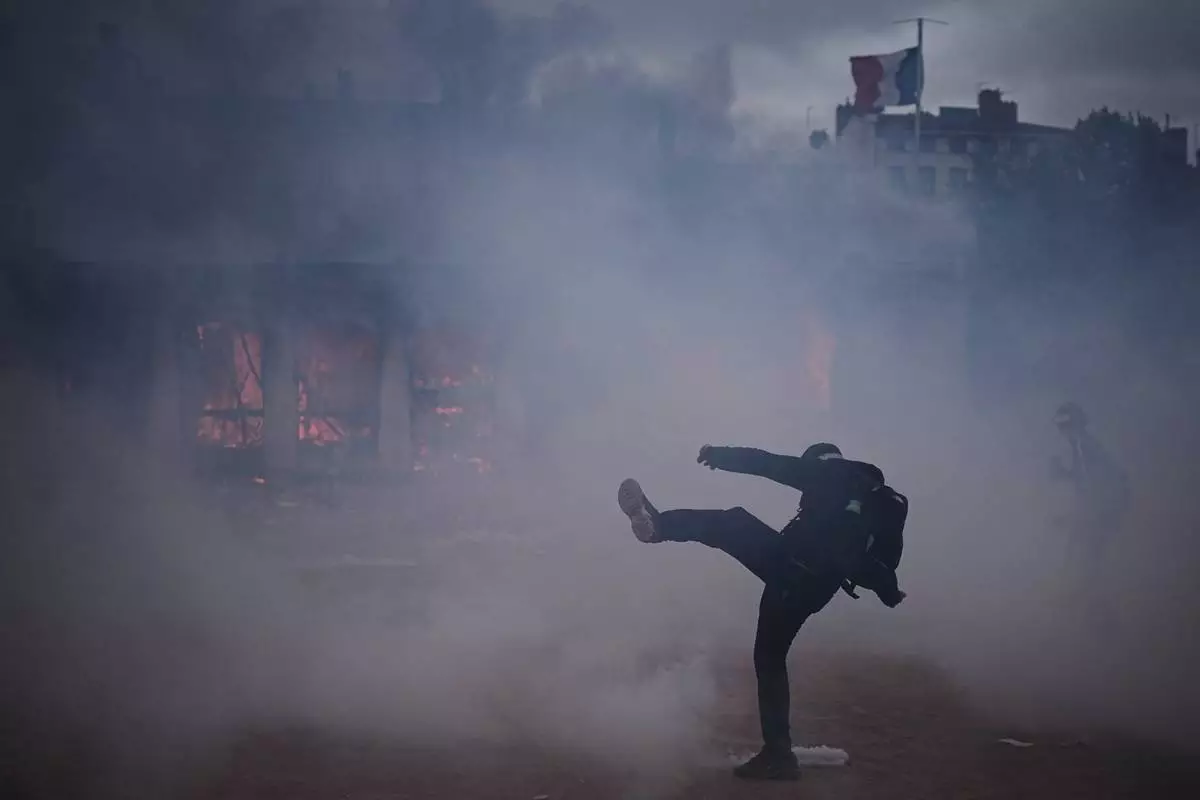
A protester kicks a tear gas canister in front of the burning tourism office during a demonstration against rising living costs and in solidarity with students’ grievances in Lyon, France, Saturday, Oct. 17, 2026. (AP Photo/Laurent Cipriani)
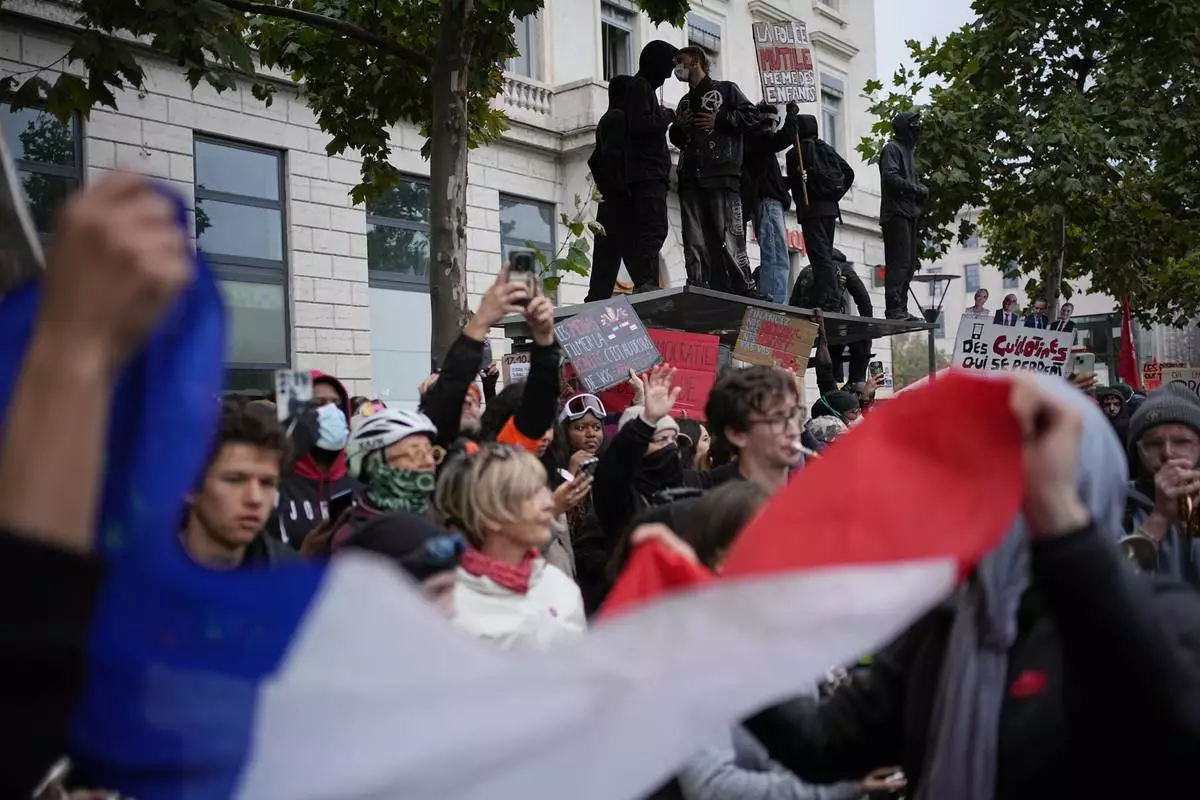
A protesters holds a French flag during a demonstration against rising living costs, joining students' grievances, in Lyon, France, Saturday, Oct. 17, 2026. (AP Photo/Laurent Cipriani)
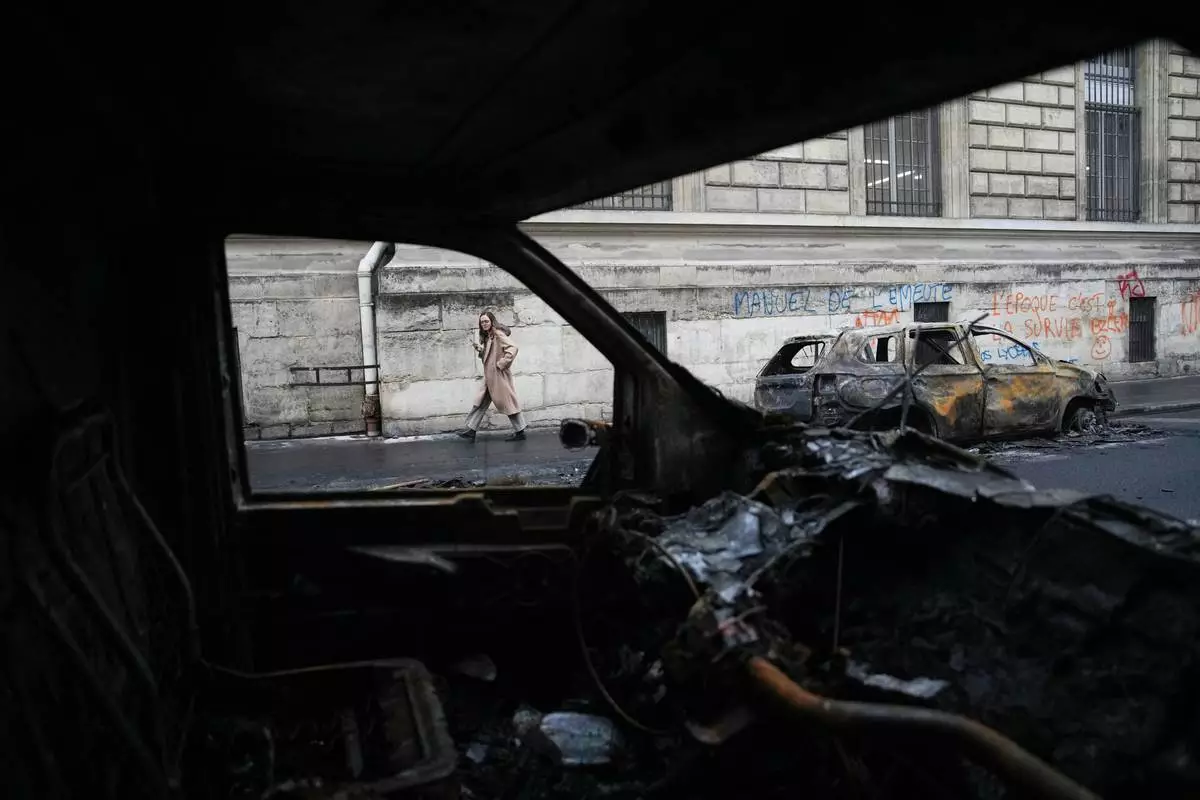
A woman walks past burned-out cars after a quiet night Monday under curfew, the first since weekend protests over the cost of living turned into rioting and looting across France, in Paris, Tuesday, Oct. 20, 2026. (AP Photo/Christophe Ena)