NEW YORK (AP) — Oil giant Chevron confirmed that it will expand its operations in Venezuela, just days after President Donald Trump announced an ambitious deal to develop the nation’s oil reserves and give the Pentagon a stake in the profits.
Chevron, the only U.S. oil company that has a major presence in the country, said Wednesday that it has been assigned additional acreage in the Orinoco Belt, where the company has an established position. Joint venture plans include investing more than $7 billion over the next five years, more than doubling production to approximately 600,000 barrels a day compared to 2026.
“Chevron’s history in Venezuela spans more than a century, and our expanded position reflects our confidence in the country’s deep resource potential and its ability to compete for investment within our portfolio for decades,” CEO Mike Wirth said in a prepared statement. “With improved terms and additional acreage, we are strengthening a portfolio that we believe can deliver attractive low-cost oil growth, support energy supply and create differentiated long-term value.”
Venezuela holds the world's largest proven reserves, which contain more than 303 billion barrels of crude oil, according to OPEC's 2025 Annual Statistical Bulletin. Saudi Arabia is a distant second with 267 billion barrels.
The announcement comes a day after a U.S. official, who briefed reporters on the expected announcement, said that Chevron officials and Energy Secretary Chris Wright were expected to visit Venezuela on Wednesday where the new investment will be formally unveiled. The official spoke on condition of anonymity under ground rules set by the White House for the call.
Chevron is the second-largest U.S. oil company and the only one with a major presence in Venezuela. It has had a presence in the country since 1923. Its joint ventures Petroindependencia and Petropiar, S.A. operate extra-heavy oil projects in the Orinoco Oil Belt, while Petroboscan, S.A. is located in the Zulia State in Western Venezuela.
The White House confirmed on Monday that it is partnering with North American Blue Energy Partners as part of Trump ’s push to tap into Venezuela’s oil industry.
The sweeping agreement has been met with skepticism from analysts who say it will take years to revive Venezuela’s production, which is in disarray after years of neglect.
Energy experts also have questioned about whether Venezuela’s acting President Delcy Rodríguez has the legal authority to give the company 100-year rights over 17 oil fields with reserves of 65 billion barrels — and whether future Venezuelan or American administrations would overturn the agreement.
Trump has had his eyes on Venezuela’s oil since the capture of Nicolás Maduro, and his aides call it a path away from reliance on oil from the Middle East. Trump has been pressing to get U.S. businesses to restore a presence in the country, and suggested Monday that other oil companies were readying for business in Venezuela. “We have Exxon going in, we have Chevron going in. We have our big oil companies going in,” he said. Trump in January said he was inclined to leave Exxon out of Venezuela after CEO Darren Woods called the country “uninvestable.”
A spokesman for Exxon said Tuesday, however, that “Nothing has changed” on the company’s position regarding Venezuela.
Treasury Secretary Scott Bessent, asked about Chevron’s announcement during an interview on Wednesday, said, “No American firm knows how to operate in Venezuela better than Chevron.”
Bessent told Fox News Channel’s “Fox & Friends” that Trump is “creating assets for the American people” with the deal and that the arrangement “is going to push down oil prices, push up production” to benefit U.S. consumers and the Venezuelan economy.
Trump has said that the agreement with Venezuela would “substantially lower” gasoline prices in the U.S. However, experts have repeatedly warned that Venezuela’s dilapidated oil infrastructure will require years of restoration work and tens of billions of dollars to resuscitate.
Meanwhile, gasoline prices jumped higher again overnight, reaching $4.12 on average for a regular gallon of gasoline, according to the motor club AAA.
Associated Press writers Aamer Madhani and Collin Binkley contributed to this report.

A woman covering a child from the rain walks along the shore of Lake Maracaibo in the oil-producing region of Cabimas, Venezuela, Tuesday, Sept. 1, 2026. (AP Photo/Ariana Cubillos)
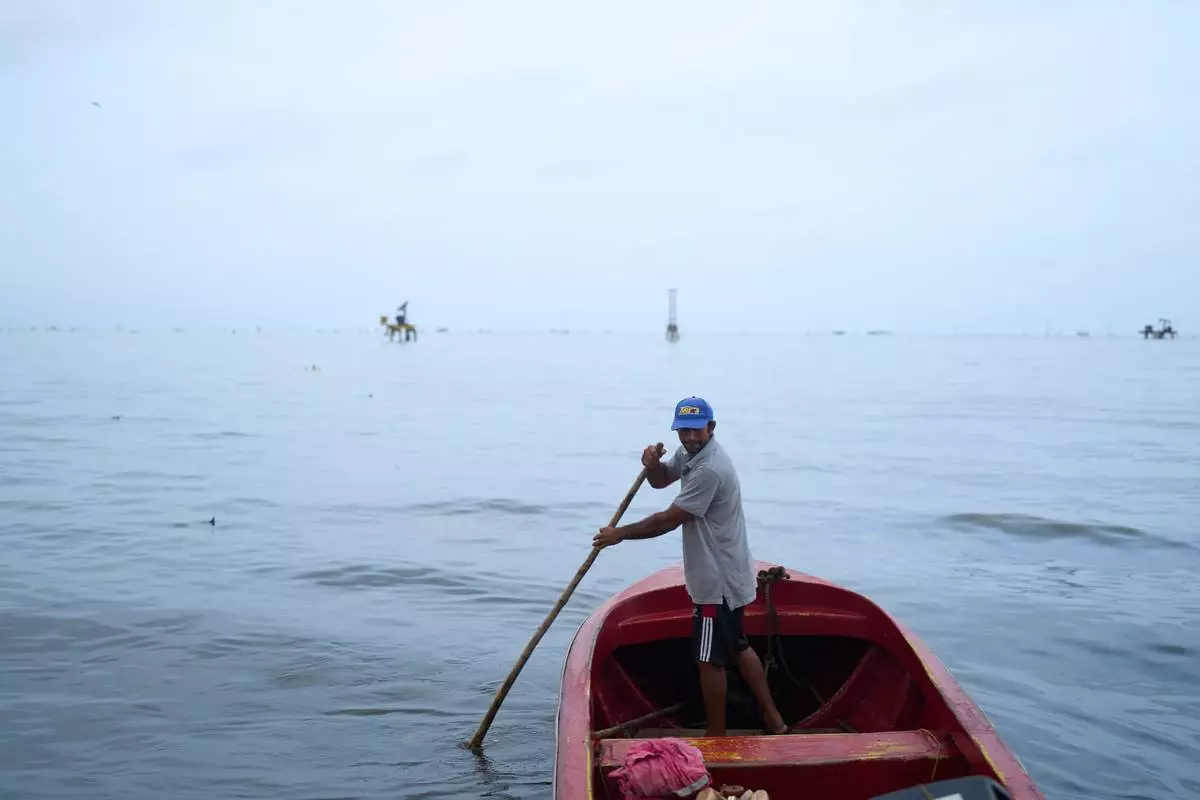
A fisherman steers his boat on Lake Maracaibo in the oil-producing region of Cabimas, Venezuela, Tuesday, Sept. 1, 2026. (AP Photo/Ariana Cubillos)
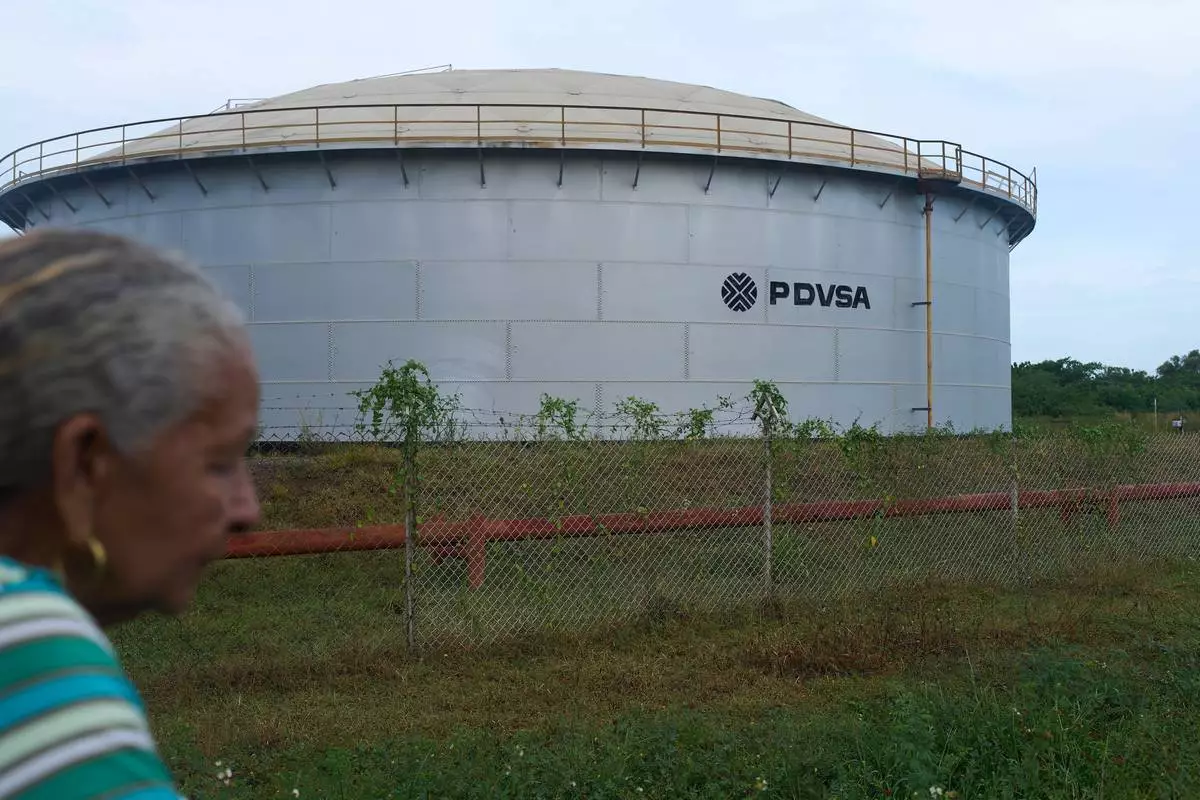
A woman walks near of a oil storage tank of Venezuela's state-run oil company, PDVSA in Cabimas, Venezuela, Tuesday, Sep. 1, 2026. (AP Photo/Ariana Cubillos)
LAEM CHABANG, Thailand (AP) — The USS Abraham Lincoln aircraft carrier docked at a port in eastern Thailand on Wednesday after its grueling deployment in the Middle East that kept the ship at sea for more than 250 days.
Associated Press journalists watched the Lincoln, which is carrying about 5,000 service members, as it made its way into the Laem Chabang port in Chonburi province shortly after the destroyer USS Frank E. Petersen Jr. sailed past the area.
The Lincoln has been supporting the U.S. war against Iran. Its deployment included a record-setting uninterrupted time at sea. Concerns have grown about the Lincoln’s lengthy deployment following reports of deteriorating mental health among the crew and shortages of supplies including food and hygiene products.
Crew members were not immediately accessible to media, but the ship itself looked due for at least a new paint job, with large blotches of what appeared to be rust on the hull, especially just above the waterline and at the edge of the flight desk, where fighter aircraft and helicopters were parked.
When asked about the aircraft carrier’s appearance, Capt. Dan Keeler, the Lincoln’s commanding officer, replied that “it is normal for a long deployment and we’re not going to make further comments.”
Asked for his thoughts about U.S. President Donald Trump’s comment that the Lincoln’s record-setting deployment was “not nearly long enough,” he was similarly terse.
“So, the president speaks for himself,” he said. “That is what I think about that.”
A U.S. Embassy statement said the Lincoln's strike group arrived in Laem Chabang, while the Petersen Jr. docked at the nearby port of Sriracha, and the guided-missile cruiser USS Robert Smalls is in Map Ta Phut in neighboring Rayong province.
The visit marked the Lincoln’s first full port stop after 286 days, or more than nine months, at sea from the start of the deployment in 2025, the statement said.
“Abraham Lincoln’s visit to Laem Chabang is a clear demonstration of our enduring commitment to our allies and partners in Thailand, and we are all very excited to make Thailand the first port visit on our historic deployment,” Keeler said earlier in a prepared statement.
The usually Asia-based USS George Washington relieved the long-deployed Lincoln in the Middle East in August.
Many of the service members are expected to make a visit to Pattaya, a popular beach town nearby. Thai officials have said the Lincoln’s stop would be for rest and recovery before returning to its U.S. base.
Pattaya officials said they welcomed the visit and the potential boost to the local economy. Authorities said they are stepping up security to ensure a smooth visit.
Shakeira Fairfax traveled to Thailand to meet her daughter Jada, a crew member on the Lincoln.
“I’m excited. I’m so full of emotion. I can’t wait to hold her. I can’t wait to snuggle up next to her,” said the mom, who hails from Paterson, New Jersey. She spoke to The Associated Press outside a hotel in Pattaya where crew members are set to spend their leaves.
Shakeira said her daughter, an entry-level seaman, finished basic training in October and shipped out for the Lincoln's deployment in mid-November, later celebrating her 25th birthday on board.
Shakeira said she worried most just after the U.S. launched its initial attack on Iran at the end of February and she was unable to connect with Jada for awhile.
“It was an uncertain time. It was a scary time. It was difficult — definitely difficult. But she has a support system. Her friends reached out to me. In fact, one of her good childhood friends is here as well. It was a time for us to stick together and trust and believe that she would be OK.”
She also recalled how her daughter sought her support when morale aboard the ship was reportedly low.
“I asked, “What can I do? What can I do?” She said, “Just tell me old stories.” Being able to share stories, laugh and look at photographs — to take that walk down memory lane — was really nice. It was really nice.”
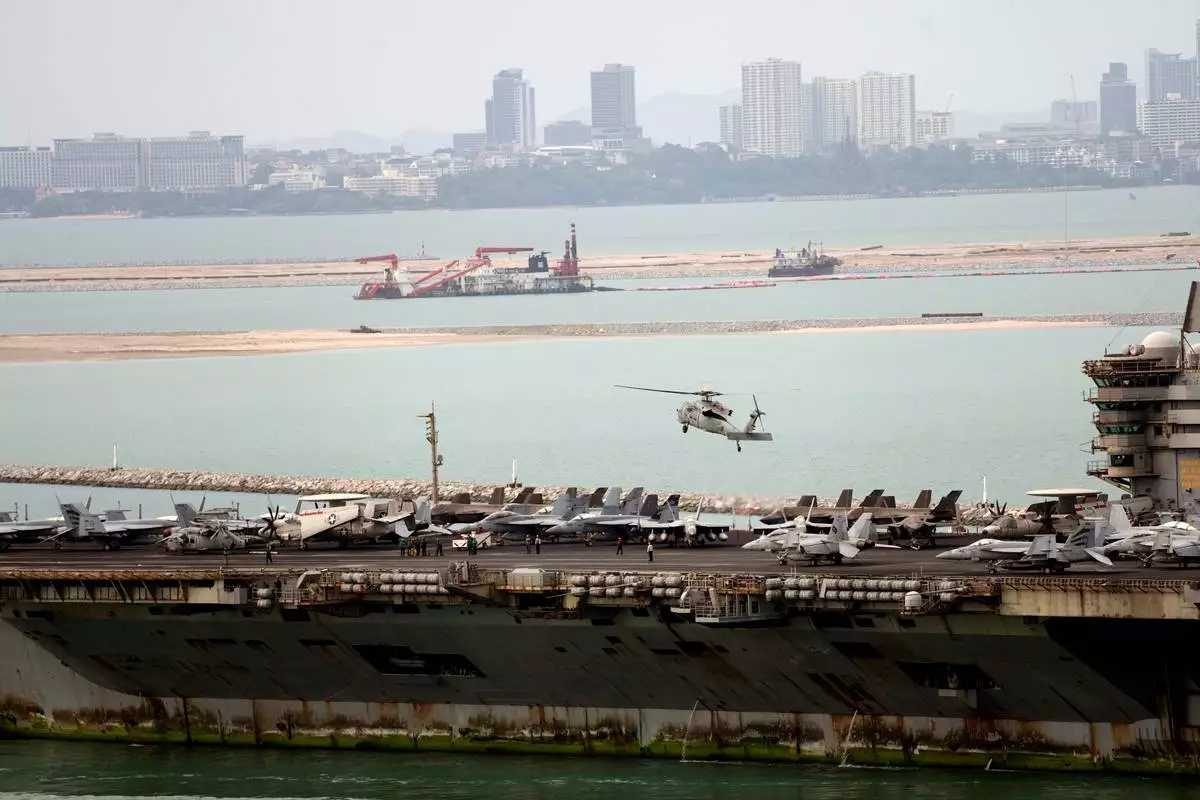
A helicopter lands on the U.S. Navy aircraft carrier USS Abraham Lincoln after it arrived at the port in Laem Chabang, Chonburi, Thailand, Wednesday, Sept. 2, 2026. (AP Photo/Sakchai Lalit)
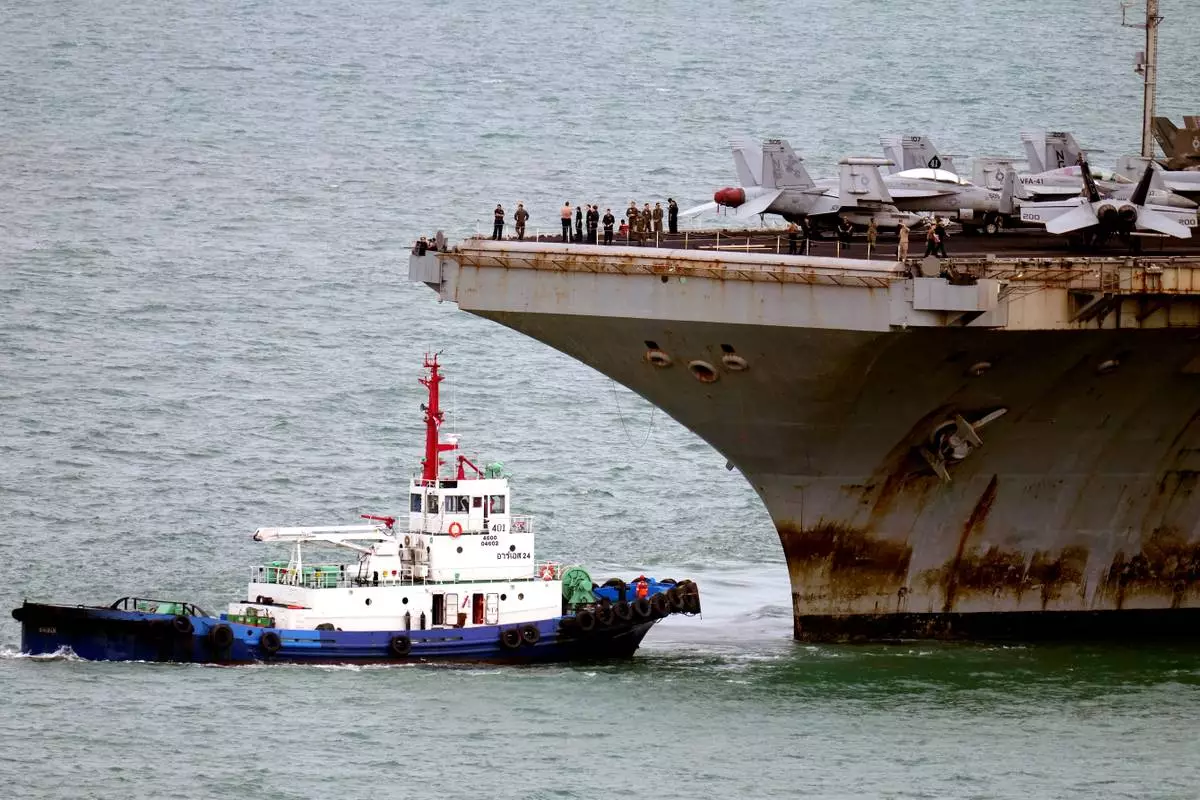
A tug boat greets the U.S. Navy aircraft carrier USS Abraham Lincoln as it arrives at the port in Laem Chabang, Chonburi, Thailand, Wednesday, Sept. 2, 2026. (AP Photo/Sakchai Lalit)
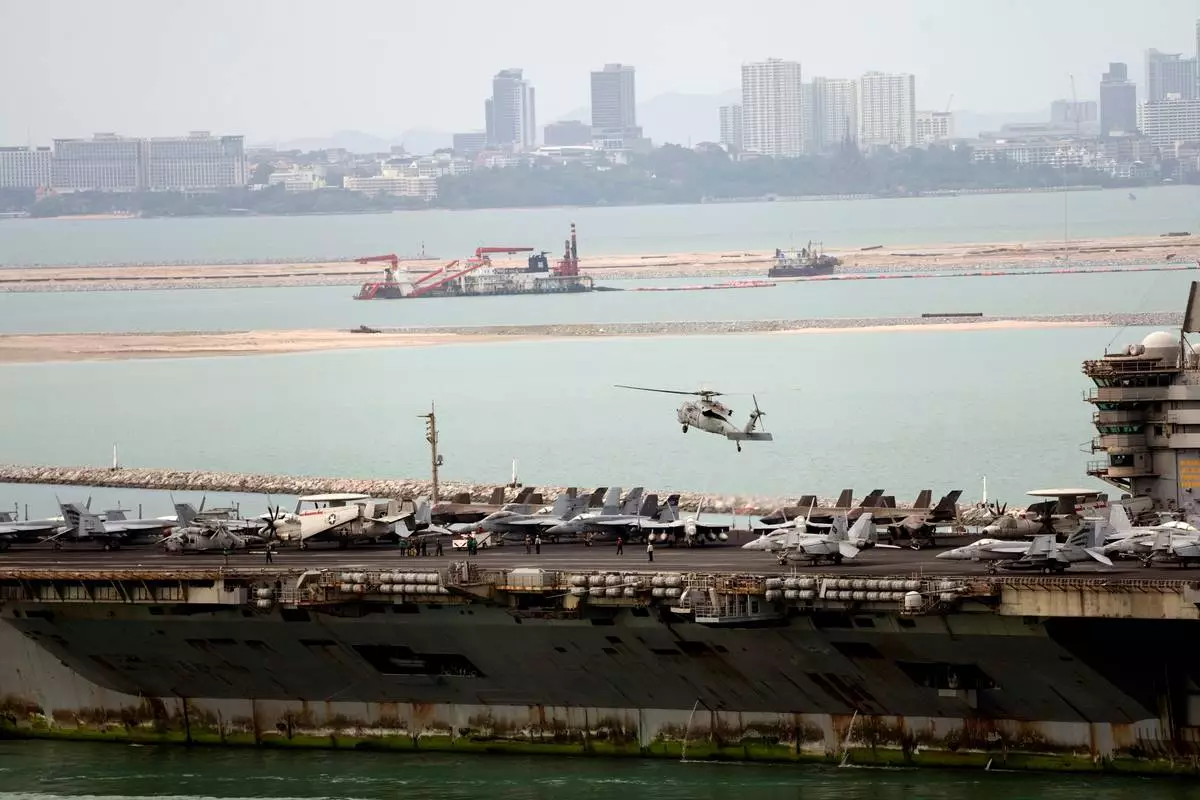
A helicopter lands on the U.S. Navy aircraft carrier USS Abraham Lincoln after it arrived at the port in Laem Chabang, Chonburi, Thailand, Wednesday, Sept. 2, 2026. (AP Photo/Sakchai Lalit)
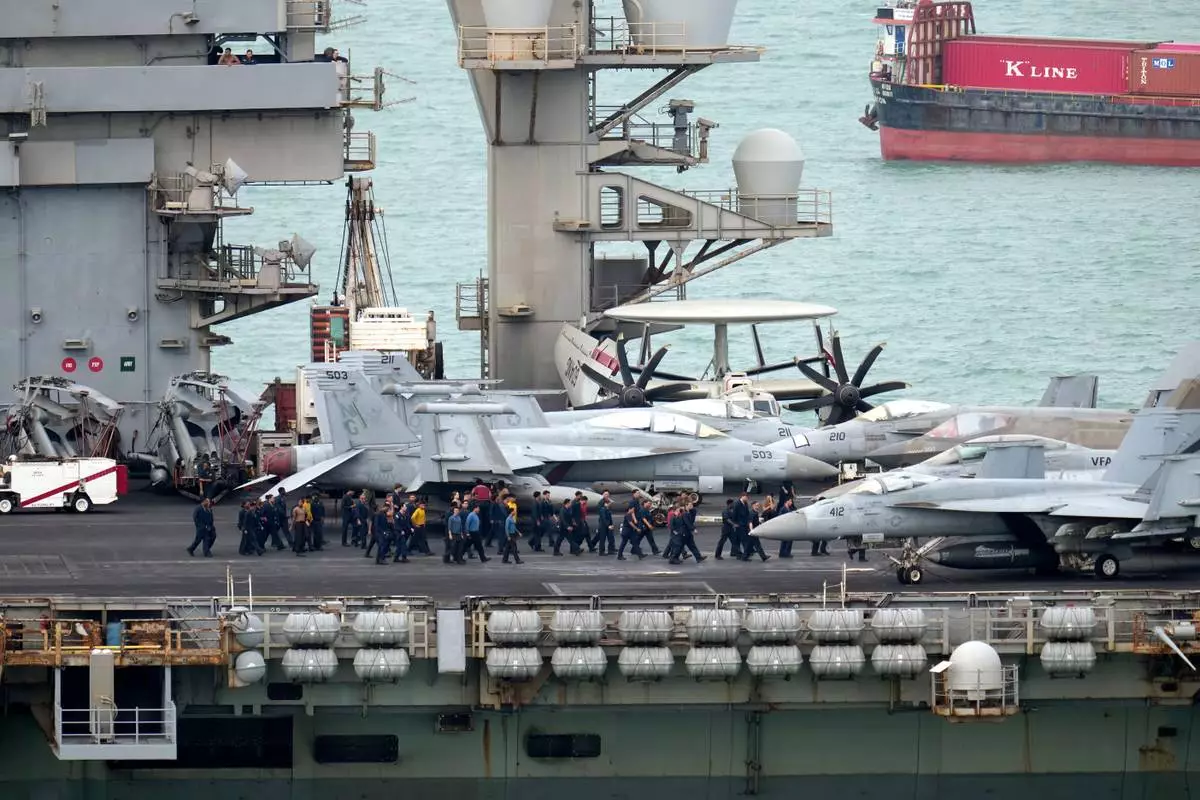
Navy personnel walk on the deck of the U.S. Navy aircraft carrier USS Abraham Lincoln as it arrives at the port in Laem Chabang, Chonburi, Thailand, Wednesday, Sept. 2, 2026. (AP Photo/Sakchai Lalit)
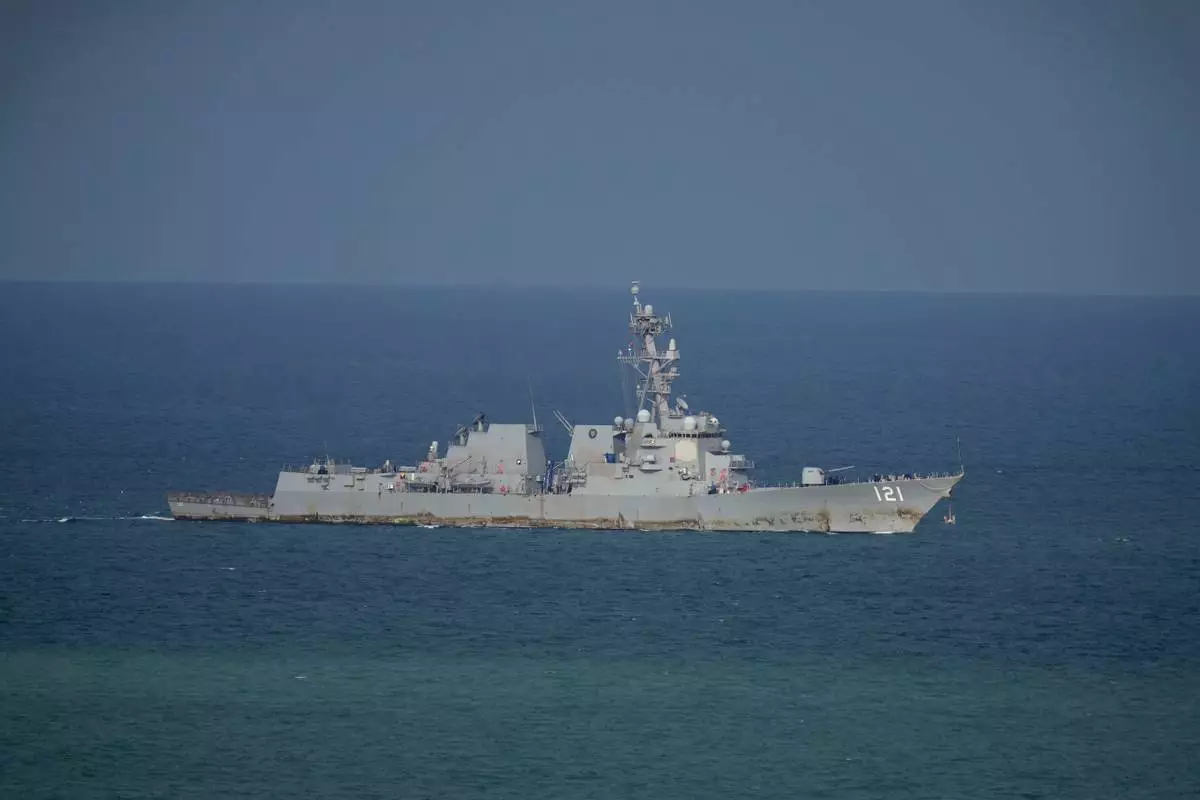
The USS Frank E. Petersen Jr. an Arleigh Burke-class destroyer arrives as part of the USS Abraham Lincoln carrier group at the port in Laem Chabang, Chonburi, Thailand Wednesday, Sept. 2, 2026 (AP Photo/Sakchai Lalit)
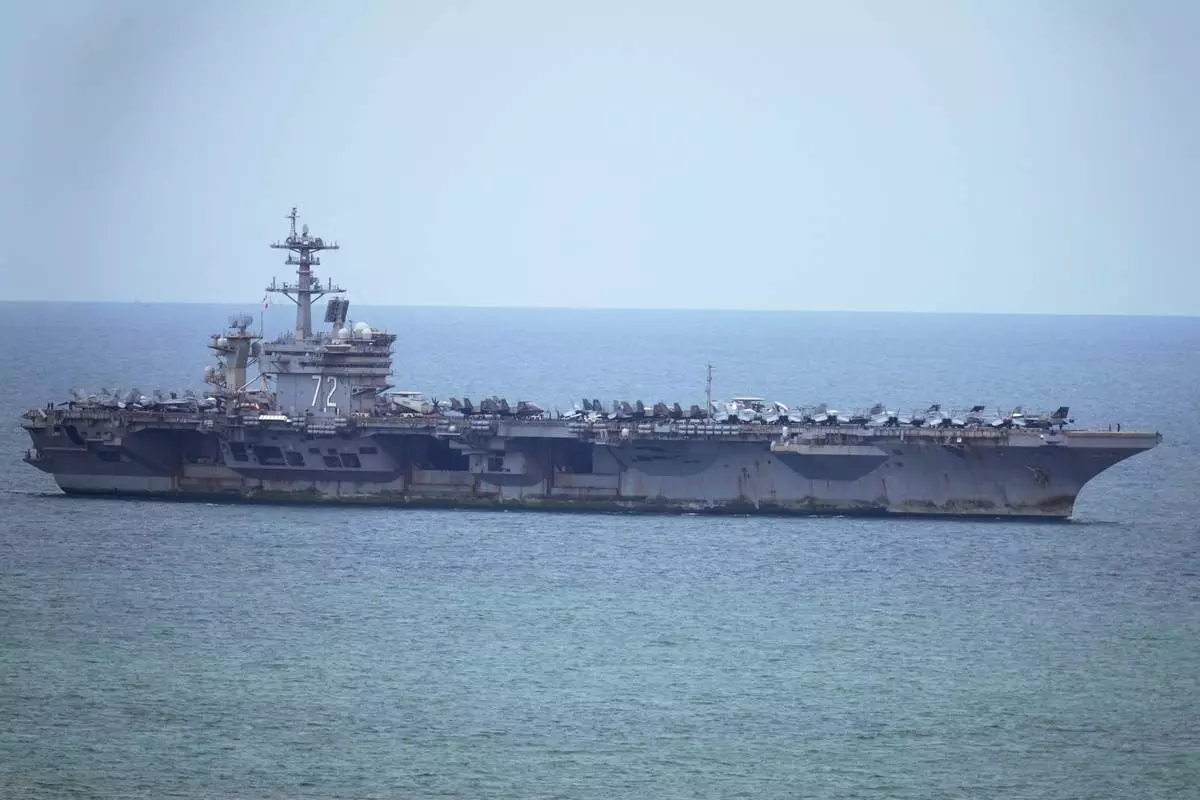
The U.S. Navy aircraft carrier USS Abraham Lincoln arrives at the port in Laem Chabang, Chonburi, Thailand Wednesday, Sept. 2, 2026. (AP Photo/Sakchai Lalit)
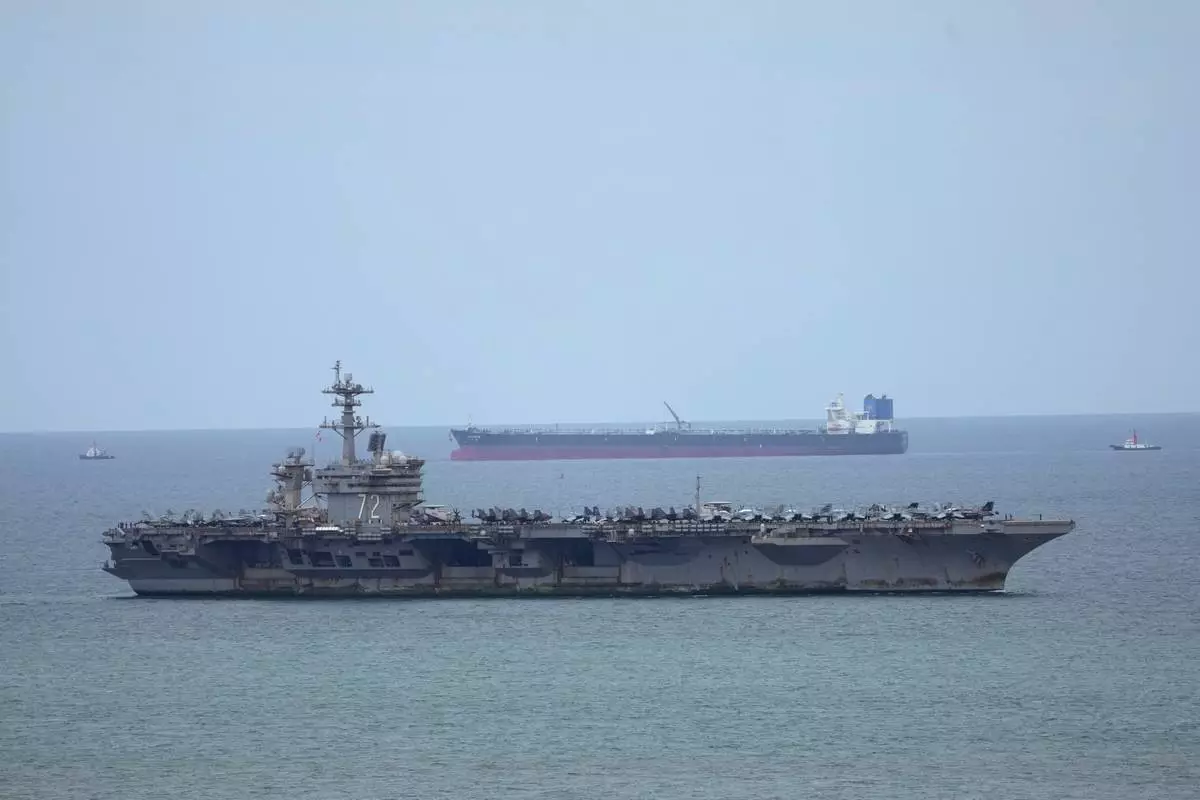
The U.S. Navy aircraft carrier USS Abraham Lincoln arrives at the port in Laem Chabang, Chonburi, Thailand, Wednesday, Sept. 2, 2026. (AP Photo/Sakchai Lalit)
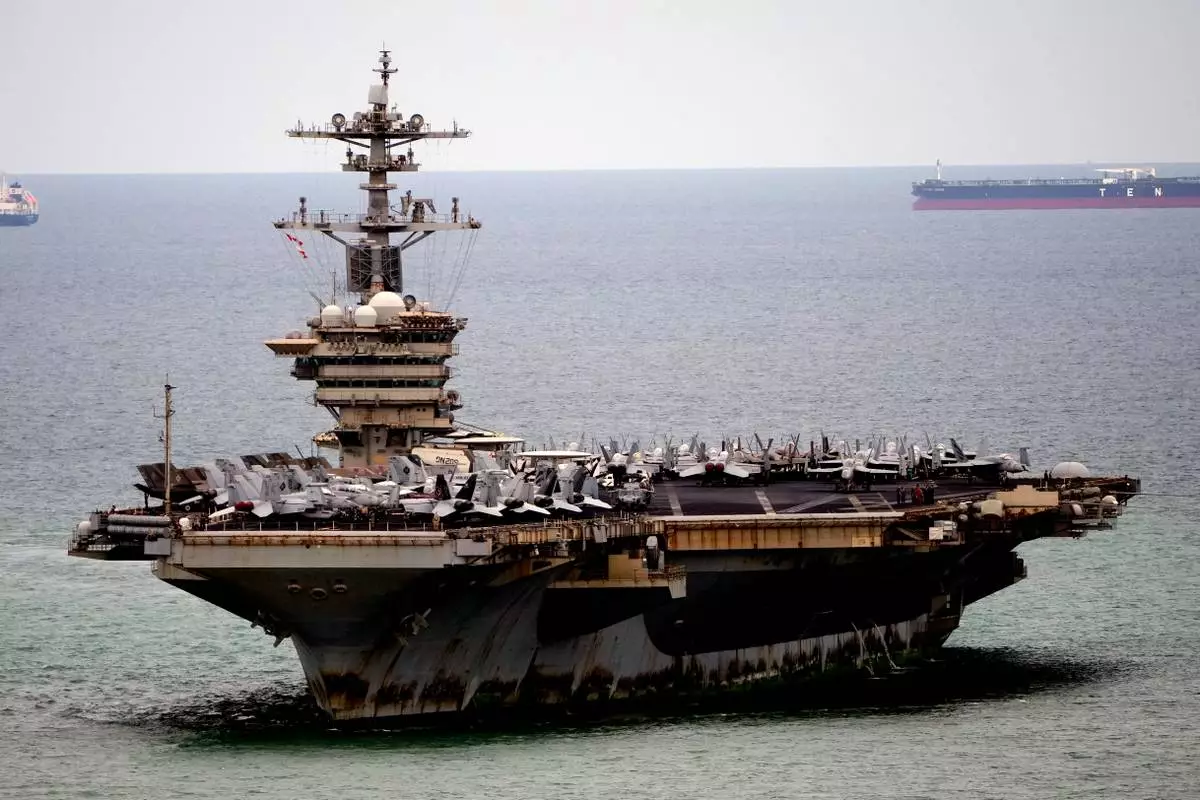
The U.S. Navy aircraft carrier USS Abraham Lincoln arrives at the port in Laem Chabang, Chonburi, Thailand, Wednesday, Sept. 2, 2026. (AP Photo/Sakchai Lalit)
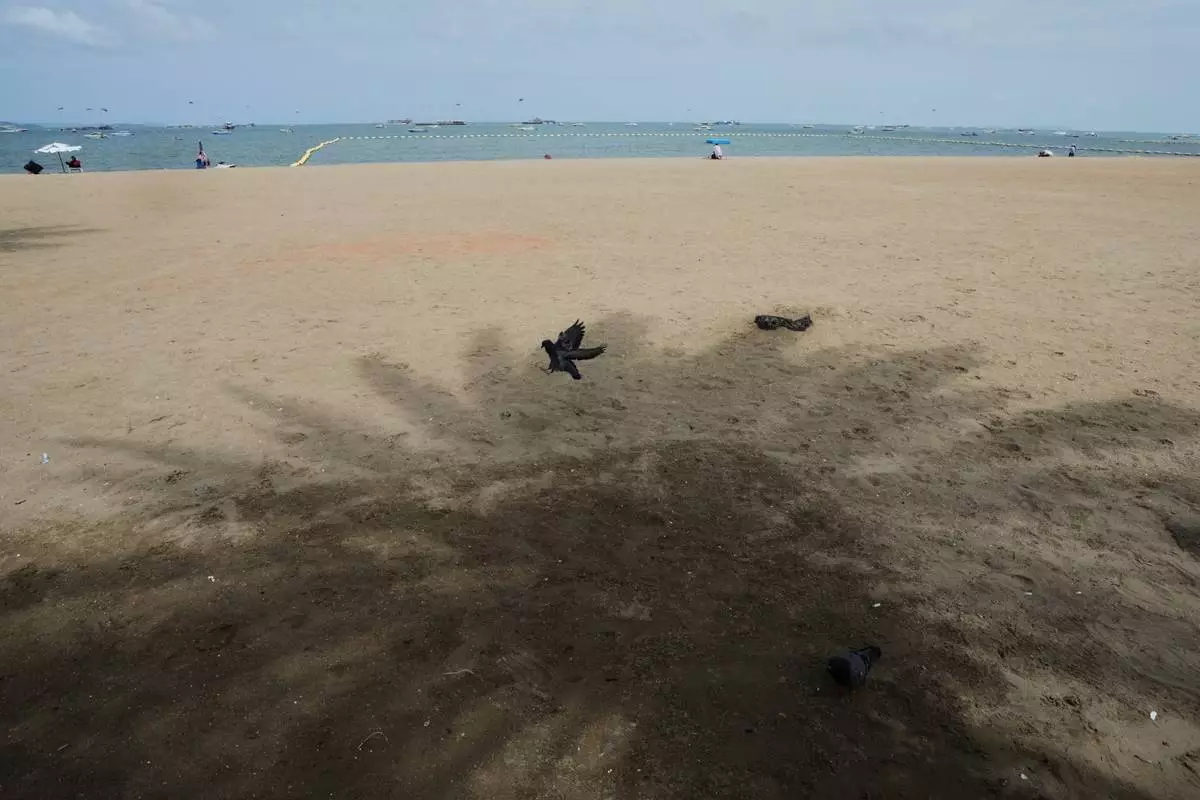
Tourists spend time on a beach in Pattaya, Thailand, Tuesday, Sept. 1, 2026. (AP Photo/Sakchai Lalit)
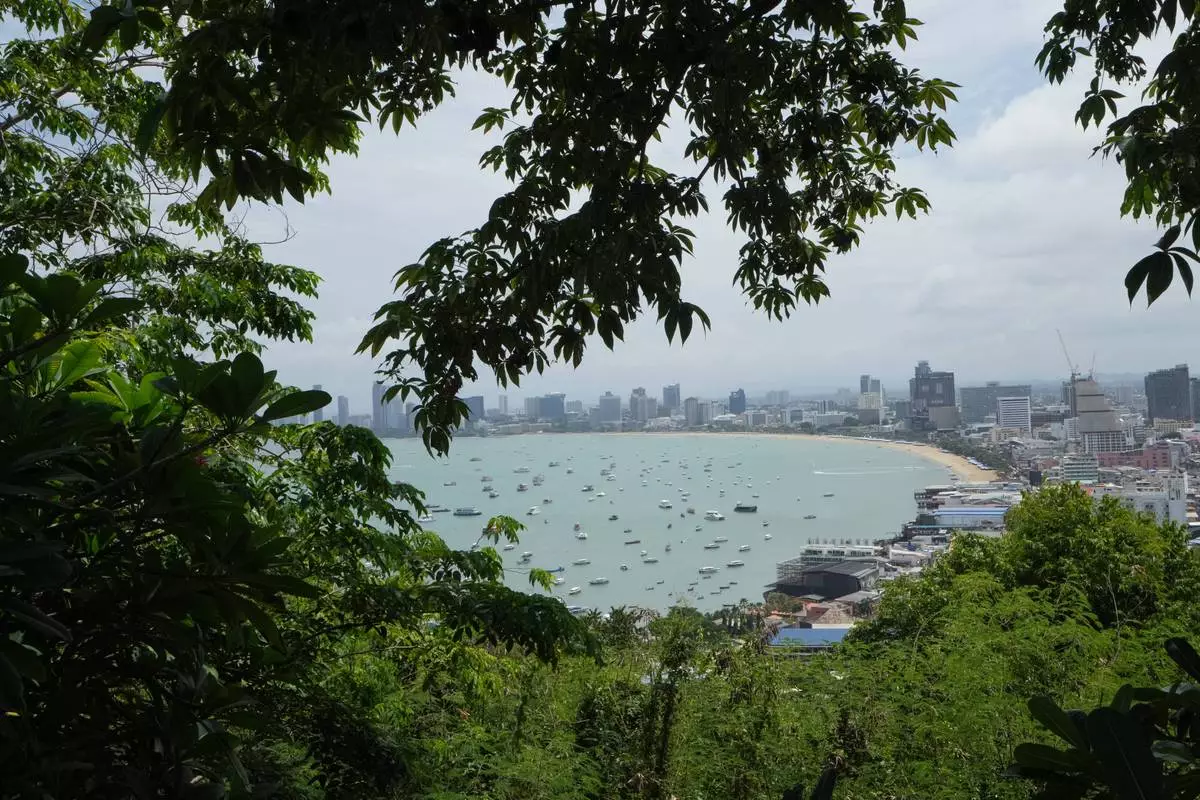
Boats float by Pattaya beach in Thailand, Tuesday, Sept. 1, 2026. (AP Photo/Sakchai Lalit)
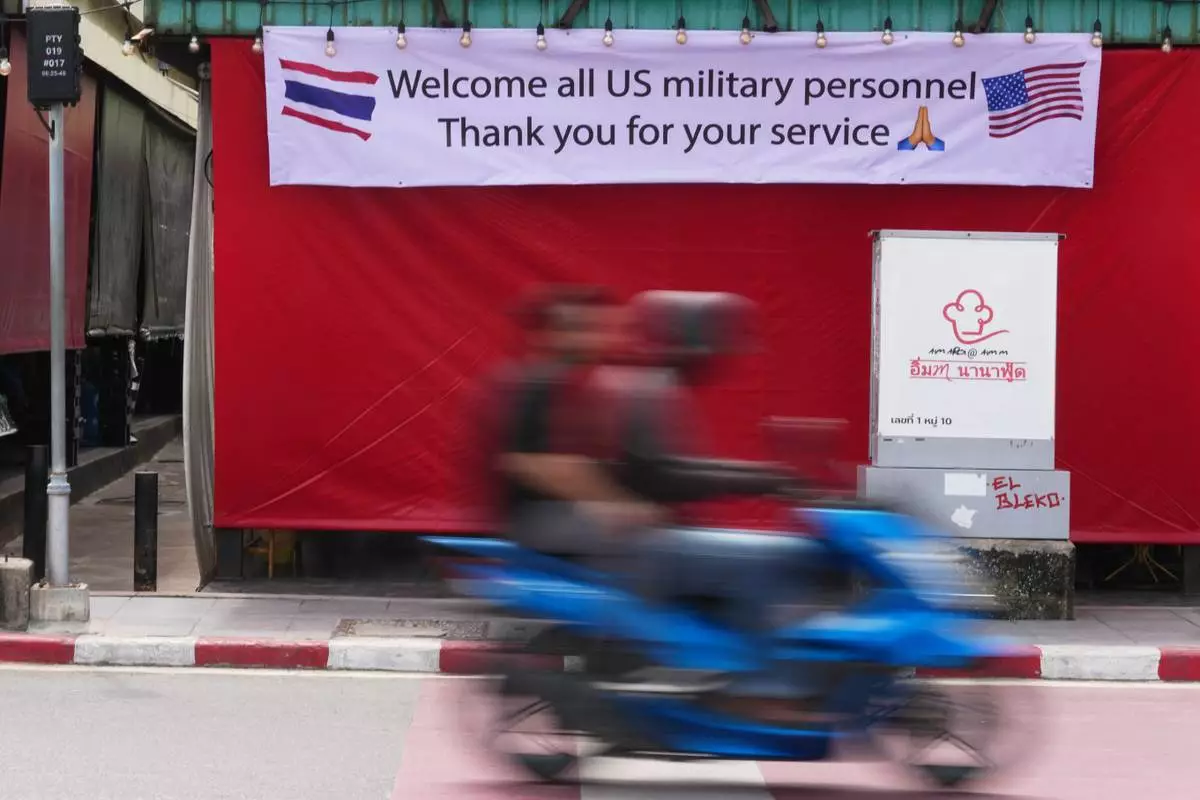
A motorcycle taxi drives past a banner in Pattaya, Thailand, Tuesday, Sept. 1, 2026. (AP Photo/Sakchai Lalit)