Skip to Content Facebook Feature Image

Germany probes suspected sabotage after disruption at 2 power substations

News

Germany probes suspected sabotage after disruption at 2 power substations
News

News

Germany probes suspected sabotage after disruption at 2 power substations

2026-09-02 22:21 Last Updated At:22:30

BERLIN (AP) — Authorities said Wednesday that two incidents that disrupted power distribution systems in eastern and western Germany were being investigated as possible acts of sabotage, with one also being examined for possible links to terrorism.

Multiple explosive devices were found Tuesday morning at a substation near the Jänschwalde coal-fired power plant in Brandenburg in northeastern Germany. Hours later, a short circuit knocked power lines out of service at the Bergheim power substation near Cologne in western Germany — an incident described by security officials as a deliberate act.

Neither incident affected the general power supply in their areas. Authorities are investigating the incidents but have not named any suspects, nor have they said if they could be connected. They say possible suspects could include a foreign power or left-wing extremists.

The developments come as Germany is on high alert after the government on Tuesday blamed Russia for an attempted attack at Leipzig/Halle Airport on Aug. 4 using a drone laden with explosives.

“A substation is the nerve center of our daily lives. Anyone who attacks it isn’t just attacking a tin roof — they’re attacking our country, our economy, our daily lives, and all of us,” said Herbert Reul, the interior minister of North Rhine-Westphalia state, where Bergheim is located. “Critical infrastructure is the Achilles’ heel of our society. Perhaps we haven’t taken this issue seriously enough over the years.”

Brandenburg police said Wednesday on X that they had launched an investigation into the suspected formation of a terrorist organization “in conjunction with causing an explosion involving explosives and the destruction of important work equipment.”

“What we are currently experiencing is a hybrid threat and we therefore cannot rule out the possibility that foreign powers are behind it,” Brandenburg Interior Minister Jan Redmann told public broadcaster ARD.

Emergency responders searched the area for evidence, prompting road closures, authorities said Wednesday. Large groups of investigators combed through the area for clues.

Officials described the explosives as “rocketlike objects equipped with a propellant charge” similar to fireworks. They said there were more than a dozen, but that only one managed to carry a cable into the high-voltage power line to establish a conductive connection to the ground, the German news agency dpa reported.

Bright flashes of light could be seen along several power lines at the Bergheim power substation near Cologne in western Germany on Tuesday evening, said Reul.

“It wasn’t a broken switch, it was intentional. It was a criminal act,” Reul said. “We are investigating two possibilities: sabotage directed by a foreign government and left-wing extremism. We cannot rule out either possibility at this time.”

RWE, the company that operates the power substation, said five coal-fired power plant units with a combined capacity of 4,200 megawatts were taken offline after the incident.

Police said investigators found six launch devices in a nearby cornfield. Chief Detective Michael Esser told reporters that the devices were supposedly designed to use pyrotechnic devices to lift a wire high above the power lines.

The investigation has so far found that “the perpetrators deliberately caused a short circuit by placing conductive material — presumably cables — over the overhead line.”

Security officials from both regions were in contact and closely checking for possible connections between the Brandenburg and Bergheim incidents, Reul said.

Two power plant units were running again by Wednesday afternoon; another one was expected to go back online later on Wednesday. Work is underway to bring the two remaining units back online by the weekend.

German power infrastructure has previously been affected under similar circumstances. Suspected left-wing extremists set fire to high-voltage lines near a power plant in southwest Berlin in January.

Ciobanu reported from Warsaw.

A police helicopter is circling above the Amprion substation in Bergheim, Germany, Wednesday, Sept. 2, 2026. (Henning Kaiser/dpa via AP)

A police helicopter is circling above the Amprion substation in Bergheim, Germany, Wednesday, Sept. 2, 2026. (Henning Kaiser/dpa via AP)

A police vehicle is blocking a road leading to the Jänschwalde power plant in Turnow-Preilack, Germany, Wednesday, Sept. 2, 2026. (Michael Ukas/dpa via AP)

A police vehicle is blocking a road leading to the Jänschwalde power plant in Turnow-Preilack, Germany, Wednesday, Sept. 2, 2026. (Michael Ukas/dpa via AP)

Water vapor rises from the cooling towers at the Jänschwalde power plant in Turnow-Preilack, Germany, Wednesday, Sept. 2, 2026. (Frank Hammerschmidt/dpa via AP)

Water vapor rises from the cooling towers at the Jänschwalde power plant in Turnow-Preilack, Germany, Wednesday, Sept. 2, 2026. (Frank Hammerschmidt/dpa via AP)
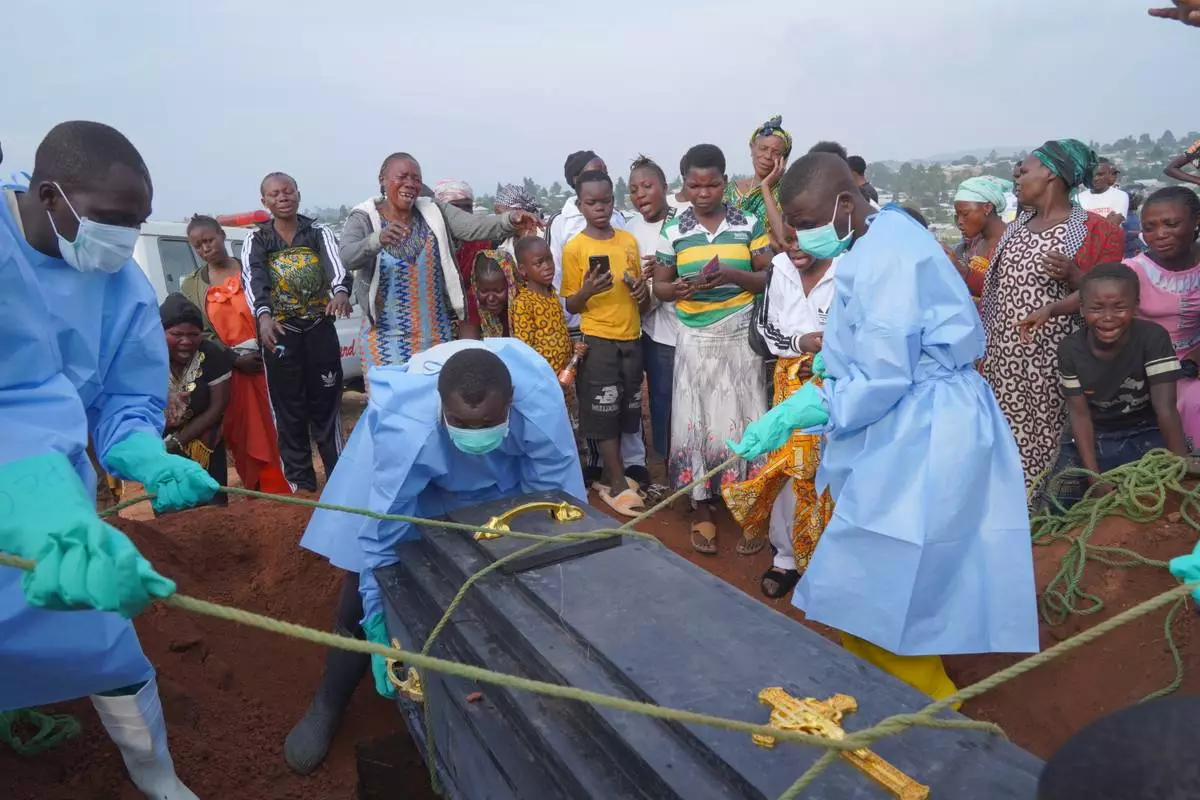
BUNIA, Congo (AP) — Congo’s Ebola outbreak has killed more than 3,000 people out of more than 6,100 confirmed cases, according to the latest government data from Wednesday, as the disease is spreading at an unprecedented speed, faster than efforts to track and slow it.

Data from Congo’s Ministry of Health showed the outbreak has recorded 6,186 confirmed cases, including 3,007 deaths since it was declared a global health emergency in mid-May. It remains the fastest-growing outbreak of Ebola ever.

Jean-Claude Angwanzia, a resident of Bunia, said that he left Mambassa in the epicenter of Ituri province, because he didn’t feel safe. He said that he hardly saw health workers and infected bodies were being mishandled, prompting safety concerns.

“I had to flee the area because of the danger looming over us,” he said.

The pace of the outbreak is putting a strain on people's lives.

Papy Baraka, a public transportation driver in Bunia, has had to cut down on the number of passengers he picks up in his car.

“The disease puts everyone at risk, and daily life has slowed to a crawl. We are afraid,” he said.

Recent weeks have witnessed a surge in cases, with two new health zones affected last week in North Kivu, where the fatality rate is much higher than in the rest of the affected provinces. The virus has spread to six provinces.

The U.S. Centers for Disease Control said Tuesday in a report that the efforts to contain the virus “remained below established response targets” and the fast expansion of the disease across many health zones indicates “uncontrolled expansion of the outbreak.”

The report said that the statistics show that most of the cases are “occurring outside known transmission chains” as a result of the percentage of confirmed new cases coming from only between 15% and 20% of known contacts.

Health workers are struggling under difficult conditions and have gone on strike multiple times to demand their pay.

The disease has continued to spread rapidly for several reasons, including conflict in the eastern region of the country where the outbreak is concentrated, attacks on health workers, miners constantly on the move, and inadequate health infrastructure.

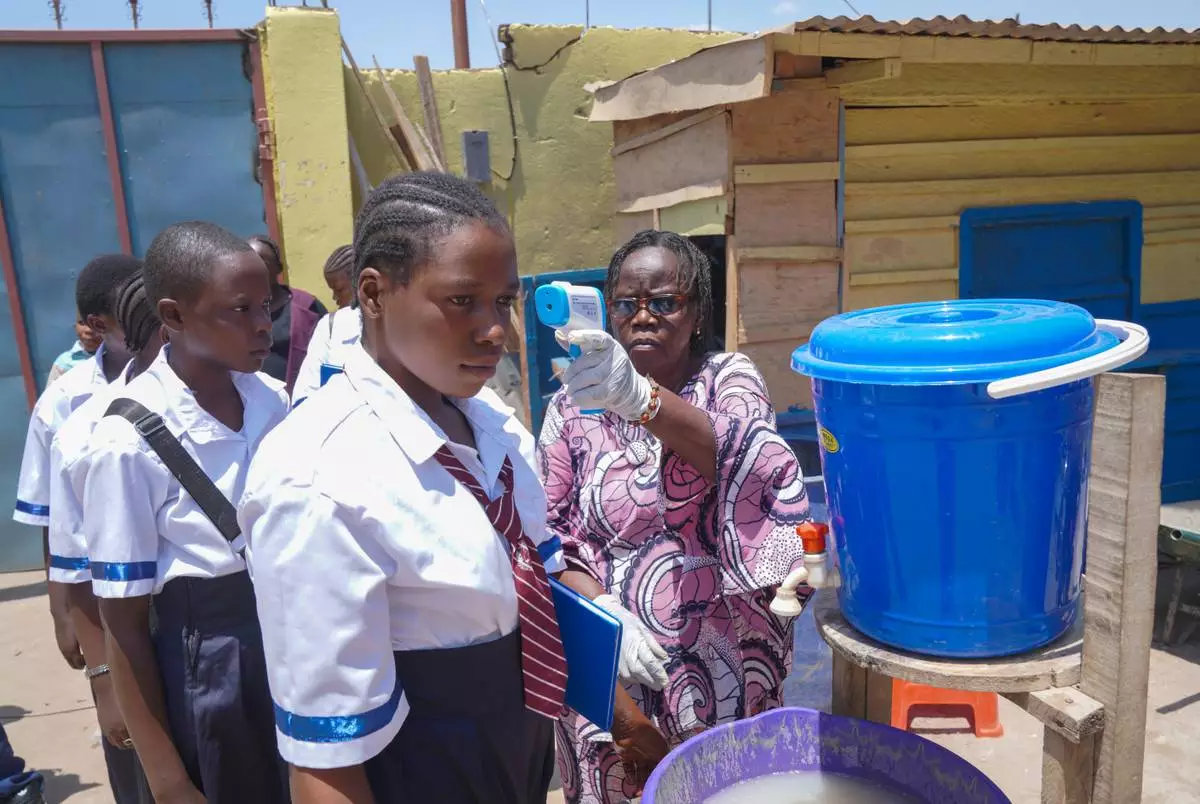
The resumption of school in the middle of the outbreak has also raised concerns about transmission in classrooms.

The World Health Organization said that the outbreak is on track to exceed the deadliest on record, West Africa's regional outbreak between 2014 and 2016, which killed 11,000 people.

The Africa Centers for Disease Control and Prevention said that the outbreak is possibly three times larger than the number of cases recorded, as surveillance and contact tracing are still weak. Despite that, the outbreak has already become Congo's deadliest Ebola outbreak.

There is no vaccine or approved treatment for the rare Bundibugyo virus that has sparked the current outbreak. A couple of vaccines are being developed to tackle the disease.

Last week, the government started the distribution of the Ervebo vaccine to front-line health workers in Kisangani in the northeastern Tshopo region. Ervebo has helped combat previous Ebola disease outbreaks, and WHO said that it could offer some protection.

A school official checks students' temperatures as they enter school, on the first day of the new school year amid the Ebola virus outbreak, in Ituri, Congo, Tuesday, Sept.1, 2026. (AP Photo/Dieudonne Dirole)

A school official checks students' temperatures as they enter school, on the first day of the new school year amid the Ebola virus outbreak, in Ituri, Congo, Tuesday, Sept.1, 2026. (AP Photo/Dieudonne Dirole)

People dressed in protective gear lower into a grave the coffin containing the remains of Jeannine Katusabe, who died of Ebola, during a burial service in Bunia, Ituri province, eastern Congo, Tuesday, Aug. 11, 2026. (AP Photo/Dieudonne Dirole)

People dressed in protective gear lower into a grave the coffin containing the remains of Jeannine Katusabe, who died of Ebola, during a burial service in Bunia, Ituri province, eastern Congo, Tuesday, Aug. 11, 2026. (AP Photo/Dieudonne Dirole)

Recommended Articles