WASHINGTON (AP) — A bipartisan group of U.S. lawmakers is pressing the Army to explain why it told a unit based in Europe to stop specializing in drone warfare, an order that comes as the world's battlefields rapidly evolve and military tactics increasingly rely on uncrewed systems to fight.
The 173rd Airborne Brigade was building its own drones and practicing the kind of warfare that Ukraine has pioneered against Russia and that Iran has fought against the U.S. — warfare that has killed and wounded American troops. The brigade of 600 soldiers was set up in November to be deployed anywhere that drones were needed.
"We have deep concerns that eliminating this specialized drone unit will limit our ability to learn from allies, particularly the Ukrainian Armed Forces, and hinder our efforts to modernize drone warfare at the speed necessary to compete on the modern battlefield," the lawmakers said in a letter shared with The Associated Press.
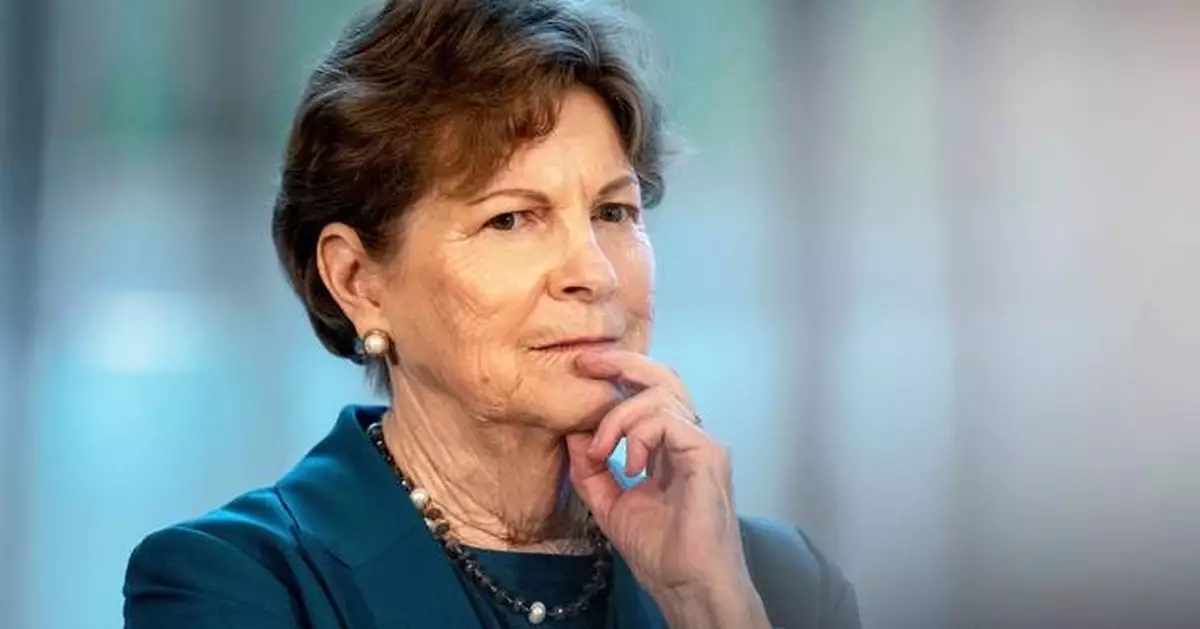
It requests a briefing from the Army to explain its decision and was sent Tuesday to departing Army Secretary Dan Driscoll and Gen. Christopher LaNeve, the Army’s acting chief of staff. It was signed by Democratic Sen. Jeanne Shaheen of New Hampshire, Republican Sen. Thom Tillis of North Carolina, independent Sen. Angus King of Maine and Republican Rep. Mike Turner of Ohio.
“This specialized unit was a prudent response in a moment when the character of warfare is changing faster than a conventional formation’s ability to adapt,” the lawmakers say.
They said they were particularly keen to understand the data, analysis and process behind the change after less than a year of the drone unit being active. They also want to know if the decision was based on guidance from Pentagon leadership or made internally by the Army.
LaNeve, who is filling in as the Army’s top uniformed officer, recently ordered the battalion to refocus on its core mission of being an airborne infantry unit. The move followed Defense Secretary Pete Hegseth’s sudden ousting of the Army’s prior chief of staff, Gen. Randy George.
Integrating drones into the Army’s tactics was a major focus for George. Last year, he and Driscoll had rolled out what they called the Army Transformation Initiative, which pushed to add “modernized (unmanned aircraft systems) into formations.”
George, who became Army chief of staff under President Joe Biden, regularly spoke about the need to accelerate development of new drone systems and get them in the hands of regular soldiers, not just specialized units. Driscoll supported such efforts and focused on cutting the red tape for military contractors to quickly develop more drones.
After George was ousted by Hegseth without explanation in April, he was replaced by LaNeve. This week, Driscoll submitted his own resignation and later said on social media that Wednesday would be his final full day on the job. A reason for his departure was not publicly revealed, but he was an ally of George, and his tensions with Hegseth have been widely reported.
“We are supportive of the transformative initiatives the Army has taken under Secretary Driscoll’s leadership in this area and would like to see that momentum maintained even as uniformed leadership changes,” the lawmakers wrote.
Toropin reported from Nuremberg, Germany.
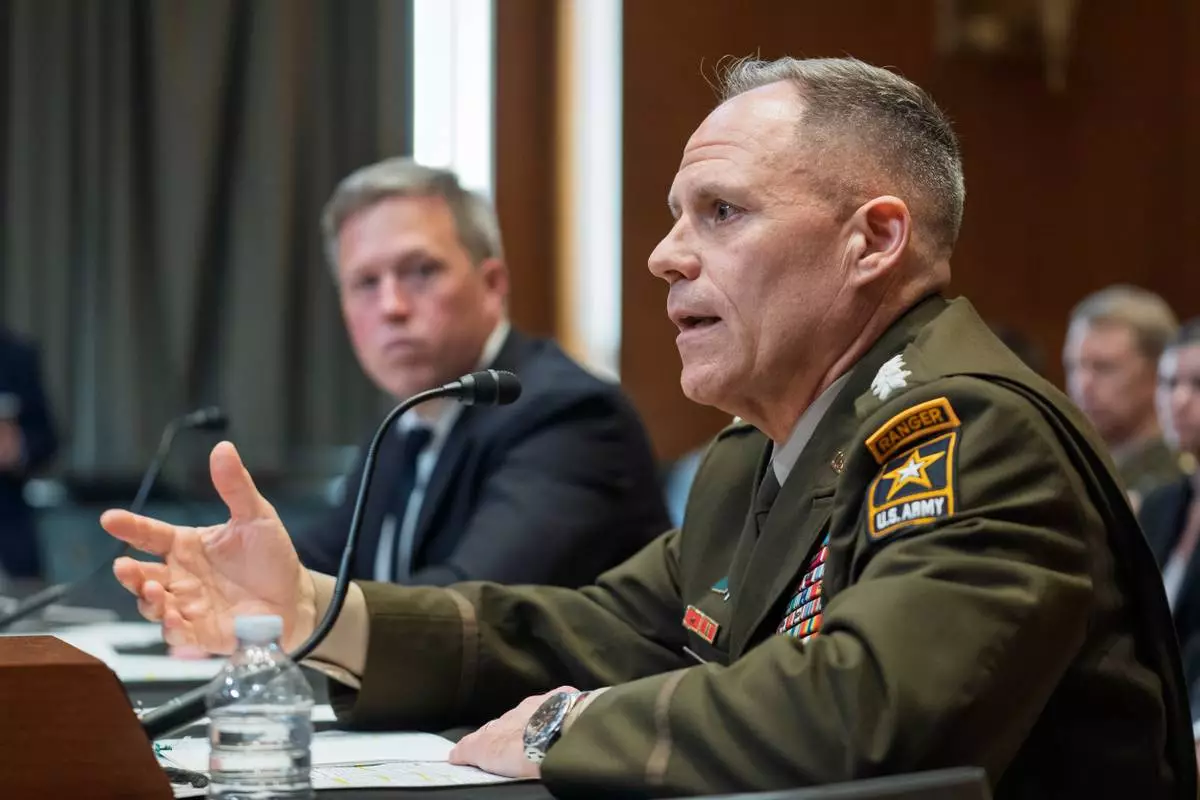
FILE - Gen. Christopher LaNeve, vice chief of staff of the Army, testifies at the Capitol in Washington, May 19, 2026. (AP Photo/J. Scott Applewhite, File)
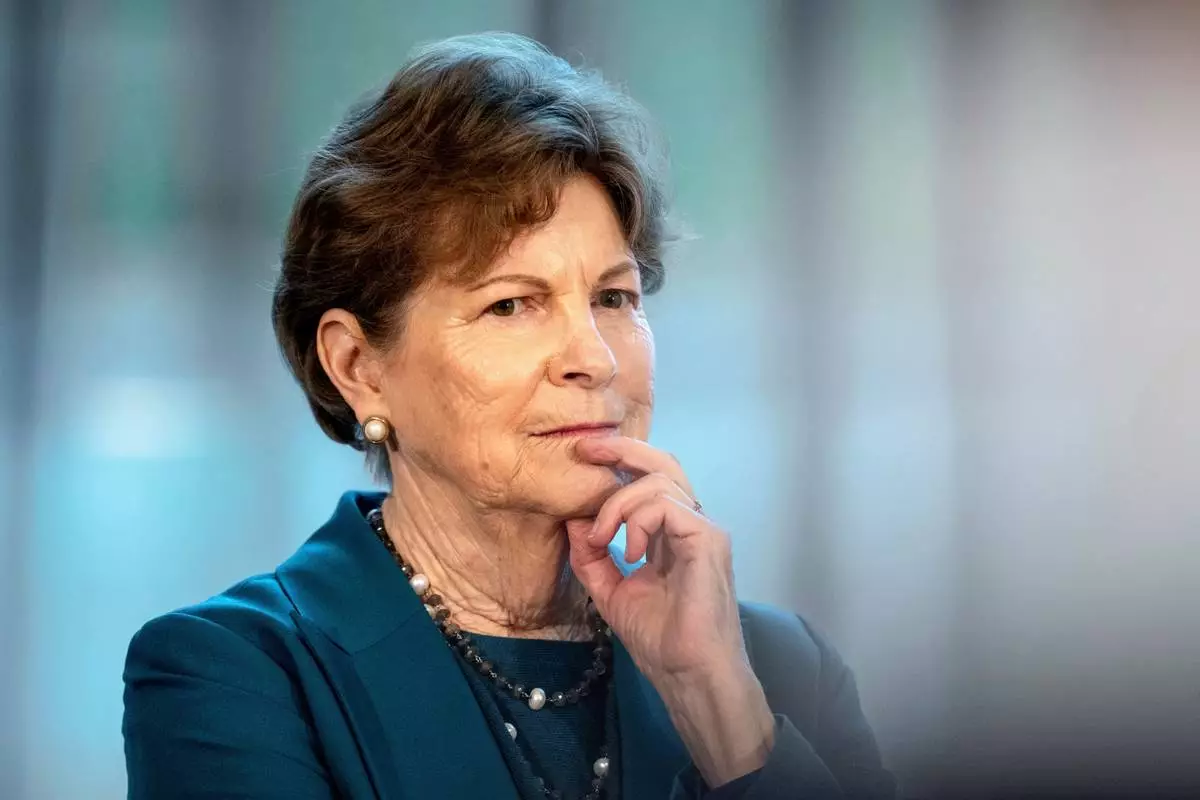
FILE - U.S. Sen. Jeanne Shaheen, D-N.H., looks on during a press conference with the American delegation, consisting of senators and members of the House of Representatives, in Copenhagen, Denmark, Saturday, Jan. 17, 2026. (Ida Marie Odgaard/Ritzau Scanpix via AP, File)
NEW YORK (AP) — Stocks drifted in morning trading on Wall Street Wednesday amid the latest updates on the jobs market and further escalation in the U.S. war with Iran.
The S&P 500 index rose 0.1%. The Dow Jones Industrial Average rose 265 points, or 0.5%, as of 9:58 a.m. Eastern time. The Nasdaq composite fell 0.1%.
Markets were mostly lower in Europe and Asia.
Technology stocks were the biggest force holding the market back. Microsoft fell 0.6% and Broadcom slipped 0.8%. They are among several companies with big market values that tend to have more influence over the market’s broader direction.
Oil prices held relatively steady despite the intensification in the six-month long U.S. war with Iran. The U.S. attacked site in Iran over the weekend, ending a six-month lull in major hostilities and Iran has since retaliated against sites around the Gulf region.
Prices for Brent crude, the international standard, fell 0.5% to $94.71 a barrel. Energy stocks mostly fell. Chevron edged 0.1% lower after confirming it will expand operations in Venezuela.
A surge in oil prices following the start of the U.S. war with Iran fueled a jump in gasoline prices and global shipping costs. The conflict shut down the Strait of Hormuz, through which 20% of the world’s oil is typically shipped.
Higher energy costs worsened inflation that was already stubbornly high amid a volatile U.S. tariff war with much of the world.
Inflation has been squeezing businesses and households at the same time that the mostly resilient jobs market shows signs of weakening. Payrolls processing firm ADP reported that private-sector employment slipped in August, according to its monthly survey. It is just a small snapshot, though, of the broader jobs market and follows a government report on Tuesday that showed U.S. job openings rose in July.
The big focus this week will be the government’s broader monthly employment report for August, which will be released Friday. The previous report for July showed that the jobs market stalled, with employers cutting positions.
Both inflation and the jobs market have been key focuses for Wall Street and the Federal Reserve.
The Fed is trying to balance its task of supporting employment and taming inflation. Wall Street expects the central bank to raise interest rates before the year ends in an effort to cool inflation, which remains well above 3%. The Fed has a stated goal of cooling inflation to a target of 2%.
The bond market has been selling off, which is a signal that it expects borrowing costs to rise.
The yield on the 10-year Treasury, which tends to impact mortgage rates, held steady at 4.79% from late Tuesday. It has been rising steadily throughout the year and was as low as 4.20% at the beginning of 2026.
The yield on the 2-year Treasury, which closely tracks expectations for Federal Reserve moves on interest rates, held steady at 4.39% from late Tuesday. It is significantly higher for the year, though, and was as low as 3.50% at the beginning of 2026.
Investors are also betting on a 66% chance that the Fed will raise rates at its upcoming meeting in September.
The Fed’s position is growing more complicated. Raising the benchmark interest rate would help cool inflation by making borrowing costs higher and slowing the economy. Doing so, though, could also hurt the employment market at a time when it is seemingly already weakening.
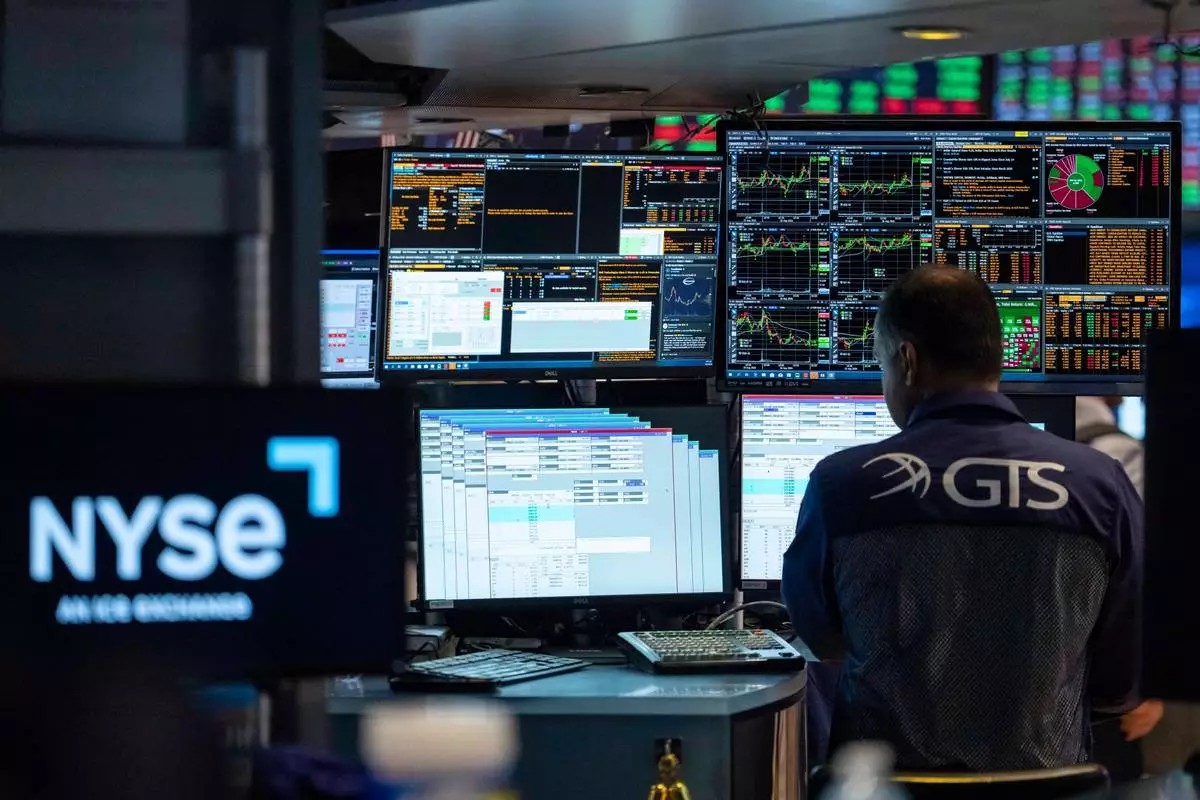
Specialists Dilip Patel works on the floor of the New York Stock Exchange, Thursday, Aug. 27, 2026, in New York. (AP Photo/Yuki Iwamura)
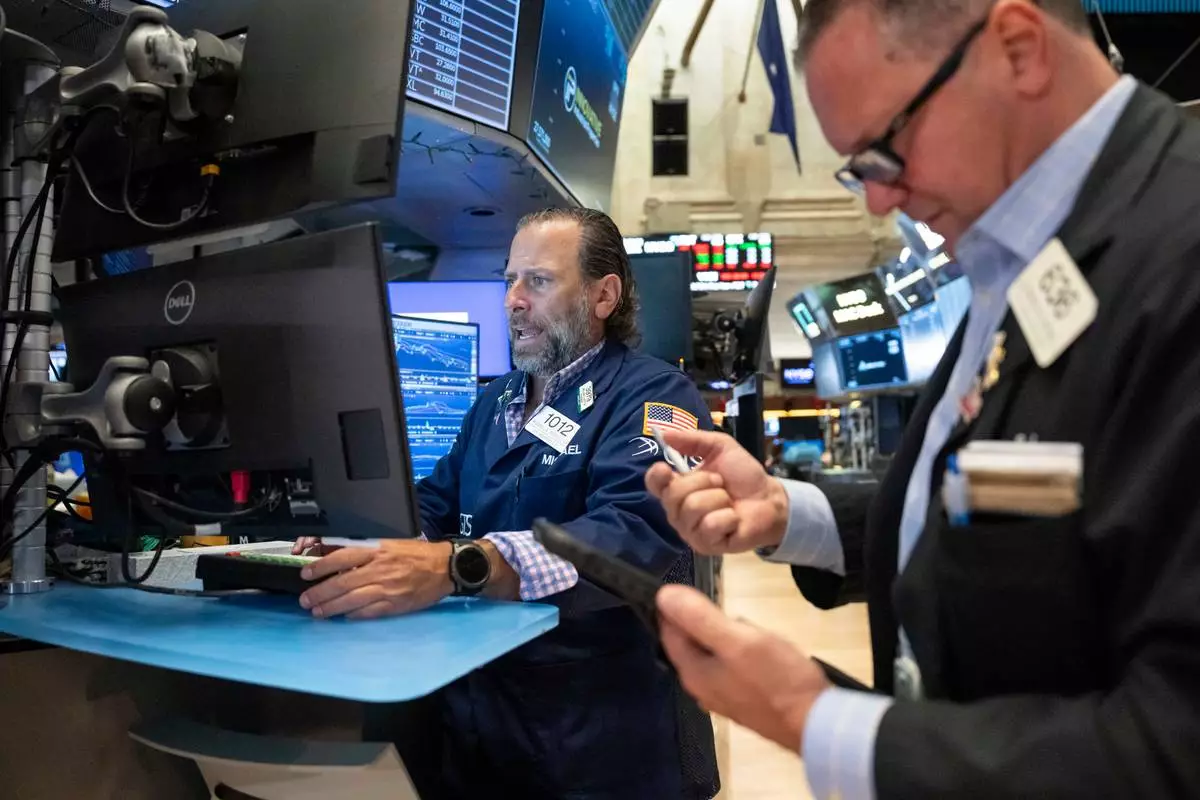
Specialist Michael Pistillo works on the floor of the New York Stock Exchange, Thursday, Aug. 27, 2026, in New York. (AP Photo/Yuki Iwamura)
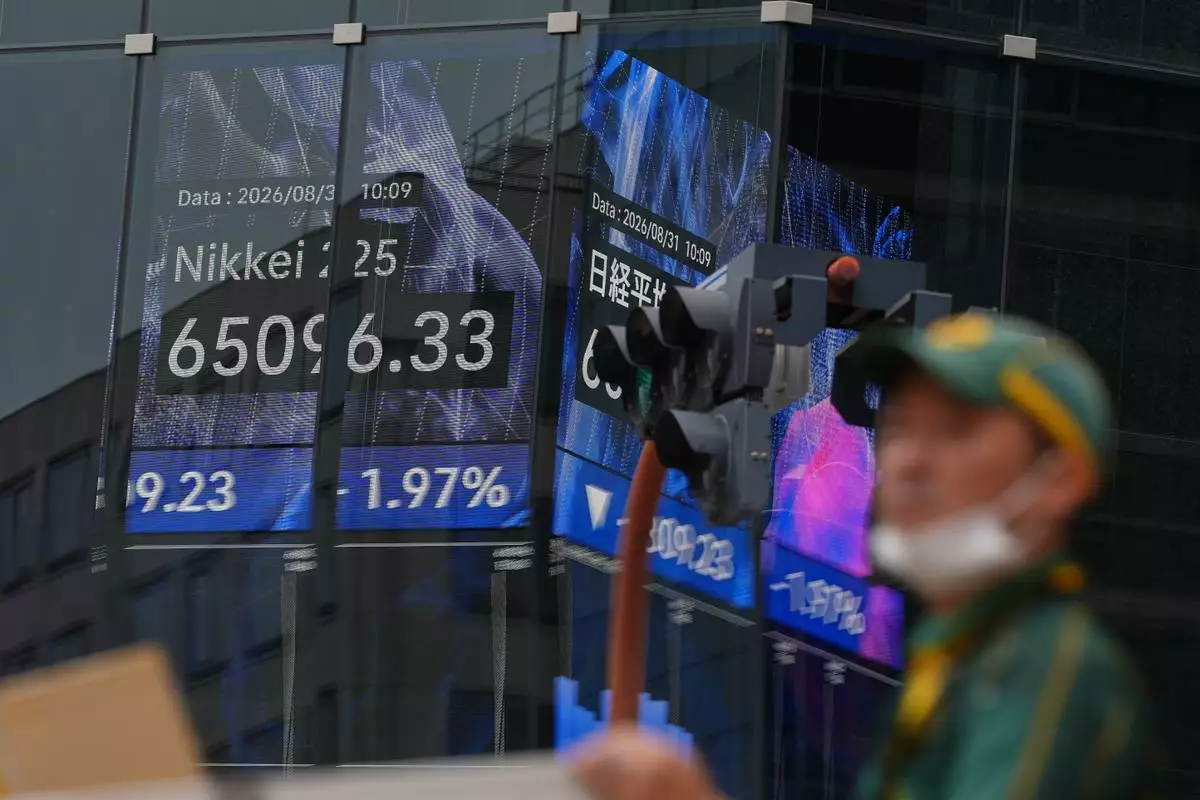
A person walks in front of an electronic stock board showing Japan's Nikkei index at a securities firm Monday, Aug. 31, 2026, in Tokyo. (AP Photo/Eugene Hoshiko)

A person walks in front of an electronic stock board showing Japan's Nikkei index at a securities firm Monday, Aug. 31, 2026, in Tokyo. (AP Photo/Eugene Hoshiko)

Currency traders work at the foreign exchange dealing room of the Hana Bank headquarters in Seoul, South Korea, Wednesday, Sept. 2, 2026. (AP Photo/Ahn Young-joon)

Currency traders work near a screen showing the Korea Composite Stock Price Index (KOSPI) and the foreign exchange rate between U.S. dollar and South Korean won at the foreign exchange dealing room of the Hana Bank headquarters in Seoul, South Korea, Wednesday, Sept. 2, 2026. (AP Photo/Ahn Young-joon)

Currency traders work at the foreign exchange dealing room of the Hana Bank headquarters in Seoul, South Korea, Wednesday, Sept. 2, 2026. (AP Photo/Ahn Young-joon)