NEW YORK (AP) — FIFA is under fresh scrutiny for sky-high World Cup ticket prices and sales tactics that fans say left them with worse deals than they wanted.
The attorneys general in New York and New Jersey, which is hosting eight World Cup matches including the final, announced Tuesday that they are investigating whether FIFA's ticketing practices violated consumer protection laws.
They have sent subpoenas to soccer’s global governing body demanding information on a range of ticketing issues, including FIFA's use of “variable pricing” models that sent ticket prices soaring for most matches and redrawn stadium maps that fans say relocated their seats far from the pitch.
The attorneys general, working with the New York City Department of Consumer and Worker Protection, said they are focused primarily on ticketing practices for matches at MetLife Stadium in East Rutherford, New Jersey.
“New Yorkers have been waiting years for the World Cup to come to their backyard, and they deserve a fair shot at affordable tickets," New York Attorney General Letitia James said. “No one should be manipulated into paying sky-high prices for seats, and fans should be able to trust that the tickets they purchase will be the ones they receive."
New Jersey Attorney General Jennifer Davenport accused FIFA of turning the act of buying a World Cup ticket “into a gauntlet of confusion, fake scarcity, and impossibly high prices.” It's an honor for New Jersey to host the World Cup, she said, "but the event is not an invitation to exploit our residents and visitors."
FIFA declined to comment.
The World Cup kicks off June 11 with matches in Mexico City and Guadalajara, Mexico. The first match at the roughly 82,000-seat MetLife Stadium — temporarily renamed New York New Jersey Stadium for the event — pits Brazil and Morocco on June 13.
Some seats for the July 19 final are going for nearly $33,000.
Last week, New York City Mayor Zohran Mamdani announced that 1,000 tickets — about 150 tickets for each MetLife Stadium game, excluding the final — will be made available to city residents via a lottery system at a cost of $50 each.
FIFA previously made some $60 tickets available for every match, distributing them through the national federations of the teams playing in the games.
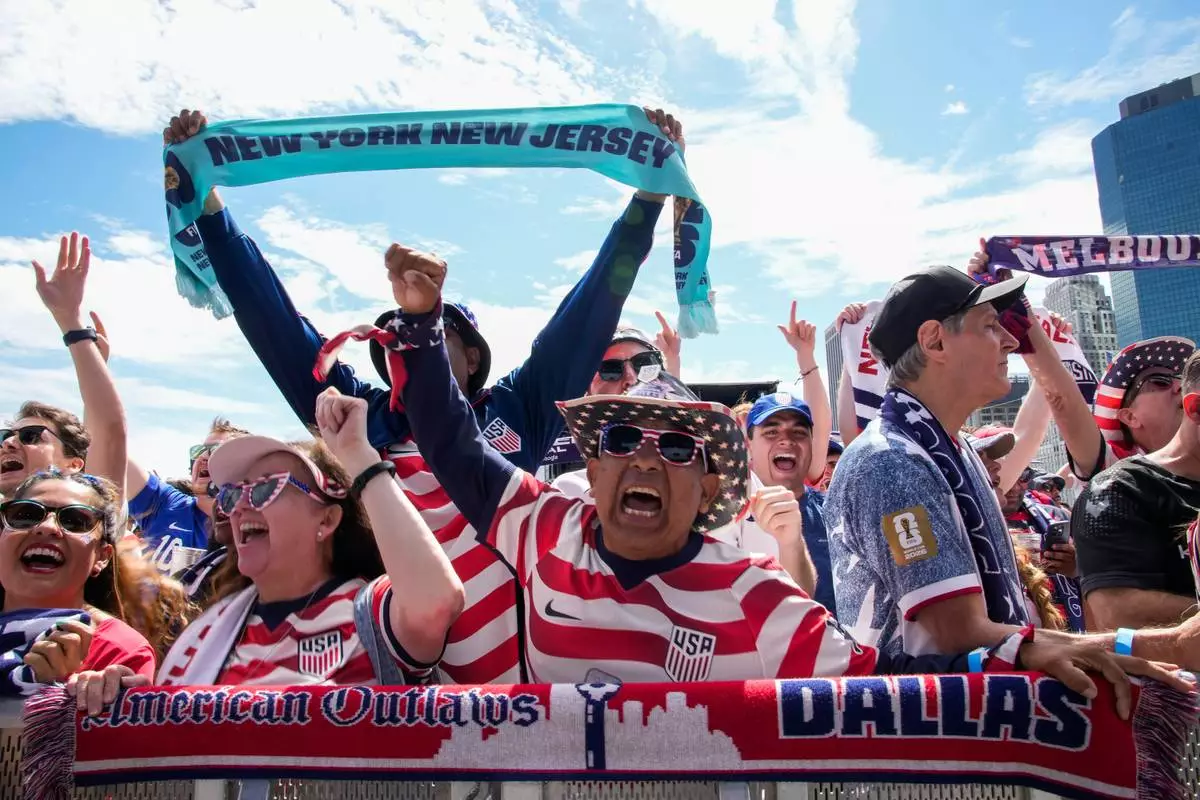
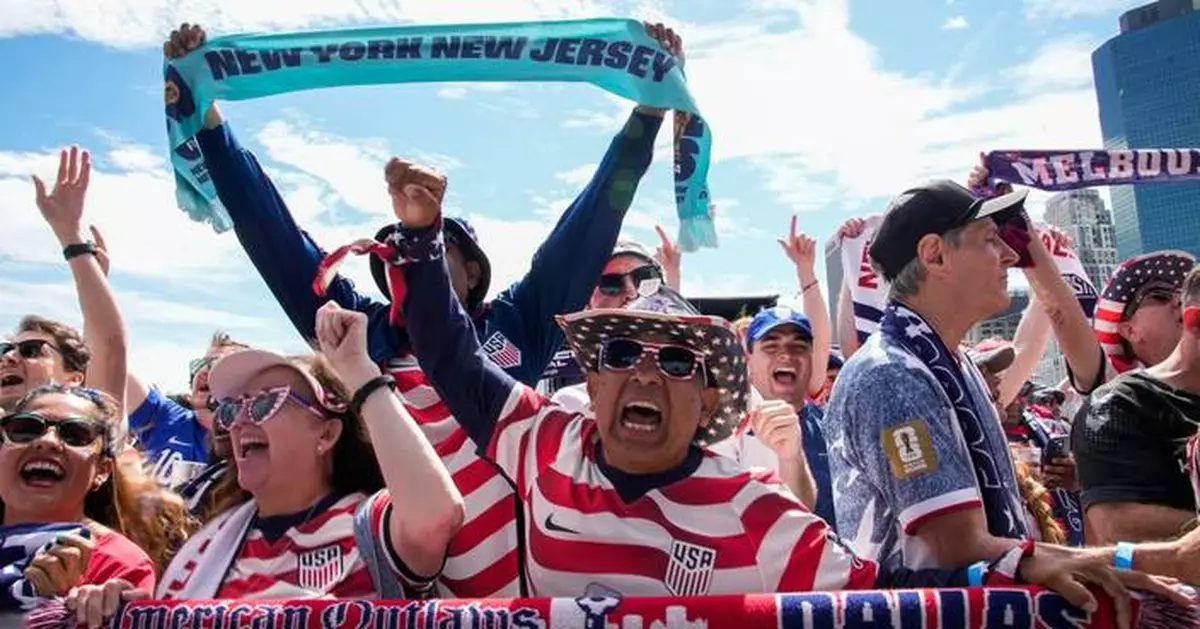
Fans celebrate during the announcement of the United States men's national soccer team roster, Tuesday, May 26, 2026, in New York, ahead of the FIFA World Cup soccer tournament. (AP Photo/Eduardo Munoz Alvarez)
LA PAZ, Bolivia (AP) — Less than six months ago, the inauguration of centrist President Rodrigo Paz seemed to usher in a new reality for Bolivians reeling from the worst economic crisis in a generation and fed up with two decades of almost uninterrupted socialist leadership.
Long lines at gas stations vanished as pro-business Paz secured fuel imports. Bolivia's chronically depreciating currency surged on the black market as stock markets swooned over his plan to shrink the budget deficit. After years of diplomatic isolation, Bolivians took pride in the dozens of international delegations that celebrated Paz's swearing-in as he repaired strained relations with the United States and regional powers.
Now, that optimism has been replaced by dread as violent protests shake the government of the Trump administration ally. Demonstrators wielding dynamite have blockaded major cities, leading to shortages of food, fuel and medical supplies. Indigenous and rural Bolivians who backed Paz's campaign promises to upend the status quo while protecting social welfare have called on him to step down.
Here are five things to know about the protests roiling Bolivia, as Paz threatened Wednesday to declare a state of emergency that could pave the way for a harsh security crackdown.
“If they do not want dialogue ... then there is no other way,” he said of the protesters in a national address Wednesday, while insisting that he preferred to negotiate. “We have deaths because of the blockades. Someone has to answer for that.”
Former supporters of Bolivia's long-dominant Movement Toward Socialism party, known by its Spanish acronym MAS, who helped vault Paz to power, have increasingly voiced concern that his government doesn't represent them.
Shortly after entering office, Paz struck deals with right-wing parties in Congress. He shut out the populist vice president widely seen as responsible for his electoral success.
He named no members of Bolivia’s Indigenous majority to high-level posts. He supported a land reform bill to boost agribusiness that Indigenous farmers said put them at risk of eviction. He scrapped fuel subsidies, sending prices surging by nearly 90%. Motorists complained the gasoline was contaminated and ruined their cars.
To blunt the blow of price hikes from the Iran war, Paz offered cash transfers to vulnerable families. He hiked the minimum wage 20%. He repealed the controversial land law. But he also rebuffed demands for further salary increases, infuriating the national labor union.
“It's not that from one day to the next he was asked to resign,” said Mirian Huarina, a protest leader. “He had time to provide a solution to these problems and to the demands of different social sectors.”
By a quirk of geography, barriers thrown up along the slopes leading down to Bolivia's seat of government, La Paz, can completely isolate more than 1.6 million residents of the city and its surroundings, or over 13% of the country's population.
Indigenous movements have long deployed the siege strategy, popularized during a late-18th-century rebellion against Spanish colonialism.
In 2003 and 2005, demonstrators blockading La Paz in protest over foreign designs on their country's natural gas reserves toppled two consecutive pro-Western governments, paving the way for the rise of former President Evo Morales, founder of MAS.
As road blocks strangling La Paz enter their fourth week, thousands of trucks loaded with food and other essentials, like oxygen supplies for hospitals, remain stranded on highways. Beef, eggs and fruit have vanished from supermarket shelves. Subsidized chicken is being flown into La Paz via military aircraft. The government says at least four people have died for lack of medical care; hospitals are still operating, but staff are rationing supplies and focusing on critical cases.
Shop owners and transport workers opposed to the protests are ramping up pressure on Paz to reopen the roads at any cost. Banging empty pots as they marched downtown on Tuesday, they chanted, "We want solutions! We can't take it anymore!”
Although security forces have used tear gas to disperse demonstrators and arrested over 120 people, Paz has so far resisted calls to deploy greater force to break the blockades. Cognizant that the deaths of protesters at the hands of police may only inflame tensions, Paz has insisted on dialogue as the best way out of the crisis.
Paz has offered bonuses to teachers, reached agreements with some protesting miners and convened a council on Wednesday to include underrepresented social sectors in economic decision-making. He slashed his own salary in half, fired his unpopular labor minister and appointed a lawyer from the country's Indigenous majority to the post.
Calls are growing for Paz to impose a state of emergency, which would put the military in charge of restoring public order for 60 days. After Congress passed a law lifting restrictions on the army’s role in quelling civil unrest late Tuesday, Paz now has the constitutional authority to invoke this power. He has described it as an option of last resort.
Morales, the former union leader who became Bolivia’s first Indigenous president in 2006 and ruled for an unprecedented 14 years, is calling for early elections.
“Paz only has two paths left: a suicidal decision like militarization or ... an election in the next 90 days," he wrote on X.
For almost two years now, Morales has been hiding out in Bolivia's central coca-growing Chapare region, evading an arrest warrant on human trafficking charges relating to having sex with a 15-year-old girl. He rejects the allegations as politically motivated.
Some of the unions and Indigenous groups rallying against Paz are allied with Morales, whose attempts to hold onto power longer than the constitution allowed alienated much of his once-vast base and led to his fraught 2019 ouster.
Morales' loyalists — hardened protesters from the coca-growing unions — joined the protest movement last week to demand Paz step down.
Paz's government has accused Morales of funding the demonstrations, which he denies.
Trump-allied governments that recently swept to power across Latin America — from Argentina and Chile to Honduras and Costa Rica — have pledged their support for Paz and denounced the protests as destabilizing.
President Gustavo Petro of Colombia — among the few leftist leaders still in power in the region — defended the protests as a “struggle for Latin American dignity." Bolivia expelled the Colombian ambassador in response.
The United States has struck a hard line, characterizing the demonstrations as a coup attempt.
“We will not allow criminals and drug traffickers to overthrow democratically elected leaders in our hemisphere,” U.S. Secretary of State Marco Rubio said last week.
The U.S. Embassy in La Paz said it was closing Wednesday and Thursday due to the unrest.
DeBre reported from Buenos Aires, Argentina.
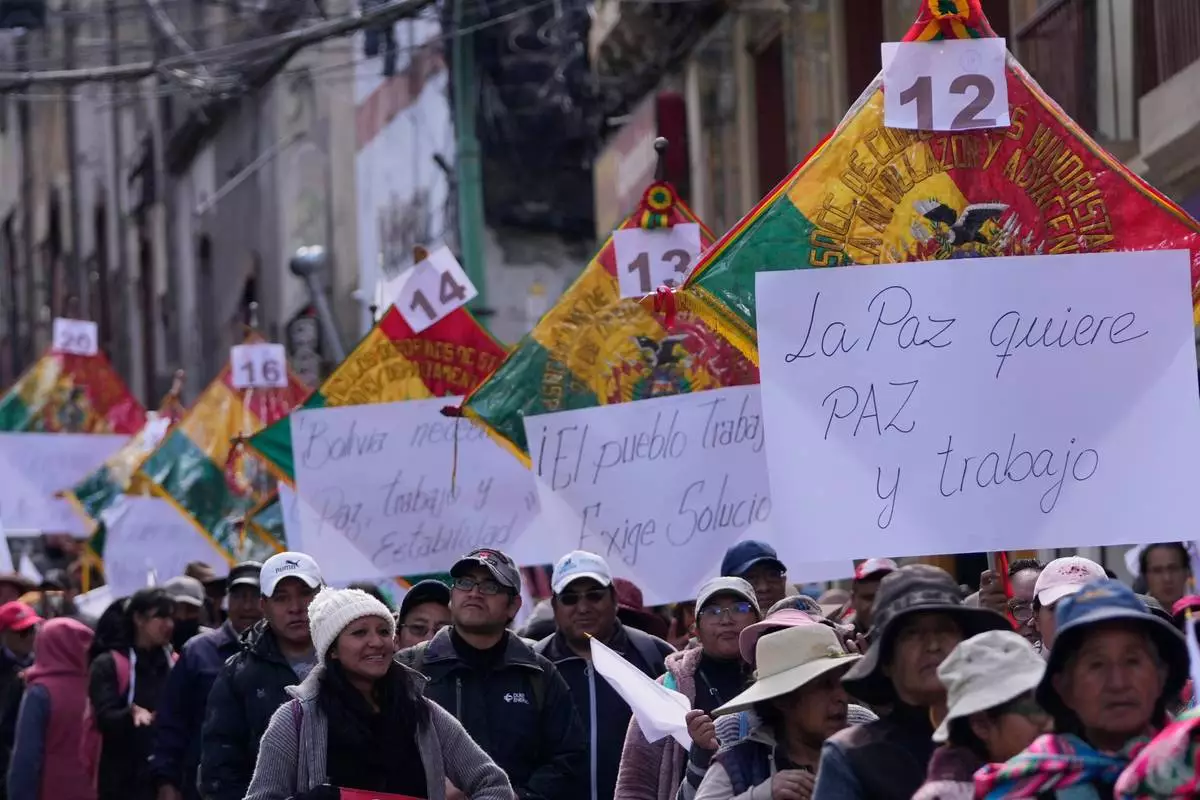
Vendors hold signs reading in Spanish, "La Paz wants peace and work," during a march against protesters who were blocking access to the city, in La Paz, Bolivia, Tuesday, May 26, 2026. (AP Photo/Juan Karita)
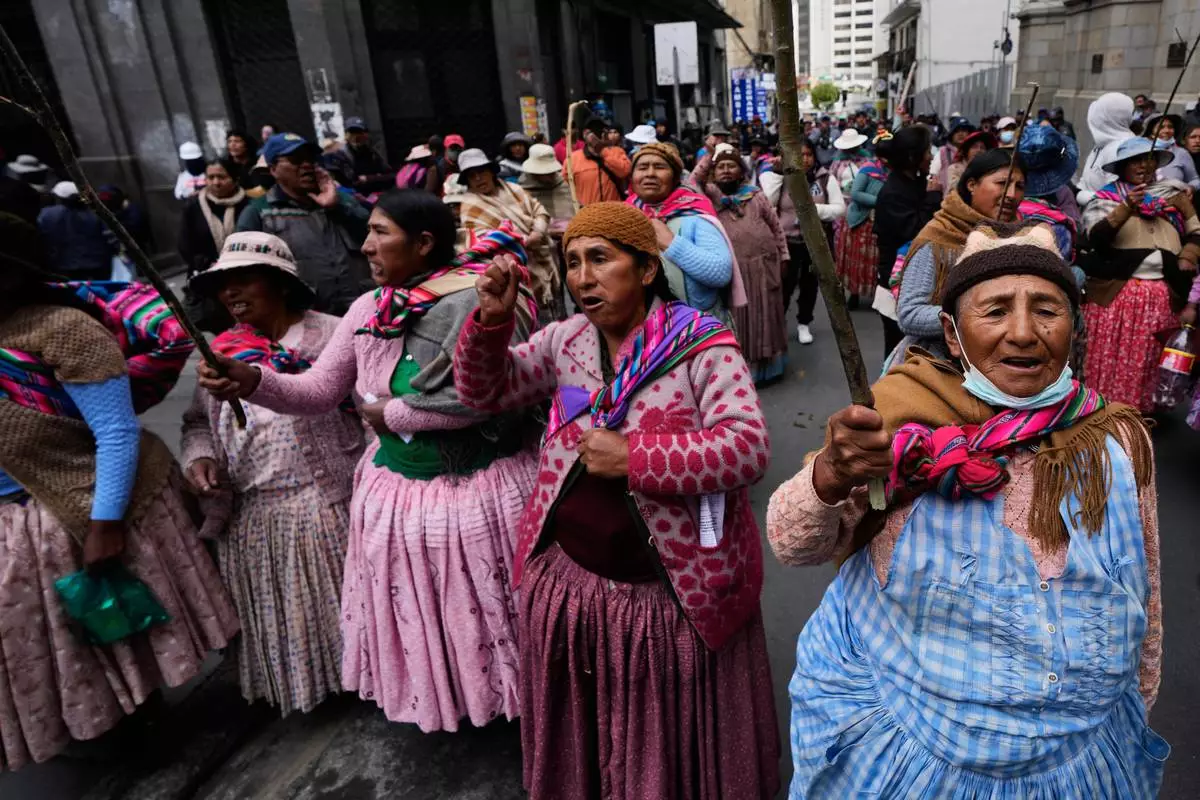
Demonstrators shout slogans during an anti-government protest in La Paz, Bolivia, Monday, May 25, 2026. (AP Photo/Juan Karita)
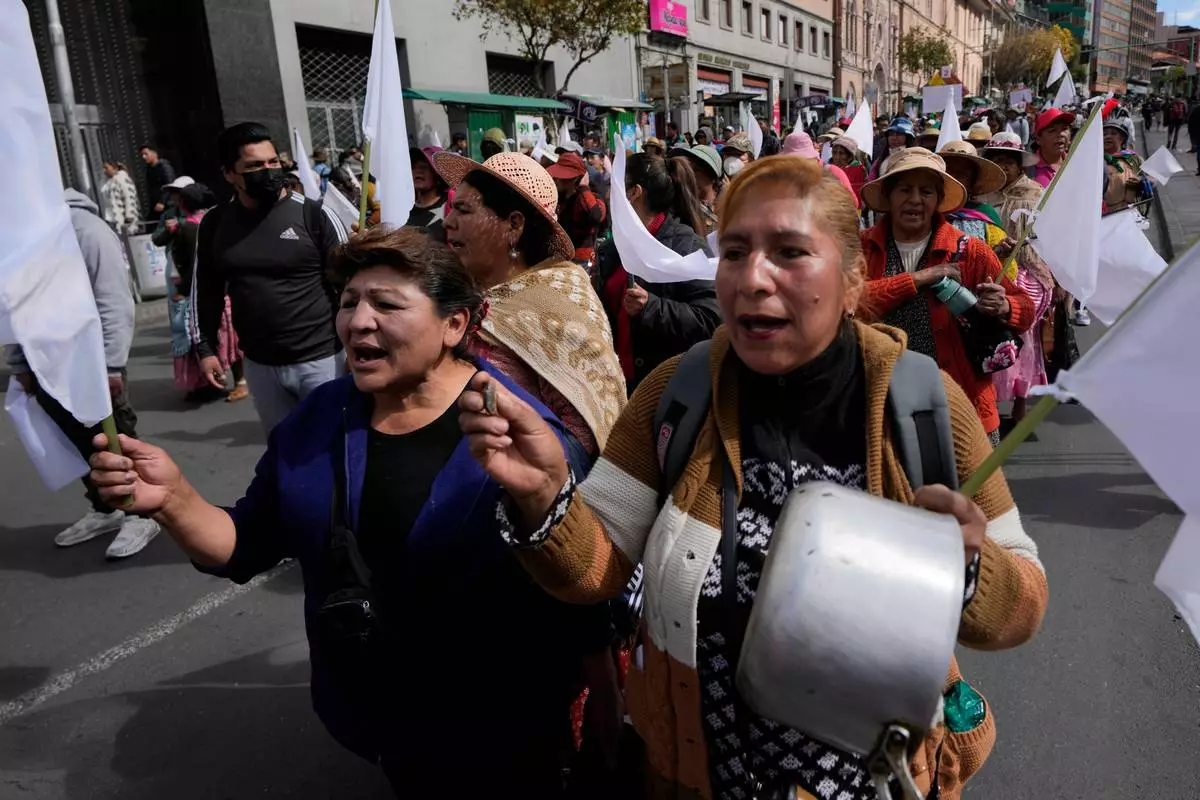
Vendors shout slogans during a march against protesters who are blocking access to the city, in La Paz, Bolivia, Tuesday, May 26, 2026. (AP Photo/Juan Karita)