Skip to Content Facebook Feature Image

5 things to know about the protests challenging Bolivia's new president

News

5 things to know about the protests challenging Bolivia's new president
News

News

5 things to know about the protests challenging Bolivia's new president

2026-05-28 05:28 Last Updated At:05:40

LA PAZ, Bolivia (AP) — Less than six months ago, the inauguration of centrist President Rodrigo Paz seemed to usher in a new reality for Bolivians reeling from the worst economic crisis in a generation and fed up with two decades of almost uninterrupted socialist leadership.

Long lines at gas stations vanished as pro-business Paz secured fuel imports. Bolivia's chronically depreciating currency surged on the black market as stock markets swooned over his plan to shrink the budget deficit. After years of diplomatic isolation, Bolivians took pride in the dozens of international delegations that celebrated Paz's swearing-in as he repaired strained relations with the United States and regional powers.

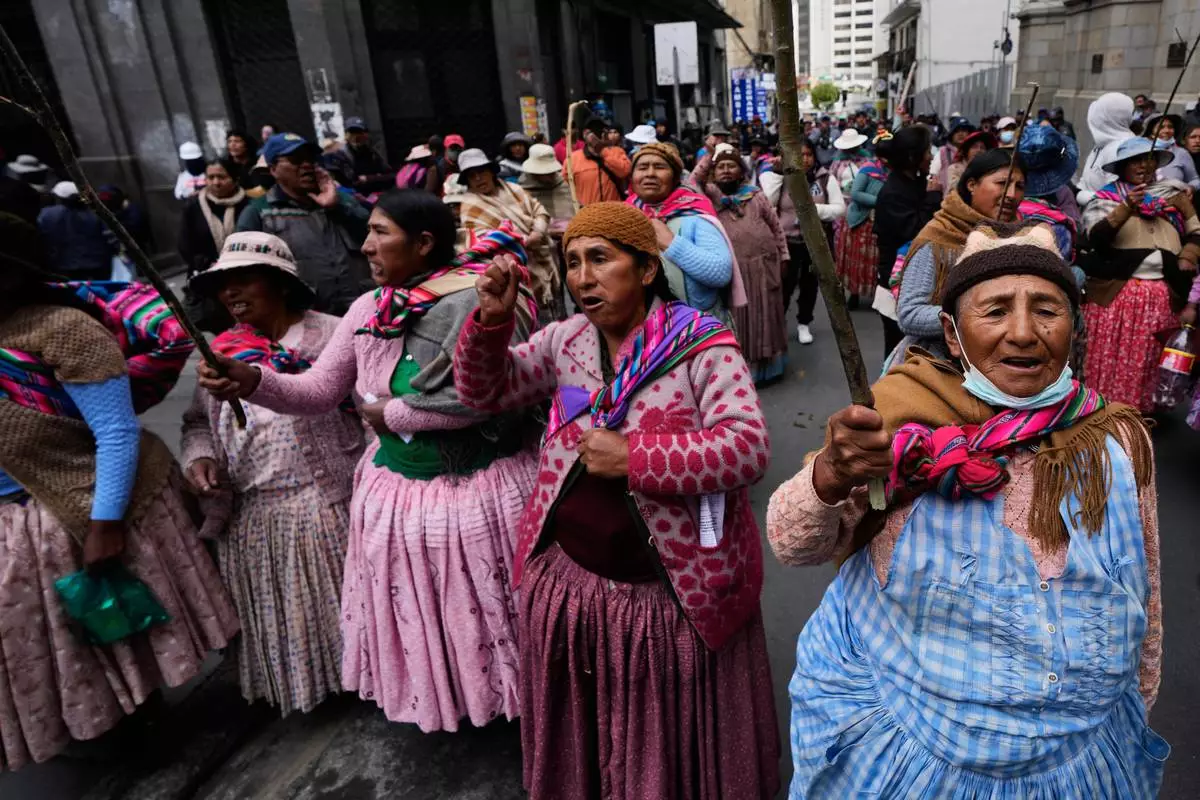
Now, that optimism has been replaced by dread as violent protests shake the government of the Trump administration ally. Demonstrators wielding dynamite have blockaded major cities, leading to shortages of food, fuel and medical supplies. Indigenous and rural Bolivians who backed Paz's campaign promises to upend the status quo while protecting social welfare have called on him to step down.

Here are five things to know about the protests roiling Bolivia, as Paz threatened Wednesday to declare a state of emergency that could pave the way for a harsh security crackdown.

“If they do not want dialogue ... then there is no other way,” he said of the protesters in a national address Wednesday, while insisting that he preferred to negotiate. “We have deaths because of the blockades. Someone has to answer for that.”

Former supporters of Bolivia's long-dominant Movement Toward Socialism party, known by its Spanish acronym MAS, who helped vault Paz to power, have increasingly voiced concern that his government doesn't represent them.

Shortly after entering office, Paz struck deals with right-wing parties in Congress. He shut out the populist vice president widely seen as responsible for his electoral success.

He named no members of Bolivia’s Indigenous majority to high-level posts. He supported a land reform bill to boost agribusiness that Indigenous farmers said put them at risk of eviction. He scrapped fuel subsidies, sending prices surging by nearly 90%. Motorists complained the gasoline was contaminated and ruined their cars.

To blunt the blow of price hikes from the Iran war, Paz offered cash transfers to vulnerable families. He hiked the minimum wage 20%. He repealed the controversial land law. But he also rebuffed demands for further salary increases, infuriating the national labor union.

“It's not that from one day to the next he was asked to resign,” said Mirian Huarina, a protest leader. “He had time to provide a solution to these problems and to the demands of different social sectors.”

By a quirk of geography, barriers thrown up along the slopes leading down to Bolivia's seat of government, La Paz, can completely isolate more than 1.6 million residents of the city and its surroundings, or over 13% of the country's population.

Indigenous movements have long deployed the siege strategy, popularized during a late-18th-century rebellion against Spanish colonialism.

In 2003 and 2005, demonstrators blockading La Paz in protest over foreign designs on their country's natural gas reserves toppled two consecutive pro-Western governments, paving the way for the rise of former President Evo Morales, founder of MAS.

As road blocks strangling La Paz enter their fourth week, thousands of trucks loaded with food and other essentials, like oxygen supplies for hospitals, remain stranded on highways. Beef, eggs and fruit have vanished from supermarket shelves. Subsidized chicken is being flown into La Paz via military aircraft. The government says at least four people have died for lack of medical care; hospitals are still operating, but staff are rationing supplies and focusing on critical cases.

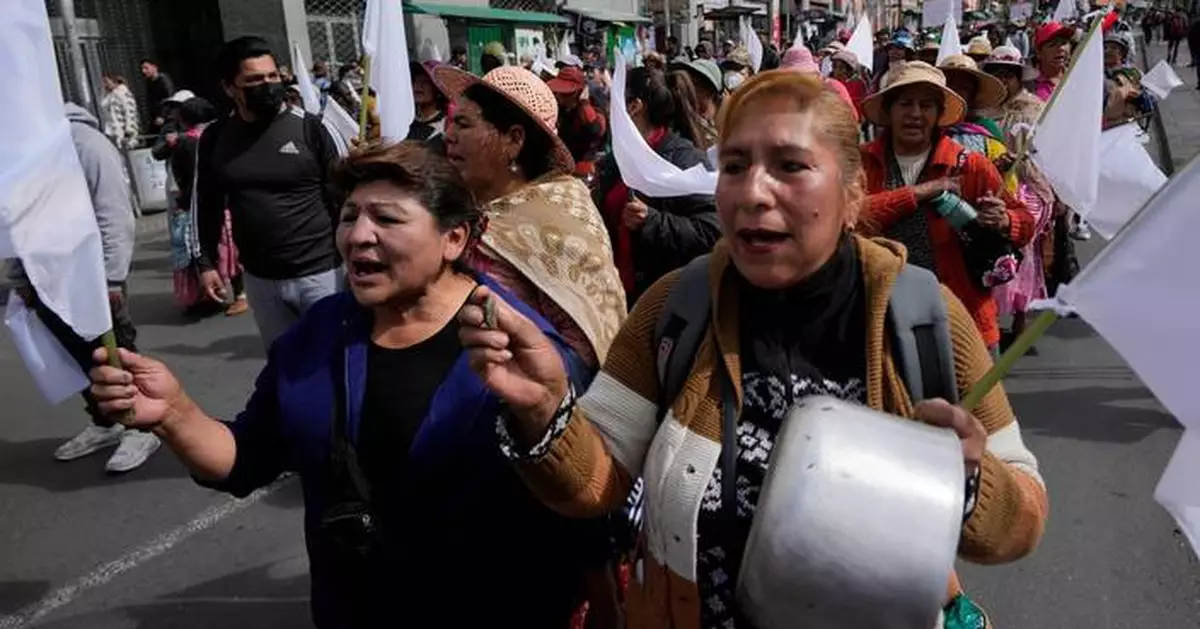
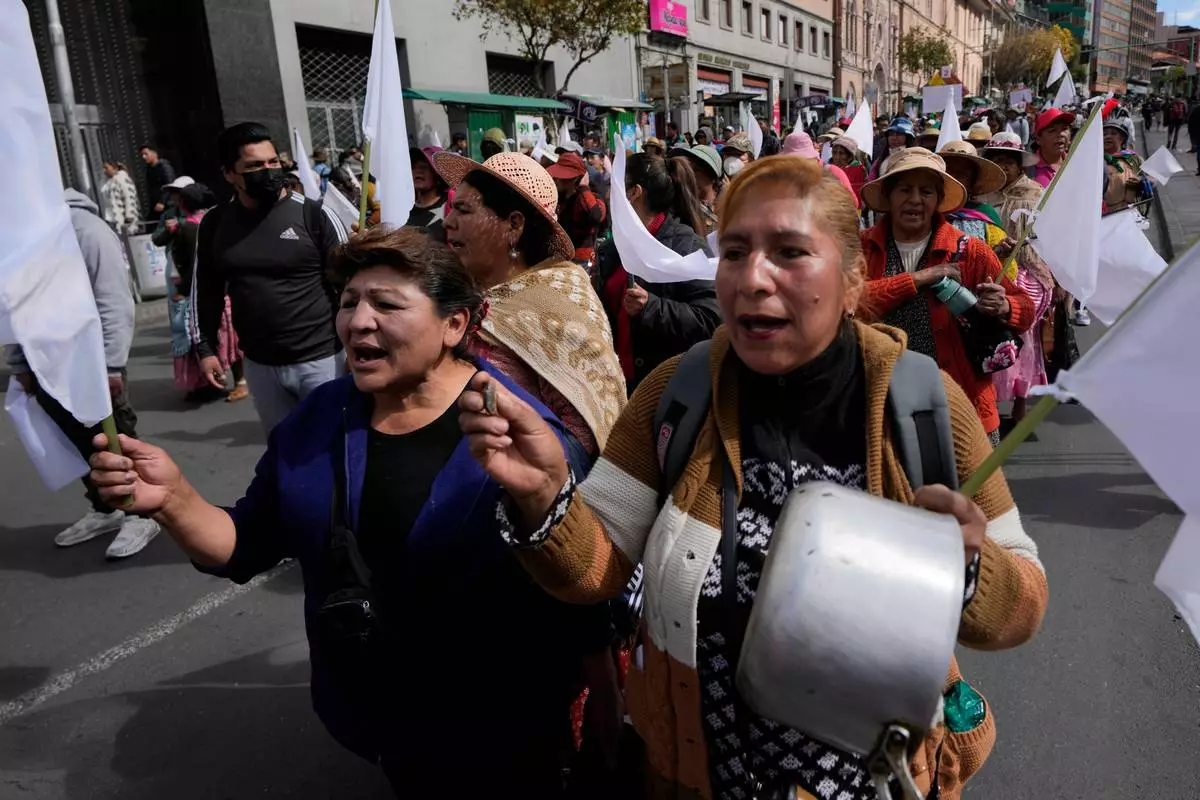
Shop owners and transport workers opposed to the protests are ramping up pressure on Paz to reopen the roads at any cost. Banging empty pots as they marched downtown on Tuesday, they chanted, "We want solutions! We can't take it anymore!”

Although security forces have used tear gas to disperse demonstrators and arrested over 120 people, Paz has so far resisted calls to deploy greater force to break the blockades. Cognizant that the deaths of protesters at the hands of police may only inflame tensions, Paz has insisted on dialogue as the best way out of the crisis.

Paz has offered bonuses to teachers, reached agreements with some protesting miners and convened a council on Wednesday to include underrepresented social sectors in economic decision-making. He slashed his own salary in half, fired his unpopular labor minister and appointed a lawyer from the country's Indigenous majority to the post.

Calls are growing for Paz to impose a state of emergency, which would put the military in charge of restoring public order for 60 days. After Congress passed a law lifting restrictions on the army’s role in quelling civil unrest late Tuesday, Paz now has the constitutional authority to invoke this power. He has described it as an option of last resort.

Morales, the former union leader who became Bolivia’s first Indigenous president in 2006 and ruled for an unprecedented 14 years, is calling for early elections.

“Paz only has two paths left: a suicidal decision like militarization or ... an election in the next 90 days," he wrote on X.

For almost two years now, Morales has been hiding out in Bolivia's central coca-growing Chapare region, evading an arrest warrant on human trafficking charges relating to having sex with a 15-year-old girl. He rejects the allegations as politically motivated.

Some of the unions and Indigenous groups rallying against Paz are allied with Morales, whose attempts to hold onto power longer than the constitution allowed alienated much of his once-vast base and led to his fraught 2019 ouster.

Morales' loyalists — hardened protesters from the coca-growing unions — joined the protest movement last week to demand Paz step down.

Paz's government has accused Morales of funding the demonstrations, which he denies.

Trump-allied governments that recently swept to power across Latin America — from Argentina and Chile to Honduras and Costa Rica — have pledged their support for Paz and denounced the protests as destabilizing.

President Gustavo Petro of Colombia — among the few leftist leaders still in power in the region — defended the protests as a “struggle for Latin American dignity." Bolivia expelled the Colombian ambassador in response.

The United States has struck a hard line, characterizing the demonstrations as a coup attempt.

“We will not allow criminals and drug traffickers to overthrow democratically elected leaders in our hemisphere,” U.S. Secretary of State Marco Rubio said last week.

The U.S. Embassy in La Paz said it was closing Wednesday and Thursday due to the unrest.

DeBre reported from Buenos Aires, Argentina.
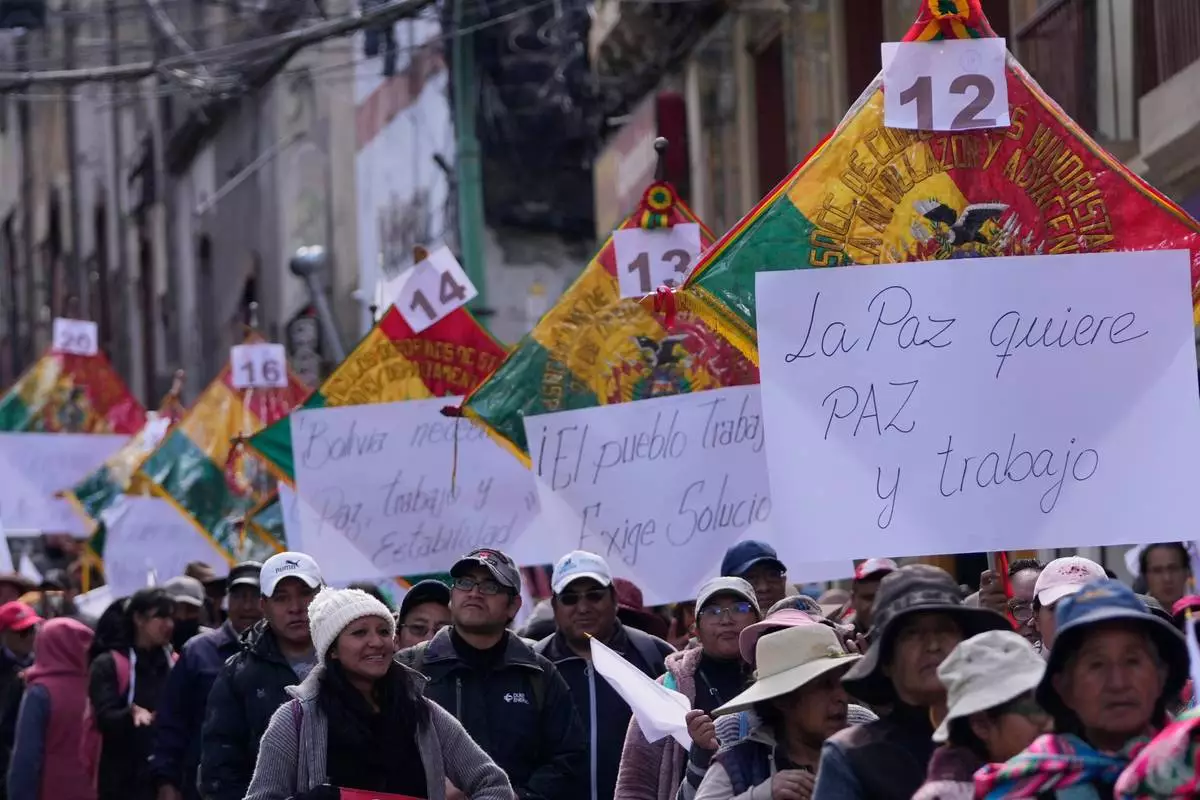
Vendors hold signs reading in Spanish, "La Paz wants peace and work," during a march against protesters who were blocking access to the city, in La Paz, Bolivia, Tuesday, May 26, 2026. (AP Photo/Juan Karita)
Vendors hold signs reading in Spanish, "La Paz wants peace and work," during a march against protesters who were blocking access to the city, in La Paz, Bolivia, Tuesday, May 26, 2026. (AP Photo/Juan Karita)

Demonstrators shout slogans during an anti-government protest in La Paz, Bolivia, Monday, May 25, 2026. (AP Photo/Juan Karita)
Demonstrators shout slogans during an anti-government protest in La Paz, Bolivia, Monday, May 25, 2026. (AP Photo/Juan Karita)

Vendors shout slogans during a march against protesters who are blocking access to the city, in La Paz, Bolivia, Tuesday, May 26, 2026. (AP Photo/Juan Karita)

Vendors shout slogans during a march against protesters who are blocking access to the city, in La Paz, Bolivia, Tuesday, May 26, 2026. (AP Photo/Juan Karita)
KAMPALA, Uganda (AP) — Uganda on Wednesday ordered the closure of its border with Congo, where suspected cases of a rare type of Ebola are surging, and as cases have been confirmed at home after Ugandan health workers were exposed to the disease from Congolese patients.

The measure, which goes against the guidance by the World Health Organization, underscores growing fears of contagion in East Africa from Bundibugyo, a rare type of the Ebola virus that is behind this outbreak and that has no approved medicines or vaccines.

Like Congo, Uganda has faced Ebola outbreaks in the past. A local Ugandan task force made the decision on the border closure. The Ugandan health workers were exposed to the virus by Congolese patients who had crossed the border before the outbreak was declared in eastern Congo on May 15.

Border crossings will be authorized only in emergency cases, including for the outbreak response, cargo or security reasons, Dr. Diana Atwine of the Ugandan Ministry of Health, told journalists. Anyone entering from Congo under emergency circumstances will be taken into mandatory isolation for 21 days.

Tracing and isolating Ebola contacts is seen as key to stopping the spread of the disease, which usually manifests as hemorrhagic fever. The virus is spread through close contact with sick or deceased patients’ bodily fluids. Experts say healthcare workers and family members caring for patients face the highest risk.

The number of suspected cases in eastern Congo is nearing 1,000, with at least 220 suspected deaths. Congo’s health ministry on Tuesday said 101 cases have been confirmed, and they are looking into over 3,000 possible contacts.

On Wednesday, Congolese authorities said that the first person who recovered from the Bundibugyo virus has been released home from a treatment center in Rwampara, one of the towns in eastern Congo at the heart of the outbreak.

WHO has discouraged border closures with Congo while acknowledging that neighboring countries are at high risk of contagion. The U.N. health agency has declared this outbreak a public health emergency of international concern.

Closures "push the movement of people and goods to informal border crossings that are not monitored, thus increasing the chances of the spread of disease," the agency said.

The Uganda-Congo border is several hundred miles long and crossed by numerous footpaths beyond formal border posts. Many people come and go in the course of a day to visit families or to trade.

Congolese health authorities are struggling to contain the outbreak, which WHO says is outpacing them. The rare type of Ebola was confirmed weeks late as tests were carried out for a more common type. Challenges also include the threat from armed groups in eastern Congo, a large number of displaced people and poor infrastructure.

WHO's Director-General Tedros Adhanom Ghebreyesus called on Wednesday for a ceasefire in eastern Congo to allow safe access for responders and others, saying on social media that “attacks on health facilities make tracking cases and their contacts nearly impossible.”

Responders in Congo have said they are underprepared and under-protected for this outbreak, while conflict-traumatized residents, long wary of outsiders, have attacked a number of clinics and hurled stones and abuse at volunteers trying to make people aware of the virus and its risks.

Infected people or those have been in contact should not undertake international travel unless it’s a medical evacuation, WHO has said. On Wednesday, the Trump administration said it is planning to send Americans who are exposed to Ebola to a new facility in Kenya instead of flying them to the United States.

Uganda has reported seven cases of Ebola, including the first case of a 59-year-old man who died in Kampala, the country's capital, on May 14. While the Ebola case load is not spiking, the number of locals exposed to infection via health workers has been rising.

“They have families, and so the number has been increasing,” Atwine, the Ugandan health official, said of the health workers.

She also said she was dismayed to see some Ugandans forming crowds to celebrate Arsenal as British Premier League champions. The team has a large following in Uganda. Atwine urged people to be vigilant, avoid shaking hands and use sanitizer.

Congo has had 17 Ebola outbreaks. Health experts say aid cuts last year by the U.S. and other rich nations are devastating for eastern Congo, in part because of the region’s unique problems.

Aid groups fighting this outbreak say they don’t have the equipment they need, including face shields and suits to protect health workers from infection, testing kits and body bags needed to safely bury victims.

Associated Press writer Jean-Yves Kamale in Kinshasa, Congo, contributed to this report.

For more on Africa and development: https://apnews.com/hub/africa-pulse

The Associated Press receives financial support for global health and development coverage in Africa from the Gates Foundation. The AP is solely responsible for all content. Find AP’s standards for working with philanthropies, a list of supporters and funded coverage areas at AP.org.

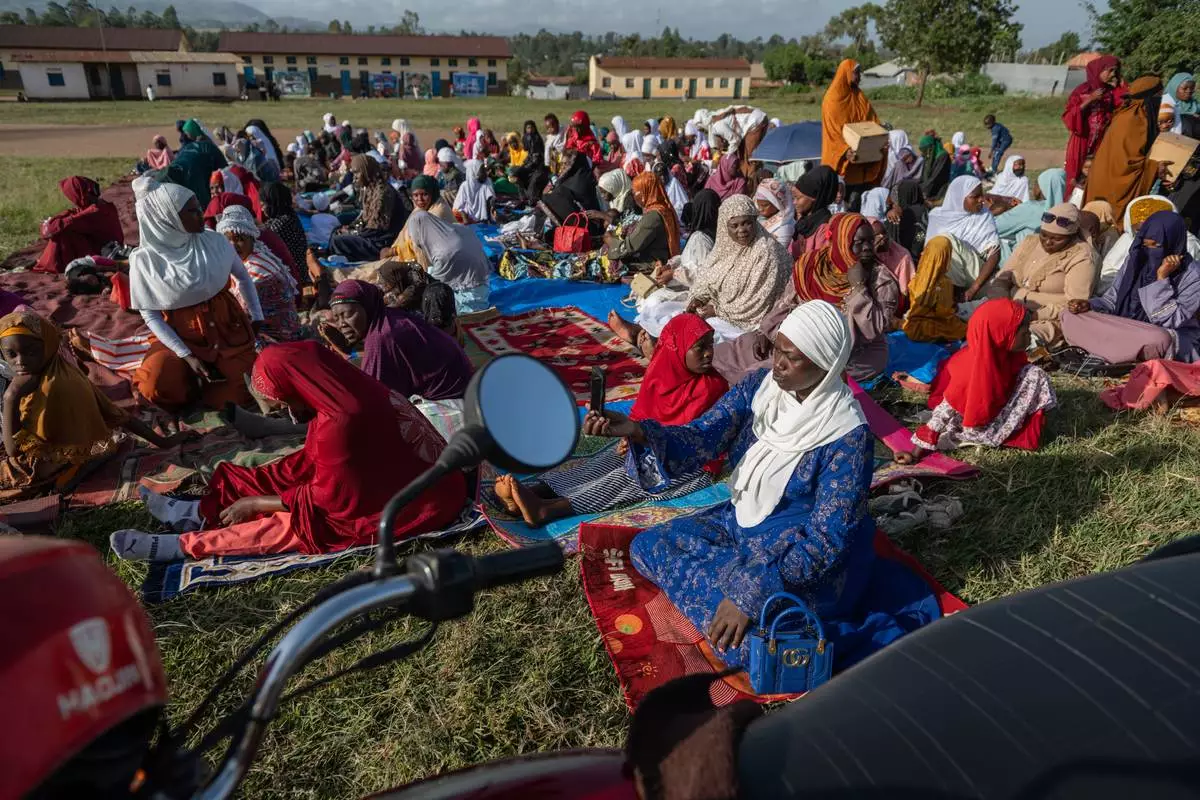
Muslims gather to pray at Sayo Muhamed School during the Eid al-Adha celebration amid an Ebola outbreak in Bunia, Congo, Wednesday, May 27, 2026. (AP Photo/Moses Sawasawa)

Muslims gather to pray at Sayo Muhamed School during the Eid al-Adha celebration amid an Ebola outbreak in Bunia, Congo, Wednesday, May 27, 2026. (AP Photo/Moses Sawasawa)

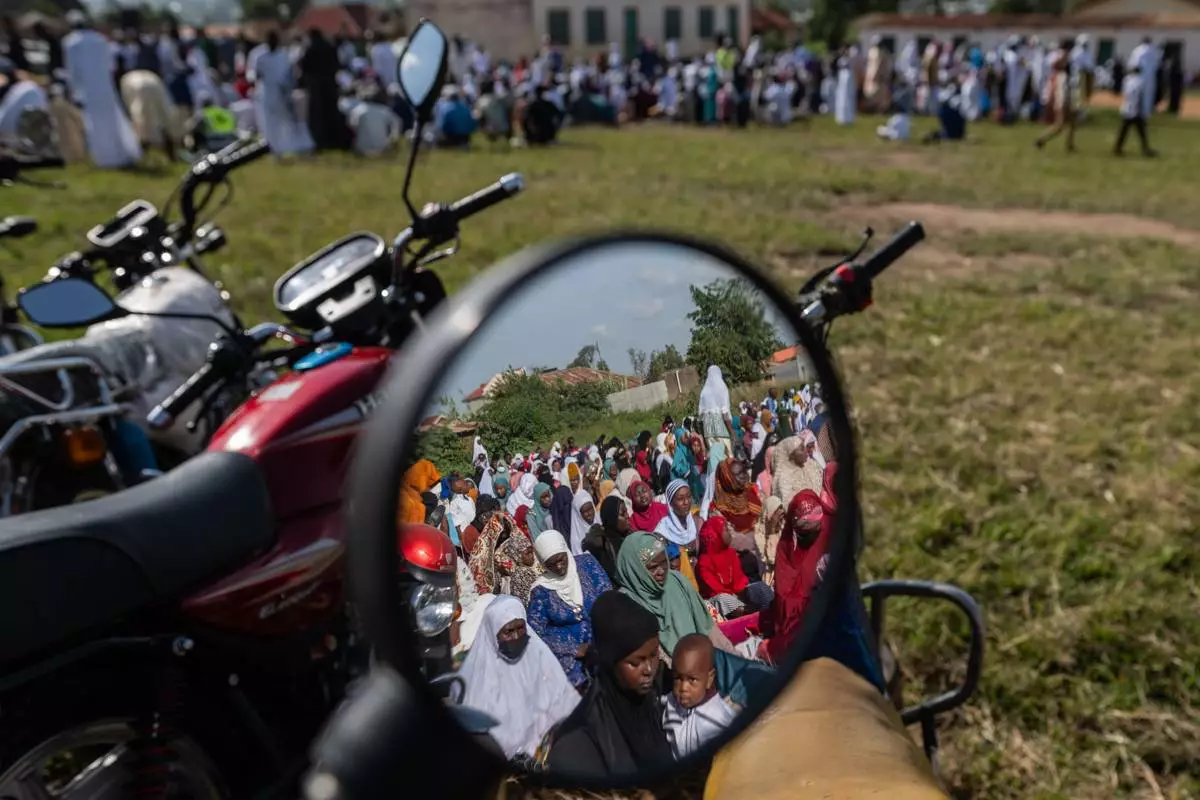
Muslims are reflected in a motorcycle mirror as they gather to pray at Sayo Muhamed School during the Eid al-Adha celebration amid an Ebola outbreak in Bunia, Congo, Wednesday, May 27, 2026. (AP Photo/Moses Sawasawa)

Muslims are reflected in a motorcycle mirror as they gather to pray at Sayo Muhamed School during the Eid al-Adha celebration amid an Ebola outbreak in Bunia, Congo, Wednesday, May 27, 2026. (AP Photo/Moses Sawasawa)

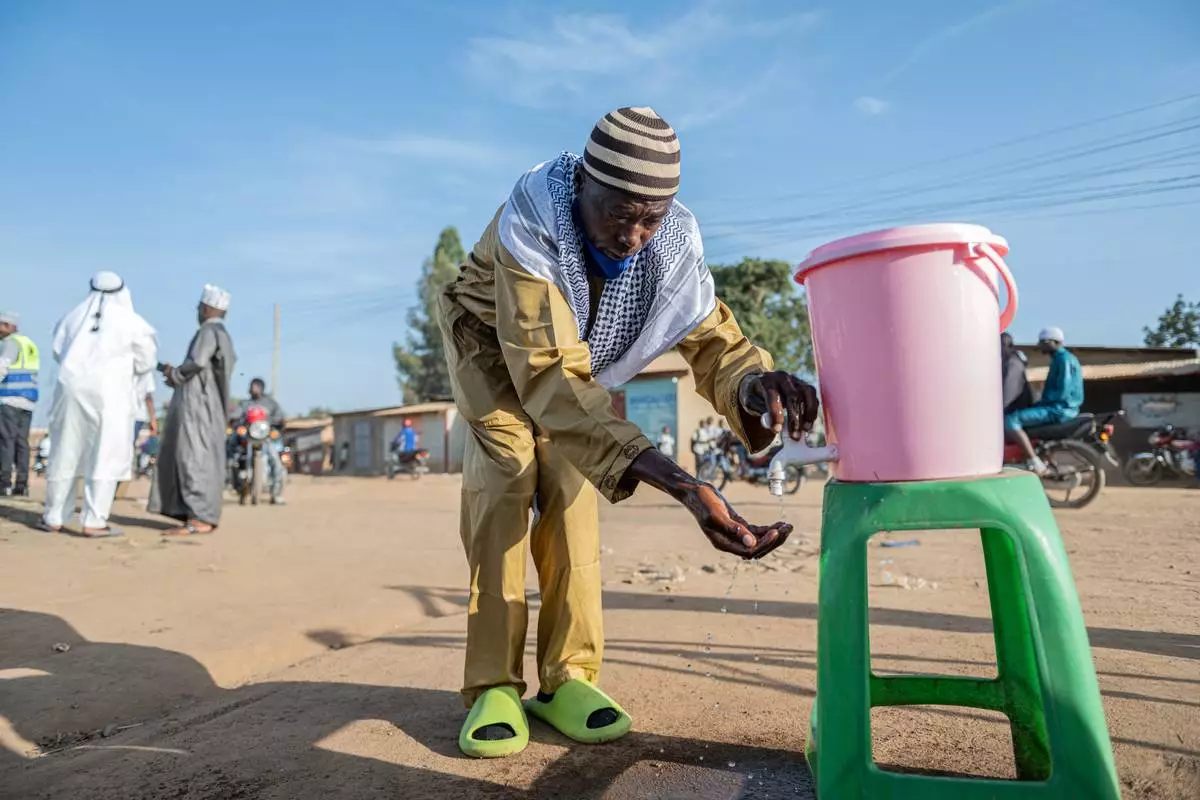
A Muslim washes his hands as a precaution against Ebola before attending the Eid al-Adha prayers at Sayo Muhamed School in Bunia, Congo, Wednesday, May 27, 2026. (AP Photo/Moses Sawasawa)

A Muslim washes his hands as a precaution against Ebola before attending the Eid al-Adha prayers at Sayo Muhamed School in Bunia, Congo, Wednesday, May 27, 2026. (AP Photo/Moses Sawasawa)

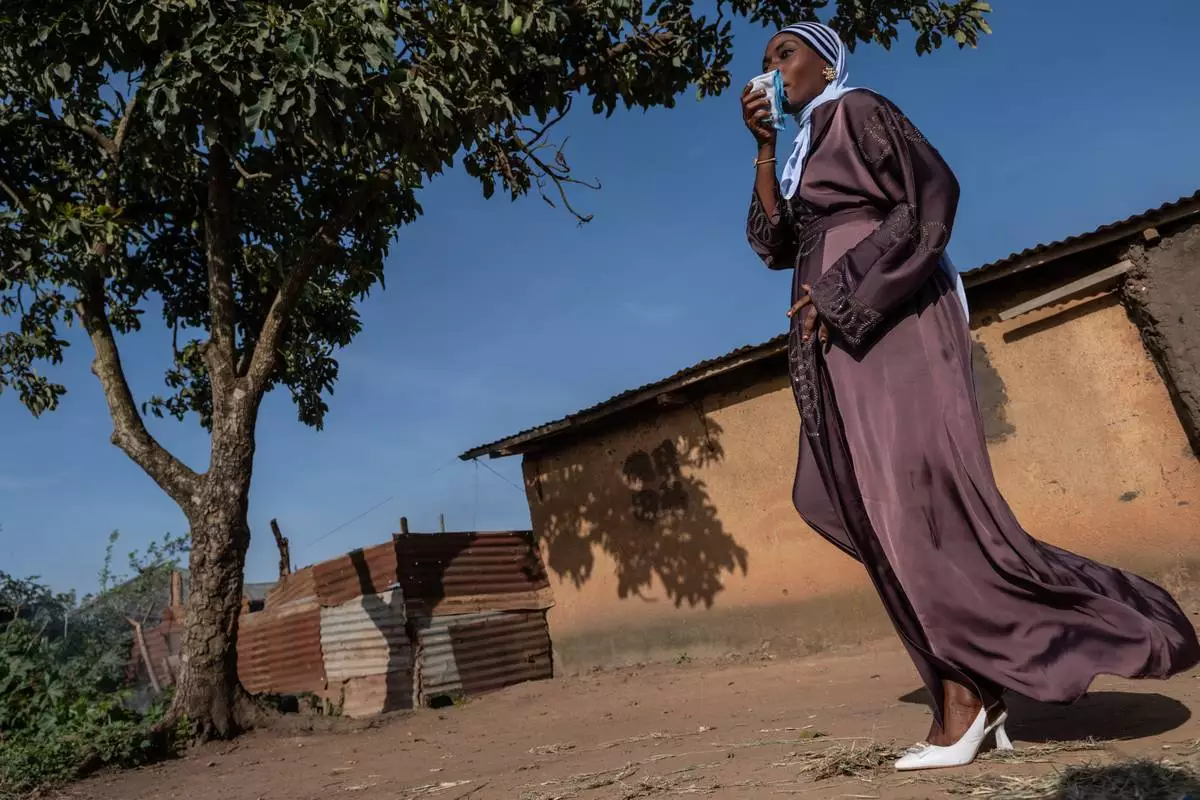
A Muslim woman walks towards the prayer grounds at Sayo Muhamed School to perform Eid al-Adha prayers amid an Ebola outbreak in Bunia, Congo, Wednesday, May 27, 2026. (AP Photo/Moses Sawasawa)

A Muslim woman walks towards the prayer grounds at Sayo Muhamed School to perform Eid al-Adha prayers amid an Ebola outbreak in Bunia, Congo, Wednesday, May 27, 2026. (AP Photo/Moses Sawasawa)

Recommended Articles