Fair housing organizations filed a lawsuit Wednesday over a federal rule change that they say would reverse decades of lending protections and open the door to discrimination against Black people, Latinos and other minorities.
The federal lawsuit, filed in Washington, D.C., takes aim at a change made earlier this year by the Consumer Financial Protection Bureau to the Equal Credit Opportunity Act, which bars lenders from discriminating against credit applicants. Among the changes being challenged is that lenders will no longer have to consider “disparate impact” — policies that appear neutral but tend to cause disproportionate harm to certain groups.
Plaintiffs also argue the rule would make it easier for lenders to market loans to predominantly white neighborhoods, forcing minority communities to rely on risky, high-cost lenders that offer predatory loans with exorbitant interest rates.
“This is the deliberate dismantling of 50 years of legal jurisprudence, regulatory guidance, and bipartisan consensus that lending discrimination has no place in America,” Lisa Rice, the CEO and president of the National Fair Housing Alliance, one of the plaintiffs that filed the lawsuit, said in a statement.
“This reversal by the CFPB is a continuation of this Administration’s efforts to gut fair housing and lending protections,” she said. “Eviscerating these guardrails will ultimately result in less credit access for many people, make our markets less sound, and cause our economy to be less productive.”
Paulina Gonzalez-Brito, the CEO of another plaintiff, Rise Economy, a California nonprofit that advocates for economic justice, accused the CFPB of ignoring “public comments, common sense, and decades of precedent in its misguided attempt to turn anti-discrimination law on its head.”
“The CFPB was created to protect consumers and small businesses from financial abuse and discrimination, and this final Reg B rule would do real harm, setting us back in our collective efforts to ensure that all families and small businesses have a fair chance to achieve the American Dream,” Gonzalez-Brito said.
The CFPB did not respond to a request for comment.
Plaintiffs argue that the rule change is part of a broader campaign by the Trump administration to dismantle regulations related to fair housing and lending protections.
The administration, the National Fair Housing Alliance said, has proposed eliminating the budget for the Fair Housing Initiatives Program, which funds nonprofits to ensure access to housing for seniors, disabled veterans, families with children and other groups. It also has cut staffing in half at the Department of Housing and Urban Development's Office of Fair Housing and Equal Opportunity.
Several high-profile settlements in recent years indicate housing discrimination remains a significant problem.
In 2023, the Justice Department accused Los Angeles-based City National Bank of discrimination by refusing to underwrite mortgages in predominately Black and Latino communities, requiring the bank to pay more than $31 million in the largest redlining settlement in department history. In 2016. the Justice Department and the CFPB fined Mississippi-based BancorpSouth $10.6 million, alleging the bank deliberately discriminated against minorities in its lending practices.
Plaintiffs are asking court to vacate the rule, which they contend is arbitrary and capricious, in excess of statutory authority, and issued outside the procedures required by Congress.
“The Final Rule does not reflect reasoned decision-making or an expert, good-faith effort to implement our nation’s foundational credit antidiscrimination statute,” plaintiffs wrote. “Quite the opposite: The Final Rule is a drastic turn, without justification, from the CFPB’s (and its Federal Reserve Board predecessor’s) longstanding interpretation and enforcement of key ECOA provisions.”
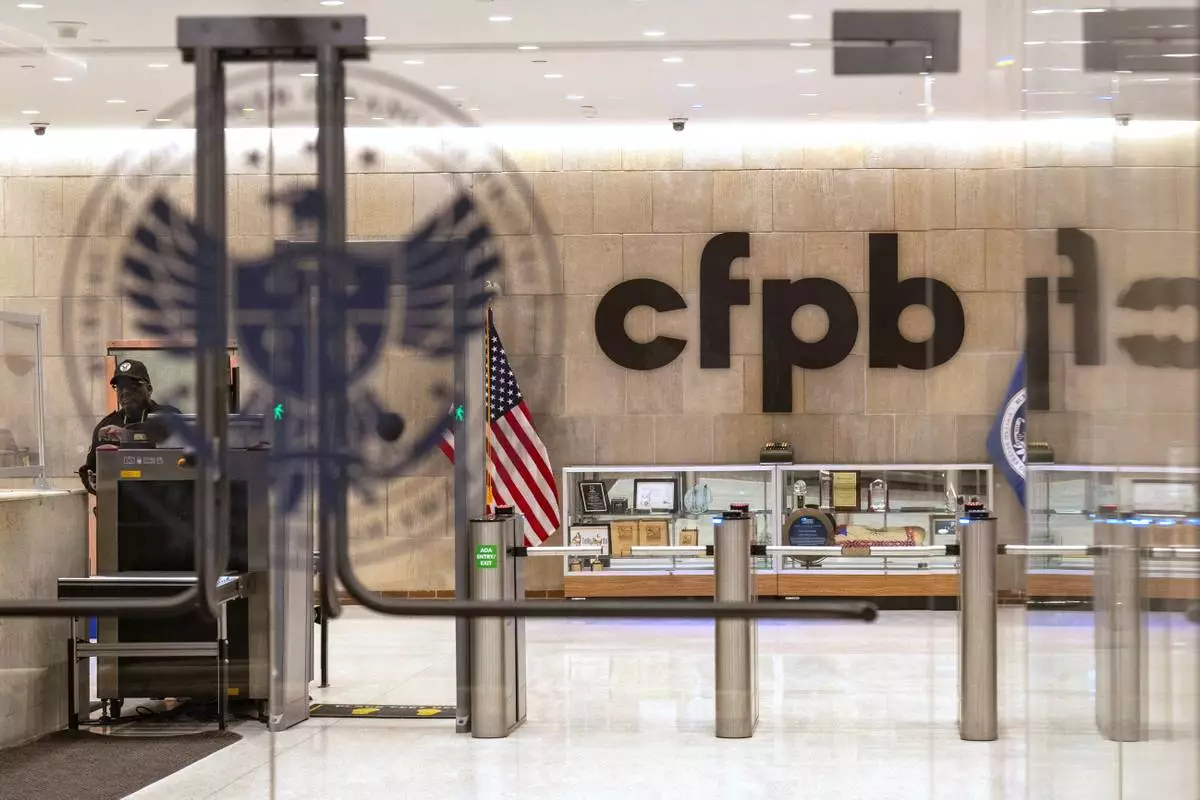
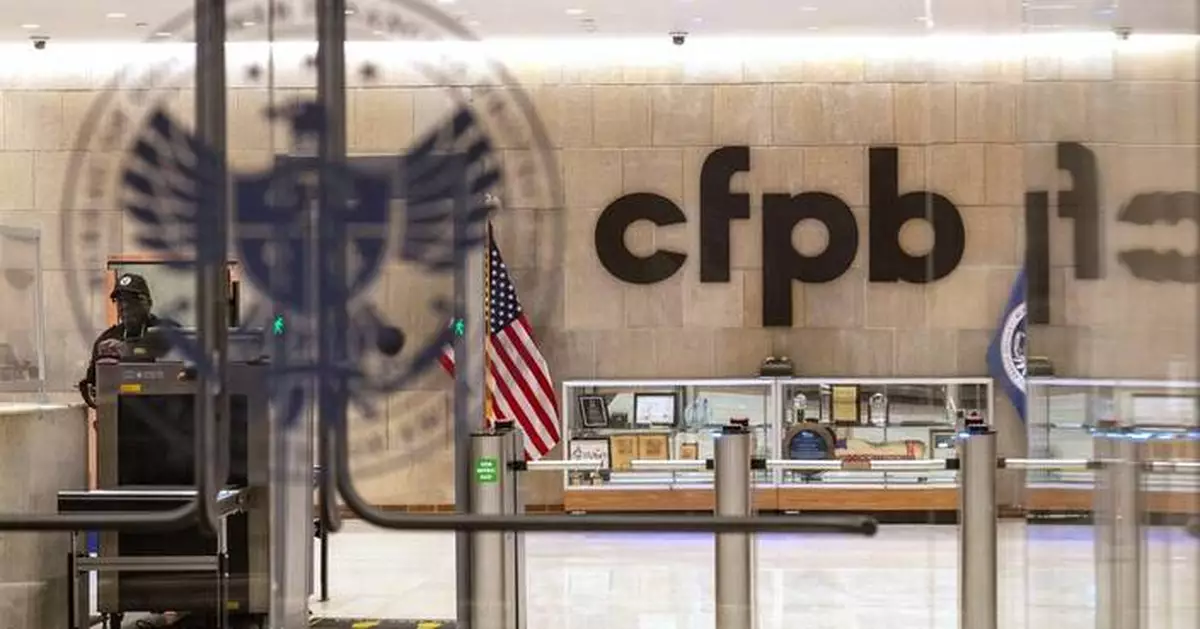
FILE - A security officer works inside of the Consumer Financial Protection Bureau (CFPB) building headquarters, Feb. 10, 2025, in Washington. (AP Photo/Jacquelyn Martin, File)
A South Carolina jury heard opening statements Wednesday in the trial of a store owner charged with murder in the 2023 fatal shooting of a Black 14-year-old, which a prosecutor called unprovoked and a defense lawyer insisted was an act of defense.
Chikei Rick Chow, 61, who is Asian, shot Cyrus Carmack-Belton in the back during a foot chase in Columbia, believing — wrongly, prosecutors say — that he had stolen four bottles of water from the gas station convenience store. The killing sent waves of anguish and grief through the African American community in Richland County, where nearly half the population is Black.
While prosecutors acknowledge Carmack-Belton had a semiautomatic pistol, they say it fell on the ground during the chase and he never threatened anyone with it. But defense lawyers said the teen pointed the pistol at Chow's son, Andy, and Chow fired one shot in his son's defense. Chow had a concealed weapons permit.
“Ladies and gentlemen of the jury, what is the value of a human life?” prosecutor Byron E. Gipson asked. “To grieving parents who lost a 14-year-old to senseless acts of violence, a human life is priceless.”
Gipson added: "But on May 28, 2023, Chikei Rick Chow, the defendant in this case, determined that Cyrus Carmack-Belton's life was worth less than four bottles of water.”
Gipson then tried to cast doubt on Chow's claim of defending his son.
“In what world do you get to falsely accuse a 14-year-old of stealing, chase a 14-year-old 130-plus yards down a road while you’re armed with a pistol, shoot that person in the back, then claim you’re defending your son?” he said, calling the shooting “senseless” and “heinous.”
Defense lawyer Jack Swerling began his opening statements questioning why the teen was carrying a pistol equipped with a laser sight around the streets of Columbia.
“If he didn’t have that weapon, he never would have had a weapon to draw on Andy Chow," Swerling said. "He never would have had a weapon to put Andy Chow in danger. And he never would have had a weapon that would cause Mr. Chow to believe his son was going to be shot and have to make a split-second decision — a split-second decision — as to whether or not to go ahead and fire that gun and protect his son.”
Afterward, Chow performed CPR on Carmack-Belton, which Swerling said helps prove Chow acted without malice — a required element of a murder charge in South Carolina.
“Nobody’s saying everybody’s happy about this, but unfortunately there are occasions in human life when someone has to exercise that right of self-defense or defense of others," Swerling said. “It’s sad. It's tragic. There’s no question about that."
Chow sat between his lawyers at the defense table, wearing a dark suit, white-collared shirt and no tie with his legs shackled, occasionally writing on a notepad.
Operating a business was a dream for Chikei Rick Chow, Swerling said. Chow was born in Hong Kong and his wife was born in Malaysia. Both became U.S. citizens and had two sons, he said.
Protesters came to Chow’s store the day after the shooting demanding justice and saying Chow mistreated Black customers. Police records showed he shot at shoplifters twice in the past eight years but did not face charges after investigators said he acted in self-defense. After the protests, Chow’s store was vandalized and broken into and cigarettes and beer were stolen, police said.
After opening statements, a police officer who responded to the shooting was the first witness to take the stand in the trial that is expected to last several days.
Witness Lori Carson testified that she saw Carmack-Belton running away from the store with Chow and his son in pursuit. She said she never saw a gun or anything else in the teen's hands.
“He just looked frightened, scared. He looked like he needed help," Carson said of the teen. "Just like a young child just in trouble, just needed help.”
She said that after they ran down the street, she saw Chow in a shooting position while the teen was on the ground. She became emotional as she described trying to help Carmack-Belton by removing leaves from his mouth while Chow performed mouth-to-mouth resuscitation.
Authorities said the shooting happened about 130 yards (120 meters) from the store. A gun was found near Carmack-Belton's body, but investigators have said there is no evidence the teen ever directed the firearm at Chow or his son.
Carmack-Belton had entered the store about 8 p.m. and quickly drew suspicion from the Chows, prosecutors said. He took four water bottles out of a cooler but put them back, they said. He got into an argument with the Chows and denied their allegations of stealing, then left the store, authorities said.
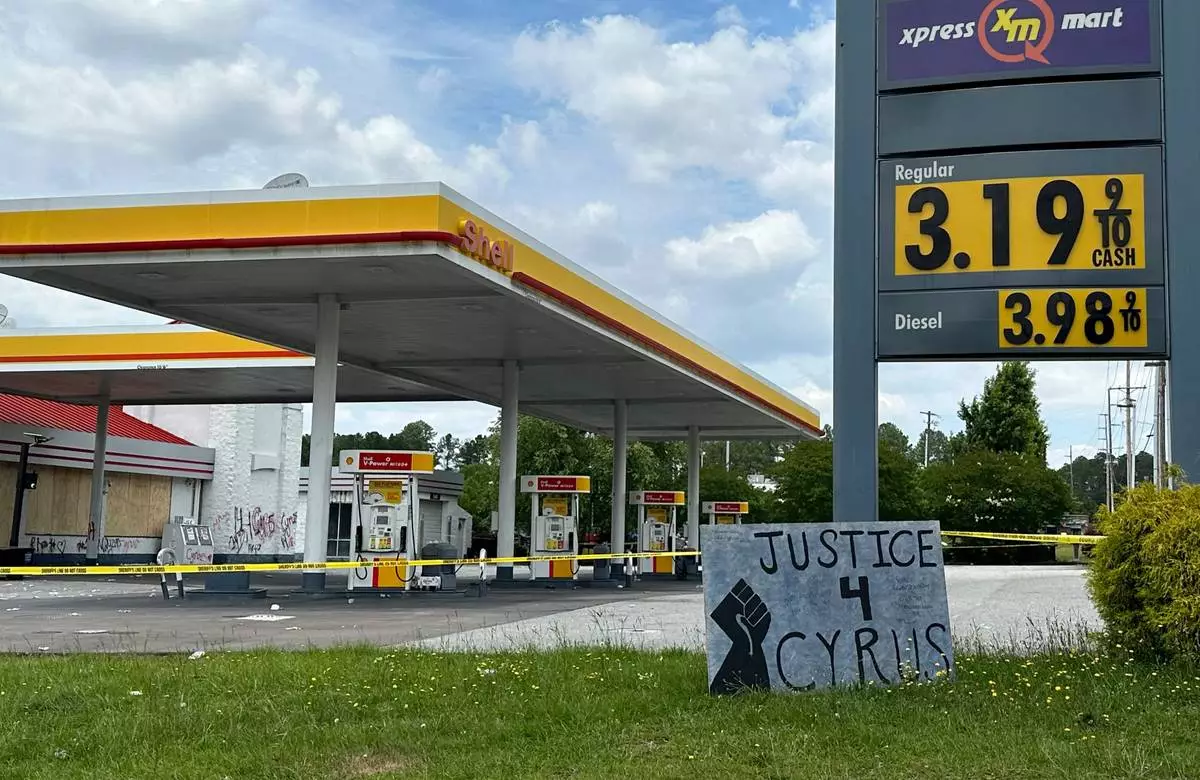
FILE - A sign calling for justice is for Cyrus Carmack-Belton is seen outside a gas station June 1, 2023, in Columbia, S.C. (AP Photo/Jeffrey Collins, File)