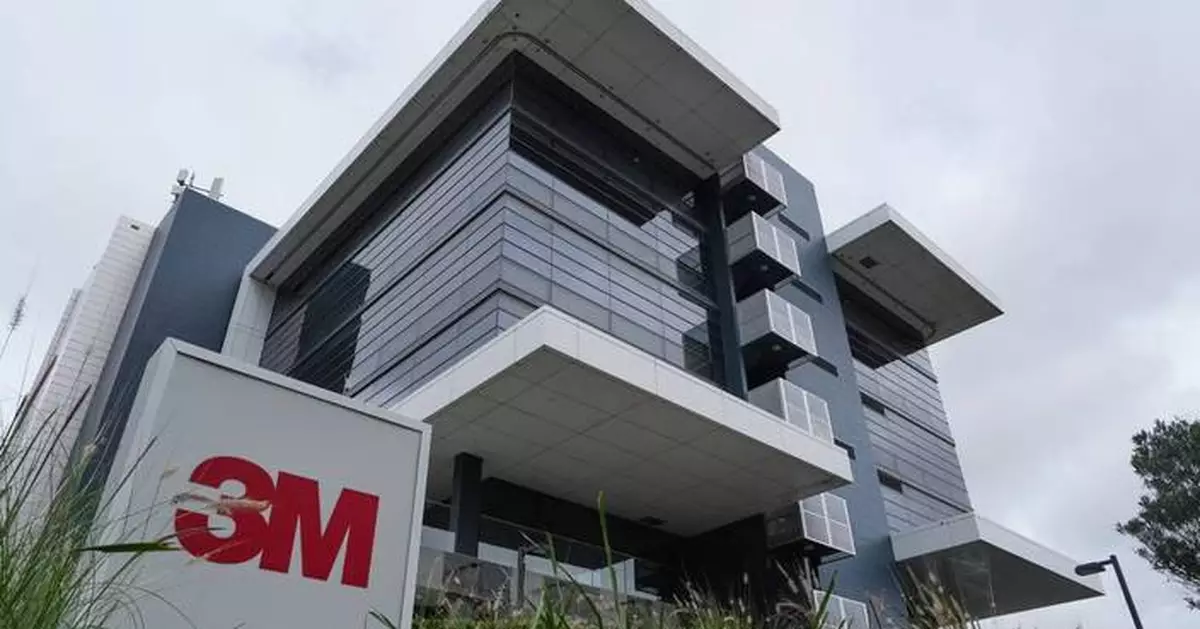
MELBOURNE, Australia (AP) — Australia is suing U.S. conglomerate 3M for more than 2 billion Australian dollars ($1.4 billion) over so-called “forever chemical” contamination from firefighting foam at defense bases. the government said on Thursday.
The government’s largest-ever claim for compensation relates to contamination with per- and polyfluoroaklyl substances, known as PFAS, at 28 bases. Human-made PFAS are commonly referred to as “forever chemicals” because they don't break down naturally.
Australia filed the suit against 3M Company and its subsidiary 3M Australia in the Federal Court of Minnesota, where the company is based.
3M said it would fight Australia’s claim.
“3M has never manufactured PFAS in Australia and ceased sales of the products at issue in Australia around two decades ago,” 3M said in a statement. “Despite this, the (Australian) Department of Defense continued to use PFAS-containing firefighting foams for nearly two decades longer.”
PFAS has been used since the 1950s in household and industrial products that resist heat, stains, grease and water. The firefighting foam containing PFAS was effective against fuel fires.
The Australian Defense Department warned residents near its Richmond Air Base outside Sydney in 2018 to reduce their consumption of locally produced fish and eggs, after PFAS was found in nearby groundwater.
Attorney-General Michelle Rowland on Thursday accused 3M of withholding information about environmental risks the foam posed.
“The Commonwealth (of Australia) is seeking more than AU$2 billion ($1.4 billion) in damages to recover significant past and future expenses incurred in investigating and managing contamination resulting from the historic storage and use of this foam,” Rowland told reporters.
Assistant Defense Minister Peter Khalil said his department had already spent AU$1.3 billion ($920 million) on managing and mitigating environmental impacts of the foam. The department had removed 200,000 metric tons (220,000 U.S. tons) of contaminated earth from bases and treated 13 billion liters (3.4 billion gallons) of contaminated water, Khalil said.
“We are prepared to take on powerful corporations when Australians and Australian communities have been impacted,” Khalil said.

The 3M chemical manufacturer's building is seen in a suburb of Sydney, Thursday, May 28, 2026. (AP Photo/Mark Baker)
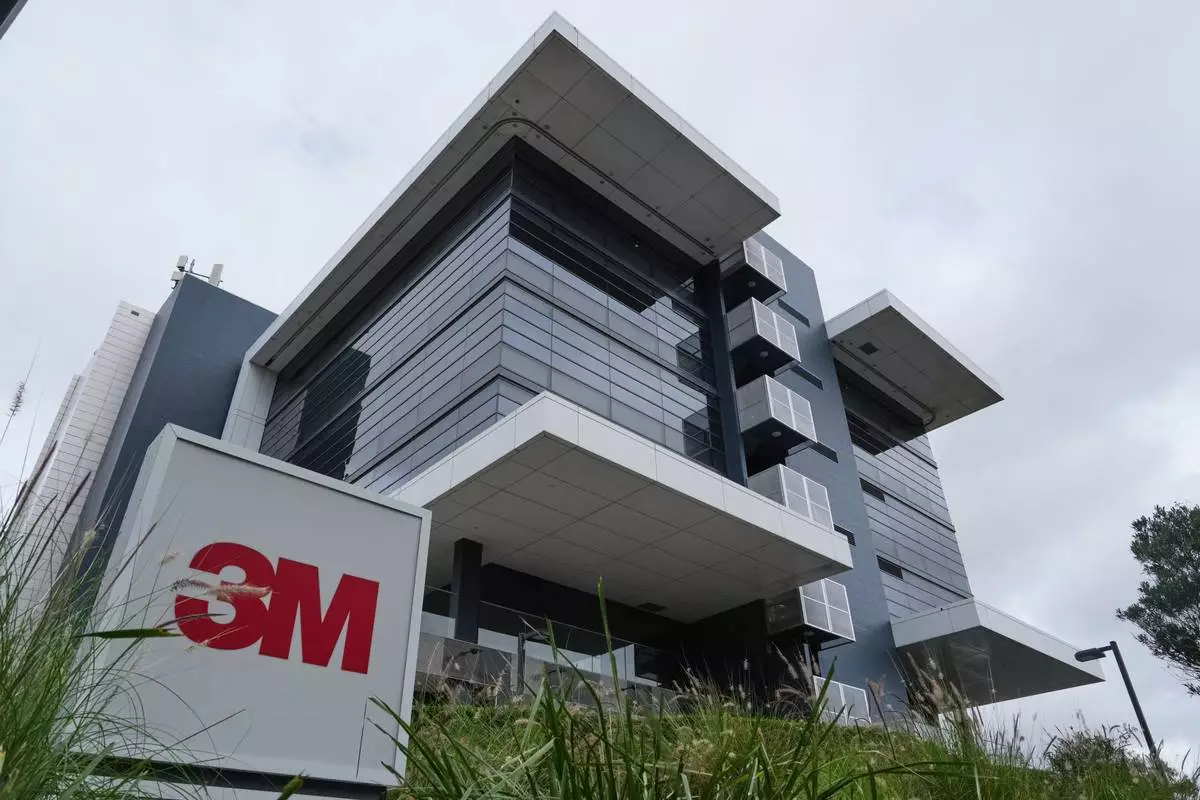
The 3M chemical manufacturer's building is seen in a suburb of Sydney, Thursday, May 28, 2026. (AP Photo/Mark Baker)
BATON ROUGE, La. (AP) — Louisiana lawmakers passed a new congressional map Friday designed to pick up a Republican seat while leaving the state with just one of its two majority-Black House districts represented by Democrats.
Approval of the new House map came a month after the U.S. Supreme Court struck down the state’s current map as an illegal racial gerrymander, weakening the landmark 1965 federal Voting Rights Act. That decision intensified a national redistricting battle fueled by President Donald Trump’s efforts to protect the Republicans’ slim House majority in the midterm elections.
Louisiana Republicans had considered drawing a map giving the party a shot at winning all six of the state’s U.S. House seats. But that would have required adding more Black voters to Republican-held districts, potentially backfiring with losses. Some Republicans said a 5-1 map better protects U.S. House Speaker Mike Johnson from facing a difficult reelection.
Republican Gov. Jeff Landry is expected to sign the new map into law.
In the weeks following the Supreme Court’s decision, several other Republican-controlled Southern states have seized upon a weakened federal Voting Rights Act to try to redraw their own congressional districts. It’s the latest flare-up in a heated national redistricting battle heading into the November elections, spurred along by President Donald Trump.
So far, Republicans are winning the redistricting contest. But that doesn’t necessarily mean they will win a narrowly divided U.S. House in November. So far, Republicans think they could gain as many as 14 seats from their redistricting efforts, while Democrats think they could gain six seats from new districts in California and Utah.
In Louisiana, Republicans currently hold four of six congressional seats on a court-ordered map drawn in 2024 to comply with the Voting Rights Act by including a second district with a majority-Black population.
That map, however, was challenged in court, and the Supreme Court responded on April 30 by striking it down as an illegal racial gerrymander.
Landry postponed the state’s U.S. House primary, scheduled for May 16, until later this summer to allow time for Republican lawmakers to draw and pass a new map.
The proposed map redraws Democratic U.S. Rep. Cleo Fields' district, clustering it around predominantly white communities in the Baton Rouge area and southern Louisiana. It also adds part of Baton Rouge to a heavily Democratic, majority-Black district based in New Orleans currently represented by Democratic U.S. Rep. Troy Carter.
More lawsuits were expected over the new map.
Democrats say the proposed map could still constitute a racial gerrymander because it packs Black voters into a single congressional district. Meanwhile, the plaintiffs in the U.S. Supreme Court's decision criticized the Legislature's map for leaving a majority-Black district in place.
Several other Southern states also have acted on redistricting since the Supreme Court's decision.
Florida’s Legislature passed new congressional districts just hours after the ruling, completing a redrawing that was in the works in anticipation of the decision. It could yield Republicans as many as four additional seats in the midterm elections.
Tennessee adopted new U.S. House districts a week after the ruling, carving up a majority-Black district based in Memphis in a Republican attempt to win an additional seat.
In Alabama, Republicans are attempting to pick up another seat by redrawing two districts where Black residents compose a majority or close to it. Democrats hold both seats, and the proposal is mired in a court battle.
South Carolina’s Senate, meanwhile, decided against redistricting, despite pressure from Trump.
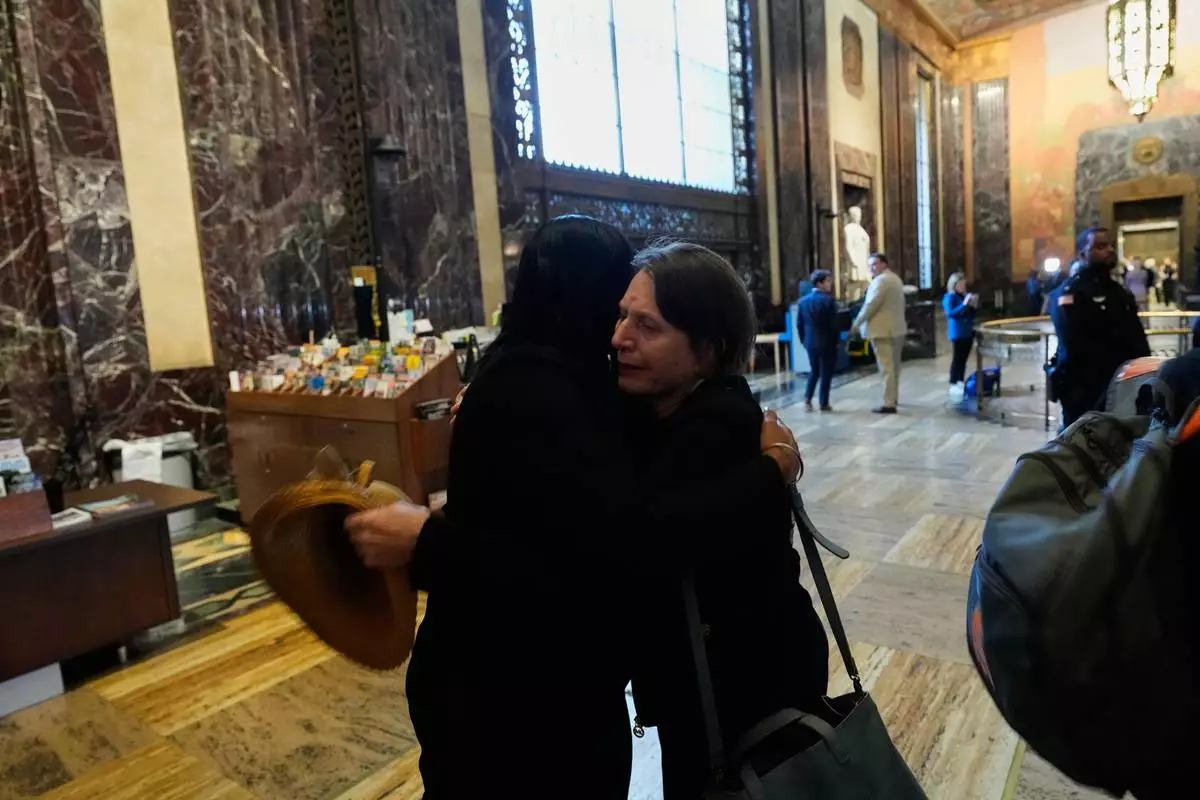
Mary Anne Mushatt, of the League of Women Voters and the Orleans Parish Democratic Committee, right, hugs Rep. Tammy T. Phelps, D-District 3, after a redistricting plan to eliminate a majority-Black congressional district, in response to a U.S. Supreme Court ruling, was passed by the House in Baton Rouge, La., Thursday, May 28, 2026. (AP Photo/Gerald Herbert)
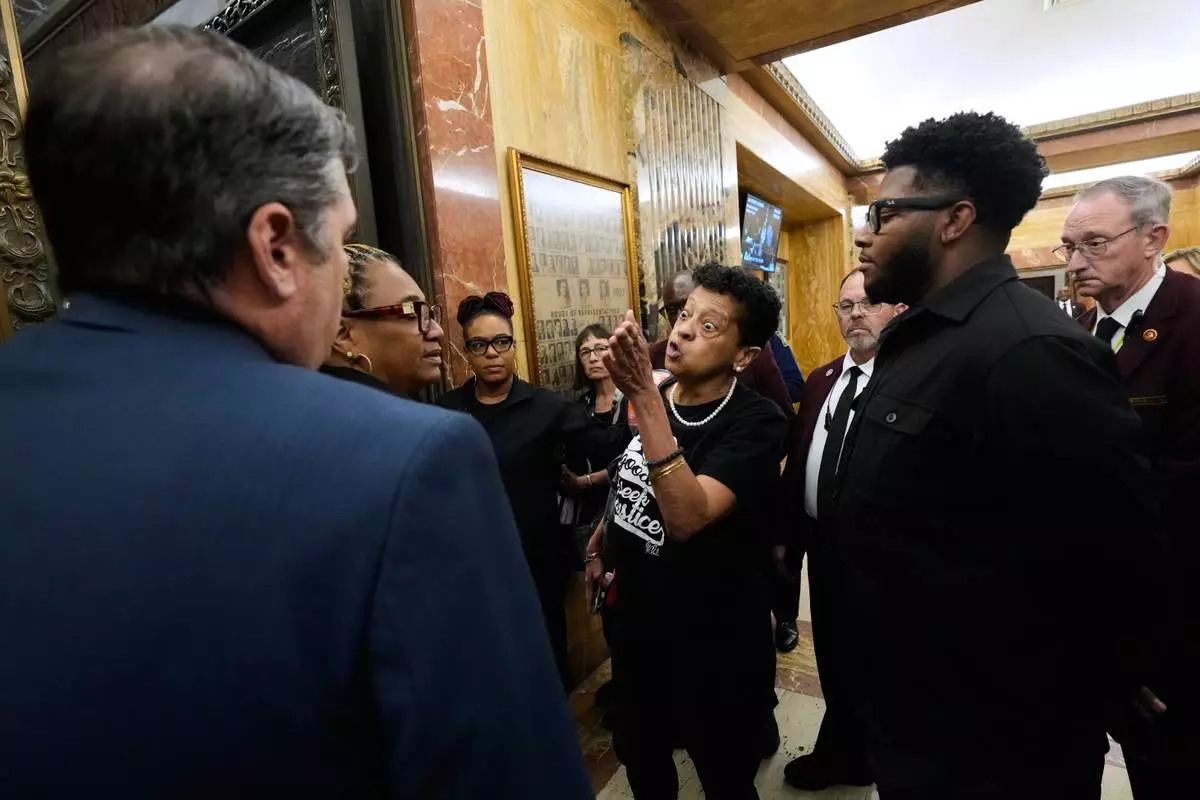
A person opposed to the redistricting plan reacts as she leaves the Louisiana House chambers after the plan to eliminate a majority-Black congressional district, in response to a U.S. Supreme Court ruling, was passed in Baton Rouge, La., Thursday, May 28, 2026. (AP Photo/Gerald Herbert)
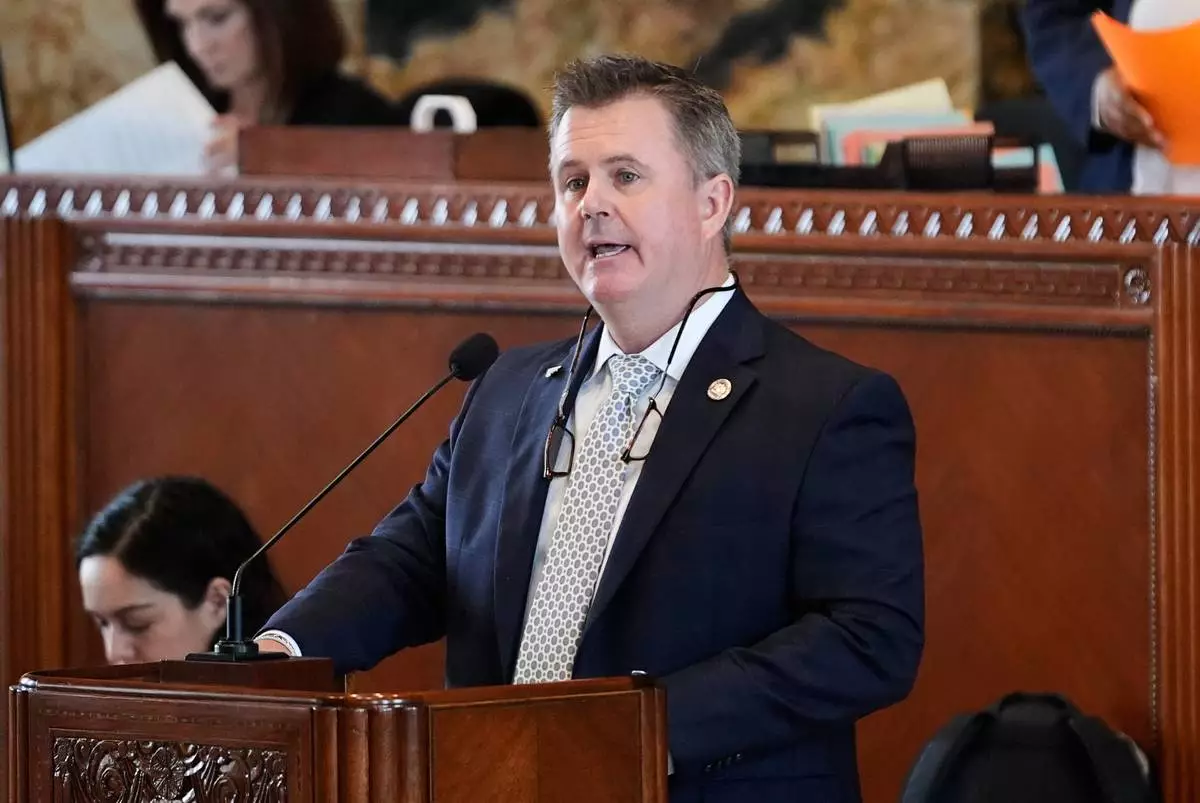
Louisiana Rep. Gerald Beaullieu, IV, R-Dist 48, speaks prior to a Louisiana House vote on a redistricting plan to eliminate a majority-Black congressional district in response to a U.S. Supreme Court ruling, in Baton Rouge, La., Thursday, May 21, 2026. (AP Photo/Gerald Herbert)
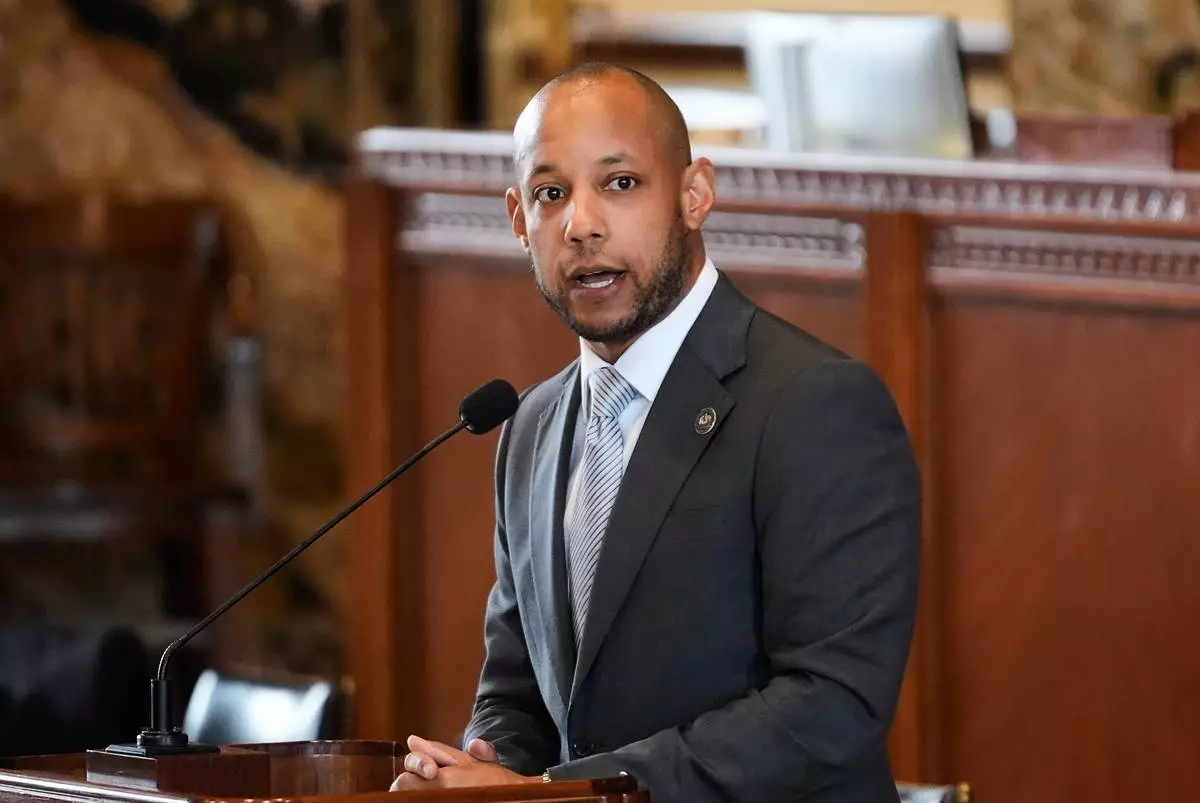
Louisiana Rep. Kyle M. Green, Jr., D-Dist 83, speaks prior to a Louisiana House vote on a redistricting plan to eliminate a majority-Black congressional district in response to a U.S. Supreme Court ruling, in Baton Rouge, La., Thursday, May 21, 2026. (AP Photo/Gerald Herbert)
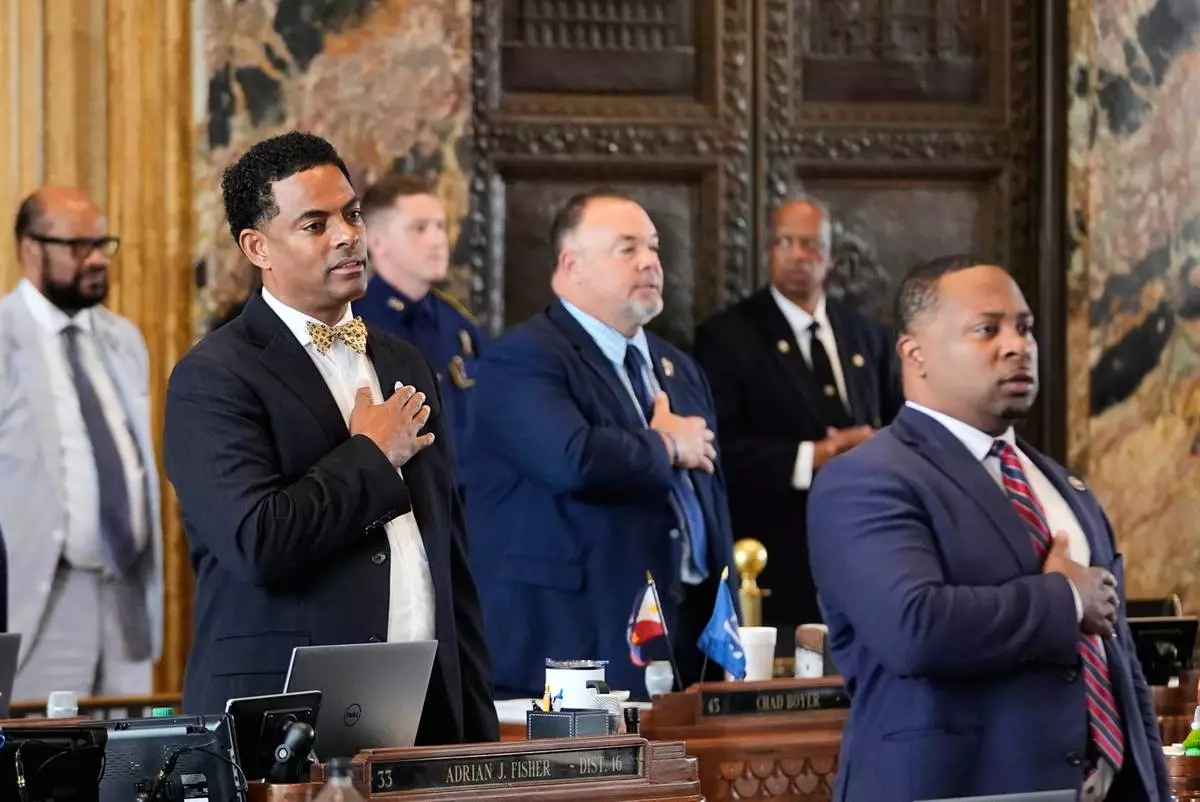
Louisiana Reps. Adrian Fisher, D-Dist 16, left, Chad Michael Boyer, R-Dist 46, and C. Travis Johnson, D-Dist 21, right, recite the pledge of allegiance prior to a house vote on a redistricting plan to eliminate a majority-Black congressional district in response to a U.S. Supreme Court ruling, in Baton Rouge, La., Thursday, May 21, 2026. (AP Photo/Gerald Herbert)