Skip to Content Facebook Feature Image

Under President Milei's austerity, disabled Argentines risk losing essential services

News

Under President Milei's austerity, disabled Argentines risk losing essential services
News

News

Under President Milei's austerity, disabled Argentines risk losing essential services

2026-05-28 15:15 Last Updated At:15:54

MORENO, Argentina (AP) — Analía Celis, a 34-year-old with intellectual disability and cerebral palsy, cannot walk, but sports therapy eased her taut muscles. She cannot work, but baking gave her a sense of independence. She struggles to speak, but painting with her peers helped her connect without words.

Now President Javier Milei of Argentina has taken his signature chain saw to these specialized therapy programs that for decades have represented a lifeline to Celis — and many more of the estimated 5 million Argentines with disabilities.

More Images
Ivan Ferreiro rides down the street in his wheelchair in Moreno, on the outskirts of Buenos Aires, Argentina Wednesday, May 13, 2026. (AP Photo/Natacha Pisarenko)

Ivan Ferreiro rides down the street in his wheelchair in Moreno, on the outskirts of Buenos Aires, Argentina Wednesday, May 13, 2026. (AP Photo/Natacha Pisarenko)

Fernando Sanchez holds a seedling from the vegetable garden at a nonprofit center that supports people with disabilities in Moreno, on the outskirts of Buenos Aires, Argentina, Tuesday, May 5, 2026. (AP Photo/Natacha Pisarenko)

Fernando Sanchez holds a seedling from the vegetable garden at a nonprofit center that supports people with disabilities in Moreno, on the outskirts of Buenos Aires, Argentina, Tuesday, May 5, 2026. (AP Photo/Natacha Pisarenko)

Camila Da Silva makes cakes at a nonprofit center that supports people with disabilities, in Moreno on the outskirts of Buenos Aires, Argentina, Tuesday, May 5, 2026. (AP Photo/Natacha Pisarenko)
Camila Da Silva makes cakes at a nonprofit center that supports people with disabilities, in Moreno on the outskirts of Buenos Aires, Argentina, Tuesday, May 5, 2026. (AP Photo/Natacha Pisarenko)

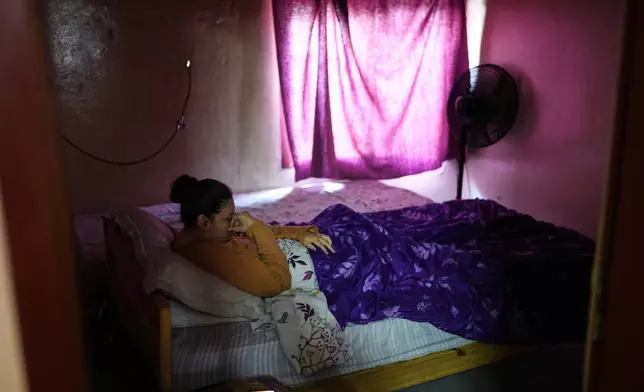
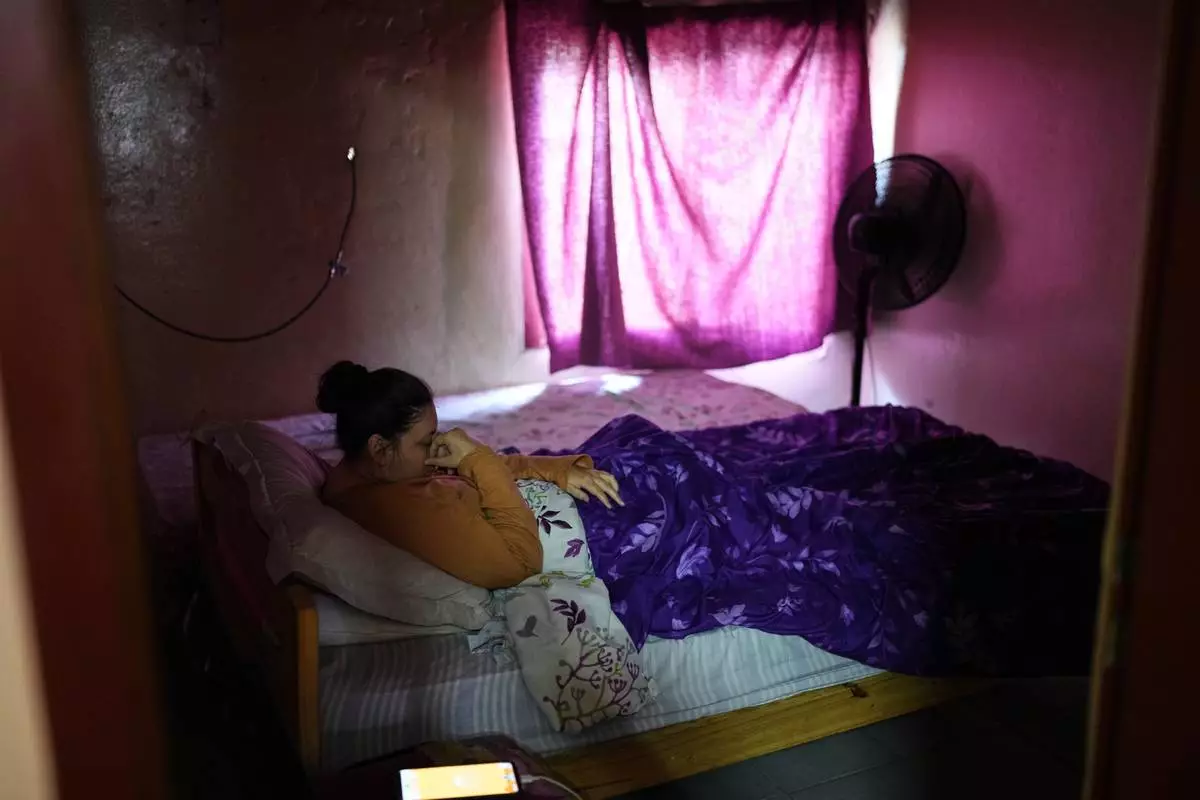
Analia Noemi Celis, who has cerebral palsy, lays on her bed at her home in Moreno, on the outskirts of Buenos Aires, Argentina Wednesday, May 13, 2026. (AP Photo/Natacha Pisarenko)

Analia Noemi Celis, who has cerebral palsy, lays on her bed at her home in Moreno, on the outskirts of Buenos Aires, Argentina Wednesday, May 13, 2026. (AP Photo/Natacha Pisarenko)

Ramito Fardelli exercises at a nonprofit center that supports people with disabilities, in Moreno on the outskirts of Buenos Aires, Argentina, Tuesday, May 5, 2026. (AP Photo/Natacha Pisarenko)

Ramito Fardelli exercises at a nonprofit center that supports people with disabilities, in Moreno on the outskirts of Buenos Aires, Argentina, Tuesday, May 5, 2026. (AP Photo/Natacha Pisarenko)

In recent months, the government has frozen payments to organizations providing therapeutic and educational services to people with disabilities. Participants have been deprived of carefully designed routines, their advocates and families say, and elements of a social safety net once regarded as robust by regional standards have been dismantled.

“I never imagined we’d be at this point, selling our vehicles because we don’t have enough money to keep the lights on,” said Martín Lucero, the legal representative of Argentine nonprofit Andar that runs a day center for people with disabilities outside Buenos Aires.

Andar has been so squeezed that it stopped running round-trip bus commutes to the center two months ago, stranding Celis and dozens of others across the sprawling Buenos Aires suburb of Moreno who depended on its free, customized transport to attend.

“The only solution can't be cutting off a person from a space they need for their development,” Lucero said. “This is a political choice.”

Since Milei took office in late 2023, his austerity agenda has made him an icon of the global conservative backlash against the liberal establishment. Much like its allies in the Trump administration, his government has portrayed the cuts to disability programs as part of a reform process aimed at eliminating fraud and waste in federal bureaucracy.

A spokesperson for the president did not respond to multiple requests for comment.

Argentina's disability care providers — including day centers like Andar but also residential programs, special education and job and skills training — operate on revenue received through billings of state-run insurance programs.

The debts of these nonprofits has been mounting due to irregular government payments and reimbursement rates held below sky-high inflation. But things got worse six months ago, they say, when the flow of money stopped altogether.

To reduce costs, they have increasingly slashed staff, delayed salaries, shrunk meals and shortened their hours. There is no official tally of how many therapeutic centers have been forced to close, but disability rights groups estimate up to 50 shut down this year, many in Argentina’s rural provinces.

“I want to tell the president to look at us, to really see us, to come here and meet us,” said Roman Pontecorvo, a 28-year-old with intellectual disability who discovered a passion for acting at Andar. “If Andar closes, many of us will be left with nothing. It will be total chaos."

Andar says around 30% of the 150 people with disabilities enrolled in its day program can no longer reach the center, a bucolic stretch of land with a soccer field, vegetable garden and professional-grade kitchen where participants can earn a monthly wage working for its catering service.

Without programming, therapists say, people with disabilities can quickly regress.

“She wakes up three or four times every night screaming that she wants to go to the farm,” said Celis’ mother, Clementina Tabares, 74, who now misses her own medical appointments because Celis requires round-the-clock care. Celis spends all day in bed with a blanket hanging over the window to block out the sun and rock music blaring from her phone, occasionally groaning in agitation.

“She's shutting herself away,” Tabares said. “That scares me.”

There’s a simple fix, rights advocates say: implementing a law passed last year that declared an emergency for people with disabilities. It boosts benefits that have lost 30% of their value to inflation and guarantees funding for providers until at least December 2026.

But Milei has stalled the law’s entry into force, arguing that its fiscal impact — roughly 0.35% of gross domestic product — would undermine his hard-won budget surplus, Argentina's first after decades of deficit.

“Using noble causes, they pass laws that drive the nation into bankruptcy,” Milei said after vetoing the law last year.

Congress overrode his veto. Court battles are playing out over the allocation of money.

In a stinging decision, a federal judge on May 18 gave the government 72 hours to restore frozen payments to providers in compliance with the law, writing that, for people with disabilities, “the interruption of treatment generates setbacks in development.” The government appealed.

Milei has meanwhile introduced a bill that would formally dismantle the current system of state payments to therapeutic centers, empowering private insurance programs and provincial governments to negotiate their own rates with providers.

It would also place new restrictions on who qualifies for benefits, ending subsidies for all but those below the poverty line with disabilities classified as “complete” and “permanent.”

The bill, which has drawn backlash from rights groups, is awaiting congressional debate.

Months before billionaire Elon Musk — of the Trump administration’s short-lived Department of Government Efficiency — falsely claimed that millions of dead people had received Social Security checks, Argentine officials alleged a similarly surreal scam: that beneficiaries were fabricating medical tests to cheat the government out of disability money, including, in at least one case, by submitting X-rays of an injured dog.

The extent of such schemes remains unclear. Authorities have not offered evidence of rampant abuse.

Prosecutors, however, are investigating accusations of corruption at a higher level: In recordings leaked last year, the ex-director of the national disability agency, Diego Spagnuolo, described Karina Milei, the president’s sister and closest adviser, taking hundreds of thousands of dollars in kickbacks from pharmaceutical companies seeking public contracts.

Milei has denied wrongdoing on his sister’s behalf. As auditing efforts acquired urgency, the government shut down the national disability agency, Andis, laying off hundreds of workers and consolidating disability programs under the Health Ministry.

Few dispute the need for more transparency. But critics say the government appears less interested in improving the system than in tearing it down it altogether.

“Dismantling institutions without building alternatives leaves people abandoned,” said Celeste Fernandez, co-director of the Civic Association for Equality and Justice in Buenos Aires, which led a successful lawsuit against the government last year after Andis suspended 140,000 disability checks on suspicion of fraud.

In most cases, the government later acknowledged, beneficiaries had simply failed to obey or understand the summons to attend in-person assessments — often at offices hundreds of miles from their homes.

“The government is not carrying out a serious reform,” she said. “It is simply emptying the system.”
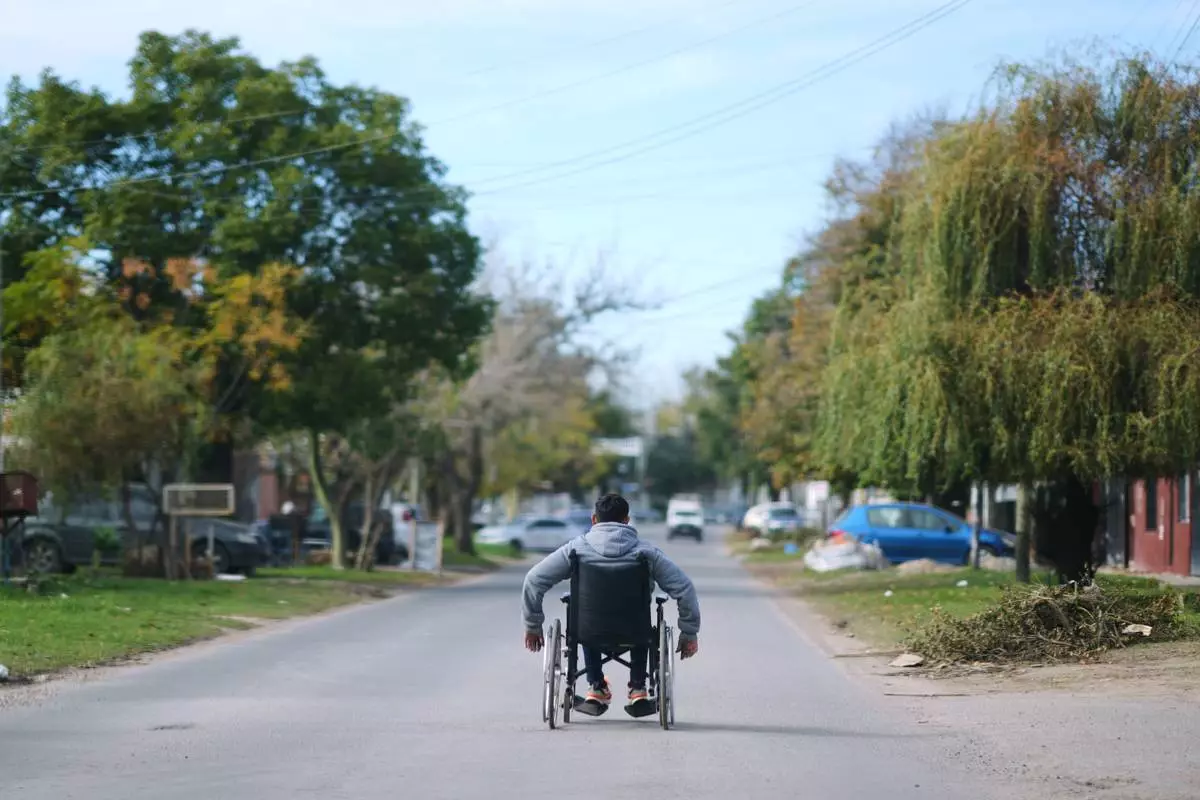
Ivan Ferreiro rides down the street in his wheelchair in Moreno, on the outskirts of Buenos Aires, Argentina Wednesday, May 13, 2026. (AP Photo/Natacha Pisarenko)

Ivan Ferreiro rides down the street in his wheelchair in Moreno, on the outskirts of Buenos Aires, Argentina Wednesday, May 13, 2026. (AP Photo/Natacha Pisarenko)

Fernando Sanchez holds a seedling from the vegetable garden at a nonprofit center that supports people with disabilities in Moreno, on the outskirts of Buenos Aires, Argentina, Tuesday, May 5, 2026. (AP Photo/Natacha Pisarenko)

Fernando Sanchez holds a seedling from the vegetable garden at a nonprofit center that supports people with disabilities in Moreno, on the outskirts of Buenos Aires, Argentina, Tuesday, May 5, 2026. (AP Photo/Natacha Pisarenko)

Camila Da Silva makes cakes at a nonprofit center that supports people with disabilities, in Moreno on the outskirts of Buenos Aires, Argentina, Tuesday, May 5, 2026. (AP Photo/Natacha Pisarenko)
Camila Da Silva makes cakes at a nonprofit center that supports people with disabilities, in Moreno on the outskirts of Buenos Aires, Argentina, Tuesday, May 5, 2026. (AP Photo/Natacha Pisarenko)

Analia Noemi Celis, who has cerebral palsy, lays on her bed at her home in Moreno, on the outskirts of Buenos Aires, Argentina Wednesday, May 13, 2026. (AP Photo/Natacha Pisarenko)

Analia Noemi Celis, who has cerebral palsy, lays on her bed at her home in Moreno, on the outskirts of Buenos Aires, Argentina Wednesday, May 13, 2026. (AP Photo/Natacha Pisarenko)

Ramito Fardelli exercises at a nonprofit center that supports people with disabilities, in Moreno on the outskirts of Buenos Aires, Argentina, Tuesday, May 5, 2026. (AP Photo/Natacha Pisarenko)

Ramito Fardelli exercises at a nonprofit center that supports people with disabilities, in Moreno on the outskirts of Buenos Aires, Argentina, Tuesday, May 5, 2026. (AP Photo/Natacha Pisarenko)
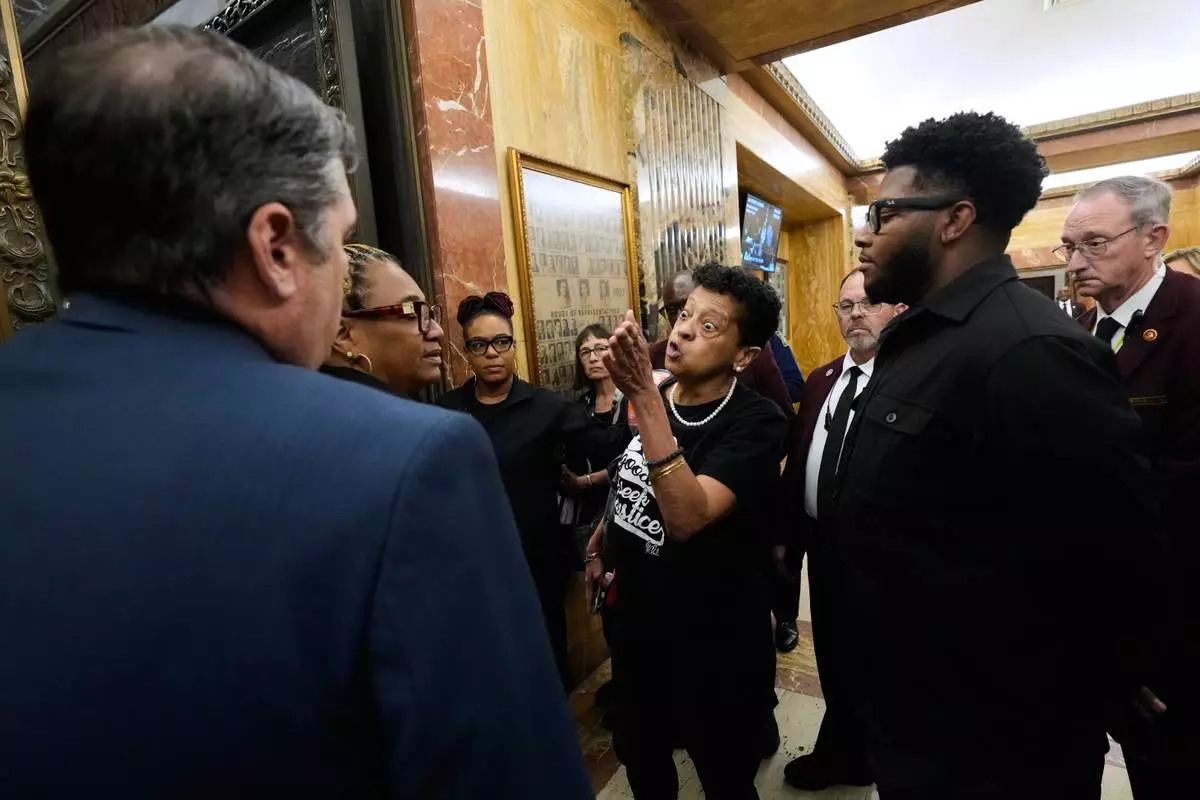
BATON ROUGE, La. (AP) — Louisiana lawmakers passed a new congressional map Friday designed to pick up a Republican seat while leaving the state with just one of its two majority-Black House districts represented by Democrats.

Approval of the new House map came a month after the U.S. Supreme Court struck down the state’s current map as an illegal racial gerrymander, weakening the landmark 1965 federal Voting Rights Act. That decision intensified a national redistricting battle fueled by President Donald Trump’s efforts to protect the Republicans’ slim House majority in the midterm elections.

Louisiana Republicans had considered drawing a map giving the party a shot at winning all six of the state’s U.S. House seats. But that would have required adding more Black voters to Republican-held districts, potentially backfiring with losses. Some Republicans said a 5-1 map better protects U.S. House Speaker Mike Johnson from facing a difficult reelection.

Republican Gov. Jeff Landry is expected to sign the new map into law.

In the weeks following the Supreme Court’s decision, several other Republican-controlled Southern states have seized upon a weakened federal Voting Rights Act to try to redraw their own congressional districts. It’s the latest flare-up in a heated national redistricting battle heading into the November elections, spurred along by President Donald Trump.

So far, Republicans are winning the redistricting contest. But that doesn’t necessarily mean they will win a narrowly divided U.S. House in November. So far, Republicans think they could gain as many as 14 seats from their redistricting efforts, while Democrats think they could gain six seats from new districts in California and Utah.

In Louisiana, Republicans currently hold four of six congressional seats on a court-ordered map drawn in 2024 to comply with the Voting Rights Act by including a second district with a majority-Black population.

That map, however, was challenged in court, and the Supreme Court responded on April 30 by striking it down as an illegal racial gerrymander.

Landry postponed the state’s U.S. House primary, scheduled for May 16, until later this summer to allow time for Republican lawmakers to draw and pass a new map.

The proposed map redraws Democratic U.S. Rep. Cleo Fields' district, clustering it around predominantly white communities in the Baton Rouge area and southern Louisiana. It also adds part of Baton Rouge to a heavily Democratic, majority-Black district based in New Orleans currently represented by Democratic U.S. Rep. Troy Carter.

More lawsuits were expected over the new map.

Democrats say the proposed map could still constitute a racial gerrymander because it packs Black voters into a single congressional district. Meanwhile, the plaintiffs in the U.S. Supreme Court's decision criticized the Legislature's map for leaving a majority-Black district in place.

Several other Southern states also have acted on redistricting since the Supreme Court's decision.

Florida’s Legislature passed new congressional districts just hours after the ruling, completing a redrawing that was in the works in anticipation of the decision. It could yield Republicans as many as four additional seats in the midterm elections.

Tennessee adopted new U.S. House districts a week after the ruling, carving up a majority-Black district based in Memphis in a Republican attempt to win an additional seat.

In Alabama, Republicans are attempting to pick up another seat by redrawing two districts where Black residents compose a majority or close to it. Democrats hold both seats, and the proposal is mired in a court battle.

South Carolina’s Senate, meanwhile, decided against redistricting, despite pressure from Trump.

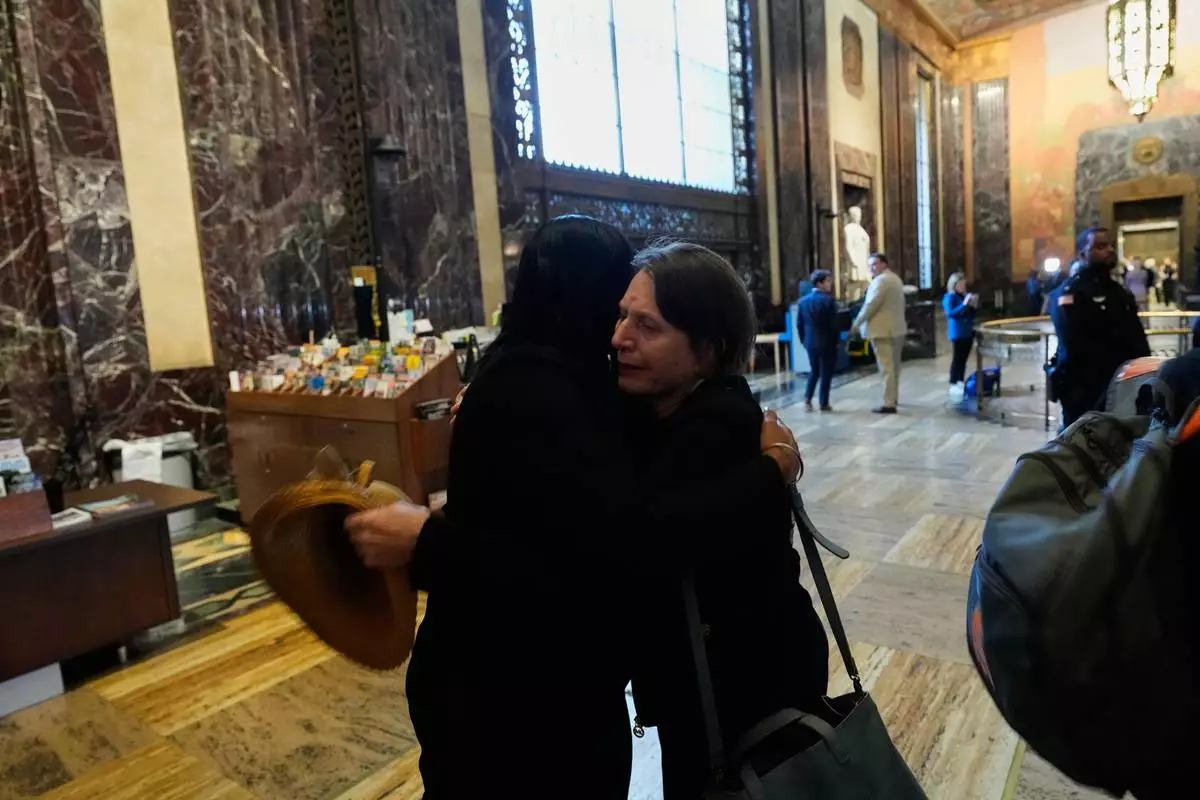
Mary Anne Mushatt, of the League of Women Voters and the Orleans Parish Democratic Committee, right, hugs Rep. Tammy T. Phelps, D-District 3, after a redistricting plan to eliminate a majority-Black congressional district, in response to a U.S. Supreme Court ruling, was passed by the House in Baton Rouge, La., Thursday, May 28, 2026. (AP Photo/Gerald Herbert)

Mary Anne Mushatt, of the League of Women Voters and the Orleans Parish Democratic Committee, right, hugs Rep. Tammy T. Phelps, D-District 3, after a redistricting plan to eliminate a majority-Black congressional district, in response to a U.S. Supreme Court ruling, was passed by the House in Baton Rouge, La., Thursday, May 28, 2026. (AP Photo/Gerald Herbert)

A person opposed to the redistricting plan reacts as she leaves the Louisiana House chambers after the plan to eliminate a majority-Black congressional district, in response to a U.S. Supreme Court ruling, was passed in Baton Rouge, La., Thursday, May 28, 2026. (AP Photo/Gerald Herbert)

A person opposed to the redistricting plan reacts as she leaves the Louisiana House chambers after the plan to eliminate a majority-Black congressional district, in response to a U.S. Supreme Court ruling, was passed in Baton Rouge, La., Thursday, May 28, 2026. (AP Photo/Gerald Herbert)

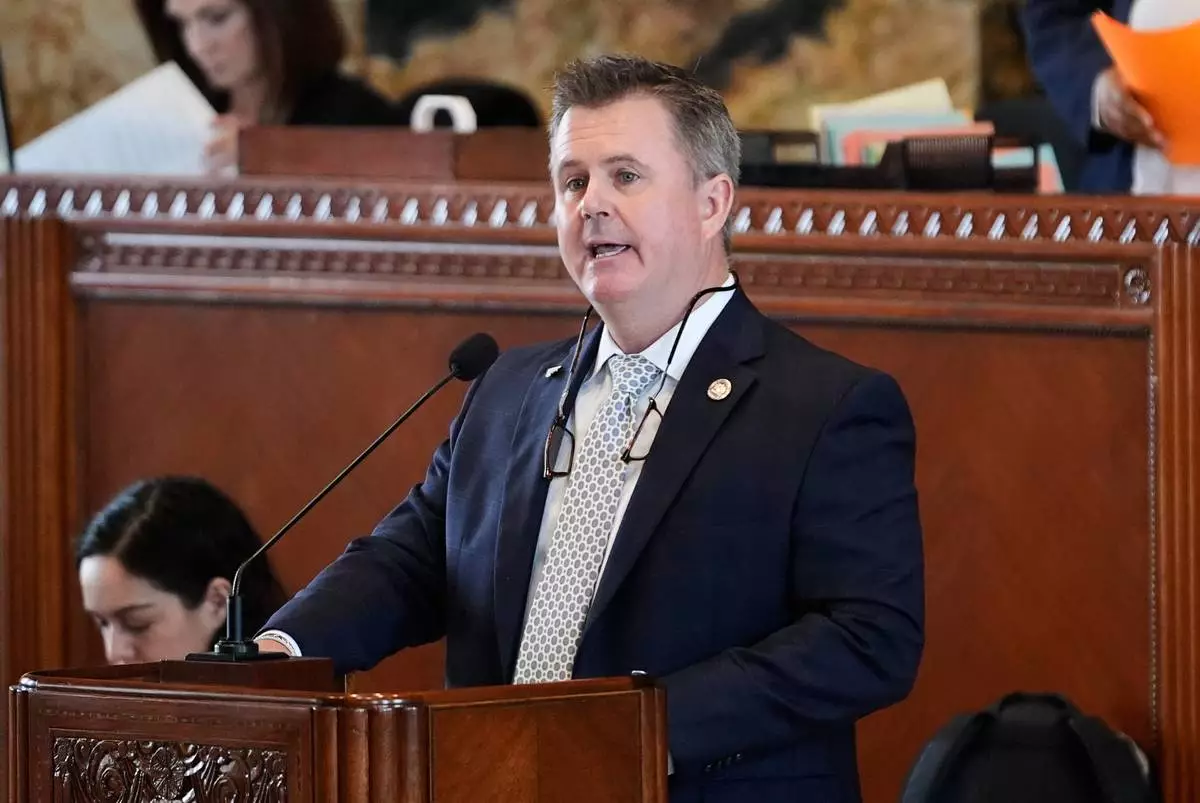
Louisiana Rep. Gerald Beaullieu, IV, R-Dist 48, speaks prior to a Louisiana House vote on a redistricting plan to eliminate a majority-Black congressional district in response to a U.S. Supreme Court ruling, in Baton Rouge, La., Thursday, May 21, 2026. (AP Photo/Gerald Herbert)

Louisiana Rep. Gerald Beaullieu, IV, R-Dist 48, speaks prior to a Louisiana House vote on a redistricting plan to eliminate a majority-Black congressional district in response to a U.S. Supreme Court ruling, in Baton Rouge, La., Thursday, May 21, 2026. (AP Photo/Gerald Herbert)

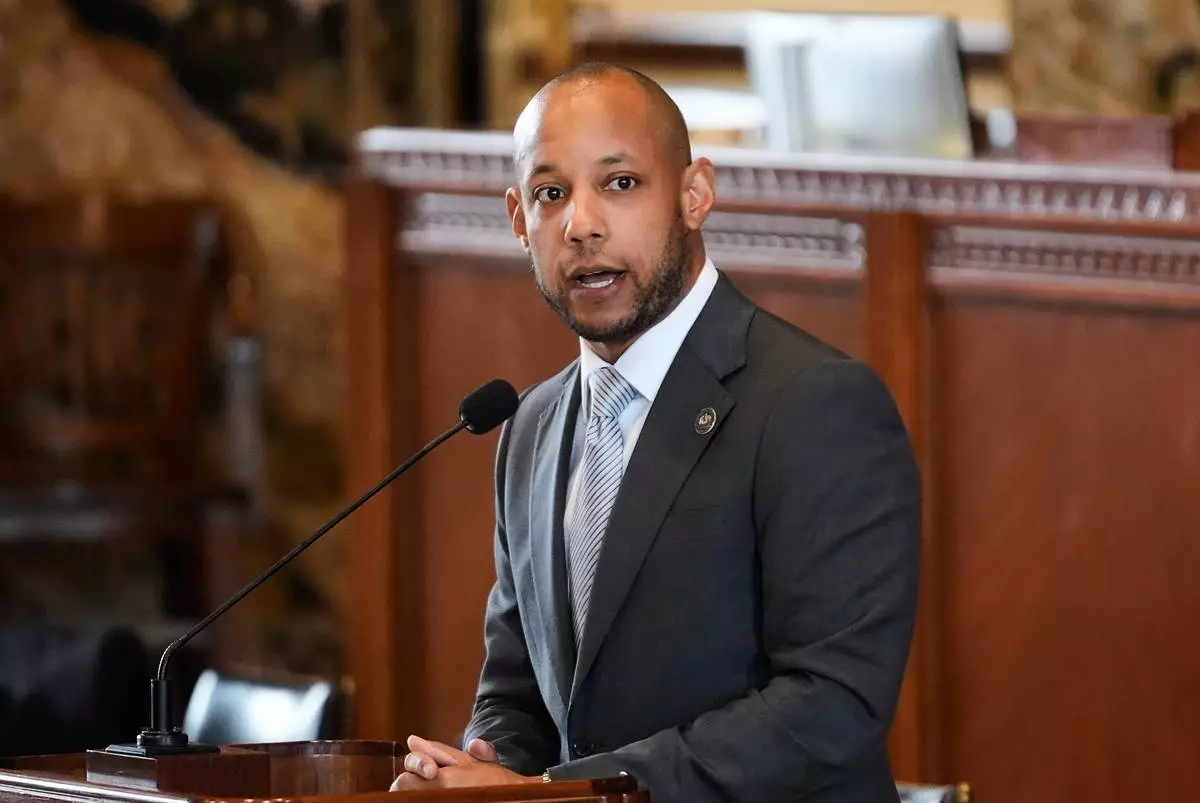
Louisiana Rep. Kyle M. Green, Jr., D-Dist 83, speaks prior to a Louisiana House vote on a redistricting plan to eliminate a majority-Black congressional district in response to a U.S. Supreme Court ruling, in Baton Rouge, La., Thursday, May 21, 2026. (AP Photo/Gerald Herbert)

Louisiana Rep. Kyle M. Green, Jr., D-Dist 83, speaks prior to a Louisiana House vote on a redistricting plan to eliminate a majority-Black congressional district in response to a U.S. Supreme Court ruling, in Baton Rouge, La., Thursday, May 21, 2026. (AP Photo/Gerald Herbert)

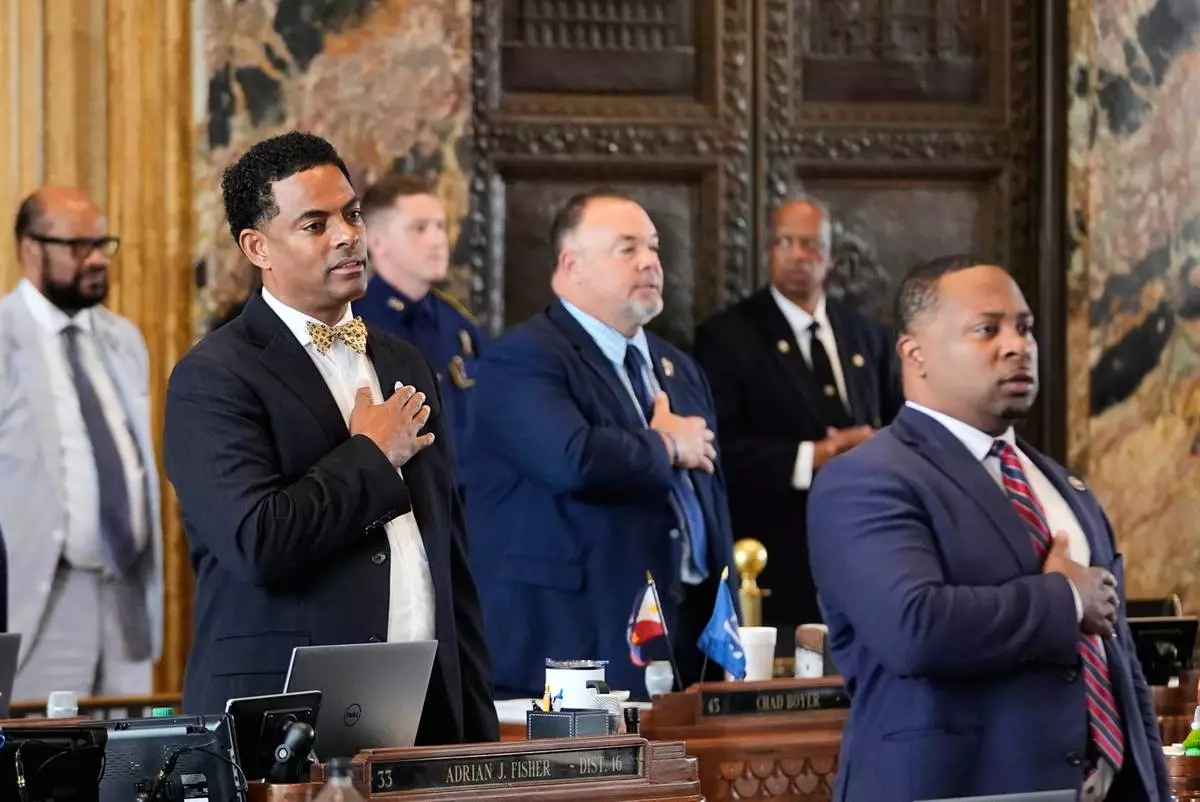
Louisiana Reps. Adrian Fisher, D-Dist 16, left, Chad Michael Boyer, R-Dist 46, and C. Travis Johnson, D-Dist 21, right, recite the pledge of allegiance prior to a house vote on a redistricting plan to eliminate a majority-Black congressional district in response to a U.S. Supreme Court ruling, in Baton Rouge, La., Thursday, May 21, 2026. (AP Photo/Gerald Herbert)

Louisiana Reps. Adrian Fisher, D-Dist 16, left, Chad Michael Boyer, R-Dist 46, and C. Travis Johnson, D-Dist 21, right, recite the pledge of allegiance prior to a house vote on a redistricting plan to eliminate a majority-Black congressional district in response to a U.S. Supreme Court ruling, in Baton Rouge, La., Thursday, May 21, 2026. (AP Photo/Gerald Herbert)

Recommended Articles