MIAMI (AP) — Kyle Adler’s discovery that he was stolen from his Chilean mother as a baby came as a shock, sparking an identity crisis that lasted years and led to a reunion with his biological mother earlier this year.
“It’s been so eye-opening to see who my people are,” Adler said. “I feel the love, I feel the compassion, the care — it’s nice to have a family again.”
Click to Gallery
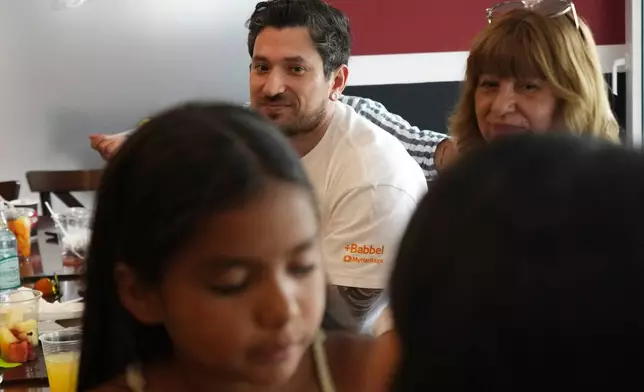
Kyle Adler, a 36-year-old Chilean American who was taken from his family at nine months old and illegally adopted, takes part in a family brunch alongside his birth mother, Ana Maria Navarrete, after traveling from the U.S. to meet her for the first time, in Santiago, Chile, Saturday, Feb. 14, 2026. (AP Photo/Esteban Felix)
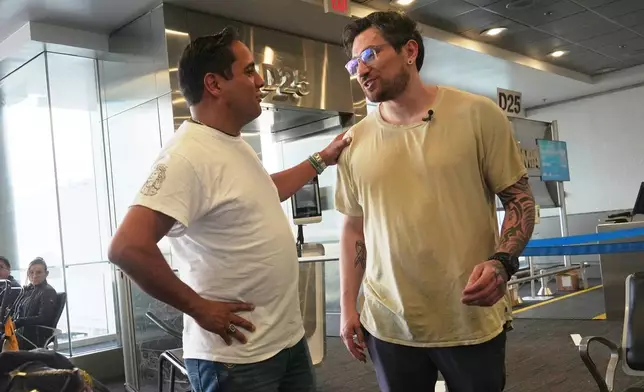
Tyler Graf, Tyler, the founder and CEO of Connecting Roots, and Kyle Adler, a 36-year-old Chilean American taken from his family at nine months old and illegally adopted, wait to board a flight to Chile where Adler will meet his birth mother, in Miami, Friday, Feb. 13, 2026. (AP Photo/Marta Lavandier)
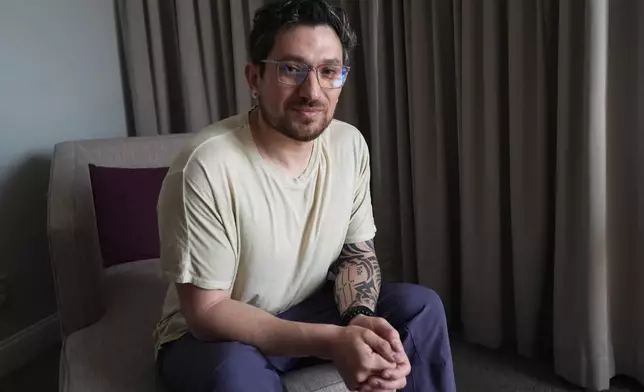
Kyle Adler, a 36-year-old Chilean American taken from his family at nine months old and illegally adopted, poses for a photo in Miami, Friday, Feb. 13, 2026, before heading to the airport to travel to Chile to meet his birth mother. (AP Photo/Marta Lavandier)
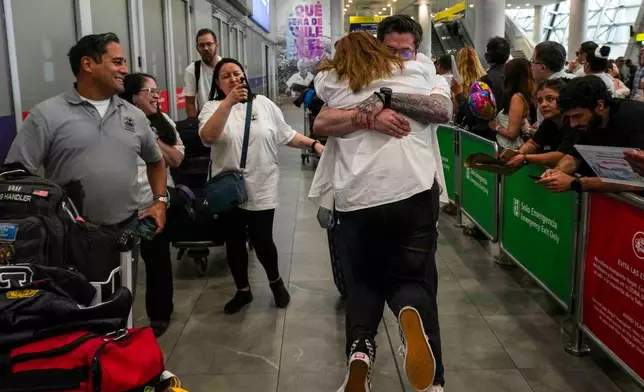
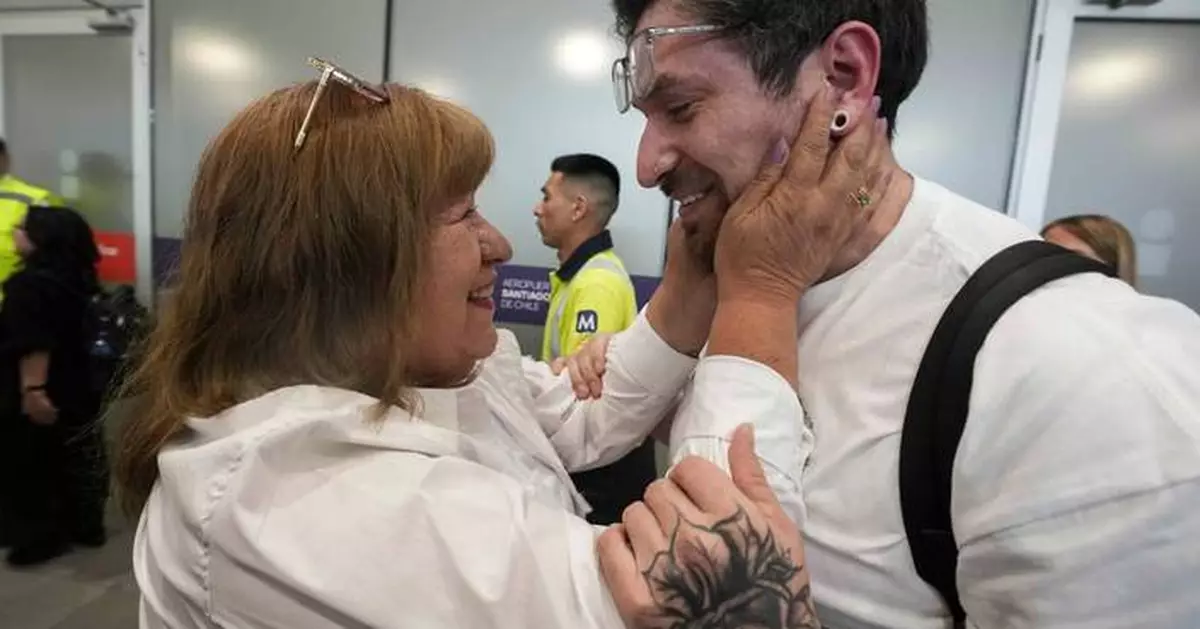
Kyle Adler, a 36-year-old Chilean American who was taken from his family at nine months old and illegally adopted, embraces his birth mother, Ana Maria Navarrete, after traveling from the U.S. to meet her for the first time, in Santiago, Chile, Saturday, Feb. 14, 2026. (AP Photo/Esteban Felix)
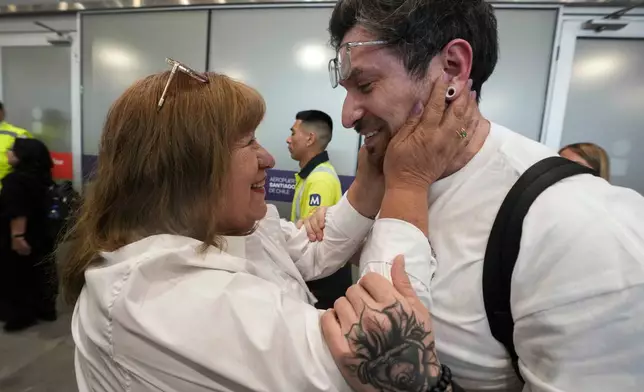
Kyle Adler, a 36-year-old Chilean American who was taken from his family at nine months old and illegally adopted, embraces his birth mother, Ana Maria Navarrete, after traveling from the U.S. to meet her for the first time, in Santiago, Chile, Saturday, Feb. 14, 2026. (AP Photo/Esteban Felix)
Adopted by an American family when he was 9 months old, the 36-year-old is one of thousands of children who were stolen from Chilean families during the 17-year dictatorship of Gen. Augusto Pinochet and among hundreds who have been reunited with their birth families thanks to DNA tracing and organizations that are helping Chilean adoptees investigate their pasts. Others are also working toward justice for the families ripped apart.
The American family that adopted Adler in 1990 raised him in an affluent Chicago suburb.
“My parents didn’t steal me; they didn’t name me Kyle out of malice. They saw me as who they wanted me to become, and there’s a lot of love that was put into that,” Adler said of his adoptive parents Mike and Connie Adler. Adler believes neither of them knew the circumstances surrounding his adoption. He said neither were initially supportive of his decision to find his birth mother before they died in 2022.
He grew up to be an overachiever who in adulthood wanted more meaning to his life, he said.
“Suddenly now I found myself where I didn’t know what to do. I knew I was adopted and at that point, I was just like, I need to find my mom.”
Adler’s biological mother, Ana Maria Navarrete, was a 19-year-old single parent working nights at a fish shop in the seaside city of Coronel, some 533 kilometers (331 miles) south of the capital. She had named him Marcos Antonio Navarrete.
She could only afford a room for herself, so she hired a woman who took Adler into her home as a baby and looked after him. Navarrete told The Associated Press she visited him whenever she was not working.
One day, the caregiver told her he was taken by an American couple after a local priest made arrangements for a baby “in need of a family.”
“And she let them have him,” Navarrete told AP, furious and ashamed. The AP could not independently verify all the details of what occurred.
A police investigator told her the baby had likely been taken as part of a wide-reaching counterfeit adoption network that involved adoption agencies, immigration officials, judges, nurses and even doctors.
No one was held accountable, Navarrete said, and “those years afterward were some of the worst years of my life.”
Lacking family support, she said she eventually surrendered the idea she would get her son back.
“Justice for the poor did not exist in Chile and it still does not,” said Constanza Del Rio, founder and executive director of Nos Buscamos, a nonprofit organization with online data for thousands of cases. The government estimates more than 20,000 children were stolen from families.
Children of the poor and Indigenous populations were targeted during the Pinochet regime from 1973 to 1990, said Jimmy Lippert Thyden González, who was also illegally adopted and became a human rights lawyer.
“It was an effort to eliminate and eradicate the poor class. It was a way of eradicating the Indigenous population, the uneducated population,” he said.
In early 2017, Adler came across the Nos Buscamos Facebook group while Googling the term “Chilean birth mom search” online, he said. And that’s when he messaged Del Rio.
Within three months, Del Rio had confirmed Adler's origin story and organized a virtual reunion.
Initially, Adler felt crushed to find out he was adopted illegally, sending him into an identity crisis that led to years of therapy.
Then last year, Adler finally felt ready for answers.
A DNA test provided by genealogy platform MyHeritage, a global family history company based in Israel, confirmed a match between Adler and 56-year-old Navarrete of Santiago and “made it official,” he said.
MyHeritage partners with both Nos Buscamos and Connecting Roots, and other nonprofits doing similar work, to provide free at-home DNA testing kits for distribution to Chilean adoptees and suspected victims of child trafficking.
Tyler Graf, the founder and CEO of Connecting Roots, traveled with Adler.
Graf had also reunited with his birth mother Hilda Quezada Godoy decades after he was taken from her, and said it is now his mission to track others taken from families in Chile.
“Now it’s time to mend these families and bring everyone back home so they can see where they came from,” Graf told the AP.
Lippert Thyden González sued the Chilean government two years ago and hopes to lead the fight all the way to the Inter-American Court of Human Rights. He also founded the organization Grafting Hope, a nonprofit focused on educating U.S. lawmakers and fighting for the rights of survivors of counterfeit adoptions.
The Chilean government didn’t immediately respond to several messages seeking comment from AP.
“I want justice. Not just for me, but also for him because I don’t know the type of life he had,” Navarrete told AP days after reuniting with her son.
Navarrete is working with a law firm and hopes those involved will get jail-time.
“My birth mom’s just been wanting me to be alive,” Adler said ahead of boarding the flight from Miami in February.
The two were reunited two days after her 56th birthday on Valentine’s Day and an AP team was with them in Miami and Chile.
Tears flowed as Adler exited the international arrivals gate in Chile. Both mother and son were wearing white as Navarrete ran to embrace him. The tall, dark-haired son bent over to bury his face in his mother's hair.
“I’m so happy to be finally meeting him, my dream has finally come true,” Navarrete said.
The emotional reunion led to a fruitful week together visiting the beach in Coronel, the hospital where Adler was born and the house where he was taken from. They recovered a copy of his original birth certificate, and he met one of his four siblings. In Miami, he had previously met another sister and her daughter.
Back in Santiago, the two enjoyed keepsakes Adler brought with him as gifts: A framed graduation diploma, childhood photographs and a pair of baby shoes his adoptive parents had kept.
Adler is not a Spanish speaker so Connecting Roots provided a translator. These days, translation apps help them continue the conversation.
Navarrete said the time spent with her son was joyful but it also made her relive much of the pain of the past 35 years.
“It took me so long to find him. And then to spend a week together only to have him leave,” Navarrete said amid tears, “it's like I found him but I've now lost him all over again.”
She said she's hopeful the family will reunite in December. For Adler, the road to forgiveness continues but he hopes Navarrete is able to let go of the trauma.
“I’m not just the son that you lost, I’m the son that you found. I’m back to being your son,” he said.
The story has been updated to correct that Lippert Thyden González sued two years ago, not three years ago.
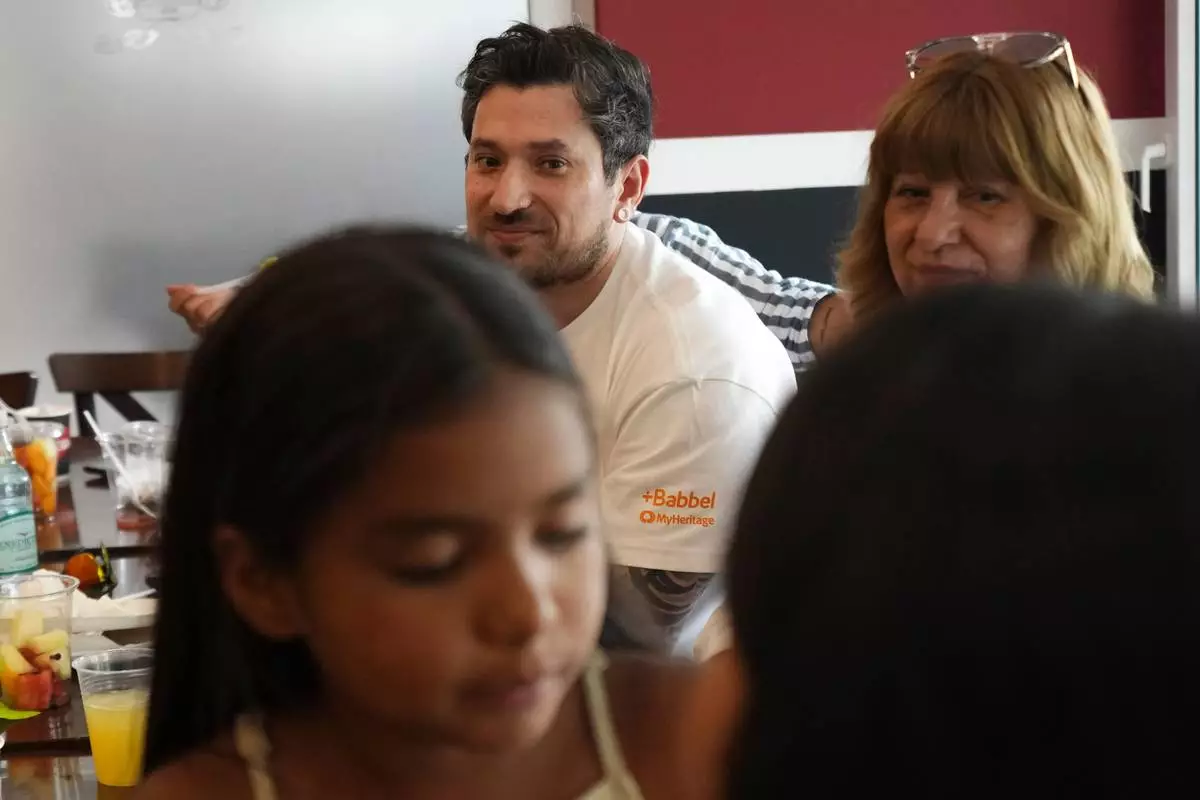
Kyle Adler, a 36-year-old Chilean American who was taken from his family at nine months old and illegally adopted, takes part in a family brunch alongside his birth mother, Ana Maria Navarrete, after traveling from the U.S. to meet her for the first time, in Santiago, Chile, Saturday, Feb. 14, 2026. (AP Photo/Esteban Felix)
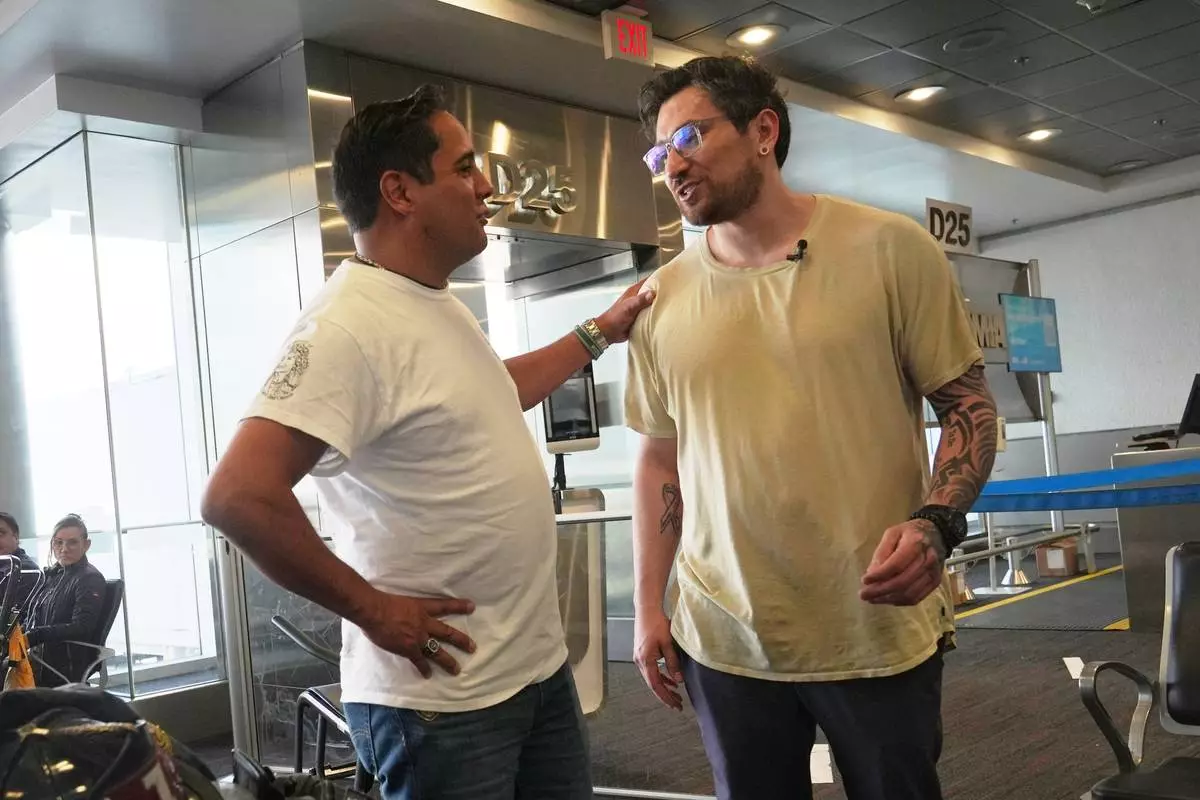
Tyler Graf, Tyler, the founder and CEO of Connecting Roots, and Kyle Adler, a 36-year-old Chilean American taken from his family at nine months old and illegally adopted, wait to board a flight to Chile where Adler will meet his birth mother, in Miami, Friday, Feb. 13, 2026. (AP Photo/Marta Lavandier)
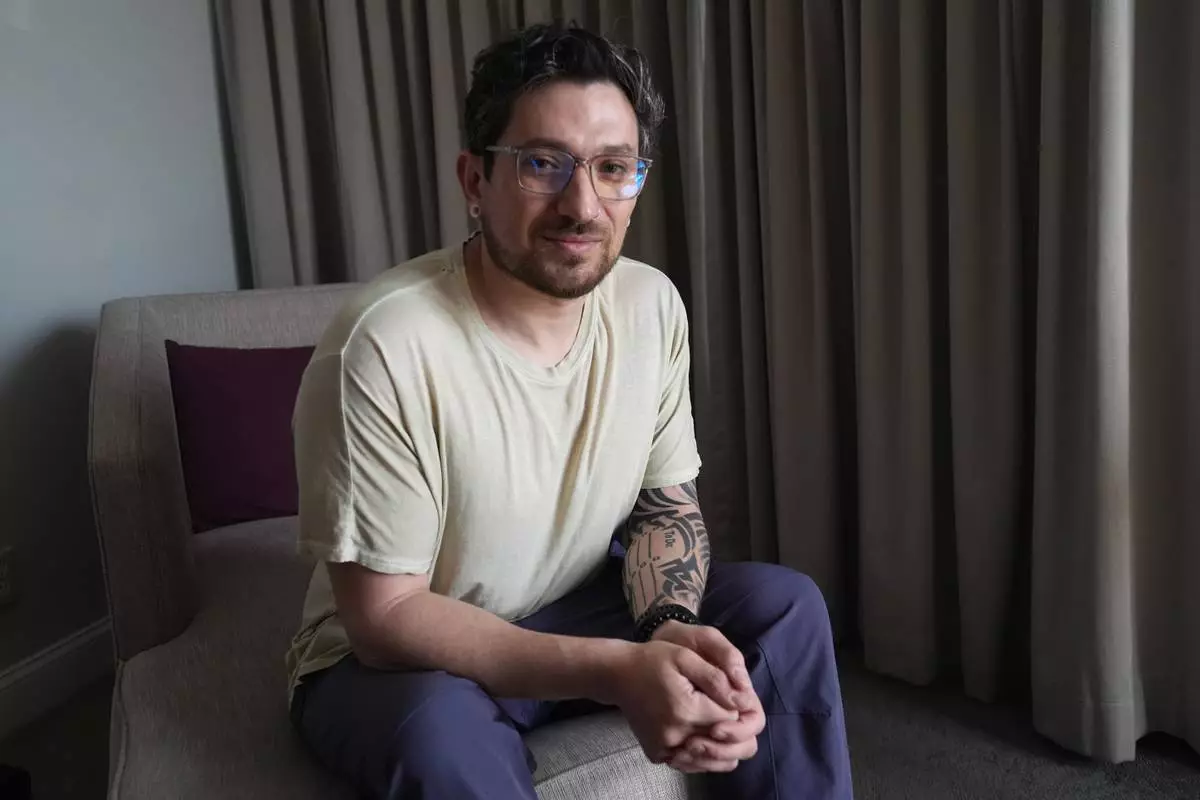
Kyle Adler, a 36-year-old Chilean American taken from his family at nine months old and illegally adopted, poses for a photo in Miami, Friday, Feb. 13, 2026, before heading to the airport to travel to Chile to meet his birth mother. (AP Photo/Marta Lavandier)
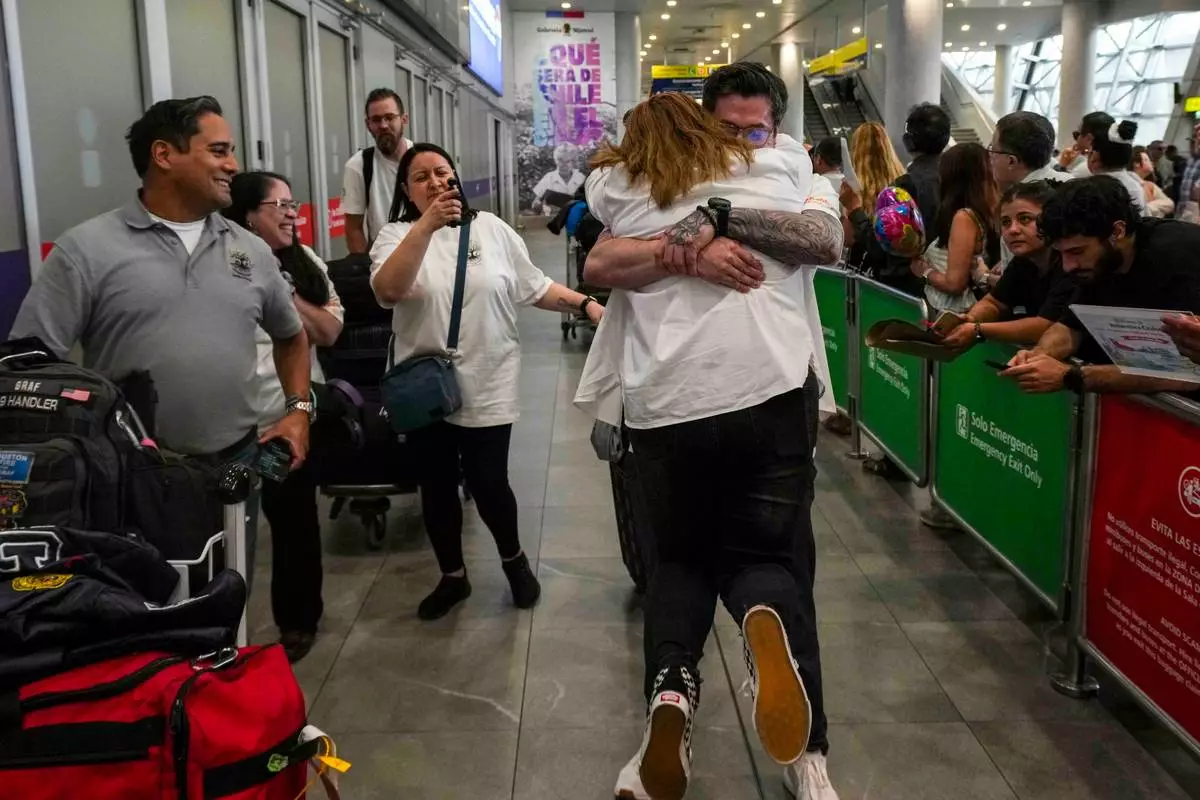
Kyle Adler, a 36-year-old Chilean American who was taken from his family at nine months old and illegally adopted, embraces his birth mother, Ana Maria Navarrete, after traveling from the U.S. to meet her for the first time, in Santiago, Chile, Saturday, Feb. 14, 2026. (AP Photo/Esteban Felix)
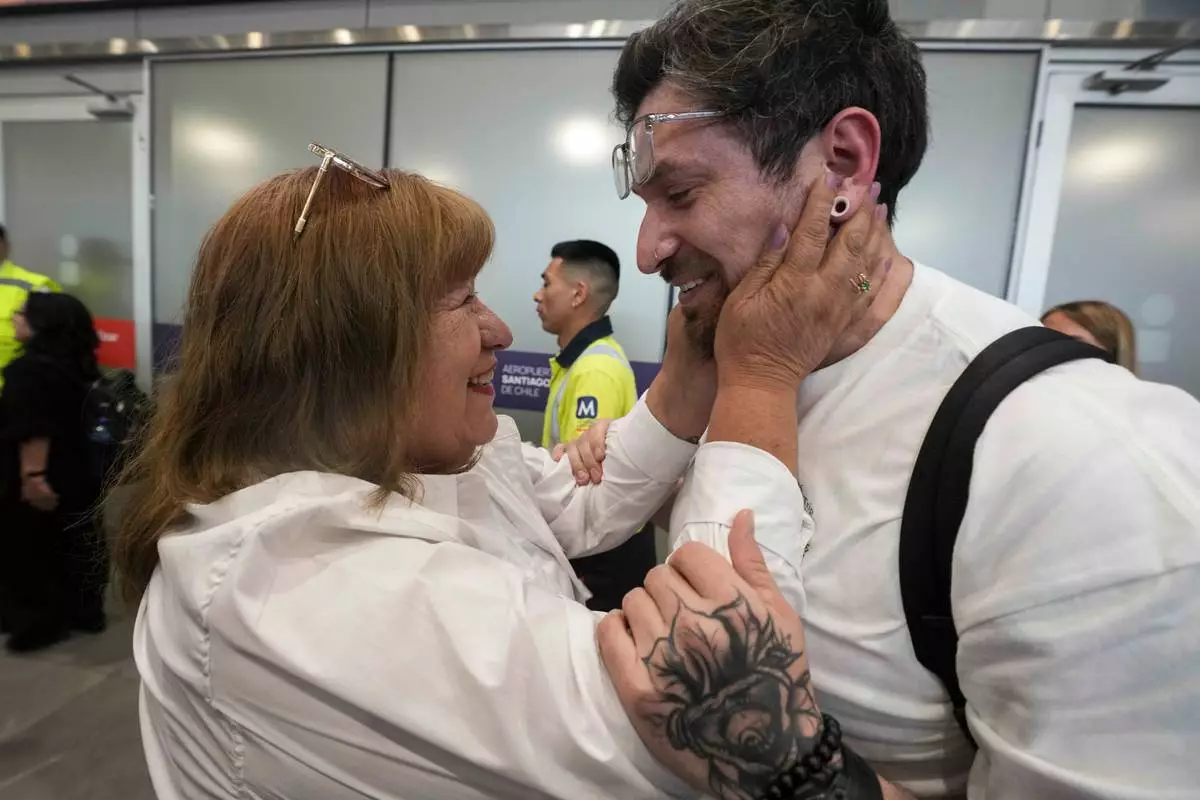
Kyle Adler, a 36-year-old Chilean American who was taken from his family at nine months old and illegally adopted, embraces his birth mother, Ana Maria Navarrete, after traveling from the U.S. to meet her for the first time, in Santiago, Chile, Saturday, Feb. 14, 2026. (AP Photo/Esteban Felix)