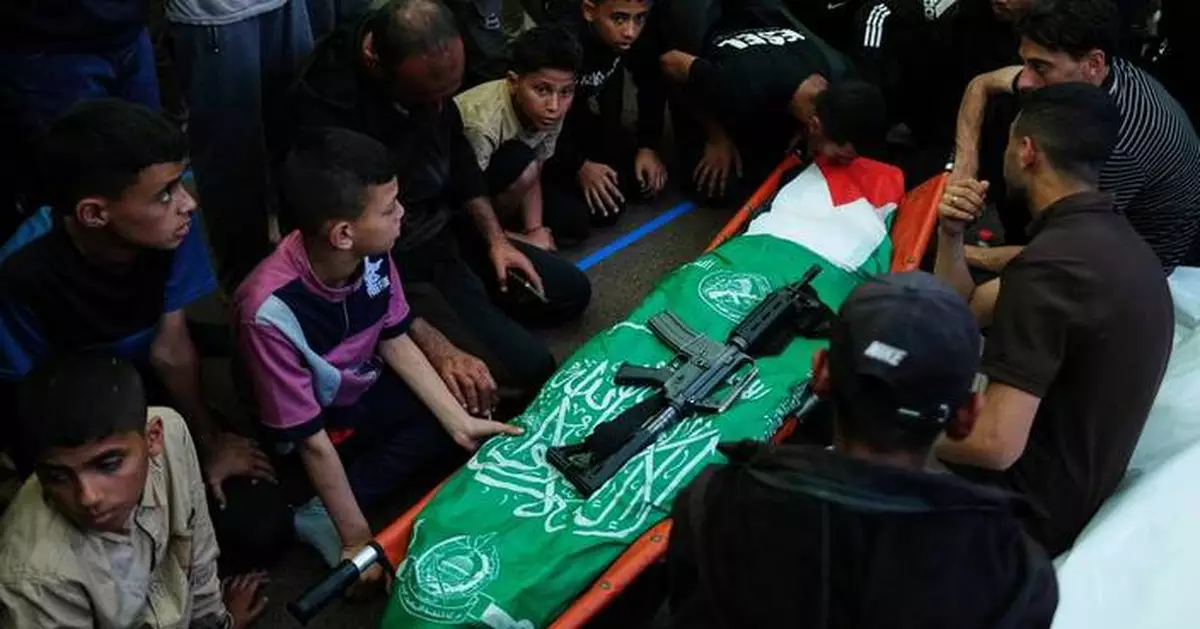
GAZA CITY, Gaza Strip (AP) — Dozens of Palestinians in Gaza City gathered on Thursday for funeral prayers for 10 people killed in Israeli strikes the night before, including five children and an elderly person, as well as a Hamas militant.
More than 20 people were injured in the strikes, according to Shifa Hospital. Video from the scene showed flames pouring from an upper-floor window of a building, while bystanders rushed to carry wounded people, including children, to ambulances.
Click to Gallery
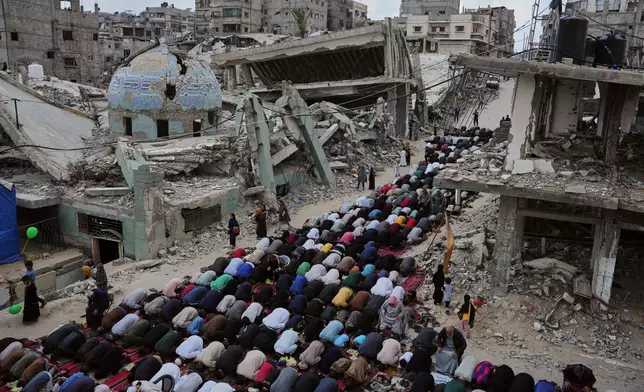
Palestinians offer Eid al-Adha prayers beside the ruins of a mosque destroyed by Israeli bombardment, in Khan Younis, southern Gaza Strip, Wednesday, May 27, 2026. (AP Photo/Abdel Kareem Hana)
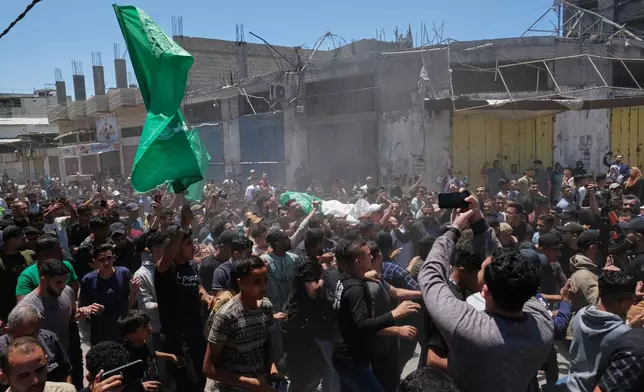
Palestinians attend the funerals of Hamas militant Imad Isleim, his wife and daughter, who were killed in an Israeli military strike, outside Al-Shafi'i Mosque in Gaza City, Thursday, May 28, 2026. (AP Photo/Jehad Alshrafi) CORRECTION: Corrects surname from al-Salem to Isleim
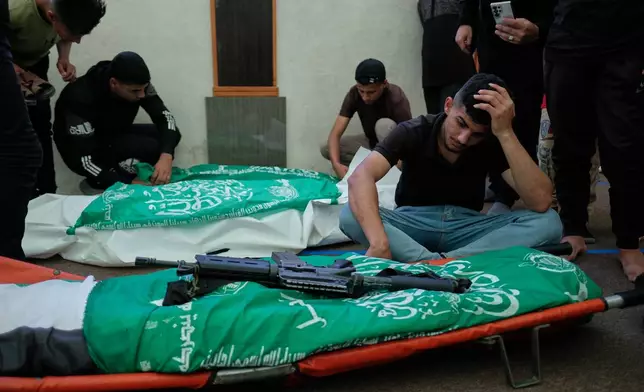
Palestinians mourn over the bodies of Hamas militant Imad Isleim, foreground, his wife and daughter, who were killed in an Israeli military strike, during their funeral at Al-Shafi'i Mosque in Gaza City, Thursday, May 28, 2026. (AP Photo/Jehad Alshrafi) CORRECTION: Corrects surname from al-Salem to Isleim
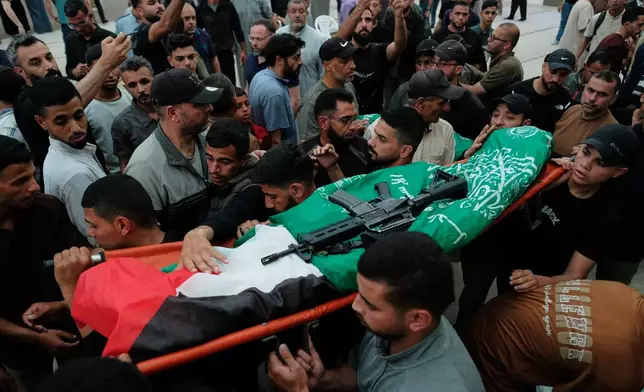
Palestinians carry the body of Hamas militant Imad Isleim, who was killed in an Israeli military strike, during his funeral at Al-Shafi'i Mosque in Gaza City, Thursday, May 28, 2026. (AP Photo/Jehad Alshrafi) CORRECTION: Corrects surname from al-Salem to Isleim
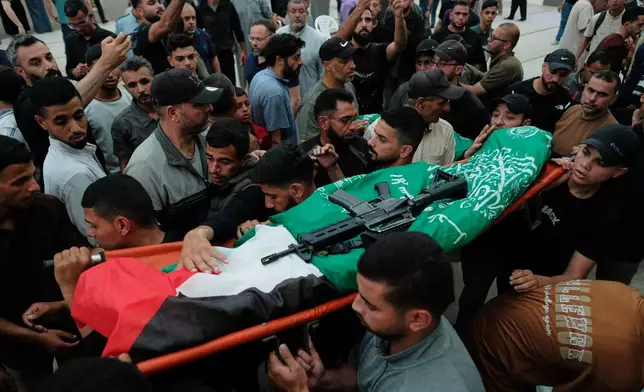
Palestinians carry the body of Hamas militant Imad al-Salem, who was killed in an Israeli military strike, during his funeral at Al-Shafi'i Mosque in Gaza City, Thursday, May 28, 2026. (AP Photo/Jehad Alshrafi)
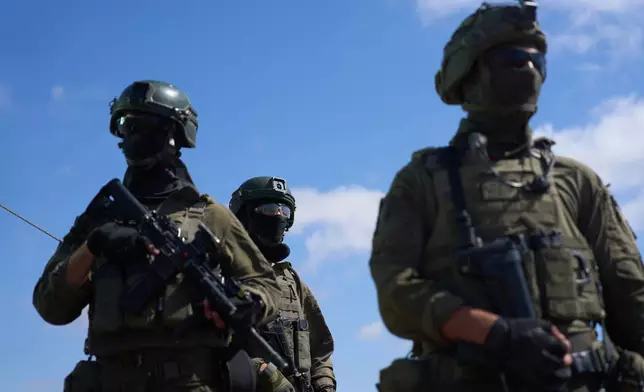
Israeli soldiers occupy a military position overlooking the so-called yellow line in the central Gaza Strip, Tuesday, May 26, 2026. (AP Photo/Ariel Schalit)
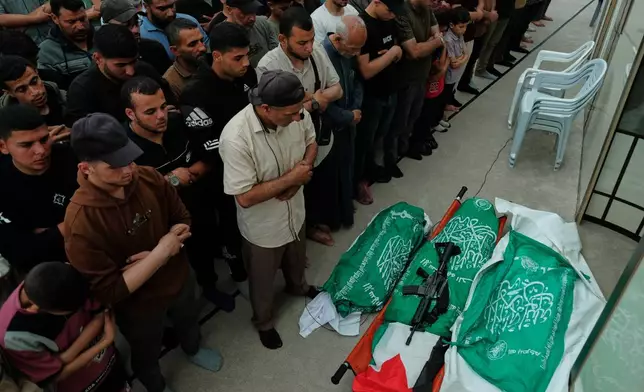
Palestinians pray over the bodies of Hamas militant Imad al-Salem, center, his wife and daughter, who were killed in an Israeli military strike, during their funeral at Al-Shafi'i Mosque in Gaza City, Thursday, May 28, 2026. (AP Photo/Jehad Alshrafi)
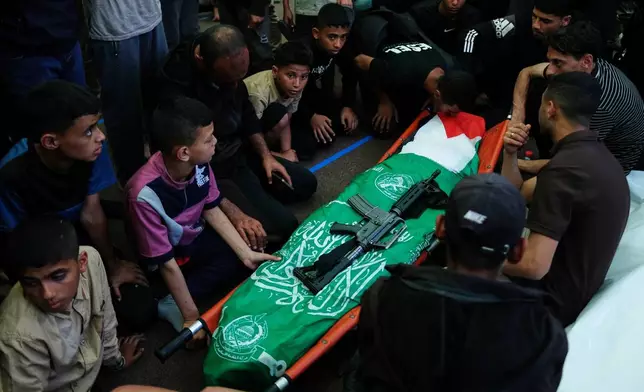
Palestinians mourn over the body of Hamas militant Imad al-Salem, who was killed in an Israeli military strike, during his funeral at Al-Shafi'i Mosque in Gaza City, Thursday, May 28, 2026. (AP Photo/Jehad Alshrafi)
Mohammed Shawish, who was wounded and lost his wife in the strikes, broke down in tears as he held her body at the hospital morgue, saying, “I married my wife for love. For God’s sake, I chose her because of love.”
The strikes took place on the first day of Eid al-Adha, or the “Feast of Sacrifice,” an Islamic holiday celebrated by millions of Muslims worldwide. The Israeli military said Wednesday evening it had launched strikes in the northern Gaza Strip targeting two Hamas militants.
Among those killed was Hamas fighter Imad Isleim. On Thursday, mourners carried his body wrapped in a white shroud with a Hamas flag draped over it. His death came as a “shock” to the family, even though they knew it could happen at any time, his cousin Nidal Isleim said.
The strikes came as Israeli Prime Minister Benjamin Netanyahu said Israel was expanding its control in Gaza.
“Right now we are tightening the grip on Hamas," Netanyahu said Thursday at the Jordan Valley Conference in the occupied West Bank. “We are now in 60% of the territory of the Gaza Strip. You know that? We were at 50%, we moved to 60%."
He said the next step was to move to 70% control, with Israel “tightening the grip" on Hamas "from every direction.”
“We will deal with the remnants,” Netanyahu said. "But the most important thing is to continue leveraging our power, to increase it.”
The conference was part of a broader discussion on the war, Iran, Hezbollah, Gaza and regional strategy.
"There is still more work. What is happening right now is truly a global change. There is no doubt about that,” Netanyahu added.
Earlier this week, an Israeli strike killed Mohammed Odeh, the newly appointed leader of Hamas’ military wing, the Qassam Brigades, less than two weeks after his predecessor was also killed.
Across the Gaza Strip, 16 people were killed and 39 others wounded over the past 48 hours, Gaza’s health ministry said in an update on Thursday. The ministry is part of Gaza’s Hamas-run government, but is staffed by medical professionals who maintain and publish detailed records viewed as generally reliable by the international community.
Since a fragile ceasefire came into effect last October, 922 people have been killed in Gaza and 2,786 others injured, according to the ministry.
This story has corrected the location where Netanyahu spoke.
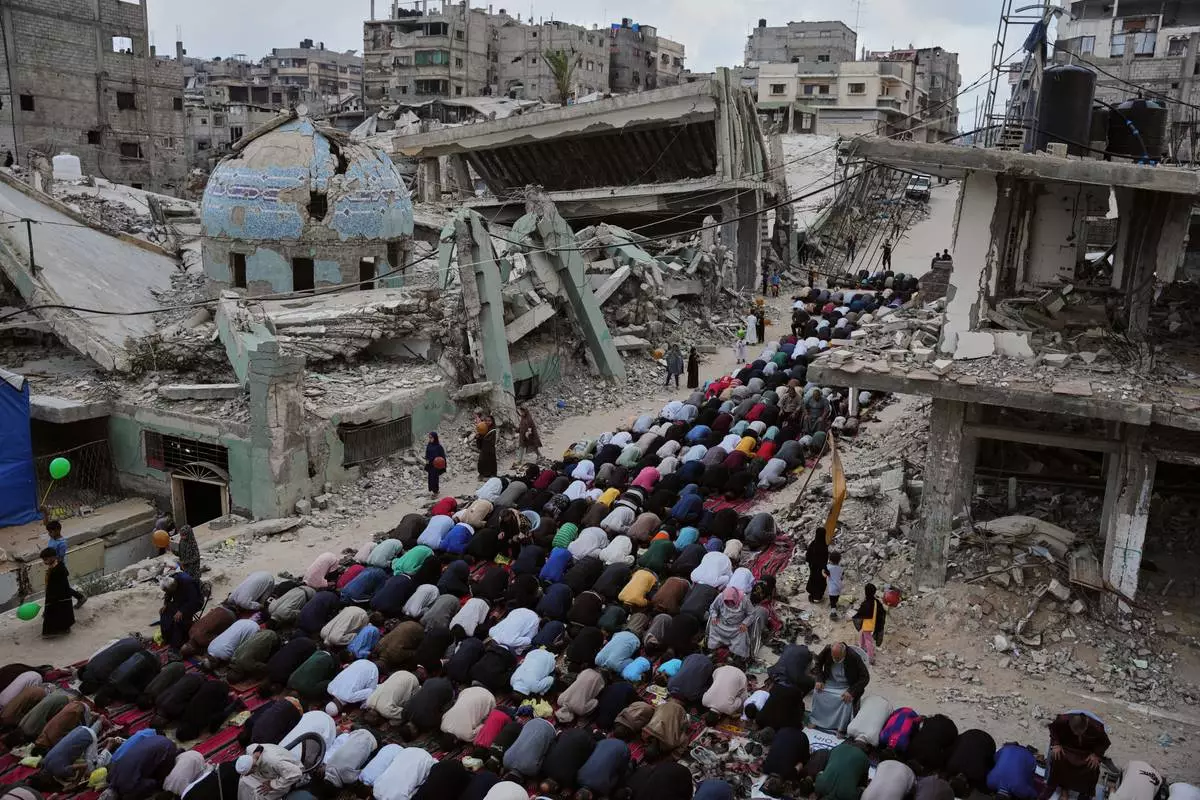
Palestinians offer Eid al-Adha prayers beside the ruins of a mosque destroyed by Israeli bombardment, in Khan Younis, southern Gaza Strip, Wednesday, May 27, 2026. (AP Photo/Abdel Kareem Hana)
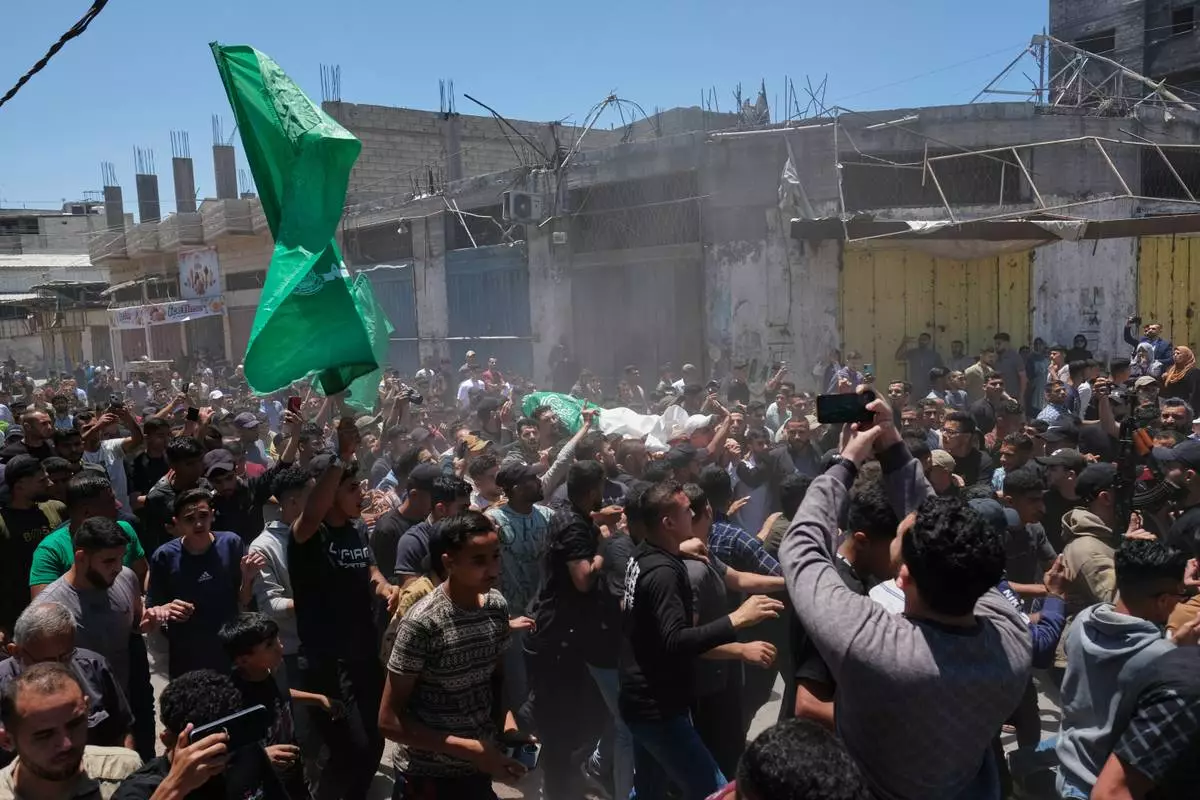
Palestinians attend the funerals of Hamas militant Imad Isleim, his wife and daughter, who were killed in an Israeli military strike, outside Al-Shafi'i Mosque in Gaza City, Thursday, May 28, 2026. (AP Photo/Jehad Alshrafi) CORRECTION: Corrects surname from al-Salem to Isleim
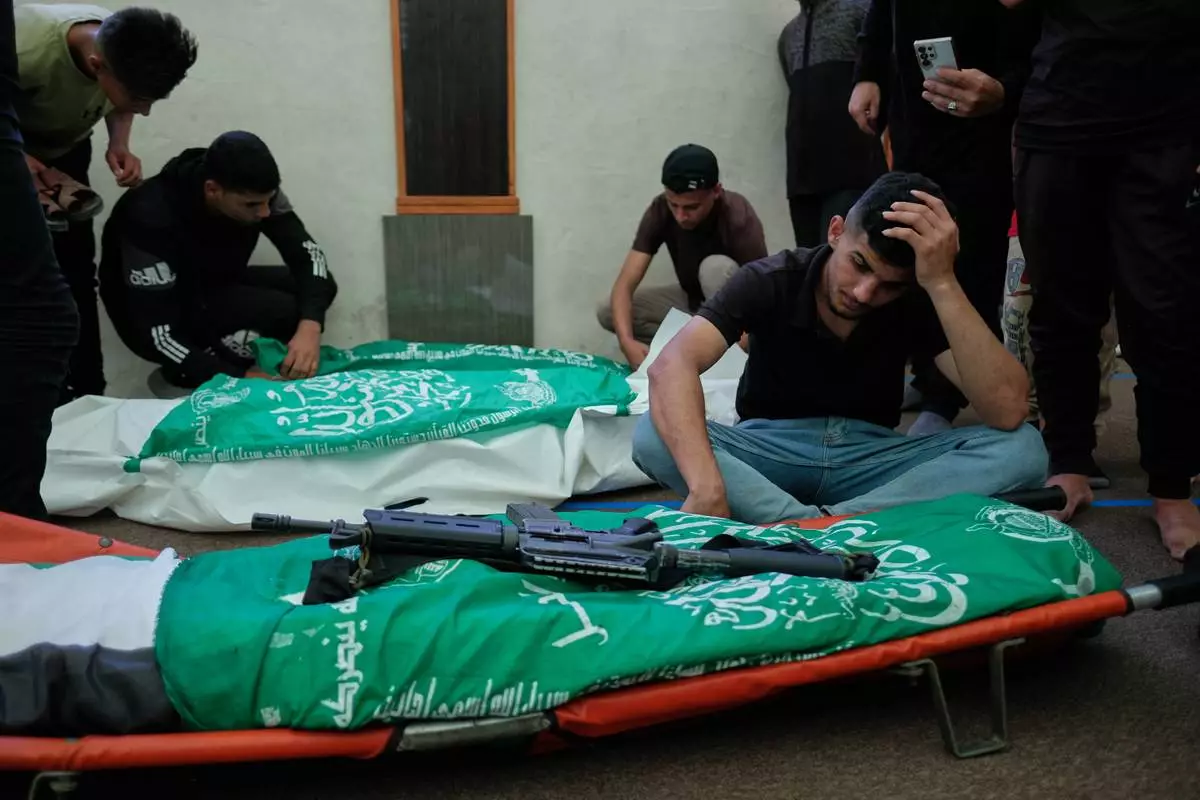
Palestinians mourn over the bodies of Hamas militant Imad Isleim, foreground, his wife and daughter, who were killed in an Israeli military strike, during their funeral at Al-Shafi'i Mosque in Gaza City, Thursday, May 28, 2026. (AP Photo/Jehad Alshrafi) CORRECTION: Corrects surname from al-Salem to Isleim
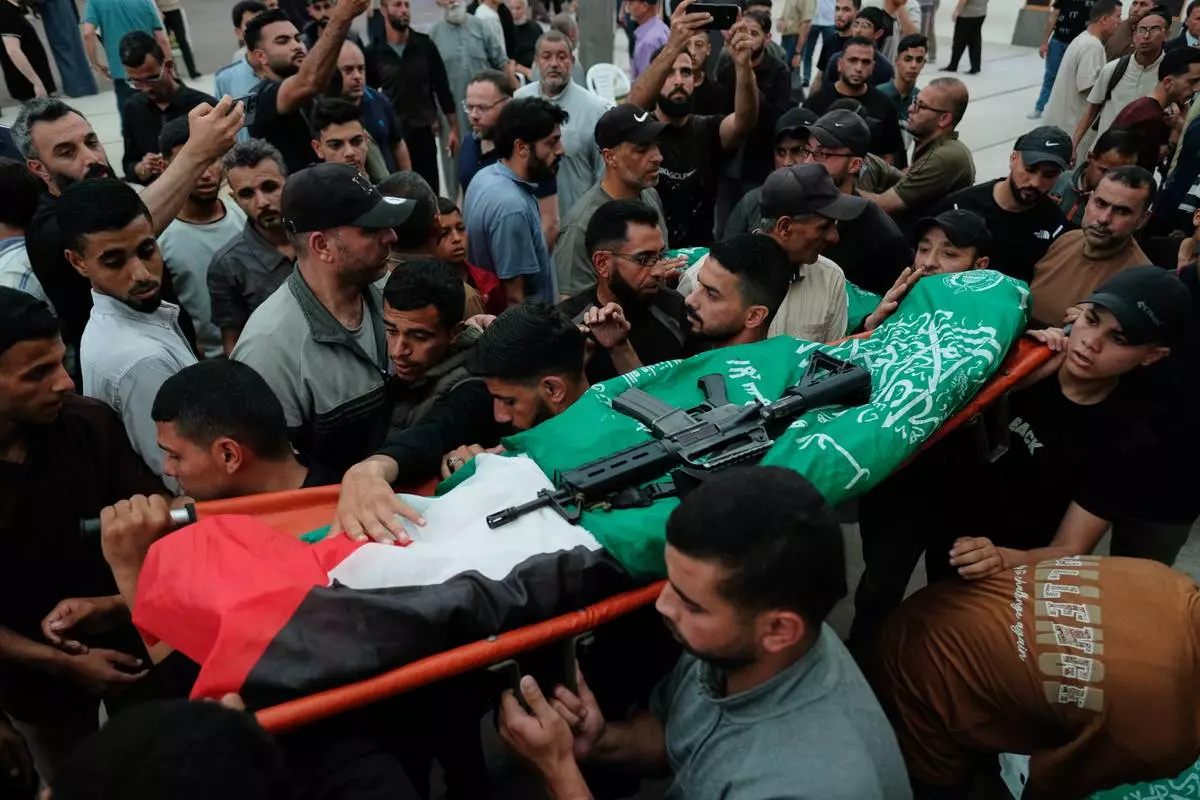
Palestinians carry the body of Hamas militant Imad Isleim, who was killed in an Israeli military strike, during his funeral at Al-Shafi'i Mosque in Gaza City, Thursday, May 28, 2026. (AP Photo/Jehad Alshrafi) CORRECTION: Corrects surname from al-Salem to Isleim
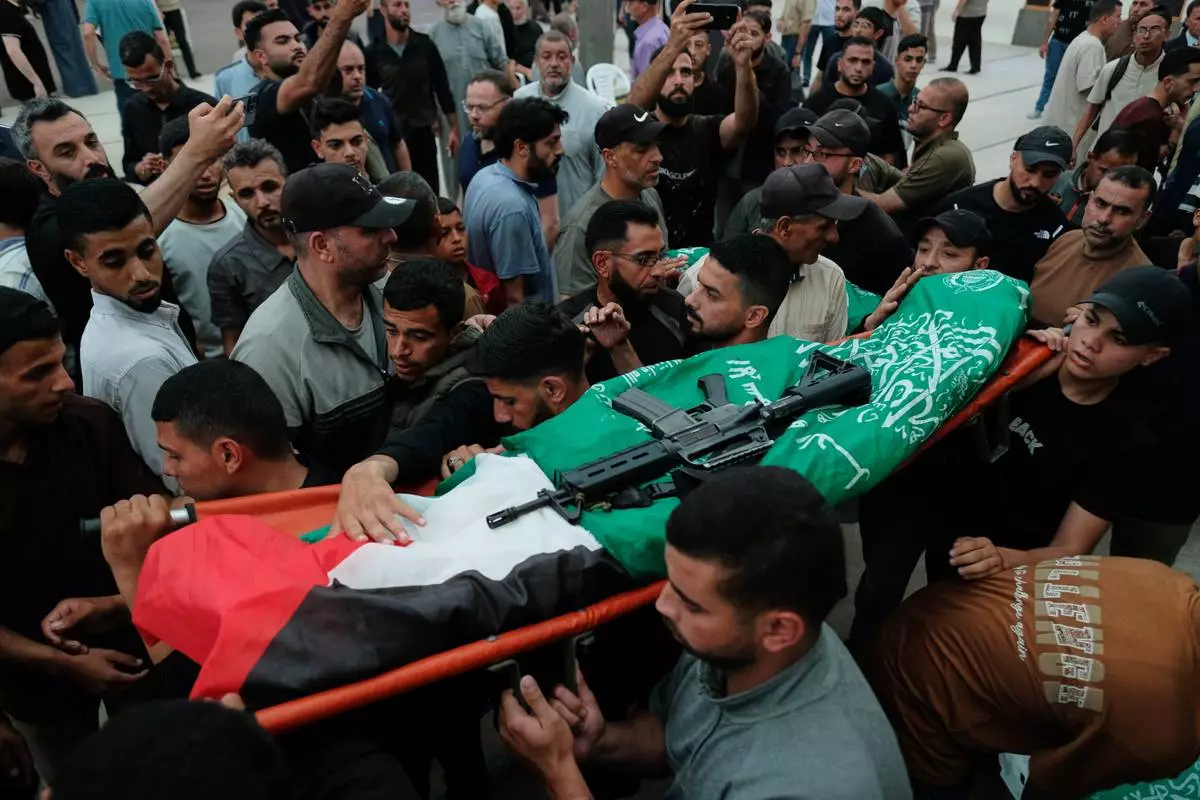
Palestinians carry the body of Hamas militant Imad al-Salem, who was killed in an Israeli military strike, during his funeral at Al-Shafi'i Mosque in Gaza City, Thursday, May 28, 2026. (AP Photo/Jehad Alshrafi)
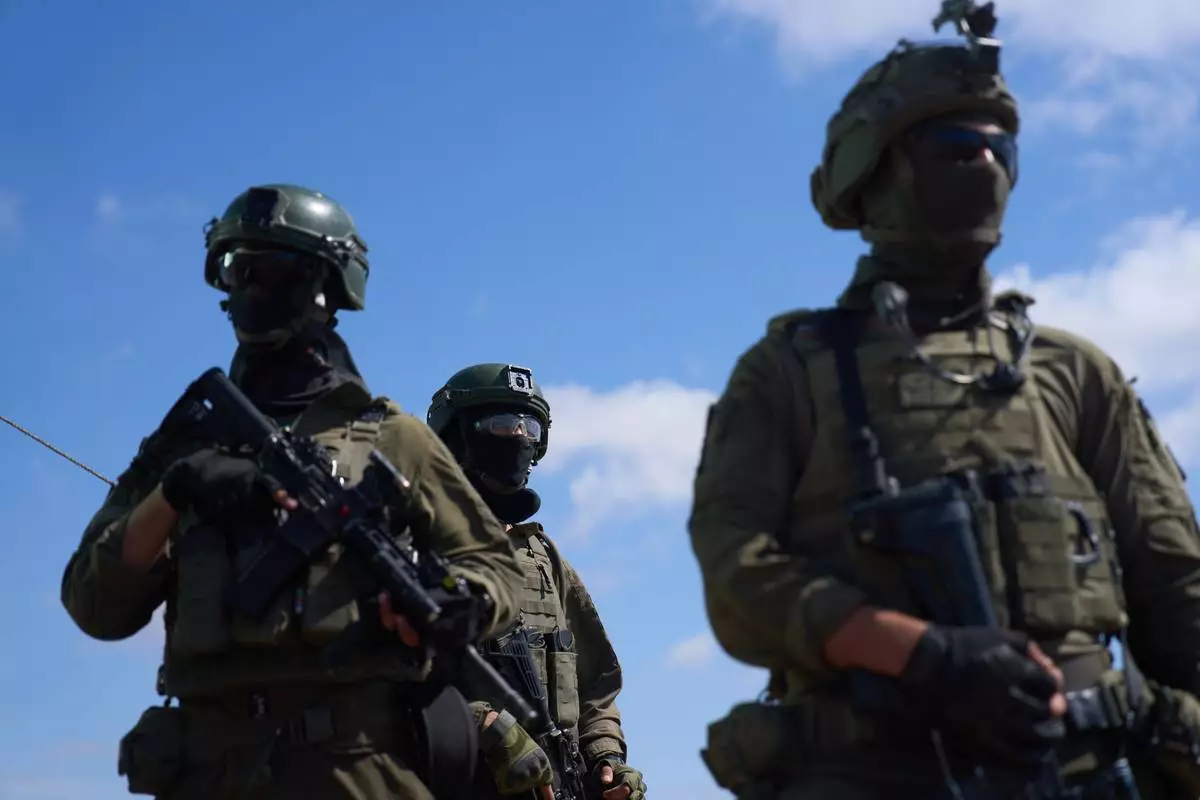
Israeli soldiers occupy a military position overlooking the so-called yellow line in the central Gaza Strip, Tuesday, May 26, 2026. (AP Photo/Ariel Schalit)
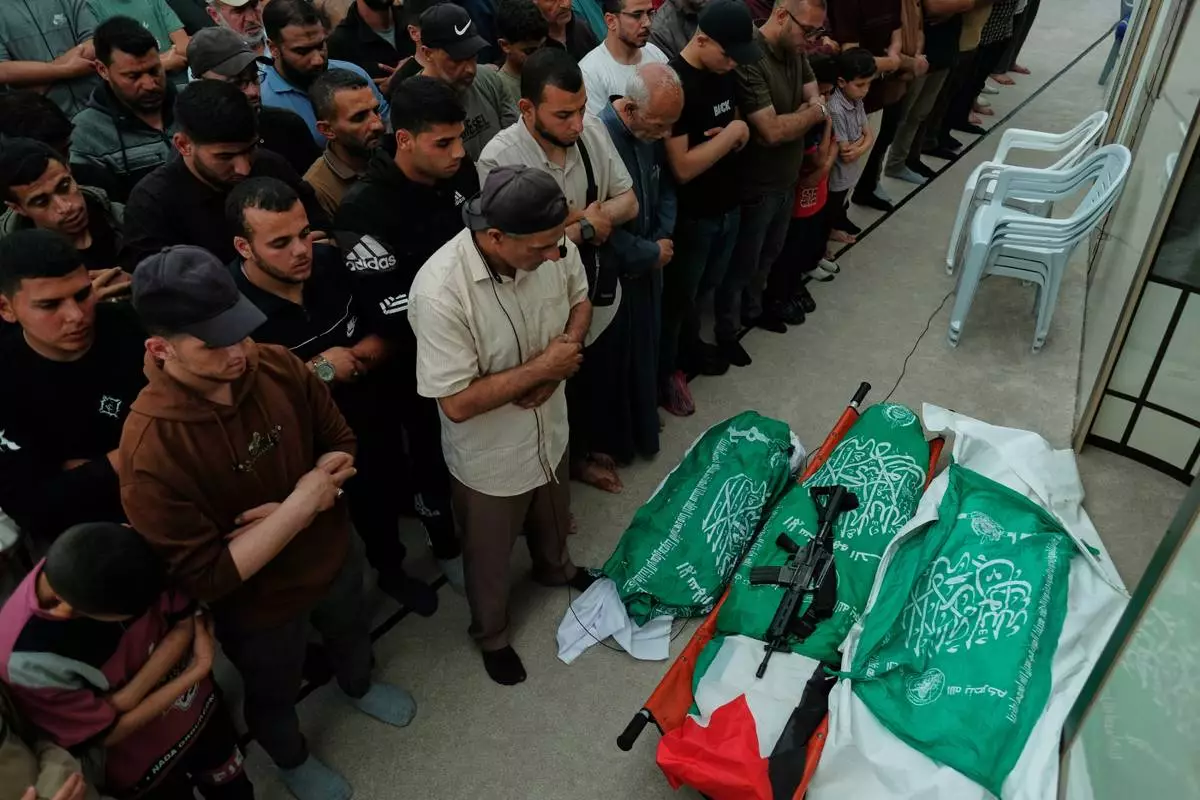
Palestinians pray over the bodies of Hamas militant Imad al-Salem, center, his wife and daughter, who were killed in an Israeli military strike, during their funeral at Al-Shafi'i Mosque in Gaza City, Thursday, May 28, 2026. (AP Photo/Jehad Alshrafi)
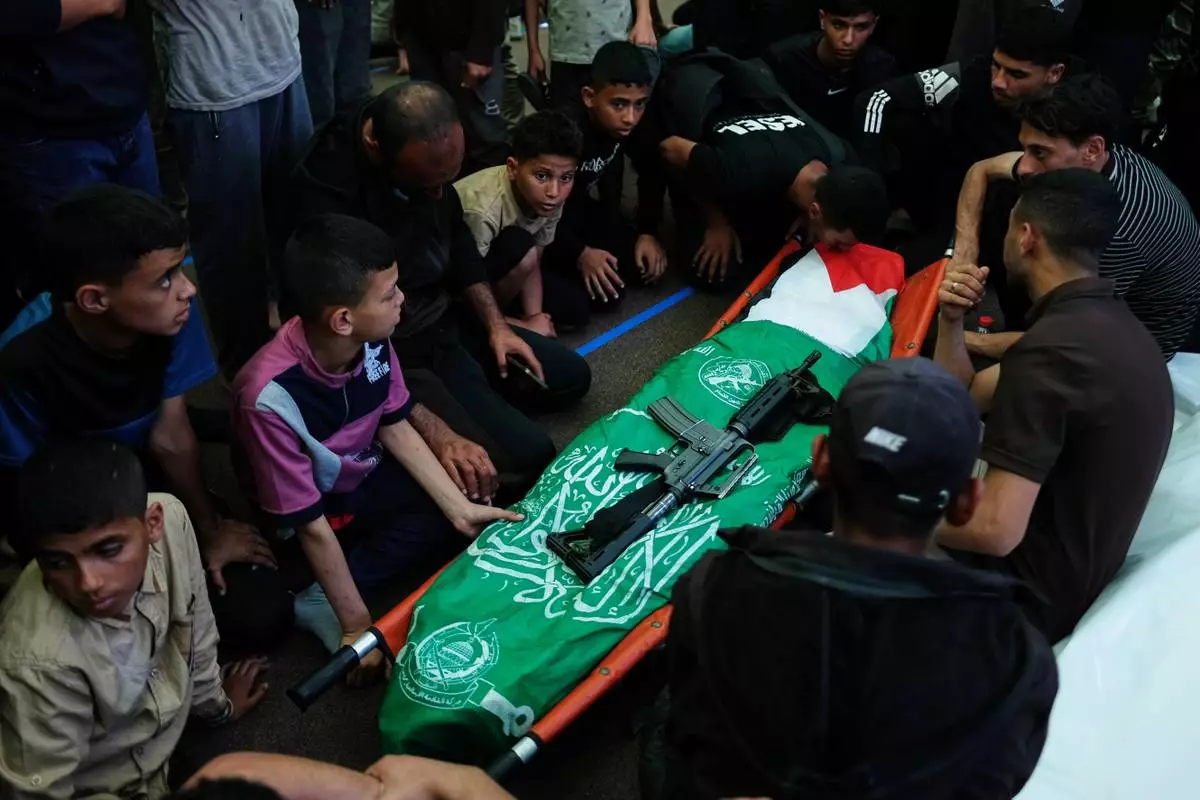
Palestinians mourn over the body of Hamas militant Imad al-Salem, who was killed in an Israeli military strike, during his funeral at Al-Shafi'i Mosque in Gaza City, Thursday, May 28, 2026. (AP Photo/Jehad Alshrafi)