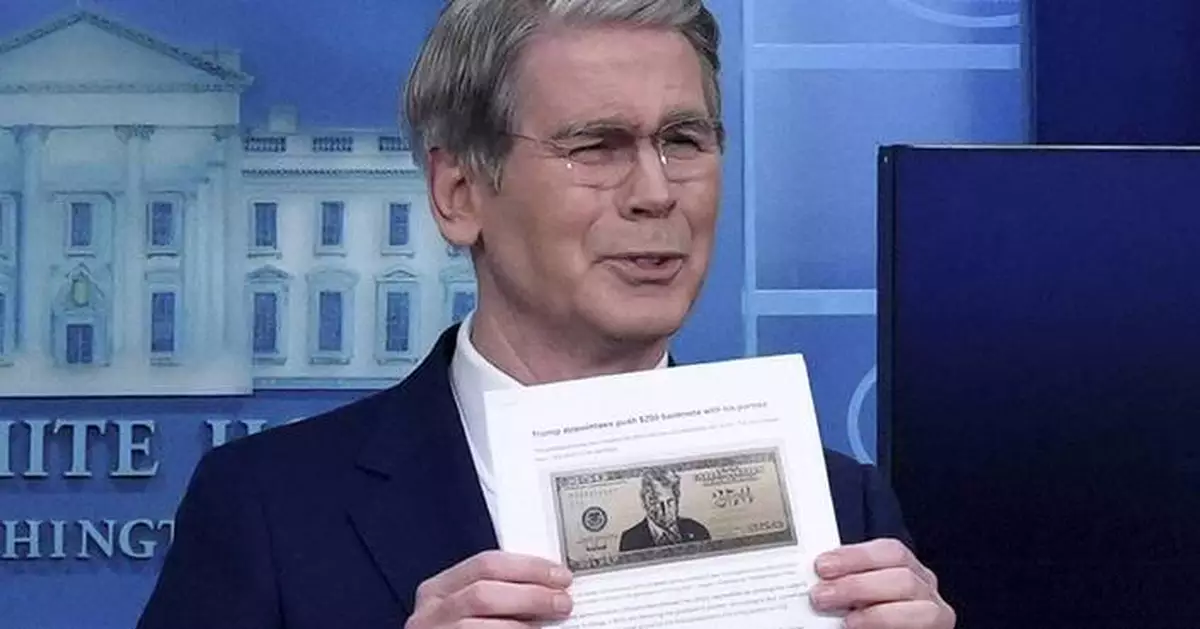
Treasury Secretary Scott Bessent said Thursday that his department has prepared the design for a $250 bill featuring President Donald Trump, anticipating the passage of stalled legislation in Congress to put the president on a new denomination of legal tender.
Bessent said at the White House that authorizing the new currency will be up to lawmakers on Capitol Hill, but that “we've created the bill” because “we have to be prepared.”
The secretary downplayed the idea that the administration is pushing the matter, despite Trump's penchant for infusing his name and likeness across the nation's capital and into the observances of the 250th anniversary of the Declaration of Independence. Yet he also insisted there is nothing inappropriate about Trump's visage being part of the seminal national celebration.
“The president doesn’t do it; the House and the Senate have to do it,” Bessent said at the White House, referring to legislation, introduced by Representative Joe Wilson, R-S.C., that would direct the Treasury Department’s Bureau of Engraving and Printing to put Trump’s face on the new bill to mark the 250th anniversary of the nation’s founding.
A Treasury Department spokeswoman said the agency has carried out “appropriate planning and due diligence” to implement a potential congressional mandate “to produce a $250 commemorative note which will appropriately recognize the 250th Anniversary of our great nation.” The spokeswoman did not mention Trump.
If passed and signed into law by Trump, Wilson's bill would mark an extraordinary recognition for a sitting U.S. leader and comes as Trump has sought to place himself at the center of this year's seminal Independence Day commemorations. The Department’s preparation for the languishing legislation suggests some enthusiasm for the idea on the part of the Trump administration.
The agency's explanation follows a Washington Post report stating that U.S. Treasurer Brandon Beach, a Trump appointee, has been pushing the Bureau of Engraving and Printing to expedite the process for a new currency note. The paper also reported that the former BEP chief, Patricia Solimene, was reassigned after pushing back.
The Treasury spokesperson declined to comment on Solimene's current status but confirmed that Michael Brown, a top Beach aide, became acting director of engraving and printing on May 18.
Beach did not respond to an Associated Press request for comment.
Wilson's legislation, which so far has languished in Congress, is intended to create an exception to existing law that bars any living person from appearing on U.S. currency; the bill would allow current and former presidents to be featured.
Bessent confirmed the measure is designed for one person.
“Donald J. Trump,” he said emphatically, repeating the full name that the president himself often uses in the third person.
According to the Post report, Beach last fall provided the Bureau of Engraving and Printing with the design for the new bill. It featured Trump's portrait — the same one that adorns banners hanging on some federal buildings in Washington — and a 250th anniversary logo. Trump's signature also was included, a design element that would differ from other paper money.
British artist Iain Alexander told the Post he designed the bill and said he'd discussed it with the president. Alexander did not respond to an AP request for comment.
The newspaper also reported that the Solimene resisted pressure from Beach and Brown and stressed to them the lengthy legal and procedural process required to issue new currency. Solimene was reassigned against her will, the Post reported, paving the way for Brown to oversee the bureau.
A new currency note would be the latest example of Trump expanding his personal brand in his official capacity since returning to the White House in 2025.
Beach and Bessent already streamlined approval of a commemorative 250th anniversary coin featuring Trump. The Treasury Department has asserted that those special coins fall outside the prohibition on living presidents appearing on money. In 1926, the nation's 150th anniversary, then-President Calvin Coolidge appeared on a commemorative half-dollar coin that was official legal tender.
The Trump administration has had banners featuring his portrait hung on the Department of Justice and other federal buildings. And his slate of appointees to the Kennedy Center governing board added his name to the national performing arts facility that Congress originally designated as a memorial to assassinated President John F. Kennedy. That renaming is being challenged in court because of the federal law establishing the center as the official memorial to the 35th president.
Bessent noted that unless Wilson's exception passes, current law sets just two conditions for him to consider on currency: that “In God We Trust” in some place and that only deceased individuals be depicted, with their names described below their portraits.
“It’s all up to Capitol Hill,” Bessent said. “We will stick to the law.”
Barrow reported from Atlanta.
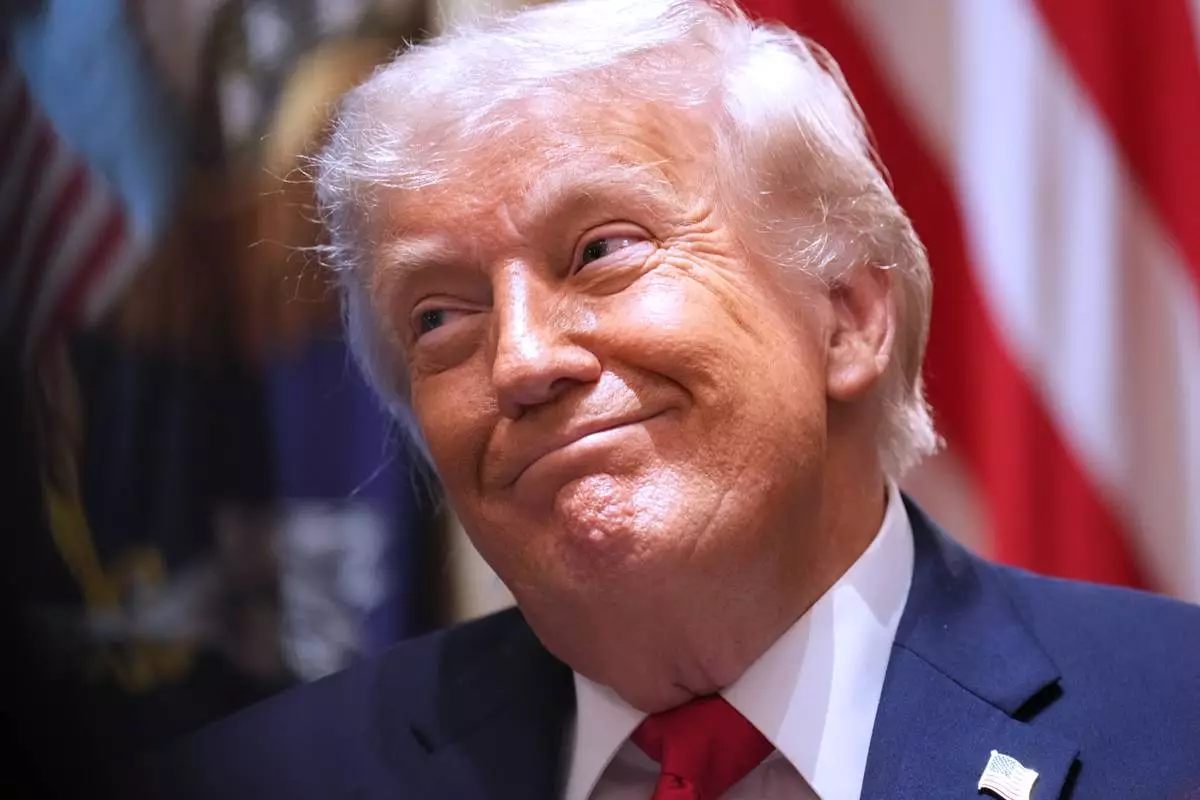
President Donald Trump listens during a Cabinet meeting at the White House, Wednesday, May 27, 2026, in Washington. (AP Photo/Jacquelyn Martin)
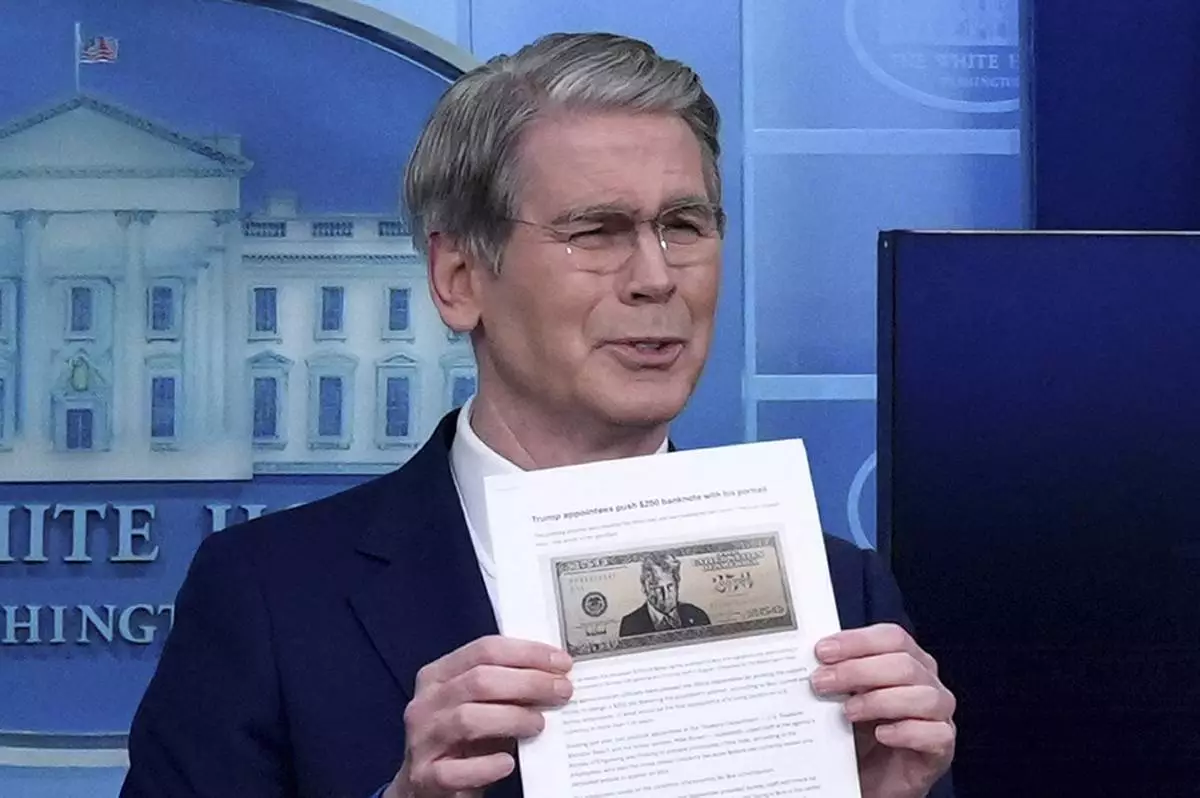
Treasury Secretary Scott Bessent speaks to reporters in the James Brady Press Briefing Room at the White House, Thursday, May 28, 2026, in Washington. (AP Photo/Jacquelyn Martin)
BOGOTÁ, Colombia (AP) — Colombians milled into voting stations on Sunday in the first round of the South American nation’s presidential election, choosing between candidates with radically diverging visions for the future of peace in a country haunted by decades of armed conflict.
The vote, seen as a referendum on outgoing President Gustavo Petro’s policies, comes 10 years after Colombia signed an historic peace pact with guerrillas of the Revolutionary Armed Forces of Colombia, or FARC.
That agreement offered hope to break the nation out of a vicious cycle of fighting between rebel groups and the government but violence has roared back since then, coming to a head in the lead-up to the presidential vote. Criminal groups have increasingly launched drone strikes, armed attacks have plagued the race and last June, 39-year-old politician and presidential hopeful Miguel Uribe Turbay was fatally shot at a political rally.
In a country where the fight for peace has long been a part of the political ethos, the question of how to address the conflict is once again dividing the country.
The vote is slated to send a message to Latin America at a time voters are increasingly ditching leaders that pitched progressive policies, like providing opportunities to youths and rooting out corruption, to solve security ails, turning instead to heavy-handed security crackdowns like El Salvador's. It also comes as the Trump administration is placing renewed pressure on the region.
“Today's election isn't just important for us, it's important for all of Latin America,” said Juan Acevedo, a 62-year-old sociologist walking out of a voting station in Colombia's capital on Sunday morning. “Whoever wins here will suggest to the region if progressive policies will continue or if things are going to return to the right.”
There are 11 candidates running for president, but the election has basically turned into a three-horse race.
Senator and peace-builder Ivan Cepeda — a Petro ally — has led the polls and promises to carry on with Petro's “total peace” initiative to negotiate with the country’s remaining rebel groups and sign peace agreements with them in an effort to resolve the persistent crisis.
While the peace plan has largely failed as criminals have taken advantage of ceasefires with the government, Cepeda and Petro have maintained strong support among many because of progressive policies pushed forward under Petro, such as boosting the minimum wage.
Running against Cepeda are Abelardo de la Espriella and Paloma Valencia, who have vowed to come down on armed groups with a heavier hand.
De la Espriella — a bombastic lawyer known as “The Tiger” — has particularly gained traction among voters in recent weeks for pitching himself as an outsider keen on emulating the heavy-handed tactics used in El Salvador’s war on gangs, which sharply reduced gang violence but fueled accusations of human rights abuses.
Valencia is considered the political protege of Colombia's former president and strongman Álvaro Uribe, who governed from 2002 to 2010 with strong support from the United States and whose government beat back FARC rebels in an offensive that took a massive civilian toll.
Both de la Espriella and Valencia have touted their affinity for U.S. President Donald Trump even as he has taken a more aggressive stance toward Latin America than any U.S. president in decades and has pressured nations like Colombia, Ecuador and Mexico to more forcefully crack down on criminal groups.
If no candidate wins at least 50% of the vote — something extremely rare in Colombia — the two top vote-getters will face a runoff in June.
Maria Eugenia, a 57-year-old seamstress who was stitching a pair of jeans on Friday in downtown Bogotá, Colombia's capital, said she welcomed an all-out offensive on an expanding slate of criminal groups, regardless of the human cost.
While she approved of Petro’s pushes to improve the country's medical infrastructure, she said she was voting for de la Espriella because violence in rural areas of the country has gotten out of hand.
“Of course, whenever you come down with a heavy hand, there’s always going to be debate,” she said. “But some people are going to have to fall to clean up what needs to be cleaned.”
Others, like 26-year-old Cristian Morales, who strolled outside her shop, shook his head.
While Petro’s peace plan has failed on many fronts, he said, making changes to a plan seeking to break the country out of cycles of violence was far better than swinging to another extreme.
He said he planned to vote for Cepeda, placing the candidate’s push to protect Colombia’s biodiversity and expand access to education over bold promises to unravel the country’s deeply entrenched conflict. That would be something Morales said he thinks is “impossible” to do in just four years of a president's term.
“The solution to this conflict isn’t aggressive confrontations. It will only end in more bloodshed,” he said. “It’s so difficult because it’s either dialogue or arms, and an internal conflict isn’t good for anyone.”
Follow AP’s coverage of Latin America and the Caribbean at https://apnews.com/hub/latin-america
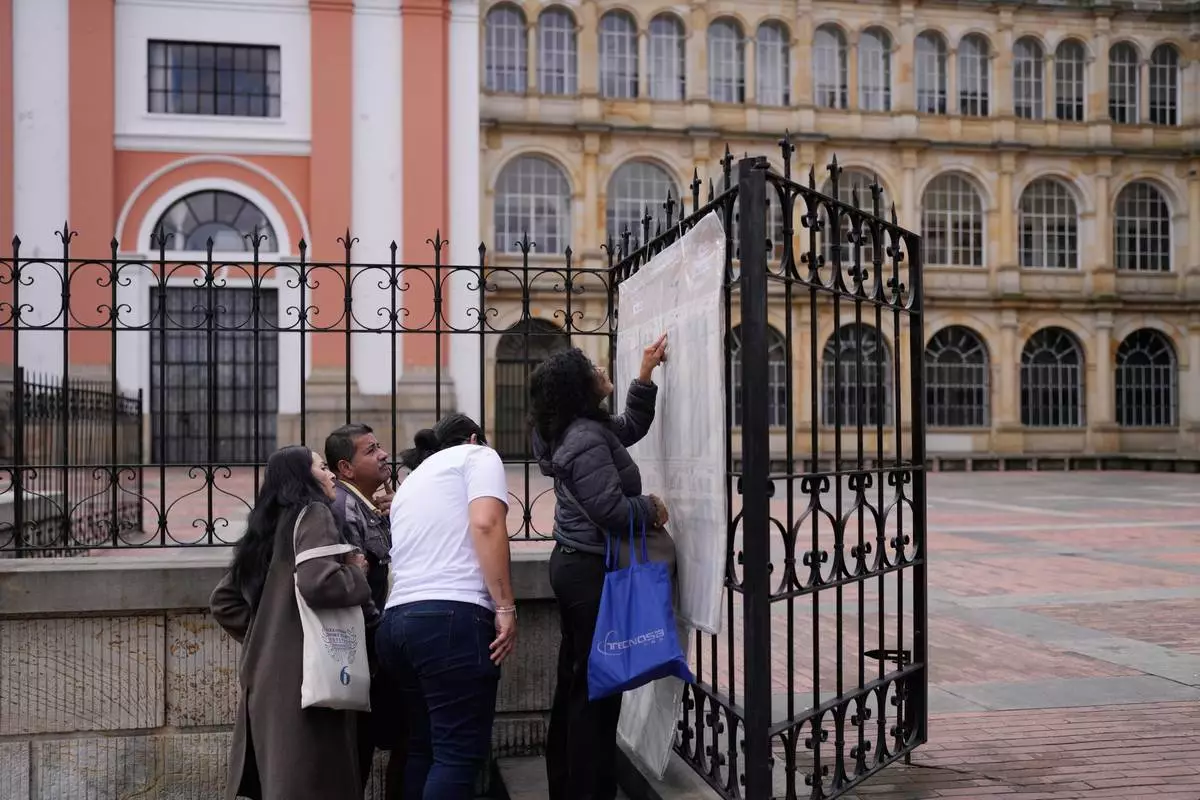
Voters check polling information during the presidential election in Bogota, Colombia, Sunday, May 31, 2026. (AP Photo/Matias Delacroix)
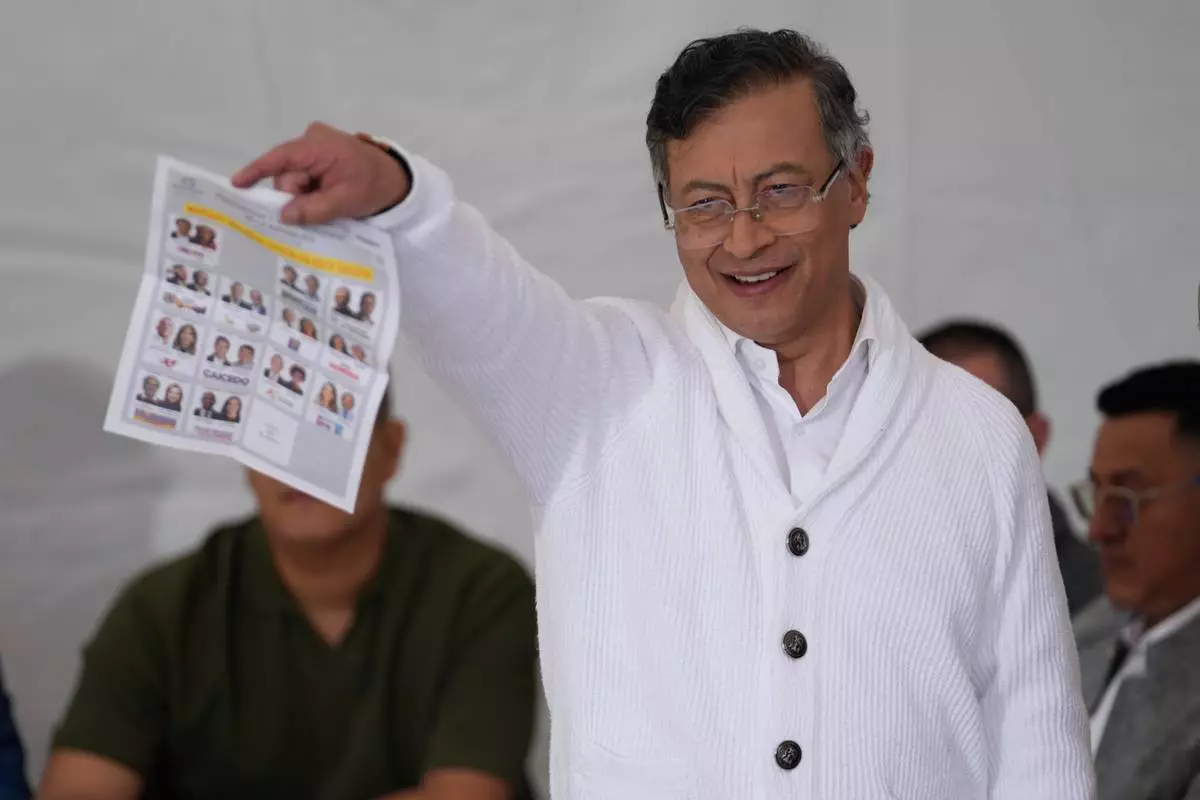
President Gustavo Petro shows a ballot during the presidential election in Bogota, Colombia, Sunday, May 31, 2026. (AP Photo/Matias Delacroix)
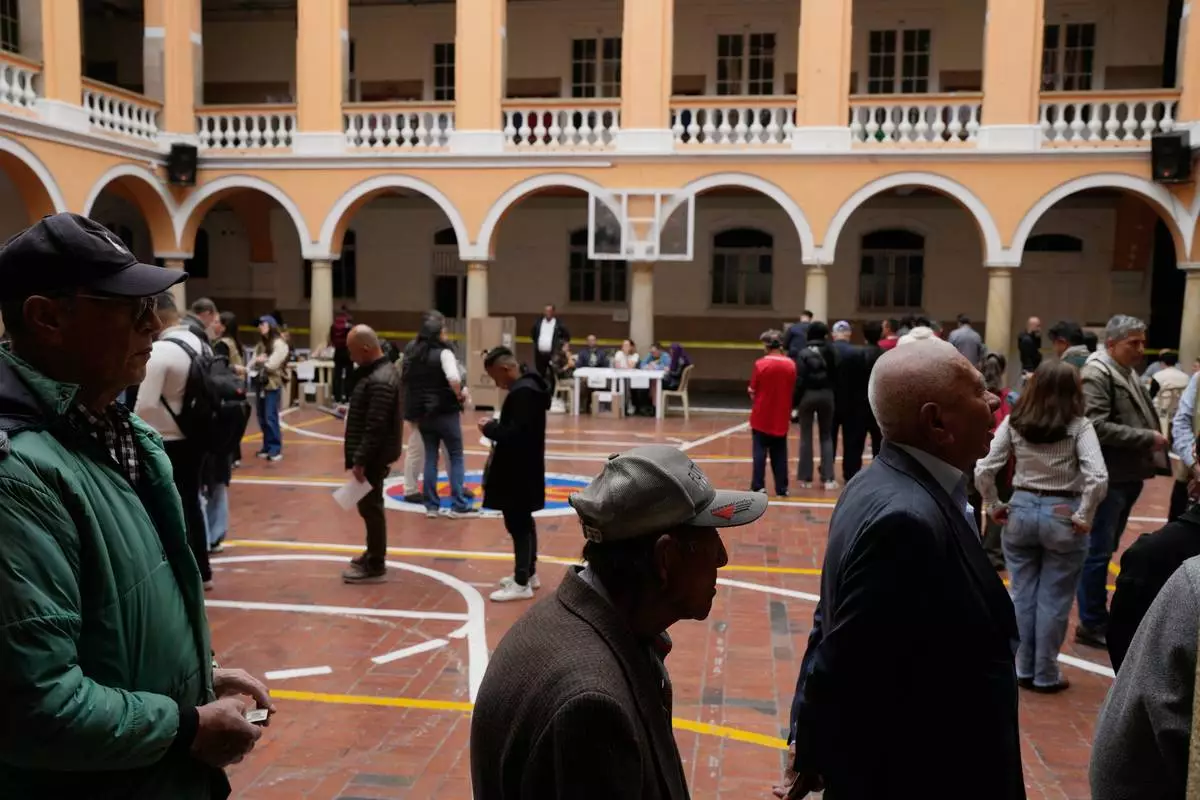
Voters line up at a polling station during the presidential election in Bogota, Colombia, Sunday, May 31, 2026. (AP Photo/Matias Delacroix)
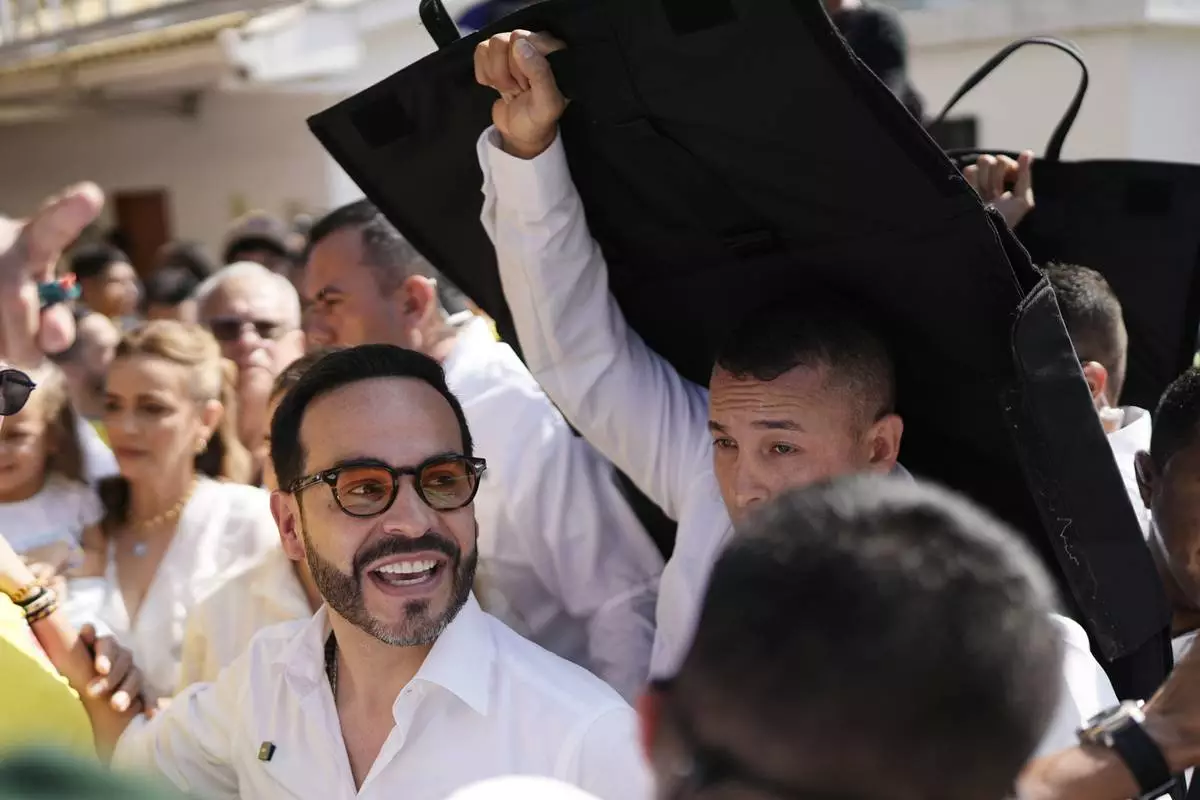
Presidential candidate Abelardo de la Espriella of the Defenders of the Motherland movement depart a polling station after voting during the presidential election in Barranquilla, Colombia, Sunday, May 31, 2026. (AP Photo/Ivan Valencia)
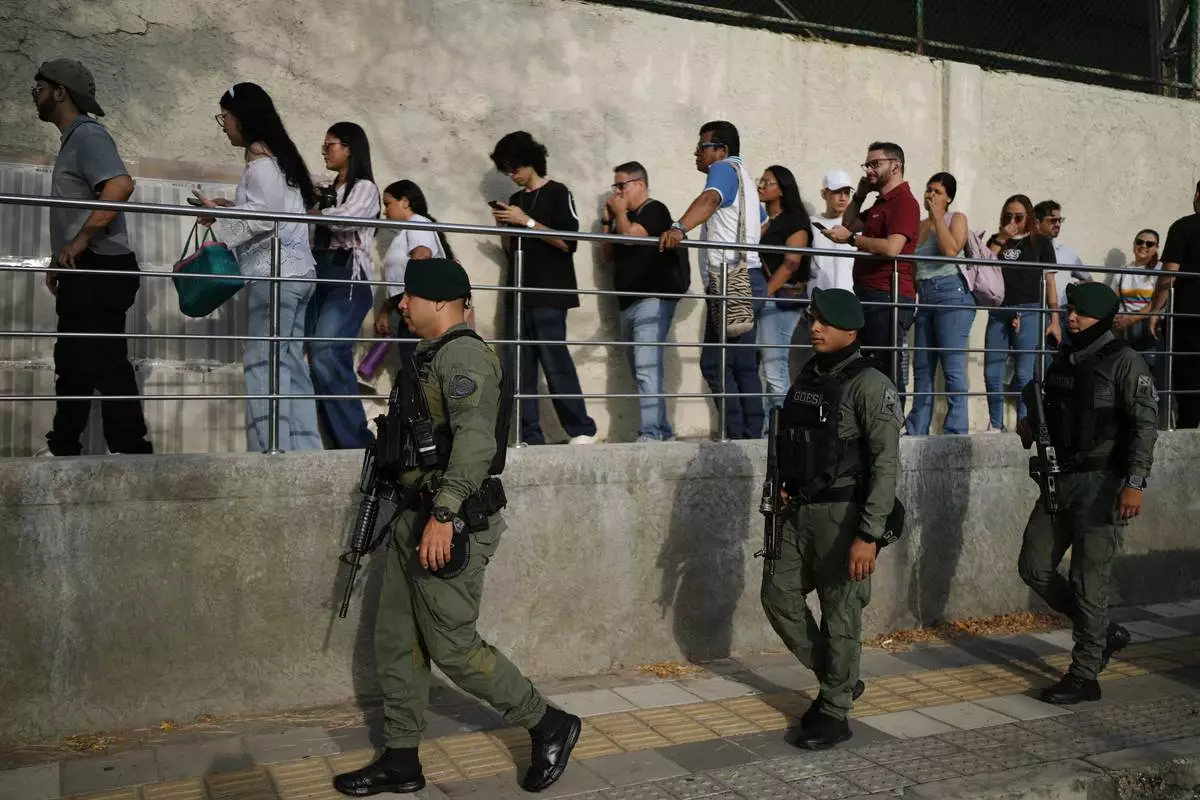
Soldiers patrol as voters arrive at a polling station during the presidential election in Barranquilla, Colombia, Sunday, May 31, 2026. (AP Photo/Ivan Valencia)
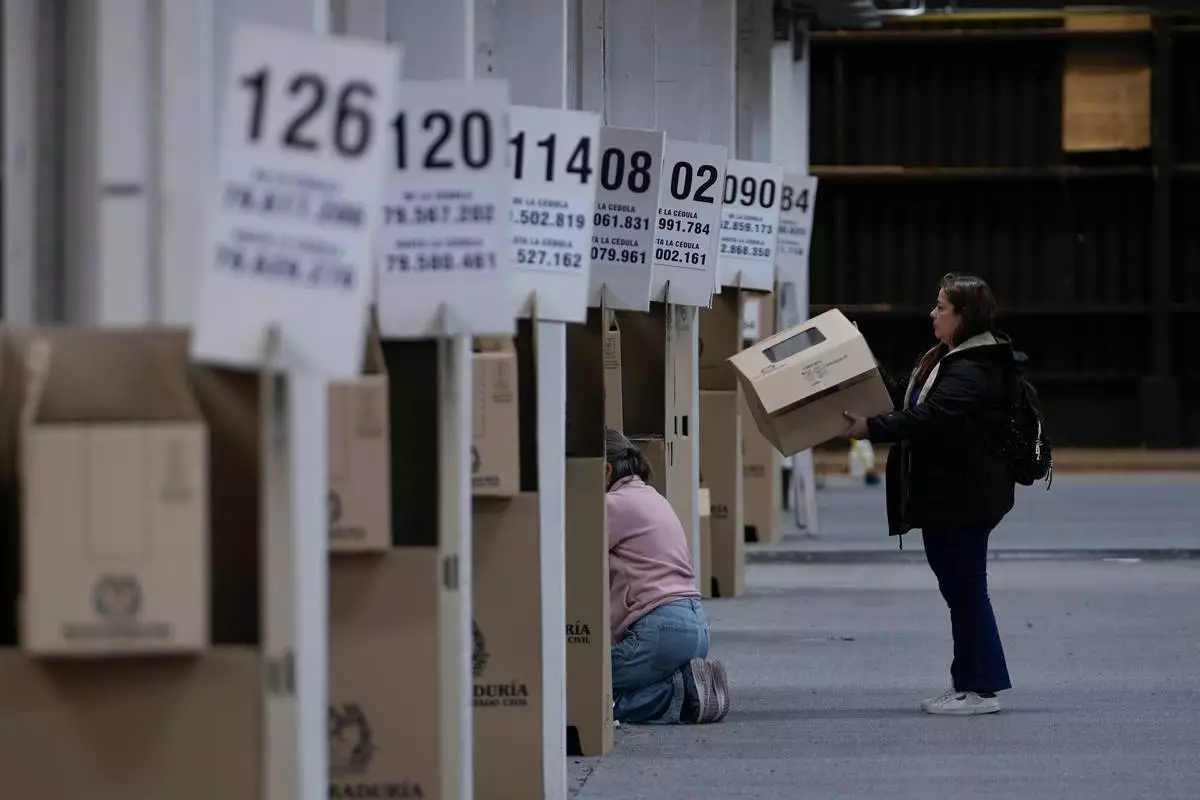
Electoral workers set up a voting center in preparation for Sunday's presidential election in Bogota, Colombia, Friday, May 29, 2026. (AP Photo/Matias Delacroix)
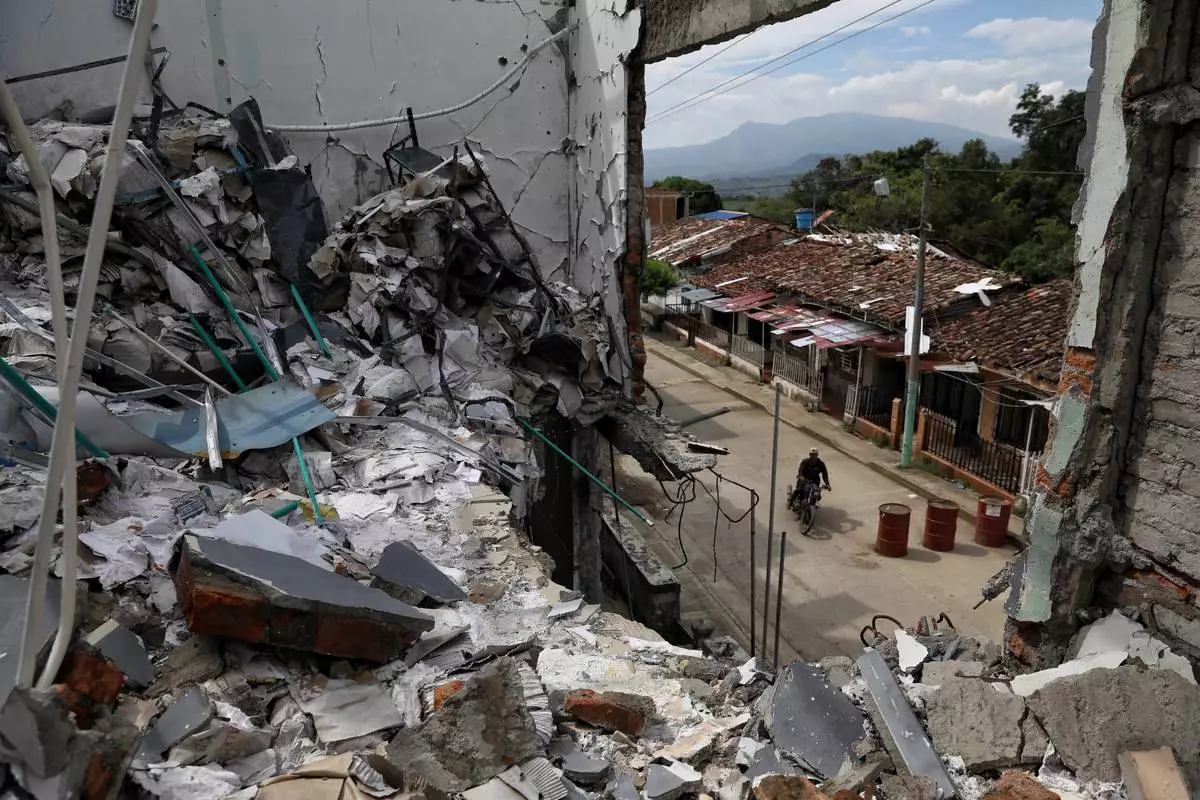
A man rides his motorcycle past the ruins of homes destroyed five months earlier in an attack by dissidents of the former Revolutionary Armed Forces of Colombia, or FARC, in Buenos Aires, Cauca, Colombia, Wednesday, May 20, 2026.(AP Photo/Santiago Saldarriaga)
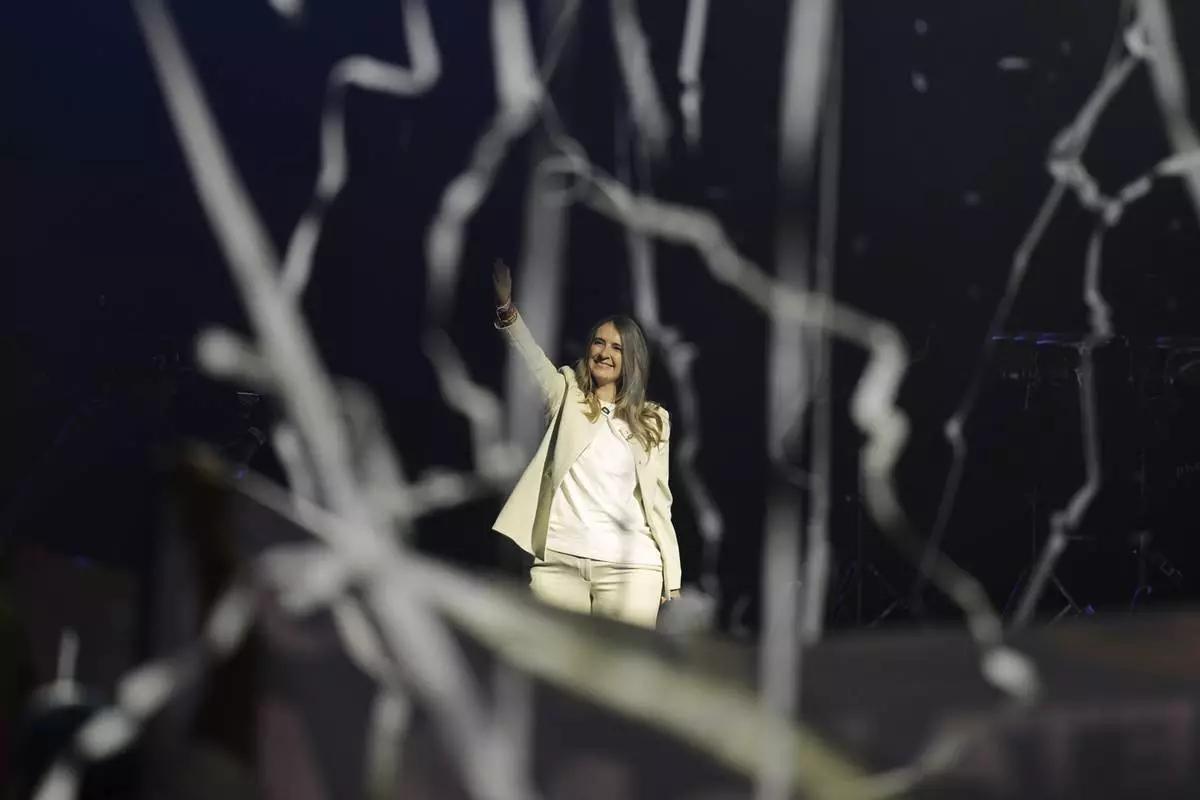
Presidential candidate Sen. Paloma Valencia of the Democratic Center party waves supporters during a campaign rally in Bogota, Colombia, Sunday, May 24, 2026. (AP Photo/Ivan Valencia)
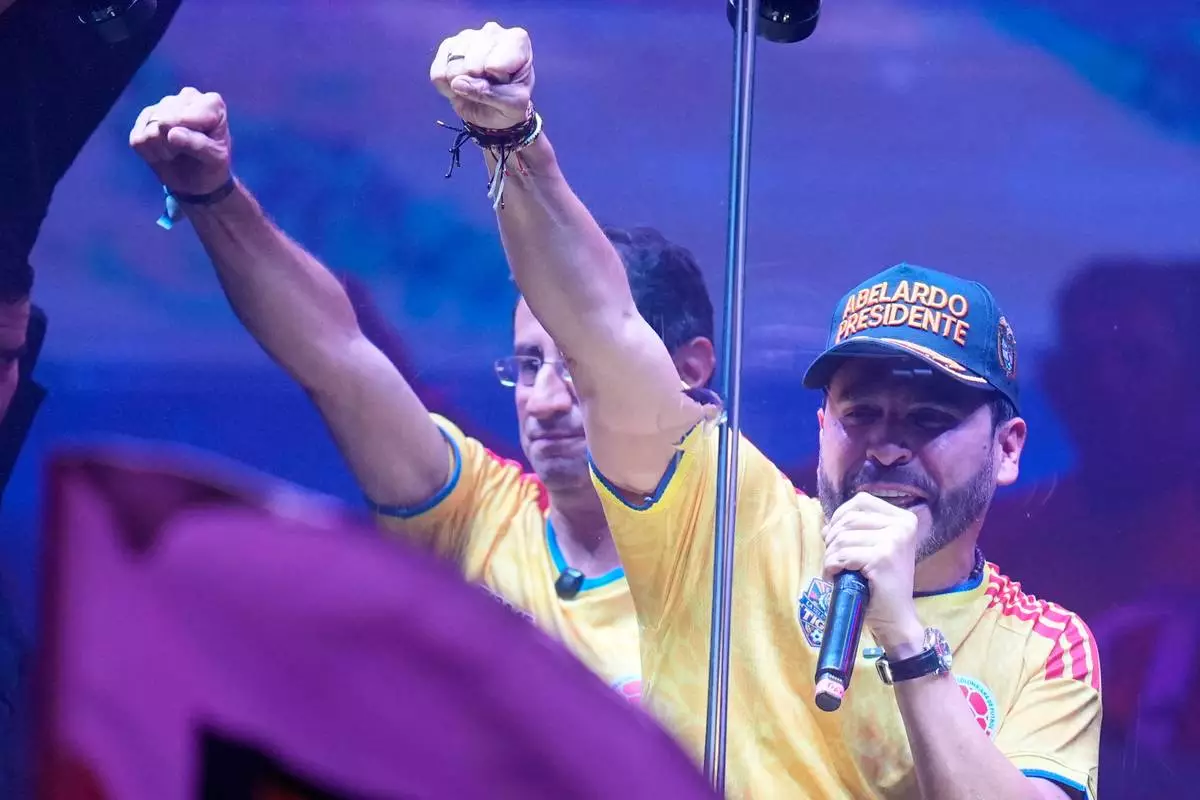
Presidential candidate Abelardo de la Espriella of the Defenders of the Motherland movement and his running mate Jose Manuel Restrepo, left, raise their fit from behind a bullet proof booth during a campaign rally in Barranquilla, Colombia, Saturday, May 23, 2026. (AP Photo/Fernando Vergara)
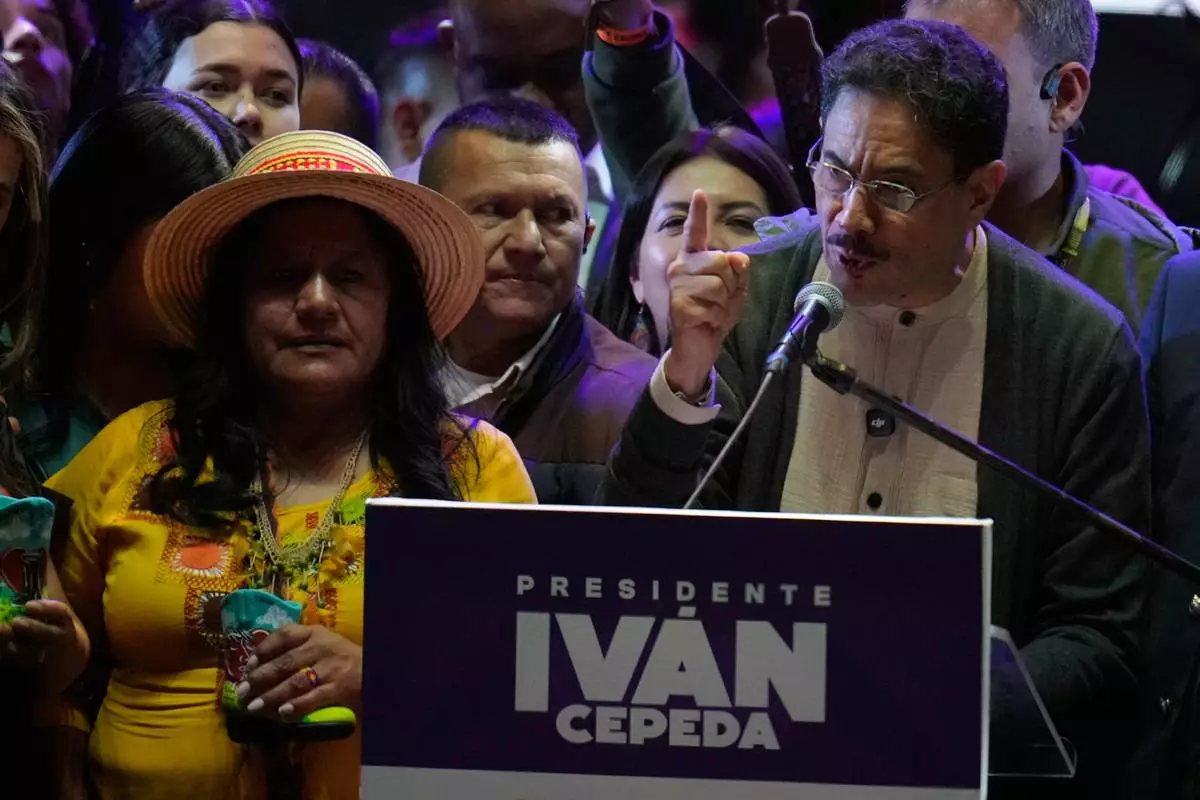
Sen. Ivan Cepeda, presidential candidate of the ruling Historic Pact coalition, speaks to supporters during a campaign rally in Bogota, Colombia, Friday, May 22, 2026. (AP Photo/Fernando Vergara)