U.S. Treasury Secretary Scott Bessent said on Thursday that Oman had assured the U.S. not to toll the Strait of Hormuz after U.S. President Donald Trump warned it not to interfere as fragile talks with Iran continue.
Iranian media reported on Wednesday that Iran and Oman were in consultation on a new mechanism for ships to pass through the Strait of Hormuz.
In response, Trump told reporters during a cabinet meeting at the White House that "the strait's going to be open to everybody."
"It's international waters. Nobody's going to control it. We're going to watch over it. We'll watch over it, but nobody's going to control it," he said, adding that it is part of the negotiation that is there.
"Oman will behave just like everybody else or we'll have to blow 'em up," Trump warned.
Bessent told reporters on Thursday that Trump just wanted to emphasize the freedom of navigation in the Strait of Hormuz.
Bessent stated he had held a call earlier Thursday with the Omani ambassador to the United States, who had assured that there were no plans for tolling the strait.
Bessent also warned on Thursday that the U.S. would impose sanctions against Oman if it helped Iran to establish a tolling system in the Strait of Hormuz.
Iran's Foreign Ministry spokesman Esmaeil Baghaei on Thursday released a statement to condemn the threats by the U.S. against Oman.

Oman has no toll plan on Strait of Hormuz, says US Treasury
China's state-owned enterprises (SOEs) directly under the central government raised their basic research spending from 56.5 billion yuan (about 8.29 billion U.S. dollars) in 2021 to 102.4 billion yuan in 2025, with its share in total research and development investment climbing from 6 percent to 9.4 percent, according to the country's state-owned assets supervision authority.
During the 14th Five-Year Plan period (2021-2025), central SOEs undertook 1,783 national-level basic research projects with total funding of 35.3 billion yuan. Additionally, 34 central SOEs established joint funds with the National Natural Science Foundation totaling over 12 billion yuan, an official of the State-owned Assets Supervision and Administration Commission of the State Council said when introducing China's achievements in this regard.
To foster closer collaboration across industry, academia, and research, central SOEs have taken the lead in building 91 national key laboratories and 66 national defense science and technology key laboratories. They have also set up eight industrial common technology research institutes.
Furthermore, 25 central SOEs have collaborated with 10 national laboratories on 183 scientific research tasks, jointly establishing a number of collaborative R and D institutions in areas such as new power systems, artificial intelligence and quantum communication. Meanwhile, 58 of them have developed 97 hubs designated as sources of original technologies.
Looking ahead, Zhang Yuzhuo, head of the State-owned Assets Supervision and Administration Commission of the State Council, highlighted the strategic goals for the coming years.
"By 2030, China's central SOEs will establish a basic research system with clear positioning, a rational layout, and close integration of industry, academia, and research. Investment in basic research will double compared with 2025 levels, accounting for 15 percent of the total. We aim to build globally influential sources of original technologies in 10 fields, including new power systems, making central SOEs a vital force in China's basic research endeavors," Zhang said.
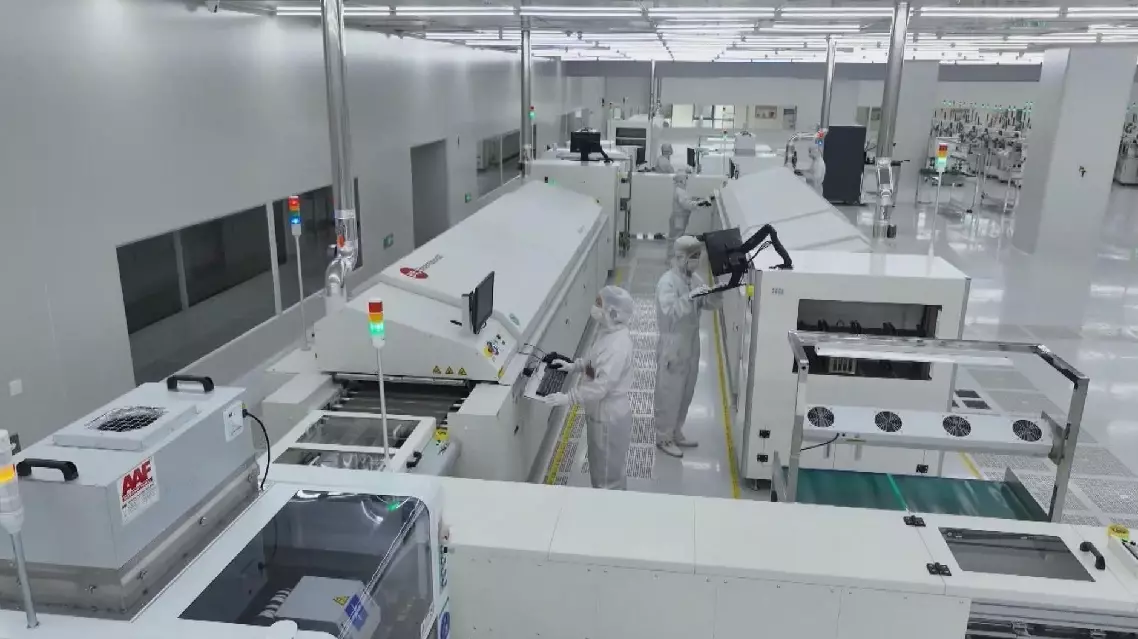
Chinese central SOEs' basic research investment tops 100 bln yuan in 2025