MANILA, Philippines (AP) — A Philippine anti-graft court ordered the arrest of a prominent senator on Friday over allegations he pocketed a kickback of millions of dollars in a flood-control project, in the latest crisis to entangle the Senate.
Sen. Jinggoy Estrada surrendered and posted bail before the Sandiganbayan court, allowing him to remain free while the case proceeds.
The court barred Estrada from leaving the country while facing the first of two corruption-related charges in relation to the flood control project anomalies.
Another warrant for his arrest for the second charge, which is non-bailable, is expected to be issued by the court soon, top anti-graft prosecutor Jesus Crispin Remulla told The Associated Press.
Estrada, 63, has strongly denied allegations mainly by a former government public works engineer that he received more than 570 million pesos ($9.3 million) in kickbacks.
“I intend to avail myself of every lawful means to defend myself and clear my name,” Estrada said.
The senator was an actor like his father, former President Joseph Estrada. Both have been previously detained on other corruption-related charges.
Several other senators and members of the House of Representatives have been implicated in the flood control anomalies in a poverty-stricken Asian archipelago that is among the most vulnerable to deadly floods and typhoons.
Another senator, Ronald dela Rosa, has gone into hiding after the International Criminal Court issued a warrant for his arrest for an alleged crime against humanity.
Dela Rosa was a former national police chief who enforced a brutal anti-drugs crackdown under then-President Rodrigo Duterte that left thousands of mostly petty suspects dead. The unprecedentedly large numbers of killings alarmed Western governments.
Duterte, who stepped down in 2022 after his stormy six-year term, was arrested last year on orders of the ICC and flown to the Netherlands, where he was detained and will face trial for alleged crimes against humanity starting in November over some of the killings.
Duterte and dela Rosa have denied any wrongdoing but Duterte had repeatedly threatened drug suspects with death.
Dela Rosa has been absent in the Senate since November for fear of getting arrested. On May 11, he suddenly reappeared to help an ally, Sen. Alan Peter Cayetano, capture the Senate presidency with a slim majority of 13 votes in the 24-member chamber.
Dela Rosa dashed to the Senate plenary hall after government agents tried to arrest him. He was taken into the Senate’s protective custody but fled two days later after the chamber’s security chief and two aides opened fire after seeing government agents in an adjacent building.
The dozens of gunshots did not cause any injuries but sparked chaos in the Senate that police investigators said may have provided dela Rosa a cover to escape.
Estrada, dela Rosa and Cayetano are allies of Duterte and his daughter, Vice President Sara Duterte, who was impeached by the House of Representatives in an overwhelming vote on May 11 over criminal allegations that include unexplained wealth and threatening to have President Ferdinand Marcos Jr., his wife and a former House speaker assassinated.
The vice president, who has announced plans to seek the presidency in 2028, denies the allegations but has not answered them in detail.
Despite the crises besetting the Senate, it has convened as an impeachment court for the vice president’s trial that may start in July.
Associated Press video journalist Joeal Calupitan in Manila, Philippines contributed to this report.
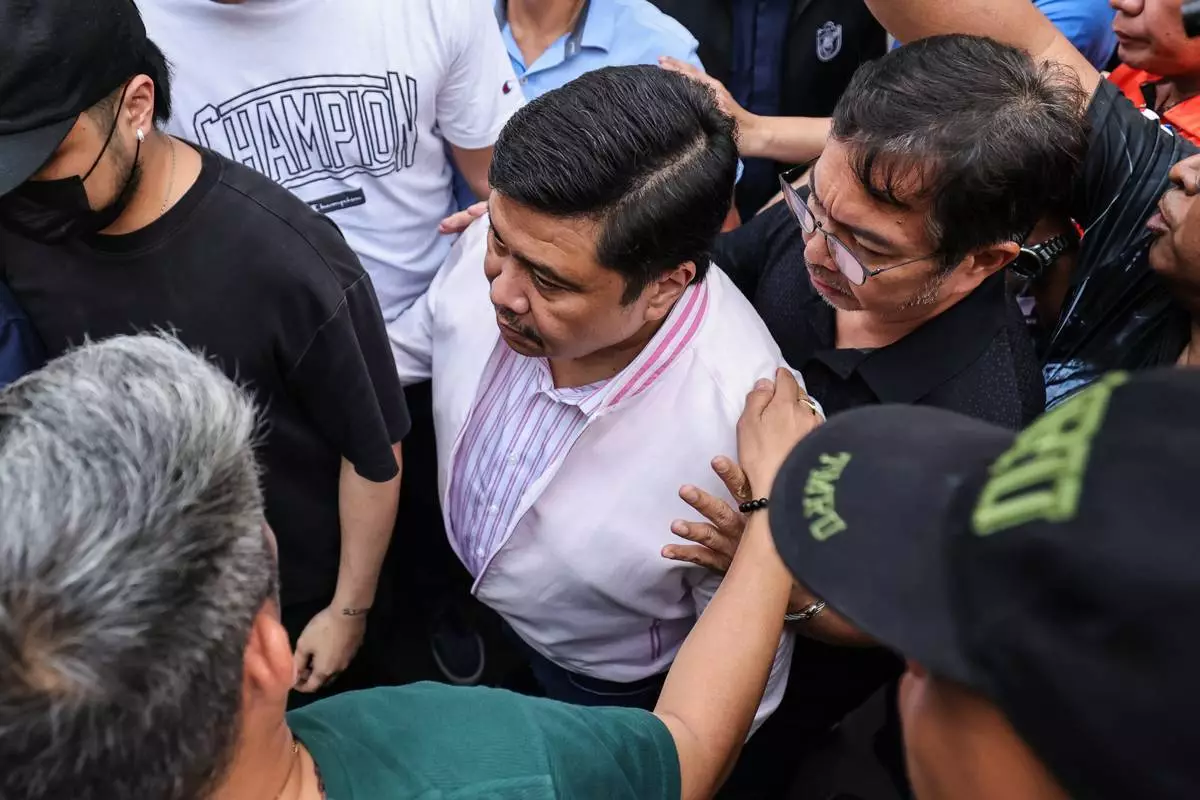
Senator Jose Pimentel "Jinggoy" Estrada, center, leaves the Sandiganbayan Anti-Graft Court in Quezon City, Metro Manila, Friday, May 29, 2026, after posting bail in connection with his graft case. (AP Photo/Gerard Carreon)
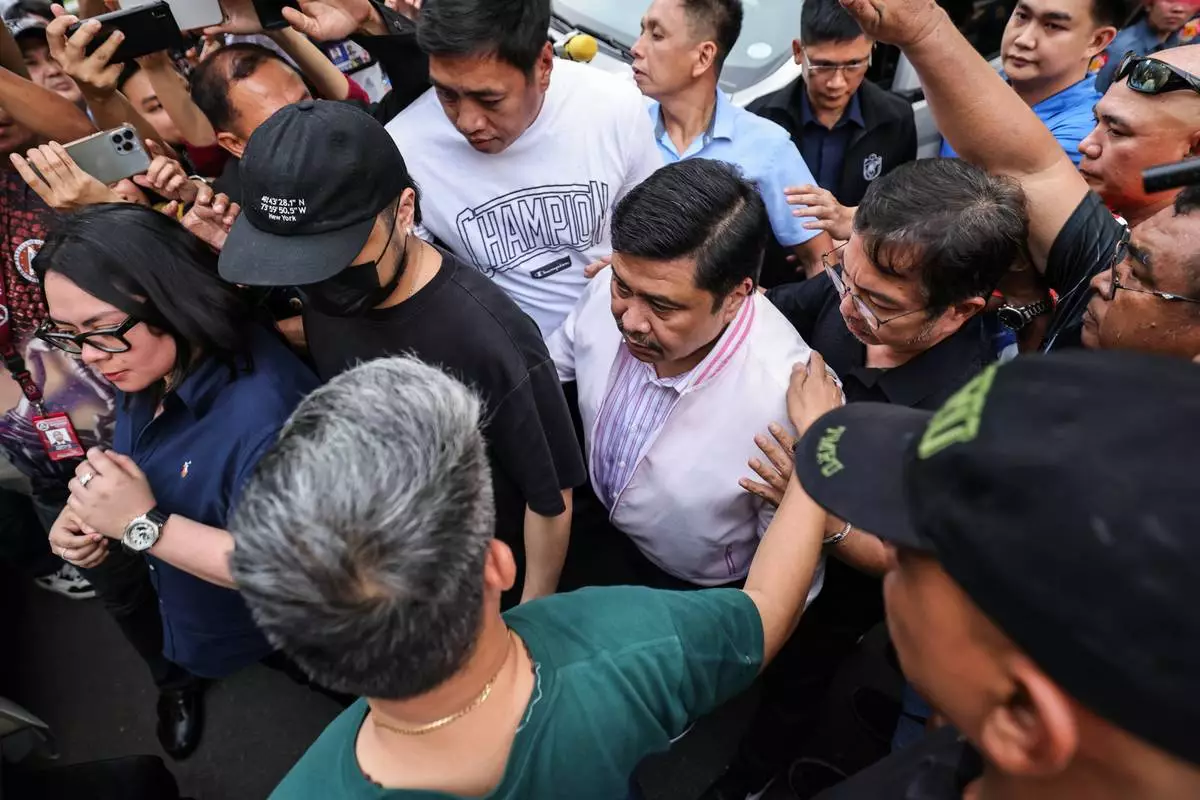
Senator Jose Pimentel "Jinggoy" Estrada, center, leaves the Sandiganbayan Anti-Graft Court in Quezon City, Metro Manila, Friday, May 29, 2026, after posting bail in connection with his graft case. (AP Photo/Gerard Carreon)
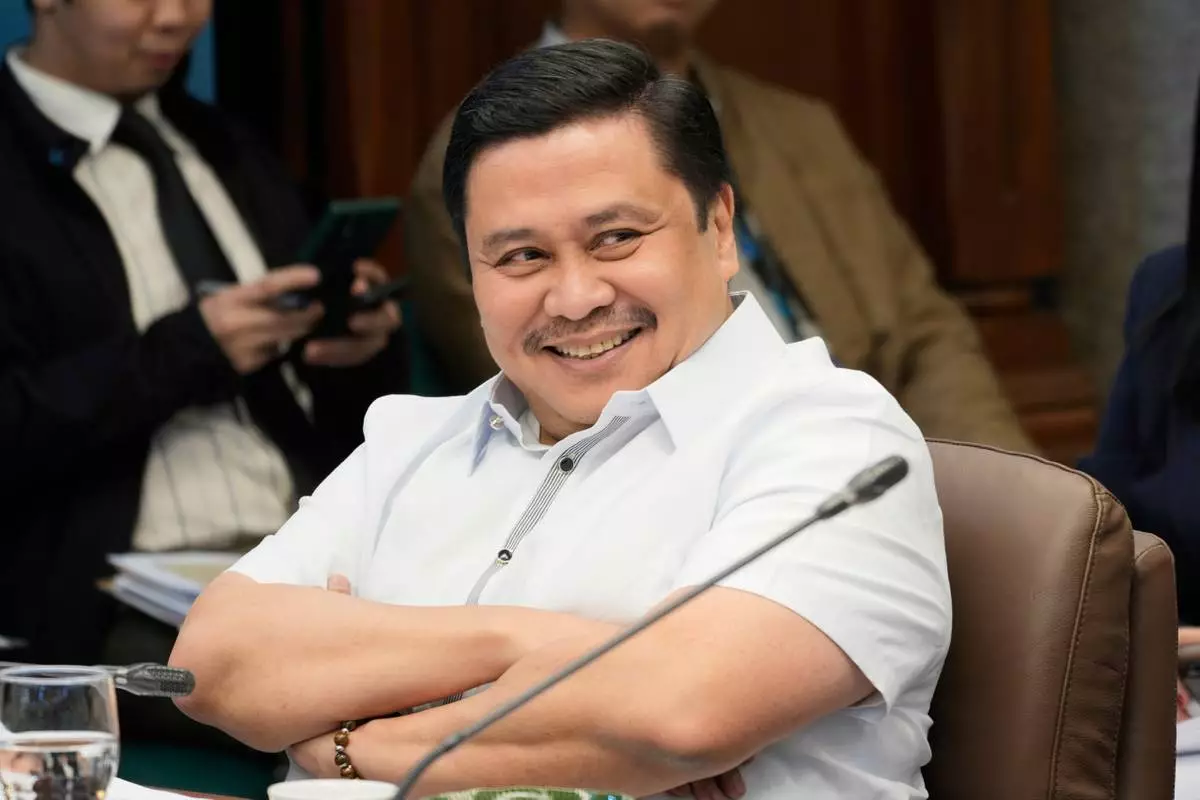
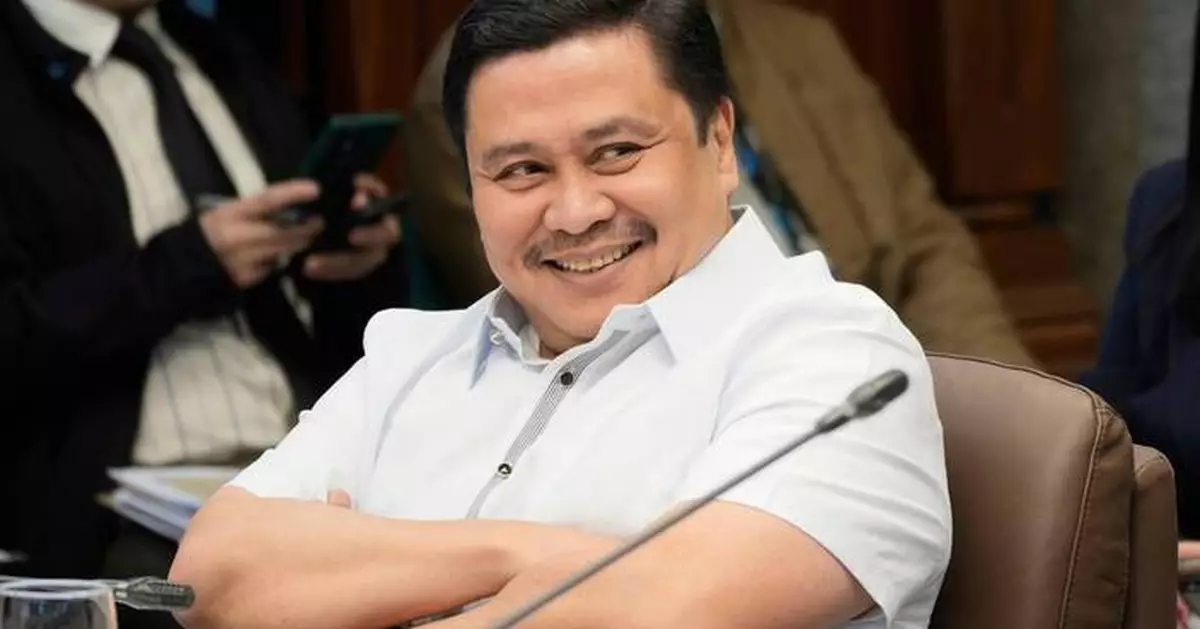
FILE -Senator Jinggoy Estrada smiles during a break in investigations on flood-control projects at the Senate Blue Ribbon committee in Pasay city, Philippines on Sept. 8, 2025. (AP Photo/Aaron Favila, File)
KINSHASA, Congo (AP) — The head of the World Health Organization has arrived in Congo's capital, Kinshasa, to support efforts against an outbreak of a rare type of Ebola virus, as medical personnel struggle with a lack of equipment, a distrustful population and armed groups in a volatile region.
“To come here is to really show to the community that they’re not alone," WHO Director-General Tedros Adhanom Ghebreyesus told reporters at the airport late Thursday.
“Pushing orders from my comfortable office in Geneva is easy, but I’m asking my colleagues to work with the community and I am asking communities to protect themselves,” he added. “That thing can be stopped,” he said, referring to the outbreak.
Describing it as a “very complex outbreak”, Tedros said challenges like the high number of people displaced by armed conflict in the region and food insecurity are complicating the containment of the outbreak.
The outbreak has also been particularly difficult to contain because the disease likely spread for weeks before it was first identified in mid-May.
The International Federation of Red Cross and Red Crescent Societies has said three of its volunteers in Ituri died after they were believed to have contracted Ebola doing unrelated health work on March 27 — more than a month before the first suspected death cited by the Africa Centres for Disease Control and Prevention.
Meanwhile, the outbreak continues to spread faster than the response, despite the response becoming more organized and the arrival of more equipment.
There had been 1,077 suspected cases and 238 suspected deaths recorded as of Tuesday, according to Congo’s Public Health Emergency Operations Center, which includes WHO.
Medical aid donated by the European Union arrived in Ituri province, the heart of Congo’s Ebola outbreak, on Thursday, with more batches planned over the next eight days. The United States announced the same day $80 million in additional aid, bringing its total commitment to more than $112 million.
An AP reporter in Bunia, the provincial capital, said the response has improved since the new arrivals of aid earlier this week.
At Rwampara Hospital, where a treatment center has been established, the response looks far more organized than in previous days, with more staff deployed, stronger prevention measures and teams in protective gear visible across units — though patients continue to arrive around the clock. The same progress was noted at Bunia General Hospital, where new medical kits, support personnel and emergency funding appear to be reinvigorating operations.
Health workers with scant supplies had been struggling to contain an outbreak of the Bundibugyo virus, a kind of Ebola that has no approved treatment or vaccine. In some areas, doctors have resorted to wearing expired medical masks while treating suspected patients.
Only one patient has so far recovered from the disease, officials say. There are no specific treatments for it
“We are currently exploring the use of more and more drugs and compounds that can help save even more lives, because, as I’ve mentioned, this disease initially presents just like any other infectious disease we’re familiar with: dizziness, headache, fever, vomiting and diarrhea,” Congo’s Health Minister Samuel Roger Kamba told reporters Thursday night.
Dangers faced by health workers have been heightened by anger among residents over the stringent medical protocols for dealing with the bodies of victims, which clash with local burial rites. Residents have launched at least three attacks against health centers.
Tucked in the northeastern part of Congo close to the Ugandan border, Ituri province has been reeling from attacks by the Allied Democratic Force, a rebel group allied with the Islamic State group, and a coalition of ethnic militias. In early May, the ADF killed at least 40 people and burned several homes in Ituri.
The illness also has been reported in the Congolese provinces of North Kivu and South Kivu, south of Ituri, where the Rwanda-backed M23 rebel group controls many key cities, including Goma and Bukavu. The rebels have reported two cases.
After Uganda closed its border with Congo, the WHO chief said Thursday he discourages countries from imposing travel bans. “There are ways to manage workers and to manage cases without having a strong, restricted travel ban and we don’t encourage that as WHO,” Tedros said.
The Trump administration last week announced a temporary ban on the entry of people without U.S. passports who have visited Congo, Uganda or South Sudan in the past 21 days. It said Wednesday it plans to send Americans who are exposed to Ebola to a new facility in Kenya instead of flying them to the U.S.
——
Kabumba reported from Bunia, Congo, and Banchereau from Dakar, Senegal.
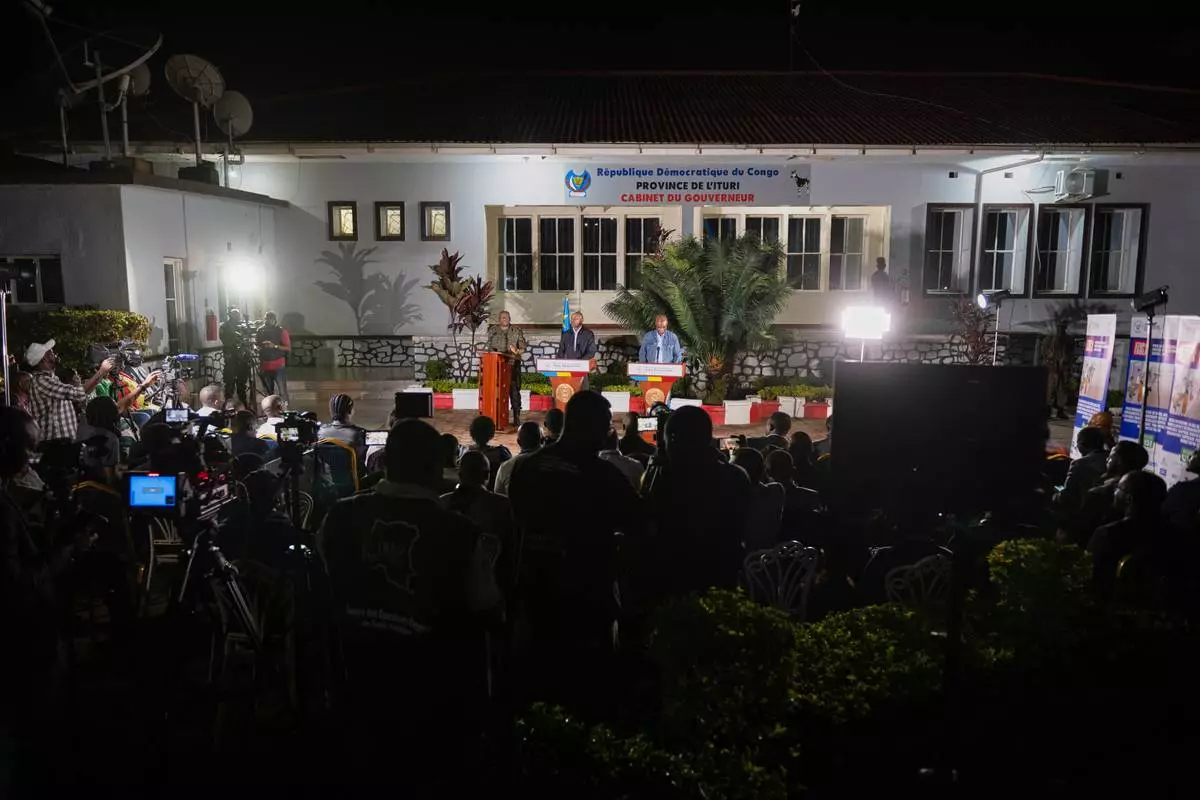
From left, Luboya Nkashama, Military Governor of Ituri Province, Patrick Muyaya, Minister of Communication and Samuel Roger Kamba Mulamba, Minister of Public Health, speak to the press during a briefing on the Ebola response in Bunia, Congo, Thursday, May 28, 2026. (AP Photo/Moses Sawasawa)
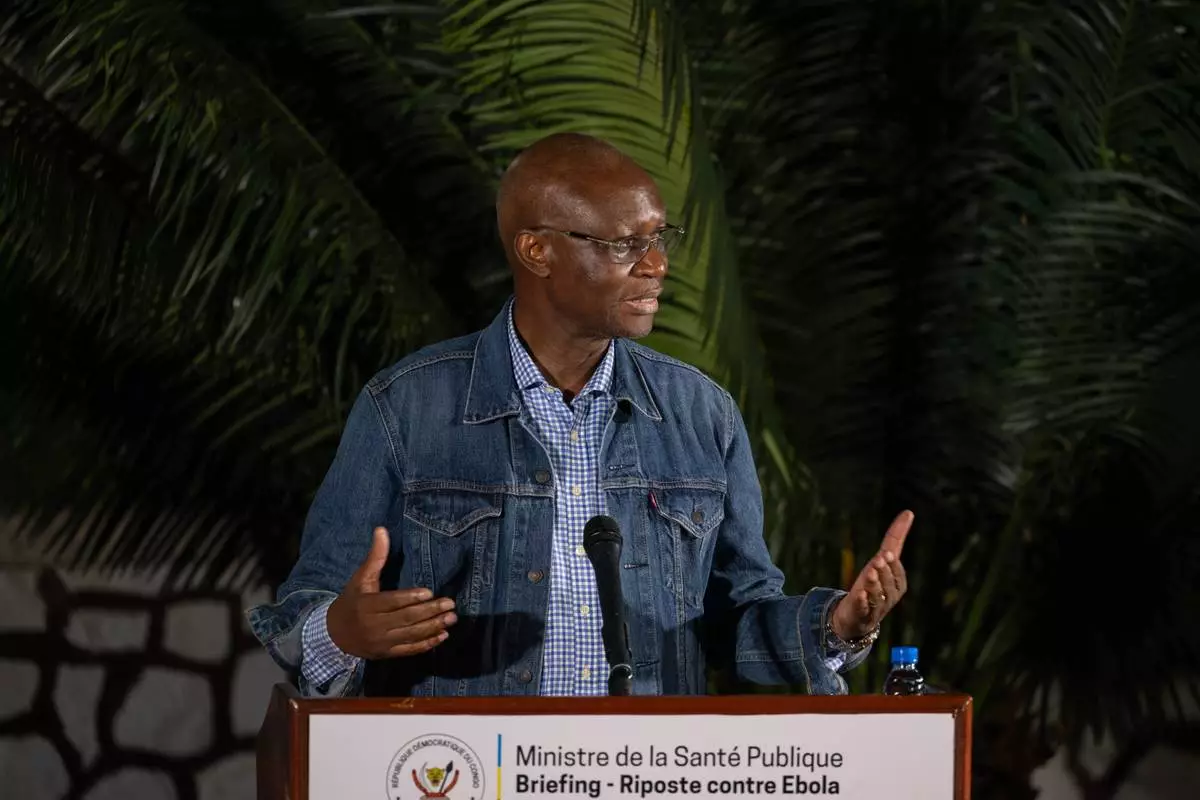
Samuel Roger Kamba Mulamba, Minister of Public Health, addresses the press during a briefing on the Ebola response in Bunia, Congo, Thursday, May 28, 2026. (AP Photo/Moses Sawasawa)
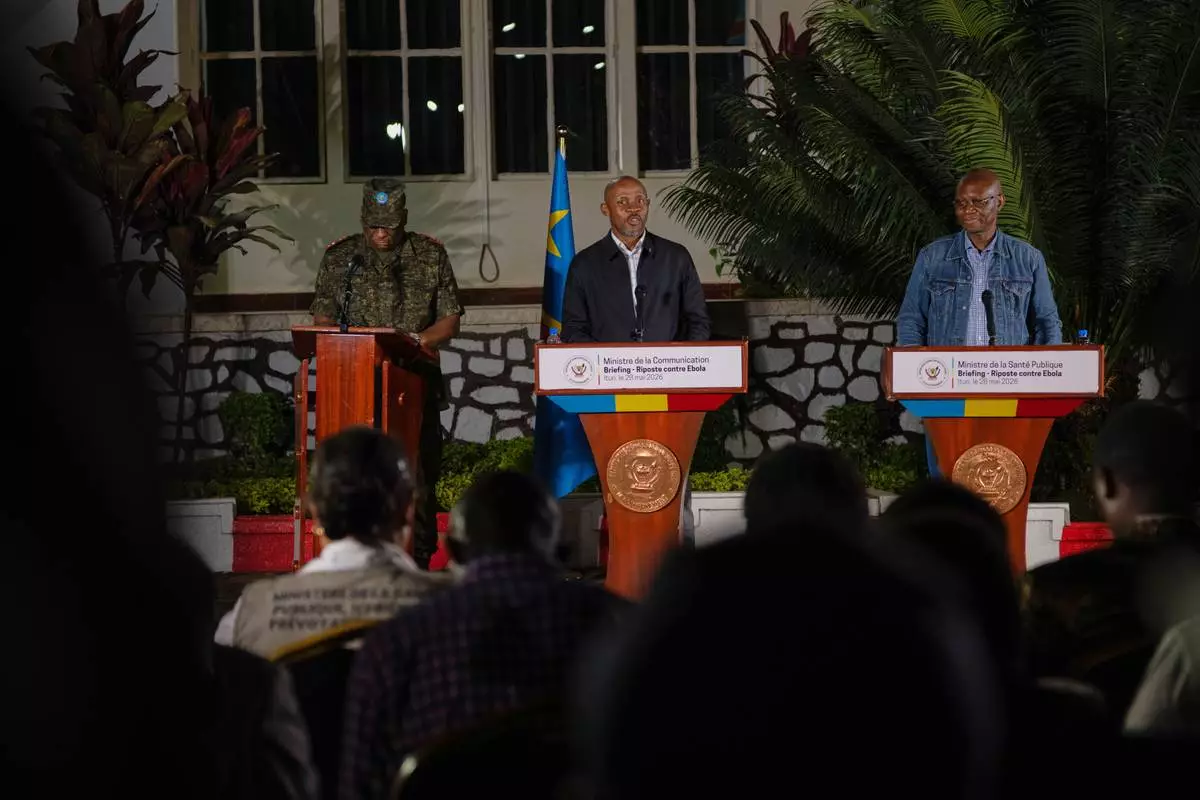
From left, Luboya Nkashama, Military Governor of Ituri Province, Patrick Muyaya, Minister of Communication and Samuel Roger Kamba Mulamba, Minister of Public Health, speak to the press during a briefing on the Ebola response in Bunia, Congo, Thursday, May 28, 2026. (AP Photo/Moses Sawasawa)
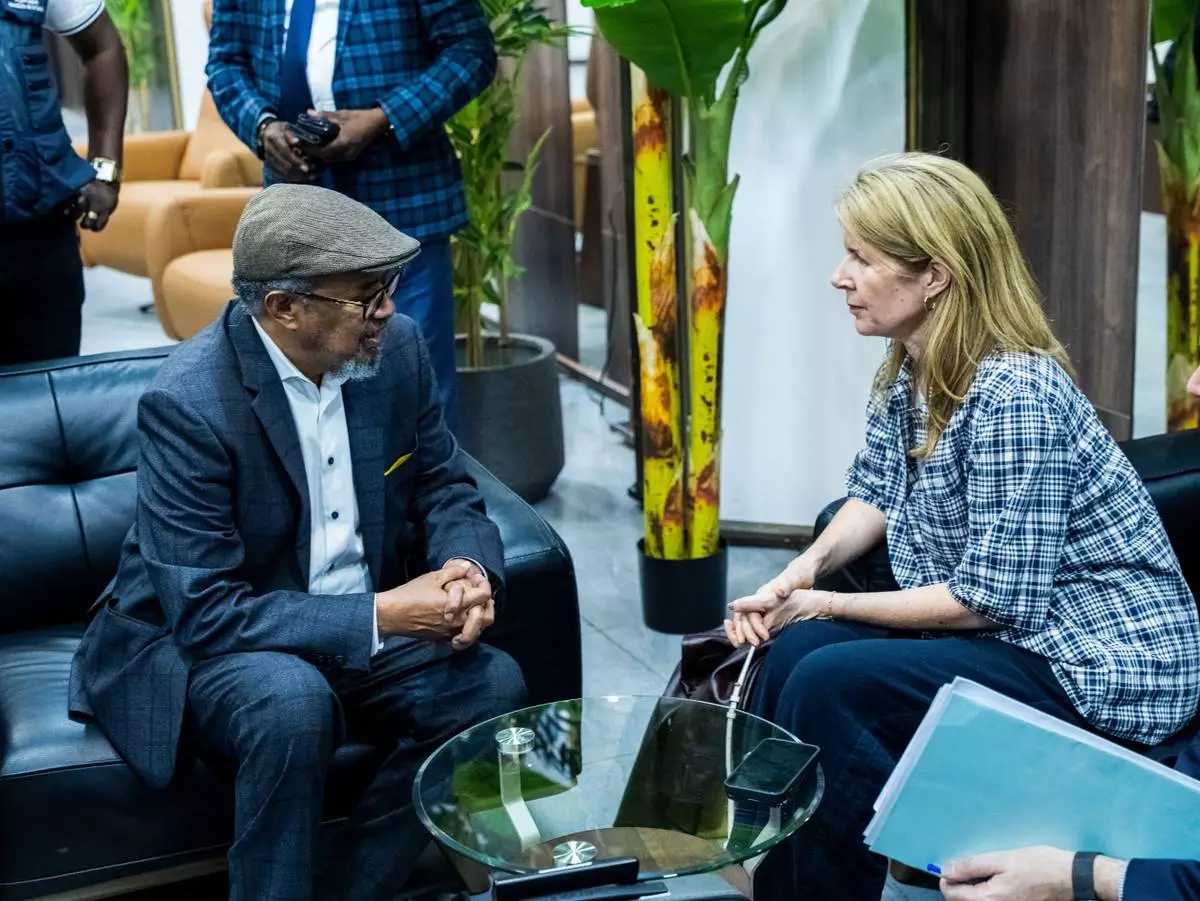
Director General of the World Health Organisation (WHO), Tedros Adhanom Ghebreyesus, left, is welcomed by U.K. Minister for International Development and Africa Jenny Chapman at N'djili International Airport in Kinshasa, Congo, Thursday, May 28, 2026. CORRECTION: corrects U.K. Foreign Secretary Yvette Cooper to U.K. Minister for International Development and Africa Jenny Chapman (AP Photo/Samy Ntumba Shambuyi)
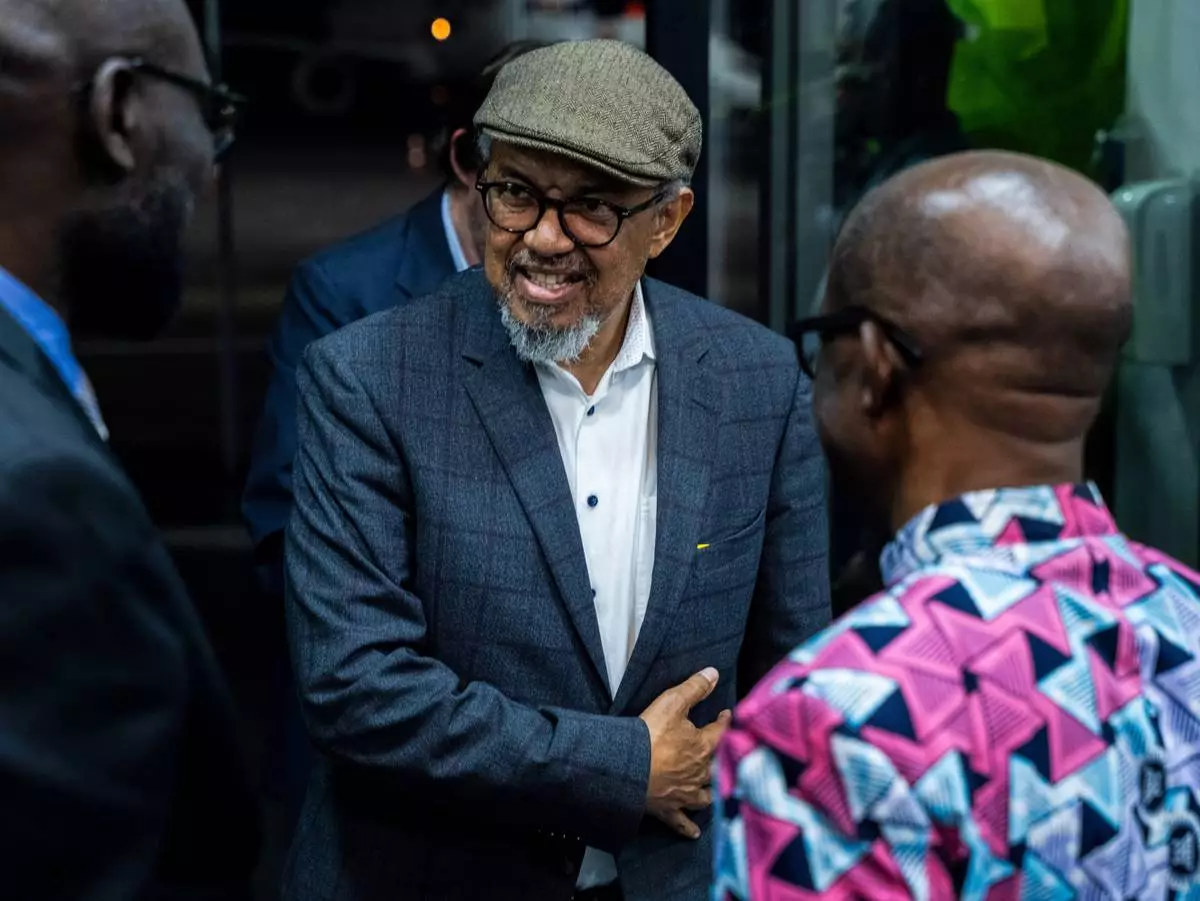
Director General of the World Health Organisation (WHO), Tedros Adhanom Ghebreyesus, arrives at N'djili International Airport in Kinshasa, Congo, Thursday, May 28, 2026. (AP Photo/Samy Ntumba Shambuyi)
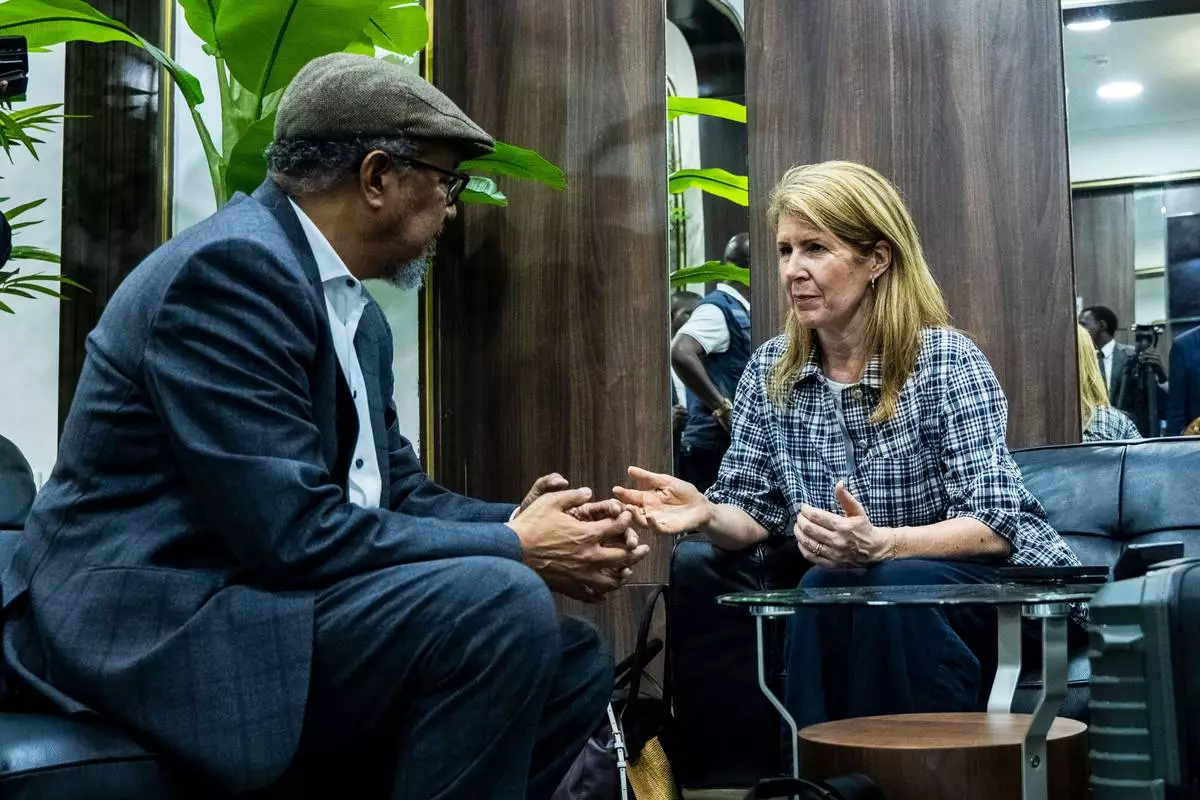
Director General of the World Health Organisation (WHO), Tedros Adhanom Ghebreyesus, left, is welcomed by UK Foreign Secretary Yvette Cooper at N'djili International Airport in Kinshasa, Congo, Thursday, May 28, 2026. (AP Photo/Samy Ntumba Shambuyi)
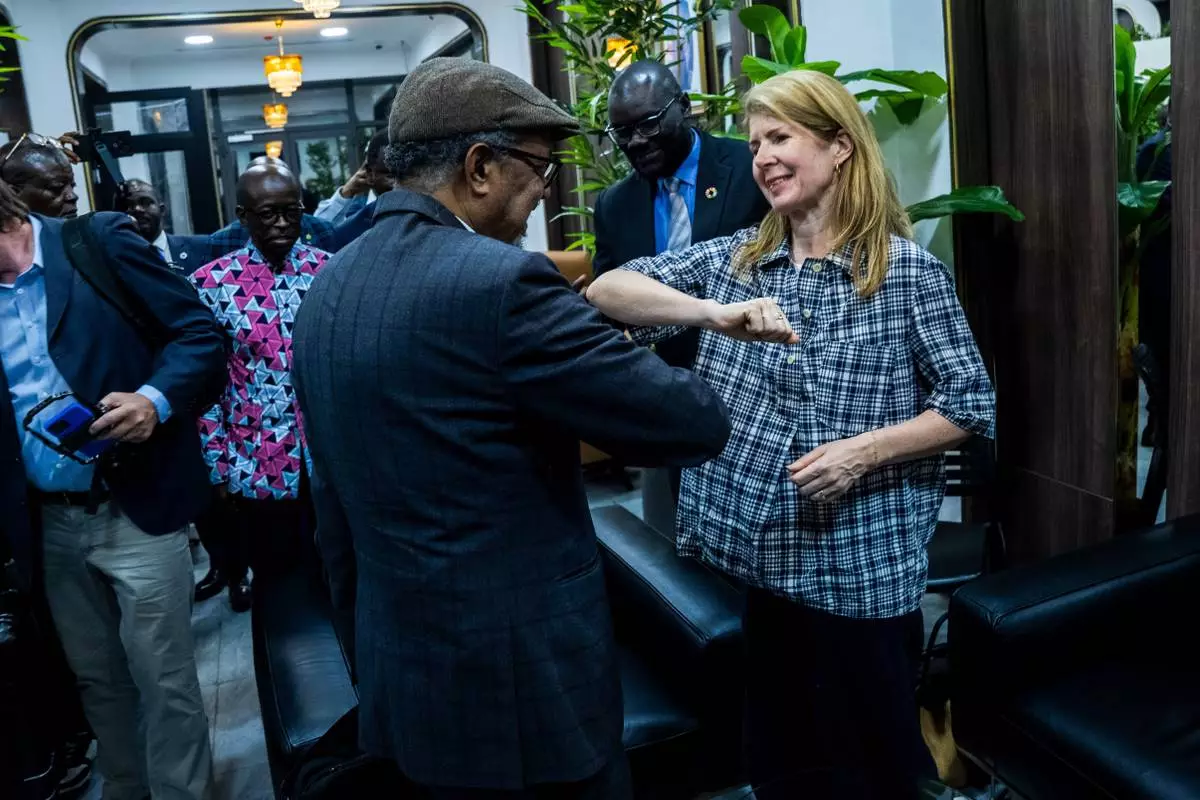
Director General of the World Health Organisation (WHO), Tedros Adhanom Ghebreyesus, left, is welcomed by UK Foreign Secretary Yvette Cooper at N'djili International Airport in Kinshasa, Congo, Thursday, May 28, 2026. (AP Photo/Samy Ntumba Shambuyi)
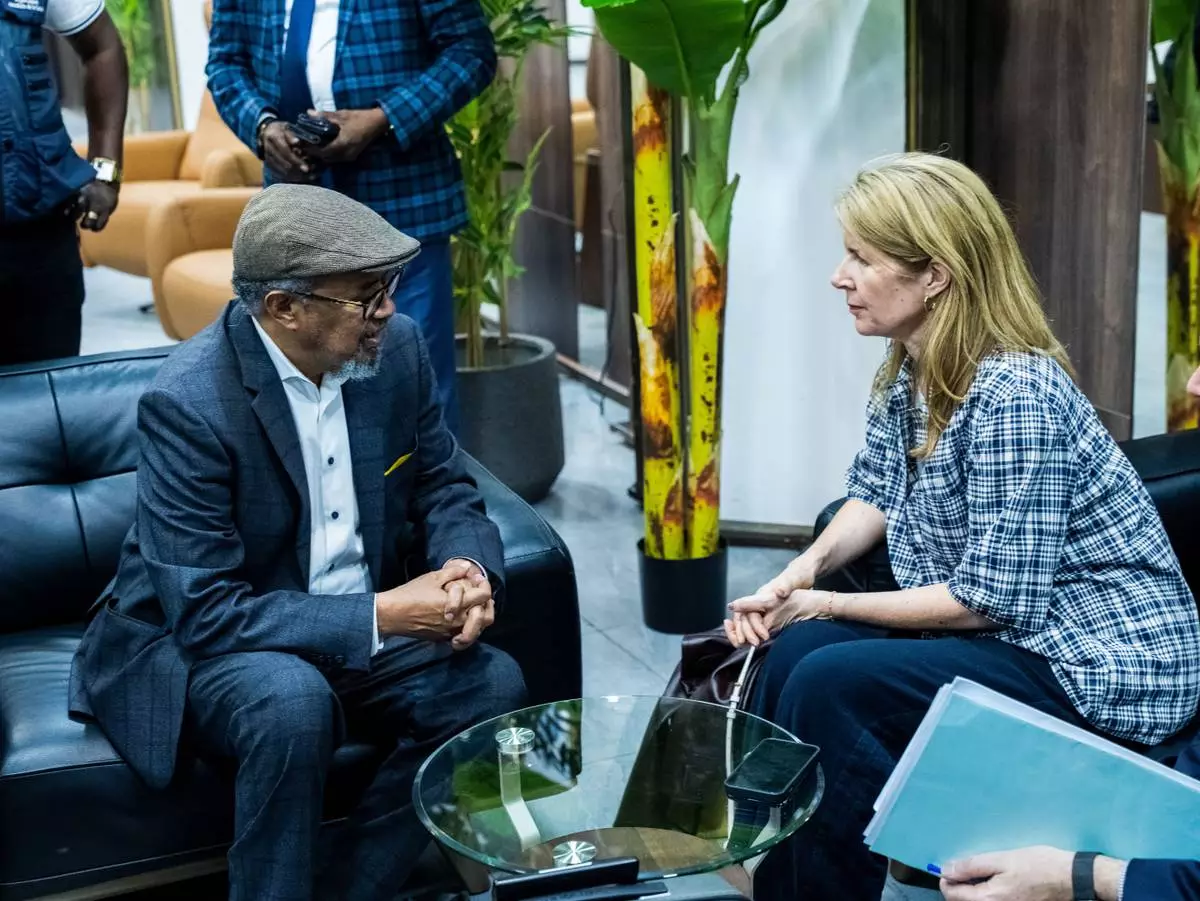
Director General of the World Health Organisation (WHO), Tedros Adhanom Ghebreyesus, left, is welcomed by UK Foreign Secretary Yvette Cooper at N'djili International Airport in Kinshasa, Congo, Thursday, May 28, 2026. (AP Photo/Samy Ntumba Shambuyi)
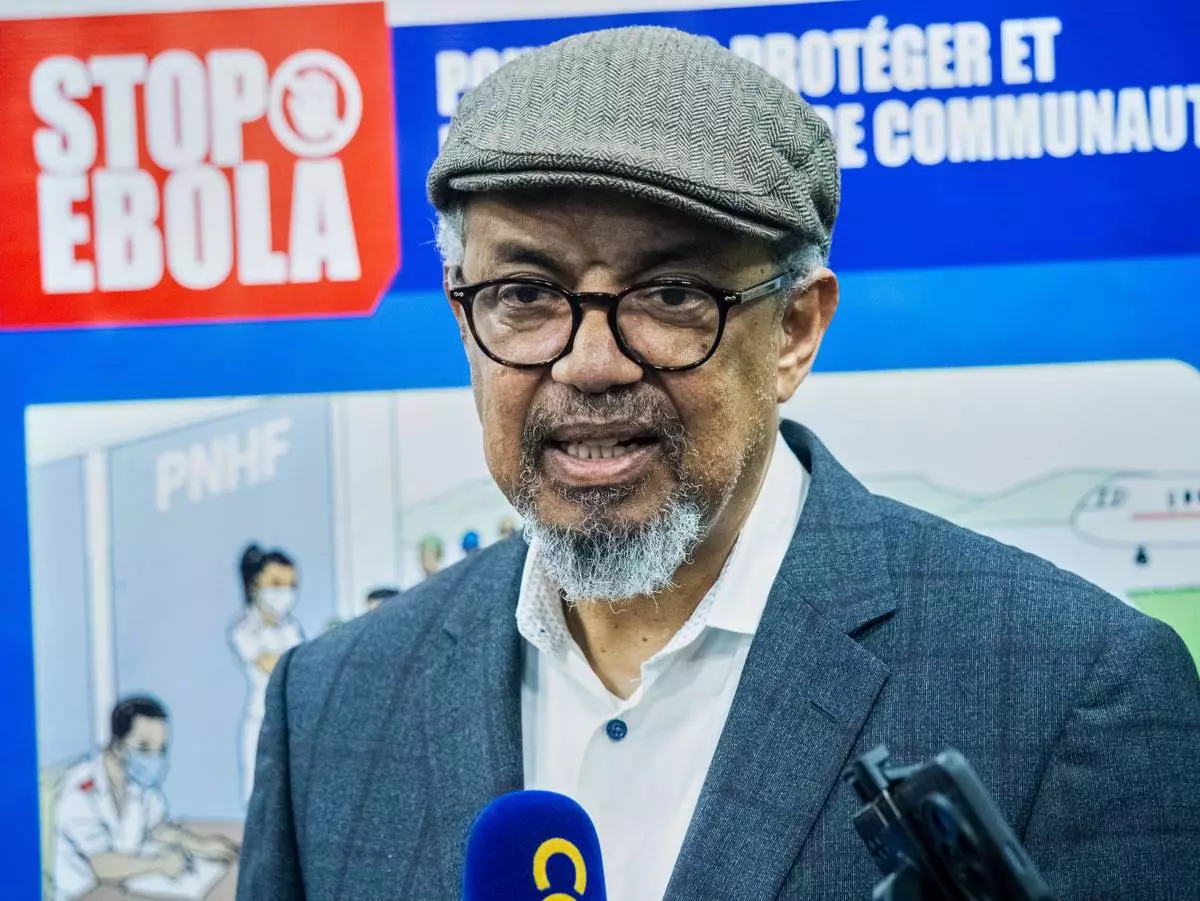
Director-General of the World Health Organisation (WHO), Tedros Adhanom Ghebreyesus, speaks to the media upon his arrival at N'djili International Airport in Kinshasa, Congo, Thursday, May 28, 2026. (AP Photo/Samy Ntumba Shambuyi)