Five helicopters have arrived near the landing site of the Shenzhou-22 spaceship for the search and retrieval mission of the Shenzhou-21 astronauts.
The Shenzhou-22 spaceship undocked from the space station combination at 14:44 (Beijing Time) on Friday to send the Shenzhou-21 astronauts Zhang Lu, Wu Fei and Zhang Hongzhang back to Earth, according to the China Manned Space Agency (CMSA).
The spaceship is scheduled to return to the Dongfeng landing site in north China's Inner Mongolia Autonomous Region later.
The five helicopters -- one for command, one for communication, one for medical supervision and rescue, and two for medical rescue -- will take care of the astronauts, while a ground team will retrieve the return capsule.
Each helicopter has two crew commanders, and nearly 80 percent of the air team have carried out search and retrieval missions before, said Jiang Xuejing, the team's commander.
"Our most important job before the landing is to closely watch the weather. The current wind comes from the northwest, with a speed of about four to six meters per second, and visibility is about 20 kilometers, so weather conditions are favorable. After the helicopters are powered off, our maintenance personnel will conduct further checks on the aircraft and their equipment, and will refuel them. Now, all preparations are complete. We will welcome the astronauts home in the best condition and to the highest standard," Jiang said.
China launched the Shenzhou-21 spaceship on Oct 31, 2025 to send the Shenzhou-21 crew to its space station for rotation with Shenzhou-20 crew. However, the Shenzhou-20 crew later found that Shenzhou-20 spaceship's return capsule viewport window suffered a suspected impact from space debris during its mission and was unfit for crew return mission.
On Nov 14, 2025, the Shenzhou-20 crew returned safely aboard the Shenzhou-21 spacecraft. On Nov 25, 2025, China launched the Shenzhou-22 spaceship to provide a return vessel for the Shenzhou-21 crew.
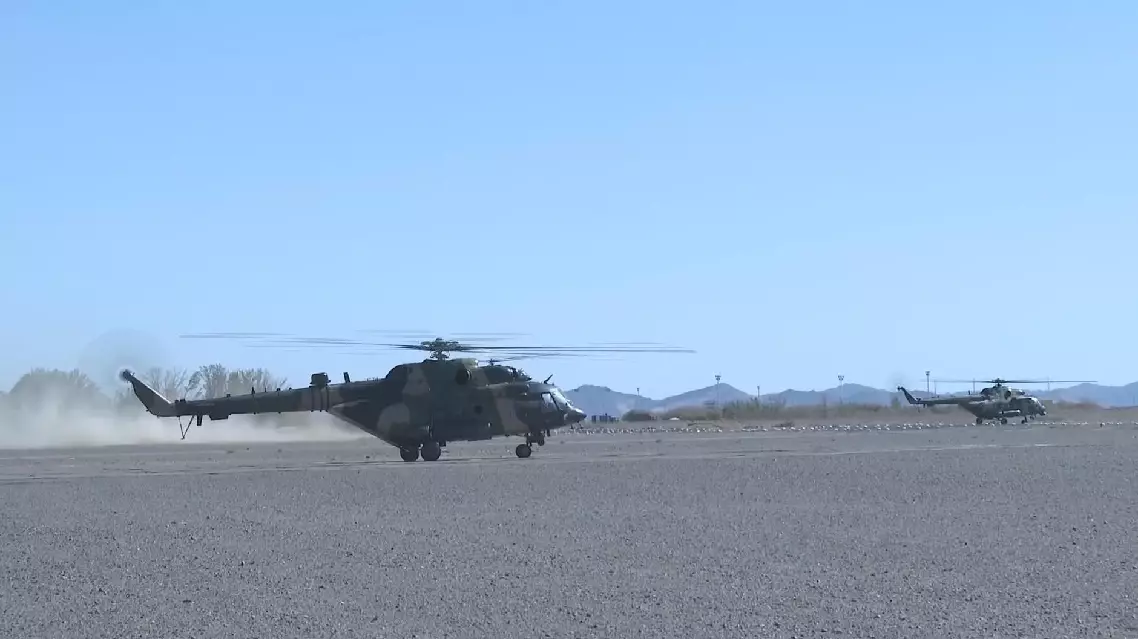
Recovery helicopters complete assembly for upcoming return of Shenzhou-21 astronauts
Colombians are heading to the polls on Sunday to elect their next president. The country's constitution prevents the current President, Gustavo Petro, from running for a second term.
Yet, many see this election as a referendum on the policies of Gustavo Petro, Colombia's first leftist president.
There are 14 candidates on Sunday's ballot, but the polls show it will likely be a tight three-way race.
The frontrunner is Ivan Cepeda, a 63-year-old three-term senator, representing President Gustavo Petro's party, the Historic Pact coalition. Cepeda has vowed to defend and deepen Petro's progressive reforms and social justice policies to reduce inequality. He also promises to continue the government's controversial "Total Peace" strategy to negotiate the disarmament of remaining guerrilla groups and criminal gangs.
"True prosperity comes from equality, from access to rights, and from transforming the peripheral and excluded territories of the rural world," Cepeda said at a campaign rally.
Running as a political outsider and independent is Abelardo de la Espriella, a 47-year-old lawyer, nicknamed "The Tiger." He has presented himself as the "authority and order" candidate who will reduce state spending by up to 40 percent in the next four years.
"(First,) we must fight insecurity. Colombia is suffering today from a pandemic of insecurity. Crime is out of control: extortion, cattle theft, smuggling, drug trafficking," he said to his supporters at an election event.
According to polls, the third candidate with strong support is Paloma Valencia. The 48-year-old senator represents the Democratic Center party led by popular former President Alvaro Uribe Velez. Her candidacy is backed by politicians and economists who are concerned with growing levels of public debt. They want to see a return to more conservative fiscal policies.
"I don't want to be a president who governs alone, locked away in glass offices. I want to be a president who stands with citizens, who embraces them, who reaches out to them, who has a team, and who governs to transform Colombia," the candidate said at the campaign event
According to polls earlier in the year, many voters are expressing concerns about unemployment, rising living costs, corruption, and, above all, public security.
The election comes after a turbulent year that the International Committee of the Red Cross has called "the worst humanitarian consequences of armed conflict over the past decade."
"(We arrive at this election in a tense atmosphere - tense) because of the economic situation, because of the security situation, and because of the narratives that have been built around the country's main problems. On top of that, emotions, ideas and social media have all helped raise (the tone,)" said Eduardo Velosa, associate professor from International Studies Javeriana University.
If no candidate receives 50 percent of the vote, a runoff election will be held between the top two finishers on June 21st.
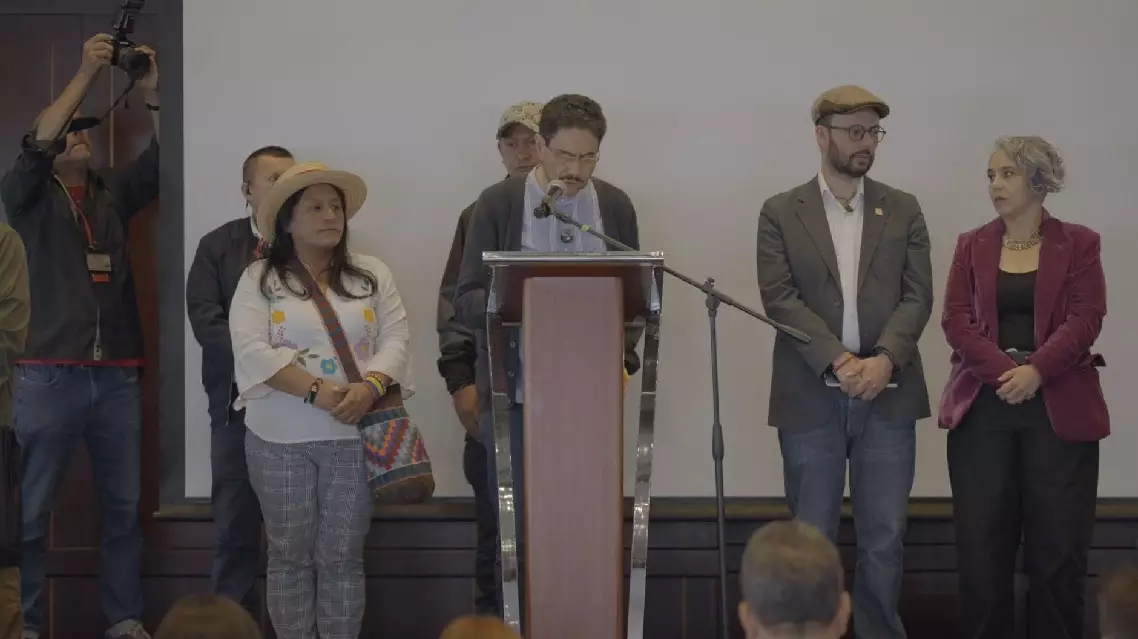
Colombians prepare to choose their next president