AUSTIN, Texas--(BUSINESS WIRE)--May 29, 2026--
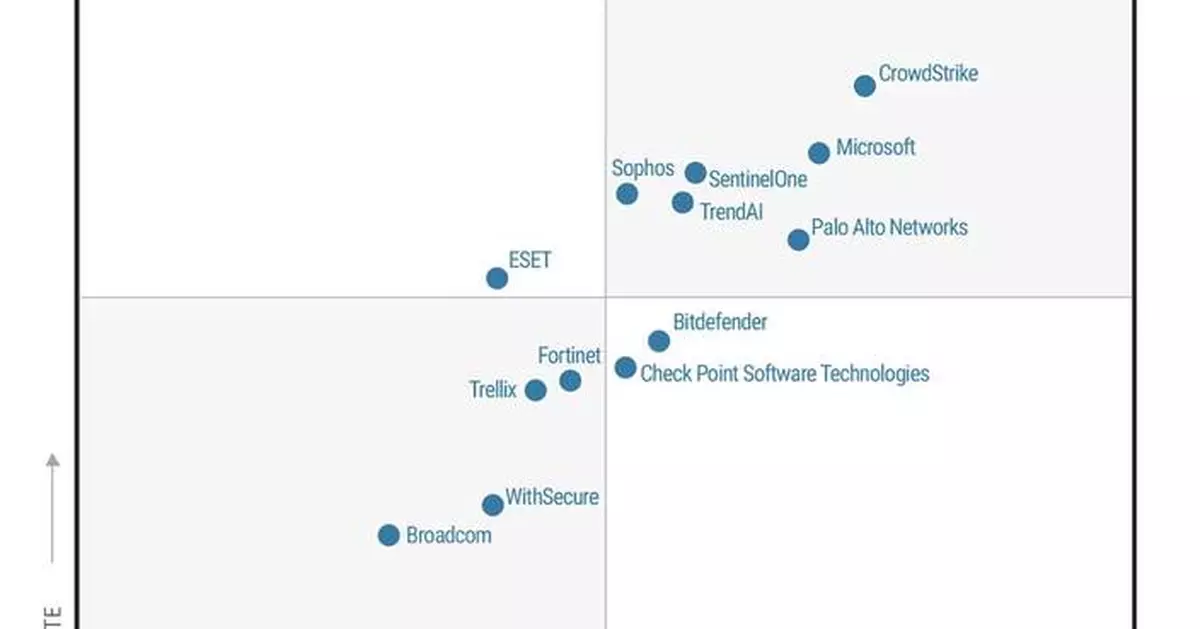
CrowdStrike (NASDAQ: CRWD) today announced it has been named a Leader in the 2026 Gartner® Magic Quadrant™ for Endpoint Protection1 for the seventh consecutive time. CrowdStrike was also positioned furthest right for Completeness of Vision and highest for Ability to Execute among all vendors evaluated for the fourth time in a row.
This press release features multimedia. View the full release here: https://www.businesswire.com/news/home/20260529975572/en/
CrowdStrike pioneered AI-native endpoint security and is defining the future of AI Detection and Response. AI has triggered an endpoint renaissance, with agents executing, deciding, and acting on the endpoint with system-level privilege at machine speed. CrowdStrike's endpoint business has accelerated for consecutive quarters as enterprises move to secure AI where it runs. 2
“AI executes on the endpoint and is creating the largest security demand driver since enterprises moved to the cloud,” said Michael Sentonas, president of CrowdStrike. “As agents take actions, access sensitive data, and interact with critical systems, they must be secured in real time, at the point of execution. We feel this recognition reflects our excellence in endpoint security today and how we are defining the next category of security for the AI era.”
Securing AI on the Endpoint
As AI agents gain autonomy and system-level privilege, the endpoint is the control point for modern security. It’s where agents execute commands, access data, and trigger downstream workflows often indistinguishable from legitimate user activity. CrowdStrike secures AI at runtime on the endpoint – delivering real-time visibility and enforcement over AI behavior, automatically discovering AI applications and agents, and inspecting prompts and interactions to stop injection attacks, data leaks, and policy violations at the point of execution.
CrowdStrike sensors detect more than 1,800 distinct AI applications running on enterprise devices, representing nearly 160 million unique application instances across its customer base, the largest dataset of AI agent behavior in cybersecurity. 3 Agent actions do not remain on the endpoint, and securing AI requires extending protection across organizations' AI infrastructure.
CrowdStrike’s unified platform architecture extends continuous, risk-aware protection across human, non-human, and AI agent identities, cloud runtime environments, as well as SaaS applications and live browser sessions where work happens. In addition, Charlotte AI – with usage growing more than 6x year-over-year and ARR more than tripling 4 – powers the agentic SOC, automating high-friction workflows and stopping breaches at machine speed across the enterprise attack surface.
“CrowdStrike introduced us to a new standard of endpoint security and has secured our innovation journey ever since,” said Jairo Orea, global chief information security officer, Royal Caribbean Group. “As AI becomes central to how we operate, CrowdStrike gives us the visibility and control we need to adopt it confidently; they are the platform we trust to secure AI where it runs.”
In January 2026, CrowdStrike was named a Customers’ Choice in the 2026 Gartner Peer Insights™ ‘Voice of the Customer’ for Endpoint Protection Platforms report, with the most 5-star ratings of any Customers’ Choice vendor. 5
To learn more about CrowdStrike’s recognition in the 2026 Gartner ® Magic Quadrant™ for Endpoint Protection, please visit our website and read our blog.
GARTNER, PEER INSIGHTS, MAGIC QUADRANT, and GARTNER PEER INSIGHTS CUSTOMERS’ CHOICE badge are trademarks of Gartner, Inc. and/or its affiliates.
Gartner Peer Insights content consists of the opinions of individual end users based on their own experiences with the vendors listed on the platform, should not be construed as statements of fact, nor do they represent the views of Gartner or its affiliates. Gartner does not endorse any vendor, product or service depicted in this content nor makes any warranties, expressed or implied, with respect to this content, about its accuracy or completeness, including any warranties of merchantability or fitness for a particular purpose.
GARTNER is a trademark of Gartner, Inc. and/or its affiliates. Magic Quadrant is a registered trademark of Gartner, Inc. and/or its affiliates and is used herein with permission. All rights reserved. Gartner does not endorse any company, vendor, product or service depicted in its publications, and does not advise technology users to select only those vendors with the highest ratings or other designation. Gartner publications consist of the opinions of Gartner’s business and technology insights organization and should not be construed as statements of fact. Gartner disclaims all warranties, expressed or implied, with respect to this publication, including any warranties of merchantability or fitness for a particular purpose.
This graphic was published by Gartner, Inc. as part of a larger research document and should be evaluated in the context of the entire document. The Gartner document is available upon request from CrowdStrike.
About CrowdStrike
CrowdStrike (NASDAQ: CRWD), a global cybersecurity leader, has redefined modern security with the world’s most advanced cloud-native platform for protecting critical areas of enterprise risk – endpoints and cloud workloads, identity and data.
Powered by the CrowdStrike Security Cloud and world-class AI, the CrowdStrike Falcon® platform leverages real-time indicators of attack, threat intelligence, evolving adversary tradecraft, and enriched telemetry from across the enterprise to deliver hyper-accurate detections, automated protection and remediation, elite threat hunting, and prioritized observability of vulnerabilities.
Purpose-built in the cloud with a single lightweight-agent architecture, the Falcon platform delivers rapid and scalable deployment, superior protection and performance, reduced complexity, and immediate time-to-value.
CrowdStrike: We stop breaches.
Learn more: https://www.crowdstrike.com/
Follow us: Blog | X | LinkedIn | Instagram
Start a free trial today: https://www.crowdstrike.com/trial
© 2026 CrowdStrike, Inc. All rights reserved. CrowdStrike and CrowdStrike Falcon are marks owned by CrowdStrike, Inc. and are registered in the United States and other countries. CrowdStrike owns other trademarks and service marks and may use the brands of third parties to identify their products and services.
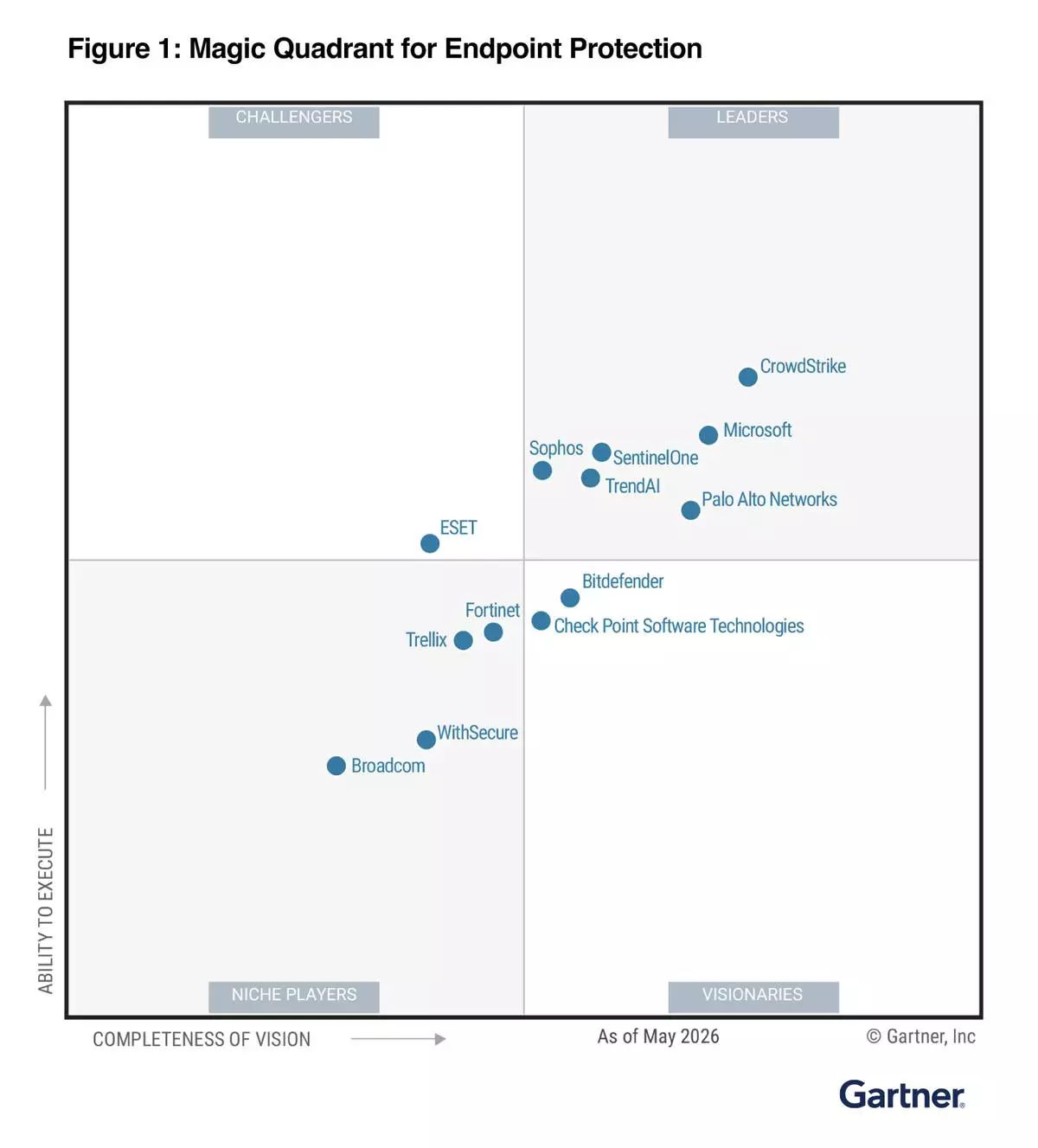
Gartner Magic Quadrant for Endpoint Protection