MEXICO CITY (AP) — Azteca Stadium has been graced triumphantly by Pelé and Maradona. It's days away from staging its third different World Cup.
And, yet, the Mexican soccer pitch known as the “Field of the Gods” is not the iconic Azteca.
Click to Gallery
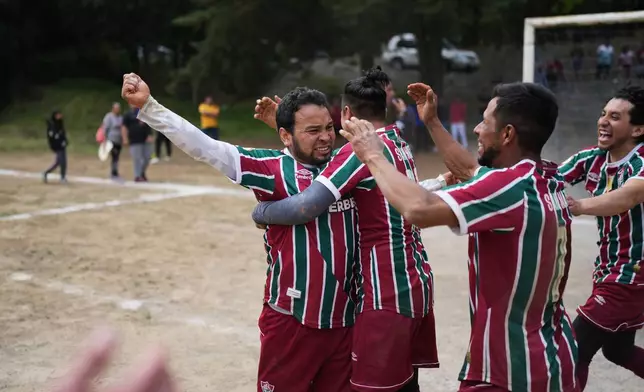
San Mateo soccer club players celebrate the penalty shot by Jesus Flores, left, that gave them the victory over Tepetlapa at the end of a tournament final on a soccer field nestled inside the crater of the extinct Teoca Volcano in the town of Santa Cecilia Tepetlapa in the Xochimilco borough of Mexico City, Sunday, April 26, 2026. (AP Photo/Eduardo Verdugo)
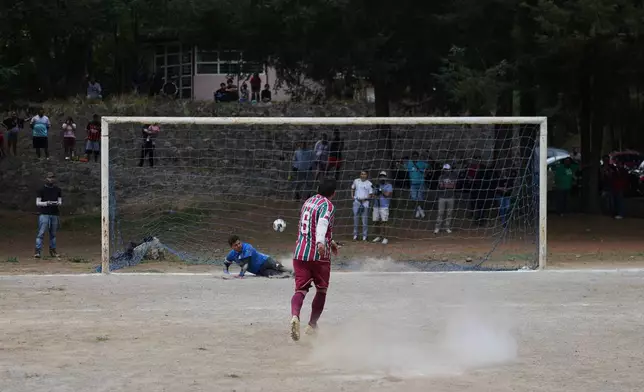
A San Mateo player scores a penalty shot past the Tepetlapa goal keeper during a match on a soccer field inside the crater of the extinct Teoca Volcano in the town of Santa Cecilia Tepetlapa in the Xochimilco borough of Mexico City, Sunday, April 26, 2026. (AP Photo/Eduardo Verdugo)
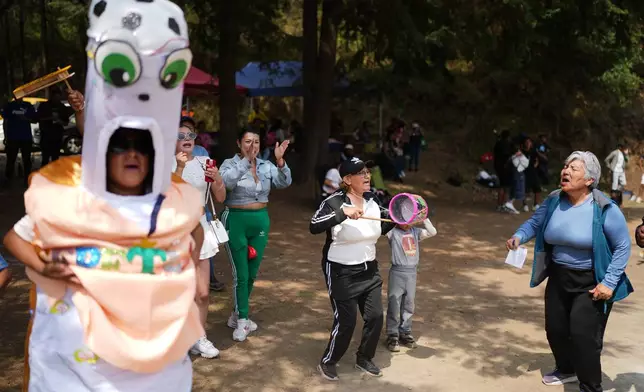
Fans cheer on the sidelines of the final tournament game between San Mateo and Tepetlapa clubs on a soccer field inside the crater of the extinct Teoca Volcano in the town of Santa Cecilia Tepetlapa in the Xochimilco borough of Mexico City, Sunday, April 26, 2026. (AP Photo/Eduardo Verdugo)
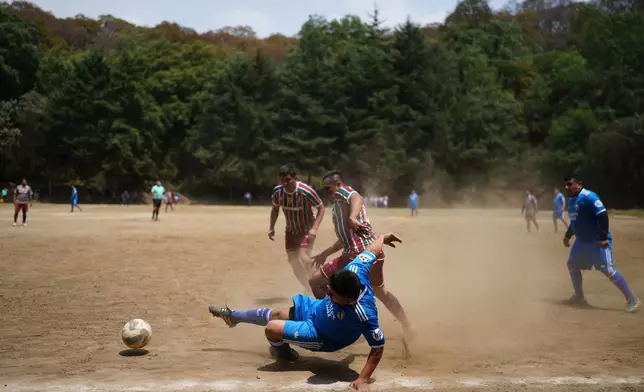
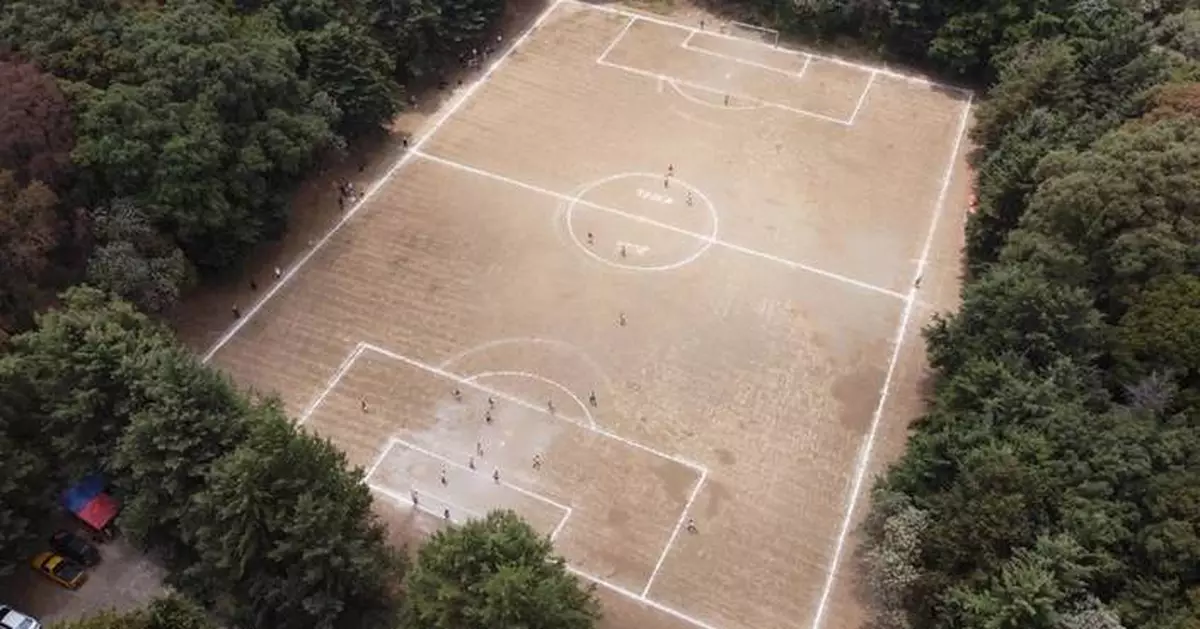
A soccer field nestled inside the crater of the extinct Teoca volcano hosts a local tournament match in the town of Santa Cecilia Tepetlapa in the Xochimilco borough of Mexico City, Sunday, April 19, 2026. (AP Photo/Eduardo Verdugo)
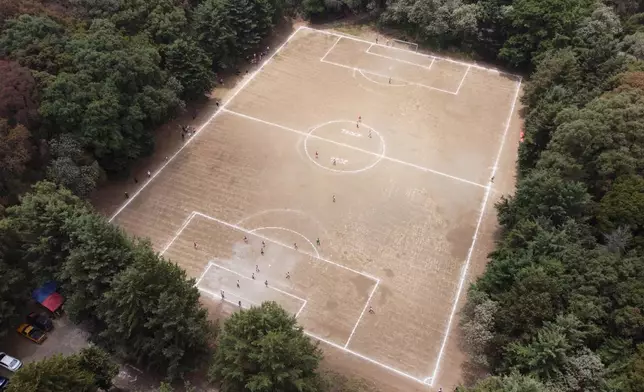
A soccer field nestled inside the crater of the extinct Teoca volcano hosts a local tournament match in the town of Santa Cecilia Tepetlapa in the Xochimilco borough of Mexico City, Sunday, April 19, 2026. (AP Photo/Eduardo Verdugo)
That nickname belongs to a football field nestled inside the crater of an extinct volcano just south of Mexico City.
Teoca volcano serves as the dramatic backdrop for an amateur league organized in the town of Santa Cecilia Tepetlapa in the Xochimilco borough.
Every Sunday, dozens of families from the town of 10,000 inhabitants — a predominantly lower-middle class community — gather to immerse themselves in Mexico's national obsession.
“For us, it's a way of life. Being here on Sundays is part of our routine, and there's a fantastic atmosphere across all the tournaments,” Jorge Becerril, the league’s representative, tells the Associated Press. “There are no altercations here; people just come to socialize, and the teams come to compete.”
The Teoca League features 10 teams, each one representing a single family. Because of these deep roots there is no age limit; generations compete side by side, from patriarchs to teenagers.
“The core of every team is a family,” Becerril explains. “When a player steps away, their son takes over, then their grandson, passing the torch down through the generations.”
While women do not currently play on the pitch, they remain the vibrant heartbeat of the league from the sidelines.
“Football is my passion,” says Isabel Madrid, the wife of one of the league players. “I'm not good at playing it, but watching it brings me a joy I can't fully explain. Outside of the birth of my children, this is what has captivated me most. I always look forward to Sundays so I can watch my husband play.”
Carving a football pitch out of a volcanic crater was born out of necessity rather than eccentricity. The surrounding terrain of Santa Cecilia Tepetlapa is strictly mountainous, leaving residents with virtually no flat open spaces to practice sports. Faced with a lack of infrastructure, the community looked to the volcano.
“It's fascinating to play inside a crater,” regular Sunday player Jonathan Flores says. “It's a challenging pitch, but the view makes it incredibly beautiful. It's about bringing football into unique spaces so people can enjoy themselves in a healthy environment. I love this game, and I'm here every week.”
To an outsider, the pitch — with its patchy grass and hard-packed dirt surface — might look weathered. However, its upkeep is a point of fierce local pride. The townspeople handle all maintenance themselves, intentionally refusing government intervention.
“We take care of it as best we can,” Becerril insists. “The league is entirely self-governing. We don't ask for municipal support because if the local government invests in it, they'll try to claim ownership. This hill is communal; it belongs to the people, and we maintain it because it's ours. By keeping the government out, we keep the field for ourselves.”
AP World Cup: https://apnews.com/hub/fifa-world-cup

San Mateo soccer club players celebrate the penalty shot by Jesus Flores, left, that gave them the victory over Tepetlapa at the end of a tournament final on a soccer field nestled inside the crater of the extinct Teoca Volcano in the town of Santa Cecilia Tepetlapa in the Xochimilco borough of Mexico City, Sunday, April 26, 2026. (AP Photo/Eduardo Verdugo)
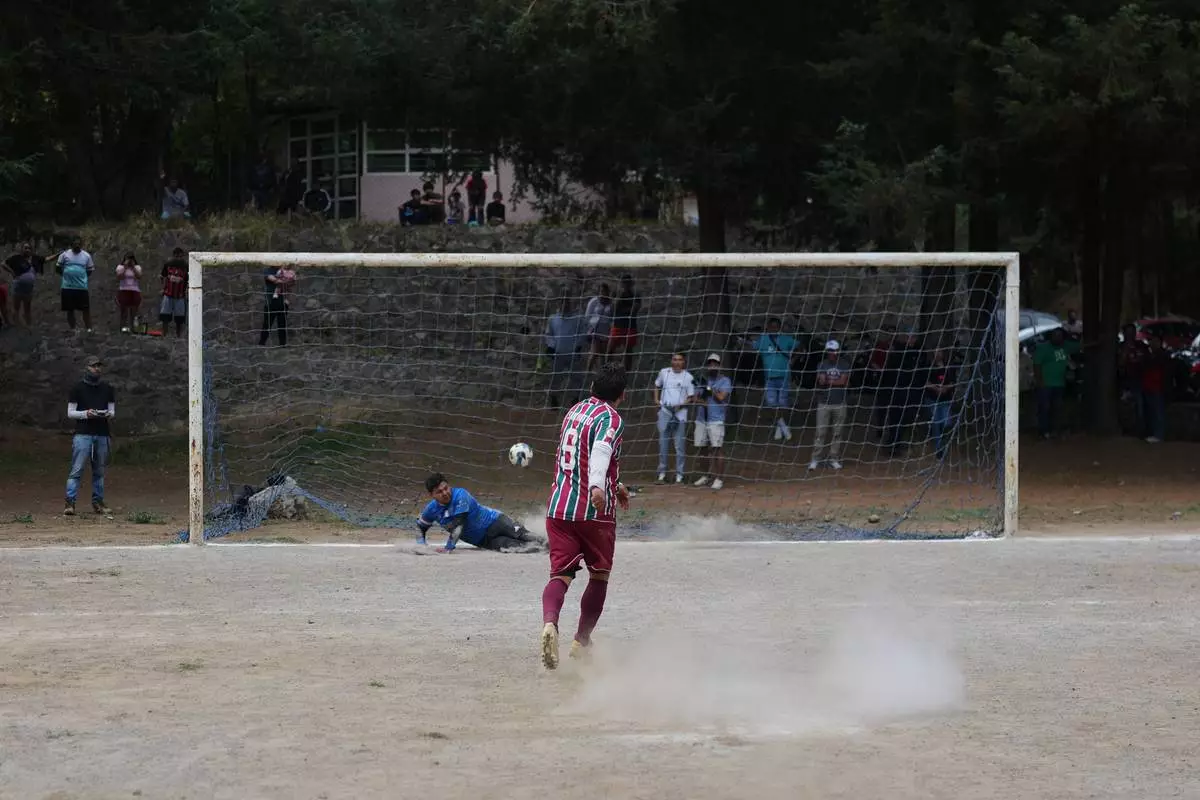
A San Mateo player scores a penalty shot past the Tepetlapa goal keeper during a match on a soccer field inside the crater of the extinct Teoca Volcano in the town of Santa Cecilia Tepetlapa in the Xochimilco borough of Mexico City, Sunday, April 26, 2026. (AP Photo/Eduardo Verdugo)
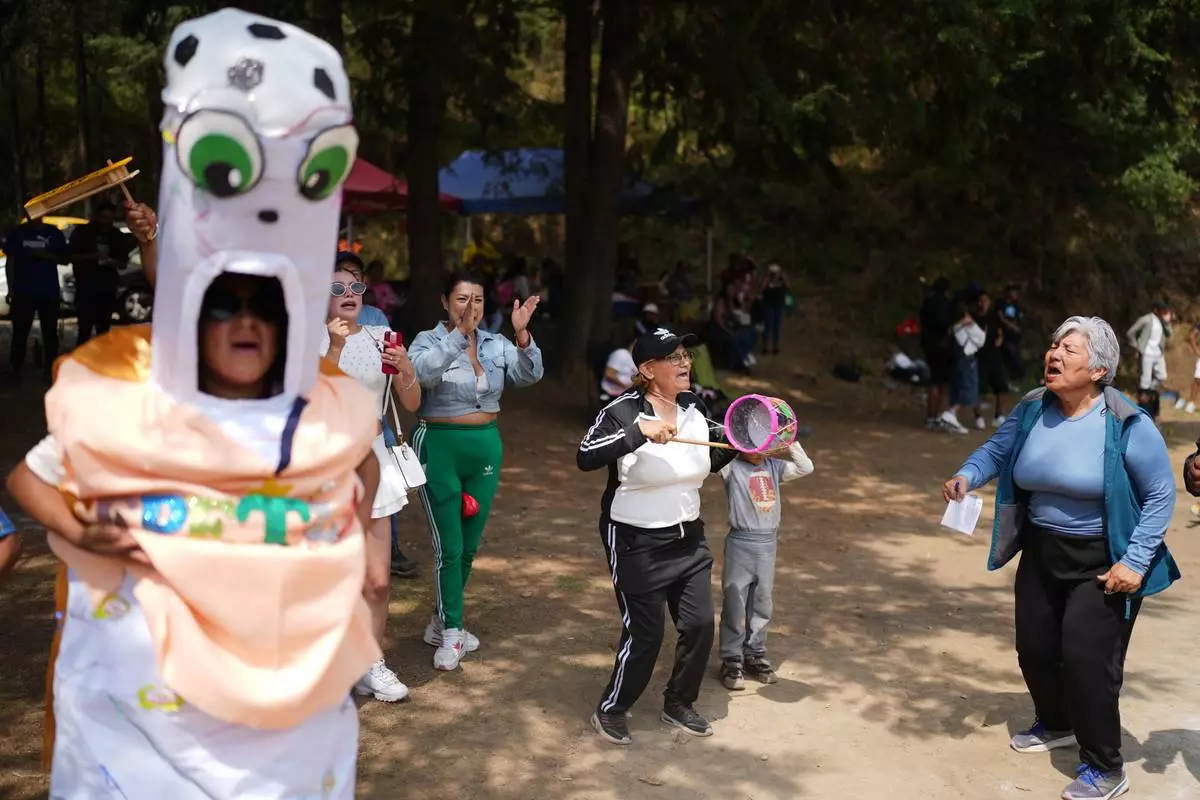
Fans cheer on the sidelines of the final tournament game between San Mateo and Tepetlapa clubs on a soccer field inside the crater of the extinct Teoca Volcano in the town of Santa Cecilia Tepetlapa in the Xochimilco borough of Mexico City, Sunday, April 26, 2026. (AP Photo/Eduardo Verdugo)
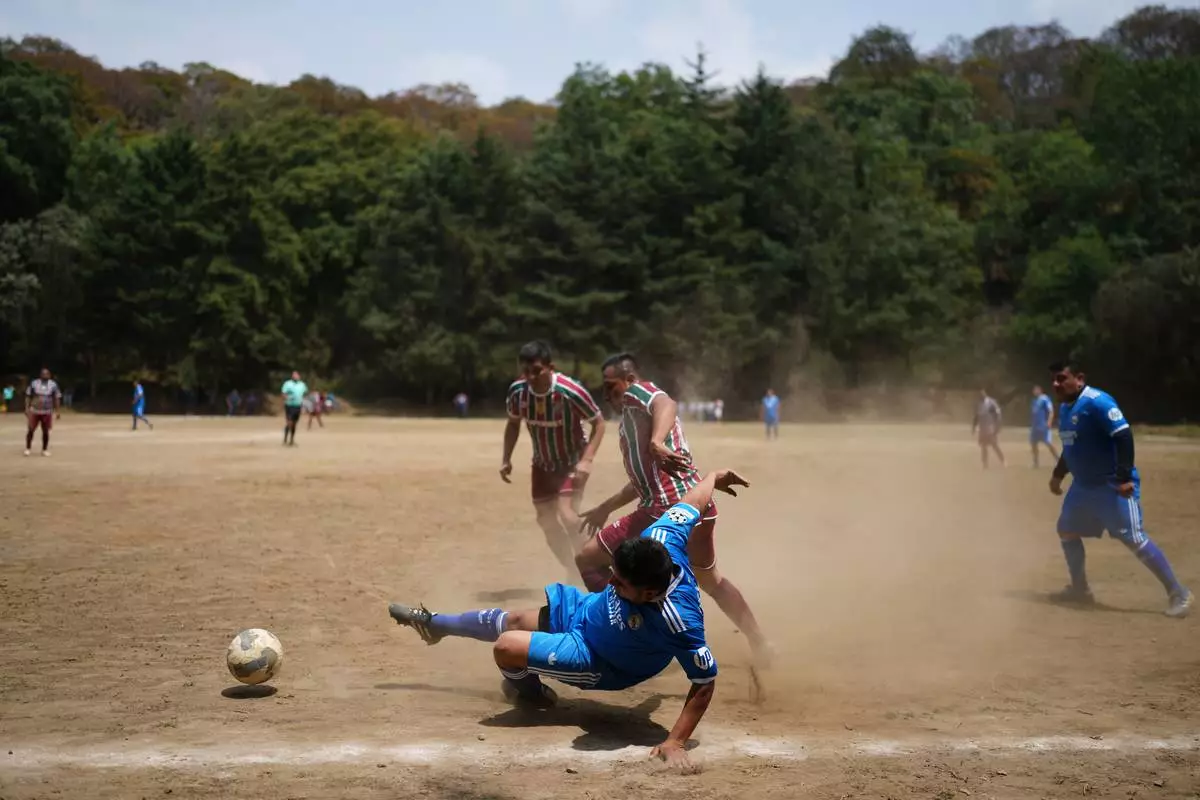
A soccer field nestled inside the crater of the extinct Teoca volcano hosts a local tournament match in the town of Santa Cecilia Tepetlapa in the Xochimilco borough of Mexico City, Sunday, April 19, 2026. (AP Photo/Eduardo Verdugo)
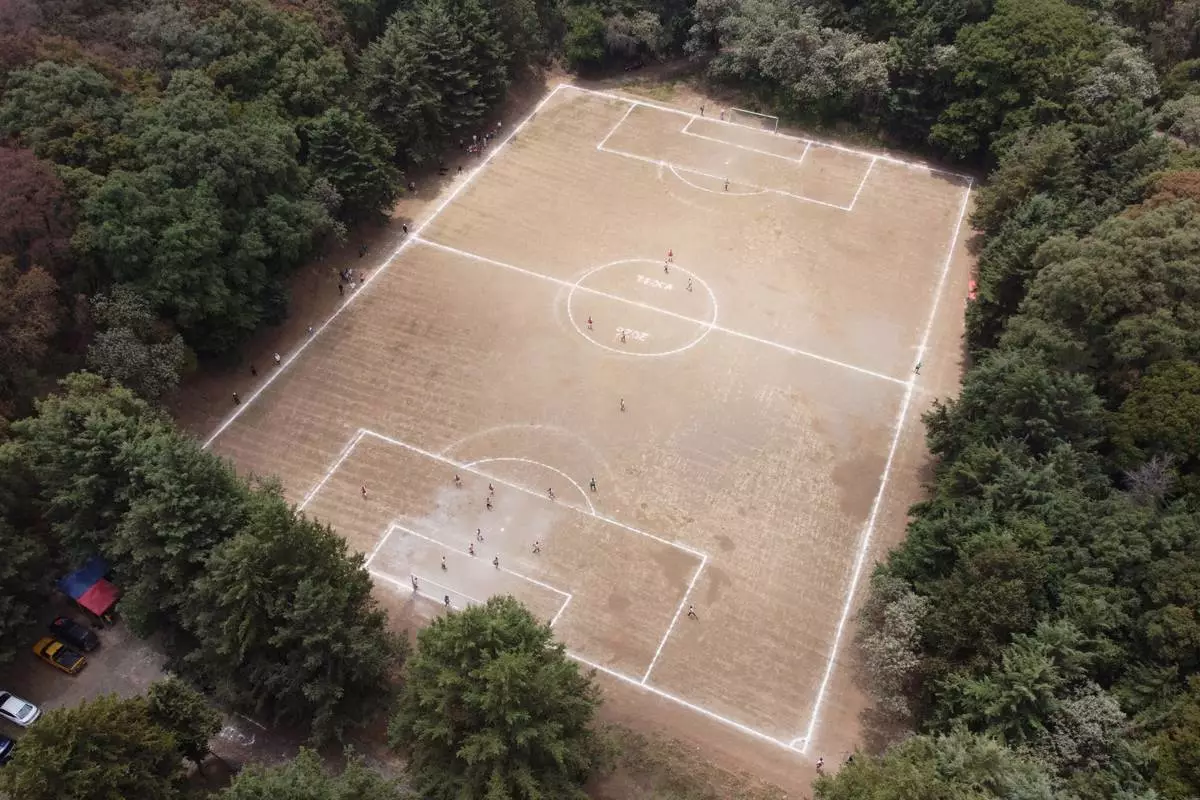
A soccer field nestled inside the crater of the extinct Teoca volcano hosts a local tournament match in the town of Santa Cecilia Tepetlapa in the Xochimilco borough of Mexico City, Sunday, April 19, 2026. (AP Photo/Eduardo Verdugo)