WASHINGTON (AP) — The top U.S. commander in Latin America met with Cuban military leaders Friday in a “brief exchange on operational security matters” near the U.S. Navy base in Guantanamo Bay, the latest official to visit the island nation as President Donald Trump ramps up pressure on its leaders.
Trump has warned that Cuba “is next” after U.S. military forces captured Venezuela's autocratic leader, Nicolás Maduro, in a January raid. In the months since, the Trump administration has imposed an oil blockade on Cuba, maintained warships in the Caribbean Sea and indicted former Cuban President Raúl Castro on federal charges.
Gen. Francis Donovan, head of U.S. Southern Command, met with Lt. Gen. Roberto Legrá Sotolongo and other Cuban military officials.
Cuba’s Revolutionary Armed Forces said in a statement that both sides viewed "the meeting positively because it addressed security issues along the perimeter separating the military enclave, and they agreed to maintain communication between the two military commands.”
Top Trump aides, including Secretary of State Marco Rubio and CIA chief John Ratcliffe, also have met with Cuban officials to explore possible improvements in relations. But the U.S. side has come away unimpressed from those talks, leading to even more sanctions imposed on the Cuban government.
Besides the meeting, Donovan also assessed the security of the U.S. naval base in Guantanamo Bay and discussed the “safety of service members and their families, and operational readiness with base officials,” U.S. Southern Command said in a post on X.
The U.S. maintains the base despite decades of friction with Cuba's socialist leaders, whom Trump wants removed from power.
The U.S. military has a handful of Navy ships, including at least one amphibious assault ship, in the Caribbean, a much smaller force than was present at the time of the Maduro raid.
On Friday, the Pentagon announced that a new unit of 1,300 sailors and Marines would be replacing the 22nd Marine Expeditionary Unit, which deployed to the region last summer.
Associated Press writer Andrea Rodríguez in Havana contributed to this report.
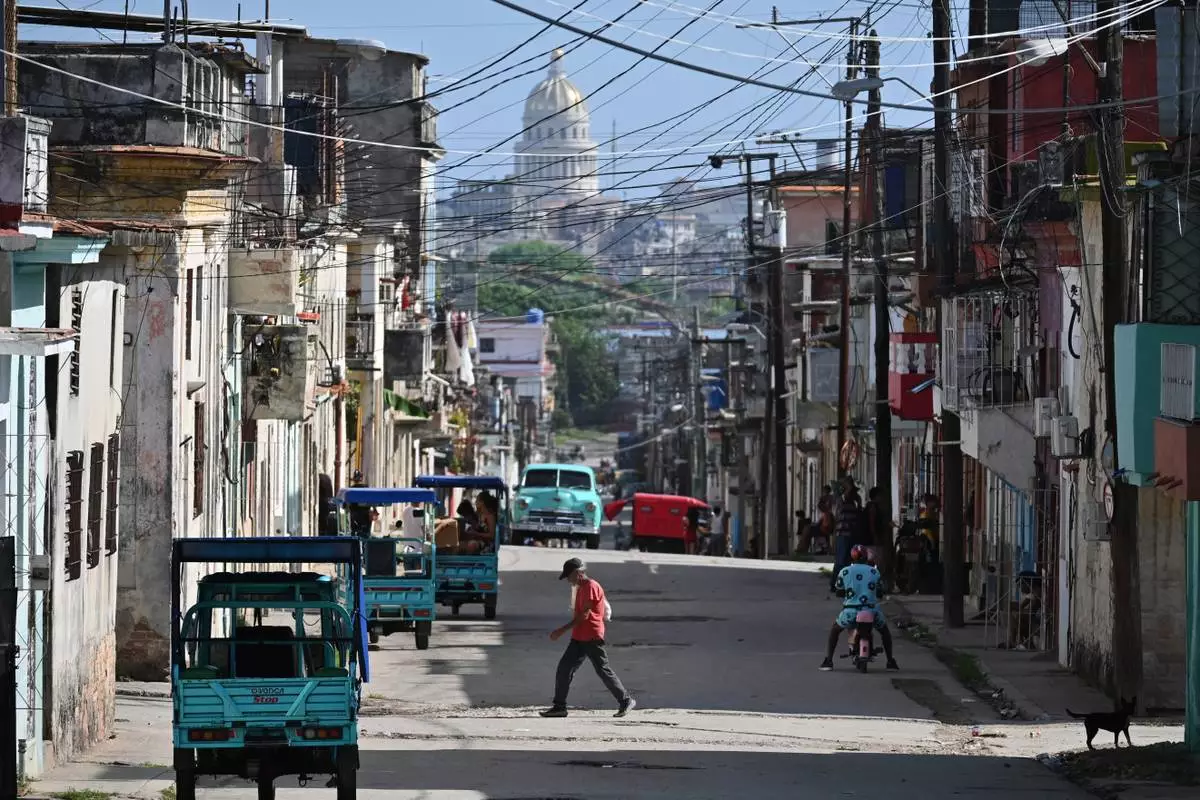
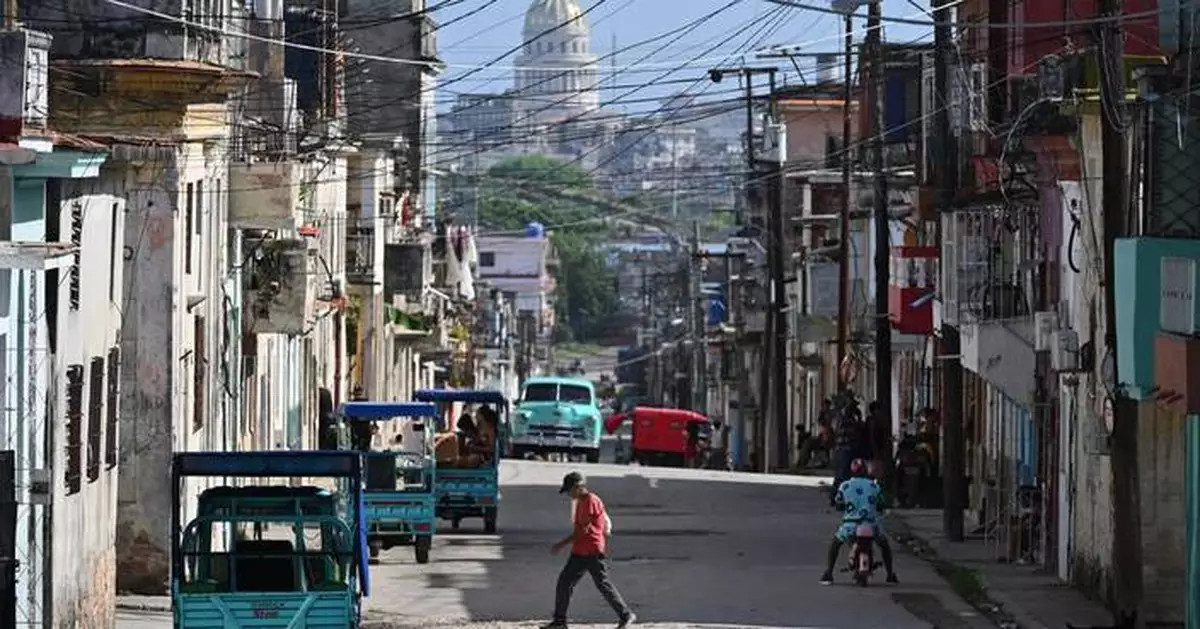
A man crosses a street in Havana, Monday, May 25, 2026. (AP Photo/Jorge Luis Banos)
GUATEMALA CITY (AP) — The U.S. called for the release of imprisoned Nicaraguan Indigenous leader Brooklyn Rivera on Friday after the government published photos of him in the hospital in critical condition.
Rivera, a leader of the Miskito people who have been at odds with the ruling Sandinista government for decades, has been imprisoned since Sept. 29, 2023 as part of a years-long crackdown on dissent. His family has said he is imprisoned for political reasons and that the government hasn’t presented formal charges.
At least a handful of prisoners have died in the Nicaraguan government’s custody in recent years as the government has imprisoned hundreds of journalists, activists and political opposition.
The Nicaraguan government said in January that it would release some prisoners, following pressure on its government in the wake of the U.S. military operation to capture Venezuela’s then-President Nicolás Maduro. But there has been little transparency from the government following the announcement.
“This repression, violence and inhumanity is abhorrent,” the Bureau of Western Hemisphere Affairs posted on social platform X Friday. “We reiterate our call for his and all political prisoners’ unconditional release NOW.”
On Wednesday, the government of co-Presidents Daniel Ortega and his wife Rosario Murillo published a report on Rivera's health, saying that he is in a “delicate” state connected to a mechanical ventilator with multiple organ failure. Photos showed an emaciated Rivera hooked up to multiple tubes in a hospital bed.
A Thursday statement from a coalition of Nicaraguan Indigenous groups criticized the government for imprisoning Rivera arbitrarily and “distorting the narrative” by claiming he was already in poor health when taken into custody.
“We know that who is responsible for this very grave situation that he is in, for the violations of human rights, is the Sandinista Ortega-Murillo regime,” they said in the statement sent to The Associated Press.
At least 47 people are currently imprisoned in Nicaragua for political reasons, according to a group tracking these cases known as the Mechanism for Recognition of Political Prisoners. Hundreds have imprisoned following a 2018 uprising, which led to a bloody government crackdown that killed hundreds.
What started as a protest against a reform to the social security system expanded to call for the resignation of Ortega, who has ruled the country for nearly two decades after changing the constitution to allow his repeated reelection. The repression intensified before 2021 presidential elections, in which all competitive candidates were imprisoned before Ortega declared victory. The U.S. does not recognize Ortega’s presidency.
More than 200 political prisoners were released and sent to the U.S. in 2023, and they described being held in isolation and subjected to physical and psychological torture. Many developed chronic health problems because of the conditions there and now live in a precarious immigration limbo under the Trump administration. Another 135 political prisoners were released and sent to Guatemala in 2024.
The Miskito population has been a particularly prickly thorn in the side of the Ortega regime, according to Manuel Prado, vice president of the Miskitu American Organization.
Rivera played a key role in the resistance to the Ortega’s Sandinista government in the late 1970s and 1980s, participating in the armed U.S.-back Contra movement and helping to establish the area on the northern coast as an autonomous region.
Rich in resources, including gold and silver, the Miskito region is important for the Ortega-Murillo administration’s goal of attracting international investment, particularly from China.
Prado called for Rivera’s release and expressed his concern for his current physical state.
“We do feel like Ortega will allow him to die,” Prado said.
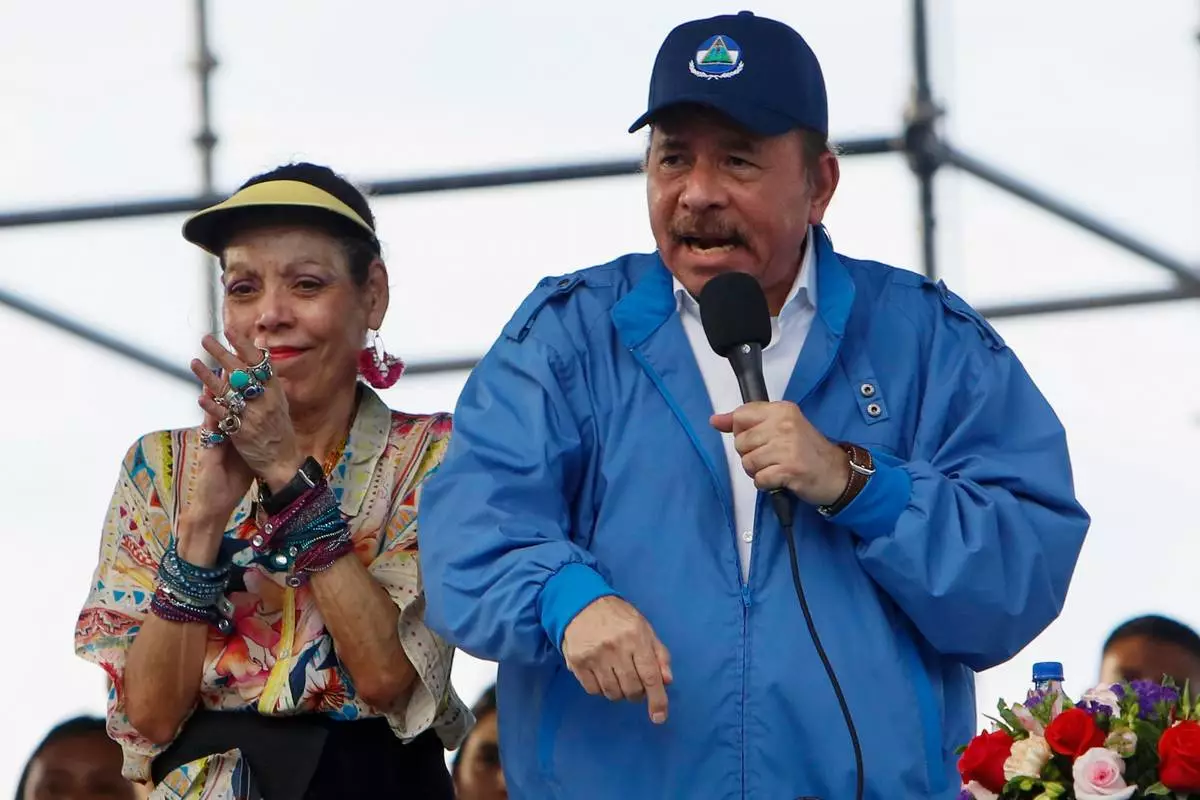
FILE - Nicaragua's President Daniel Ortega speaks to supporters as his wife and Vice President Rosario Murillo applauds, in Managua, Nicaragua, Aug. 29, 2018. (AP Photo/Alfredo Zuniga, File)