The southern Chinese city of Guangzhou is home to the world's largest lychee gene bank, housing nearly 800 varieties and a rare scientific breakthrough -- the world's first lychee-longan hybrid.
Lychees are returning to markets this summer. But behind the popular seasonal fruit lies decades of agricultural research and breeding innovation. China has cultivated lychees for more than 2,000 years and has exported them overseas since the 17th century.
In one of the busiest commercial districts of Guangzhou, a five-hectare lychee orchard serves as a living archive of the fruit's past, and a testing ground for its future. Nearly 800 varieties are grown here. Some originate from different parts of China, while others have been reintroduced from regions as far away as Africa, South America and Australia.
"This comes from a variety we collected in Madagascar and naturally crossbred. We want to preserve biodiversity, while passing desirable traits to future generations," said Dr. Yan Qian, director of the Lychee Germplasm Resources and Breeding Research Office, the Fruit Tree Research Institute, the Guangdong Academy of Agricultural Sciences.
It can take more than 15 years from identifying a promising strain to developing a commercially viable variety.
One of the most promising breakthroughs is a cross-species hybrid between lychee and longan, producing fruit for the first time after 11 years of research and cultivation.
"The mother plant is lychee, and the father is longan. This kind of distant crossbreeding is extremely difficult because they are naturally incompatible. So we kind of “tricked” them by mixing pollen. There’s only one tree in the world, right here," she said. Another promising newcomer is also producing fruit for the first time - although mass cultivation is still a long way away.
"This one combines two traditional Guangdong varieties. The flesh is especially smooth and delicate, so we call it 'Ice Cream Lychee'. But it still needs regional testing and government approval. Large-scale cultivation is at least five or six years away," said Dr. Shi Fachao, the Fruit Tree Research Institute, the Guangdong Academy of Agricultural Sciences. Freshly picked lychees are quickly sent to the lab. Researchers aren't just studying the taste and appearance - they are also looking at the fruit's nutritional value.
"We discovered that lychee contains high levels of GABA, a functional amino acid, which may help improve sleep and mood. With more than 700 varieties to analyze, cutting research time in half helps us identify better candidates much faster," said Dr. Wen Yingjie, the Fruit Tree Research Institute, the Guangdong Academy of Agricultural Sciences. Digital tools are helping researchers sort through mountains of data - and speeding up the search for higher quality fruit.
"We used to measure traits by hand and visual observation. Now, sensors and big data can track growth, color changes and development in real time. Good varieties aren't just in demand in China. Overseas markets want them too. Disease-resistant varieties also help reduce pesticide use and meet EU food safety standards," said Huang Zhenrui, director and researcher, the Fruit Tree Research Institute, the Guangdong Academy of Agricultural Sciences. China's lychee industry is valued at around 4.4 billion U.S. dollars and accounts for roughly 70 percent of global production.
Developing improved varieties could translate into higher incomes for farmers, longer shelf life for exporters, and more diverse options for consumers.
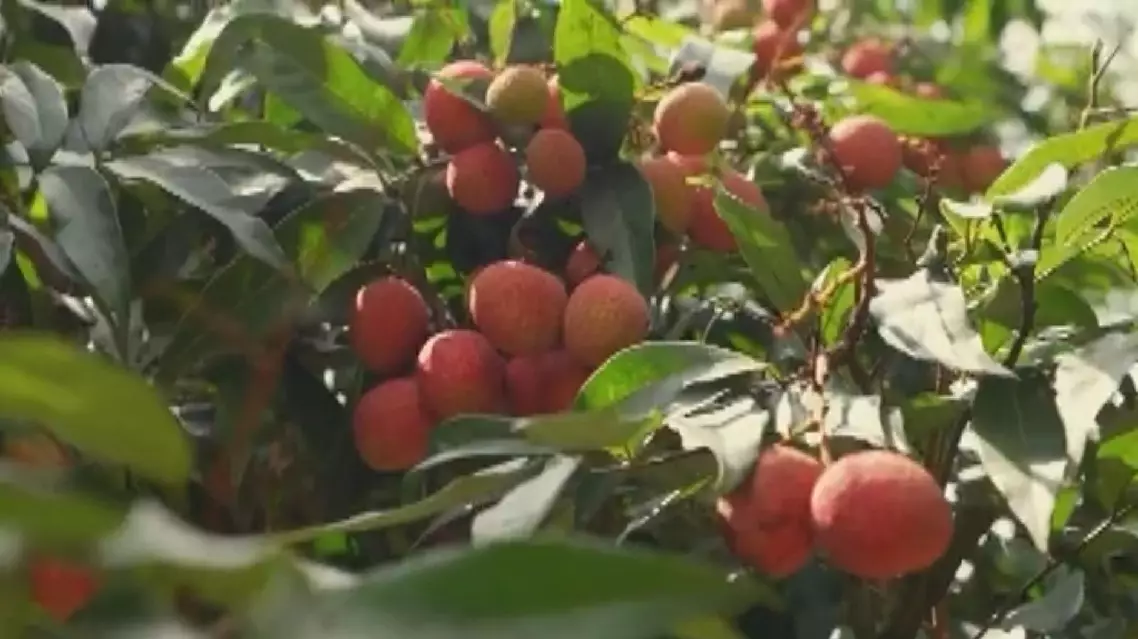
South China's Guangzhou boasts world's largest lychee gene bank, housing nearly 800 varieties
Doctoral students from the U.S. and China spent days together aboard a research vessel, collaborating on marine science projects and exchanges designed to foster deeper understanding and enduring friendships between the two countries' scientific communities.
In late March, 20 Chinese and U.S. students boarded a research vessel in Hong Kong, sailing via Ningbo to Shanghai as part of the "A Shared Voyage: China-U.S. Youth Friendship Program". Over 12 days, the students collaborated on marine science and cultural exchanges.
Since the launch of an initiative to invite 50,000 young Americans to China for exchange and study programs in a five-year span in November 2023, over 50,000 young Americans have visited China, achieving the target two-and-a-half years ahead of schedule.
Chinese and U.S. students who took part in the program wrote to Chinese President Xi Jinping in April, thanking him for the "50,000 in Five Years" initiative, which has provided valuable opportunities for young people of both countries to engage in learning and exchange.
To their surprise, Xi replied to the letter, encouraging the students to make new contributions to the stable, healthy and sustainable development of China-U.S. relations.
In the letter, Xi said that the story of China-U.S. friendship is written by the people, and the future of China-U.S. relations is shaped by the youth.
"Hearing back from him was really crazy. I'd love for people to have more buy into what the project was all about, which was, shared friendship, shared science," said Benjamin Acosta, a Columbia University PhD student.
"He actually took the time to read our letter and even respond to it because I know he's very busy. I feel very honored," said Lesley Figueroa, a PhD student at UC Santa Barbara.
Chinese students also expressed gratitude for the opportunity to meet their U.S. counterparts and exchange ideas.
"We are truly grateful for the '50,000 in Five Years' initiative proposed by President Xi, which has offered young people from both China and the U.S. valuable opportunities for certainty in an otherwise turbulent international landscape. It's remarkable that we could come together aboard an American research vessel and carry out such meaningful scientific and cultural exploration in Chinese waters," said Niu Lishan, a PhD student at Tsinghua University.
Noting that young people, full of vitality and dreams, represent the future and hope of China-U.S. relations and of the world, Xi called on more Chinese and U.S. youth to take up the baton of friendship, learn from each other, progress together, and become "envoys of friendship" bridging the Pacific.
The voyage experience went beyond laboratories, allowing the future scientists to explore underwater robotics and water quality monitoring.
"I have never seen this many krill. It's really crazy. They've got a lot of larger species here, and that means that they probably have a lot of fish and other kinds of higher life forms that feed off this stuff. So it's probably the most productive waters I've seen," said Acosta.
"We learned to operate underwater robots for water quality sampling in shallow-water marine zones. We also collected samples firsthand and conducted related water quality monitoring and analysis," said Niu.
"I've never been on a ship before. I normally do, like I said, on smaller ships and in my lab by myself. With the greater community in this very high-tech environment and using a lot of instruments that I don't normally have access to, which is really incredible," said Meredith Kamm, another Columbia University PhD student.
"This kind of program plants a seed for future cooperation and exchange between China and the U.S., especially in areas such as marine science and climate change. It can help us work together to build a maritime community with a shared future," said Huang Wei, chief scientist of the voyage and researcher at the Second Institute of Oceanography of the Ministry of Natural Resources.
In the letter, Xi noted that through these interactions, young people from both countries have reached out to each other, deepened mutual understanding, forged profound friendships, and opened a new chapter in friendly exchanges between the two peoples.
"I think the United States and China have some of the best researchers in the world. I hope to gain a different perspective in something I've never considered before by talking to these students and understanding how their research works," said Natalie Lafont, a PhD student at Harvard University.
The program also gave the students the chance to meet industry leaders and innovators in the field of ocean exploration. Vincent Pieribone, OceanX co-CEO and chief science officer, said he encouraged the students to always keep their determiniation steady even in the face of failure.
"Science is a tough business and failure is all over, and both sides see that happens. And it's great to bring people together over a common goal, which is ocean stewardship and ocean science and ocean exploration," said Pieribone.
In addition to personal connections, the U.S. students said they were highly impressed with the investments that Chinese universities have made toward ensuring their students and scholars can make an impact.
"I feel like most all the labs at these universities were very well equipped with, not just marine equipment, but research equipment. Students who are there can do multiple, like a variety of projects. My favorite one was the School of Marine Science at Ningbo University. Because we got to see the aquaculture tanks. So there was a lot of tanks and they had a variety of fish. It seems that they really take aquaculture and fisheries as a priority," said Figueroa.
Yet, the focus of the voyage always returned to building lasting ties with their fellow students. Ray Dalio, founder of U.S. Bridgewater Associates and one of the program's initiators, encouraged the participants to take a long-term view of the voyage's impact.
"What I'd love to see is that you develop those relationships and that you stay in touch as a foundation for our future collaborations and friendships because you have a shared passion. Wouldn't that be great? Not just this mission, but the future of your relationships would be great, and think about how that could expand," Dalio said.
"In the face of profound changes unseen in a century and a turbulent world, and confronted with emerging issues such as climate change and artificial intelligence, young people in China and the United States shoulder a special mission. They should strengthen exchanges and cooperation, carry forward China-U.S. friendship, and continue to advance the development of China-U.S. relations," said Geng Shuang, vice president of the Chinese People's Institute of Foreign Affairs, at the April closing ceremony.
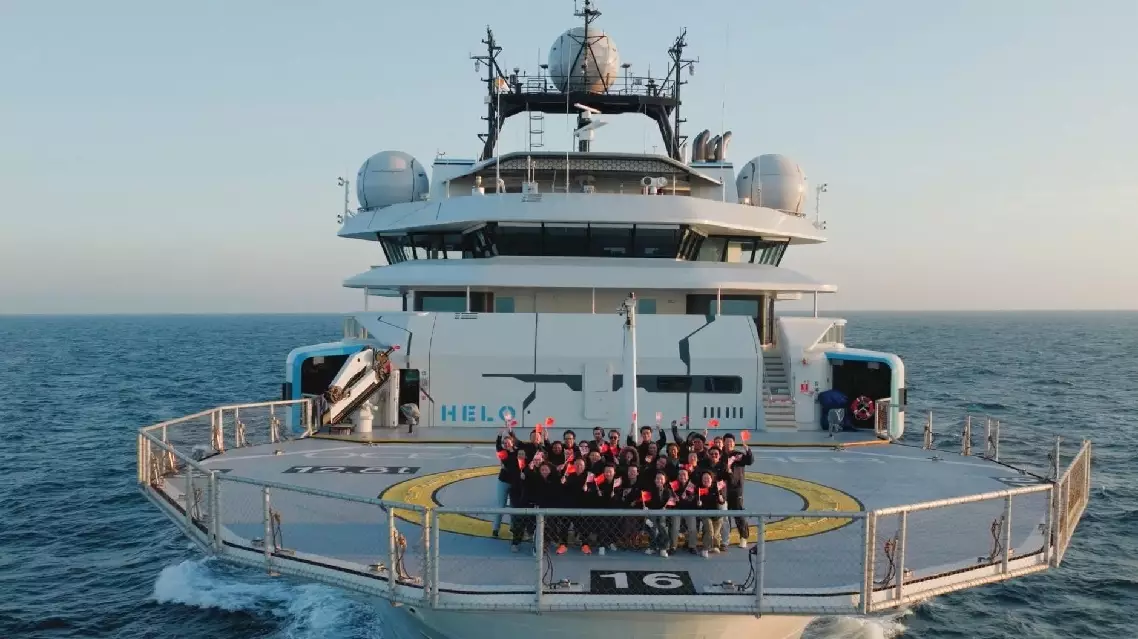
China, U.S. marine science students strengthen ties through ocean voyage