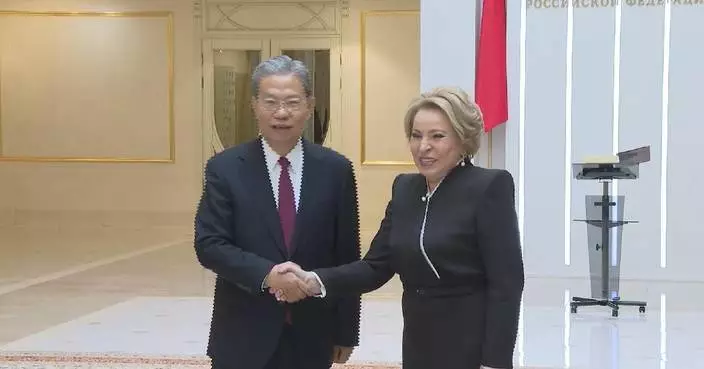
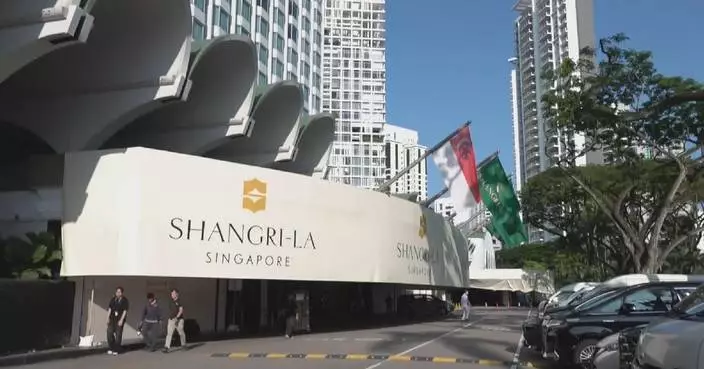
Both the Chinese and U.S. delegations participating in the IISS Shangri-La Dialogue 2026 have highlighted the significance of a stable China-U.S. relationship for the Asia-Pacific region and even the world at large.
The three-day event, Asia's premier defense and security summit, opened on Friday in Singapore.
In a speech on Saturday, U.S. Defense Secretary Pete Hegseth said that relations between the United States and China are better than they've been in many years.
Hegseth emphasized the importance of maintaining open lines of communication, echoing the recent consensus reached by the two heads of state to build a relationship of "constructive strategic stability."
John Ellison, a senior advisor at FTI Consulting, said Hegseth's remarks demonstrated positive signals.
"I think positive signals, all based on President Trump and President Xi getting together in Beijing, that's what set the change. I think if we'd had this meeting a month ago, the speech might have been quite different," said Ellison. At a special session titled "Managing Threats to Strategic Stability," Major General Meng Xiangqing, head of the Chinese delegation, responded to Hegseth's remark.
"We hope the two sides will work for the same goal, implement the important consensus reached by the two heads of state, and promote military-to-military relations along a healthy, stable, and sustainable track," said Meng.
Observers say that the Asia-Pacific region stands to gain from stable China-U.S. ties.
"It will encourage more dialogues, more peaceful mechanisms, confidence-building mechanisms between these great powers and other middle powers in the region to try to maintain peace and dialogue, and using diplomatic means to manage issues and whatnot. And that itself will translate to better stability for the region," said Adam Leong Kok Wey, professor of strategic studies, National Defense University of Malaysia.
Questions remain over how both sides can safeguard their shared interests, including maintaining peace and stability across the Taiwan Strait.
While Hegseth offered no clear answer regarding future U.S. arms sales to China's Taiwan region, experts say China's position and actions on the issue have remained consistent and unambiguous.
"The Taiwan question is China's domestic affairs. China's reunification will be achieved. We are determined to do that. But for regional stability, it's quite clear who has brought about instability in this region. Not China. China has always been a force for stability, for prosperity of our region and for the world," said Cui Tiankai, former Chinese ambassador to the United States.
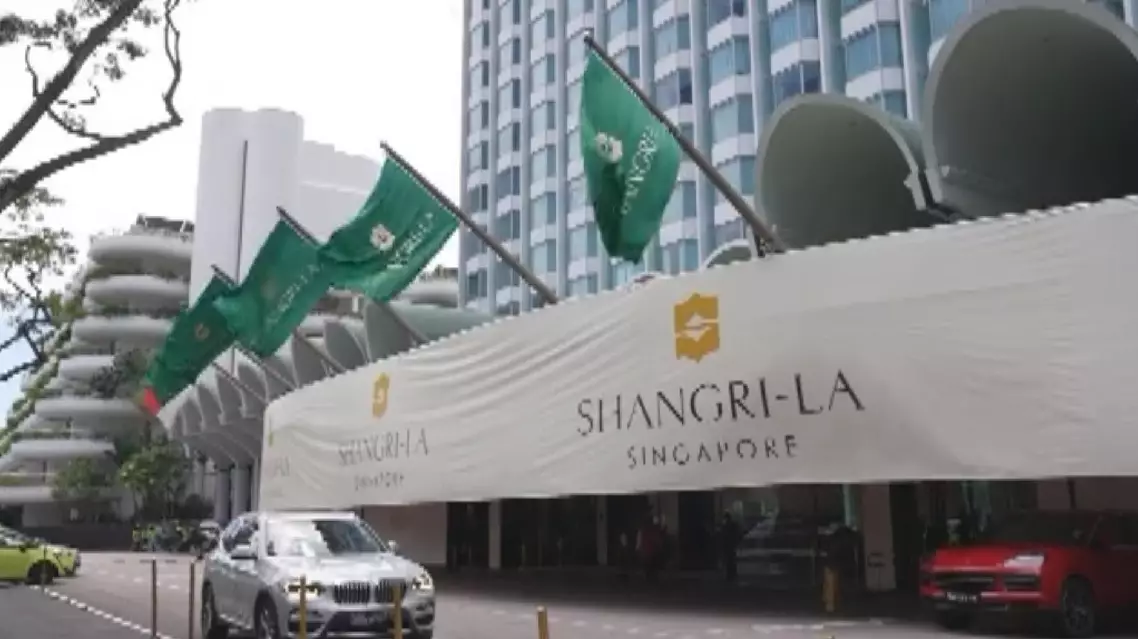
Chinese, US delegates highlight significance of stable bilateral ties at Shangri-La Dialogue
Colombians are heading to the polls on Sunday to elect their next president. The country's constitution prevents the current President, Gustavo Petro, from running for a second term.
Yet, many see this election as a referendum on the policies of Gustavo Petro, Colombia's first leftist president.
There are 14 candidates on Sunday's ballot, but the polls show it will likely be a tight three-way race.
The frontrunner is Ivan Cepeda, a 63-year-old three-term senator, representing President Gustavo Petro's party, the Historic Pact coalition. Cepeda has vowed to defend and deepen Petro's progressive reforms and social justice policies to reduce inequality. He also promises to continue the government's controversial "Total Peace" strategy to negotiate the disarmament of remaining guerrilla groups and criminal gangs.
"True prosperity comes from equality, from access to rights, and from transforming the peripheral and excluded territories of the rural world," Cepeda said at a campaign rally.
Running as a political outsider and independent is Abelardo de la Espriella, a 47-year-old lawyer, nicknamed "The Tiger." He has presented himself as the "authority and order" candidate who will reduce state spending by up to 40 percent in the next four years.
"(First,) we must fight insecurity. Colombia is suffering today from a pandemic of insecurity. Crime is out of control: extortion, cattle theft, smuggling, drug trafficking," he said to his supporters at an election event.
According to polls, the third candidate with strong support is Paloma Valencia. The 48-year-old senator represents the Democratic Center party led by popular former President Alvaro Uribe Velez. Her candidacy is backed by politicians and economists who are concerned with growing levels of public debt. They want to see a return to more conservative fiscal policies.
"I don't want to be a president who governs alone, locked away in glass offices. I want to be a president who stands with citizens, who embraces them, who reaches out to them, who has a team, and who governs to transform Colombia," the candidate said at the campaign event
According to polls earlier in the year, many voters are expressing concerns about unemployment, rising living costs, corruption, and, above all, public security.
The election comes after a turbulent year that the International Committee of the Red Cross has called "the worst humanitarian consequences of armed conflict over the past decade."
"(We arrive at this election in a tense atmosphere - tense) because of the economic situation, because of the security situation, and because of the narratives that have been built around the country's main problems. On top of that, emotions, ideas and social media have all helped raise (the tone,)" said Eduardo Velosa, associate professor from International Studies Javeriana University.
If no candidate receives 50 percent of the vote, a runoff election will be held between the top two finishers on June 21st.
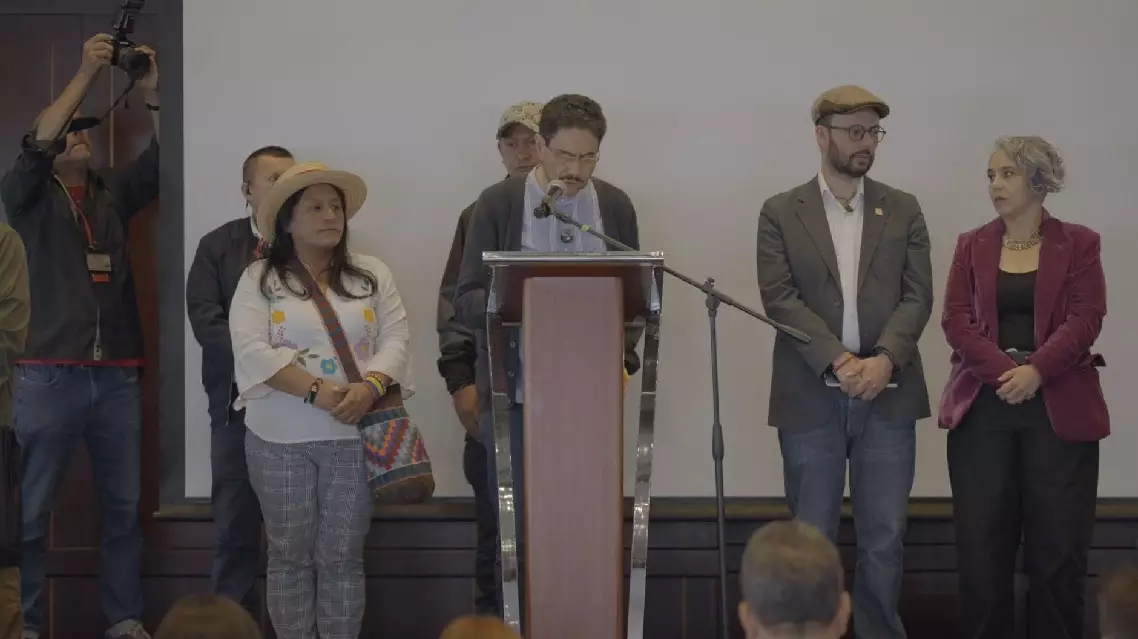
Colombians prepare to choose their next president