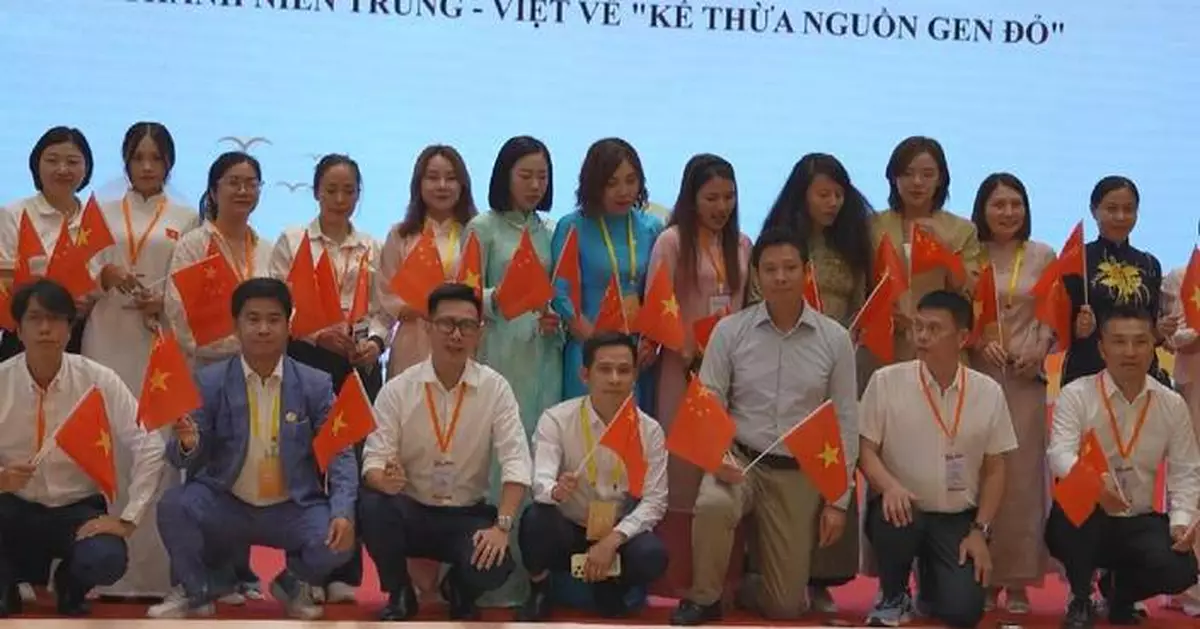
Nearly 200 young Vietnamese participants joined a cultural and educational exchange in southwest China's Yunnan Province to strengthen China-Vietnam friendship and explore future cooperation.
In Jianshui County of Yunnan, which borders Vietnam, the young participants of the "Red Study Tours", including university students, government officials, and entrepreneurs, learned to make traditional Jianshui purple clay pottery using a 200-year-old technique recognized as a National Intangible Cultural Heritage of China.
Many described the hands-on experience as both novel and rewarding.
"This is my achievement," said Tran Thuy Nga, General Manager of investment firm BIG Group, while proudly holding her pottery work.
In addition to cultural workshops, the group visited historic sites symbolizing the longstanding ties between the two countries, including the century-old Yunnan-Vietnam Railway, which connects southwest China with Vietnam's port city of Haiphong.
Reflecting on the experience, Vietnamese participants said the program deepened their appreciation for Chinese culture and strengthened their understanding of the historical bonds between the two nations.
"I was fascinated by Chinese culture. While our two countries share many cultural similarities, Chinese culture has its own unique characteristics that I found very appealing. Whether it was the local cuisine or folk songs, everything left a strong impression on me," said Nguyen Thi Thu Trang, staff member at Lao Cai Newspaper and Radio-Television Station.
"Through this program, I have gained a much deeper understanding of President Ho Chi Minh's revolutionary activities in Yunnan. The more I learn, the more I appreciate and respect this friendship, and I feel this friendship from both the government and the people," said Tran Dinh Huy, founder of Ban Viet North-Central-South Tourism Company.
Launched in May 2025, the "Red Study Tours" initiative seeks to facilitate exchanges between young people in China and Vietnam, highlighting shared revolutionary history and cultural heritage.
"I believe the future lies with the young people. Going forward, we should expand cooperation in more fields, using small-scale initiatives to achieve broader impact. Whether in education exchanges, entrepreneurship or joint projects, I see great potential," said Qi Xiao, an official of the Communist Youth League of Yunnan Province.
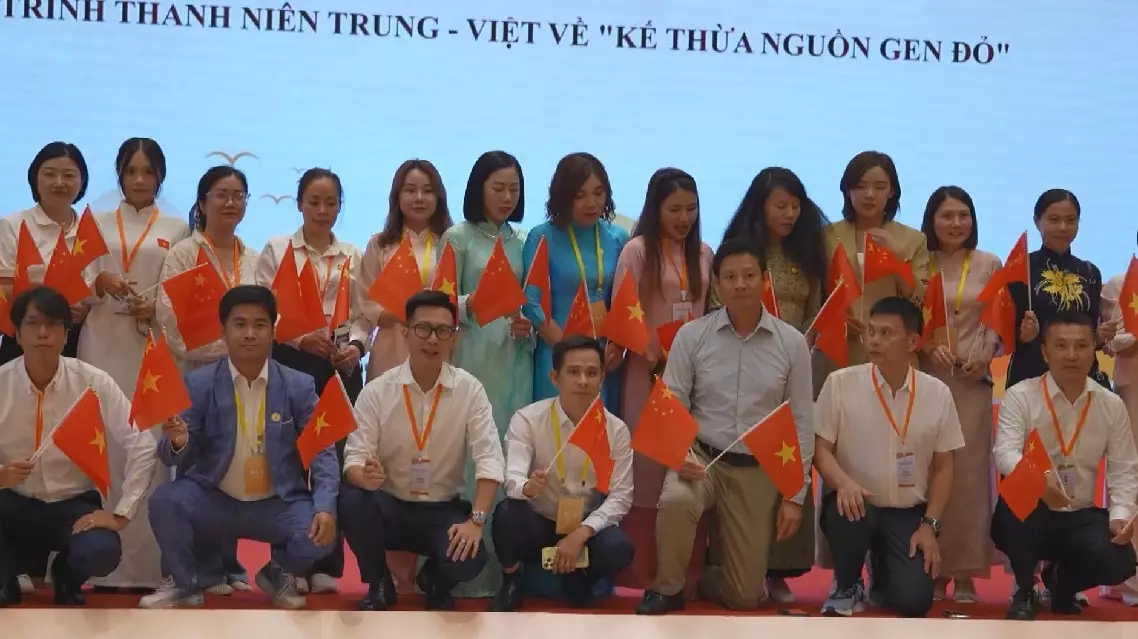
Vietnamese youth trace bonds with China in inspiring study tour
Colombians are heading to the polls on Sunday to elect their next president. The country's constitution prevents the current President, Gustavo Petro, from running for a second term.
Yet, many see this election as a referendum on the policies of Gustavo Petro, Colombia's first leftist president.
There are 14 candidates on Sunday's ballot, but the polls show it will likely be a tight three-way race.
The frontrunner is Ivan Cepeda, a 63-year-old three-term senator, representing President Gustavo Petro's party, the Historic Pact coalition. Cepeda has vowed to defend and deepen Petro's progressive reforms and social justice policies to reduce inequality. He also promises to continue the government's controversial "Total Peace" strategy to negotiate the disarmament of remaining guerrilla groups and criminal gangs.
"True prosperity comes from equality, from access to rights, and from transforming the peripheral and excluded territories of the rural world," Cepeda said at a campaign rally.
Running as a political outsider and independent is Abelardo de la Espriella, a 47-year-old lawyer, nicknamed "The Tiger." He has presented himself as the "authority and order" candidate who will reduce state spending by up to 40 percent in the next four years.
"(First,) we must fight insecurity. Colombia is suffering today from a pandemic of insecurity. Crime is out of control: extortion, cattle theft, smuggling, drug trafficking," he said to his supporters at an election event.
According to polls, the third candidate with strong support is Paloma Valencia. The 48-year-old senator represents the Democratic Center party led by popular former President Alvaro Uribe Velez. Her candidacy is backed by politicians and economists who are concerned with growing levels of public debt. They want to see a return to more conservative fiscal policies.
"I don't want to be a president who governs alone, locked away in glass offices. I want to be a president who stands with citizens, who embraces them, who reaches out to them, who has a team, and who governs to transform Colombia," the candidate said at the campaign event
According to polls earlier in the year, many voters are expressing concerns about unemployment, rising living costs, corruption, and, above all, public security.
The election comes after a turbulent year that the International Committee of the Red Cross has called "the worst humanitarian consequences of armed conflict over the past decade."
"(We arrive at this election in a tense atmosphere - tense) because of the economic situation, because of the security situation, and because of the narratives that have been built around the country's main problems. On top of that, emotions, ideas and social media have all helped raise (the tone,)" said Eduardo Velosa, associate professor from International Studies Javeriana University.
If no candidate receives 50 percent of the vote, a runoff election will be held between the top two finishers on June 21st.
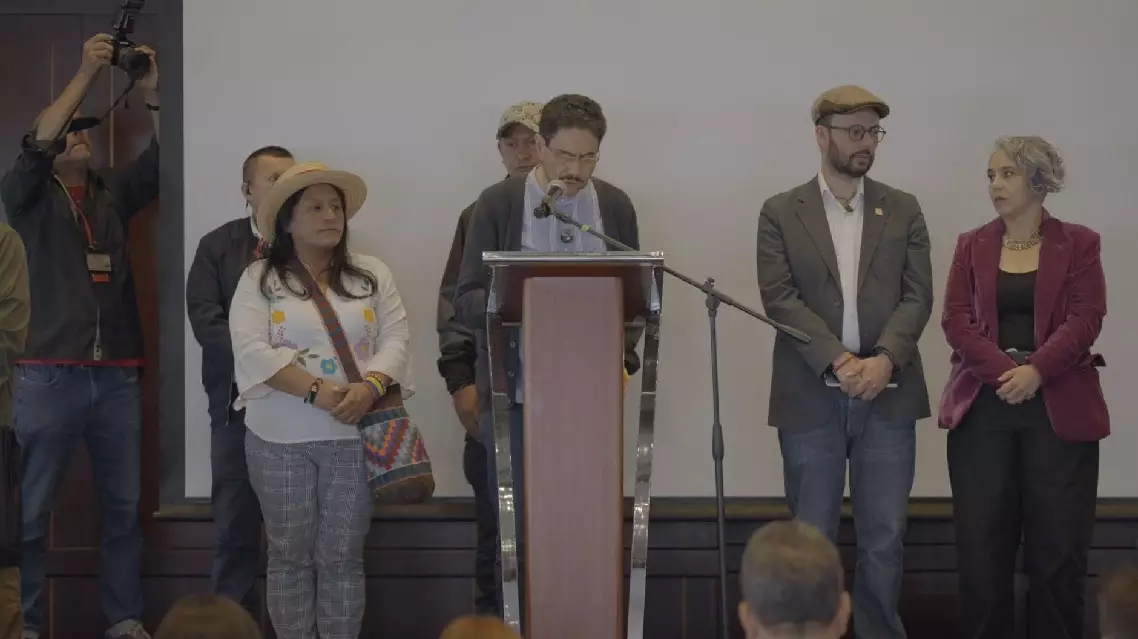
Colombians prepare to choose their next president