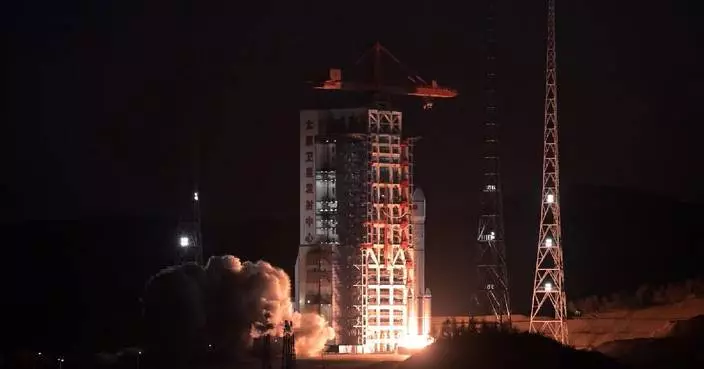
China on Saturday launched its first full-stack green AI computing platform in Hohhot, a city in north China's Inner Mongolia Autonomous Region, aiming to expand regional computing services and lower costs for businesses adopting artificial intelligence.
The platform integrates functions such as computing power scheduling, model access and token trading and provides end-to-end services for governments, research institutes and enterprises.
The platform is also compatible with domestically produced chips and mainstream computing architectures, and the first batch connects more than 10 leading models from China's three major telecom operators and top technology firms.
Depending on user demand, the platform can pool diverse resources across national access nodes, including general computing, intelligent computing and supercomputing. Smart scheduling algorithms enable flexible allocation, efficient dispatch and economical supply of computing power, while offering token trading services that are convenient, low-carbon and cost-effective.
Tokens, the basic unit of AI interaction and computation, can be called on demand, reducing expenses for users.

China launches first full‑stack green AI computing platform
Medical treatment and support work are going smoothly at the Sog County People's Hospital in the vicinity of Baqen County in the city of Nagqu in southwest China's Xizang Autonomous Region that was hit by a powerful earthquake on Thursday.
Some of the injured people in Maru Township and Gangqie Township of Baqen County were transferred to the hospital, which is about 57 kilometers away from the epicenter.
The hospital has sufficient medical supplies and living necessities.
"All the medical staff in our hospital are working together to provide treatment for the injured. Those who need to be hospitalized are hospitalized, and those who need observation are under observation. We also provide round-the-clock food services for the family members," said nurse Kunsang.
"We have been working around the clock since last night, and more patients have been coming in," said hospital official Rinchen Drolma.
Besides offering effective treatment, medical workers have also been giving psychological support to the injured and their family members.
"The medical workers and police officers helped us reach here. The foods are great, and the hospital is taking good care of the patients. Now my child has received a comprehensive examination and his condition has stabilized," said Pug Rayul, father of an injured kid.
"We are from Maru Township, and the ambulance took us here from the quake-hit area. Medical staff come every half an hour to check if our blood pressures and other data are normal. They also prepared bedding and other daily necessities for us," said Namchoe Gya, family member of an injured resident.
A local of Sog County brought free foods to the patients at the hospital Friday morning.
"I brought more than 100 servings of Tibetan noodle, as well as Tibetan tea and tsampa. I prepared all these myself. I feel very happy to be able to help others," said Norbu Wangchen, the local.
At least 16 people were killed and 76 others were injured after the quake jolted Baqen County at 22:33 Beijing time (1433 GMT) on Thursday.
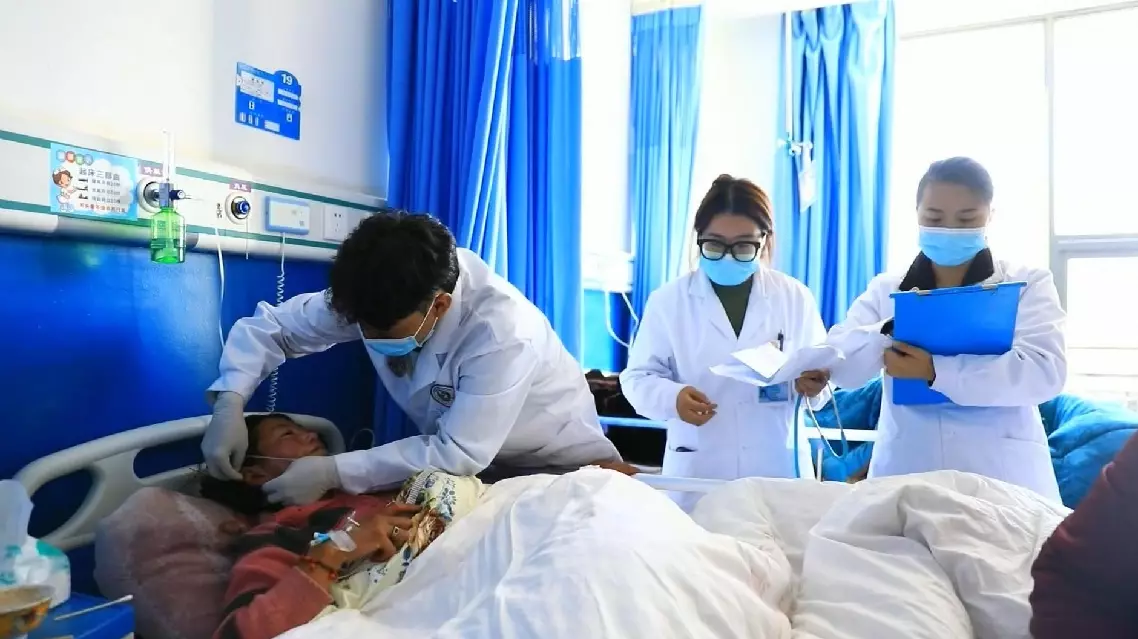
Post-quake medical treatment goes smoothly at county hospital in Xizang