Skip to Content Facebook Feature Image

Returning to the fold? Some young Spaniards embrace Catholicism and can’t wait for Pope Leo’s visit

ENT

Returning to the fold? Some young Spaniards embrace Catholicism and can’t wait for Pope Leo’s visit
ENT

ENT

Returning to the fold? Some young Spaniards embrace Catholicism and can’t wait for Pope Leo’s visit

2026-06-01 14:17 Last Updated At:14:30

Until three years ago, Sara Cabral’s faith experience was on trend with other Southern European youth — a “Catholic but never practicing” upbringing with little relevance to her life on Spain’s Canary Islands.

Then she listened to a song from a faith youth group that felt as if God were speaking to her. She joined the group, and now in addition to its weekly adoration with music sessions, Cabral is excitedly preparing to attend Pope Leo XIV ’s Mass in Gran Canaria with her friends.

More Images
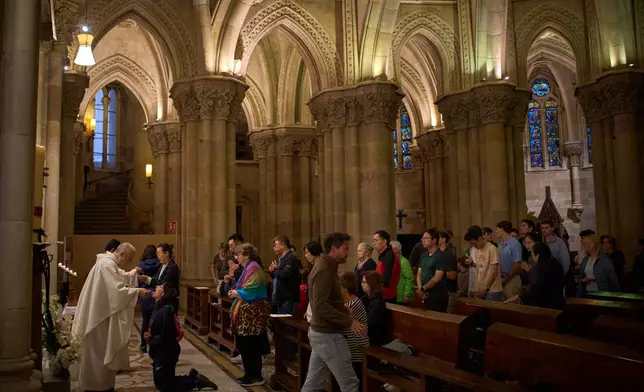
Worshippers receive communion during a Mass in the crypt of the Sagrada Familia in Barcelona, Spain, on Friday, May 15, 2026. (AP Photo/Emilio Morenatti)
Worshippers receive communion during a Mass in the crypt of the Sagrada Familia in Barcelona, Spain, on Friday, May 15, 2026. (AP Photo/Emilio Morenatti)

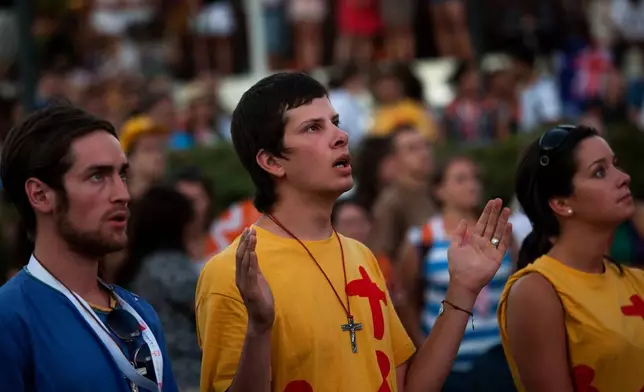
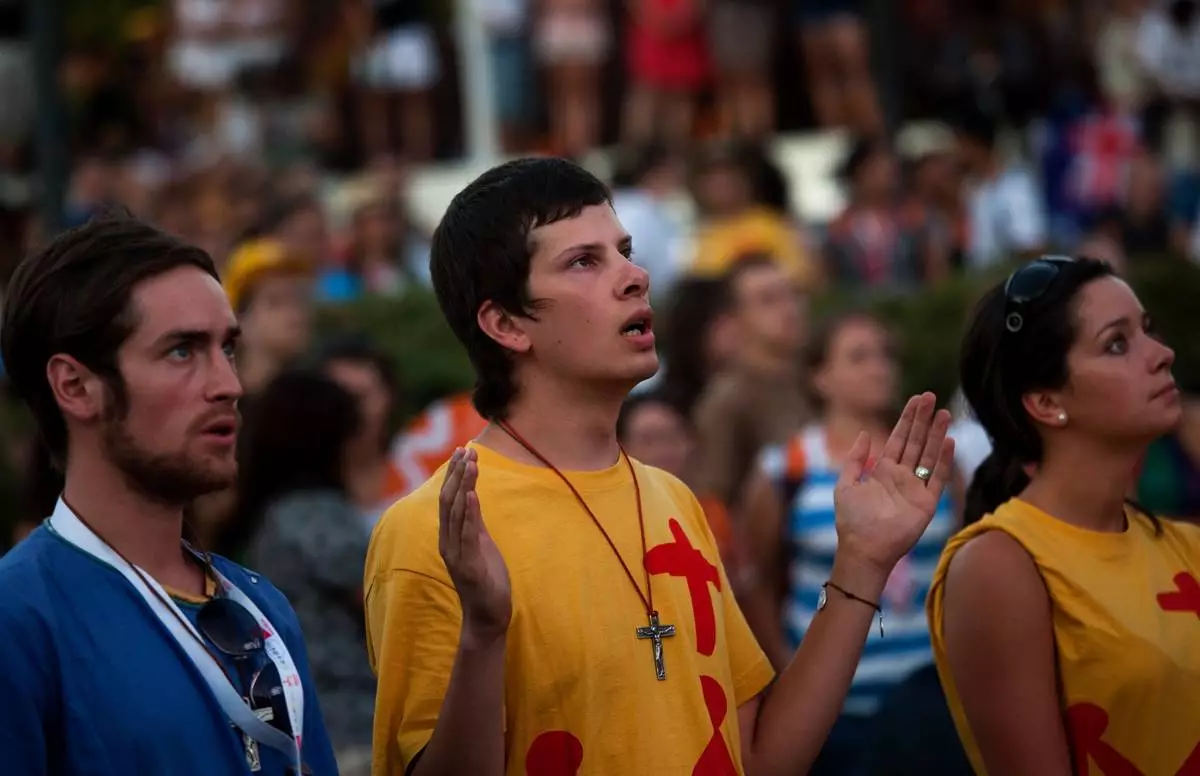
FILE - Pilgrims pray in the street during a mass at the Cibeles square in Madrid, Aug. 16, 2011, ahead of the visit of Pope Benedict XVI. (AP Photo/Emilio Morenatti, File)
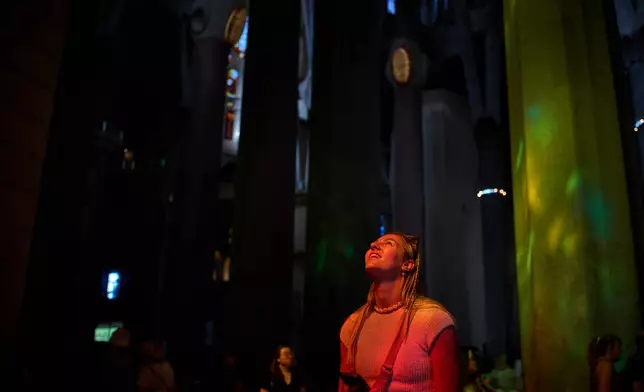
FILE - Pilgrims pray in the street during a mass at the Cibeles square in Madrid, Aug. 16, 2011, ahead of the visit of Pope Benedict XVI. (AP Photo/Emilio Morenatti, File)

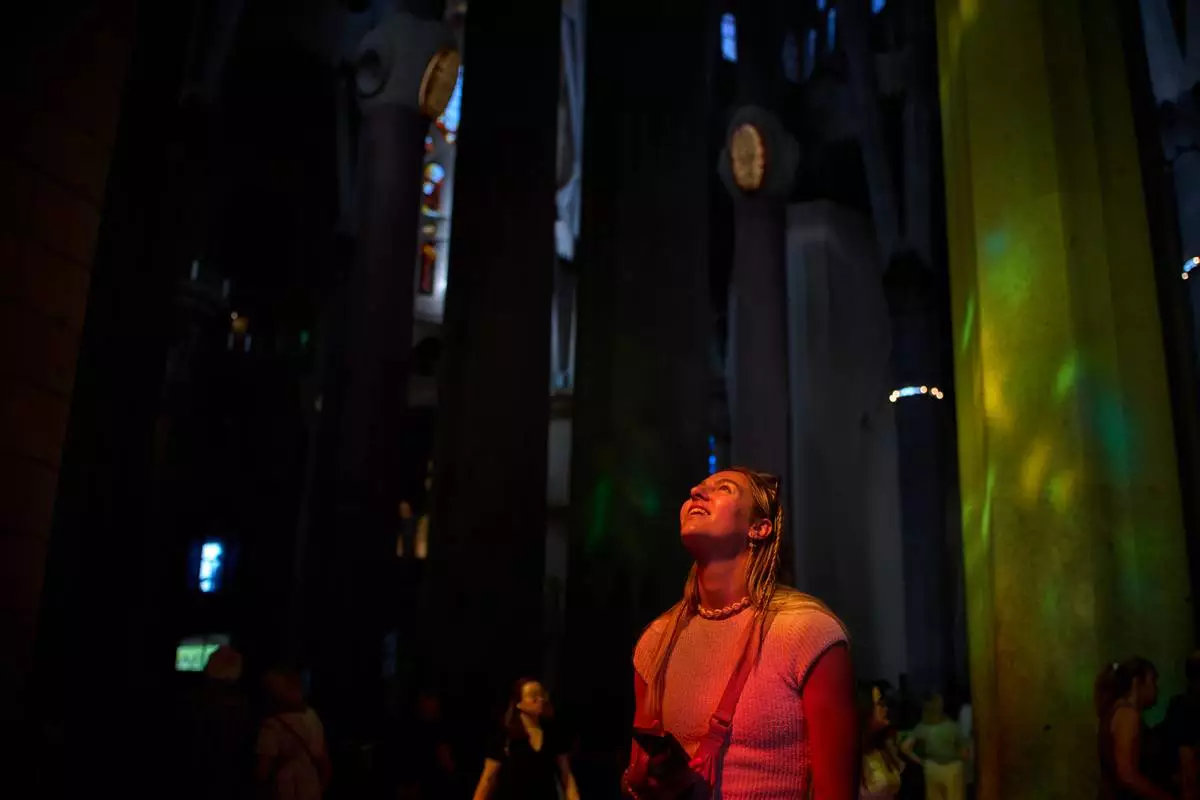
A visitor, bathed in sunlight streaming through the stained-glass windows, gazes up at the ceiling of the Sagrada Familia in Barcelona, Spain, Tuesday, May 26, 2026. (AP Photo/Emilio Morenatti)
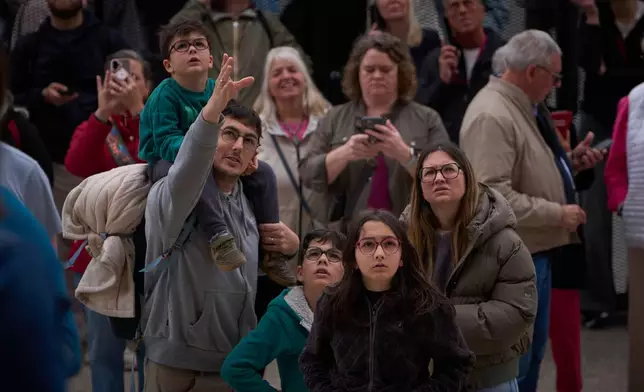
A visitor, bathed in sunlight streaming through the stained-glass windows, gazes up at the ceiling of the Sagrada Familia in Barcelona, Spain, Tuesday, May 26, 2026. (AP Photo/Emilio Morenatti)

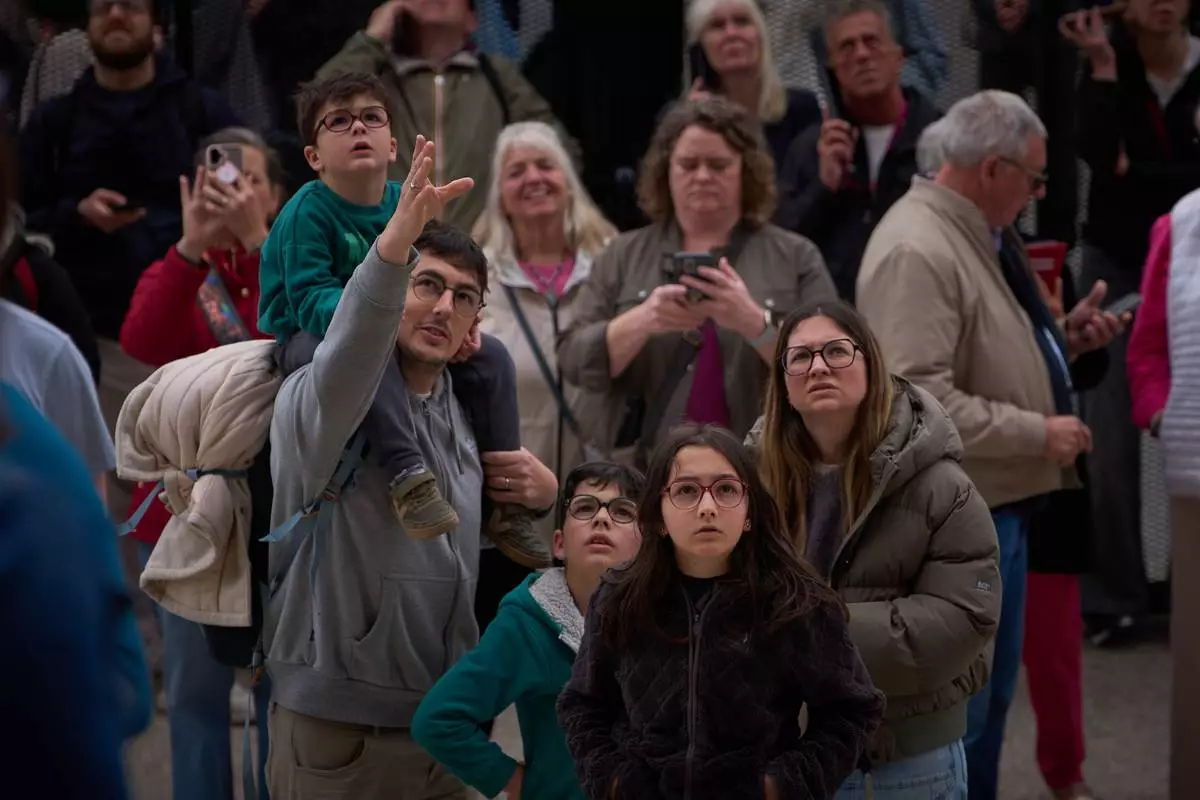
Visitors admire one of the facades of the Sagrada Familia in Barcelona, Spain, Friday, May 15, 2026. (AP Photo/Emilio Morenatti)
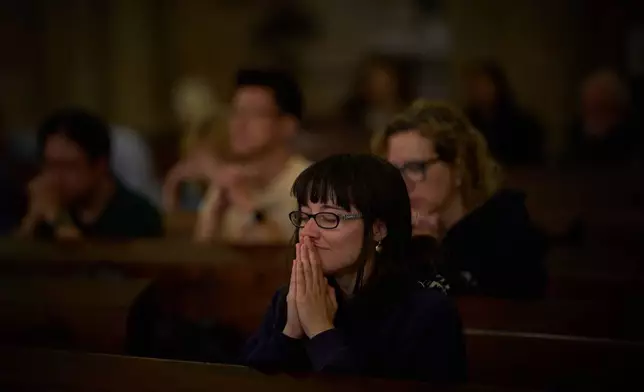
Visitors admire one of the facades of the Sagrada Familia in Barcelona, Spain, Friday, May 15, 2026. (AP Photo/Emilio Morenatti)

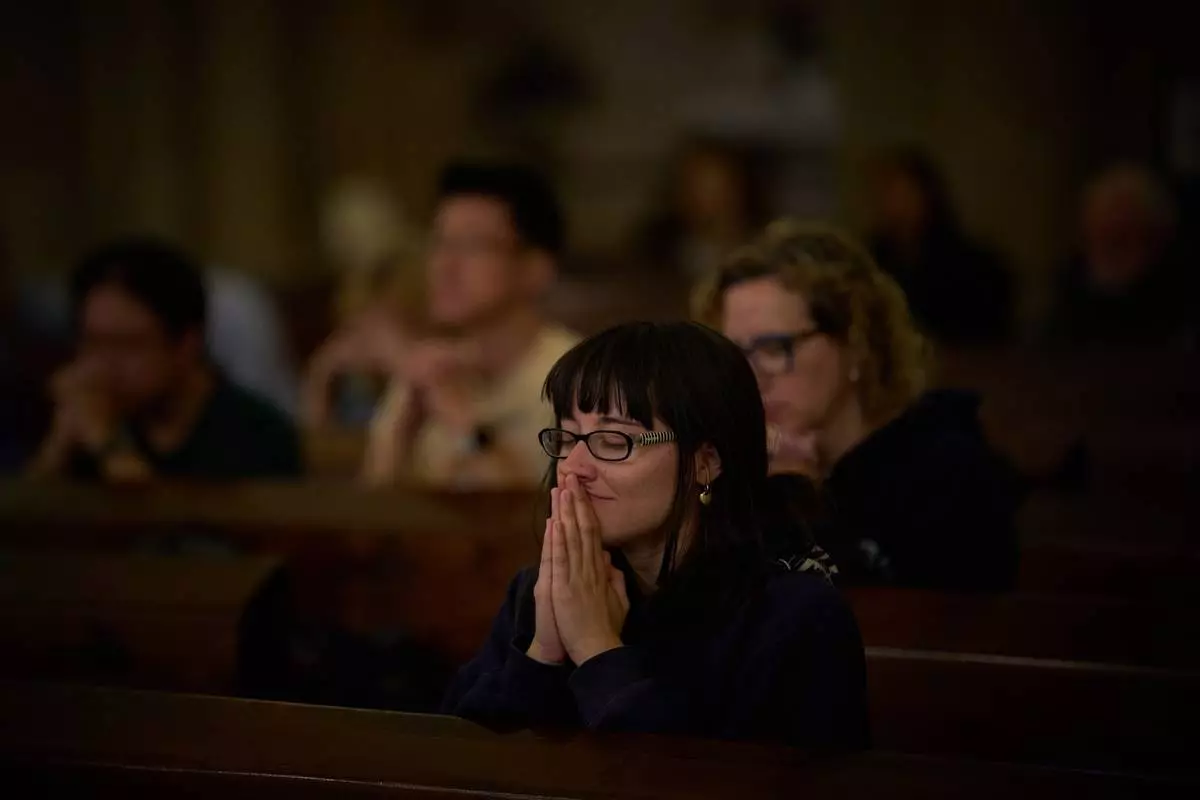
Parishioners pray during a mass in the crypt of the Sagrada Familia in Barcelona, Spain, Friday, May 15, 2026. (AP Photo/Emilio Morenatti)

Parishioners pray during a mass in the crypt of the Sagrada Familia in Barcelona, Spain, Friday, May 15, 2026. (AP Photo/Emilio Morenatti)

“You get a restlessness about an emptiness that you don’t know how to fill,” Cabral, 26, says of her embrace of Catholicism. “God is the one looking for you first, but you need to go meet him.”

On trips to Spain this month and France in September, Leo will find thousands of young people like her in these traditionally Catholic but now staunchly secular countries, where historic churches are abundant and Mass attendance is sparse.

Church leaders and some experts see the success of youth movements and the surge in adult baptisms as signs that some young people are showing new interest in the church, while also challenging it to embrace a more inclusive message.

“They are drawing near with a look of surprise,” said the Rev. Josetxo Vera, spokesperson for Spain’s Catholic Bishops Conference. “It’s an excellent opportunity that bursts forth from heaven, not from the church.”

Vera has seen many teens “scare” their atheist parents by asking to be baptized after becoming aware of, and attracted to, Christian messages spread in popular culture — like Catalan pop star Rosalía and her recent, spirituality-infused album Lux.

They’re approaching faith in a drastically different environment than their parents and grandparents.

Until 1975, Spain was ruled by dictator Gen. Francisco Franco, who aligned with a deeply traditional Catholic Church still reeling from the anticlerical violence of Spain’s civil war. Becoming a democracy, the country saw “a kind of divorce between popular piety and the church’s religious culture,” said Mónica Cornejo Valle, a religion professor at Complutense University in Madrid.

Wildly popular religious processions and feasts have continued to be held in most Spanish regions and it’s hard to find a neighborhood or hamlet without some visible vestige of Spain’s outsized importance in the global history of the spread of Catholicism.

There are nearly 23,000 active Catholic parishes — but new priestly ordinations haven't started to bounce back. Most Spanish adults, 80%, were raised Catholic but only 47% currently identify as such, including a meager 2% who joined the faith from non-Catholic upbringings, according to a Pew Research Center survey conducted in 2024.

Only about 16% of Spanish Catholics go to Mass at least weekly, according to the 2024 Pew survey, even though it’s an obligation for those practicing the faith.

One of Cabral’s friends in Gran Canaria, José María Marrero, remembers attending Mass with his mother as a child, “and all you met were the old folks.” His wife, a teacher who was baptized in her early 20s, told him some of her students on a recent trip saw a picture of Jesus and asked, “Miss, that’s the Catholic one, right?”

In this overall environment, scholars like Cornejo Valle warn that a supposed revival in religiosity might amount to a “publicity effect” driven by a savvy use of media and popular culture.

But youth movement and church leaders see opportunity in this blank slate — especially if they “transmit Jesus’ message with happiness, a message that’s easy to understand,” as Cabral puts it.

That’s the case for the group Cabral and some 35,000 other youth belong to, Hakuna, which started in the early 2010s in a Madrid parish when a group of college students set up a weekly hour of Eucharistic adoration, preceded by a short lecture and followed by a meetup at a local bar.

The movement became an official lay organization of the Spanish church in 2017, and has grown into volunteer trips and concerts, with seven records launched of Christian music, said its spokeswoman, Maca Torres.

“It’s the Holy Spirit, we’re the first to be surprised” by the success, Torres said, adding that most members are people who had stopped practicing, though there are a few converts.

In Catholicism, infants are baptized — but more than 13,300 baptisms of people older than 7 were counted in the latest annual report from Spain’s Catholic bishops conference.

And in France, a country whose approach to secularism is increasingly contested because of its strict regulation of religion in public life, some 13,000 adults were baptized at the Easter Vigil this year — 42% of them ages 18 to 25. That's according to the country's Conference of Catholic Bishops, which said that amounts to a tripling of such baptisms compared to 10 years ago.

Last summer at the Vatican, Leo encouraged a gathering of baptism candidates and newly baptized from France to share their experience of faith with others and let it guide their daily life.

“What a joy to see young people who are engaging with faith and want to give a sense to their life, by letting themselves by guided by Christ and his Gospel,” Leo told them.

The appeal for young people, experts say, seems to be twofold — a disenchantment with other institutions and with the growing loneliness of life lived on social media, together with a church that, starting with Pope Francis, has focused less on doctrine and more on social justice.

On June 6, the first day of his trip to Spain, Leo will hold a prayer vigil with youth in a vast Madrid public square — but he’s also later visiting a migrant center in the Canary Islands and a prison near Barcelona, outreach initiatives that tend to appeal to progressive youth.

“We don’t think that the number of Catholic young people has grown by a lot, but we do see that in general the profile of the Catholic youth is more committed than before,” Cornejo Valle said.

María Salazar, 23, leads a Barcelona outpost of the global Catholic youth movement Effetá. She says many of her peers are looking for different forms of spirituality, within and outside the church.

“More than looking for faith, we look for a feeling of peace,” Salazar said. “We live in a microwave society — everything has to be immediate — but the Lord doesn’t work this way.”

She said there’s been “a boom of youth” in her parish, which also happens to be one of the most visited monuments in Europe — the Sagrada Familia, modernist architect Antoni Gaudí’s unfinished masterpiece.

About 120 of them engage in adoration and weekend-long spiritual retreats, the first of which saw organizers and the basilica’s rector stay up to prepare the church until well past midnight.

They also volunteer to help with the elderly going to Mass in the crypt and the international tourists flocking to worship services in the grand temple above it, where the pope will celebrate Mass on June 10 and inaugurate the new tower of Jesus Christ.

“We’re going to have him here at home,” Salazar gushed. “I see the tower from afar and I see the home that God gave us.”

Associated Press journalist Nicole Winfield at the Vatican contributed to this report.

Associated Press religion coverage receives support through the AP’s collaboration with The Conversation US, with funding from Lilly Endowment Inc. The AP is solely responsible for this content.
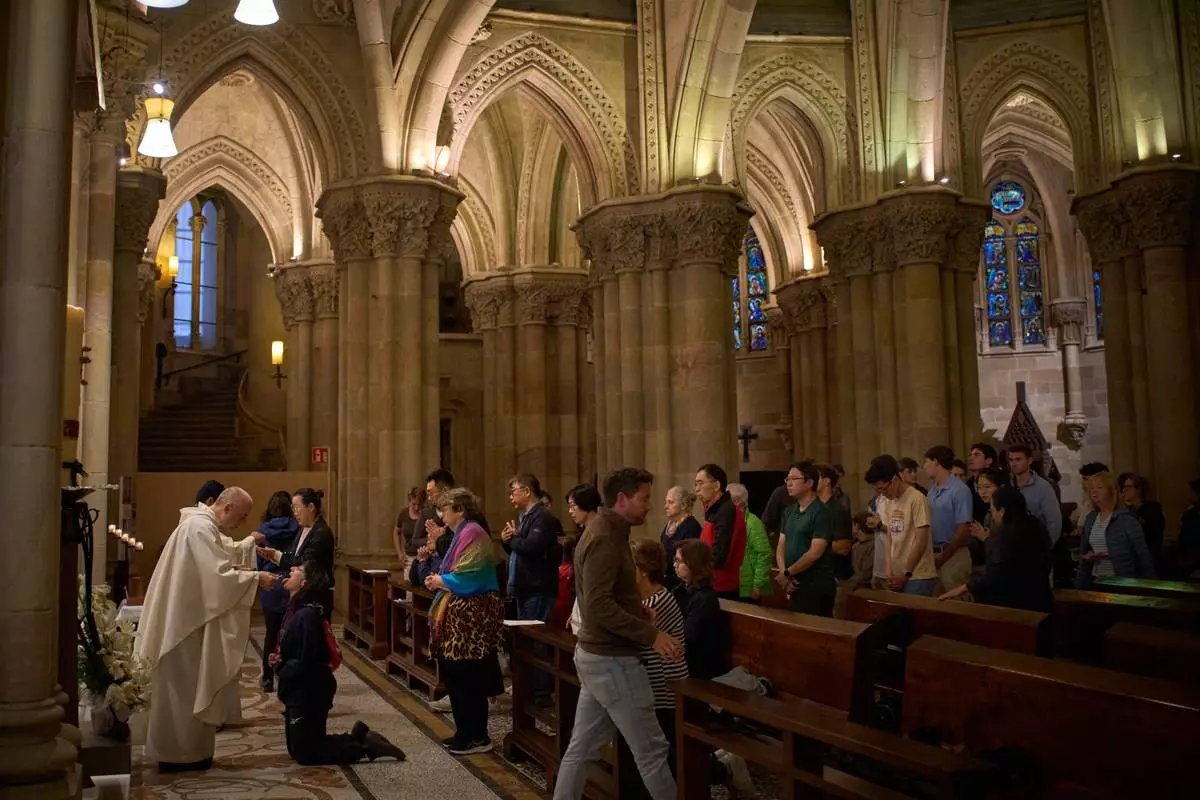
Worshippers receive communion during a Mass in the crypt of the Sagrada Familia in Barcelona, Spain, on Friday, May 15, 2026. (AP Photo/Emilio Morenatti)
Worshippers receive communion during a Mass in the crypt of the Sagrada Familia in Barcelona, Spain, on Friday, May 15, 2026. (AP Photo/Emilio Morenatti)

FILE - Pilgrims pray in the street during a mass at the Cibeles square in Madrid, Aug. 16, 2011, ahead of the visit of Pope Benedict XVI. (AP Photo/Emilio Morenatti, File)
FILE - Pilgrims pray in the street during a mass at the Cibeles square in Madrid, Aug. 16, 2011, ahead of the visit of Pope Benedict XVI. (AP Photo/Emilio Morenatti, File)

A visitor, bathed in sunlight streaming through the stained-glass windows, gazes up at the ceiling of the Sagrada Familia in Barcelona, Spain, Tuesday, May 26, 2026. (AP Photo/Emilio Morenatti)
A visitor, bathed in sunlight streaming through the stained-glass windows, gazes up at the ceiling of the Sagrada Familia in Barcelona, Spain, Tuesday, May 26, 2026. (AP Photo/Emilio Morenatti)

Visitors admire one of the facades of the Sagrada Familia in Barcelona, Spain, Friday, May 15, 2026. (AP Photo/Emilio Morenatti)
Visitors admire one of the facades of the Sagrada Familia in Barcelona, Spain, Friday, May 15, 2026. (AP Photo/Emilio Morenatti)

Parishioners pray during a mass in the crypt of the Sagrada Familia in Barcelona, Spain, Friday, May 15, 2026. (AP Photo/Emilio Morenatti)

Parishioners pray during a mass in the crypt of the Sagrada Familia in Barcelona, Spain, Friday, May 15, 2026. (AP Photo/Emilio Morenatti)
BEIRUT (AP) — Israeli troops have captured a strategic mountain topped with a Crusader-built castle in southern Lebanon in the deepest incursion into the country in more than a quarter-century, the military said Sunday, while U.S. Secretary of State spoke to Lebanese and Israeli leaders in an effort keep negotiations going.

The taking of Beaufort castle, near the city of Nabatiyeh, followed days of airstrikes and intense fighting in nearby villages between Israeli troops and Hezbollah militants.

The capture marked a major Israeli advance in the latest Israel-Hezbollah war, which began on March 2, when Hezbollah fired rockets into northern Israel two days after the U.S. and Israel attacked its main backer, Iran.

Since then, Israel has launched a ground invasion, capturing dozens of Lebanese villages and towns close to the border. Hezbollah has launched thousands of missiles and drones at Israeli soldiers in southern Lebanon and northern Israel.

The Israeli push came despite a nominal ceasefire that has been in place since April 17 and just days before Lebanon and Israeli hold their next round of direct talks in Washington starting Tuesday.

Secretary of State Marco Rubio spoke to Lebanese President Joseph Aoun and Israeli Prime Minister Benjamin Netanyahu to propose a fresh path to continue ongoing negotiations, according to a U.S. official who spoke on condition of anonymity to discuss private diplomatic conversations. Under the proposal, Hezbollah would halt all attacks on Israel and Israel would refrain from escalating military operations in the Lebanese capital of Beirut, according to the official.

In a televised statement, Lebanese Parliament Speaker Nabih Berri, a key Hezbollah ally, said he can guarantee the militant group's “full, comprehensive and immediate commitment to a ceasefire."

“But who will force Israel to stop its aggression?” he said in a statement on his television station, NBN.

French Foreign Minister Jean-Noël Barrot requested an emergency meeting of the United Nations Security Council to discuss Israeli military operations in Lebanon, which he described as “unacceptable.”

“Nothing can justify the prolongation of Israeli military operations in Lebanon and its increasingly deep occupation of Lebanese territory,” Barrot said Sunday on French television BFM TV.

Diplomats said the council meeting might take place Monday afternoon, speaking on condition of anonymity ahead of a formal announcement.

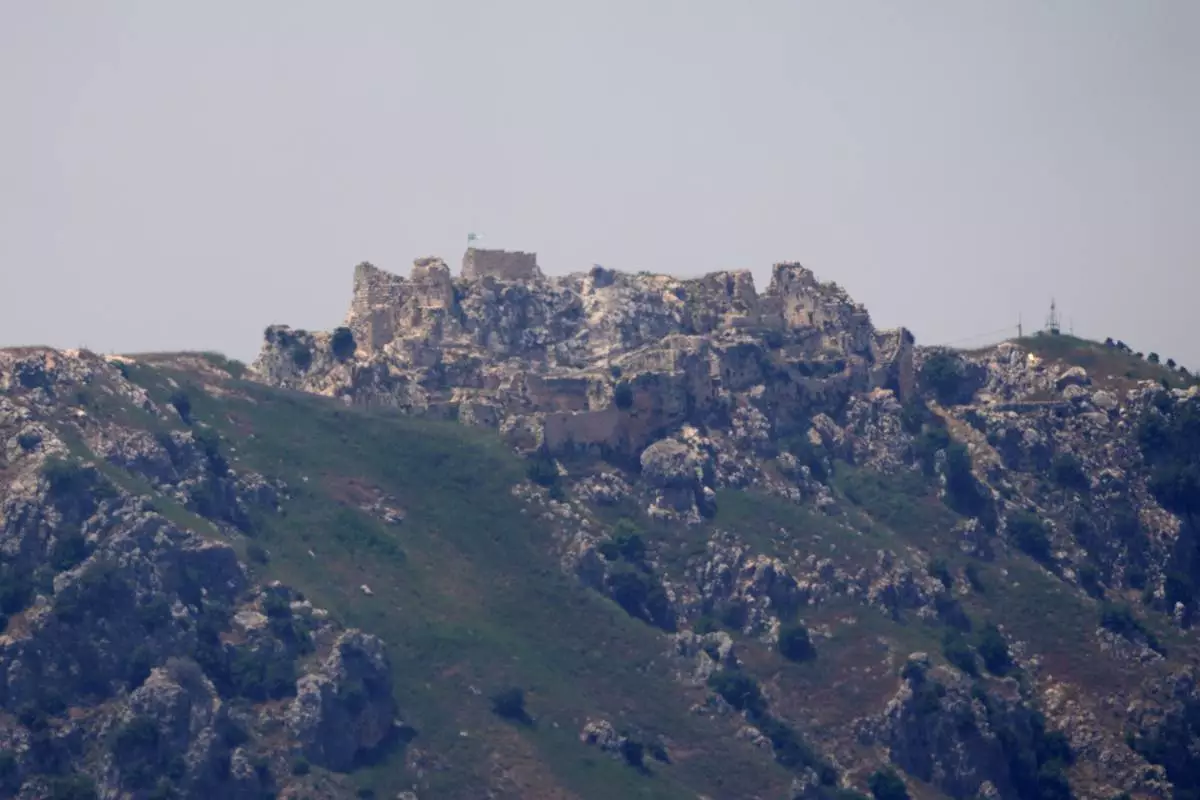
The Israeli military's Arabic-language spokesperson, Avichay Adraee, posted photographs on X showing Israeli troops walking outside the castle, and Defense Minister Israel Katz wrote on X that they raised an Israeli flag over the castle. Israeli troops previously captured the castle in 1982 and held it until they withdrew from Lebanon in 2000.

“Twenty six years after the withdrawal from the security zone in Lebanon, the Israeli flag has returned to fly on the peaks that overlook the Galilee towns,” Katz said Sunday at a memorial ceremony for Israeli soldiers killed in its previous occupation of southern Lebanon.

Katz said Israel intends to hold the castle as its troops work to destroy thousands more homes that he says were used by Hezbollah and other military infrastructure in southern Lebanon.

The Beaufort fortress, perched high atop Lebanon’s rolling green hills and overlooking the Litani River, has been a strategic military asset for centuries.

Built as a Crusader castle around the 12th century on top of previous fortifications, it has also been used by Saladin’s Jerusalem army, Mamluks, Ottomans, the French mandate and the Palestine Liberation Organization. The Crusaders named it Beaufort, which is Old French for “beautiful fortress.”

The 1982 capture of the castle from the PLO was a major victory for the Israeli military, which was then led by Defense Minister Ariel Sharon, who later became prime minister. At the time, the Israeli army pushed all the way north and occupied Beirut.

In 2000, the castle was partially restored and opened to visitors.

During the previous Israel-Hezbollah war in 2024, UNESCO gave enhanced protection to 34 cultural sites in Lebanon, including Beaufort Castle, to safeguard them from damage.

The castle is a few kilometers north of the Israel border and overlooks wide parts of southern Lebanon and northern Israel. In Arabic, it is called Al-Shaqif castle, an old Syriac word referring to the formidable rocky area.

Beaufort is symbolic across the region, including in Israel, where it was one of the best-known places Israel controlled during the 18-year occupation. An Israeli film titled “Beaufort” explores moral questions about war in the last days before the military withdrew.

In recent days, Israel has expanded the scope of its operations in Lebanon, sending troops across the Litani River, which previously served as a de-facto boundary, and demanding that residents leave much of southern Lebanon.

“The occupation of Beaufort is a dramatic stage and a dramatic shift in the policies we are leading,” Israeli Prime Minister Benjamin Netanyahu said Sunday, citing the military occupation of security zones in Syria, Lebanon and Gaza along Israel’s borders. He said Israel has killed 3,000 Hezbollah militants since the start of the war. Hezbollah has not disclosed its casualty numbers.

Israel has designated the area from the Litani up to the Zahrani River a combat zone. Some residents have already left the area due to intense strikes in recent days, but people remain.

Israeli troops have been advancing for days in villages close to Beaufort castle. They are now about 5 kilometers (3 miles) from Nabatiyeh, a major center in southern Lebanon. They have called on people to leave that area, as well as the coastal city of Tyre, the country’s fourth-largest city, and its surroundings.

There was no immediate comment from Hezbollah or the Lebanese government on the Israeli push.

The expanded operation would give Israel an upper hand in the upcoming talks with Lebanon in Washington, said Beirut geopolitical analyst Joe Macaron.

“We are at a tipping point,” Macaron said, adding that it is still too early to say how Hezbollah will react to the loss of land. “The more land they (the Israeli military) can grab before the ceasefire, the more they can impose conditions on Hezbollah before their withdrawal.”

Israel has continued striking near Tyre, including near the Hiram Hospital. The Lebanese Health Ministry said 13 health workers were wounded in the strike. Elsewhere, a strike in Deir al-Zahrani, near Nabatiyeh, killed eight people and wounded 16 others, according to Lebanon's state-run National News Agency.

Hezbollah overnight claimed two attacks targeting Israeli troops and a Merkava tank in the southwestern town of Bayada near the border. In recent days, the group has said it has clashed with Israeli troops in several towns just north of the river near Nabatiyeh and the strategic castle. It also claimed attacks deeper into Israel near the northern city of Haifa, Nahariya, as well as border areas.

Hezbollah on Saturday fired salvos of rockets into northern Israel, including Kiryat Shmona, the largest city in the area.

Hezbollah's use of hard-to-detect fiber optic drones has been deadly for the Israeli military, which is struggling to respond. There have been nearly 200 alerts for Israeli civilians across northern Israel warning of drones and missiles in the past 24 hours, according to Israel's military.

The latest round of fighting between Israel and Hezbollah has killed 3,350 people in Lebanon and displaced more than 1 million people.

According to Netanyahu’s office, at least 25 Israeli soldiers and a defense contractor have been killed in or near southern Lebanon, including one on Saturday. Two civilians have also been killed in northern Israel.

Lidman reported from Tel Aviv, Israel. Associated Press Writer Edith M. Lederer at the United Nations contributed to this report.

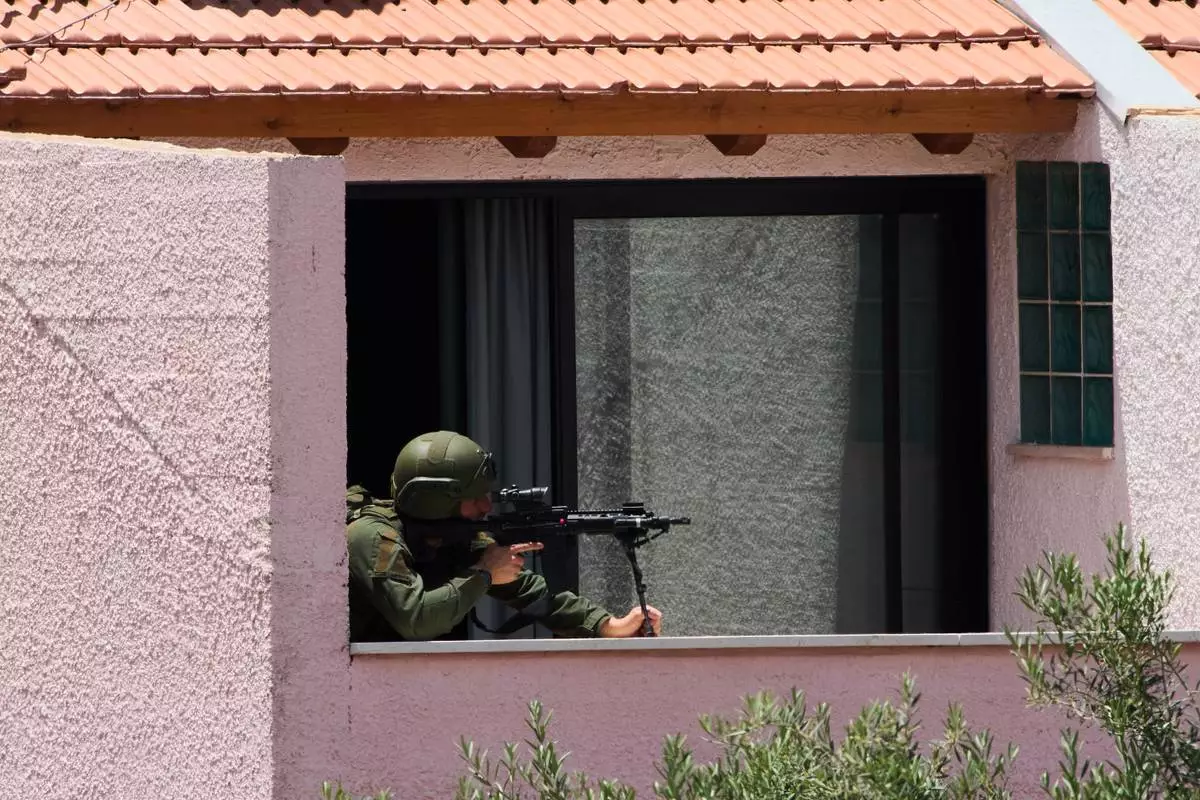
An Israeli solider takes a position in a house in the community of Metula, northern Israel, on the border with Lebanon Sunday, May 31, 2026. (AP Photo/Ariel Schalit)

An Israeli solider takes a position in a house in the community of Metula, northern Israel, on the border with Lebanon Sunday, May 31, 2026. (AP Photo/Ariel Schalit)

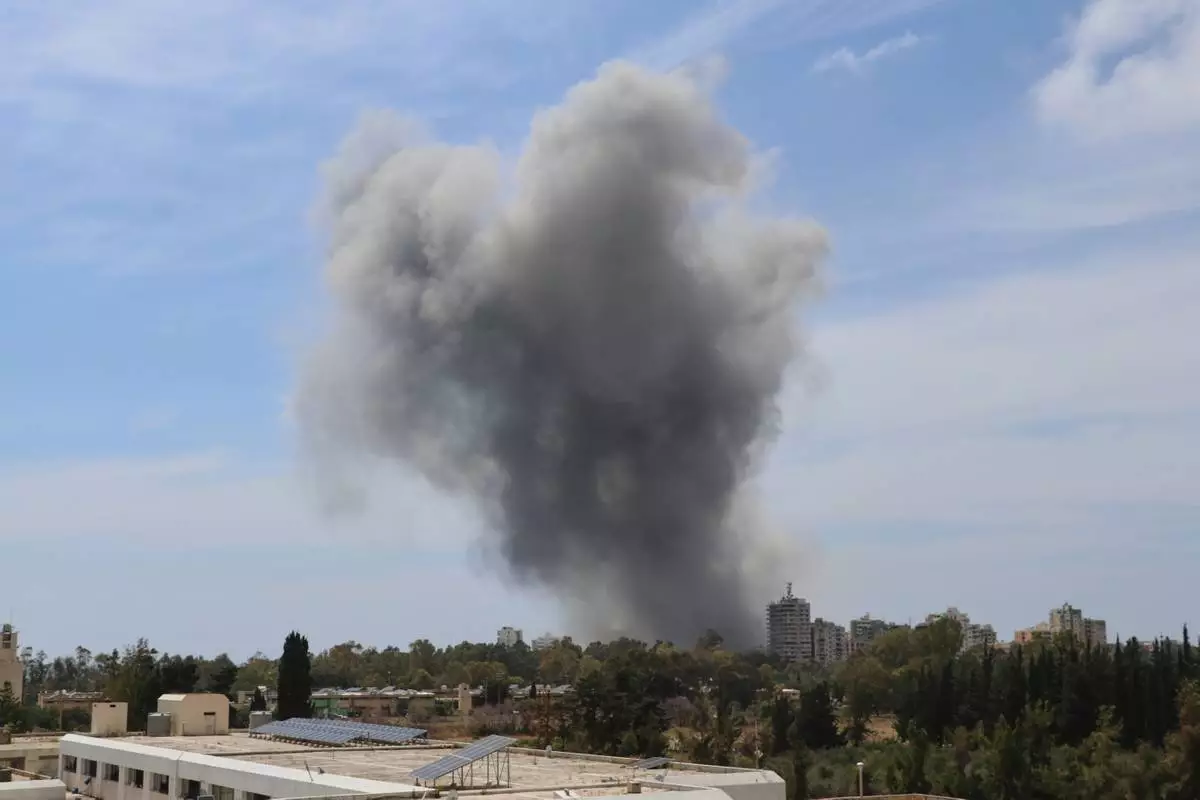
Smoke rises following an Israeli airstrike in the southern port city of Tyre, Lebanon, Sunday, May 31, 2026. (AP Photo)

Smoke rises following an Israeli airstrike in the southern port city of Tyre, Lebanon, Sunday, May 31, 2026. (AP Photo)

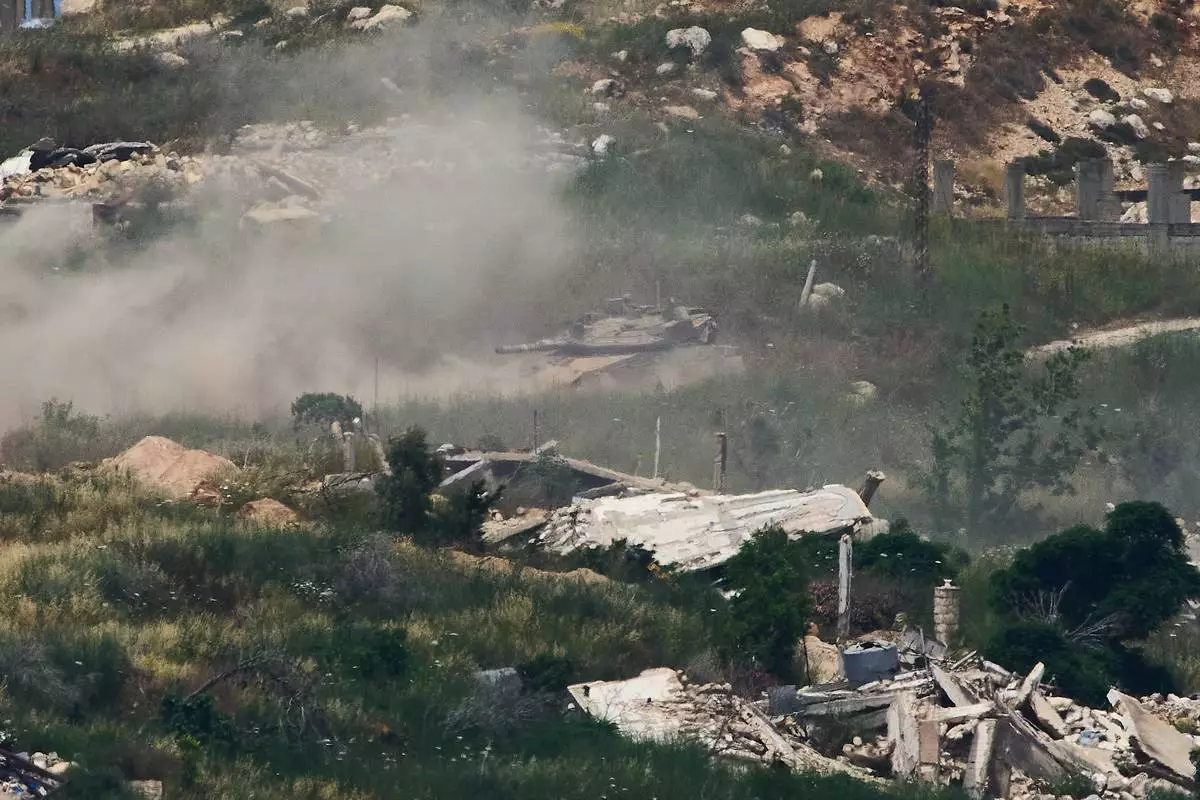
Israeli soldiers drive a tank in southern Lebanon as seen from northern Israel, Sunday, May 31, 2026. (AP Photo/Ariel Schalit)

Israeli soldiers drive a tank in southern Lebanon as seen from northern Israel, Sunday, May 31, 2026. (AP Photo/Ariel Schalit)

A view of he Beaufort Castle in southern Lebanon as seen from northern Israel, Sunday, May 31, 2026. (AP Photo/Ariel Schalit)

A view of he Beaufort Castle in southern Lebanon as seen from northern Israel, Sunday, May 31, 2026. (AP Photo/Ariel Schalit)

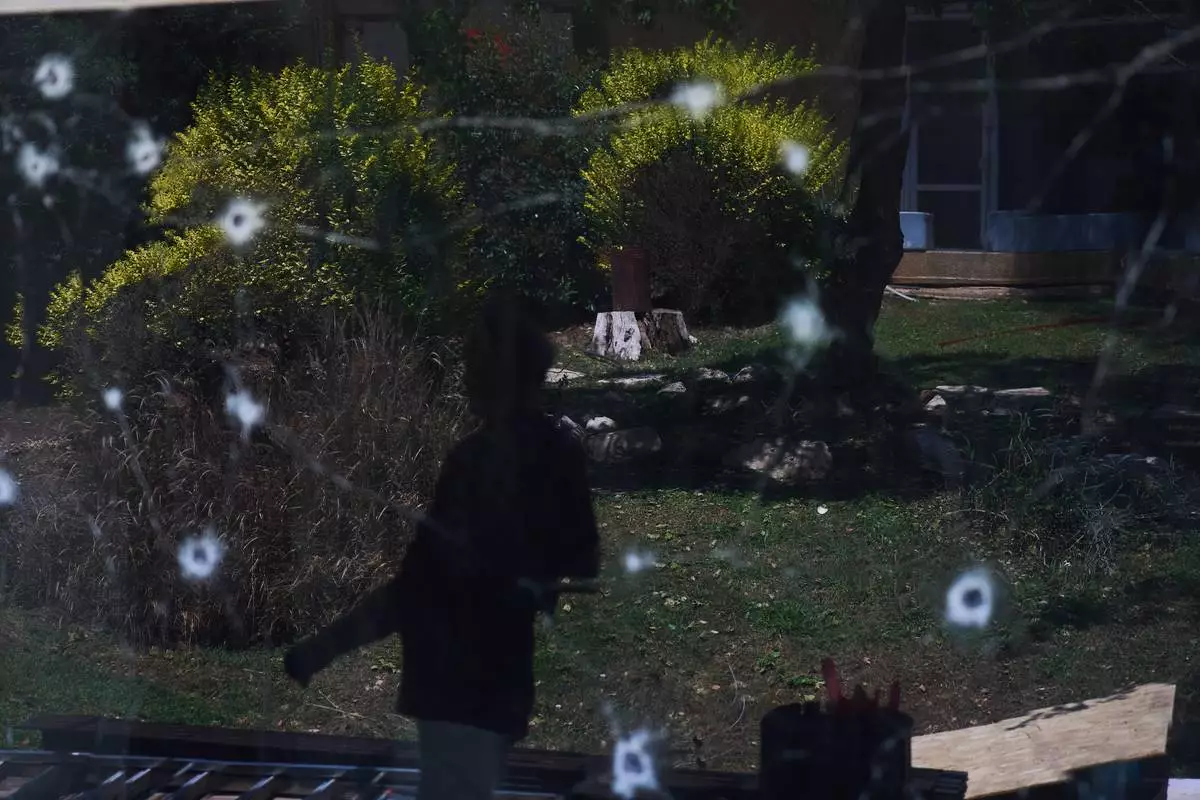
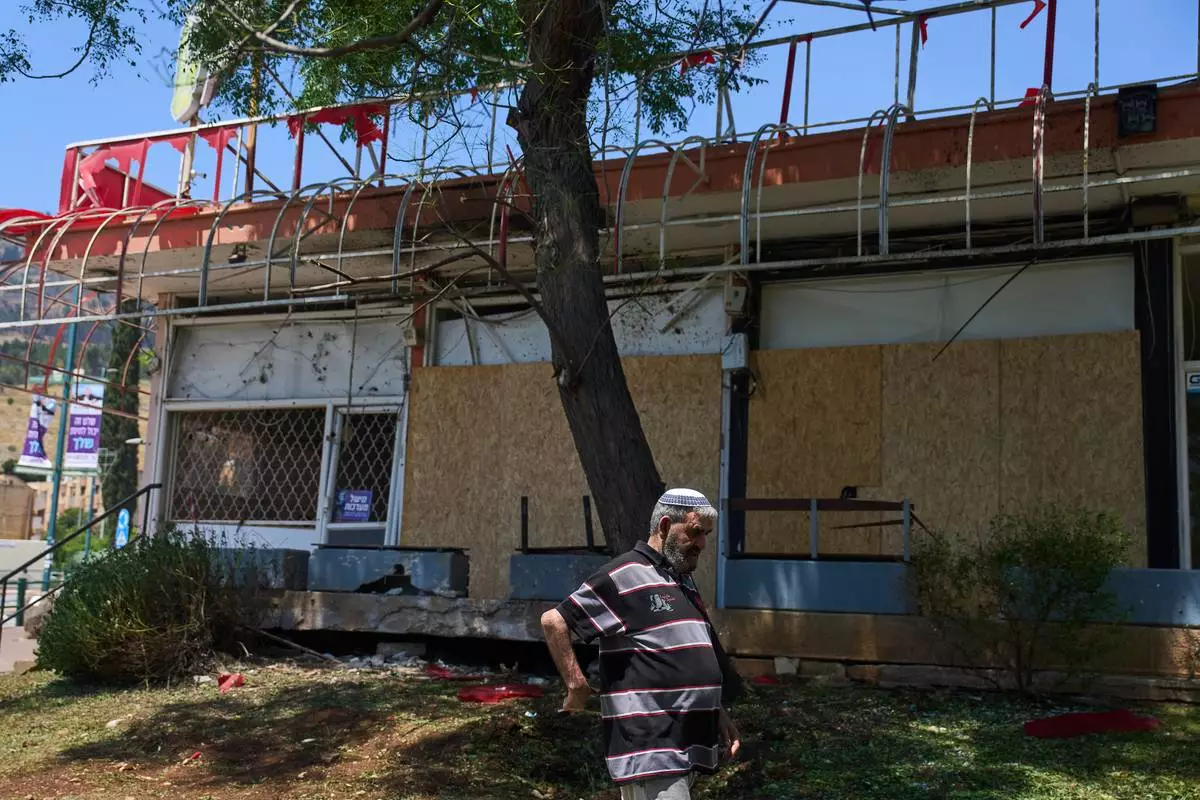
A person walks past the site struck by a rocket fired from Lebanon on Saturday in Kiryat Shmona, northern Israel, Sunday, May 31, 2026. (AP Photo/Ariel Schalit)

A person walks past the site struck by a rocket fired from Lebanon on Saturday in Kiryat Shmona, northern Israel, Sunday, May 31, 2026. (AP Photo/Ariel Schalit)

A local resident walks past the site struck by a rocket fired from Lebanon on Saturday in Kiryat Shmona, northern Israel, Sunday, May 31, 2026. (AP Photo/Ariel Schalit)

A local resident walks past the site struck by a rocket fired from Lebanon on Saturday in Kiryat Shmona, northern Israel, Sunday, May 31, 2026. (AP Photo/Ariel Schalit)

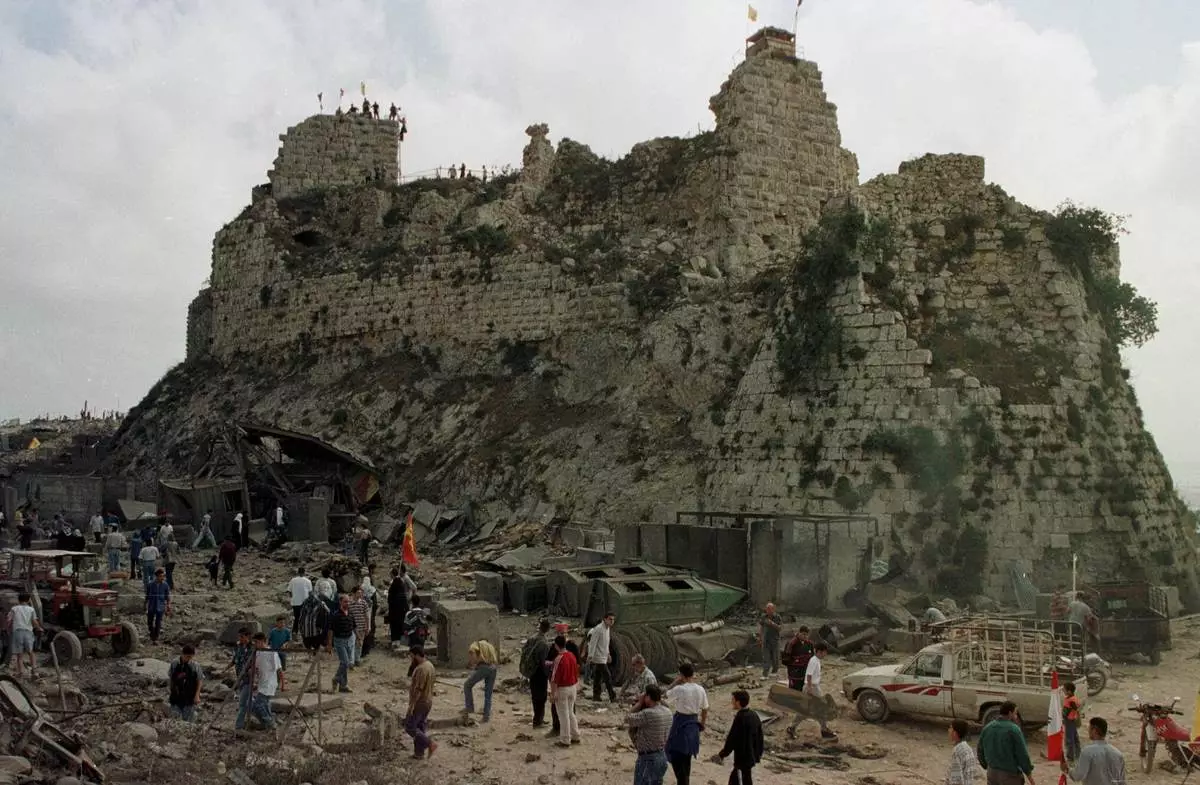
FILE -Villagers inspect the damage to Beaufort Castle, 10 kilometers (6 miles) northwest of the southern market town of Nabatiyeh, Lebanon, Wednesday, May 24, 2000. (AP Photo/Ahmed Mantash, File)

FILE -Villagers inspect the damage to Beaufort Castle, 10 kilometers (6 miles) northwest of the southern market town of Nabatiyeh, Lebanon, Wednesday, May 24, 2000. (AP Photo/Ahmed Mantash, File)

Recommended Articles